Recent

my best for your worst

By Daniel Boscaljon
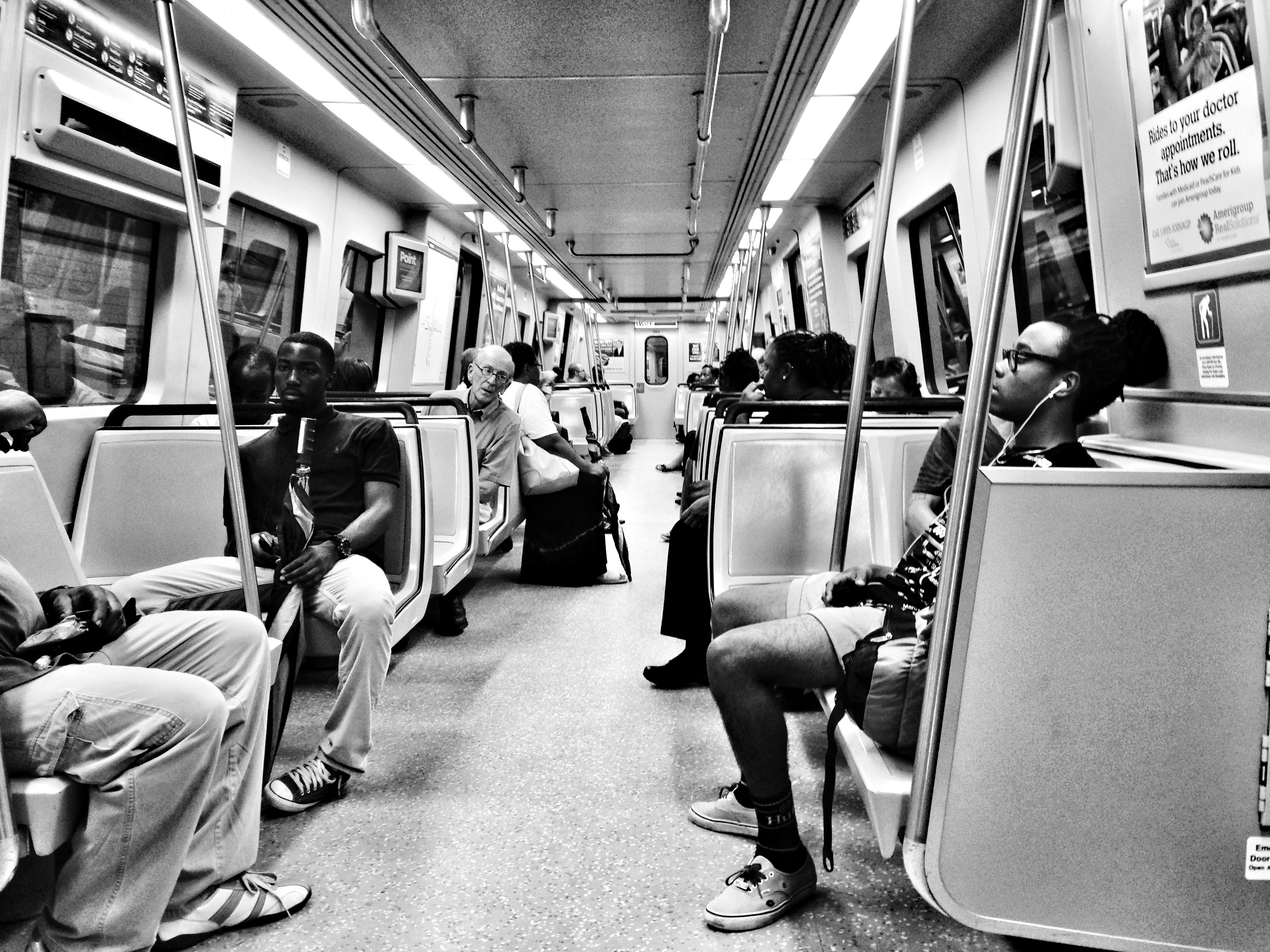
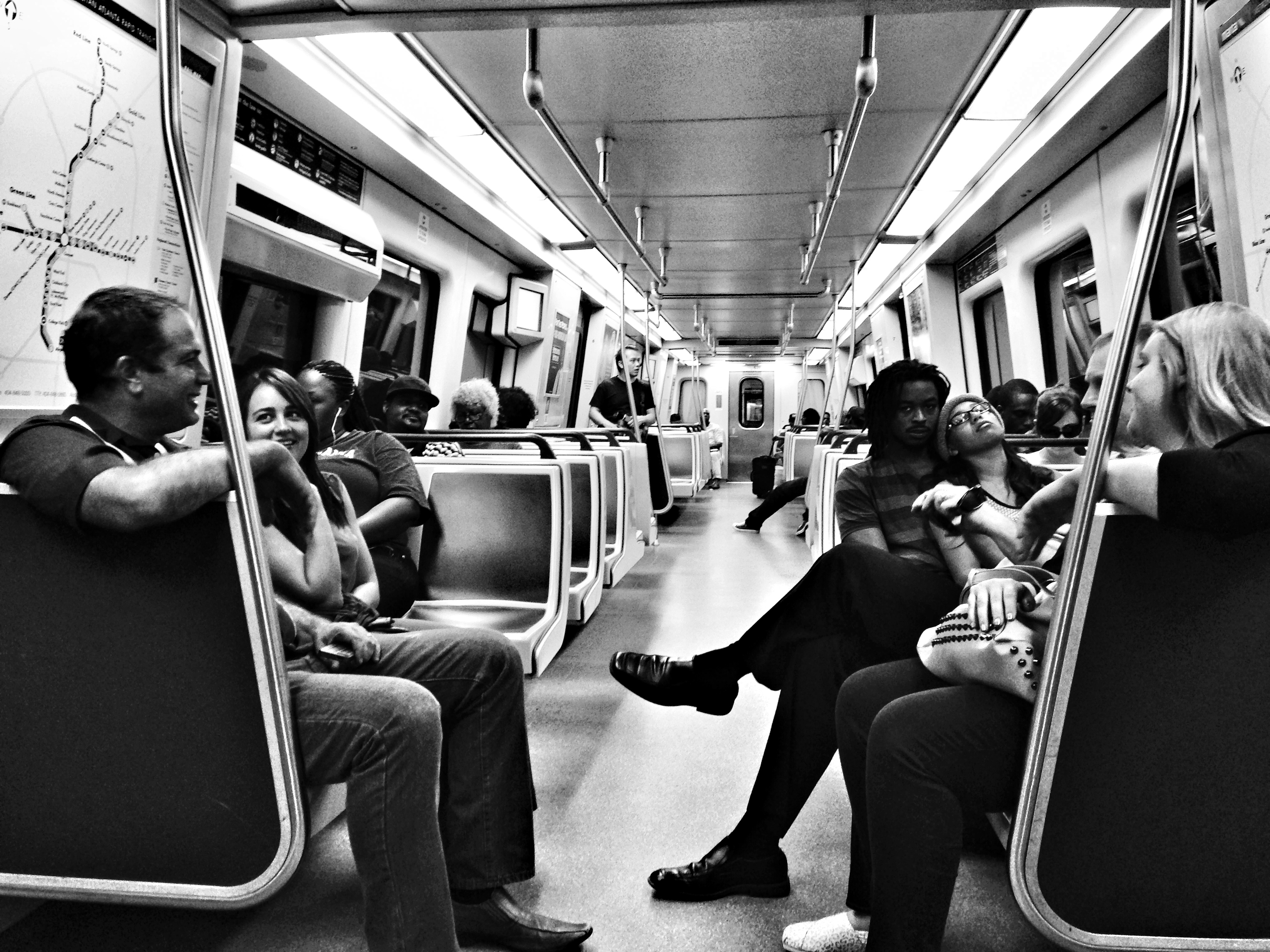
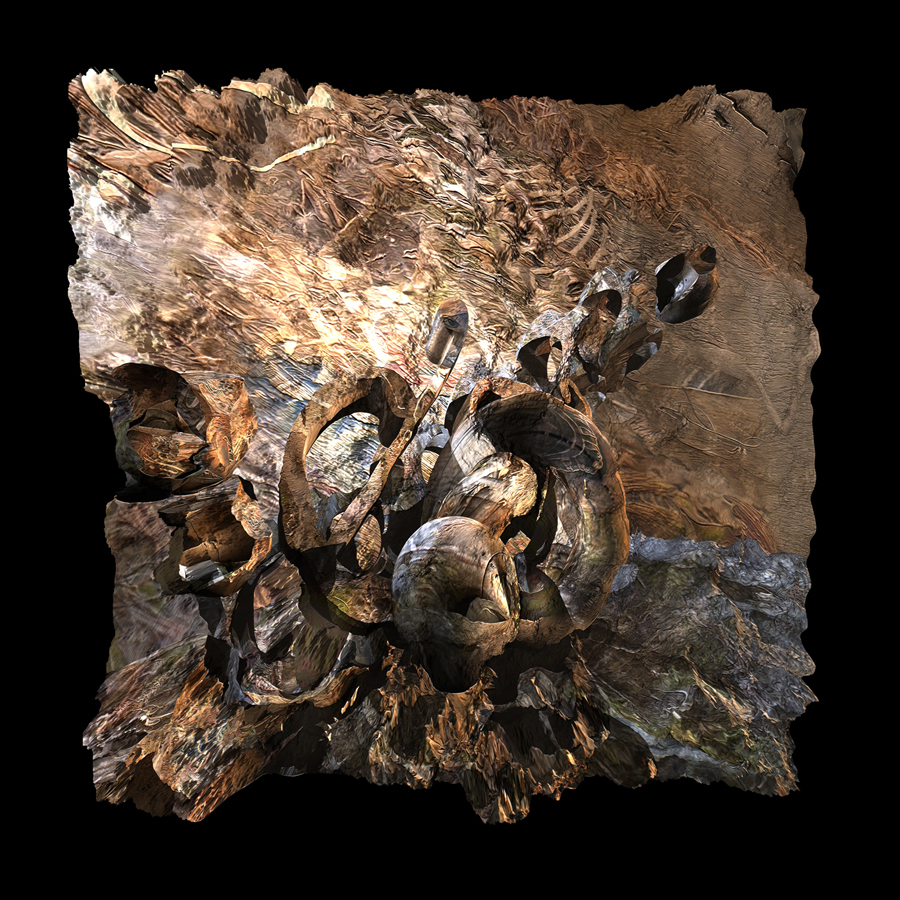
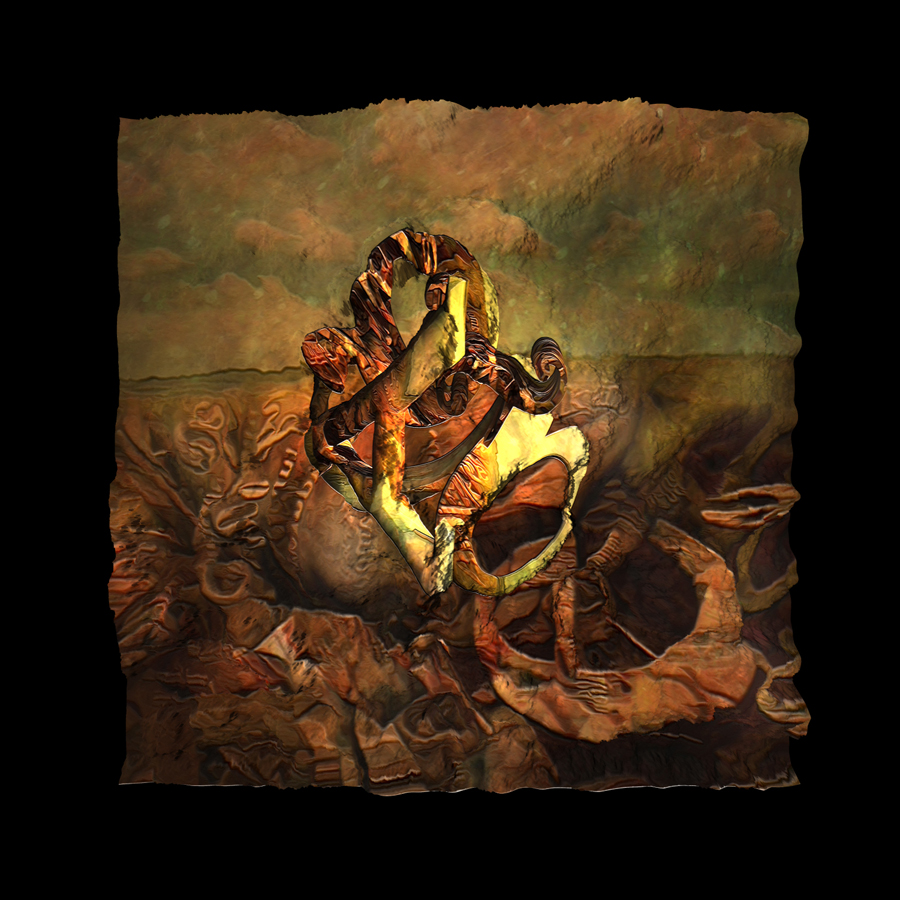
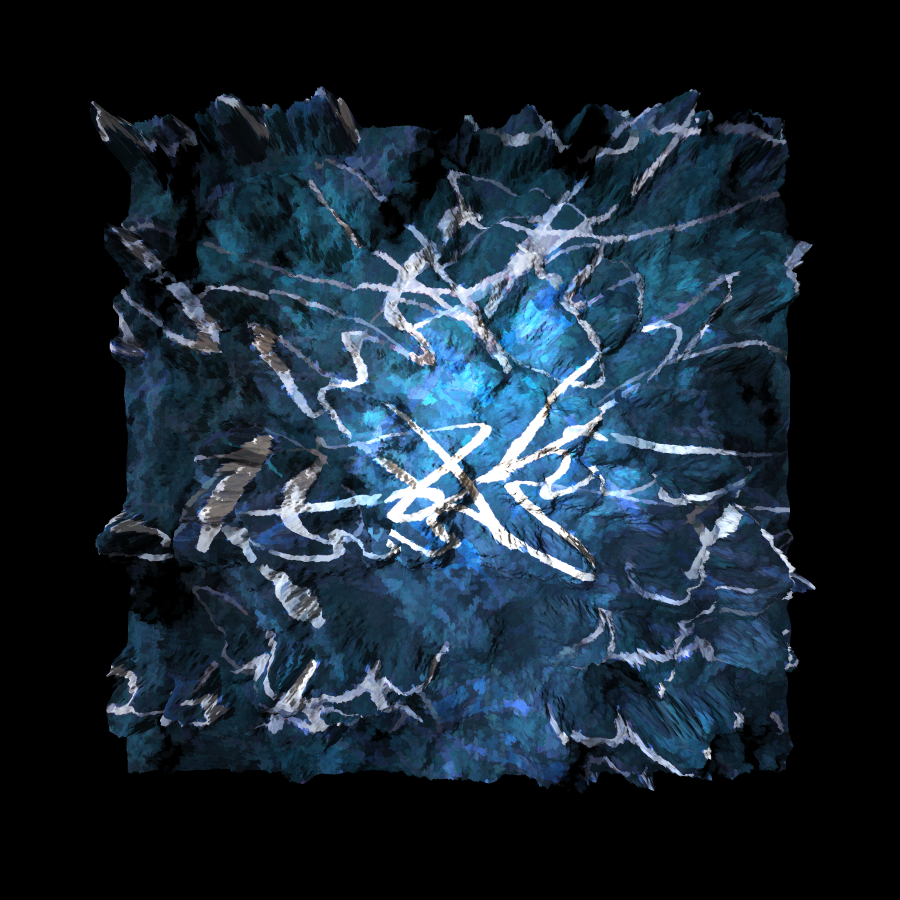
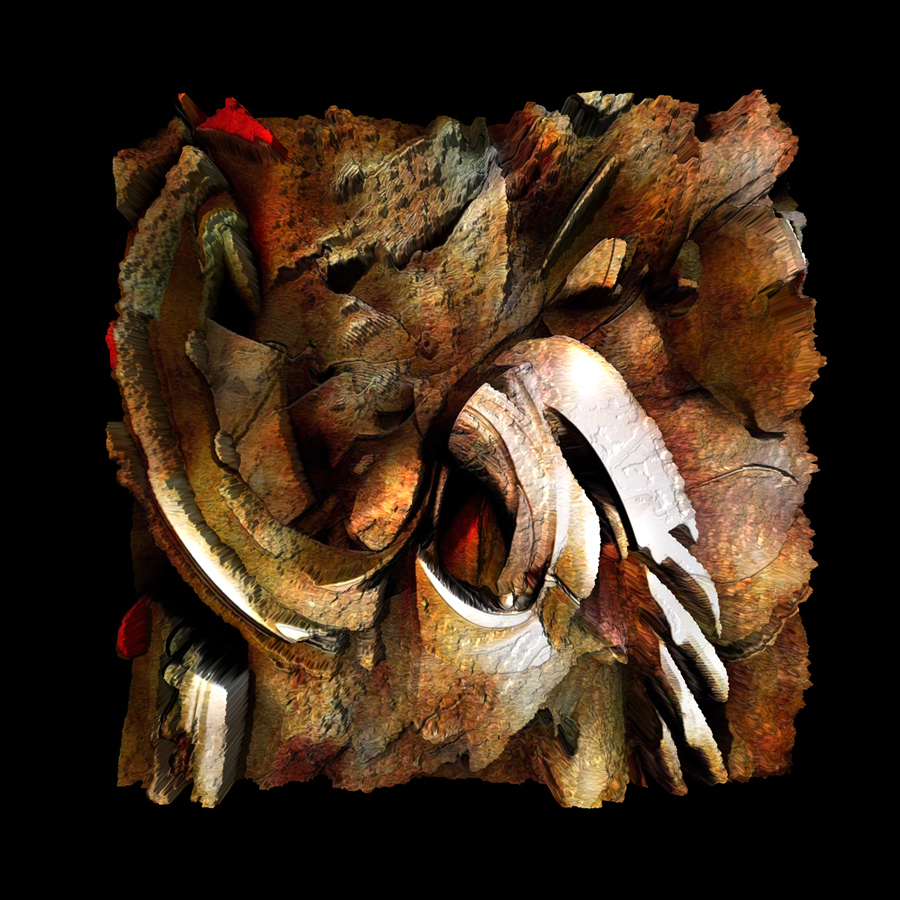
Image by Melissa D. Johnston

not rothko experiment. the now final

“my best for your worst” is the fourth letter in a series of posts called Letters to You written by Daniel Boscaljon with images by Melissa D. Johnston (from one of her ongoing projects). Letters to You began in July with “everytime i write i feel myself disintegrate.”

some words have power.  Even though I’m sure you will not dispute this assertion, I nonetheless will provide you with an example.  During 7th grade band, Maria looked at me and said: “You bring out the worst in everyone.”  An arrangement of seven words–do you think that they could stand engraved in my memory if they had no power? At the time, I laughed off the words, thinking to myself that they were only tossed out in a sort of bored and half-hearted rage.  As the words continued to haunt me, I continued to defend myself using a variety of different strategies: 1) she doesn’t know me well enough to be able to judge me!  2) she just hasn’t seen me with my friends, and, reduced to the context of band, was rendering a verdict as universally true despite being only locally valid.  3) she herself was just having a bad day and simply displaced other troubles and anxieties onto me.  Over the years, I settled on one or another of these theories, seeking solace overall in the wisdom of friends happy to assure me that I produced a beneficent effect on others and made them to be better people.  At the same time, the TRUTH of these words continued to haunt me beneath the comfort and I was unable to simply remove myself from them altogether.  Over the years, systematically unable to ignore her words, it was time for me to reconsider the original statement.  This I did.  I discovered, perhaps, that it is true.  I DO, indeed, bring out the worst in everyone.  I brought out the worst in her that day, her anger and blind frenzied frustration.  But not only her, or those who dislike me, or my students, or those indifferent: in all, I bring out the worst.  I finally understood that I want to bring out the worst even in you.  I succor it, slowly allowing you to open up to me, to trust me enough to give me even that.  I want to know ALL of you, I want the gift of you unfiltered, uncensored.  I want your bests–but your worst, too.  I want to bring it out of you.  The question I’m sure you’re asking is WHY I would do this.  For you, it’s easy…although there are two possible answers:1) I see your worst and realize how truly amazing you are…for your worst is not so bad at all.  2) I take your worst, drawing it out from you, allowing you to offer it to me as a type of purgative: freed from your worst, you can truly be your best.  With others, an additional motive comes into play:  3) I draw out the worst within them such that they can see themselves as who they are. In my youth, I would bring the worst out in people as a type of game.  As I aged, I grew self-righteous and would serve as a judge but now, I simply allow people’s worst to be reflected.  Judge for yourself!  I offer only comfort, never judgment.  I will take your worst, and then give a hug in return (if such physical proximity is not abhorrent).  I will do my best to get your worst.  I use what empathy has been granted to me to probe below surfaces, to see the dark linings under silver clouds.  I want your smog and pollutions, your dark secrets and rotting skeletons: once they’ve seen the light, perhaps we both can be released.  I will not judge.  I will not be angry.  I will do my best for your worst, my utmost for your lowest.  Such is my lot, and here do I embrace it!

Daniel Boscaljon has Ph.D.s in Modern Religious Thought and 19th-century American Literature, both from the University of Iowa. His interest is in the fragility and liminality of human experiences. His first book, Vigilant Faith: Passionate Agnosticism in the Secular World will be published by the University of Virginia Press this August.

Postcolonial thoughts: Michi Meko’s The job of the resurrectors is to wake up the dead

by Christopher Hutchinson

Michi Meko’s The job of resurrectors is to wake up the dead is the artist’s most recent triumph.  As a participant in Flux 2013, Meko used the opportunity to declare his position atop the list of contemporary American/African American artists in Atlanta.  Meko’s deliberate performance will easily be remembered as the best of 2013 with a couple months to spare.

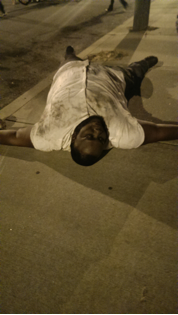
Meko photo 1“A sound theater of Negro prison work songs will be played to wake up the souls of Negro men that were forced to lay the tracks in and around Atlanta as the re-enslavement of Black Americans increased during the Civil War up to World War II. Most of these free men were imprisoned on bogus charges enforced by Penal Labor/Servitude laws allowing the cycle of supremacy to continue. The inspiration for this sound work came from the pages of Slavery by Another Name written by Atlanta author and Pulitzer Prize-winner Douglas A. Blackmon.”

Performance

Early performance feminist artists like Carolee Schneeman and Yoko Ono employed performance to break from the European institution of the voiceless nude.  With similar stagnation the Black body has been stuck, unable to speak beyond the object/spectacle.  Schneeman merely reacted against the Tradition; she remained tied to that narrative. Meko goes beyond just speaking to create a sound performance that does not allow the Western custom to penetrate.  Meko has complete ownership of his narrative; it is not interested in protesting the West, rather revealing another tradition altogether.  Meko has revealed something that has always been present and regularly dismissed, disqualified as art-ritual.

Meko photo 2

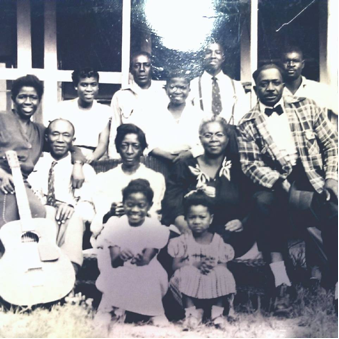
Meko’s family. His mother is the youngest child in front on the right.

 This narrative in sound and action demands an investigation into a rich lineage of rites of passage which Meko receives directly from his bloodline.  It is a direct source, as well as a shared means of access.  Meko includes us in his lineage that allows the viewer to participate in a tangible way, not as romantic spectators.

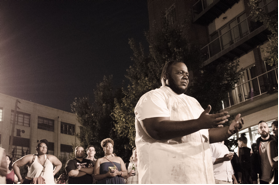
 Meko photo 3Meko’s wailing sounds envisage a time that is past and present as a continuum.  It was a confrontation with the dead, not just the physicality of death, but also the innate that died to become more academic.  What awakened was the “Id.”

Romanticism

It would be easy to lump these chants into a familiar generalized “tribal.”  Native American chants, African drums, and the familiar “Bass,” that heavy “Bass” which divides the guitar lovers.  When Meko uses these sounds they are not bound by the already generalized “Blackness” that exists.   Viewers had to come to terms with visceral response.  The mind tried to figure out where it was. What was happening?  Why this felt so good? The body didn’t care to reason anymore, it just gave in to Meko’s provocation.  It was transcendence.

Participation

After moving through the crowd and happening on the piece, I saw a little boy doing some contemporary Hip-Hop dance. There was a circle of at least 100 people around him.  This youth captivated the viewers, and then about ten minutes later large Black Male fell on the asphalt motionless. After a while of lying there, “Bass” brought him back to life.  He was re-animated with the prison chants.  He was intense and somber corresponding with the introspective tone of the audio.  The performance had a crescendo into a celebration, where everyone participated.  It could no longer be contained in one cipher, the performance overflowed to another circle completely on its own, organically.  This ceremony went on for hours.

Christopher HutchinsonChristopher Hutchinson is an Assistant Professor of Art at Atlanta Metropolitan State College and Archetype Art Gallery Owner in Atlanta, Ga. He received his Master of Fine Arts Degree in Painting from Savannah College of art & Design, Atlanta and his Bachelor of Arts Degree from the University of Alabama in Huntsville, Alabama. He lived in Alabama for 10 years before moving to Atlanta in 2008. His installations mostly consist of black folded paper airplanes.

Learn more about Christopher and his work at Black Flight 144.

confession: the nature of my crime

By Daniel Boscaljon
Image by Melissa D. Johnston

“confession: the nature of my crime” is the third letter in a series of posts called Letters to You written by Daniel Boscaljon with images by Melissa D. Johnston (from one of her ongoing projects). Letters to You began in July with “everytime i write i feel myself disintegrate.”

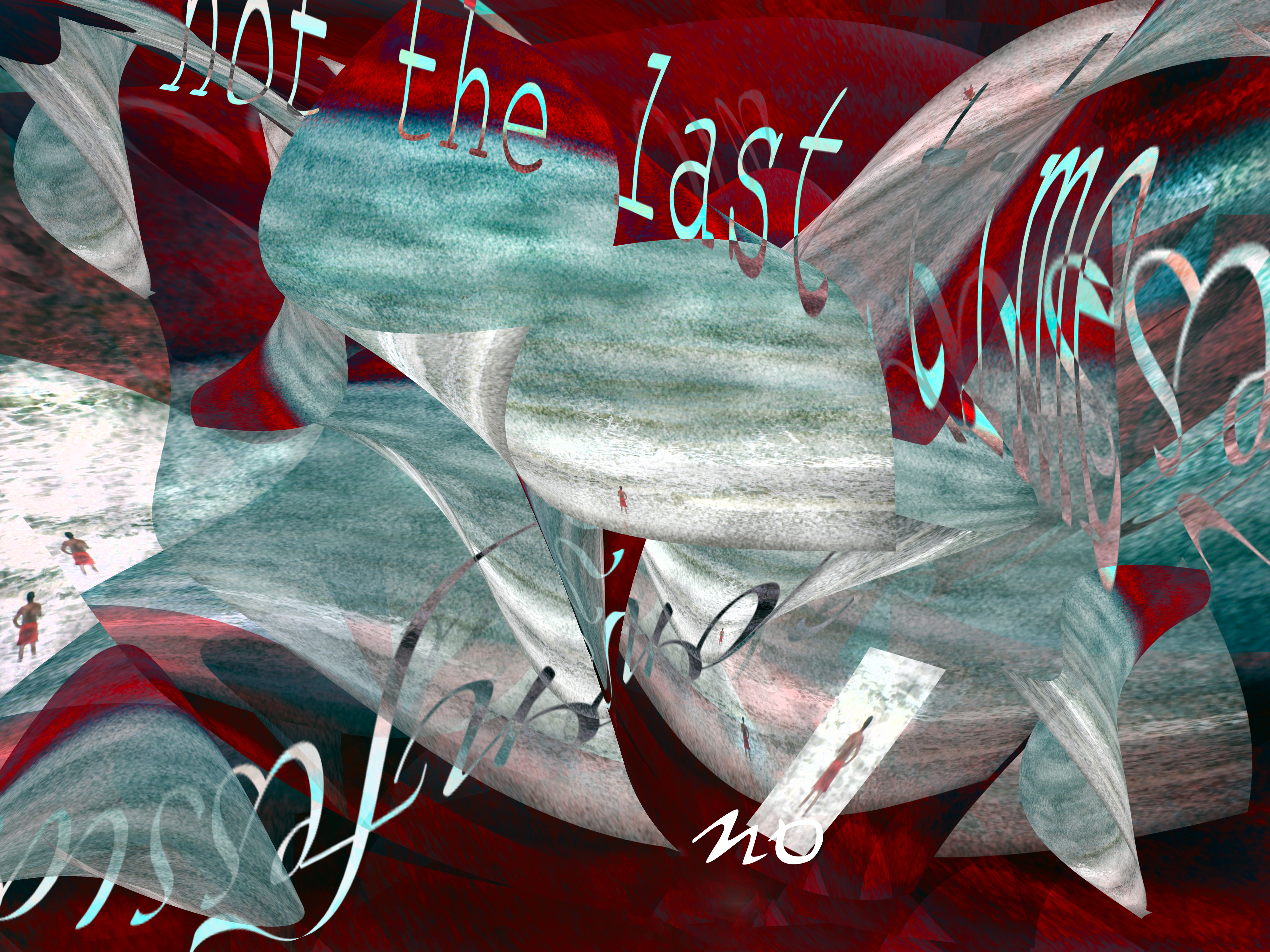
not the last time no by Melissa D Johnston

If I have, in fact, committed a crime, I offer this up as my confession and apology:  1) I am guilty for a lack of self-reflection: I wrote to you when I was tired, and the presence of sheer honesty obscured the level of half-truths in which we are used to communicating.  I’ve let you become accustomed to reading through what is there–and not the thing itself.  If in being purely honest I have misled you, I am sorry. 2) Instead of being honest and stating that I miss you and need to find myself in your words–the words of past or future–I decided to accuse you falsely of crimes uncommitted.  The truth is that i need to hear from you–to hear you address me, as me.  I need for you to fill voids in my life, unavoidably present, as much as I attempt to see past and through them.  My life is empty: I want you to fill me up.  It isn’t your responsibility, you aren’t obligated…but I want to think that you want to do this. 3) I desire to assume that I mean as much to you as you mean to me, even when I know that it is an absurd truth, and therefore far from the truth at all. 4) When you tell me the truth, I want to hear it all as lies.  When you lie to me, I wish to see it as the truth.  I wish I could be less human than this, but human I remain. 5) I told you that I would tend your garden, but I did not.  Weeds grew, unobserved, in the evening.  Should I have told you I do not know a flower from a weed?  Should I have told you that I think weeds are as beautiful as the flowers you desire?  Should I have told you that I was busy during that time period and couldn’t do justice to your instructions?  I told you that I would tend your garden, but my tendency was to sit and do nothing, allowing nature to run its course.  You knew this about me, however: in entrusting me, were you counting on my failure?  This, now, is my hope.6)  You said that you would return.  You promised you would come back for me: how was I to know?  When I was obedient, you stayed far from me.  In sinning, I merely wanted to see you once again, even to see you angry.  I would rather have you judge me than ignore me.  Is this a crime? 7)  I can be righteous for a moment at a time, but only a moment.  If you make me wait past these moments and I fall from grace, if I get bored with waiting and wander into unmarked deserts–is this my fault, or yours? 8)  I am guilty of being empty but wanting to be full.  I am guilty of trying to hide from the lack of reality in my life.  I am guilty of sleeping too little and dreaming too much.  I am guilty of not being ashamed. 9)  Instead of simply missing you, I choose to blame myself for imaginary crimes or blame you for a lack of attention.  If being human differed from being guilty, I’d offer this as an excuse.  Instead, I can only confess and testify this is so.

Daniel Boscaljon has Ph.D.s in Modern Religious Thought and 19th-century American Literature, both from the University of Iowa. His interest is in the fragility and liminality of human experiences. His first book, Vigilant Faith: Passionate Agnosticism in the Secular World will be published by the University of Virginia Press this August.

Postcolonial Thoughts: Afrofuturist Rashid Johnson’s Message To Our Folks

“Afrofuturist Rashid Johnson’s Message To Our Folks” is the first post in the new column “Postcolonial Thoughts” written by artist Christopher Hutchinson, Assistant Professor of Art at Atlanta Metropolitan College and Archetype Art Gallery Owner in Atlanta, Ga. In the column Christopher will offer fresh and trenchant analyses of art and theory through the lens of multiple traditions, especially those neglected or not included in the Western canon. 

by Christopher Hutchinson

Rashid Johnson earned his B.F.A. from Columbia College Chicago in 2000 and enrolled in the Master of Fine Arts program at the School of the Art Institute of Chicago in 2003. The program’s heavy emphasis on concept and theory posed a challenge to Johnson who wanted to make things. Yet it stoked his interest in the formal elements of artworks and in finding meaningful materials outside those typically associated with traditional art. Johnson left for New York in 2005, and currently lives and works in Brooklyn. Johnson was the recipient of the 2012 David C. Driskell Prize.

Rashid Johnson’s Message to our Folks exhibition at the High Museum was on display June 08 – September 08, 2012 and has recently moved to September 20, 2013 – January 6, 2014 at the Kemper Art Museum to great reviews. Viewers were asked to accept Johnson’s venture from photography to a hodgepodge of other mediums.  Johnson’s venture includes carefully contrived compositions.  These compositions are not as offensive in the medium of photography, where the medium itself is understood to be a simulation. Once Johnson includes sculpture, painting, installation, grafitti and video these compositions are painfully   insulting.  Johnson’s attempts at expression do not meet the requirements included in  the freedom provided by abstract expressionism. Johnson’s marks are unresponsive, static moves. The expression here is purely decorative design.  Johnson’s decisions aren’t concerned with the exploration of the praxis of art making.

 UNDERGRADUATE

Johnson’s methodology is clearly an undergraduate approach. When a concept is weak, throw as many icons as possible. Undergraduates plow through ideas without taking into account the limitations of the medium.  The medium dictates whether that idea will succeed, and when it doesn’t, undergrads depend on imagery to cover this oversight.  Every medium requires a different process from concept to execution and often the concept conflicts with the material. Will this material allow this concept to work? Johnson presents forced concepts onto materials inorganically.
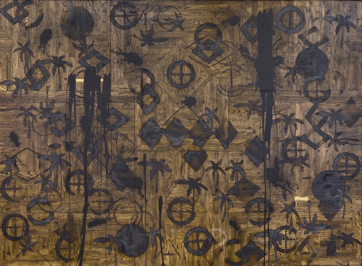
"Napalm" (2011) by U.S. artist Rashid Johnson. It will be shown by the London and Zurich dealers Hauser & Wirth at the 38th edition of the FIAC fair in Paris, previewing Oct. 19.

“Napalm” (2011) by U.S. artist Rashid Johnson. It will be shown by the London and Zurich dealers Hauser & Wirth at the 38th edition of the FIAC fair in Paris, previewing Oct. 19.

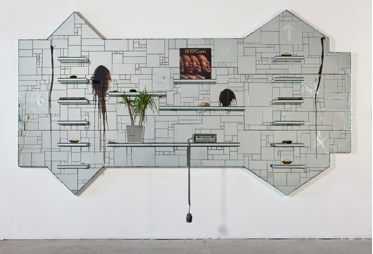
Johnson’s Napalm is a good example of this oversight. Napalm is just one example of the blatant disrespect Johnson displays in his praxis. Marks and mediums are made as an afterthought, not as an intuitive response. Every drip, every punch, every brand, every image is staged as an illustration of narrative. Johnson often employs an additive process. Adding more stuff does not make that idea any clearer. Johnson’s marks are timidly placed to make the photographer (which he is) comfortable. Broken glass is regularly spaced and spray paint drips are consistently spread out. It is problematic when an individual is having a discussion of materials, mark-making, sculpture, abstraction, and graffiti.

NOSTALGIA

Johnson explores the work of black intellectual and cultural figures as a way to understand his role as an artist as well as the shifting nature of identity and the individual’s role in that shift. By bringing attention to difference and individuality, he attempts to deconstruct false notions of a singular black American identity. (http://www.high.org/Art/Exhibitions/Rashid-Johnson-Message-To-Our-Folks.aspx)
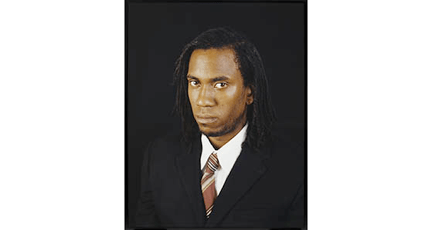
Rashid Johnson Self Portrait

Self Portrait with My Hair Parted Like Frederick Douglass, 2003.Lambda print. Collection of Museum of Contemporary Art Chicago, gift of the Susan and Lewis Manilow Collection of Chicago Artists, 2006.26
Photo: Nathan Keay, © MCA Chicago

Message to our Folks is laced with nostalgia. Don’t you remember Frederick Douglass, Al Green, Sweetback, Huey Newton’s wicker chair, Jazz, and Public Enemy? Johnson’s Self Portrait with My Hair Parted Like Frederick Douglass accurately sums up this exhibition.  This seems like Black intelligence, this appears like authentic Blackness. It is a simile and if Johnson’s discussion included simulacra, he would have succeeded. This exhibition provides the foundation to include Blackness as a trend. It adopts osmosis of style, where all an individual has to do is “act Black” to be an authority on Blackness.
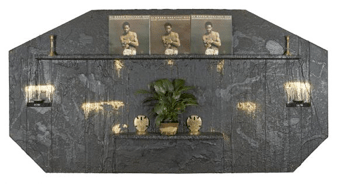
Triple Consciousness, 2009 Black soap, wax, vinyl in album cover, shea butter, plant, and brass 48 x 96 in. (121.9 x 243.8 cm) Collection of Dr. Daniel S. Berger, Chicago Courtesy of the artist and moniquemeloche, Chicago

Triple Consciousness, 2009.
Black soap, wax, vinyl in album cover, shea butter, plant, and brass
48 x 96 in. (121.9 x 243.8 cm)
Collection of Dr. Daniel S. Berger, Chicago
Courtesy of the artist and moniquemeloche, Chicago

Nostalgia is a protective warm blanket that prevents this work from critique. How can you criticize the monolithic Black community and not be a deserter? The fact is, Johnson’s Triple Consciousness is just corny. Three Al Green albums does not address the Dubois’s Double Consciousness; it belittles it. The moment critical questioning is applied Johnson’s exhibition falls apart. Johnson’s work is the very definition of Black exploitation by Black Artists under the pretense of uplifting the community.

AFROFUTURISM
Here again we have a contemporary artist living in the past. The irony is Johnson and others are considered to be Afrofuturists. Doctoral candidate Nettrice Gaskins does her best to define and identify the Afrofuturist agenda.

What is afrofuturism?
• It’s not the black version of Futurism. It is an aesthetic and the term can be used to describe a type of artistic and cultural community of practice. Afrofuturism navigates past, present and future simultaneously. The keyword here is: navigation or ascertaining one’s position and planning and following a specific route.
• It is counter-hegemonic. Hegemony refers to the dominant, ruling class or system. Afrofuturism is not concerned with the mainstream or the canon of (Western) art history. In the image above jazz musician and cosmic philosopher Sun Ra (Ra being the Egyptian God of the Sun) placed himself at the center of other known cosmic philosophers and scientists.
• It is revisionist, meaning that afrofuturism advocates for the revision of accepted, long-standing views, theories, historical events and movements

While Gaskins provides the best analysis of Afrofuturism’s intent, unfortunately most of the visual artists included in the Afrofuturist dialogue succeed at accomplishing the exact opposite of its intent. Afrofuturism currently actually provides a collective generic consciousness, which Johnson has condoned. The canon of Afrofuturism imagery is there due to the lack of originality and the regurgitation of something that is assumed to be authentic “Blackness“. Afrofuturism, at best, is a style not an aesthetic. It is not a set of principles underlying and guiding the work of a particular artist or artistic movement. Afrofuturism is stuck navigating the past. Using the spectacle of black bodies dressed up in futuristic garb does not change the context that already exists. The spectacle nourishes it.

ECTO-KITSCH

Black artists manage their representations (images, sounds, systems) in mainstream society and the global world through creativity and innovation, and by using improvisation and re-appropriation to move beyond the limits of nationality or identity. We see these representations manifested again and again in black culture. The lack of African knowledge has not prevented African diasporic people from tapping into the ancestral memory of traditional (African) systems. In other words, we replaced images/artifacts like the cosmogram (map of the universe) with the Unisphere. (http://netarthud.wordpress.com/2013/09/16/what-is-afrofuturism/)

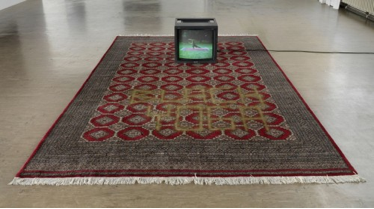
Ecto-Kitsch, a term coined by Professor Jason Sweet that addresses the globalization push that was initially a response to Postcolonialism, is a farce. Ecto-Kitsch recognizes the pretense that a globalization is a non-Western interpretation of art produced by minorities. It recognizes that Globalism has created a universal rubric used to qualify art from non-Western people through the lens of the West. The most Western-like minorities are pushed to the forefront as an example of the West’s new inclusive attitude. The Unisphere expressed in Afrofuturism equals hegemony and hegemony equals kitsch. The very images/artifacts posed as re-appropriations in Afrofuturism, are used for commodification of living people. Johnson proves this commodification with his New Black Yoga. A Black man is performing yoga poses on a T.V placed on a persian rug with the words black yoga spray painted in gold on the rug. This is by far the worst piece in the exhibition. Now Johnson ventures into commodifiying other non-Western cultures as well as his own. This is Johnson’s Message to our Folks.

Christopher Hutchinson Christopher Hutchinson is an Assistant Professor of Art at Atlanta Metropolitan State College and Archetype Art Gallery Owner in Atlanta, Ga. He received his Master of Fine Arts Degree in Painting from Savannah College of art & Design, Atlanta and his Bachelor of Arts Degree from the University of Alabama in Huntsville, Alabama. He lived in Alabama for 10 years before moving to Atlanta in 2008. His installations mostly consist of black folded paper airplanes.

Learn more about Christopher and his work at Black Flight 144.
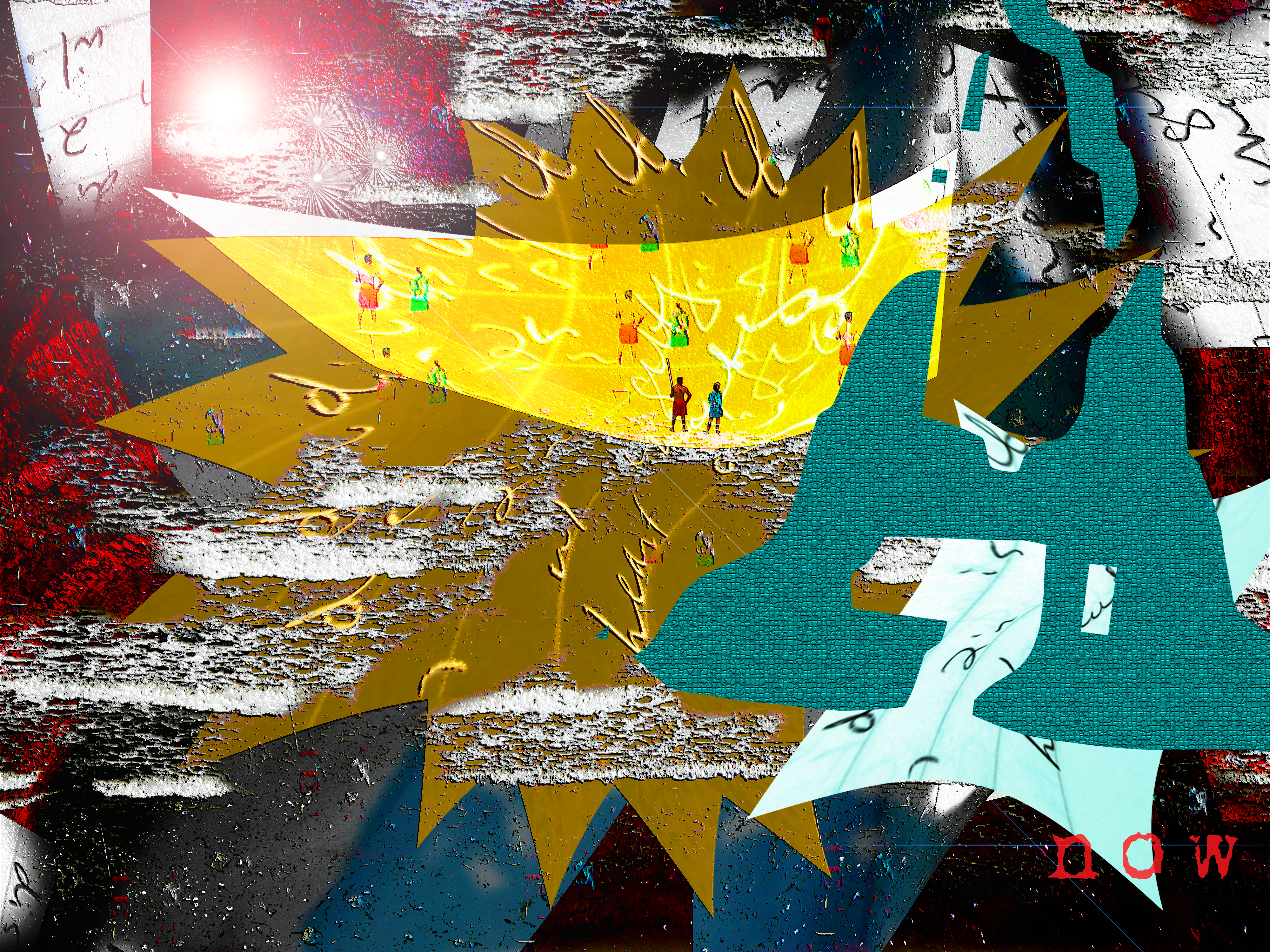
Sofa Drawings

by Rachel Troutman

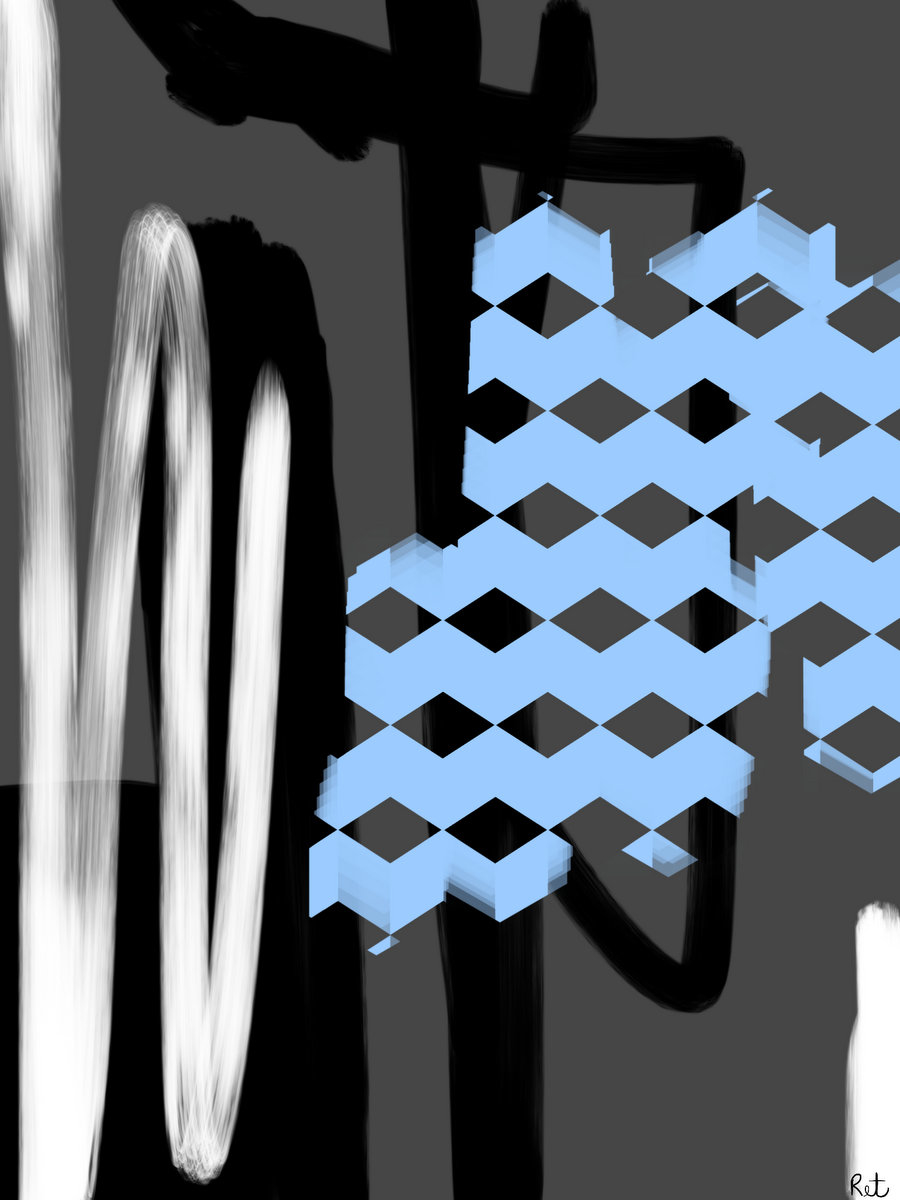
I curl up on the sofa, grab my iPad, and begin to draw….

Hand Fighting

Hand Fighting

iPad Automatism

iPad Automatism

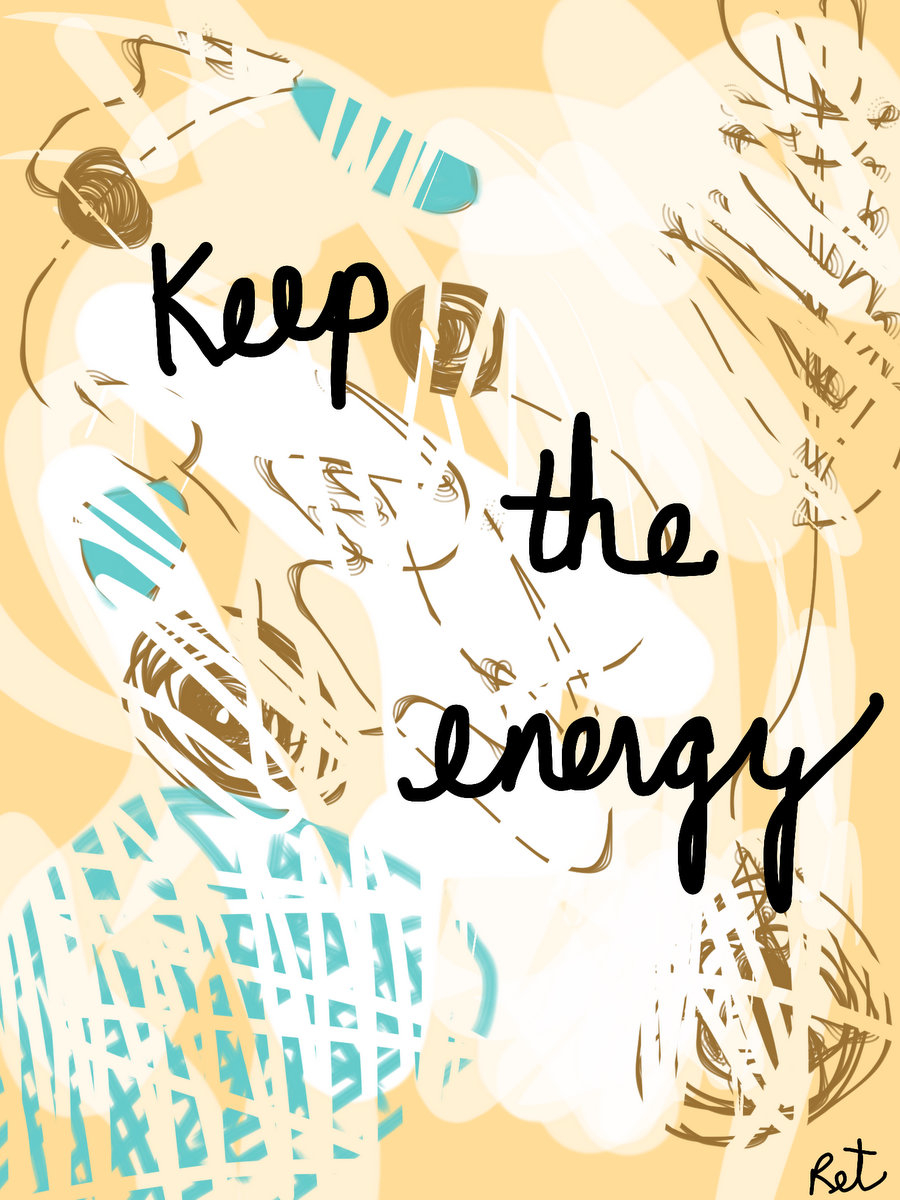
Keep the Energy

Keep the Energy

Losing the Plot

Losing the Plot

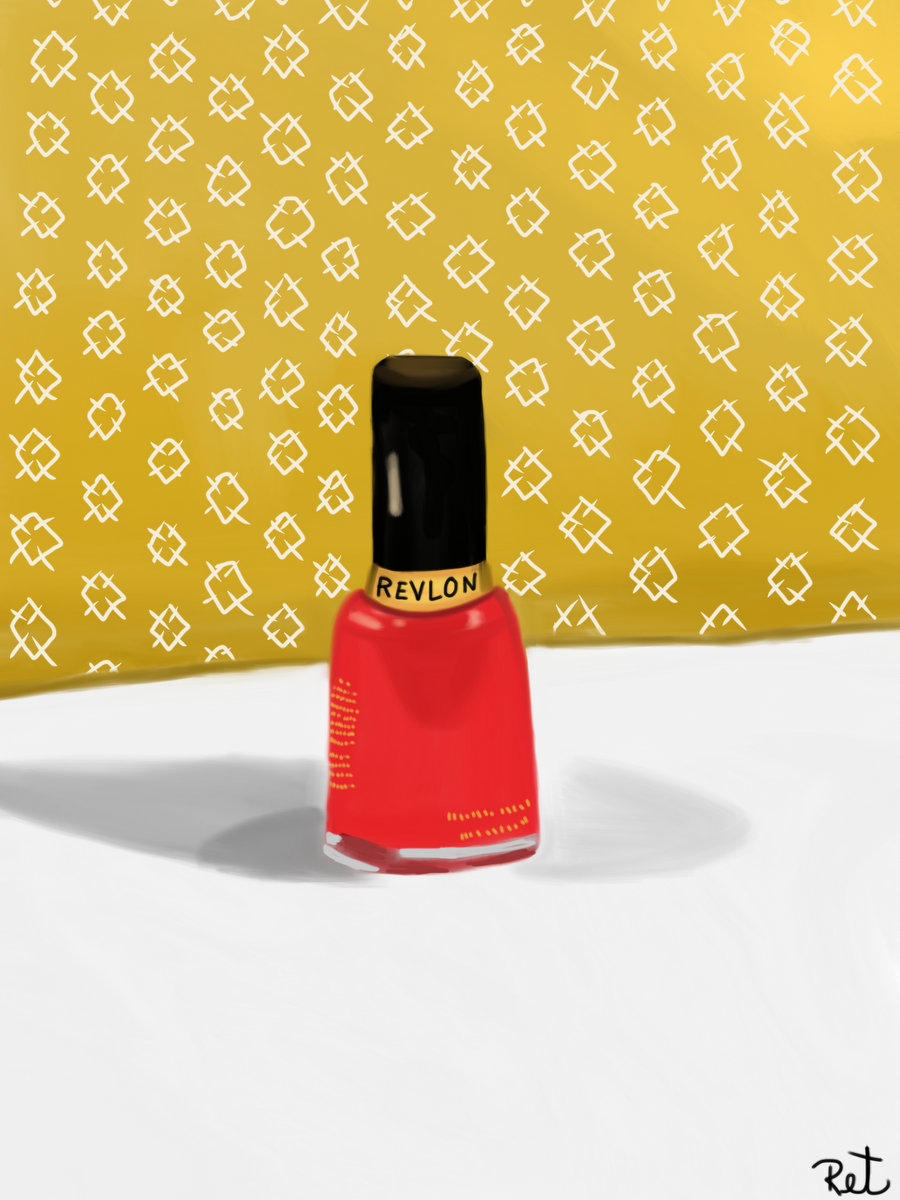
Revlon Still Life

Revlon Still Life

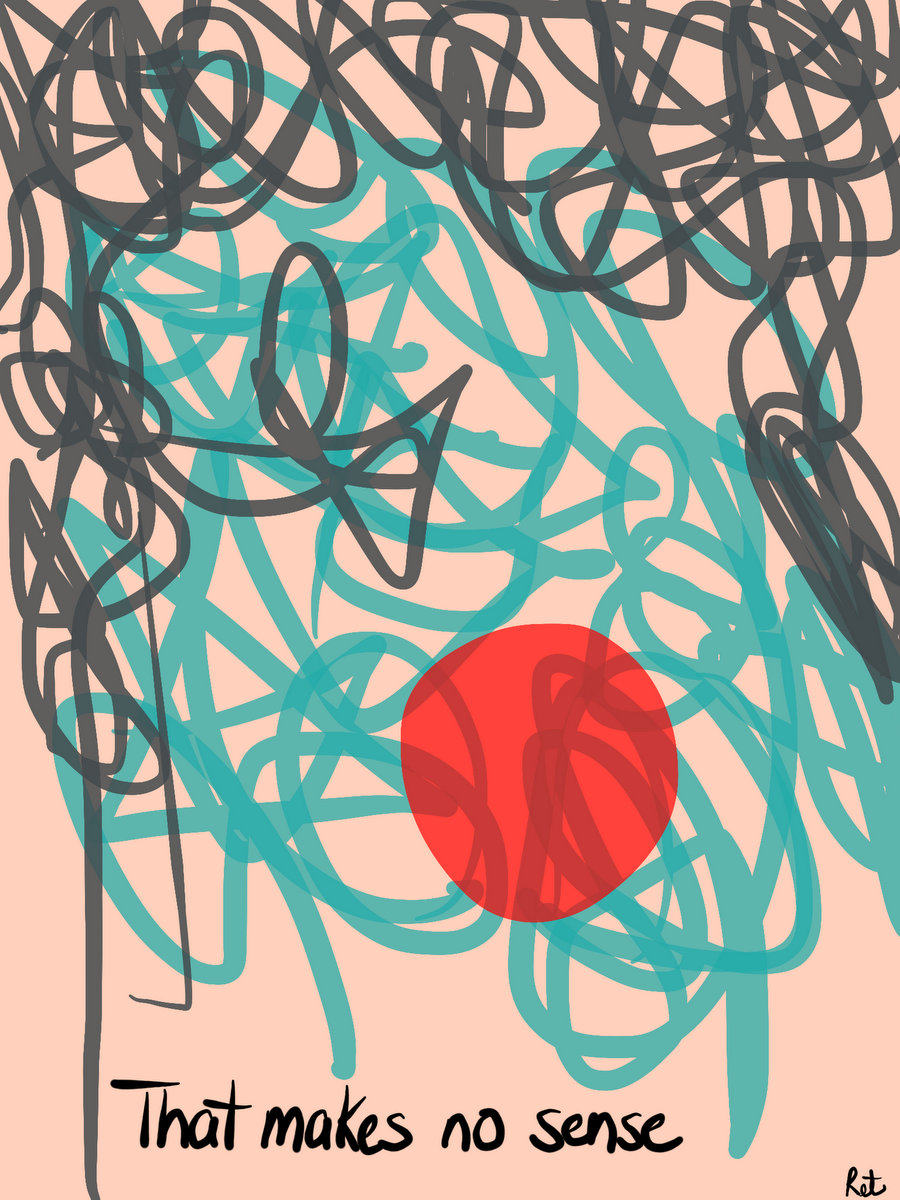
That Makes No Sense

That Makes No Sense

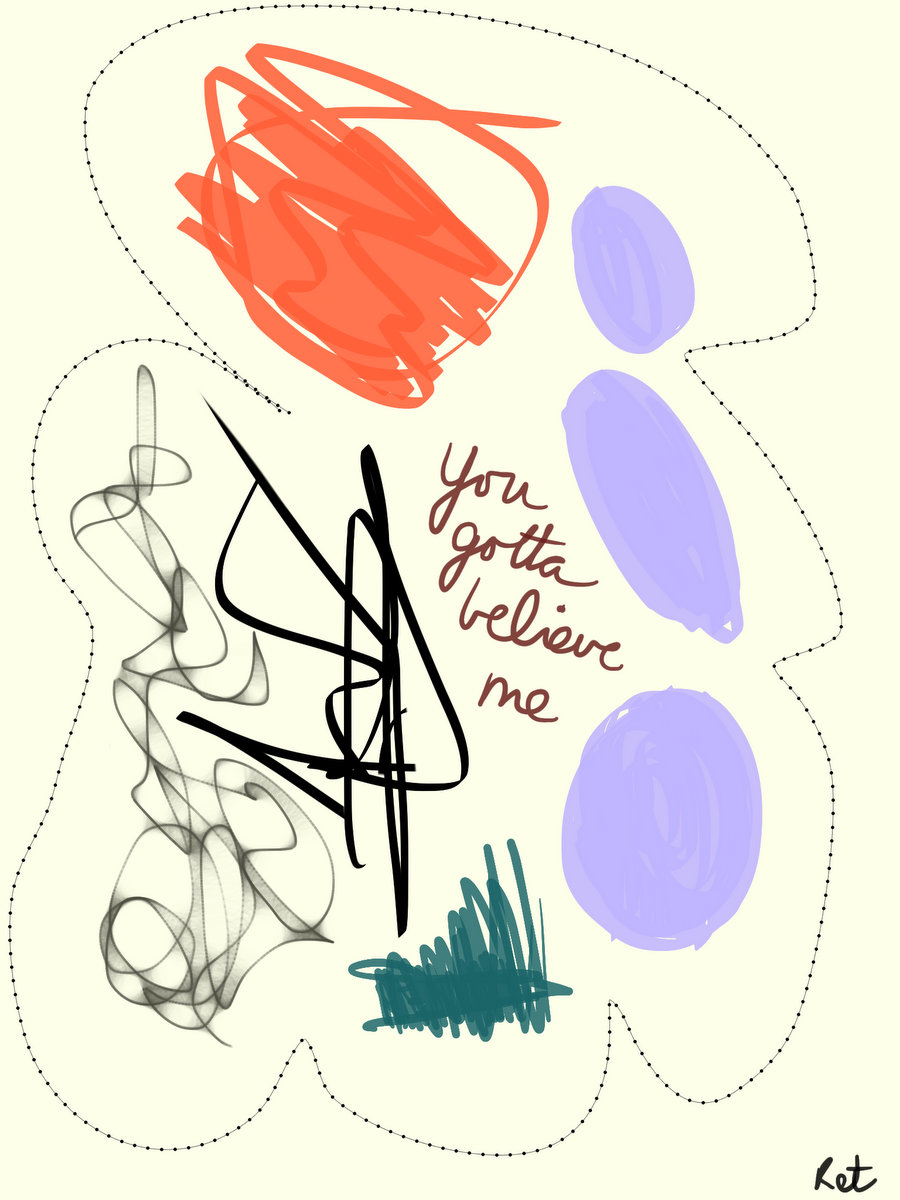
You Gotta Believe Me

You Gotta Believe Me

Rachel TroutmanRachel Troutman is an abstract artist living and working in rural Central Pennsylvania.  She earned her degree in Sport Management from Slippery Rock University but after a few years decided to focus on her passion for creating bold artwork on recycled wood, thereby helping the environment.  Rachel has a studio in Lykens, PA, where she also lives with her 4 furry kitties.  Her website is Staunch Studio. Check out more of her work at Etsy and Big Cartel or follow her on Twitter and Facebook.

dixie’s s-bahn

by J. Christopher Matyjasik

I’ve been working on this series for well over a year and only three works have been prepared for print production at this point. I’ve been known to get halfway through a project, throw everything I’ve done out and start over. I don’t even have a definitive title (I don’t usually title a series until I’ve finished it). But I decided to just go ahead and share what I can of this in-progress project with you. What you see here is a peek inside my studio, at what i’m doing right now. It is not complete…

These days, I work on a whole series at once. I am still a drawer, painter, and assembler at heart. I see photographs two ways…an end…and a source material. Below are twelve examples, I’ve selected to share with you, of the source material for this project…and then the first three “completed” works, fresh off the griddle.

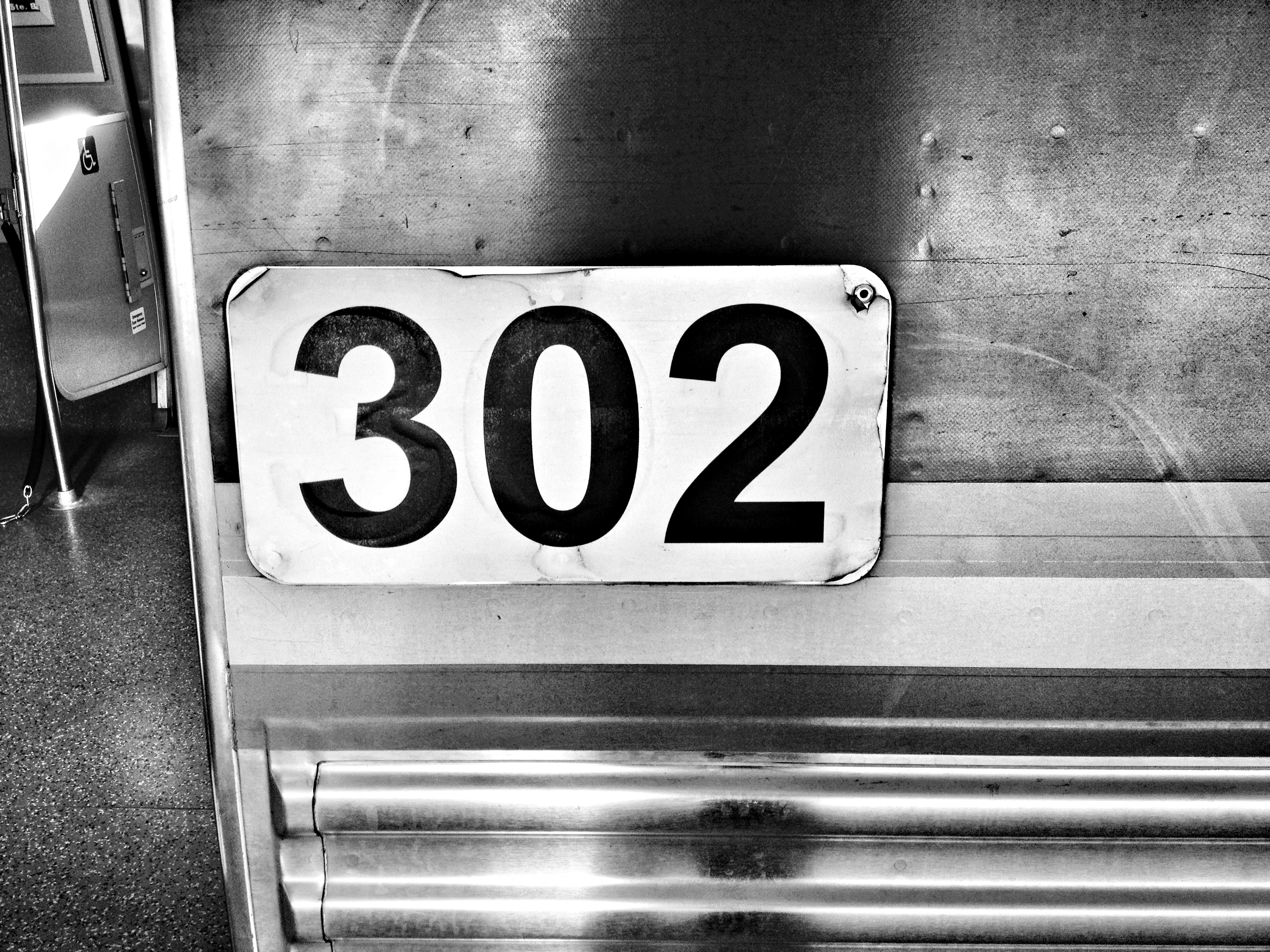
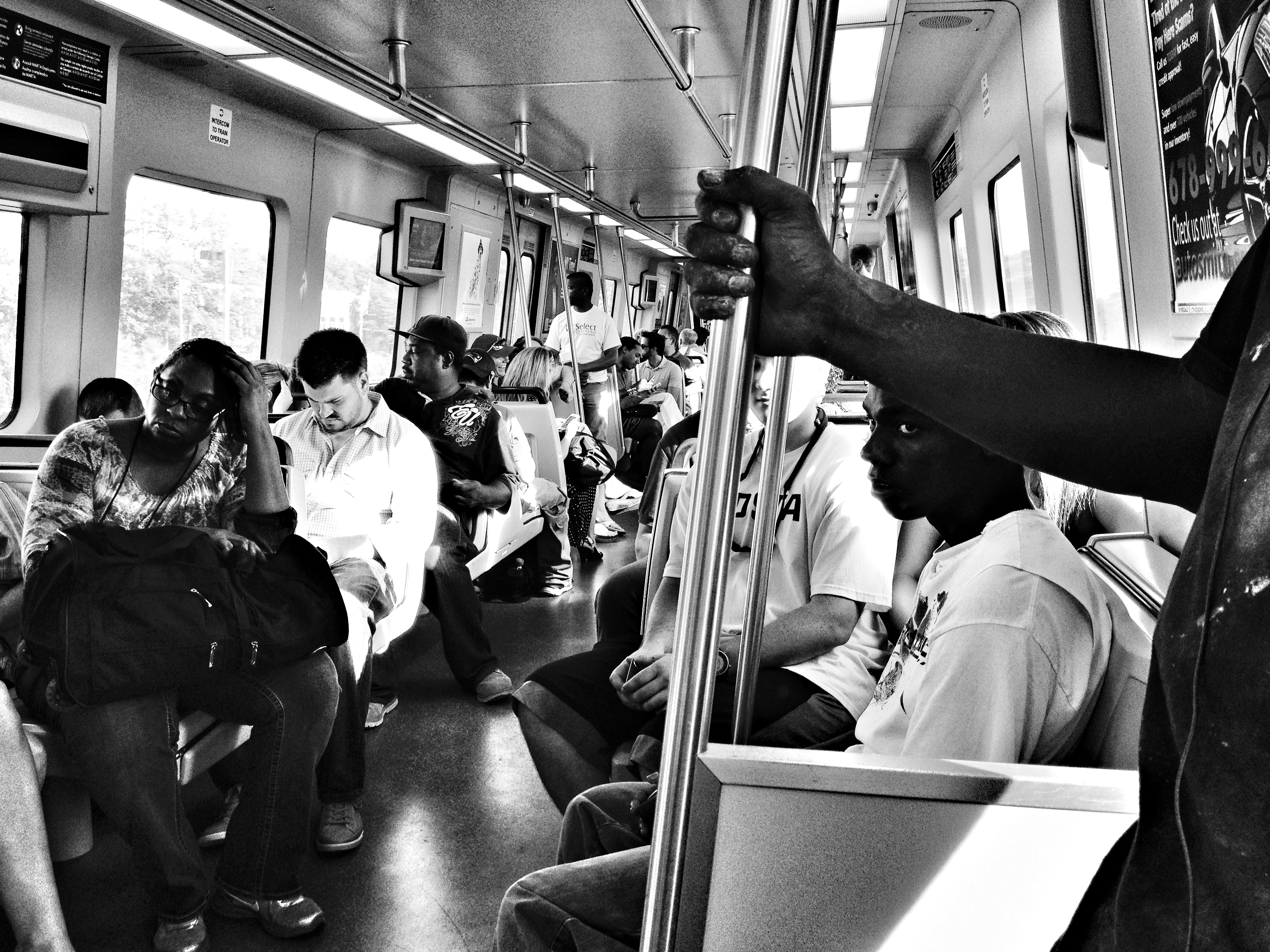
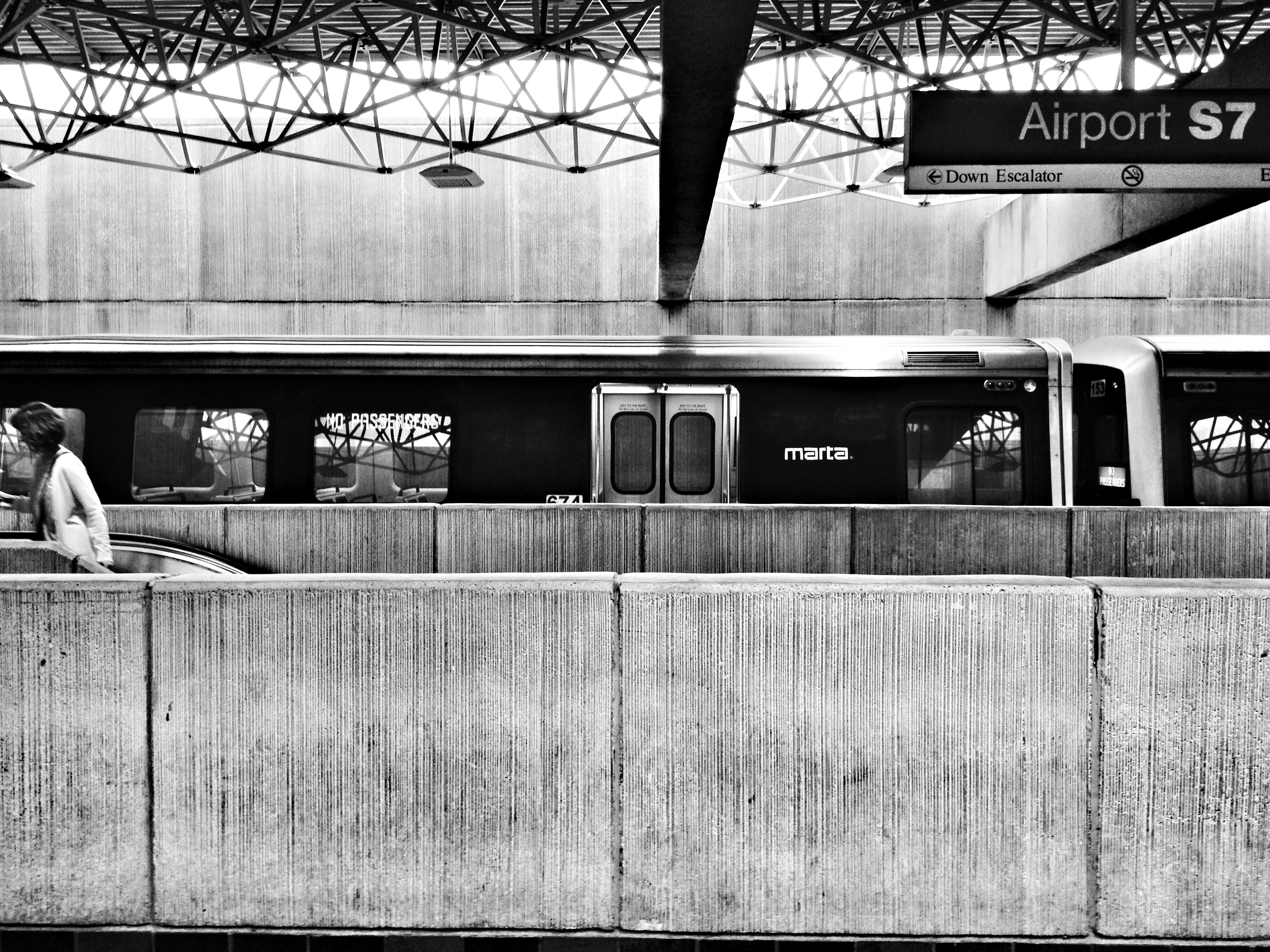
photo 1 christopher matyjasik

photo 2 christopher matyjasik

photo 3 christopher matyjasik

photo 4 christopher matyjasik

photo 5 christopher matyjasik

photo 6 christopher matyjasik

photo 7 christopher matyjasik

photo 8 christopher matyjasik

photo 9 christopher matyjasik

photo 10 christopher matyjasik

photo 11 christopher matyjasik

photo 12 christopher matyjasik

photo 13 christopher matyjasik

photo 14 christopher matyjasik

photo 15 christopher matyjasik

 John Christopher MatyjasikJ. Christopher Matyjasik

picture maker, data scientist, tinkerer, man’s man, general observer, amateur ponderer, entry-level life participant, believer in the laws of karma, fortunate soul

Check out more of his work at his website eye parcel or his Facebook page.

Dreamhealer

by Maria Protopapadaki-Smith

Field Four (for video)-Melissa D. Johnston

Althea awoke one morning to find that she had dreamt of nothing. Not in the sense that she hadn’t had a dream at all or couldn’t remember that she’d had one, but rather that her dreaming self had spent the whole night in a completely dark space, doing nothing, seeing and hearing nothing. She found it a little odd, but thought no more about it until it happened again that night, then the next, then the one after that. At this point she was more frustrated than mystified – aside from anything else, it made for an excruciatingly dull sleeping experience. After it went on for two more weeks, she was at the end of her tether and decided to do something about it.

Three puzzled sleep specialists later, it became apparent that this was not the route to go down. She tried many different things, like watching horror movies and eating cheese before bedtime, but none of them worked. The only thing that did work was staying up all night, but of course this could never be anything more than a temporary solution, and the empty dream always returned the next time she slept. Nevertheless, she treated herself to a sleepless night every few days in the hopes that it would slow down the rate of her mental breakdown. It was on one of those nights that her haphazard internet browsing led her to the Dreamhealer. Recurring nightmares? I can help you. I can make them go away.

Had she chanced upon this website before the empty dreams had started, she would have immediately dismissed the man as a charlatan, much like those who take cash from grieving people in exchange for a faked conversation with their dead loved ones. Desperate times called for desperate measures, however. The man claimed to be able to fix all your dream problems by invoking the ancient spirits, and since modern day spirits didn’t seem to be helping, she decided to give the Dreamhealer a try.

He was different to what she had expected. She had been convinced he would be one of those charmer types, sporting a garish tie and a smile that boasted expensive orthodontistry. Instead she found a man who wouldn’t have looked out of place as the lead character in a gritty Western movie. A lone ranger, for sure. He couldn’t be a happy man, she thought; not with that look in his deep-set eyes. Here was a face that had long ago forgotten how to smile. Perhaps he had dealt with too many of other people’s nightmares over the years. The thought stirred some hope in her – maybe this man really could help her. Maybe he was not a charlatan after all, but a genuine healer of dreams.

The Dreamhealer took Althea’s hands and made her touch her forefingers to his temples. He told her to keep them there and apply a little pressure. He placed his own forefingers under her earlobes, as if he were taking her pulse. He locked eyes with her and she had to work hard to suppress a shiver.

The chant took her by surprise. She couldn’t understand a word of it, and it sounded like no language she had experienced, but she could have listened to it for hours. His voice, which had been gruff when he spoke, was deep, low and beautiful as he sang. It stopped abruptly and she felt something snap inside her. He jumped back from her and doubled over, retching. After that had passed, he stood up straight and gasped.

“Is…is that it? Is it done?” she asked as soon as she could see he’d caught his breath. He nodded, looking exhausted. She picked up her handbag and took out her wallet to pay the fee they’d agreed on. He shook his head and held up his hand.

“This one’s on me,” he said, no louder than a whisper, and walked out of the house without another word. Once she was alone, Althea wondered if she was imagining things, or whether that had been a hint of a smile on his face.

That night, she dreamt of being the guest of honour at the launch of an enormous battleship named Planet, and awoke the next day feeling better than she had felt in ages. Even when the doorbell rang before her first sip of coffee, she answered it with a smile and a spring in her step. She accepted the box from the delivery man and signed her name in the device proffered. It was a very light box. She placed it on the kitchen table and opened it carefully. Inside was a single red rose and a handwritten note.

Thank you, Dreamhealer.

Maria Protopapadaki-SmithMaria Protopapadaki-Smith likes to take herself and her readers to other worlds, or at the very least to the dark edges of this one. Spend some time with her at her blog Mazzz in Leeds, Twitter, or Facebook.

Would you prefer monthly, bimonthly, or weekly posts from CT?

We want your feedback fotolia

We’re thinking of changing CT to a bimonthly or even weekly format. We started as every two weeks, but with Melissa undergoing so many surgeries during that period of time it was too much. Now it might be possible. The benefits would be that email subscribers wouldn’t get so many posts at once in their inbox, artists would be able to be in the spotlight a bit more, and CT would get more exposure through the frequency of posts. The down side is that it may seem to be more “bloggy” than “magazine-y” as the posts no longer seem part of a single issue (but spread throughout the month) as well as it being a bit more work for the editor. What do you think?

Thanks so much for your support. You guys ROCK.

TEXTUAL · ARTIFACTS · SERIES

by Peter Ciccariello

ABOUT THE SERIES

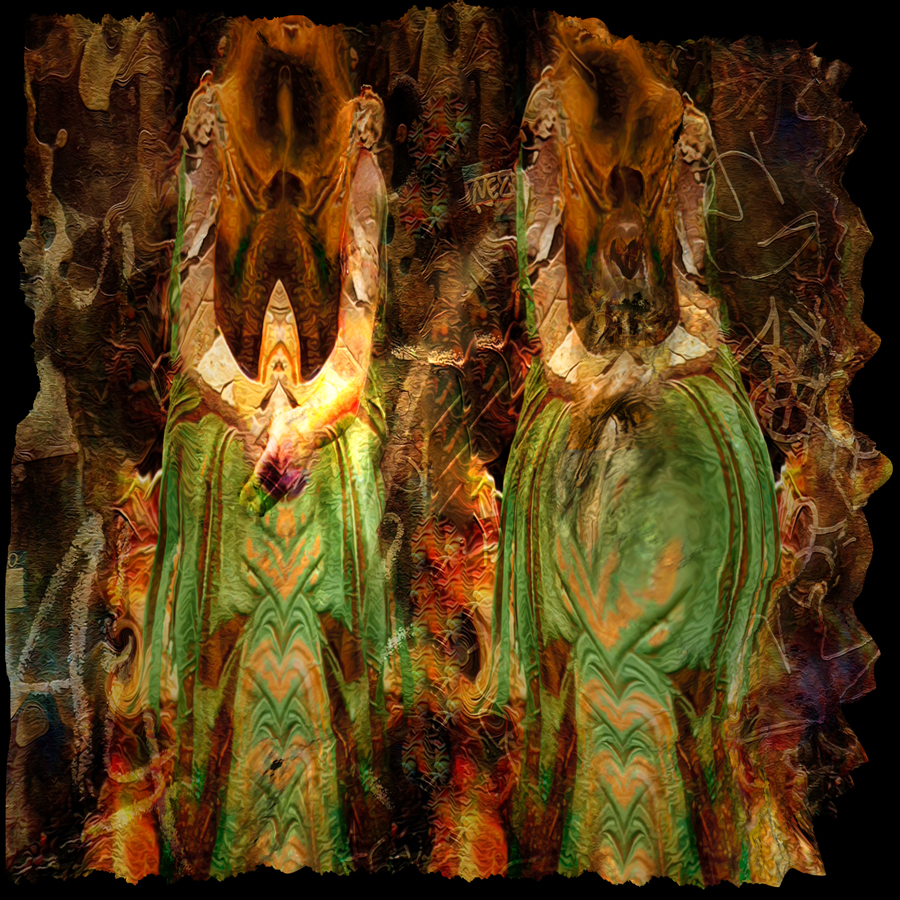
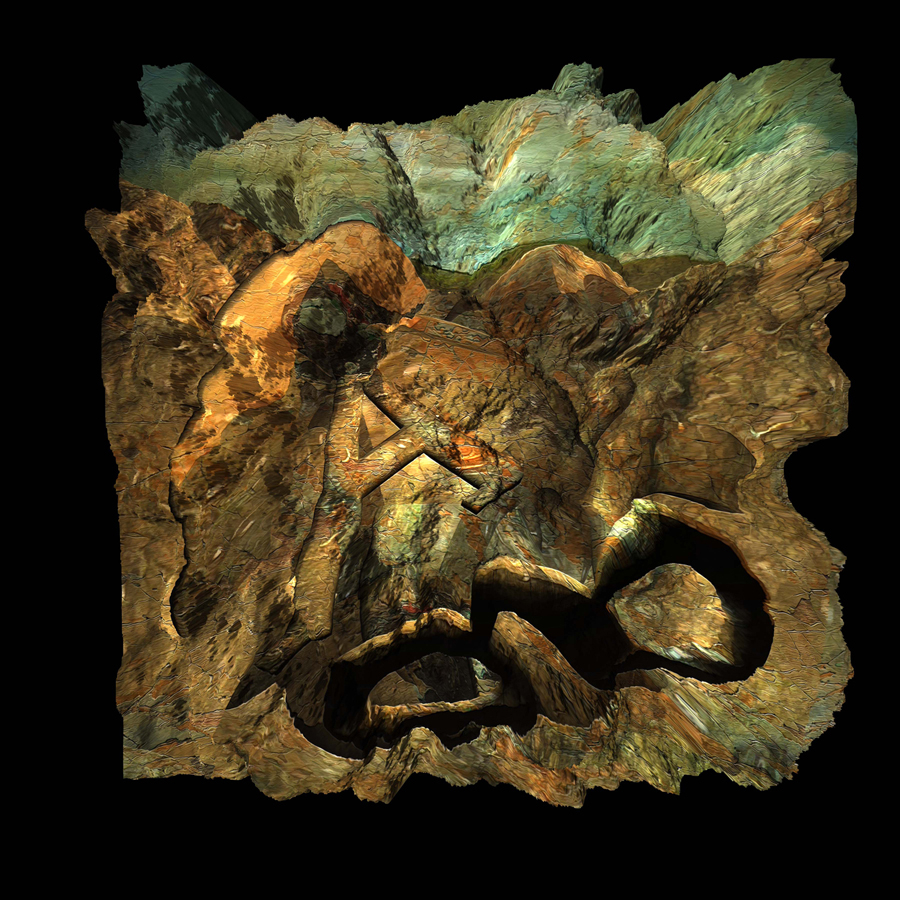
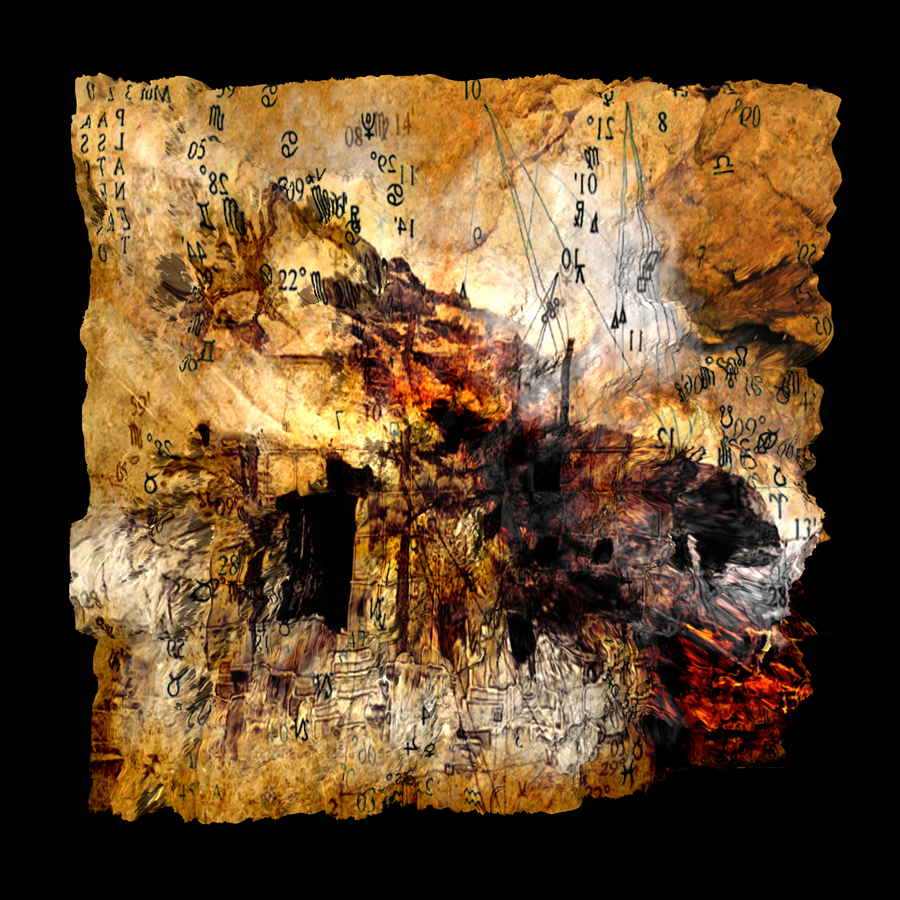
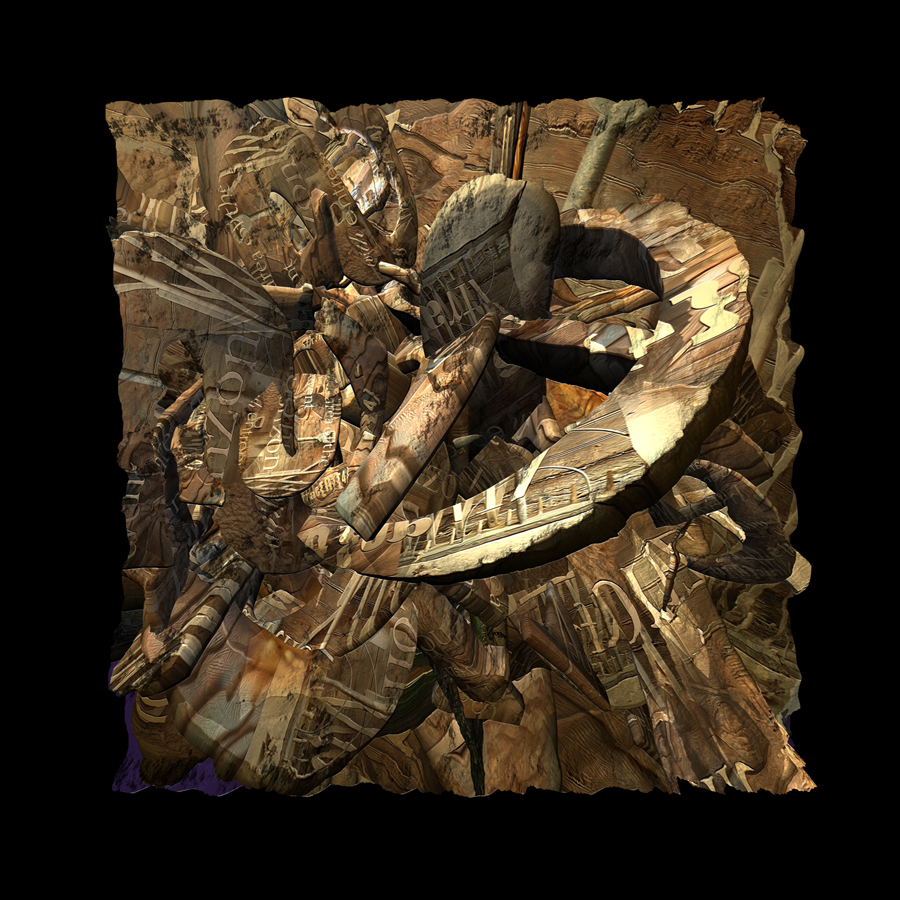
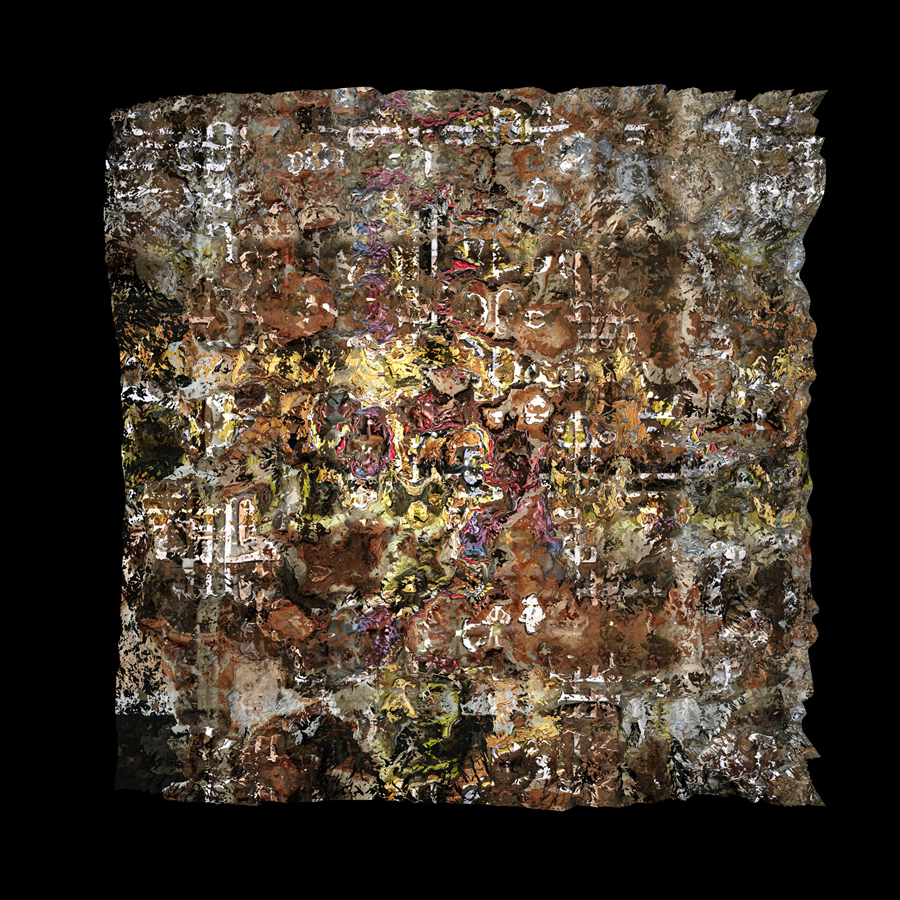
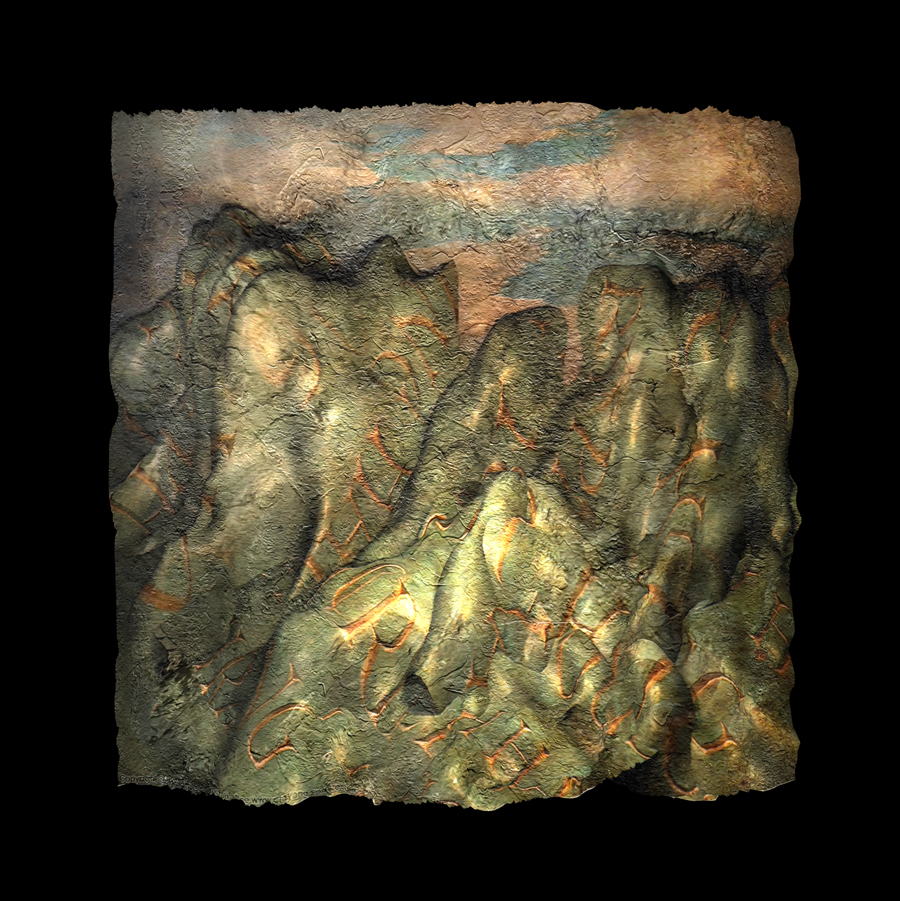
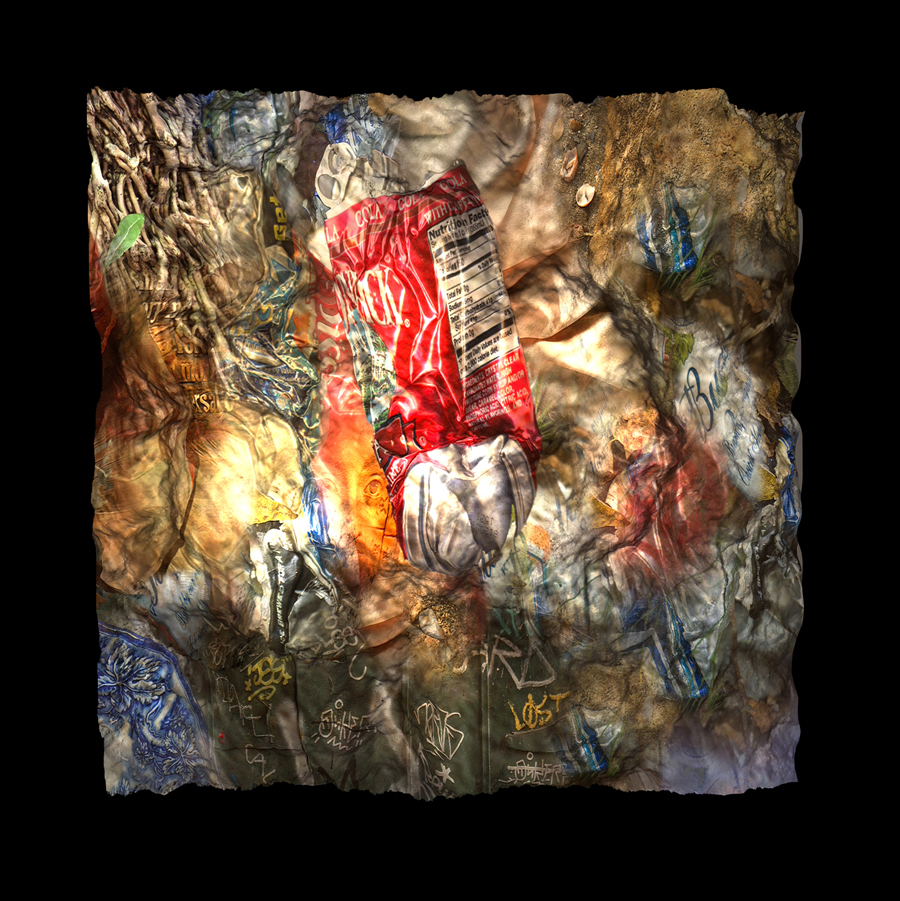
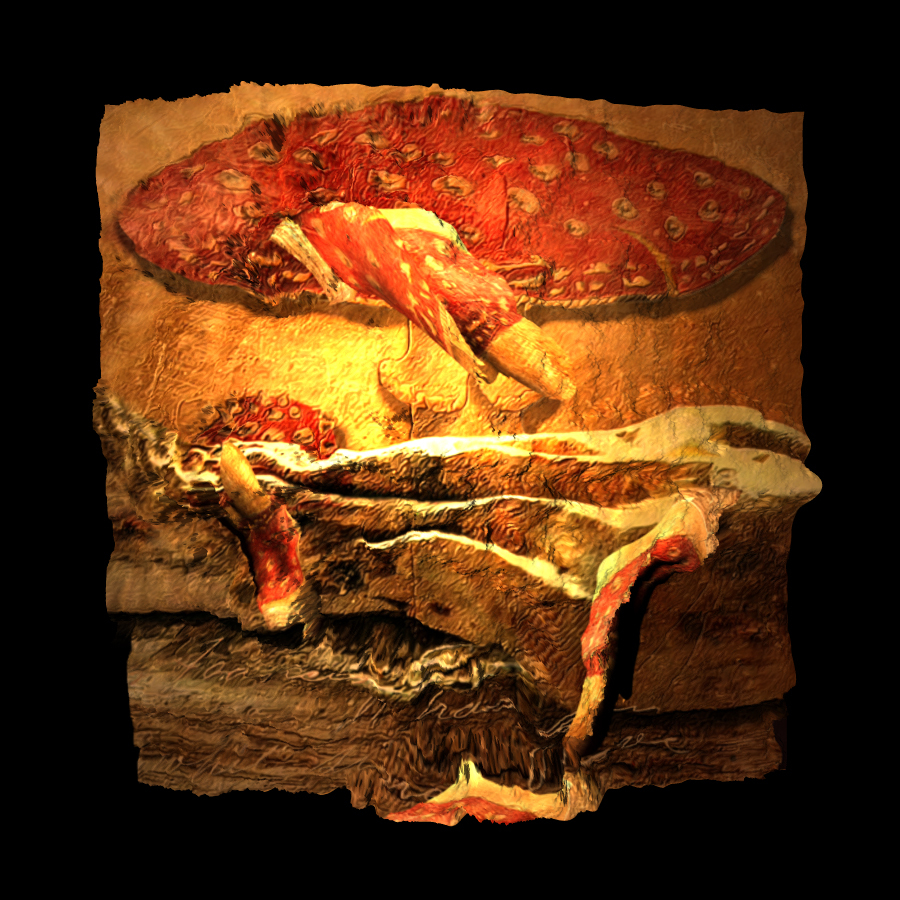
Works in Textual artifacts are created using an array of 2-D and 3-D software programs and take their inspiration from common methods of archeological excavation. Just as ancient artifacts are deciphered through the recovery and examination of the remains of a culture, environmental data and detritus that they leave behind, these image artifacts represent the remains of poems and writings that have been eroded and battered in a digital process. That process attempts to dissect and deconstruct a text and then reconstruct that text as an evolutionary image. The final visual is created by digitally mapping the image with a copy of itself, in a sense, forming an archeological topography of the material essence of the image. This visual topography, created from the value scale of the image, is excavated from within the process revealing the remains, historical marks and gestures from the original source data. In this way, these images become metaphors of themselves, just as the incidental evidence of our human ancestors provide a reflective metaphor for our own lives.

A NOTE ABOUT PROCESS

This art is defined by process, a hybrid of the essential elements of painting, photography and writing. The digital matrix that is created is at the core of this work, provides a new form of plate printing, a virtual digital matrix that functions as the film negative in photography or the copper plate that is the basis of etching, intaglio and engraving printmaking processes. This digital image matrix now provides the possibility to be output from 3-D printers and realized as free-standing sculptures or in this case, sculptured wall hangings. This unprecedented freedom of instantiation provides the artist with the ability to output multiple types of art realized from the same original matrix.

In this sense, every instantiation of the matrix is an original with the unique aura of the artists’ conception. In an age of ever more sophisticated reproductive technologies the image matrix becomes the postmodern link to the artist’s hand. The abstract schema that becomes an imprint is akin to personal writing, instantiated as a new private language – part sign, part symbol and part code, this image surface becomes a non-navigational road map of fragmented and disassembled narratives, disruptive and de-centering yet at the same time oddly imbued with an inner, familiar, and abstracted order.

sister queens

sister queens

tiny disconnects

tiny disconnects

map of the kindness of strangers

map of the kindness of strangers

body as locus

body as locus

raining tache

raining tache

blue scrawl poem

blue scrawl poem

 homage to brancusi

homage to brancusi

after tender buttons redux

after tender buttons redux

poem totally destroyed

poem totally destroyed

soft poem after ryder

soft poem after ryder

trash

trash

mushroom

mushroom

Peter Ciccariello

Peter Ciccariello finds his inspiration in the fields and forests of Northeastern Connecticut.

His work explores the fine lines between image and text, and is in constant inquiry about what is and what is not poetry.

Ciccariello’s work has appeared in print & online, in amongst other places, Poetry Magazine, Fogged Clarity, Hesa inprint, Leonardo On-Line, National Gallery of Writing, and also appeared  in the 2013 issue of MAINTENANT 7, A Journal of Contemporary Dada Writing and Art.

New work gallery – http://invisiblenotes.blogspot.com/
Poetry and writing – http://poemsfromprovidence.blogspot.com/

You can find my art and writing updates on Twitter
https://twitter.com/ciccariello On Facebook – https://www.facebook.com/peter.ciccariello

Natural Inclinations

by Seana Reilly

Seana Reilly_AF-203-web

AF-203, Graphite on paper 1” x 1”

Seana Reilly_AF-207-web

AF-207, Graphite on paper 1” x 1”

Seana Reilly_AF-218-web

AF-218, Graphite on paper 1” x 1”

Seana Reilly_AF-226-web

AF-226, Graphite on paper 1” x 1”

Seana Reilly_DeuteronilusMensae w border

DeuteronilusMensae, Graphite on drafting film 16.5” x 16.5”

Seana Reilly_GenetiveCase_details2

GenetiveCase, Graphite on Dibond 12” x 12” (detail)

Sean Reilly_MassWasting_web

MassWasting, Graphite on drafting film 18” x 18”

Seana Reilly_PeñaFlamenca_web

PeñaFlamenca, Graphite on paper 20” x 20”

Seana Reilly_ResolvingKazimir_web

ResolvingKazimir, Graphite on Dibond 48” x 48”

Seana Reilly_SolarProminence-w border_web

SolarProminence, Graphite & pencil on drafting film 60” x 18”

Seana Reilly_TippingPoint_web

TippingPoint, Graphite on Dibond 36” x 48”

Seana Reilly_TorrentialConstant_web

TorrentialConstant, Graphite on Dibond 48” x 24”

Seana Reilly_untitled_web

Untitled, Mixed Media 18″ x 30″

Seana Reilly_VestigialStroke-web

VestigialStroke, Graphite on Dibond 48” x 24”

*Seana Reilly _for scale_Aqua Miami

Installation–AtramentalMain (Graphite on Dibond 72” x 48”) and DiamagneticLift (Graphite on Dibond 72” x 24”)

*Seana Reilly_for scale_AF sketchbook

AF Sketchbook

Seana Reilly & her respiratorApproximately seven years ago Seana Reilly decided to call it quits on her previous architectural career and move back to the east coast to make a go of it as an artist. She spent a couple years figuring out what she should be making, experimenting mostly. A visiting artist from the UK showed her something new he’d developed in his studio – liquid graphite. She likens it to hearing a song for the very first time that she somehow already knew. This medium expressed the way nature moves and it needed precise measurements, but it also imposed a distinct lack of control over the final product. Using this built-in framework, she started making drawings/paintings that simultaneously addressed both western science and eastern philosophy, two ways of seeing that she had been trying to align for most of her life.

Seana lives in Atlanta and currently has a studio at the Atlanta Contemporary Art Center. She has work in the High Museum’s Drawing Inside the Perimeter show and at Stanley Beaman Sears both until late September 2013. You can also see her work at Hartsfield Jackson International Airport’s T-Concourse until January 2014.

You can view more of her work at www.sreilly.com and contact her at info@sreilly.com.