Recent

Life is Beautiful

by Collin Reiff

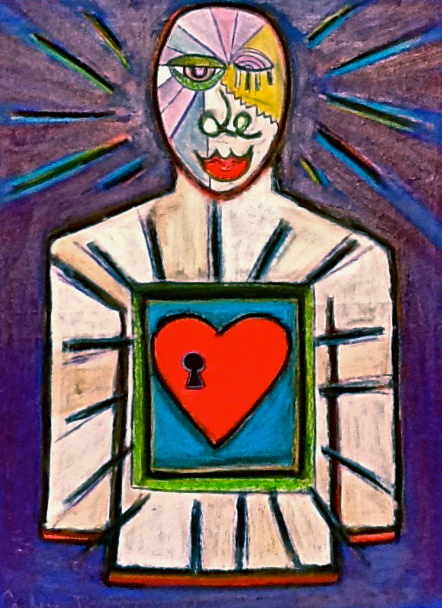
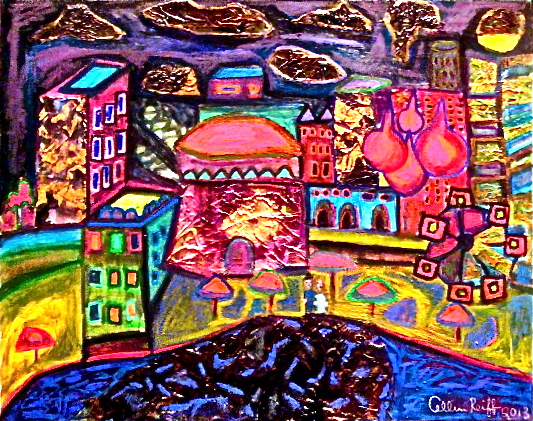
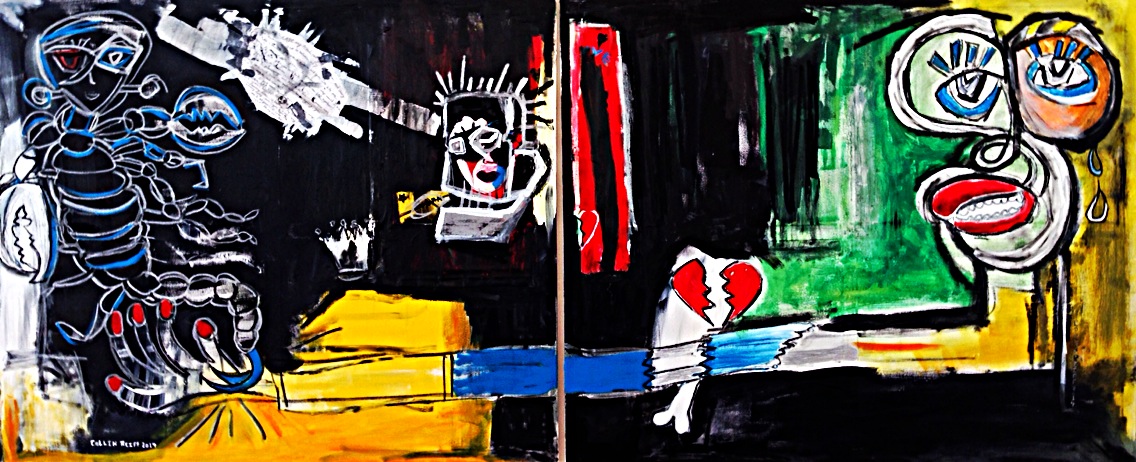
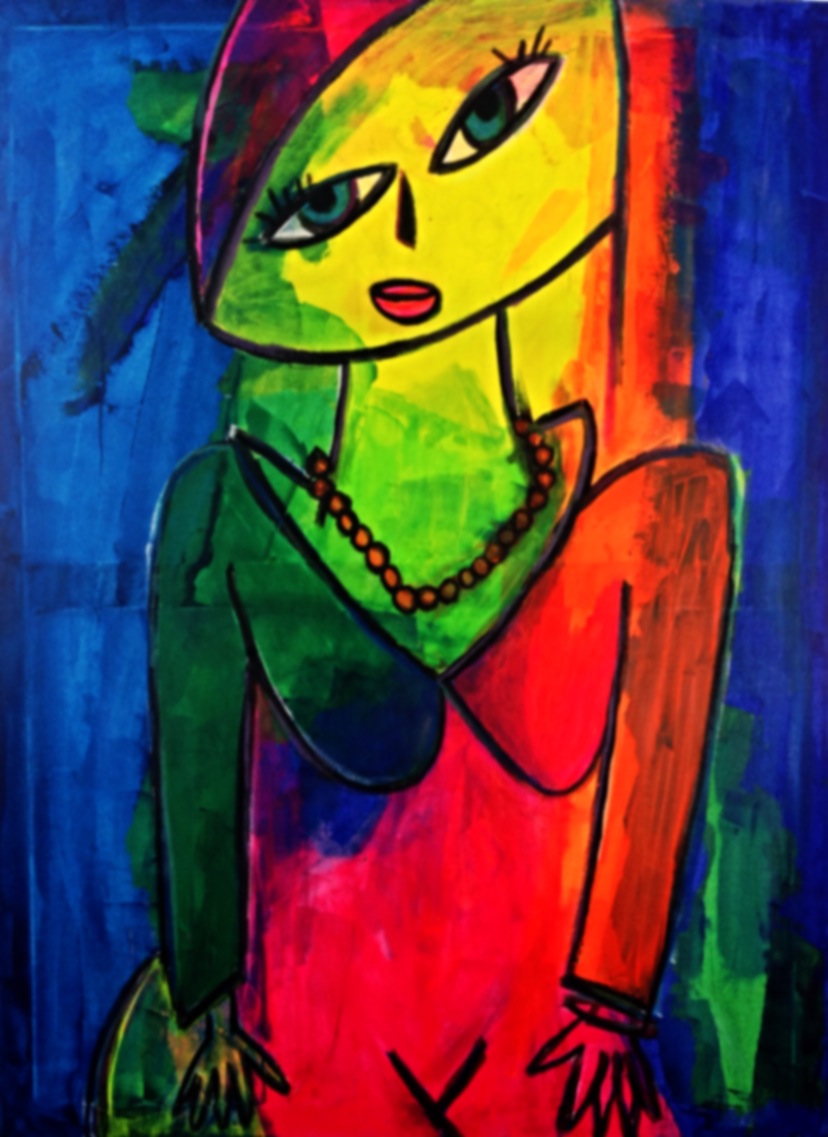
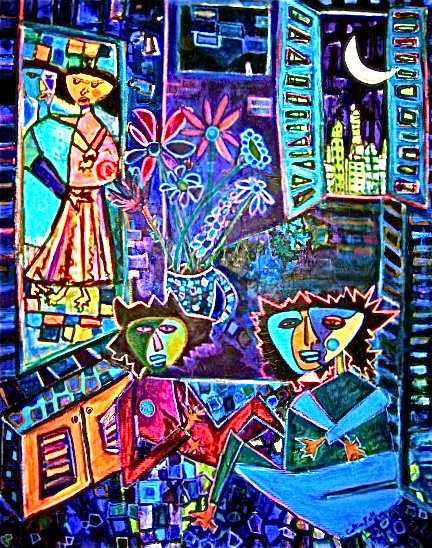
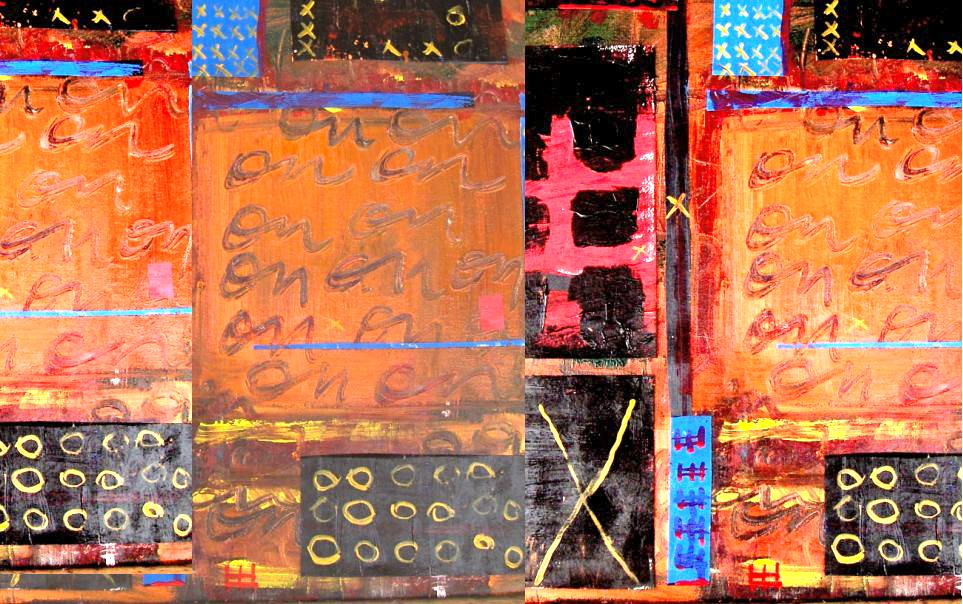
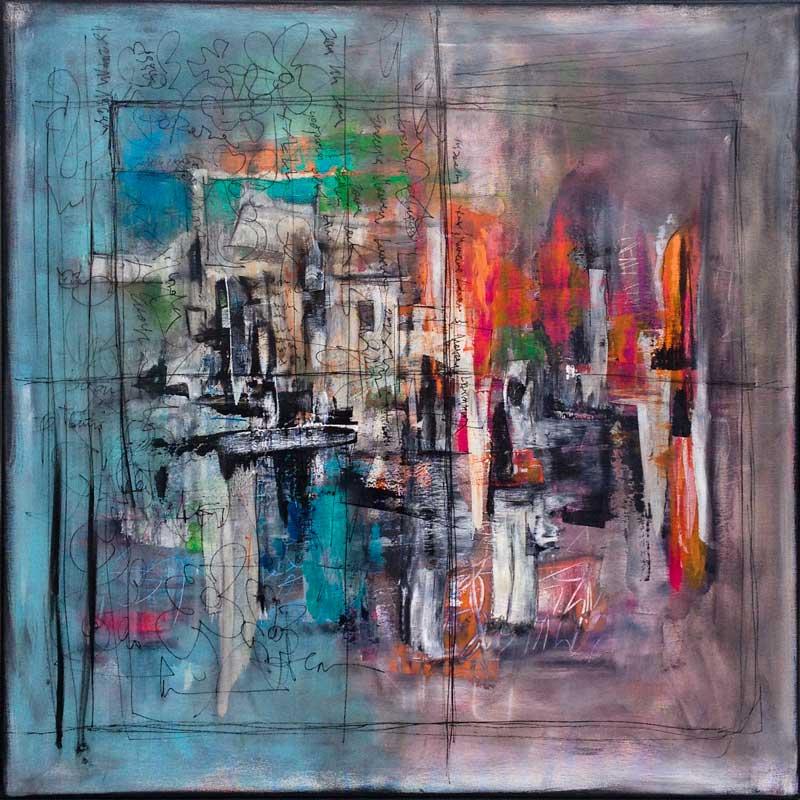
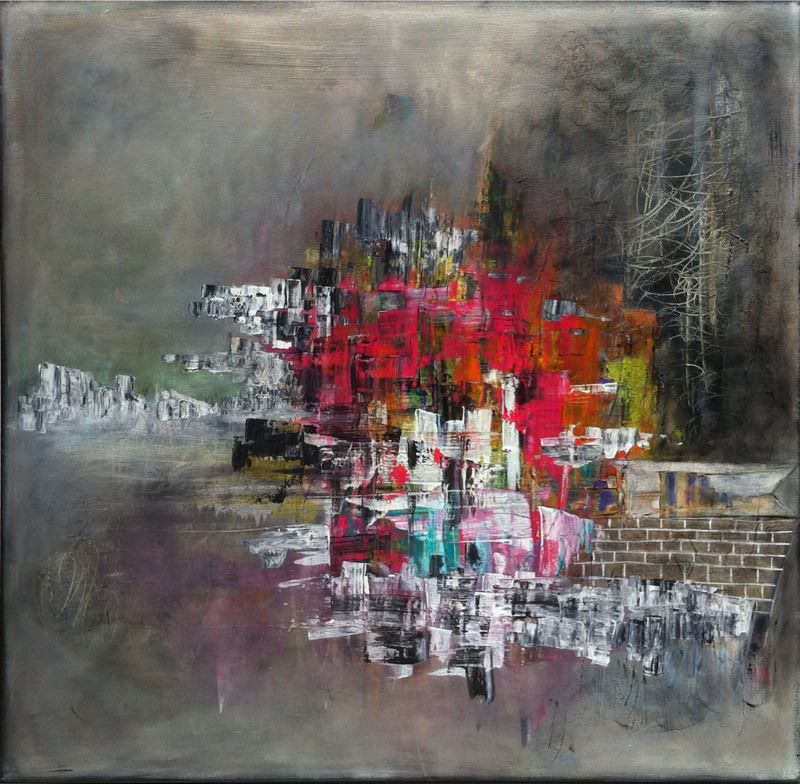
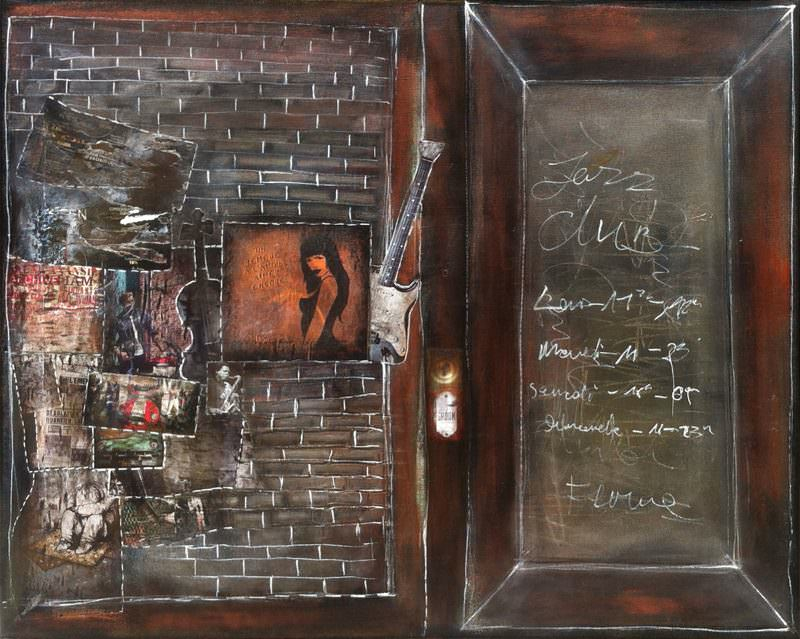
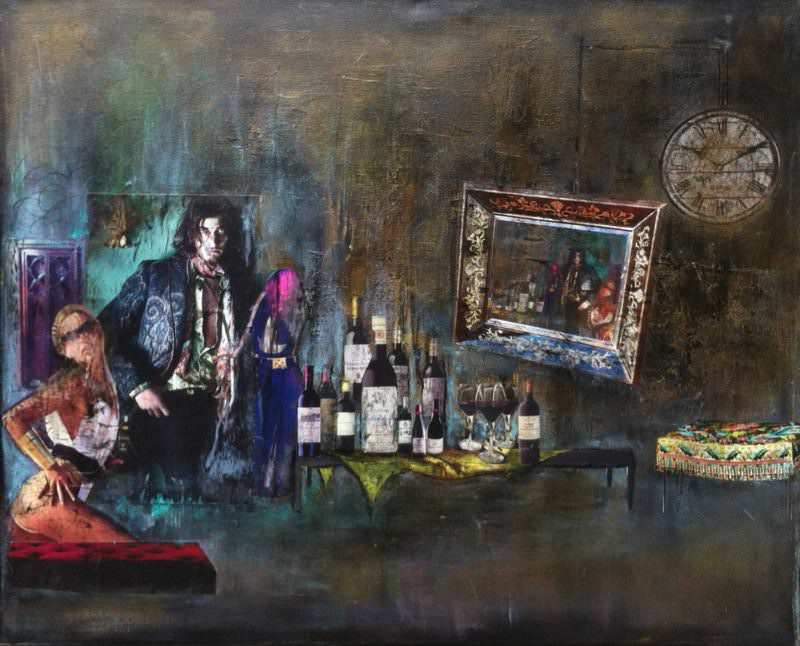
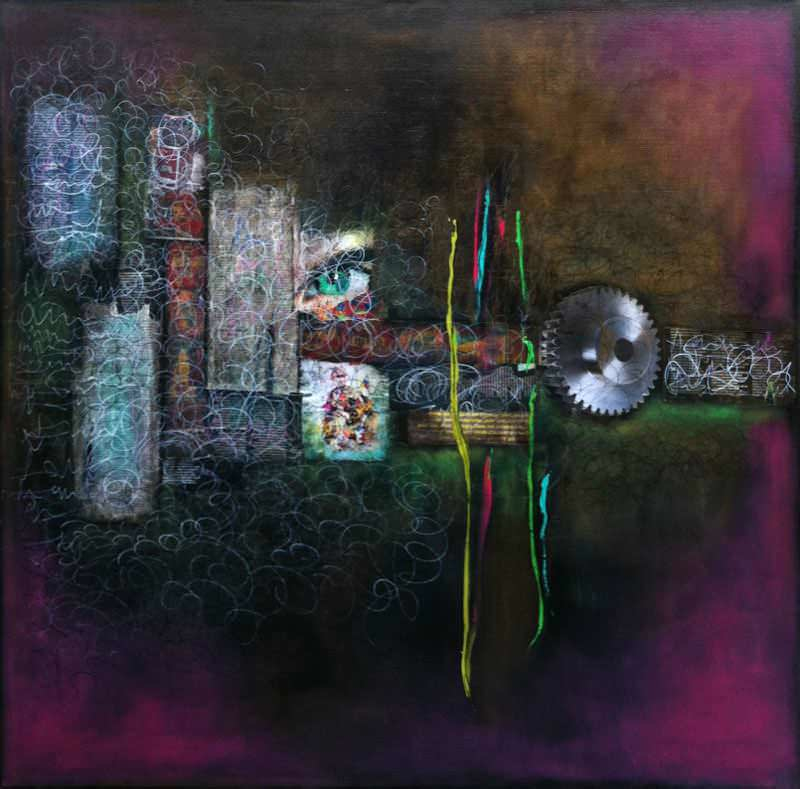
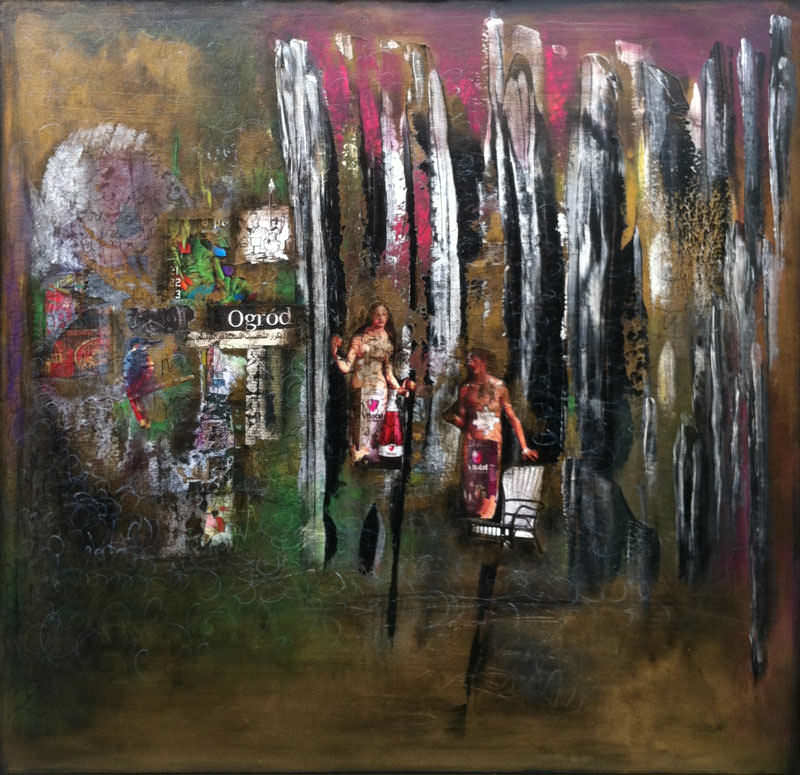
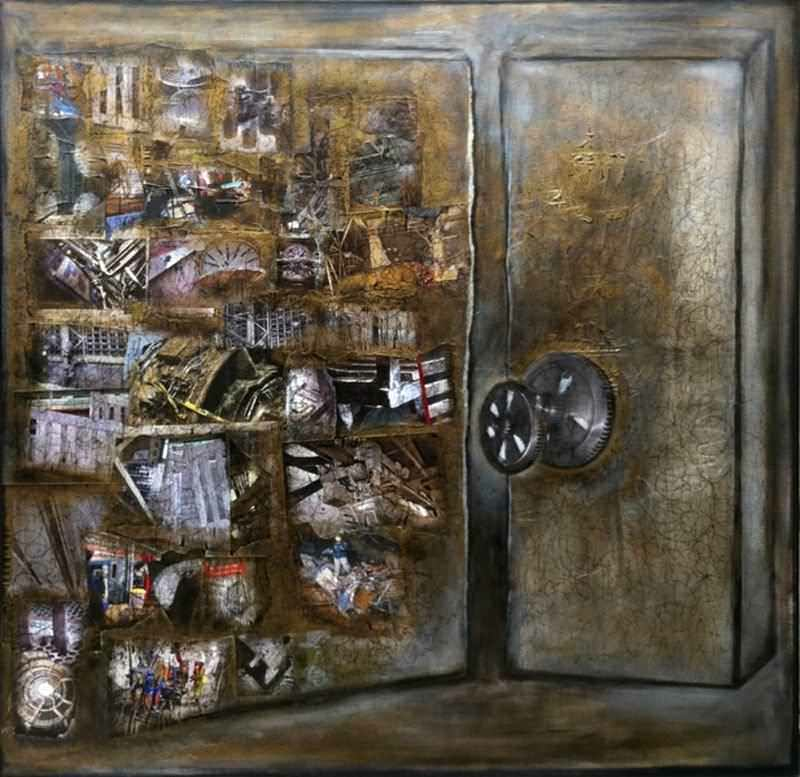
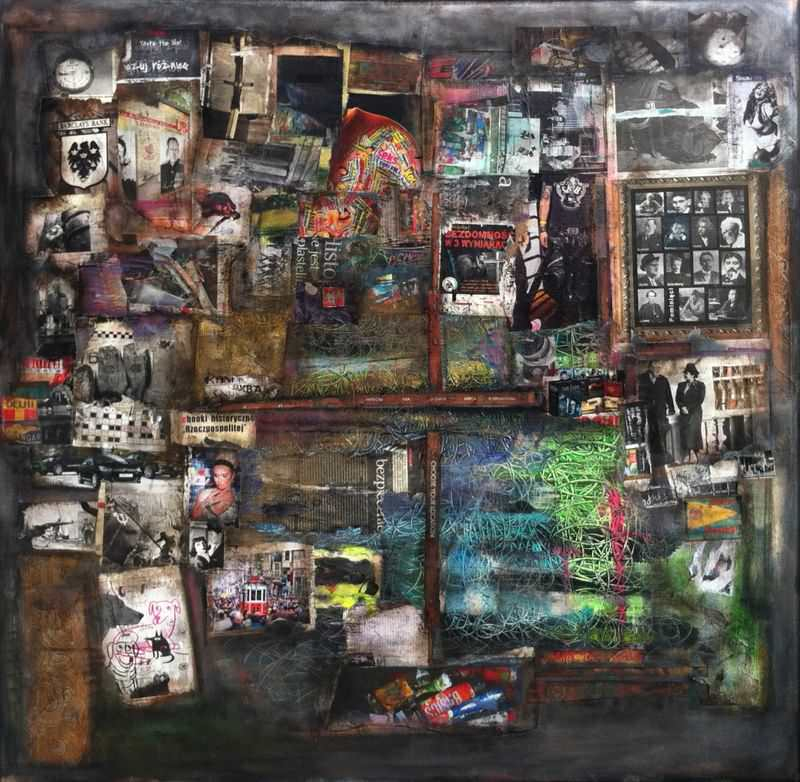
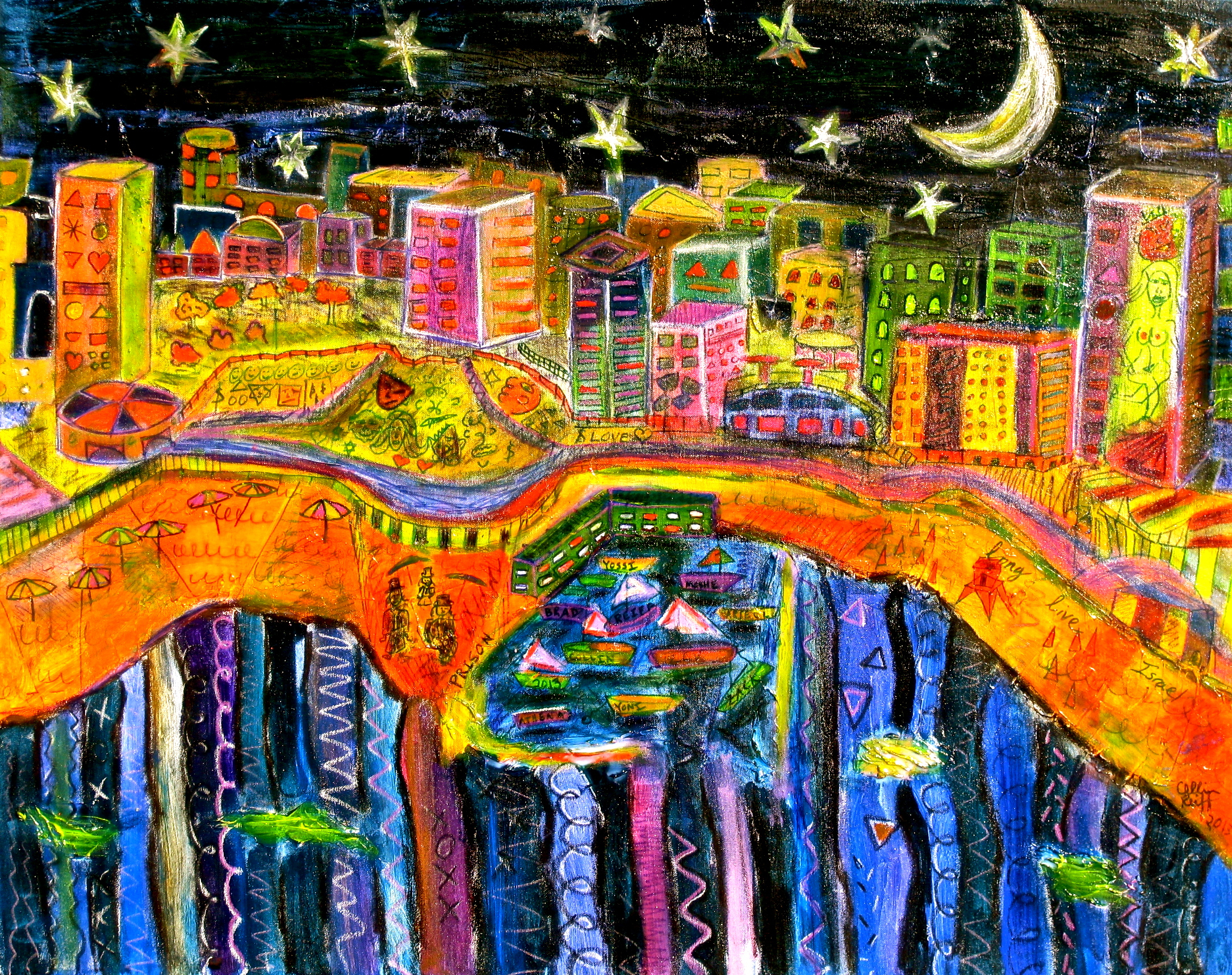
The paintings featured here were created in Tel Aviv, Israel between 2013 and 2014 with incredible support from The Karp Art Fellowship.

Tel Aviv at Night

Tel Aviv at Night

Portrait of Limor

Portrait of Limor

Margishim: We Feel

Margishim: We Feel

Eliat at Night

Eliat at Night

The artist and the scorpion

The artist and the scorpion

Portrait of Athena

Portrait of Athena

Lady in Jerusalem

Lady in Jerusalem

The chase

The chase

Opium in Sinai the eternal recurrence of Le Petit Prince

Opium in Sinai the eternal recurrence of Le Petit Prince

Untitled

Untitled

Artist: Collin Reiff
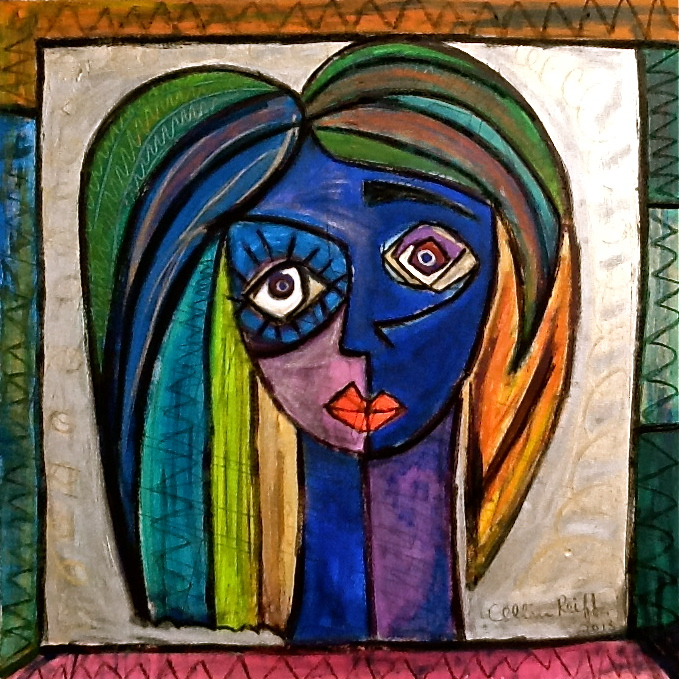
I like to think of myself as an existentialist painter. It is all about meaning. Every painting has been inspired by a real life event. Together the works tell a story, which began when I was 19 years old. They highlight life events: relationships, loves lost and found, unique moments, places and people who have touched my soul. My philosophy on painting is there is no art in the ugly and the beautiful. It does not exist. Only the mystery, the magic, the horrible and the beautiful can be expressed. It is by engaging the instinct entirely, without intellectual intervention, that one can express completely and strongly what is in oneself. There are times when the canvas reveals itself to the imagination and must be explored without hesitation, and other times when the imagination reveals itself to the canvas. It is the dialogue between the two that continues to inspire each stroke, drip, splash, or tear. Eventually a climax is reached. At this moment, the artist steps away and leaves before him another world within the confines of the canvas. When another being encounters this creation and feels love, sorrow, the pull of emptiness or inspiration, the artist’s job is complete.

Website: http://www.collinreiff.com

the tomorrow after world’s end

by Daniel Boscaljon

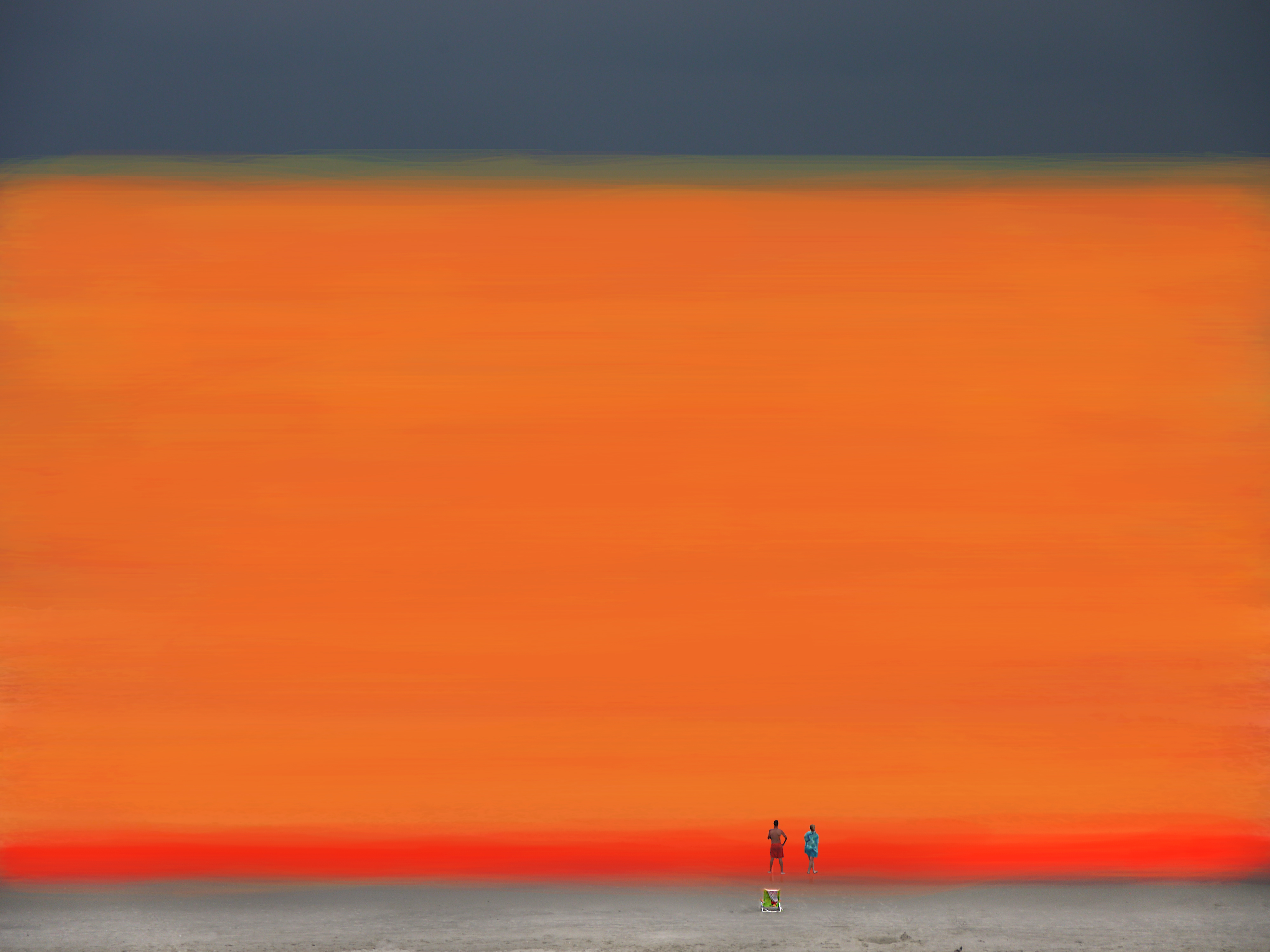
“the tomorrow after world’s end” is the eighth letter in a series of posts called Letters to You written by Daniel Boscaljon with images by Melissa D. Johnston (from one of her ongoing projects). Letters to You began in July with “everytime i write i feel myself disintegrate.”

rothkoexperiment3.3.orange

your tears were reluctant to fall, but the way that your body trembled announced to me that the world was about to end.  i held you in my arms, a tight embrace, hoping that you could jolt me to your state, so that i could share in it with you.  but my arms did nothing: weak, lifeless, they simply encircled you adding neither strength nor comfort.  your words came forth: they were not indictments of me, the messenger.  i know that you understood the situation fully.  you know that i, too, sense that the end of the world is beginning to dawn and that we see the red sky brimming as a token of doom.  the difference lies not in what we see, but how we react.  i am envious of your tears and trembles, for the sight does nothing for me but create a numbed sense of cold death.  tears, at least, express something.  my weak arms and straight face do nothing but stare straight ahead.

of course, the tragedy lies not in the world’s end but precisely within its failure to do so.  were it truly to end, tonight, i feel we could both (with joy) embrace each other and accept annihilation.  it would be a moment of relaxation where we could reflect on the past–leading up to today. it would not be hypocritical to overlook the moments of torments and tragedies.  the world should end with a bang, not a whimper, after all.  so we would light the fireworks we never saw when the world was young, and lay on a blanket under the moon and have bread and cheese and wine.  at the last moments, we could hold onto each other, and with one last kiss yield our bodies and lives to the horizon of annihilation.  …if only the world were ending.

instead, we’re left with the taste of a world which stubbornly persists beyond its ending.  having tasted and accepted the end, there is nothing worse than the arrival of a new tomorrow.  embarrassed, the empty wine bottle reveals the futility of last night’s celebration.  insects and rodents enjoy our bread despite the fact that it has hardened–but even they ignore the cheese.  tomorrow forces itself upon us with an unrelenting presence.

when you had begun to cry, i had thought your tears were an act of mourning the failures of the past.  when you continued to cry, i interpreted them as betokening the futility of fighting fate. now, i think, i understand that you understood the true nature of the tragedy from the beginning.

there is nothing worse than being forced to accept a series of tomorrows without a future.  there is nothing emptier than time without hope, when duration and repetition are indistinguishable.  Emptiness arrives when one is given the form of a day and is simultaneously forbidden to fill it with any sort of content.  The future spreads itself as a numb, blank, empty, dumb canvas and its blankness is an expression of our soul.

had the world ended last night, i could have rested in the fulfillment of joy.   instead, i merely endure through time.

Daniel Boscaljon has Ph.D.s in Modern Religious Thought and 19th-century American Literature, both from the University of Iowa. His interest is in the fragility and liminality of human experiences. His first book, Vigilant Faith: Passionate Agnosticism in the Secular World was published by the University of Virginia Press this past August.

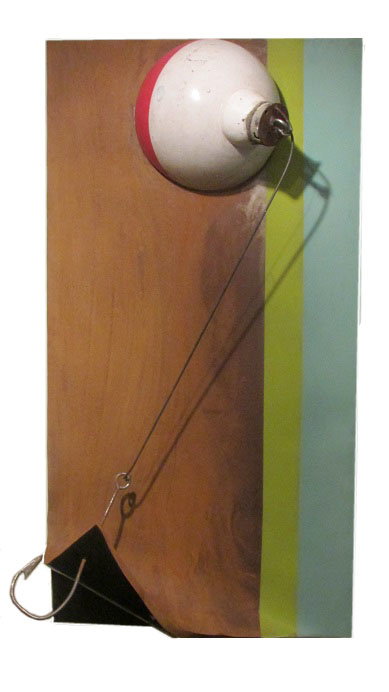
Works by Jason Sweet

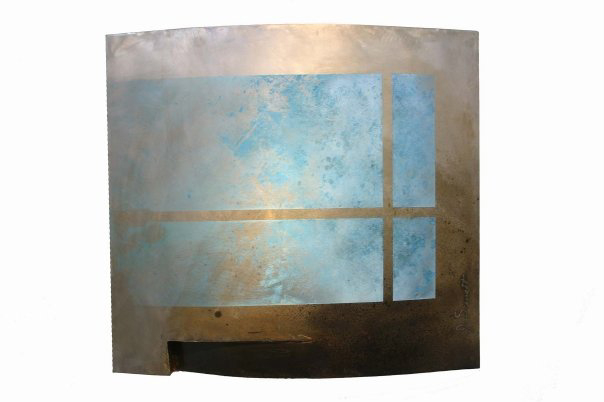
"From Home"     32" x 32" x 5"     Welded steel, enamel paint, patina

“From Home”
32″ x 32″ x 5″
Welded steel, enamel paint, patina

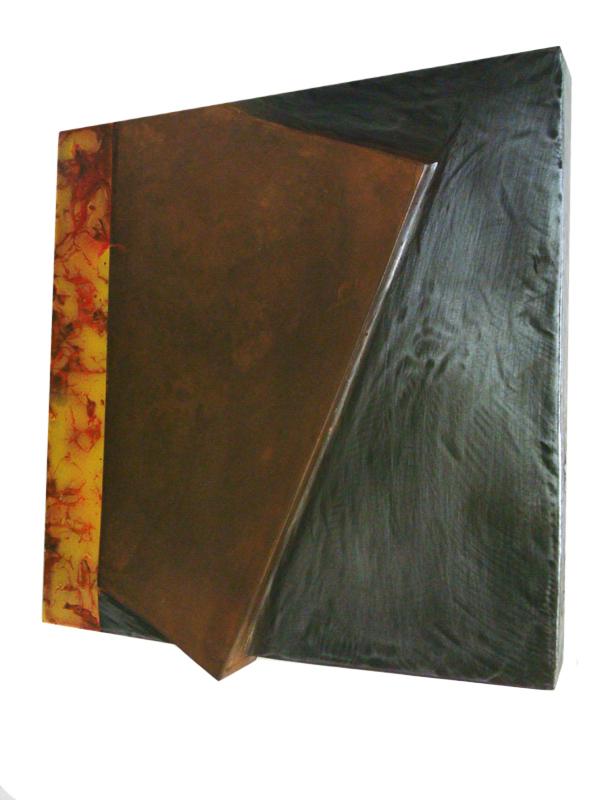
"Comp 3 & 4"      32" x 32" x 2"      Welded Steel, enamel paint, patina

“Comp 3 & 4”
32″ x 32″ x 2″
Welded Steel, enamel paint, patina

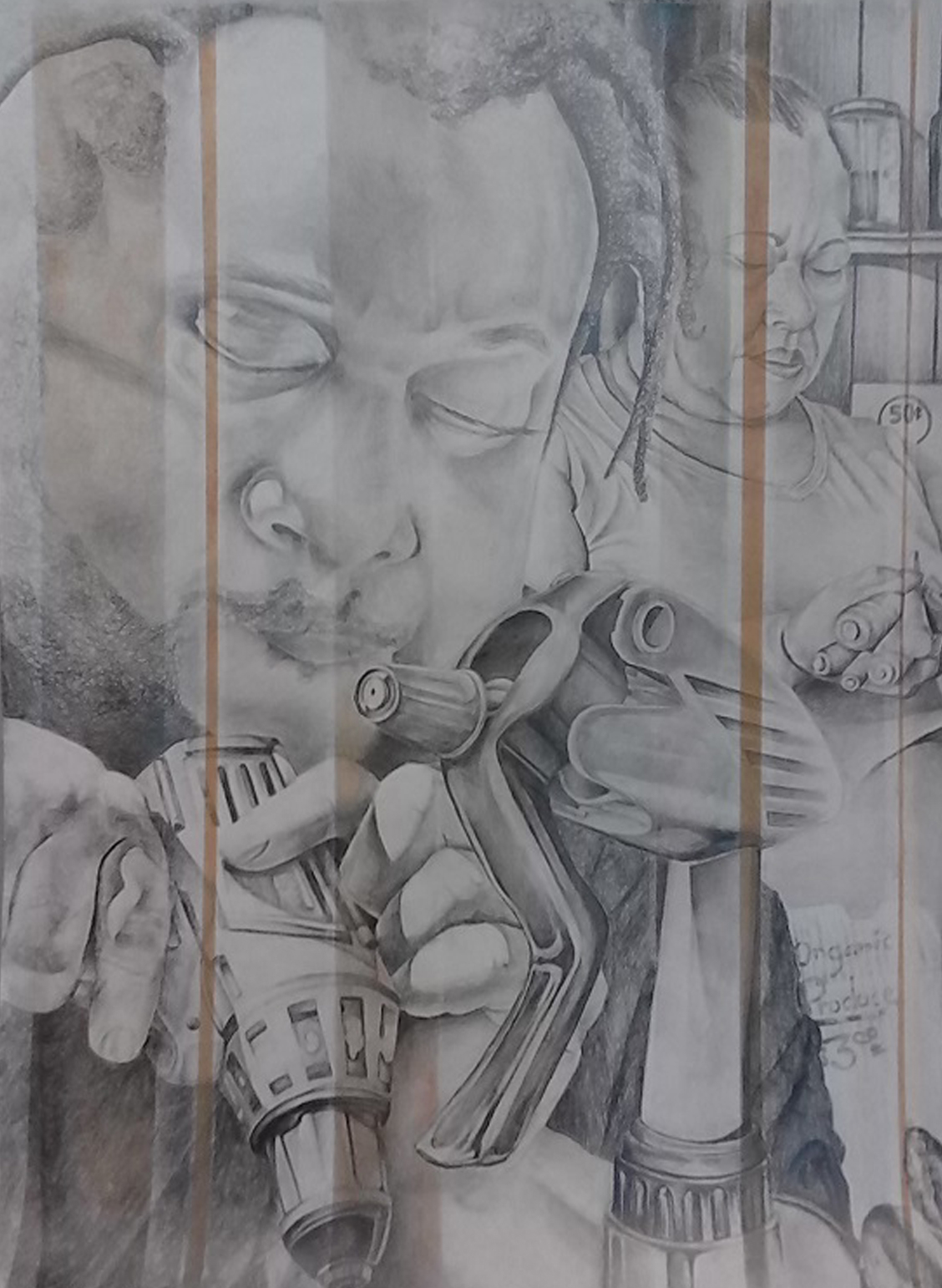
"Organic Produce"      18" x 24"      Pencil drawing and Georgia clay

“Organic Produce”
18″ x 24″
Pencil drawing and Georgia clay

"Cast Under"       60" x 38" x 12"       Welded Steel, enamel paint, patina

“Cast Under”
60″ x 38″ x 12″
Welded Steel, enamel paint, patina

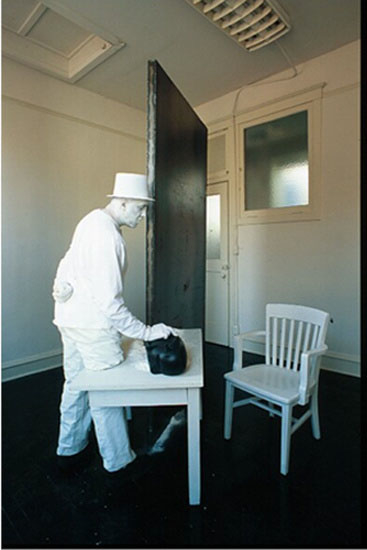
"John Woolman's Gift"       Mixed media installation

“John Woolman’s Gift”
Mixed media installation

"No Puede Hacer Anoche"        Performance art piece

“No Puede Hacer Anoche”
Performance art piece

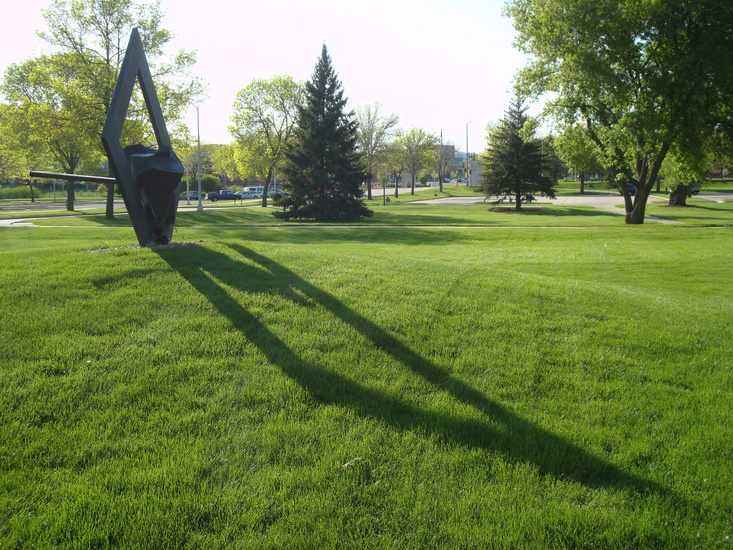
"Architectural and Environmental Symposium"      Public Art Commission monumental scale       Commercial Bronze

“Architectural and Environmental Symposium”
Public Art Commission monumental scale
Commercial Bronze


“Sigoa!” at 2009 annual international performance art series at Vertigo.

ARTIST STATEMENT

 Aspects of art I create is a genuine reflection of my interest in conceptual and/or formal notions in art making. By using conceptual matter and formal matter as a vehicle, my body of work attempts to balance contrasting elements be it through materials, design and/or subject matter.

   BIO

Jason Sweet Jason Sweet is a sculptor, painter, drawer, performance and installation artist.  He has exhibited his work internationally and has been awarded a number of public art commissions.  Sweet is Assistant Professor of Art and serves as Department Chair of Fine Arts at Atlanta Metropolitan State College.  He received his Master of Fine Art Degree in Sculpture from the University of Illinois Urbana/Champaign where he studied under renowned glass artist William Carlson and artist/critic Buzz Spector.  For his Bachelor of Arts he attended the University of Northern Iowa studying under the direction of sculptor Tom Stancliffe.  In 2001 he moved to Atlanta of which he currently resides.

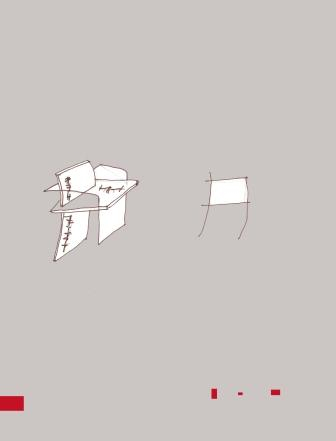
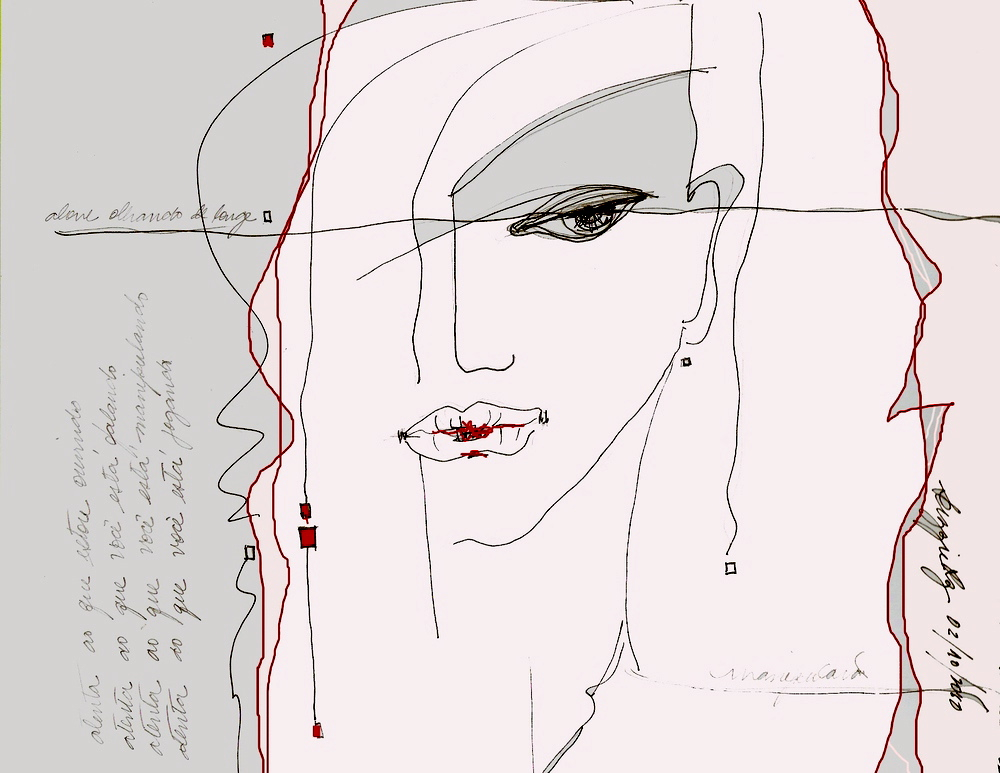
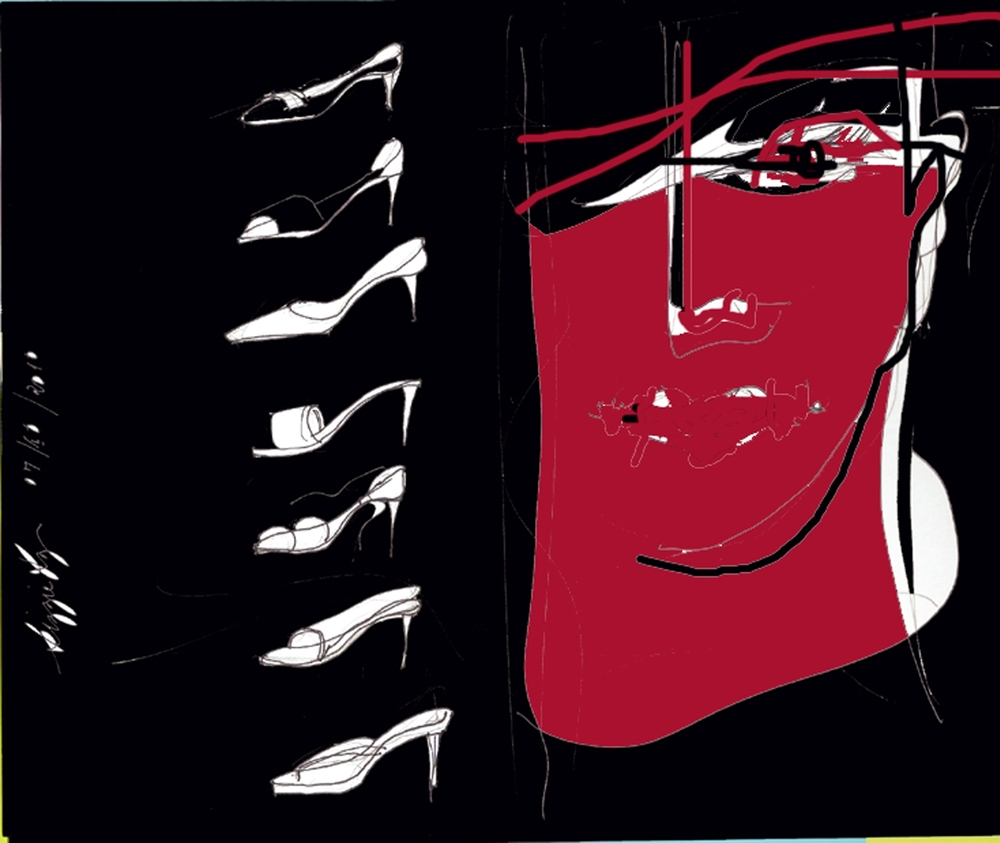
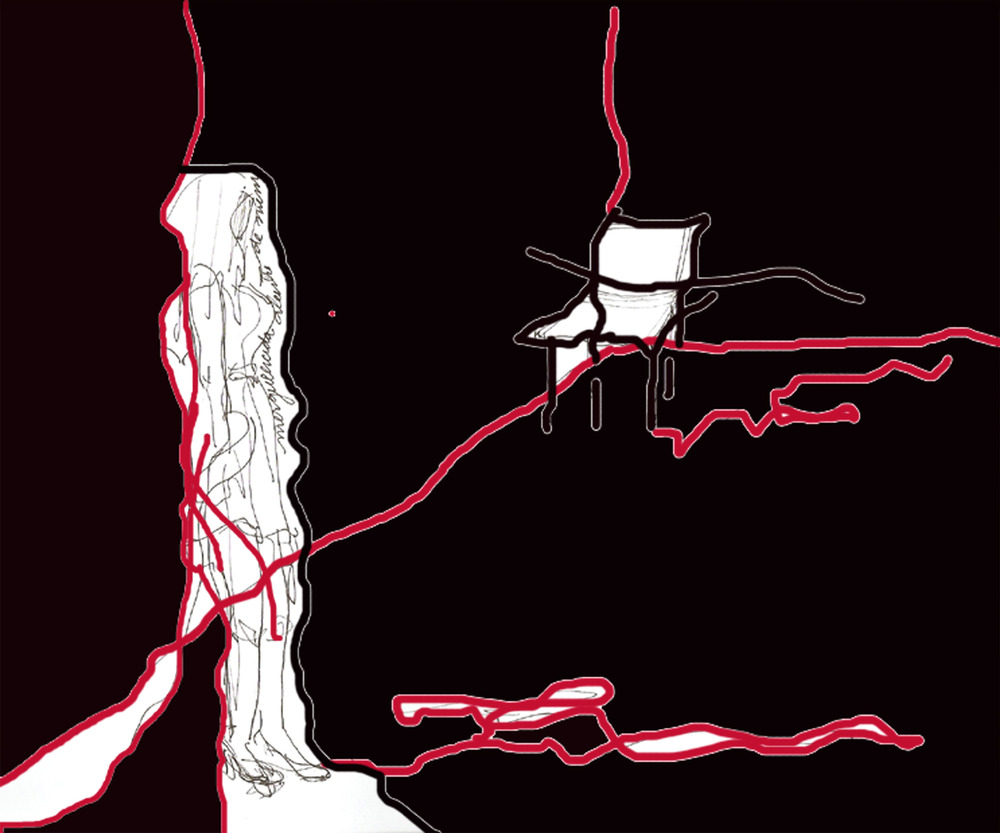
1 MULHER 1 CADEIRA [ 1 WOMAN 1 CHAIR]

by LizzieRz

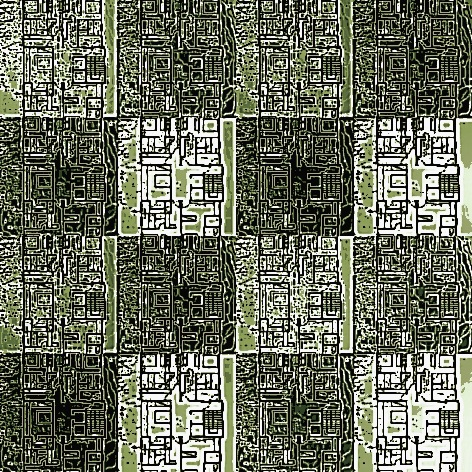
ESTAMPA, graphic design on architectural design

ESTAMPA, graphic design on architectural design

ABOUT KISSES & HUGS, acrylic painting on canvas, digital photo, collage

ABOUT KISSES & HUGS, acrylic painting on canvas, digital photo, collage

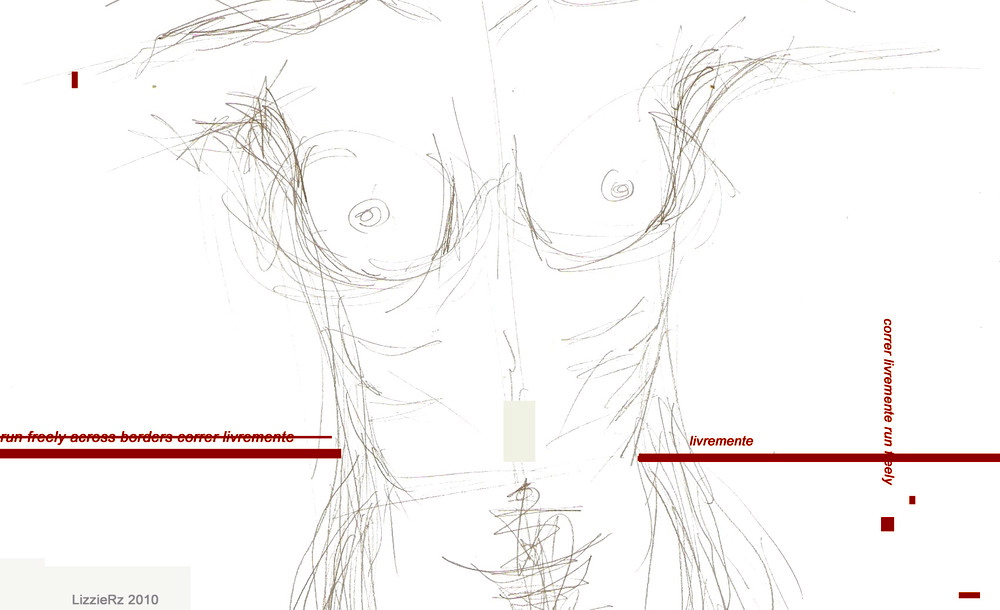
RUN FREE, pencil and pen on paper and digital graphic design

RUN FREE, pencil and pen on paper and digital graphic design

CHAIRS, pencil and pen on paper and digital graphic design

CHAIRS, pencil and pen on paper and digital graphic design

WOMAN, pencil and pen on paper and digital graphic design

WOMAN, pencil and pen on paper and digital graphic design

OPOSTOS, pencil and pen on paper and digital graphic design

OPOSTOS, pencil and pen on paper and digital graphic design

1 MULHER 1 CADEIRA, pencil  and pen on paper and digital graphic design

1 MULHER 1 CADEIRA, pencil and pen on paper and digital graphic design

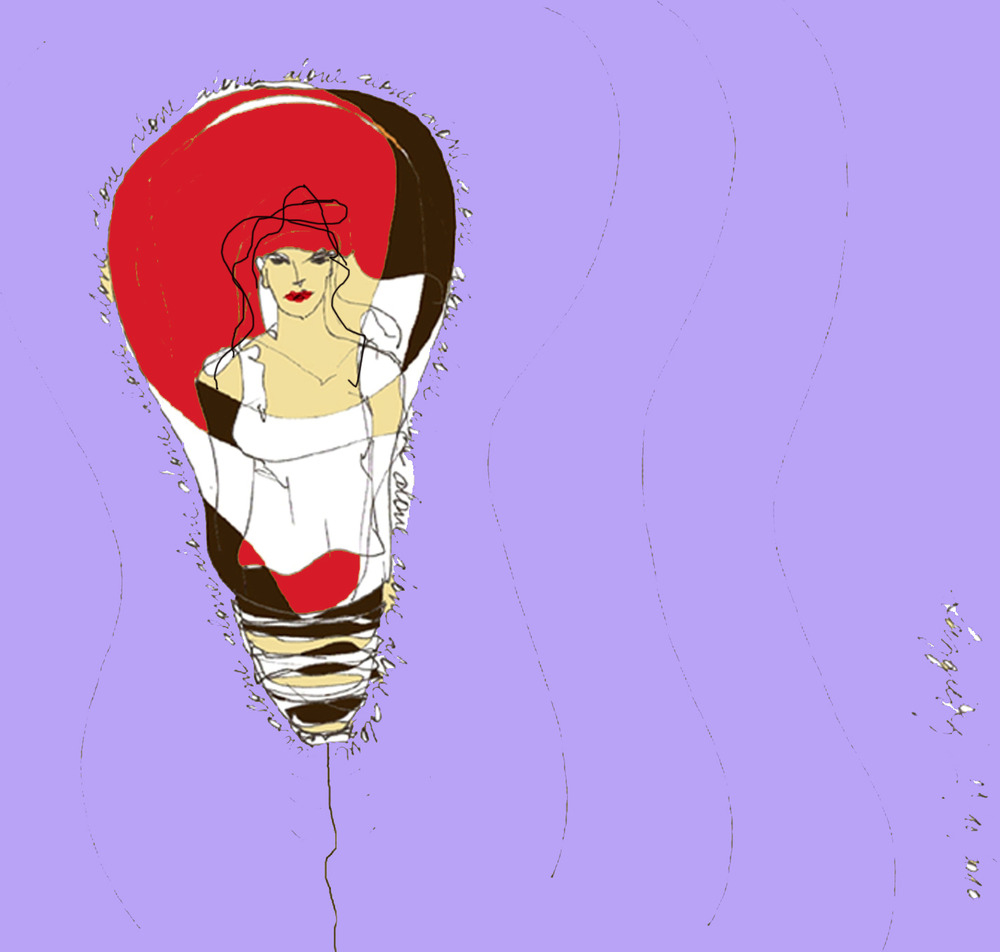
ALONE, pencil and pen on paper and digital graphic design

ALONE, pencil and pen on paper and digital graphic design

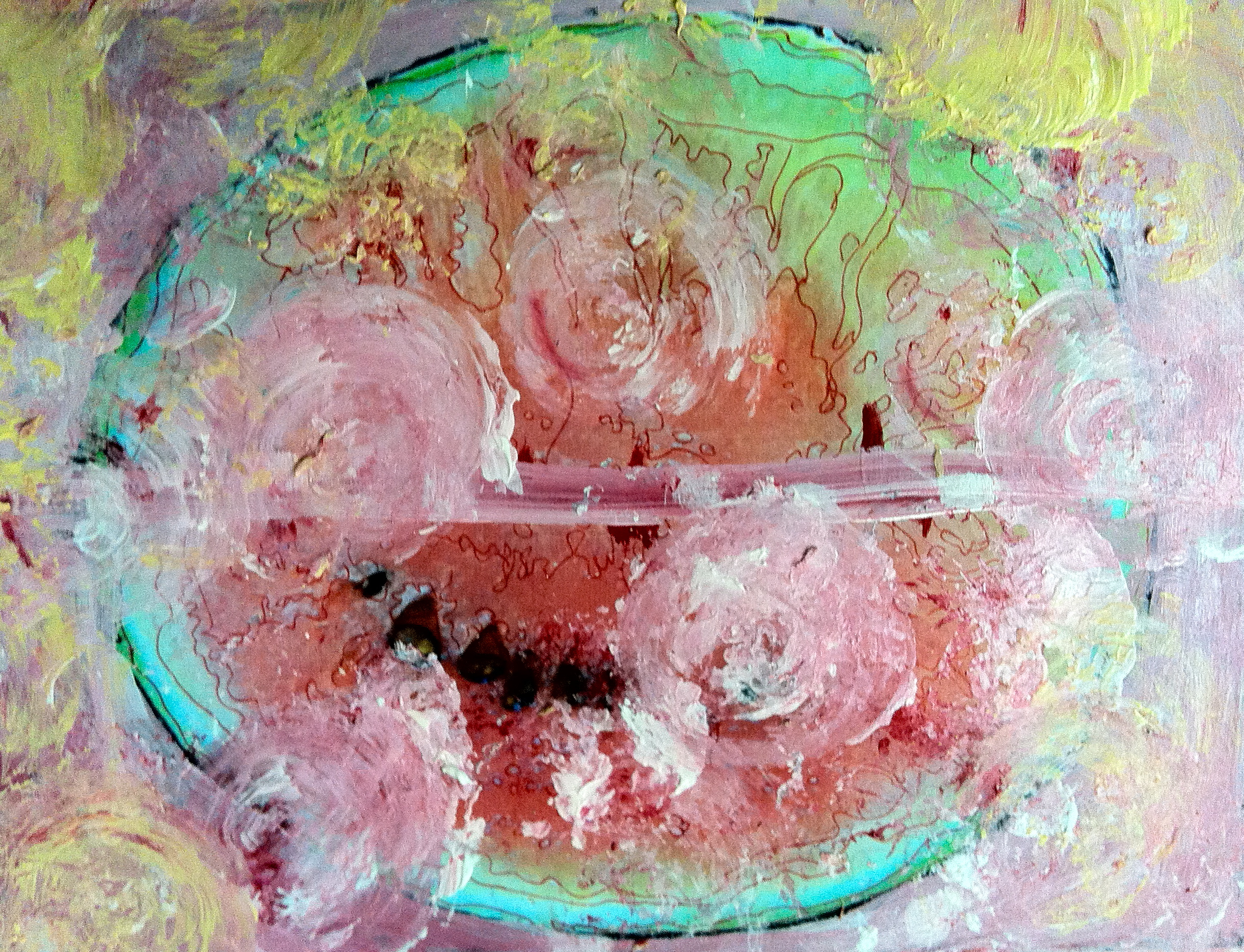
MELANCIA, photography and acrylic painting

MELANCIA, photography and acrylic painting

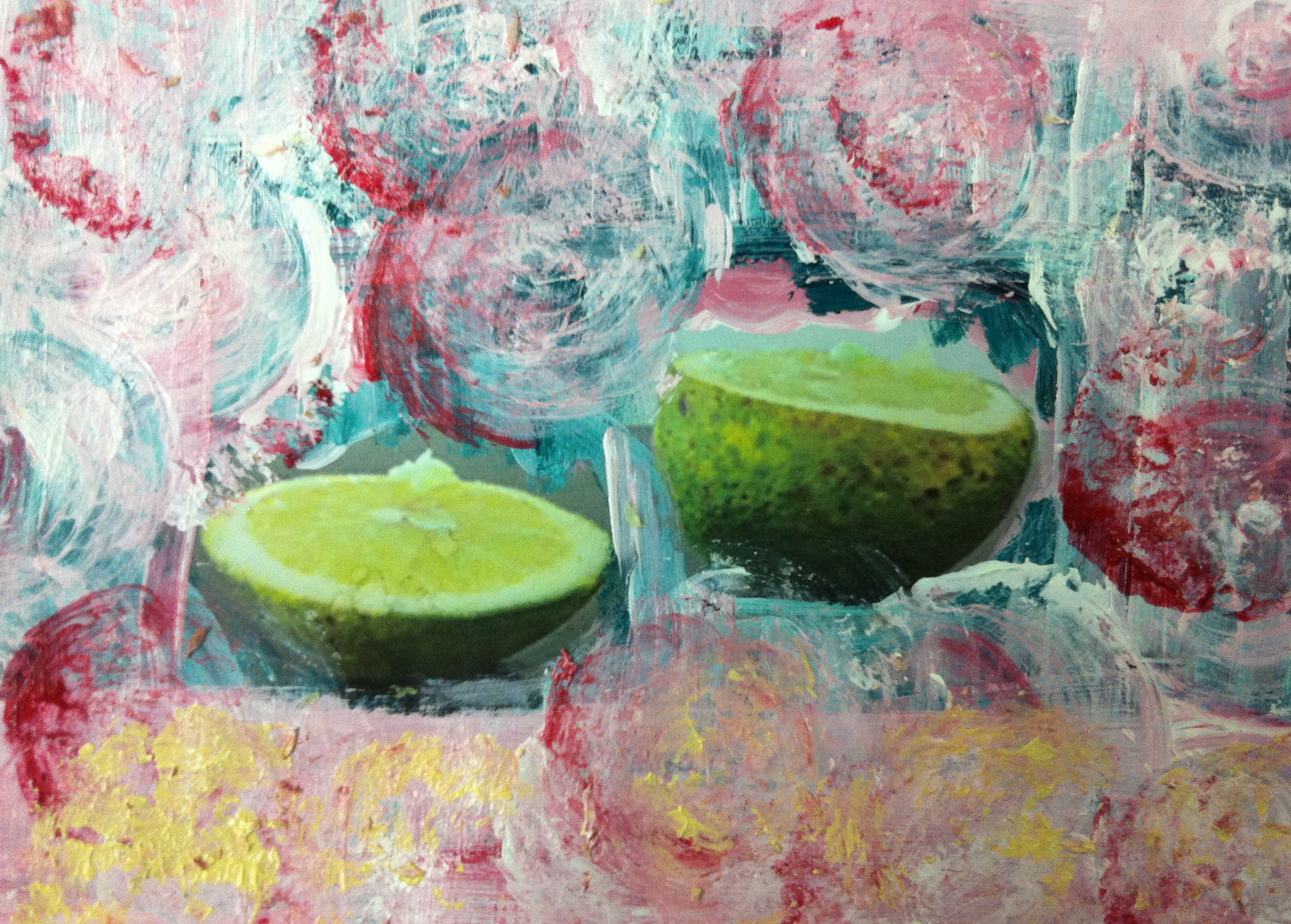
LARANJAS, photography and acrylic painting

LARANJAS, photography and acrylic painting


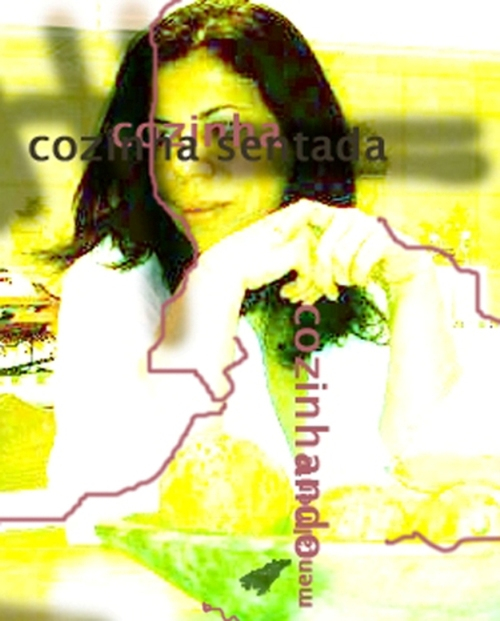
LizzieRz-SAMSUNGLizzieRz is a Brazilian Architect and Urbanist, internationally recognized and quoted in the press for her artistic and architectural projects. Throughout her career she’s worked in a broad artistic universe–design, graphic design, painting, drawing, sculpture, and literature. As an artist, Liz likes to choose simple details in everyday context and expand them to reveal new patterns.

You can learn more about LizzieRz here:

http://www.lizzierz.com/

http://www.soulempreendimentos.com/

https://twitter.com/LizzieRz

Postcolonial Thoughts: Raymond Saunders and Black Abstraction

by Christopher Hutchinson

Black abstraction is often overlooked in art history. Black art is a term that is used to classify the artwork of image and subject based exclusively for the Black community. Any work outside of the stereotype lives in a limbo state that would typically be designated for Western Academia. Black abstraction is almost an oxymoron, due to the fact that Black art is largely associated with outsider, primitive, and folk art. Examining this relationship between Raymond Saunders and Jean-Michel Basquiat is to draw a linear history of Art that proves a transcendence of Black art to being more than stereotypical images.

When one does an Internet search for Saunders, names like Robert Rauschenberg, Jim Dine, or Cy Twombly come up. Likewise with Basquiat names like Julian Schnabel, David Salle, Francesco Clemente, Enzo Cucchi, and Warhol. The two almost never intertwine yet their work is so similar. It is my hypothesis that the obvious link between the two is their Black art lineage. It is in their interest in documenting history and challenging the prohibition on black in traditional painting, the physicality of Blackness through black paint, all the while coding it in Black language.

Prohibition on black paint

Gray is toneless and immobile. This immobility, however, is of a different character from the tranquillity of green, which is the product of two active colors and lies midway between them. Gray is therefore the disconsolate lack of motion. The deeper this gray becomes, the more the disconsolate element is emphasized, until it becomes suffocating.
Wassily Kandinsky, On the Spiritual in Art
http://www.artnet.com/magazine/features/kuspit/kuspit12-19-02.asp

The term Black is a color is a direct response to any painter who has endured a traditional oil painting class. The professors of these classes create rules for students that forbid the use of buying or using black paint at anytime during the course. Students are to mix their own blacks. You must learn the ways of the Italian oil painting masters. Painters who paint from life know that there is no real black in nature. So to a true oil painter any amount of pure black is an offence. Black paint is not a shadow, it is a warm color that comes to the front and does not recede. Black flattens space, or the depth of a painting, everything that the old masters are against. These were the guidelines all the way to a significant shift with Edward Manet. It is very easy to tell artists who paint from life or a photograph. That heightened contrast only exists in photography and artificial lighting, not nature. Undergraduate foundation courses still have these rules as a rubric.

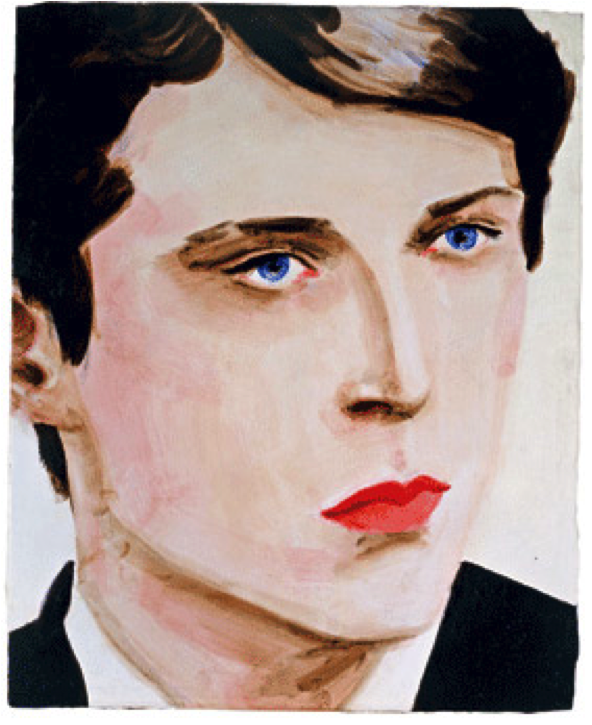
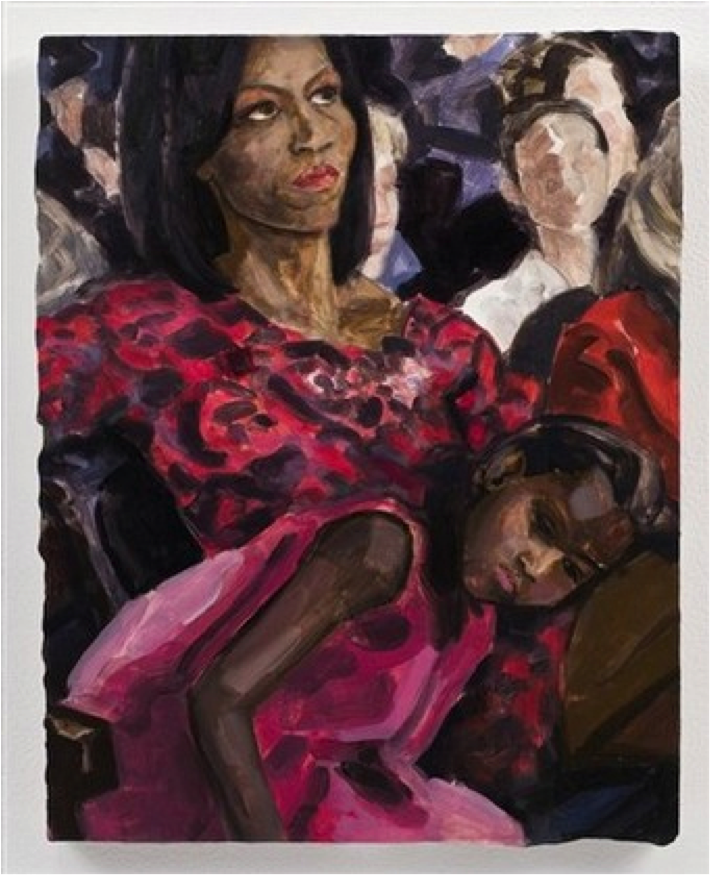
This ban on black paint allows many so-called oil realists, who are also considered brilliant colorists, to fail miserably to capture Black skin. While initially these black paint and Black skin seem to be unrelated, it becomes blatantly obvious when it is painted. This can easily be seen in the works of Elizabeth Peyton. She is known for painting these androgynous icons but her depiction of the first Lady and daughter is proof of the European painters lack of skill in understanding black paint and Black skin, then further Black people.

Elizabeth Peyton Democrats are more beautiful (after Jonathan Horowitz), 2001 Oil on board 25,4 x 20,3 cm Collection Laura & Stafford Broumand http://www.e-flux.com/announcements/elizabeth-peyton/

Elizabeth Peyton
Democrats are more beautiful (after Jonathan Horowitz), 2001
Oil on board
25,4 x 20,3 cm
Collection Laura & Stafford Broumand
http://www.e-flux.com/announcements/elizabeth-peyton/

Elzabeth Peyton “Michelle and Sasha Obama Listening to Barack Obama at the Democratic National Convention, August 2008” http://artandperception.com/2009/01/obama-and-the-arts.html

Elzabeth Peyton
“Michelle and Sasha Obama Listening to Barack Obama at the Democratic National Convention, August 2008”
http://artandperception.com/2009/01/obama-and-the-arts.html

The prohibition of black paint is transfixed to Black imagery and the spectacle of the Black body. It is within this prohibition that Raymond Saunders practice begins to identify the semiotics of black the color and Black imagery.

black
1. lacking hue and brightness; absorbing light without reflecting any of the rays composing it. 2. characterized by absence of light; enveloped in darkness: a black night.
3. ( sometimes initial capital letter ) a. pertaining or belonging to any of the various populations characterized by dark skin pigmentation, specifically the dark-skinned peoples of Africa, Oceania, and Australia. b. African American. 4. soiled or stained with dirt: That shirt was black within an hour. 5. gloomy; pessimistic; dismal: a black outlook.
6. deliberately; harmful; inexcusable: a black lie. 7. boding ill; sullen or hostile; threatening: black words; black looks. 9. without any moral quality or goodness; evil; wicked: His black heart has concocted yet another black deed. 10. indicating censure, disgrace, or liability to punishment: a black mark on one’s record. 11. marked by disaster or misfortune: black areas of drought; Black Friday. 13. based on the grotesque, morbid, or unpleasant aspects of life: black comedy; black humor. 14. (of a check mark, flag, etc.) done or written in black to indicate, as on a list, that which is undesirable, substandard, potentially dangerous, etc.: Pilots put a black flag next to the ten most dangerous airports. 17. deliberately false or intentionally misleading: black propaganda. http://dictionary.reference.com/browse/black

Black is a Color pamphlet

Saunders has also published catalogs and pamphlets; most notably, his 1967 pamphlet “Black is a Color”, which argues that African American artists need not be limited by racial representations, and argues against the concept of “black” art as a potentially degrading restriction, in favor of a more race-neutral approach to artistic creation. https://www.cca.edu/academics/faculty/rsaunders

Artist and Professor Raymond Saunders wrote his pamphlet “Black is a Color” in 1967 after attaining his MFA from California College of Arts in 1961. Black is a Color takes issue with the Black Art of present in the 60’s and is still more so relevant today. Saunders sees the spectacle of the black body as something extremely limiting to African American contribution to the Arts. Saunders recognizes the need for abstraction as a tool to challenge the narrative of black so coded in the long history of the painted image.

“Racial hang-ups are extraneous to art. no artist can afford to let them obscure what runs through all art–the living root and the ever-growing aesthetic record of human spiritual and intellectual experience. can’t we get clear of these degrading limitations, and recognize the wider reality of art, where color is the means and not the end?” [sic]
–Raymond Saunders, African-American artist, in his 1967 pamphlet Black is a Color http://xroads.virginia.edu/~ug01/westkaemper/callaloo/gallery6.html

Black Abstraction

abstract art
noun
an abstract genre of art; artistic content depends on internal form rather than pictorial representation [syn: abstractionism]

A trend in painting and sculpture in the twentieth century. Abstract art seeks to break away from traditional representation of physical objects. It explores the relationships of forms and colors, whereas more traditional art represents the world in recognizable images.

http://dictionary.reference.com/browse/abstract%20art?&o=100074&s=t

20th-century black art  is the first to concentrate on the art works themselves, and on how these works, created during a major social upheaval and transformation, use black culture both as subject and as context. Professor Powell traces and explores the visual representations of black culture throughout the 20th century, to racial and cultural identity used as artistic content in the 1980s and 1990s. A conclusion discussing black society and culture in 20th-century film and video, and biographies of the many artists discussed in the book, complete this comprehensive work. http://www.amazon.com/Black-Culture-20th-Century-World/dp/0500202958

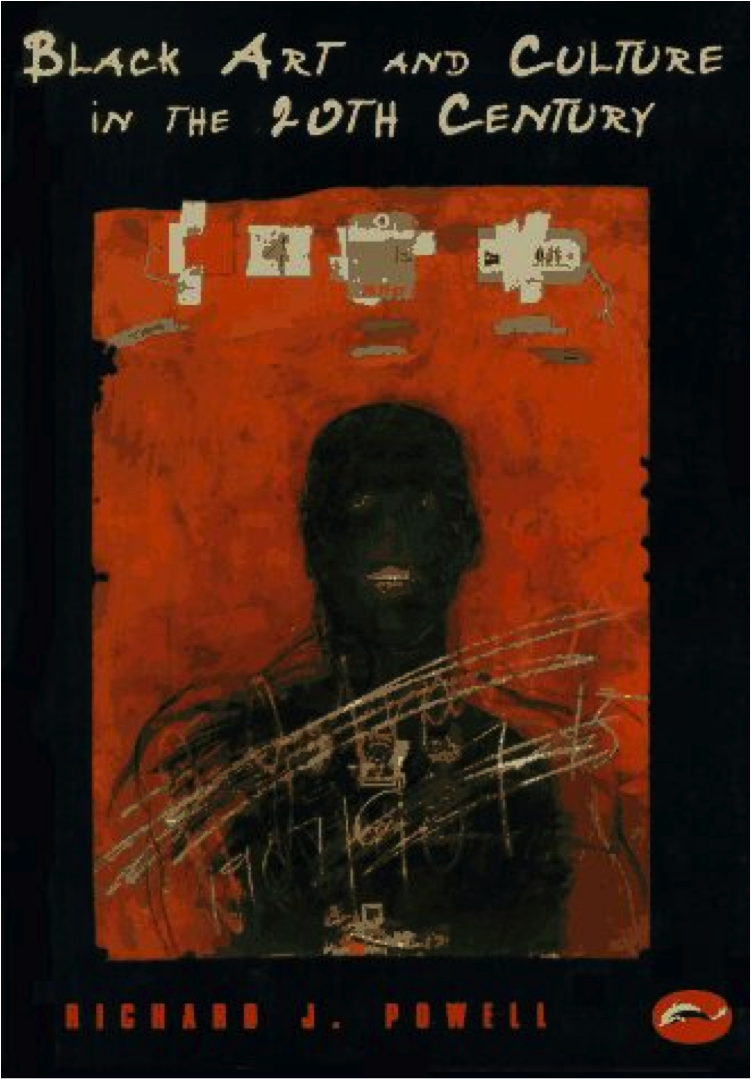
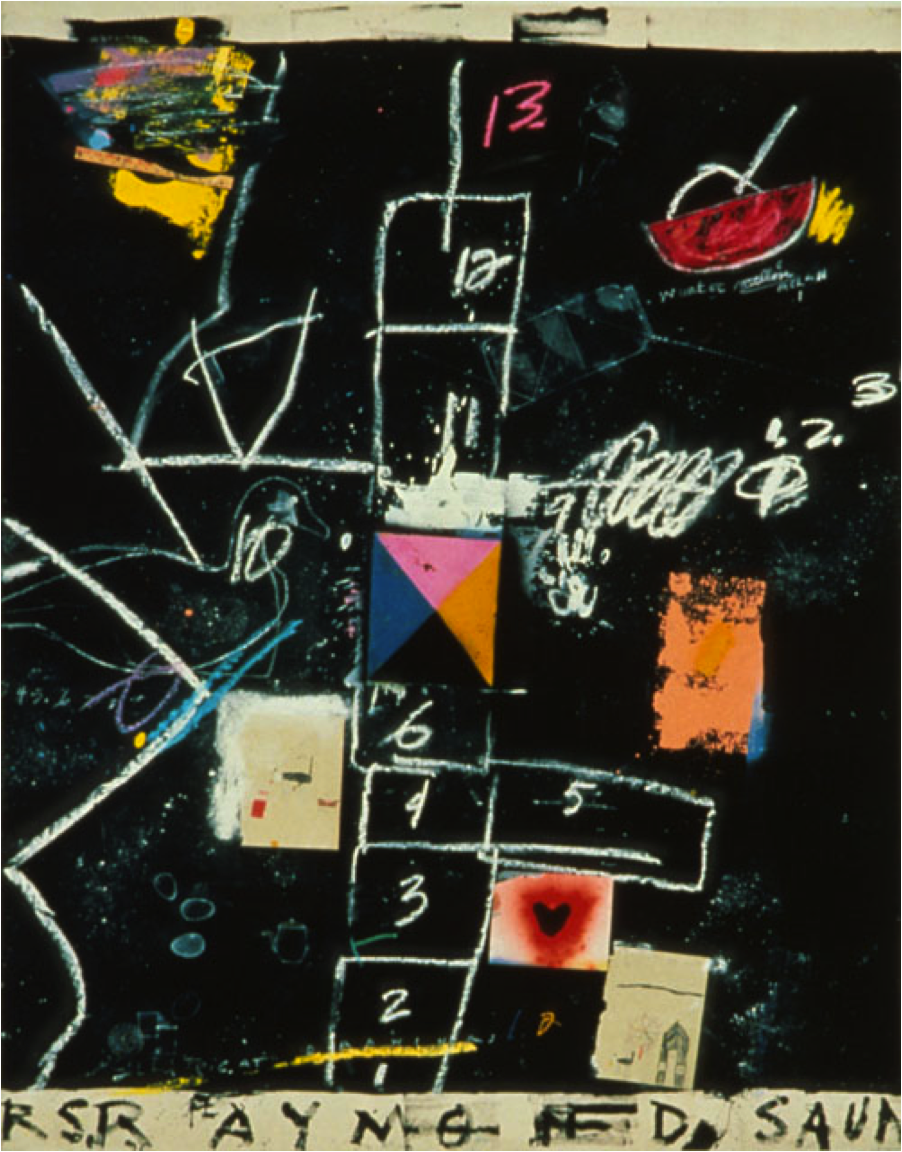
Saunders’s  “Jack Johnson” (1972) painting graces the cover of Professor Richard J. Powell’s Black Art and Culture in the 20th Century. Powell’s book lists artists from the Diaspora that have contributed to a contemporary art dialogue while discussing its context. There is a Black lineage of artists that goes beyond Romare Bearden. There is a lineage of Black abstraction.

Saunders does not use abstraction as a way to hide his ethnicity, rather to explore the physical qualities of black as it relates to Blackness. Many have used abstraction in ways to avoid ethnicity completely. The use of black in Black abstraction is also shared with Jack Whitten in his Dead Reckoning  1  1980.

Basquiat’s Radiant predecessor

Centered on a rare interview that director and friend Tamra Davis shot with Jean-Michel Basquiat more than 20 years ago, this film chronicles the meteoric rise and fall of the young artist. In the crime-ridden New York City of the 1970s, he covers the city with the graffiti tag ‘SAMO.’ In 1981 he puts paint on canvas for the first time, and by 1983 he is an artist with “rock star status.” He achieves critical and commercial success, though he is constantly confronted by racism from his peers. In 1985, he and Andy Warhol become close friends and painting collaborators, but they part ways and Warhol dies suddenly in 1987. Basquiat’s heroin addiction worsens, and he dies of an overdose in 1988 at the age of 27. The artist was 25 years old at the height of his career, and today his canvases sell for more than a million dollars. http://www.pbs.org/independentlens/jean-michel-basquiat/film.html

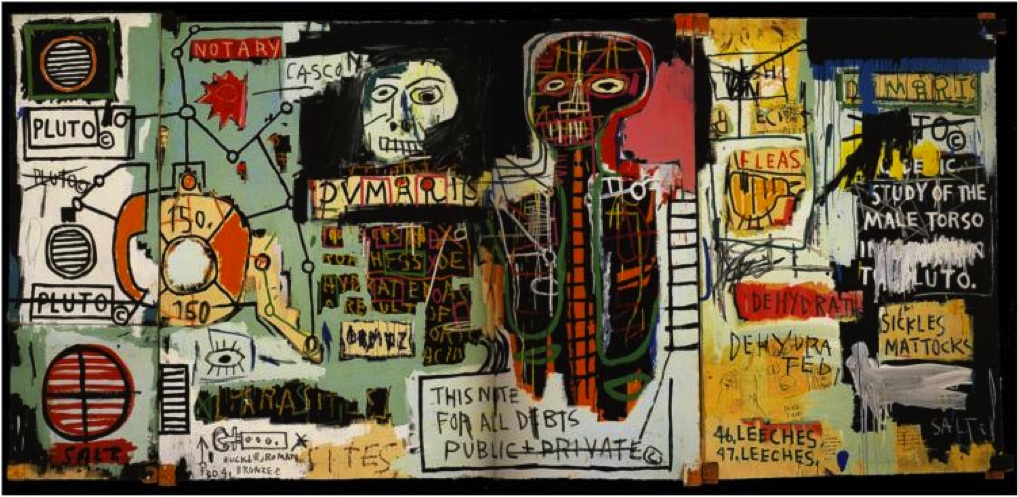
Tamara Davis’s documentary Jean-Michel Basquiat: The Radiant Child is the best documentary about the Afro-Puerto Rican, Haitian-American, and New York native Basquait there is. Davis filled the scholarly interviews that provided a feel of a real understanding of Basquait’s methodology and process. As all-encompassing as this documentary was, the lineage of Black abstraction was again overlooked. No mention of Saunders, Whitten, Chase-Riboud allows for a Western discovery narrative of the radiant child, a child born and nurtured with no influence of Black. An unknown phenomenon plucked out as worthy. Even the depiction of him listening to Jazz as he painted reminds us of the Pollock process being the same. This Western Adoption of Basquiat has every bit to do with the fact that Basquiat himself does not mention the Black lineage of Abstraction, but one look at Saunders’s mark-making, image and text, collaboration, chalk and found object doors, and it easy to see that whatever praise is lauded unto Basquiat it due to the utter appropriation of his predecessors, specifically Raymond Saunders.

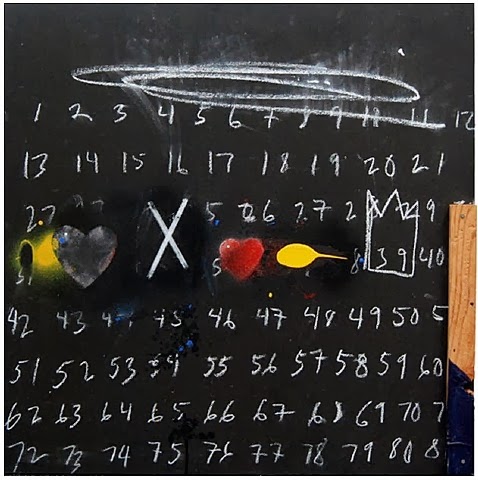
Jean-Michel Basquiat, who was so heavily influenced by Saunders that he adapted several of the artist’s motifs into his own paintings. Some of these, like his dedications to famous jazz musicians and a king’s crown drawn in white chalk, appear prominently in the new work. Taken as a whole, the exhibits’ swirls of color over full black grounds resemble galaxies and suggest movement, perhaps influenced by his years of traveling and working abroad. http://www.boothism.org/2007/09/28/open-to-interpretationraymond-suanders-just-paints/

These two are both great artists and are both responsible for the limited scope of Black art which is still largely viewed as folk. Not acknowledging the past and allowing the Western canon to “discover” you is a problem. It negates the possibility of that culture to stand on its own aesthetics and moral. Not acknowledging reinforces the very advances that great artists like these make.


Christopher HutchinsonChristopher Hutchinson is an Assistant Professor of Art at Atlanta Metropolitan State College and Archetype Art Gallery Owner in Atlanta, Ga. He received his Master of Fine Arts Degree in Painting from Savannah College of art & Design, Atlanta and his Bachelor of Arts Degree from the University of Alabama in Huntsville, Alabama. He lived in Alabama for 10 years before moving to Atlanta in 2008.
Learn more about Christopher and his work at Black Flight 144.
Liminal

By Nicole J. Johns
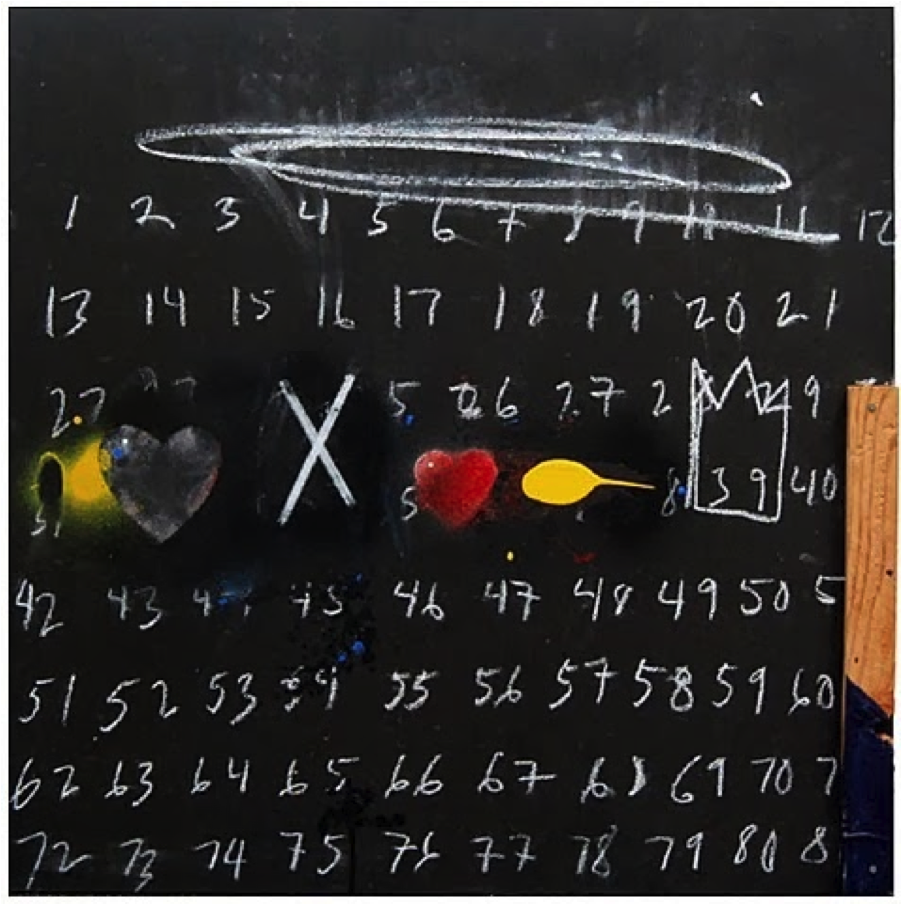
Image by Caroline Nevin

Queen of the Grotto by Caroline Nevin

Queen of the Grotto by Caroline Nevin https://www.facebook.com/CINfulART


The Trouble with Bridges

to have lived in this town
is to never trust a bridge again.

we have seen
when bridges fail, like people.

we feel the give and shake
as we sit idling in traffic.

bumper to bumper
so close together, we are.
 
 
gusset plate crumbling
like a thin, rusty communion wafer.

tumbling, braking, crashing,
praying.
 
 
Bridges don’t collapse in America.
 
 
this must be some third world country,
or a terrorist attack.

we know better,
the sonic boom alerted and altered.

we sit disconnected, staring
at taillights and that murky water.

wondering, knowing, our river
is full of secrets.

and we are merely suspended–
above
 

Liminal

find the dark space—
crawl inside

iniquity.

we go down,
together. into

liminal space
language, no one

has ever written—
or spoken.

language is born.
language is reborn.

straddle the gap,
quiver along the line


Rush Hour

what does it mean
to tell you this?

to sit static
on the interstate

and think of the place
i used to call home

a time and a space
rolling in memory

the person i was
three lives ago

gone.

all of us
have multiple lives

we are all reborn
of former selves

our old lives
creep in on us

during rush hour
while waiting in line

would you have loved
the person i once was?


Poetry Village

I want to join a poetry village,
where metaphors
Run wild through a dim forest,

A plethora of frenzied poesy,
poems composed by poets,
Strung out on coffee, cigarettes,
gin and tonic, and love.

Verbs race through the air,
knocking into the walls of huts,
Nouns primly sip tea with a poet.

A genre goddess knocks at the door,
bringing with her a custom made muse,
A replica of the woman I fell in love with
over lunches, late nights and dancing.

Erogenous alphabets float
through the atmosphere,
a cacophony of rolling consonants blending.
Redundant entanglements are forbidden.

Nicole J. JohnsNicole J. Johns is originally from rural western Pennsylvania, but now lives in the Twin Cities of Minnesota, where she teaches English at the University of Wisconsin-River Falls. She received her MFA in Creative Writing from the University of Minnesota and her BA in English/Creative Writing from Penn State-Erie, The Behrend College. Her first book, Purge: Rehab Diaries (Seal Press, 2009) was nominated for ForeWord Magazine’s Book of the Year Award in memoir, and has been described by Library Journal as an “unflinching work rooted in feminist self-reflection.” Nicole has also published poems in numerous literary magazines, including The Evening Street Review, Ellipsis, and Lake Effect.

Check out her Website and her Facebook page or say “hi” on Twitter (@nicolejjohns). You can writer her at nicolejjohns@gmail.com.

Reclaiming Experiential Residue: Misconceptions

by Nicholas Quin Serenati

Reclaiming Experiential Residue: Misconceptions is the second of a three-part series, which began with Locating Place: Fragments of an Illness. The third and final part is Humanscapes.

About the series: Illness experience is a resource for experiential knowledge. To that extent, it is important to understand that life has infinite spaces which can be experienced. My work is concerned with phenomenological experiences that transform these spaces into places. These places become the foundations in our individual lives – the construct of our identity. The work in this series is intended to ascertain an understanding of the ways meaning–making functions as a method for healing, and how the creative process operates to uncover and identify new metaphors that best communicate illness experience to others.


Reclaiming Experiential Residue: Misconceptions

Illness is a window to foresight. My proposed metaphor is a dynamic performance. This metaphor encompasses experience, object, space, language, sound, translation and meaning as a surfacing of my experience with illness. I have chosen a window for two significant attributes: an object – a way of being, and a lens – a way of seeing. With this approach, the window is a reconstitution of my body in a place – or experience – that is designed by time and space. Time, within the relationship of this video, provides insight into a spatiotemporal system. This system is intended to shape perception and impart meaning. Employing this conceptual system of spatiotemporal thinking has a history that also needs unpacking.

In 1922, Sigmund Freud published his analysis of the conventional understanding of traumatic neurosis in his book, Beyond the Pleasure Principle. In Freud’s analysis, he identified two major effects of traumatic neurosis that go beyond the conservative notion of physical injury (8). Most critical to Freud’s analysis are two polarizing and complex effects. First, the idea of a negative effect is characterized by the defensive action of suppressing the traumatic event as a method of avoiding a reliving of the event. The second, the positive effect, is using methods to bring the event back into operation, or as Freud states, “confirm the reconstruction of [the patient’s] own memory” (17-18). It is of my opinion that the positive effect approach exercises with success illness experience. Presently, this approach can be deemed most effective by contemporary applications such as journaling and creative outputs (i.e., painting, drawing, photography, etc.) and will play a central role in the theory that underpins this project.

In elaborating on illness experience, a trauma is absorbed and an influential preoccupation with that experience becomes rooted in the psyche of the patient. This preoccupation can have a deeply profound result on the way an individual perceives and lives with illness experience. Through methods of positive effect approaches – repeating, reliving and re-organizing – the traumatic experience will serve as a source of knowledge building. In using video art as the method of positive effect operation, there exists a fascinating application with digital media that support, and in some cases, goes beyond the ideas presented by Freud when it comes to “repetition-compulsion” (Freud, 19).

The idea of repetition and compulsion is a landmark in video art and I will use this method to emphasize the focus of the work’s investigation of metaphorical construction and meaningful subtext. For example, one key component to the structure of video art is time.  Through the employment of repetition, or the loop, time can be utilized to suspend the real so that a greater attention can be paid to an element that may be, in the real, too small.  More specifically, the idea is to narrow the scope of time on a particular sequence of footage, lock in a specific set of in and out points within the timecode of the video, and encode a repetitious sequence that delivers a cycle meditated on a specific idea(s). Another key component in the structure of time is the notion of speed. The rendering of speed not only shifts the paradigm of what is believed to be footage of real time, it also changes the context by ramping up or slowing the speed down to a hyper-real interpretation. In influencing these few attributes, the work moves outside of normality and is reconfigured to communicate a new perception of reality – or provide exposure to an augmented reality.

This augmented reality is a justification of constructing methods of sight. Time and space manipulation of the video project will inform the ways the work is engaged, meditated, and understood. For instance, the window is the conceptual anchor – for being and seeing differently. The concept of a window extracted from its traditional context and placed directly in an aesthetic situation, is intended to communicate an idea of illness within the body.

Misconceptions (2012) is a body of work that enforces the notion of repetition, time, and space. Additionally, the work was produced from a mixed methodology approach involving the weaving of my Buddhist mediation practice and art practice. From this particular approach, the objective is to select a location that I am interested in investigating – at times it is planned and others it is meant to be spontaneous and thus would explain my work with new media and mobile devices – and I arrange my meditation session along with the setup of my camera. If I choose video, I record the entire meditative session. If I choose still photography, I wait to the moment that my meditation is complete and I either use a short or long exposure to capture the moment. Misconceptions employs video as the means of documentation and a window as a center of interest. Interestingly enough, this experience inspired some creative writing that I shortly after I stopped recording the session. Later, I recorded the prose with a talent that I frequently use in my pieces and embedded the audio track in the video to complete the work. This project was the first in a series of experiments intended on achieving dharma art.


Nicholas Quin SerenatiNicholas Quin Serenati is an interdisciplinary scholar-artist whose work is defined by arts-based research that explores the potential of medium and discipline in liminal spaces. With a practice rooted in locating one’s place, Serenati employs video, creative writing, photography, sound, installation and performance to investigate forming situations that direct his research around illness and metaphor.

Serenati’s intellectual practice deeply engages the creation of meaning – form and function – and the articulation of story throughout the investigative process. Themes of trauma, identity, illness, disability, experimental narrative, social constructivism, sound and language are all contributing factors to Serenati’s work as a critical discourse. Serenati’s scholarly-art practice is intended to investigate phenomena as a way of achieving profound knowledge of theory, philosophy and art.

Based out of St. Augustine, Florida, Serenati holds a BA in Communications from Flagler College, an MFA in Interdisciplinary Arts from Goddard College, and is a candidate for his Ph.D. in Interdisciplinary Studies: Humanities and Culture from Union Institute & University. He is currently the Art Director / Dept. Chair of the Cinematic Arts program at Douglas Anderson School of the Arts and an adjunct professor of media and cinema studies at Flagler College.

Serenati’s dissertation, The ReFraming of Leukemia: Metaphor, Buddhism, Art and Illness Experience, will be completed May 2014, and the installation of the project is set for early 2015 in St. Augustine, Florida.

Twitter: @nqserenati
Website: nqserenati.com


The Clocks are Melting

By Daniel Boscaljon
Image by Melissa D. Johnston

“The Clocks are Melting” is the seventh letter in a series of posts called Letters to You written by Daniel Boscaljon with images by Melissa D. Johnston (from one of her ongoing projects). Letters to You began in July with “everytime i write i feel myself disintegrate.”

clocks are melting rothko experiment for dan1

I appreciate both the fact that you are concerned about me and the tact with which you let your concern be shown. While you never directly probed me about my current mental situation, your worries nonetheless were revealed lurking under every other “innocuous” question. How was dinner last night (i.e. are you eating?) Do you still dream of me? (i.e. are you sleeping?). It’s sweet, though. And I do appreciate it.

I suppose you may wonder that I am writing to you again, but the nature of this missive will reveal itself: I am concerned about time. Please do not worry, but you should know that I am having problems with it. I will look at a picture on my wall, one that I have seen many times: 10 minutes will pass. I will go to the kitchen for a glass of water, and find that the clock will have advanced 30 minutes and the water remains unconsumed, growing warm on a countertop. I sit down for a moment–and it IS a moment–but an hour will have gone by.

Rumor has it that time is relative, after Einstein. And…he was smart. I suppose that he is right. Nonetheless, it seems problematic that I keep on thinking that time is shorter than what it is: how can 30 seconds turn into a half hour? Why do small tasks–cutting vegetables–last for hours?

I am not so naive…which you know. I am avoiding the reality of my task. It is self given, but it doesn’t make the strain any more. I want to be able to focus on it, but it seems to momentous for me. Inertia creeps through my skin, slowing me down, slowing down how I feel about the day. I feel as though this time will stretch on forever, as though I have an infinite amount of it…more than enough to accomplish my preparations. Outside of me, however–in your world–I know that time marches on, impervious to my experience of it.

Time moves too fast for me, and too slow. Why can’t you be here with me now, when I need you most? I know your reasons. They’re good ones. I even approve of them. But they’re like time…while I can understand, there is little that I can do and all that happens is my minutes turn into hours in your world as I grow smaller and smaller. Will I live forever at this pace? And if so–at the end of time–would I still be held accountable for all that I claim I had too little time to do?

Daniel Boscaljon has Ph.D.s in Modern Religious Thought and 19th-century American Literature, both from the University of Iowa. His interest is in the fragility and liminality of human experiences. His first book, Vigilant Faith: Passionate Agnosticism in the Secular World was published by the University of Virginia Press this past August.

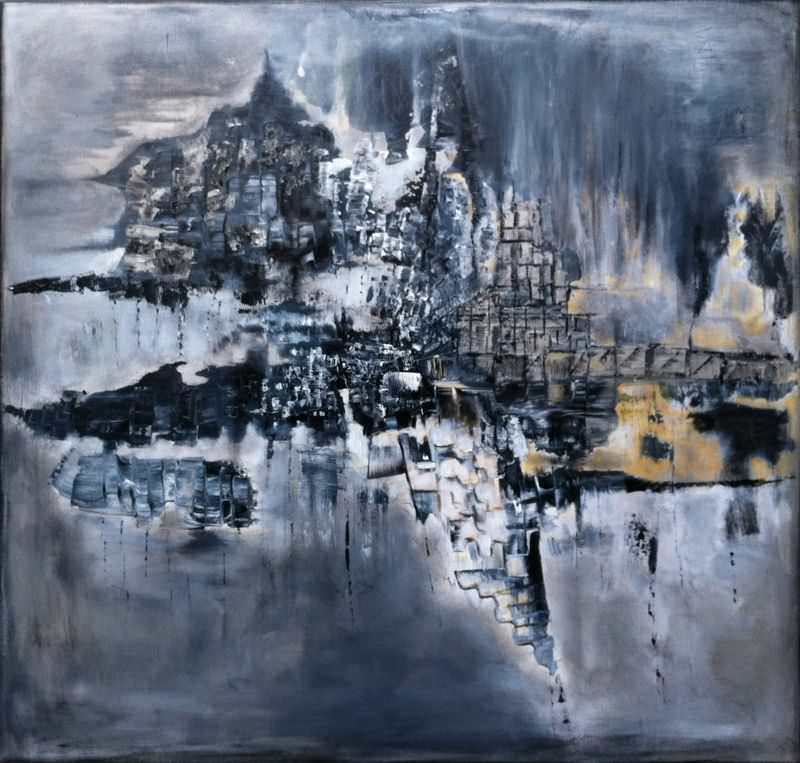
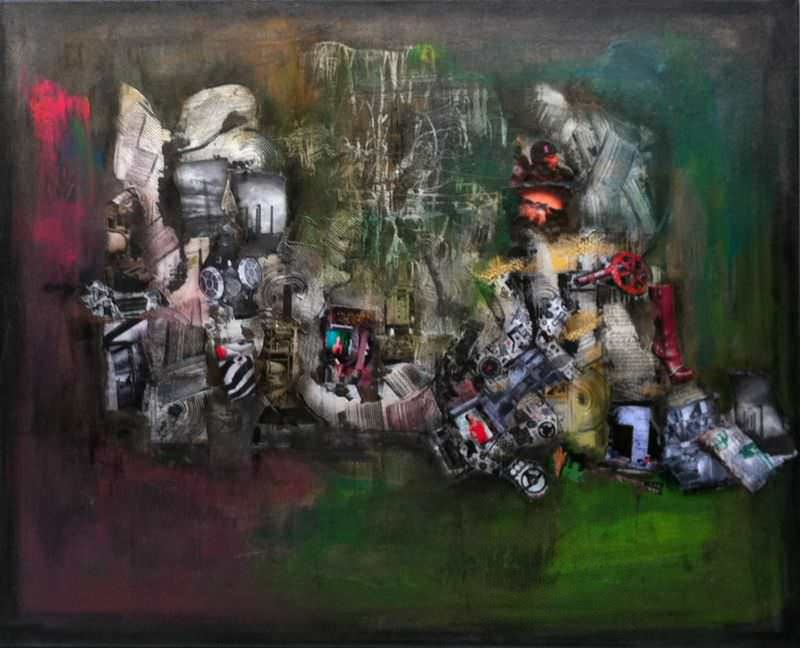
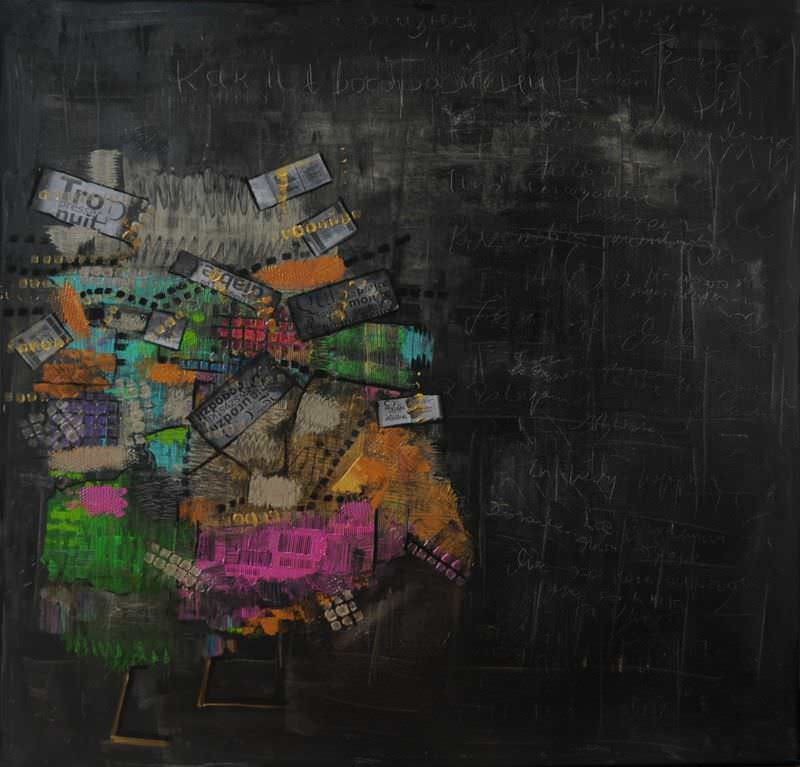
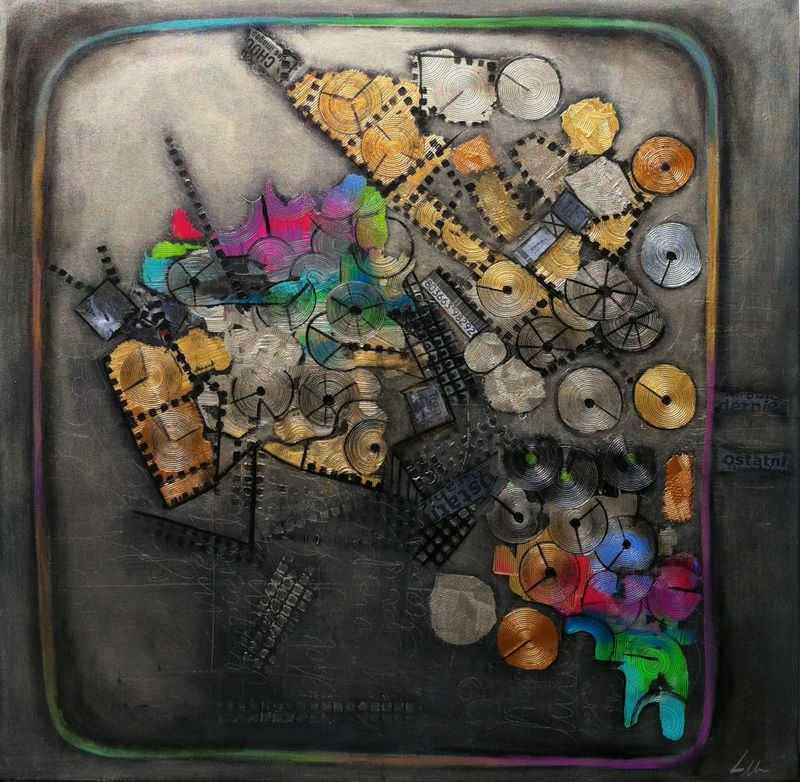
Marzena, French-Polish artist-painter

Marzena Lavrilleux 1

Marzena Lavrilleux 2

Marzena Lavrilleux 3

Marzena Lavrilleux 4

Marzena Lavrilleux 5

Marzena Lavrilleux 6

Marzena Lavrilleux 7

Marzena Lavrilleux 8

Marzena Lavrilleux 9

Marzena Lavrilleux 10

Marzena Lavrilleux 11

Marzena Lavrilleux 12

Marzena LavrilleuxArtist: Marzena Lavrilleux
Born in Lodz (Poland) in 1969, I came to France at the end of 2007 and I’m now living in Orleans. I’ve painted since 2008. Before arriving in France, I worked with a Polish artist. We made a few fashion shows in Poland (Warsaw and Lodz). Until then, my artistic sense was expressed more in fashion clothing. The ability to express emotions through painting has always fascinated me. It was something of a revelation, not of my artistic side, but my ability to express myself on a canvas. In my paintings, I want to express my emotions, which are sometimes extreme. I never prepare what I am going to paint, it is a spontaneous expression of my imagination. Most of my paintings are dark for the reasons mentioned above. My paintings are subjective because I have no perception of people who will view them. So everyone will see what he or she wants.

Learn more about Marzena and see more of her work at her Website and Facebook page.

Postcolonial Thoughts: Liz Linden: I wasn’t lying; you didn’t ask the correct questions. January 9 – March 12, 2014

by Christopher Hutchinson

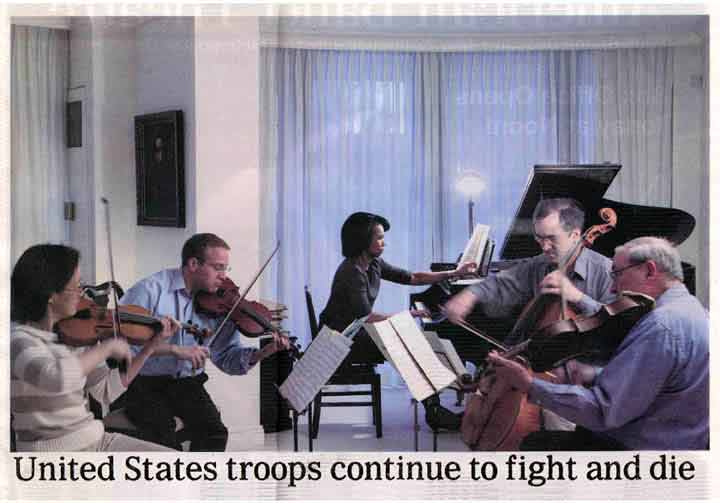
Liz Linden presents viewers with simple, straightforward imagery that unfolds into multiple, often contradictory readings of everyday objects. Over the past seven years Linden has created striking readings of images from The New York Times in her Cartoons (2006-2013) by enlarging and re-captioning selected photographs with text from the articles they illustrate: drawing attention to commentary in the article that broadens the meaning of the image.”
http://www.hfgallery.org/exhibitions.html

Liz Linden Cartoon (04/09/06, from text by Anthony Tommasini, photo by Stephen Crowley), 2006 Archival pigment print on plexi mount 13.25” x 9.25” http://www.lizlinden.com/Cartoons.html

Liz Linden
Cartoon (04/09/06, from text by Anthony Tommasini, photo by Stephen Crowley), 2006
Archival pigment print on plexi mount
13.25” x 9.25” http://www.lizlinden.com/Cartoons.html

Semiotics & Pop

se·mi·ot·ics
n. (used with a sing. verb)
The theory and study of signs and symbols, especially as elements of language or other systems of communication, and comprising semantics, syntactics, and pragmatics.
http://www.thefreedictionary.com/semiotics

Linden’s artist talk at the Hagedorn foundation Gallery on January 9, 2013 was full of the artspeak terminology, especially that of semiotics, to explain and validiate her work. While Linden rationalized her work behind an academic vocabulary, upon examining the work itself, the context of semiotics is not quite accurate.What we have here is a literal definition of theory projected as art. Does this literal definition art qualify as art or artifact?

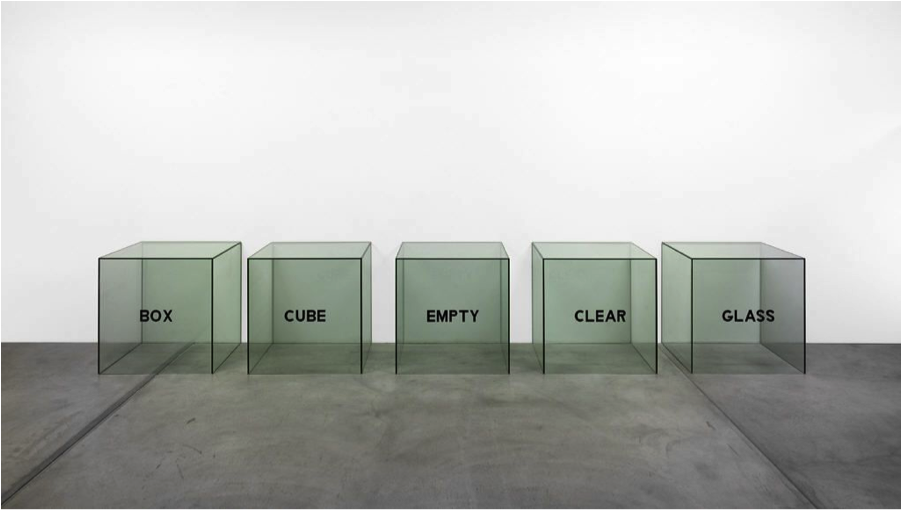
There is a common misconception of the definition of conceptual art, where one thinks that by executing a specific concept one has achieved conceptual praxis. This is not conceptual art; rather it is an illustration of a narrative. True conceptual art requires no physical making; it’s not interested in illustrations. In conceptual art the idea or concept is the most important aspect of the work. “When an artist uses a conceptual form of art, it means that all of the planning and decisions are made beforehand and the execution is a perfunctory affair. The idea becomes a machine that makes the art. This kind of art is not theoretical or illustrative of theories; it is intuitive …”-Sol Lewitt http://www.tufts.edu/programs/mma/fah188/sol_lewitt/paragraphs%20on%20conceptual%20art.htm

Joseph Kosuth. 1965. "Box, Cube, Empty, Clear, Glass – A Description http://nsmn1.uh.edu/dgraur/Research.html

Joseph Kosuth. 1965. “Box, Cube, Empty, Clear, Glass – A Description
http://nsmn1.uh.edu/dgraur/Research.html

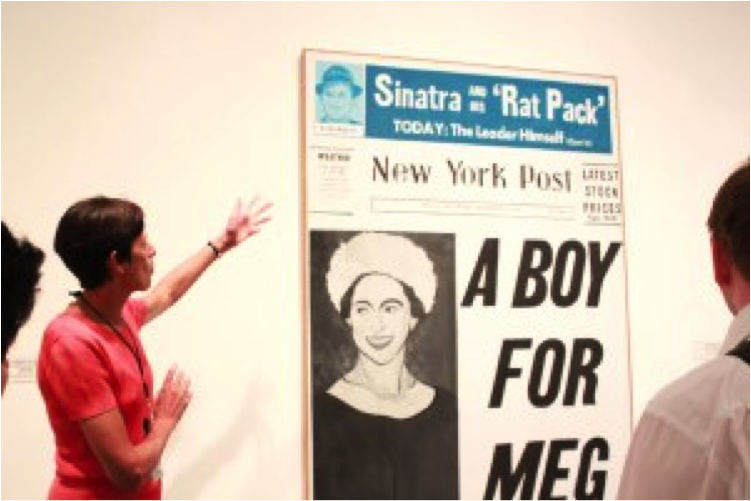
Linden claims the use of the random text already present in the newspaper juxtaposed beside the image printed creates the system necessary for the recognition of semiotics at work. Juxtaposing the Image and Text, only allows for one possible conclusion. The issue present in Linden’s Cartoons is the iconography present in its illustration of concept. Pop would be a more accurate term for Linden’s work. There was a familiarity with her Cartoons that brought to mind Warhol’s disaster series. Warhol did not use art speak to elevate Pop art to become more than what it was, 15 minutes only to be easily digested then forgotten.

Andy Warhol, "A boy for Meg," 1962 http://gloriajoh.wordpress.com/tour/

Andy Warhol, “A boy for Meg,” 1962
http://gloriajoh.wordpress.com/tour/

Pop & Authenticity

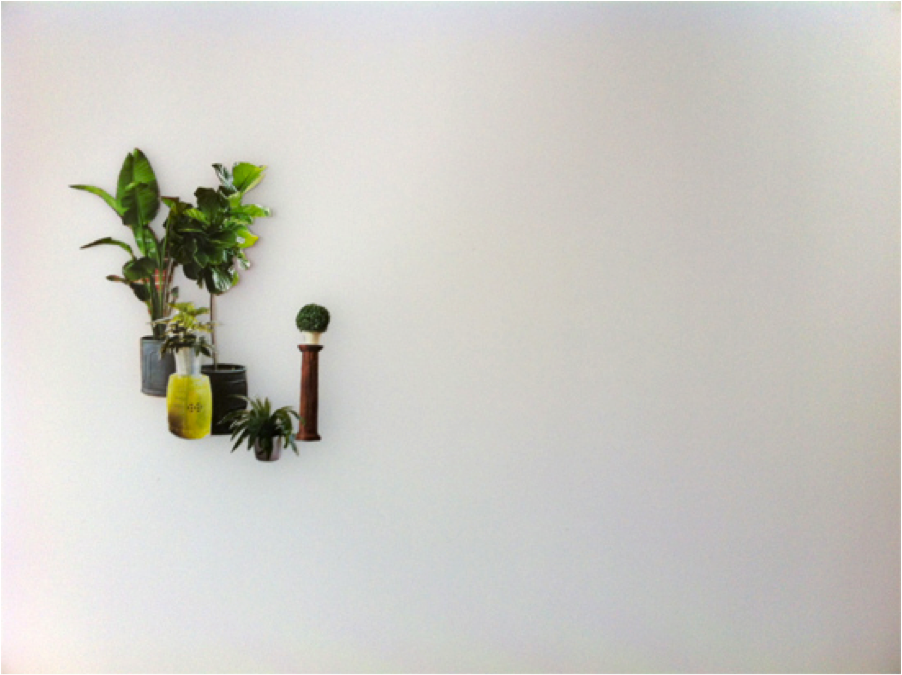
“In the suite of collaged images, exotic domestic (2013), Linden resituates photographs of archetypal houseplants culled from the pages of interior design and lifestyle magazines in groups on blank pages to create surprising and quirky relationships through the plants anthropomorphic abstractions. These houseplants are the cornerstone of Linden’s third body of work in the exhibition—a hypothetical installation for which she will place a live and artificial Phalaenopsis orchid side by side for the duration of the exhibition. With this coupling Linden presents a compelling tautology that presses on questions of representation, signification, and what the artist calls the plant’s “oxymoronic status as minimalist decoration.” These works shed light on the social and political context we consciously or unconsciously bring to our perception of images and objects, challenging the received epistemology and learned affective responses ubiquitous in contemporary western culture.” http://www.hfgallery.org/exhibitions.html

Liz Linden exotic domestic no. 1 Paper on denril 17”x14" http://www.lizlinden.com/exotic_domestic.html

Liz Linden.   exotic domestic no. 1
Paper on denril
17”x14″
http://www.lizlinden.com/exotic_domestic.html

Linden led a discourse on the strange habits of humans that bring exotic plants into their homes and how in catalogues the only objects that are not for sale are the plants. Of Linden’s exotic domestic series (not pictured) the most interesting was the Orchid sculptures exhibited side by side on two pedestals. One orchid was real and the other fake.

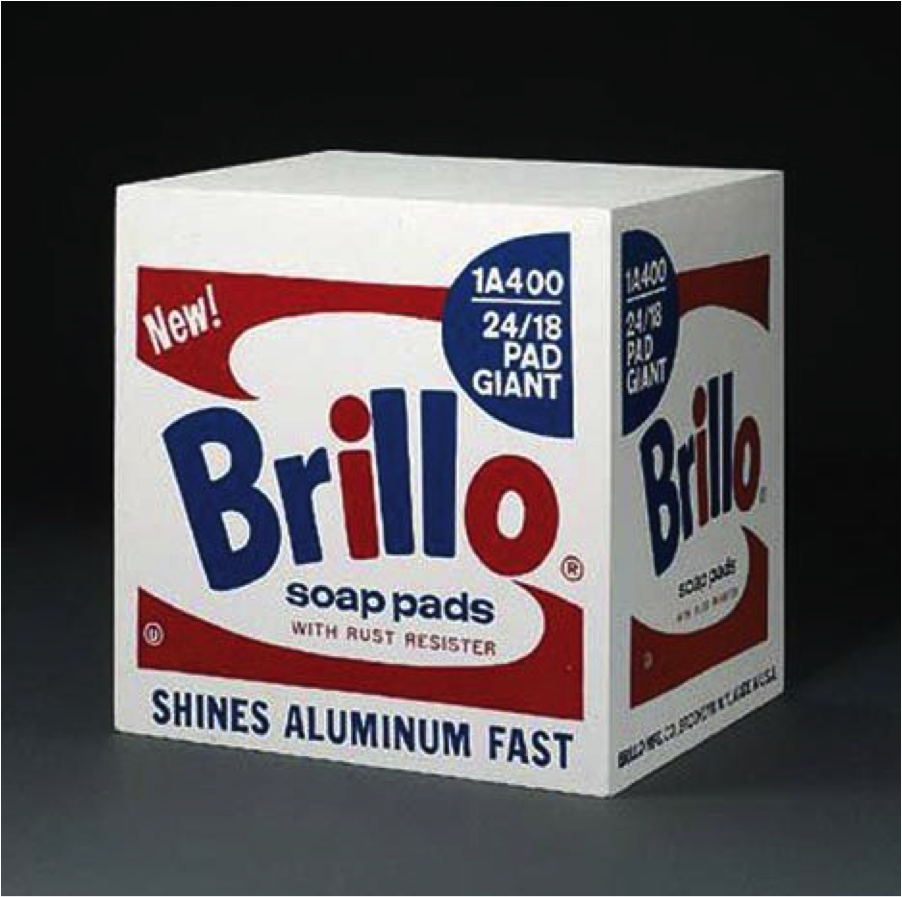
The viewer was asked to question, which was the authentic? One of the main components of Pop art was to purposely challenge the value of authentic art, to use mass media production as the cheapest way to level the all that the art world values. Linden’s work repeats these same dated goals, which would not be a problem if these works were presented as artifacts. Does Linden’s exotic domestic orchid challenge authenticity more successfully than Warhol’s brillo boxes?

The values of artifacts are judged based on the civilization present when created. Roman sculpture considered less in comparison to Greece. Linden’s artifacts do not succeed in contributing a new dialogue Pop, much less semiotics.


Christopher HutchinsonChristopher Hutchinson is an Assistant Professor of Art at Atlanta Metropolitan State College and Archetype Art Gallery Owner in Atlanta, Ga. He received his Master of Fine Arts Degree in Painting from Savannah College of art & Design, Atlanta and his Bachelor of Arts Degree from the University of Alabama in Huntsville, Alabama. He lived in Alabama for 10 years before moving to Atlanta in 2008.

Learn more about Christopher and his work at Black Flight 144.