Recent

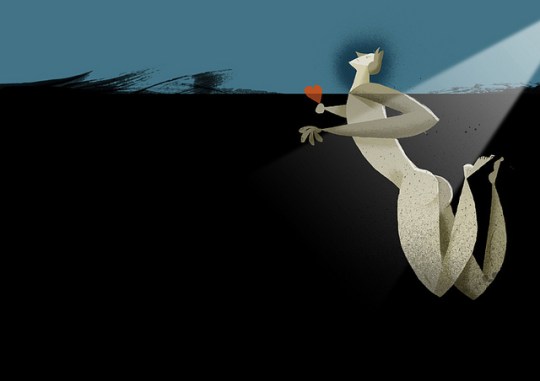
Ocean Haiku

by Virginie Colline

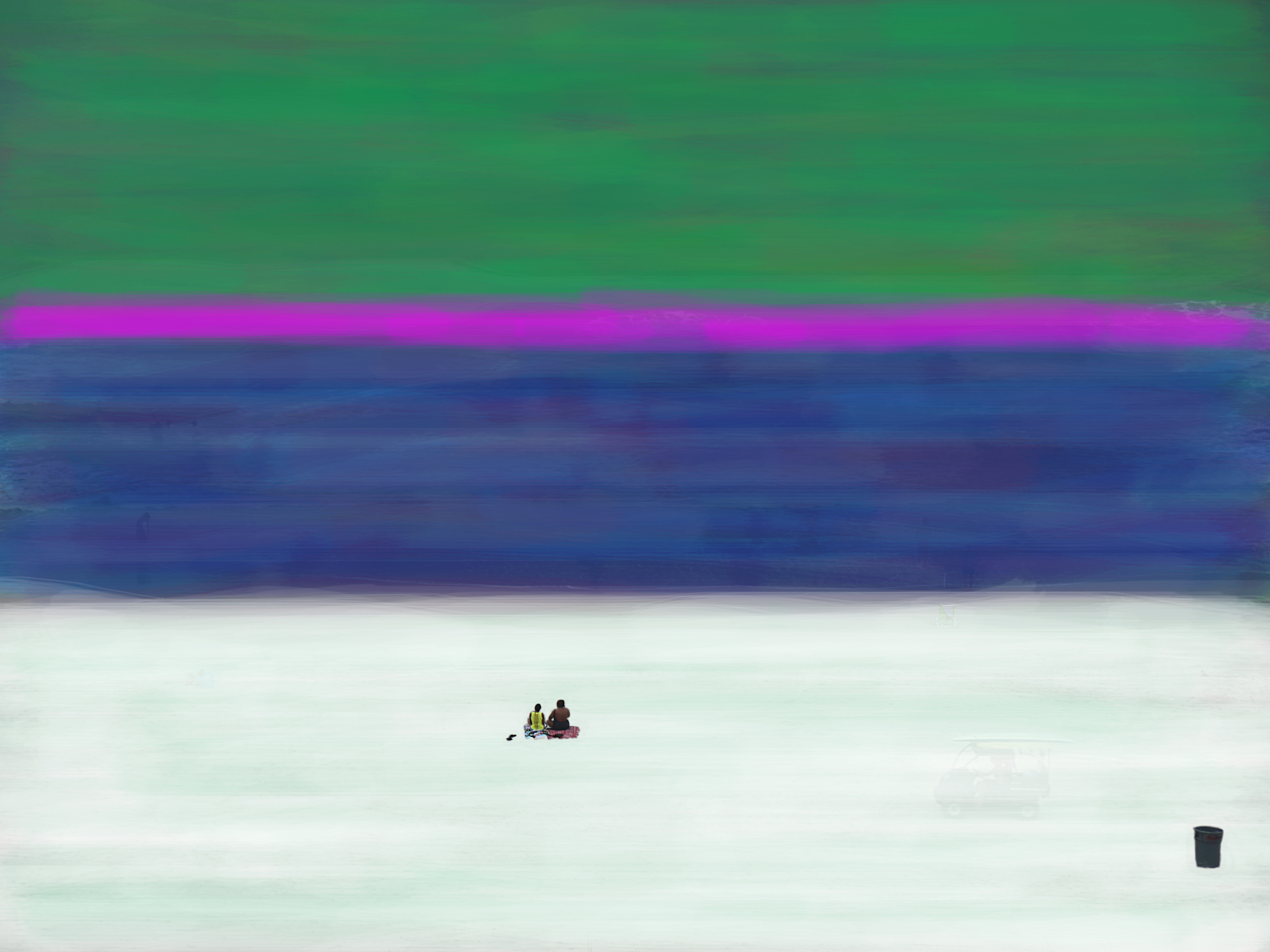
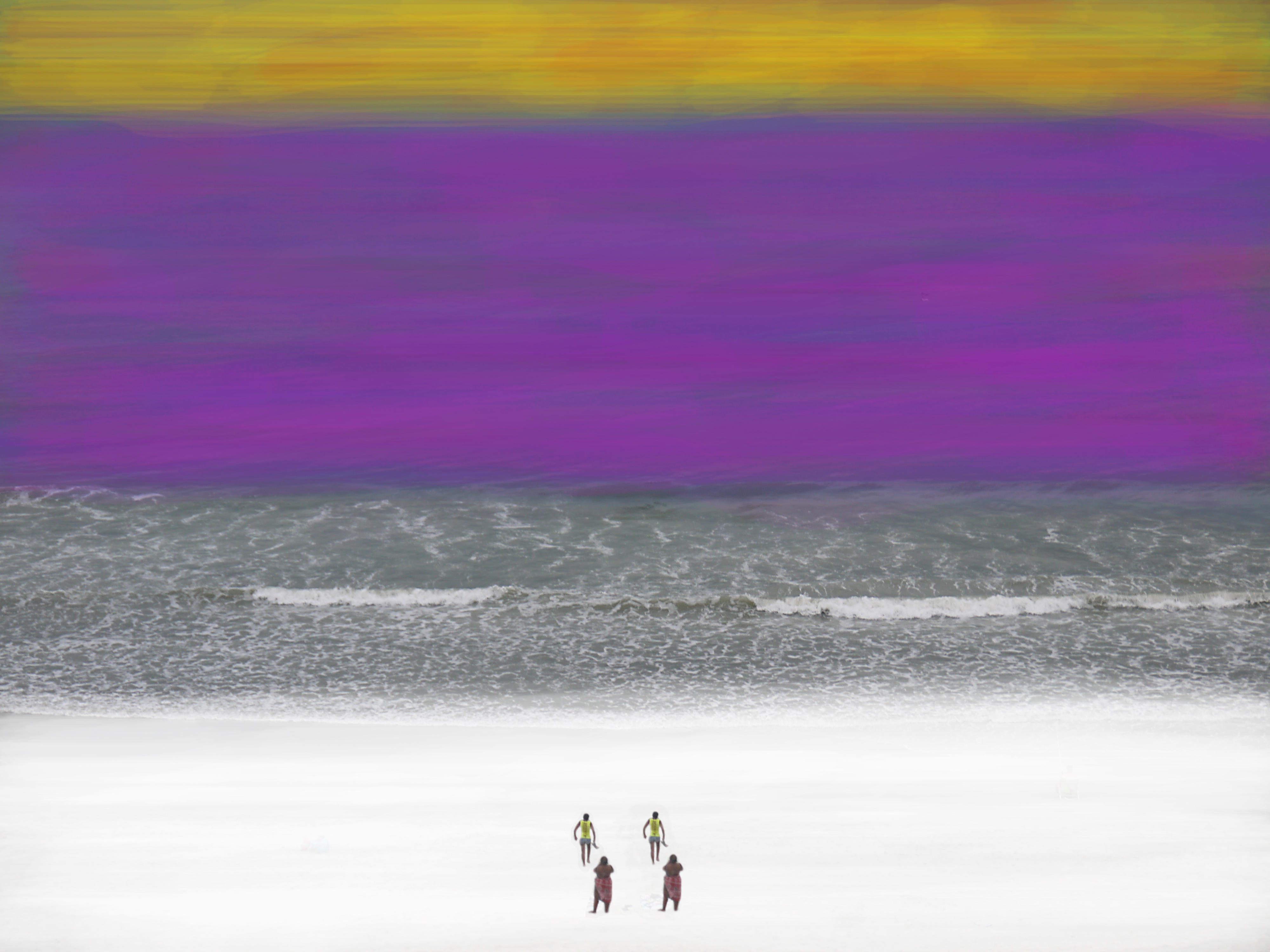
Illustration by Riccardo Guasco from "The Book of A+R"

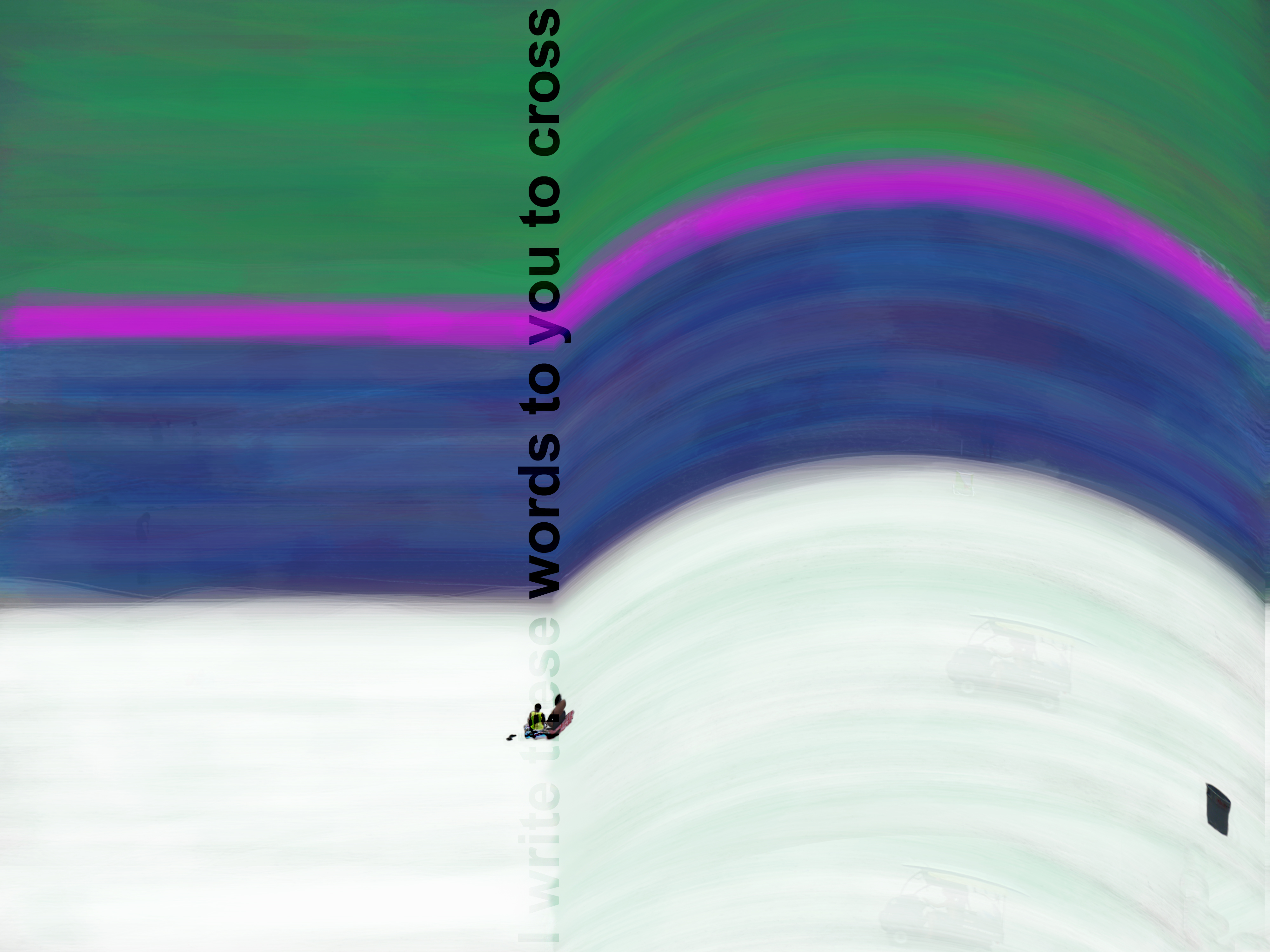
Illustration by Riccardo Guasco from “The Book of A+R”

onyx shingle beach
all night long he gently chokes
in a stagnant dream

far side of the bed
after a winter away
an ocean of ice

the words left unsaid
sinking down into the depths
ripples and sunset

unknown latitude
he has lost track of his self
riding the black waves


Virginie Colline lives and writes in Paris. Her poems have appeared in The Scrambler, Prune Juice, The Mainichi, Frostwriting, Prick of the Spindle, Mouse Tales Press, StepAway Magazine, BRICKrhetoric, Overpass Books, Dagda Publishing, Poethead, Silver Birch Press, The Bangalore Review, and Yes, Poetry, among others.

Locating Place: Fragments of an Illness

by Nicholas Quin Serenati

Locating Place: Fragments of an Illness is the beginning of a three-part series. The next installment is Reclaiming Experiential Residue: Misconceptions.

About the series: Illness experience is a resource for experiential knowledge. To that extent, it is important to understand that life has infinite spaces which can be experienced. My work is concerned with phenomenological experiences that transform these spaces into places. These places become the foundations in our individual lives – the construct of our identity. The work in this series is intended to ascertain an understanding of the ways meaning–making functions as a method for healing, and how the creative process operates to uncover and identify new metaphors that best communicate illness experience to others.


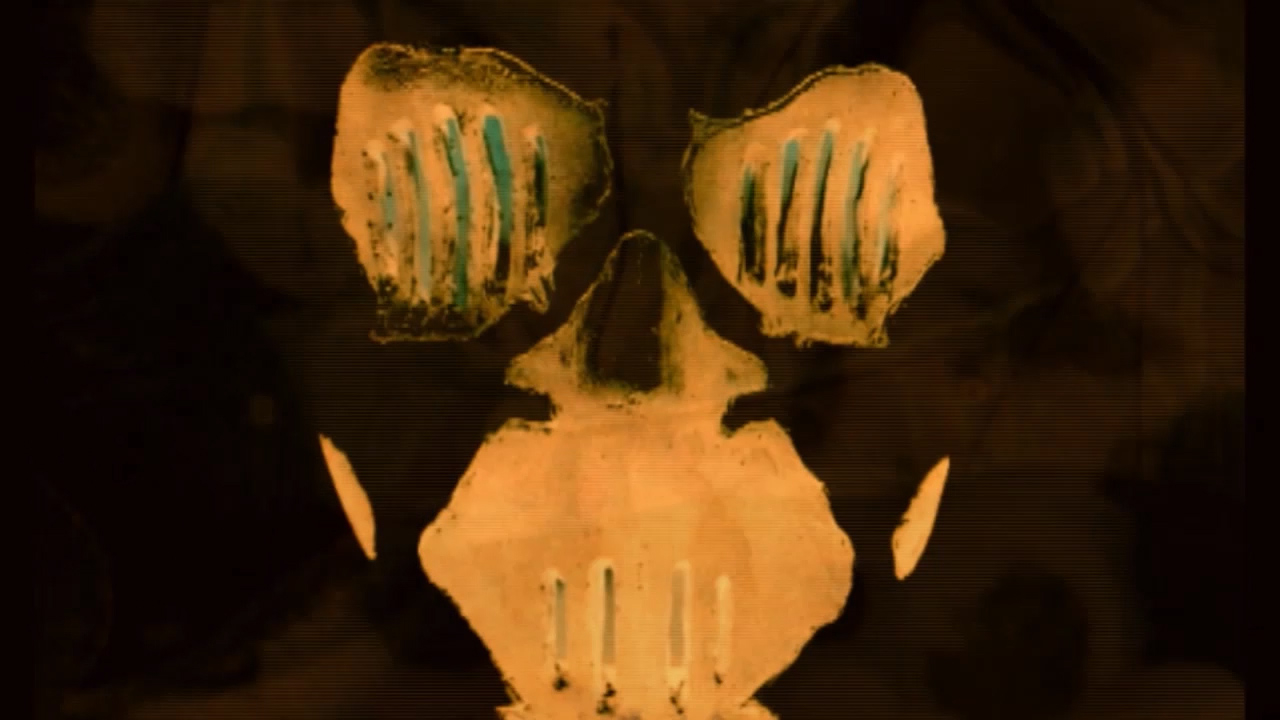
Screenshot 1, Fragments of an Illness, 2011

Screenshot 1, Fragments of an Illness, 2011


We all have bodies. This is not a truism. It is not an exercise in the obvious. It is a fact – and a fact of a special kind. It is an incontestable fact. Everything we do, we do as or by means of our body. We cannot get beyond the fact that we are bodies. The body is, simply put, where everything in human culture begins and ends.     

(Tobin Siebers, Disability Aesthetics)


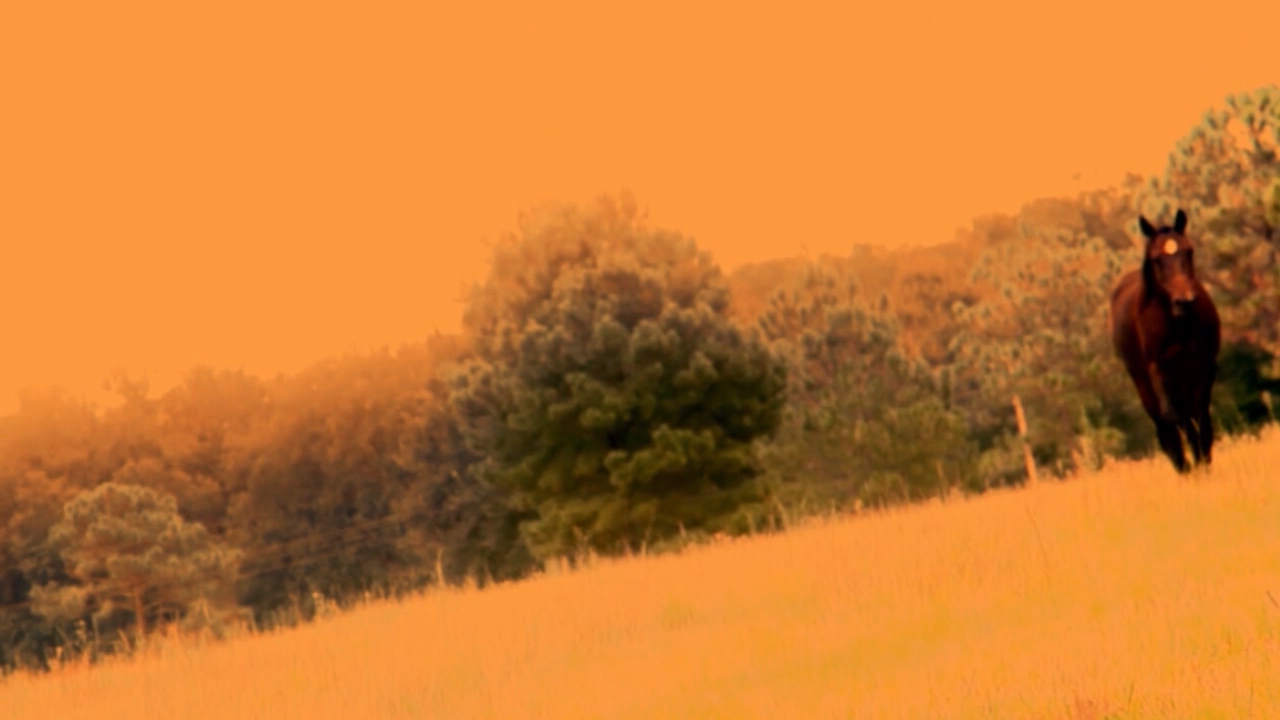
Screenshot 2, Fragments of an Illness, 2011

Screenshot 2, Fragments of an Illness, 2011

When I look at the work that I have produced as an artist, I have come to realize the importance of the body as the locus for inquiry and discovery. The idea of the body as a critical lens for investigating the theoretical and philosophical implications of representation and voice in illness experience is a common thread in my work – whether consciously or subconsciously. My unrelenting interest of the body can most easily be attributed to a personal experience with illness when in 2001 I was diagnosed with Acute Myelogenous Leukemia (AML).

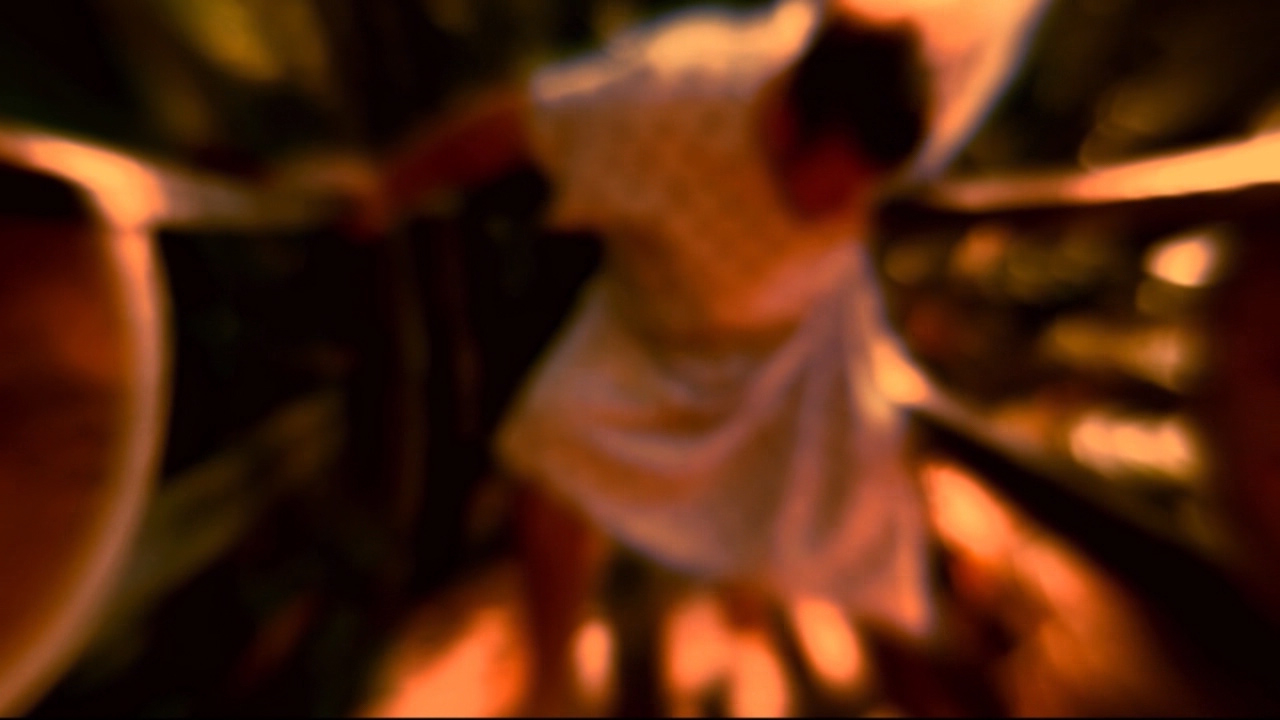
Screenshot 3, Fragments of an Illness, 2011

Screenshot 3, Fragments of an Illness, 2011

Being a young man at the time, the profundity of this experience sparked a curiosity of the human condition that has lingered in many ways over the course of 13 years in remission. Most notably, my illness experience has emerged as a significant preoccupation in my research and creative work. Mortality, representation, voice, identity, humanness, Buddhism, metaphors, illness and disability studies as well as the formal and experimental aesthetics that encompass my art practice, have all played a vital role in the identification of place in my life.

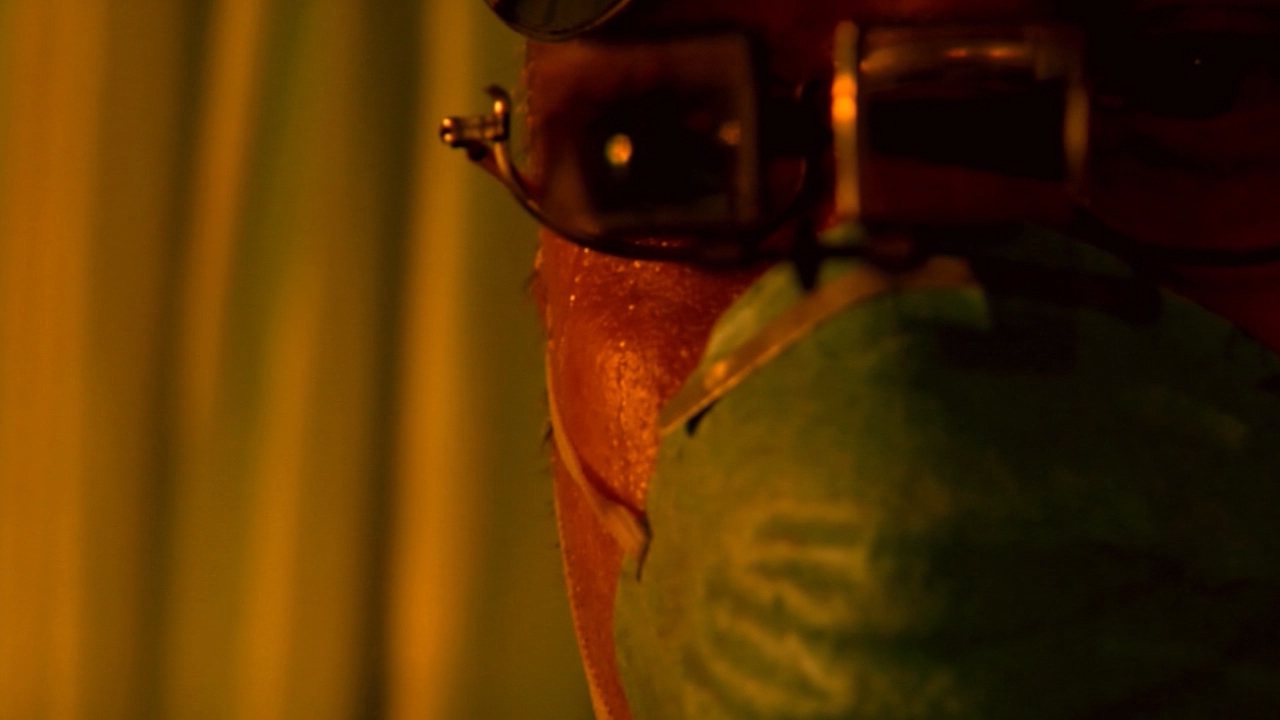
Screenshot 4, Fragments of an Illness, 2011

Screenshot 4, Fragments of an Illness, 2011

The study of the bodymy body – as a territory occupied by illness is my attempt to pierce to the marrow of the questions that inform my art practice. That is why I believe it is through the study of illness experience that a deeply engaged and meaningful source for experiential knowledge can be achieved.

In this particular exploration, I employed video and sound design to execute a reconstruction of experience.

Screenshot 5, Fragments of an Illness, 2011

Screenshot 5, Fragments of an Illness, 2011

The result is my 2011 film, Fragments of an Illness. This film came to exist as a final research project in my doctoral course, HMS 711: The Human Condition: Pursuit of Happiness. Fragments of an Illness situates specific recollections as a metaphorzed-reality within the film. Presented with a concentration into the blending of speed, color, composition, language, sound, and narrative establishment(s), these fragments were my attempt to bridge a dialogue about illness with the aesthetics of the medium and conceivable metaphorical notions.


Nicholas Quin SerenatiNicholas Quin Serenati is an interdisciplinary scholar-artist whose work is defined by arts-based research that explores the potential of medium and discipline in liminal spaces. With a practice rooted in locating one’s place, Serenati employs video, creative writing, photography, sound, installation and performance to investigate forming situations that direct his research around illness and metaphor.

Serenati’s intellectual practice deeply engages the creation of meaning – form and function – and the articulation of story throughout the investigative process. Themes of trauma, identity, illness, disability, experimental narrative, social constructivism, sound and language are all contributing factors to Serenati’s work as a critical discourse. Serenati’s scholarly-art practice is intended to investigate phenomena as a way of achieving profound knowledge of theory, philosophy and art.

Based out of St. Augustine, Florida, Serenati holds a BA in Communications from Flagler College, an MFA in Interdisciplinary Arts from Goddard College, and is a candidate for his Ph.D. in Interdisciplinary Studies: Humanities and Culture from Union Institute & University. He is currently the Art Director / Dept. Chair of the Cinematic Arts program at Douglas Anderson School of the Arts and an adjunct professor of media and cinema studies at Flagler College.

Serenati’s dissertation, ReFraming Leukemia: Metaphorizing Illness as Windows, will be completed May 2014, and the installation of the project is set for early 2015 in St. Augustine, Florida.

Twitter: @nqserenati
Website: nqserenati.com


Notes from kingCARLA

by Carla Aaron-Lopez

They call this the beginning of a career. Even though my resume is already a mile long, I believe it to be the start of getting to that “emerging artist” label. Somewhere in grad school, I attended a lecture from an artist who asked my class what we were going to do once we graduate. We all agreed that he was crazy and answered that we were going to get jobs and go to work. At the time, it seemed like it made sense and that’s what some of us went off to do. We graduated, got jobs and became professors at respective universities.

However, for some of us, those cards didn’t stack that way. In my case, I was an adjunct at a historically black university for three years until I was cut. I still don’t know why. My unemployment says I was cut because of low enrollment and since then I haven’t been able to pick up another job. I had no choice but to do what I had been trained to do which is be an artist and when I look at the art world in motion I see less of me and more of those that taught me.

Lots of old white men and women. Ain’t nothing wrong with that but it forces me to wonder if I should do this at all. My ego is too big to let appearances cause me to quit. Therefore, I can’t help but to ask and investigate what it takes to be an artist of color in the 21st century. It’s 2014 and I find I still have to play cute little games to get accepted into this centuries old world. I come from a different place. I call it the dirty South, others just call it Atlanta. I’m not much into creating works that examine the place of black women in America or the African diaspora. I’m also not interested in making works that dog the sh*t out of men. I prefer making works that reflect my Southern background just like the ignorant rap music I love listening to while I create works. If you want a postcolonial discussion from me, I’ll direct you to my homie, Christopher Hutchinson, because he has the words you can’t run from.

In the meantime, this post is being created to help you (and me) explore what it takes to be an artist. And here’s the first step. Explore your influences. It doesn’t have to solely be artists. It can be writers, thinkers, dancers and/or rappers. As much as I love rappers is as much as I love Jean Baudrillard and Michel Foucault. It could even be television characters like the great Doctor Who. Examine why you are drawn to these influences. Is it the confidence you’re attracted to? Is it theories that you’ve read and you want to create something that reflects what you’ve learned? Is it history of a person, place or thing? I don’t know. It’s your world coming to life as an artist. We all have a world we live in that separates us from the next person. I believe that’s how we all keep our sanity. Don’t believe me? Check my next paragraph.

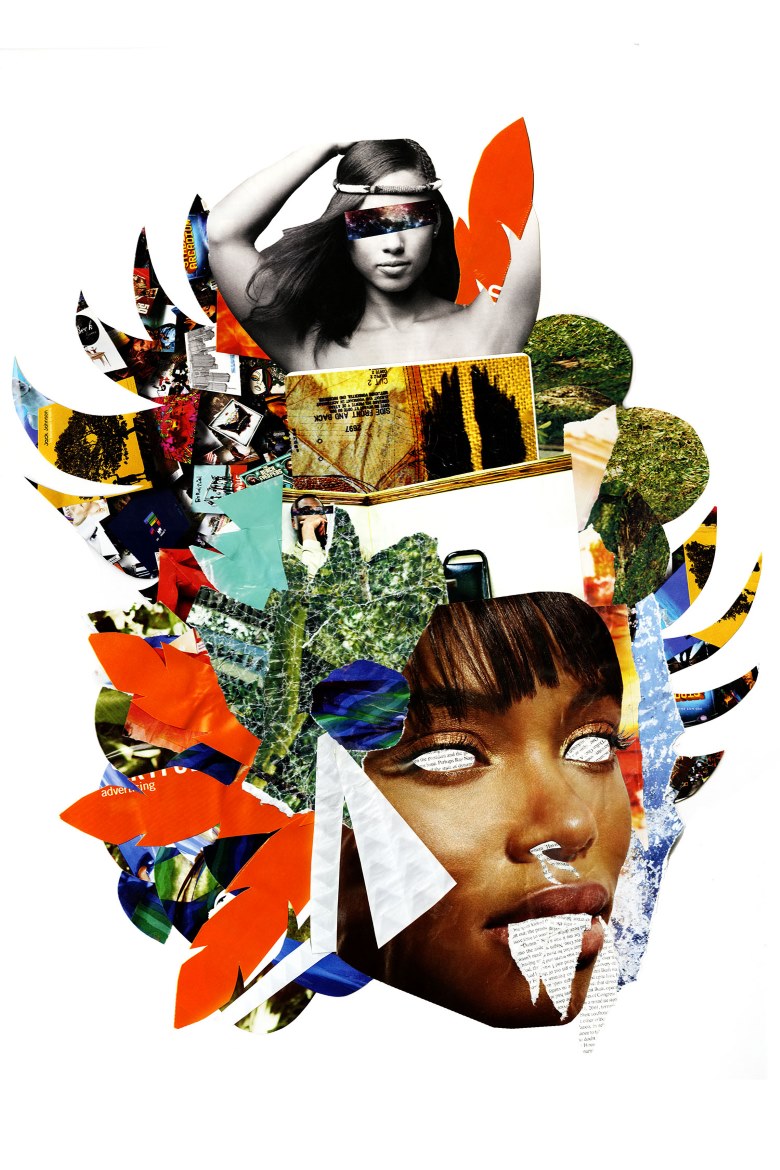
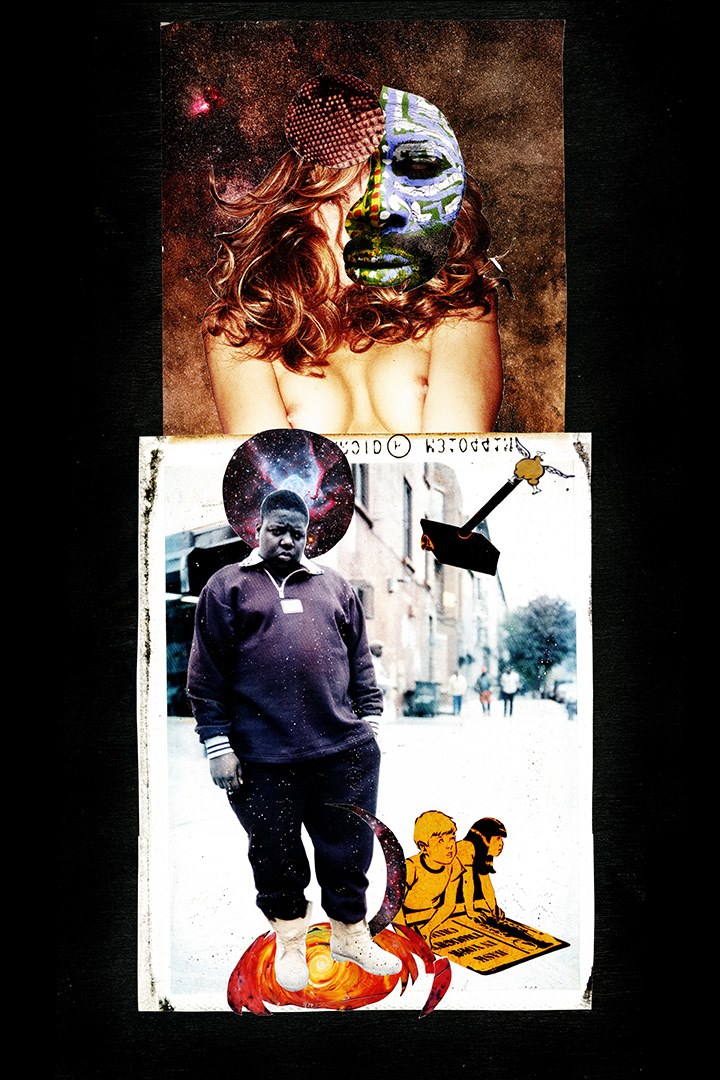
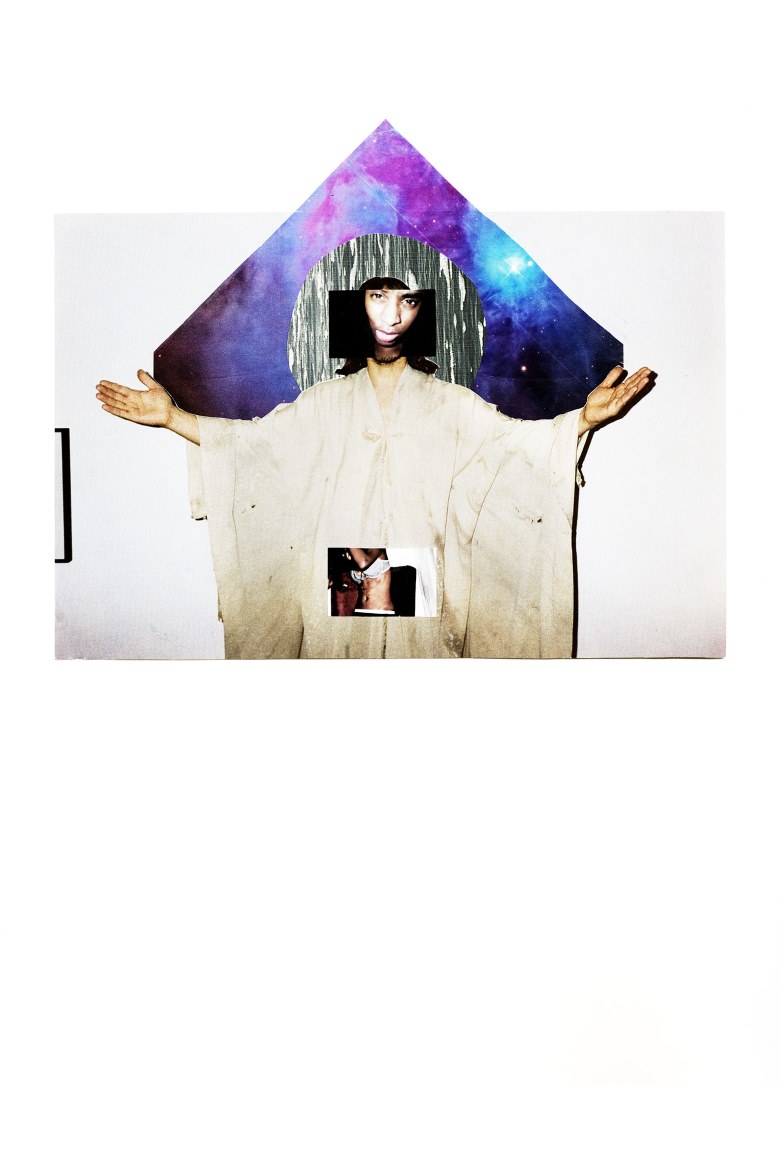
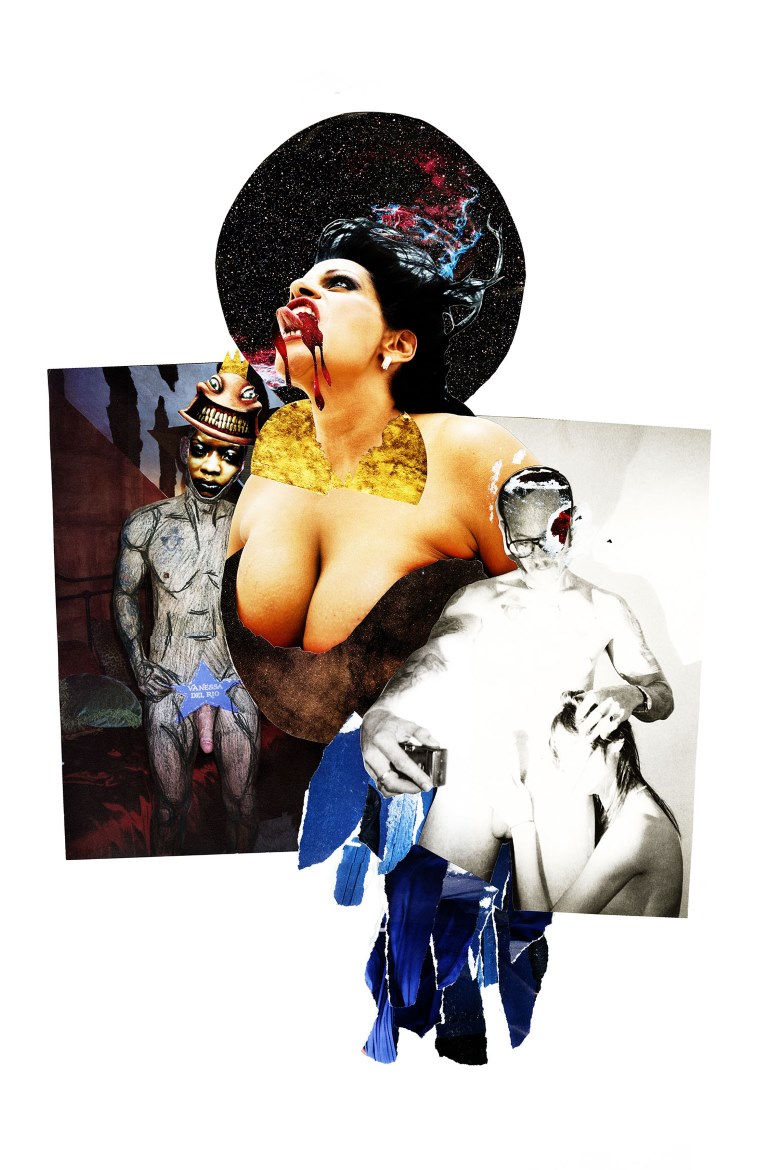
When I graduated with a MFA in photography in 2009, I ended up with a crappy job at TSS Photography transferring children in sports photos to products like keychains, dog tags and mugs to name a few. I hated it. I also didn’t have a camera and I was driving myself crazy. One day, I came across Romare Bearden again and remembered how my favorite black artists could only work using few materials because they had regular crappy jobs and families to feed. I looked around my apartment and saw that I had scissors, glue and plenty of collected magazines. If I couldn’t shoot the photograph then I figured I could make a new image using ones I found in magazines. It was at that moment I realized that I was more than the photographer that some cute little sheet of paper declared. I realized that I needed to investigate image making. In 2011, I started a new body of work that has taken me in a direction that I never anticipated. I dropped a baby from the womb in 2012 which led me to think about the nature of creation. OF COURSE, I knew NOTHING of what it meant to be pregnant. Let alone a mother of color in a world that believes itself to be post-racial. No. I began to think about what images and influences I will be bringing around my son based upon the things I had grown to like. None of them were very pretty, soft or becoming of a woman. They were quite hypersexualized, crude and rude. Just how I like my life.

That woman you see in strip clubs laughing with the dancers? Yeah. That’s me. I love being your family’s worst nightmare walking through your house for dinner. A dirty intellectual. The work I created ended up being bodies that were imbued with power because they appear to be powerless. What happens when you flip a world upside down and inside out?

You get the beginnings of an emerging artist. Take a look and tell me what you think. If the work makes you feel uncomfortable then my job as an artist is complete because those are the images I have to deal with on a daily basis.

– Carla Aaron-Lopez
@iamkingcarla
whoiskingcarla.com

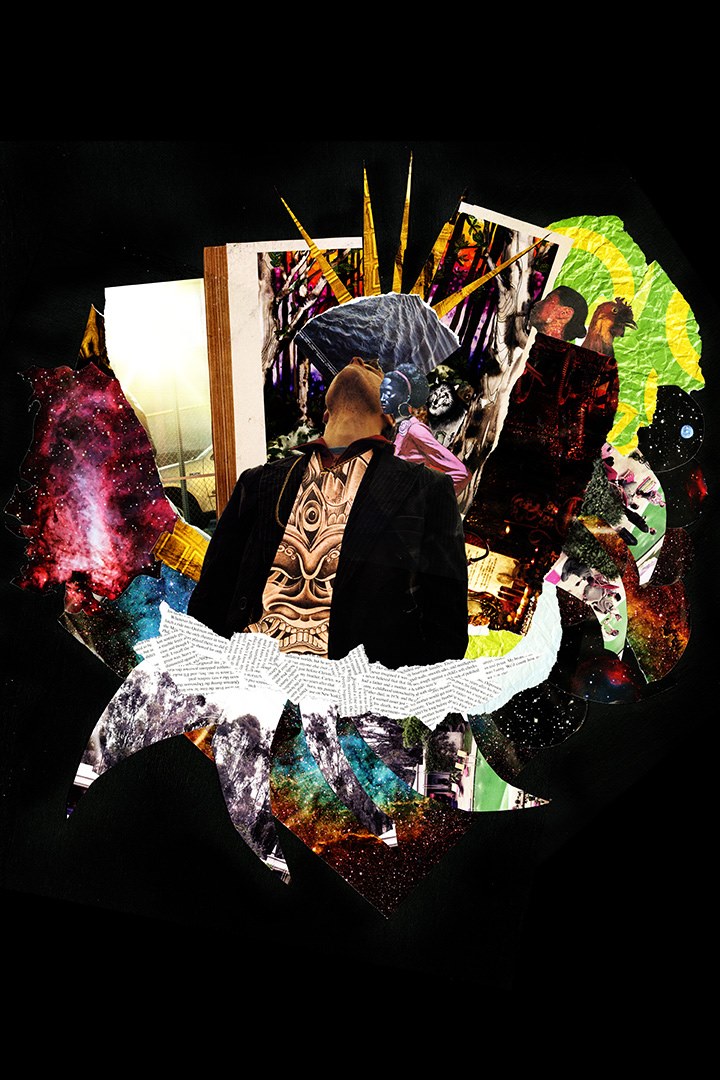
original mother, 2011

original mother, 2011

biggie alone, 2011

biggie alone, 2011

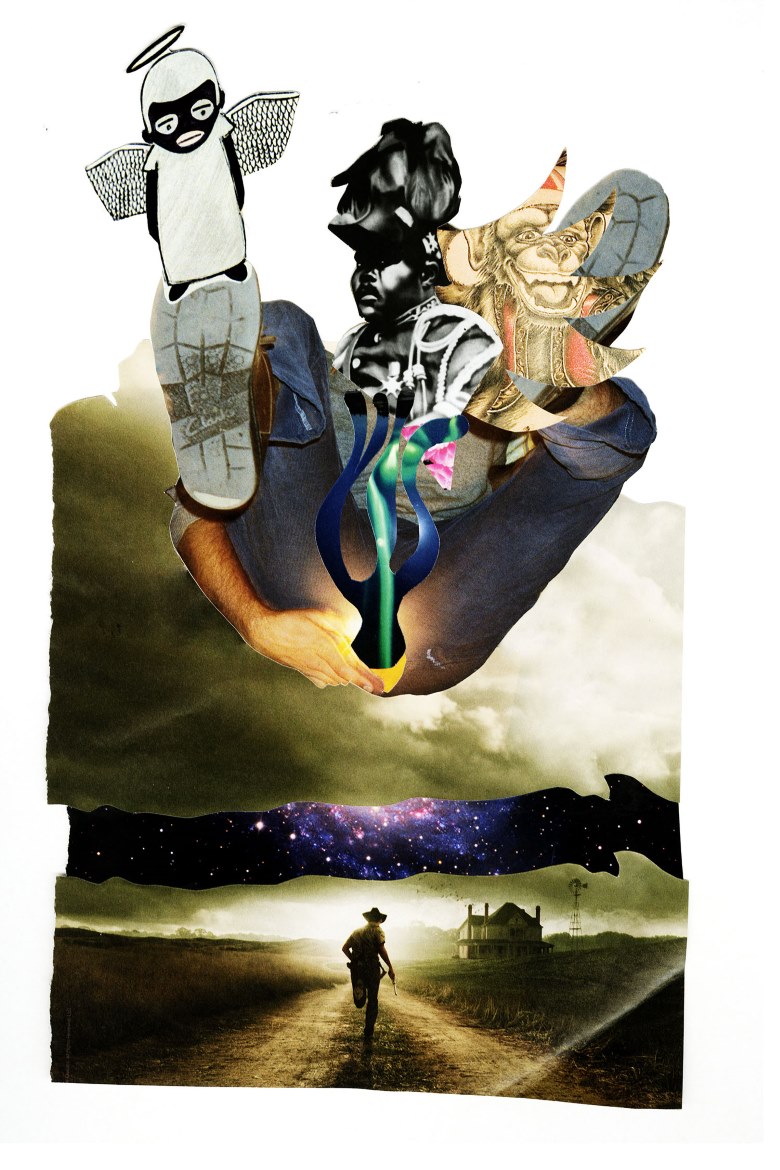
black girl jesus, 2012

black girl jesus, 2012

queen vanessa, 2011

queen vanessa, 2011

duality, 2011

duality, 2011

garvey fart, 2012

garvey fart, 2012

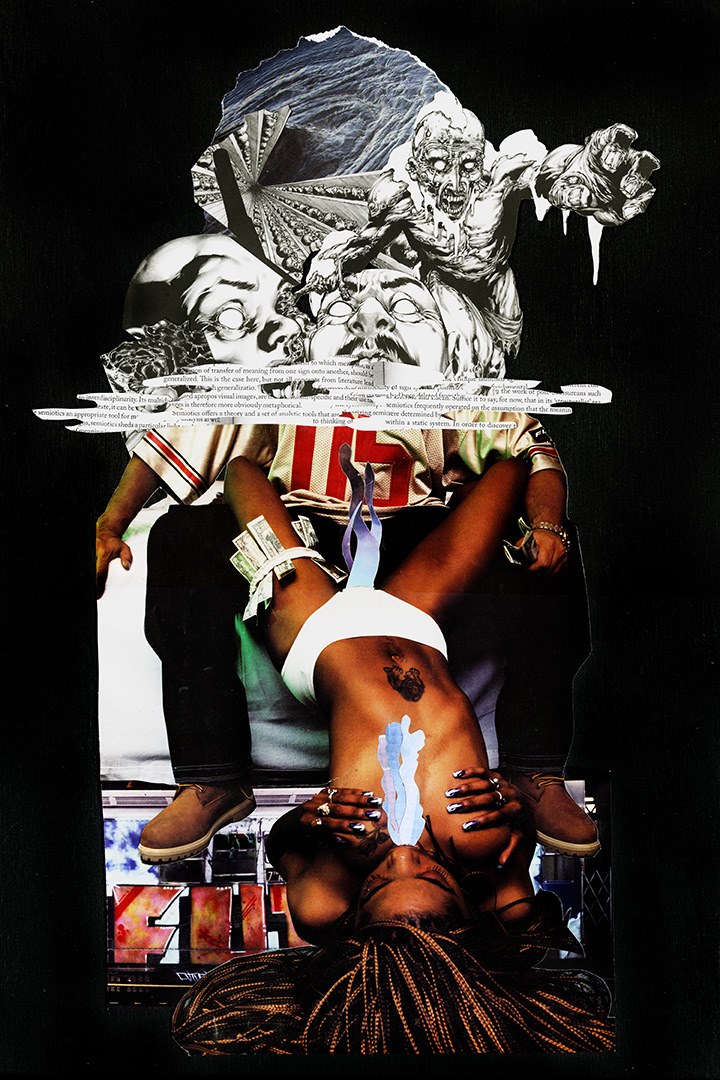
zombie shaman, 2012

zombie shaman, 2012

the me that i most long to give i give to others instead

By Daniel Boscaljon
Image by Melissa D. Johnston

“the me that i most long to give i give to others instead” is the sixth letter in a series of posts called Letters to You written by Daniel Boscaljon with images by Melissa D. Johnston (from one of her ongoing projects). Letters to You began in July with “everytime i write i feel myself disintegrate.”

rothkoexperiment mother and child one 2 for CT

i wish that it were easier for me to reach out to you in comfort and in love, but you make it so incredibly difficult to love you that i must admit that your efforts have become more or less acceptable.  i believe that you do desire to be loved, in your way…but of course only insofar as it meets your expectations.  You have a list of rules about what loving you must mean, and insofar as i am not designed to follow a program of rules…i fear that i will continue to be a disappointment to you.  Why must you insist on finding things which you can take personally, or reasons that will allow you to feel wronged?  Is it as simple as the fact that you would rather stew in a justified hurt than enjoy the world?  That you would rather clothe yourself in the humble garments of the put-upon saint than expend your energy in serving the others in the world with actual sorrows?  That you would rather be the object of pity than love?  If only you could see that your rules for others are what hurts you, and not the intention of those who are moved (in their own ways) to love!  i cannot be sorry that i offend you for i feel as though the offense is solely YOURS.  my intention is always to love you, always and in spite of your reactions to my desires: i know not what more i can do.  even though you clearly desire unhappiness, i nonetheless cannot be one to mistreat you directly for i feel as though there is enough misery in the world.  rothkoexperiment mother and child 1 for CT

but for this i am sorry: i lack the courage to confront you with these facts.  perhaps if i were to call you and explain to you why others are slow to embrace you, and quick to move away from conversation…it would help.  perhaps if i were to go for a coffee with you and speak softly to you these hard truths, there would be time enough for a change.  the rare moments when you sparkle forth with a genuine smile–the ones you cannot help but control, the ones that take you by surprise–i know that you are worth saving; however, i always come against the fact that it truly is not my place to have this discussion.  the suspicion about you that you have taught leads me to believe that my words will be twisted and misinterpreted, and that i will become one of the legions in this world which plot against you.  your ability to deceive yourself is a powerful one which not even the truth, in this case, can overcome.  and so instead of being your true friend, or at least a true enemy, i suffer the thrusts of your unjust tongue in silence, preferring to be lashed rather than lash back.  i wish that i could help you, but you have neutralized every attempt to be aided.  you are in complete control of your life: those things which you do not control you ignore.  although i wish that i could know you better or love you more, i content myself with superficial greetings and a hug hello and goodbye.  the would be gifts of love that i would offer, the ways i wish i could delight you, the me that i most long to give i give to others instead.  you leave me no room to do otherwise.

rothkoexperiment mother and child 3 for CT

Daniel Boscaljon has Ph.D.s in Modern Religious Thought and 19th-century American Literature, both from the University of Iowa. His interest is in the fragility and liminality of human experiences. His first book, Vigilant Faith: Passionate Agnosticism in the Secular World was published by the University of Virginia Press this past August.

Happy Holidays and Happy New Year!

happy new yearHappy Holidays from Creative Thresholds! We wish you a fantastically creative New Year full of exuberance, wonder, and delight!

2014 brings a new twice-a-month format for us, an issue coming out every 2nd and 4th Thursday of the month. We’re excited about what additional possibilities this will bring for both content creation and reader experience.

Something else that is new is that Christopher Hutchinson’s “Postcolonial Thoughts” column will be accepting submissions of books, essays, and eBooks for review. Email your interest to melissa@creativethresholds.com.

Here’s to a joyous year for all of us!
Melissa, curator/editor

Michael Dickins: PreOccupied

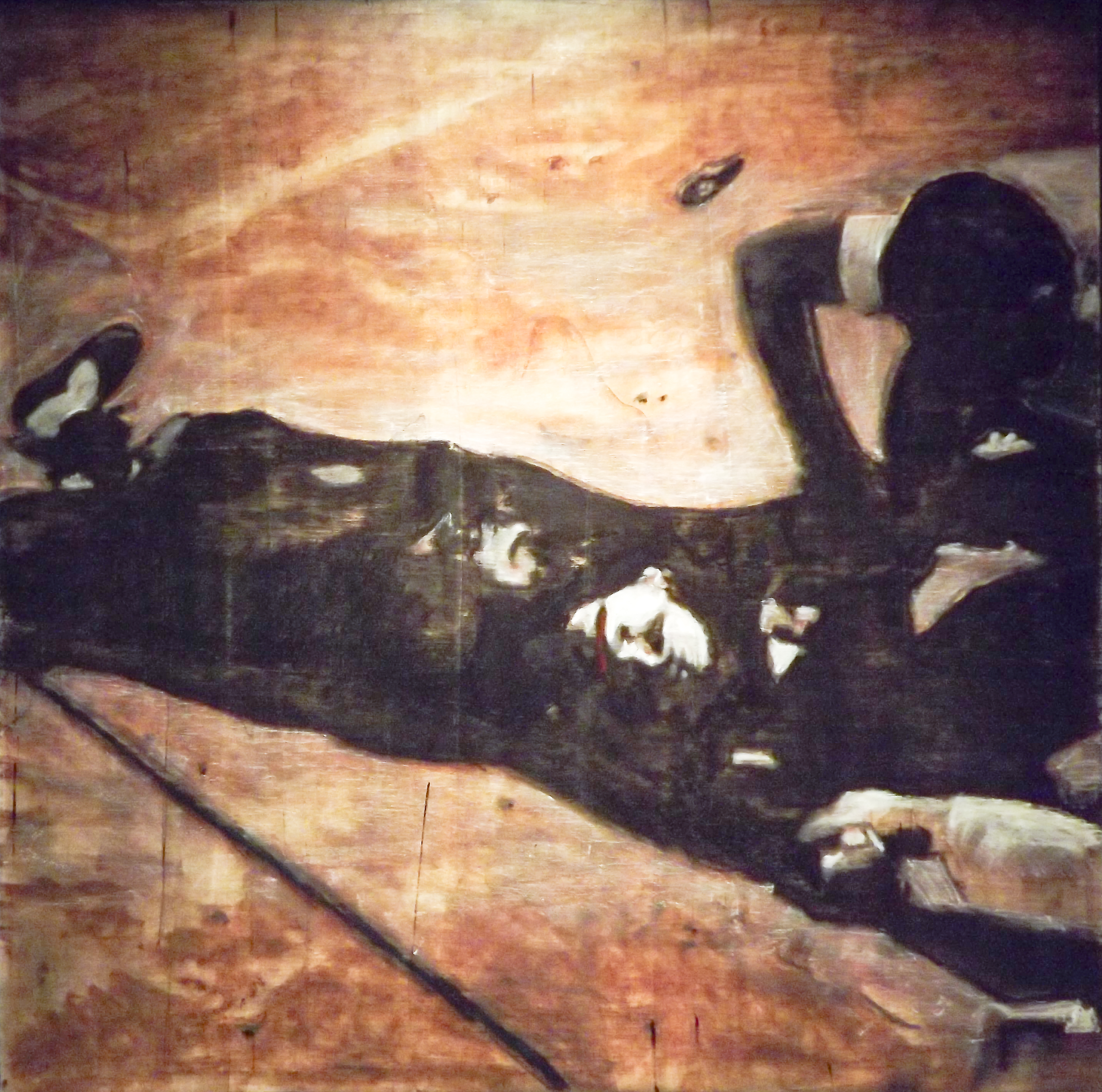
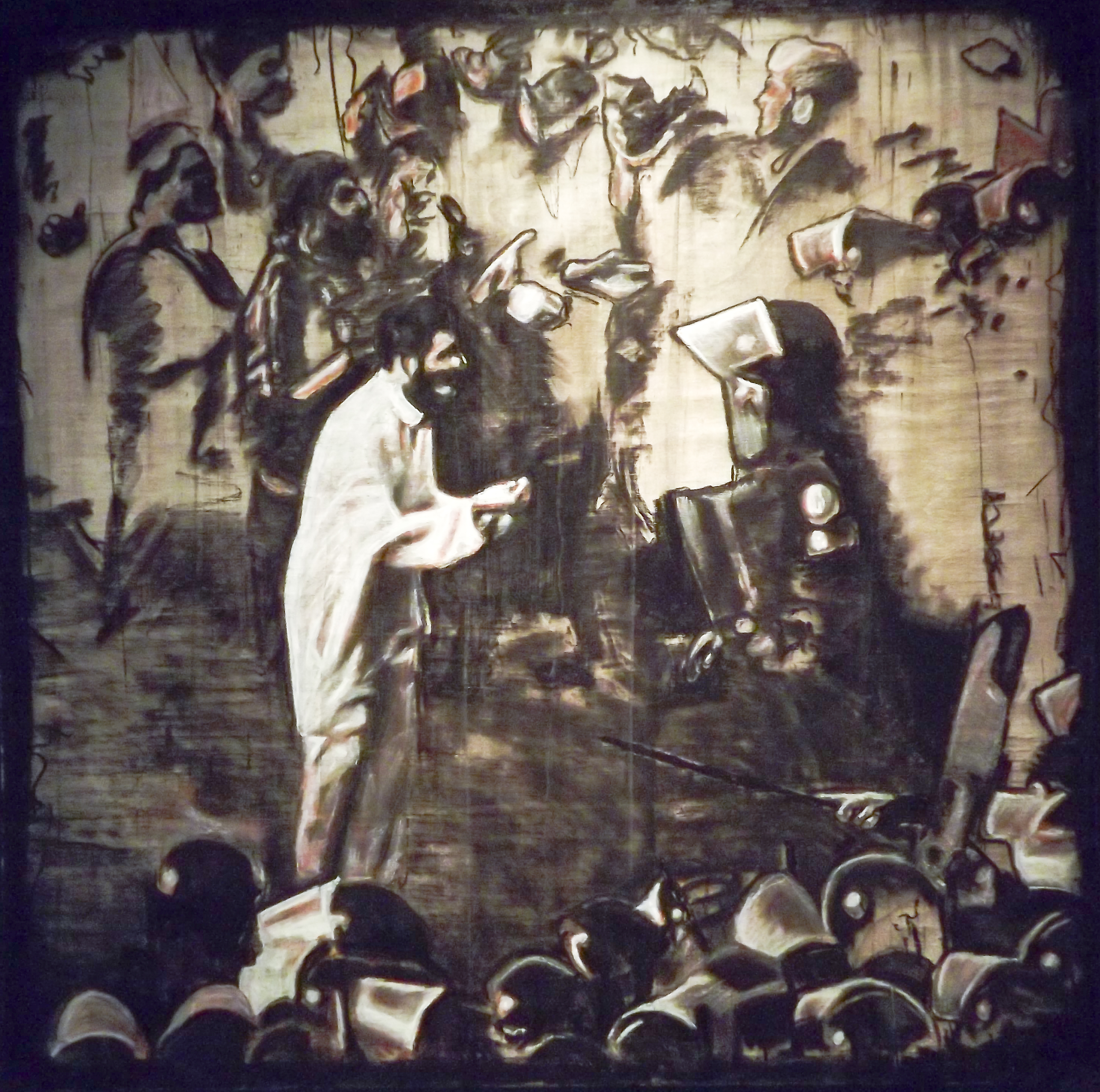
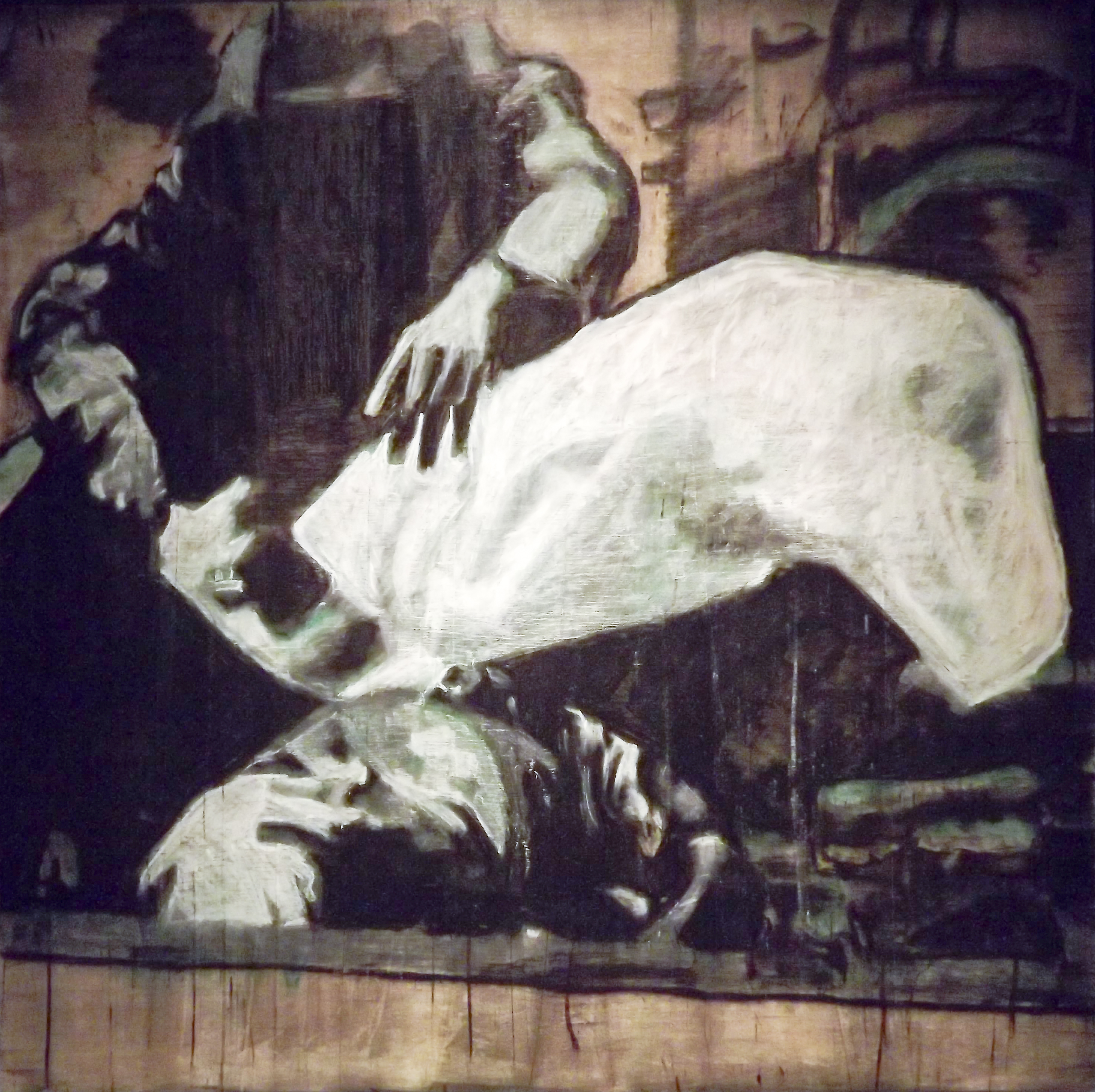
In November 2011, I began talking about the Arab Spring in my classes and found myself looking out at blank stares. I asked my students to raise their hands if they had not heard of the term Arab Spring. Surprisingly, all the students’ hands in two classes went up, except for one, a member of the military. As he sat there looking down shaking his head, I realized that my students were completely unaware of the current global political and economic unrest almost a full year after it had started. Most, at that point, were also oblivious of the three-month-old Occupy Movement that was spreading across the U.S.

Because of this, I began to ask why it was, in the age of social media and instant information, that many people in this country, not just my students, were unaware of current global events — events that included economic collapses, toppled governments, mass civilian deaths, and the overwhelming use of force against civilians. I observed that American mass media, specifically the network news shows, provides a minimal, glossed-over account of world conflicts, restricting the viewer’s knowledge and understanding of events beyond their television screen.

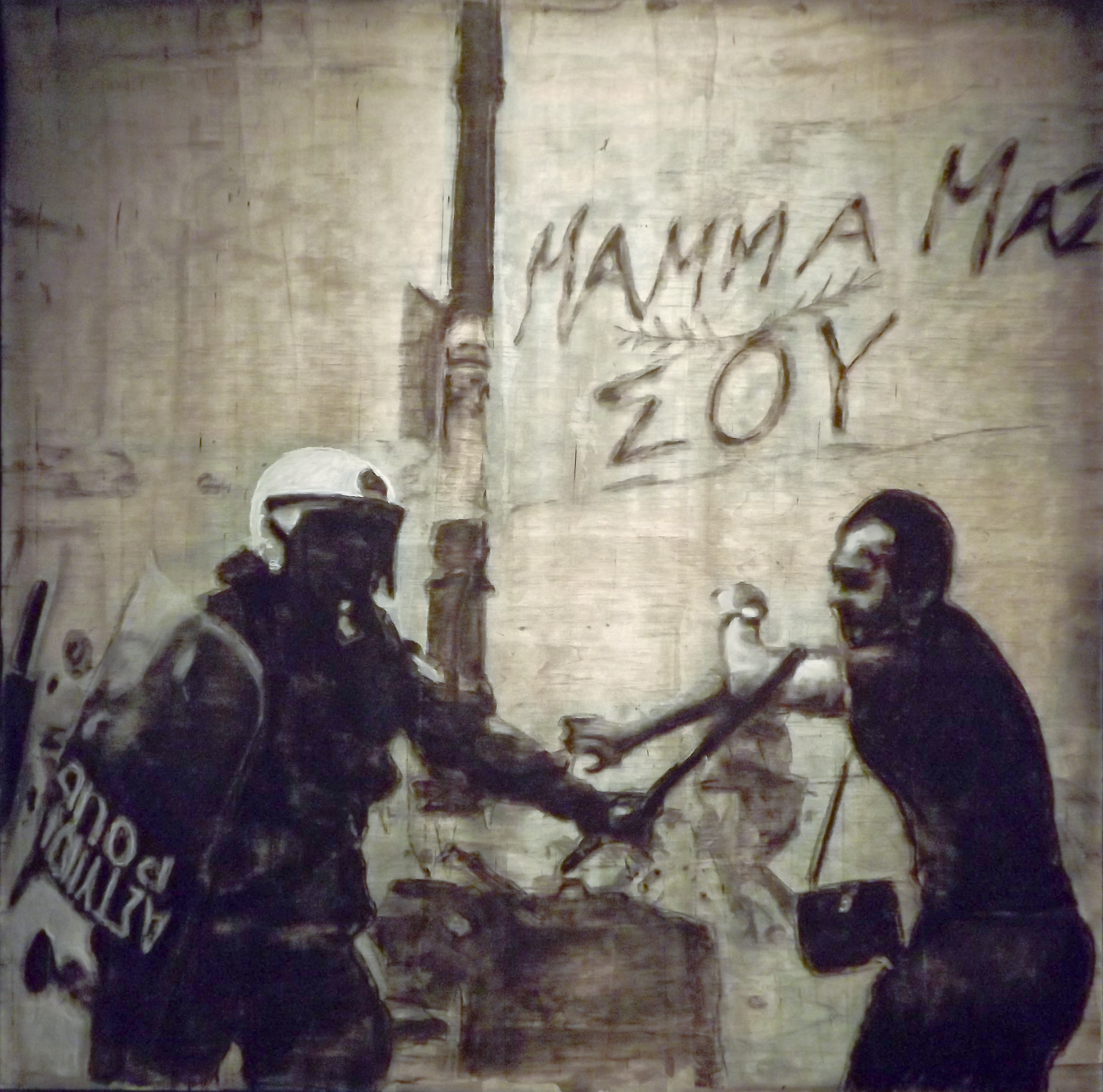
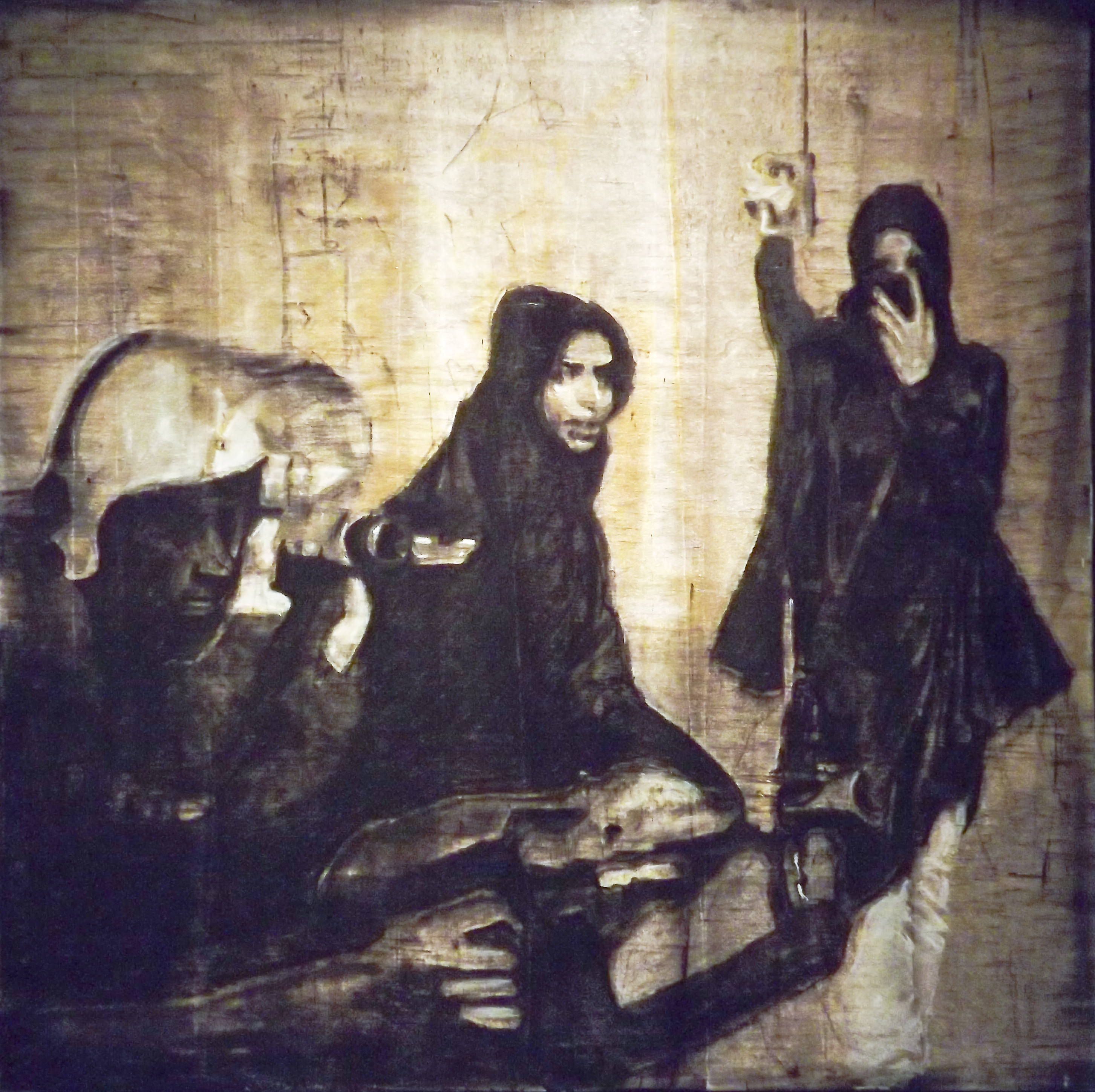
Focusing on the conflicts and uprisings of the past year in Greece, Libya, Syria, Egypt, Bahrain and New York, PreOccupied brings to the forefront how consumers of American mass media are distracted by entertainment and disconnected from empathy.

These particular images were appropriated from first person videos that were shared via YouTube and social media outlets in order to serve as eyewitness accounts of the conflicts occurring in their respective countries.

The installation features live, broadcast television in which the viewer is free to “channel surf”.  The sound projected in the space is a mash-up of the audio that accompanied the selected YouTube videos.  The viewer’s experience of watching American television is challenged by the gunshots and screams that play on a continuous loop.

PreOccupied will be featured at the Rebecca Randall Bryan Art Gallery at Coastal Carolina University May 19 – June 28, 2014.   http://www.coastal.edu/bryanartgallery/

“Greece 2011”, 48”x48”, pastel, graphite, charcoal, oil pastel

“Greece 2011”, 48”x48”, pastel, graphite, charcoal, oil pastel

“Bahrain 2011”, 48”x48”, pastel, graphite, charcoal, oil pastel

“Bahrain 2011”, 48”x48”, pastel, graphite, charcoal, oil pastel

“New York 2011”, 48”x48”, pastel, graphite, charcoal, oil pastel

“New York 2011”, 48”x48”, pastel, graphite, charcoal, oil pastel

“Syria 2011”, 48”x48”, pastel, graphite, charcoal, oil pastel

“Syria 2011”, 48”x48”, pastel, graphite, charcoal, oil pastel

“Egypt 2011”, 48”x48”, pastel, graphite, charcoal, oil pastel

“Egypt 2011”, 48”x48”, pastel, graphite, charcoal, oil pastel

“Libya 2011”, 48”x48”, pastel, graphite, charcoal, oil pastel

“Libya 2011”, 48”x48”, pastel, graphite, charcoal, oil pastel


Michael DickinsMichael Dickins is an interdisciplinary artist whose work is created with a variety of media including photography, printmaking, drawing, installation, sound and video. His balance of both digital and material processes allows him to create pieces that are both expressive and engaging.

Dickins is interested in the impact that the technological advances of photography has had, and is having, on our visual culture. His current work focuses on the importance of the snapshot and vernacular video both as art and as an influential medium in historical and contemporary societies.

Dickins holds a BFA in photography/printmaking from Georgia Southern University and an MFAIA from Goddard College.  He is currently the gallery manager of the Curtis R. Harley Art Gallery and an adjunct professor of art at the University of South Carolina Upstate in Spartanburg, South Carolina.

http://www.michaeldickins.com

https://www.facebook.com/michaeldickinsart

twitter: mdickins

Projections

by J. Adam McGalliard

"Pink Magnolias," Oil on Linen

“Pink Magnolias,” Oil on Linen

"Sunflower Fields,"  Oil on canvas

“Sunflower Fields,” Oil on canvas

"Troche", Oil on canvas

“Troche”, Oil on canvas

"Allison," Oil on Linen on Panel

“Allison,” Oil on Linen on Panel

"Antonia," Oil on Panel

“Antonia,” Oil on Panel

"After Arcimboldo 1,"  C-Print

“After Arcimboldo 1,” C-Print

"After Arcimboldo 3," C-Print

“After Arcimboldo 3,” C-Print

"Headless," C-Print

“Headless,” C-Print

"Intake," C-Print

“Intake,” C-Print

J. Adam McGalliard, The Scream

“The Scream,” C-Print

J. Adam McGalliard received an MFA from the New York Academy of Art with a scholarship for study and a BFA from the University of North Carolina at Greensboro where he was the recipient of the Myrtle Reeves Scholarship. McGalliard taught painting, drawing, and printmaking as a faculty member at the Sawtooth Center for Visual Art in Winston-Salem, NC. In New York, he taught as an Adjunct Painting Professor at Brooklyn College and the City University of New York. He also worked as a Post Graduate Teaching Assistant at the New York Academy of Art, NYC.  For Five years he worked as a painter and sculptor for world-renowned artist Jeff Koons.

His latest work is a series of photographs and paintings involving the projection of images on figures. The photographs are works in and of themselves while also informing the painting process. The projected image works as a double-edged sword. It can starkly reveal something that is hidden, like the writhing tattoos of the Illustrated Man, or it can mask an individual as a concealing veil or garment that creates a protected outer hull.

Learn more about Adam and see more of his work at his Website or visit his Facebook page.

Pay attention (and then do something)

by Rebekah Goode-Peoples

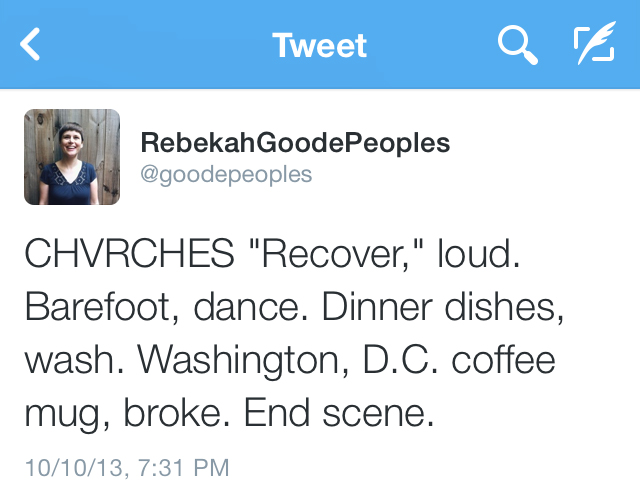
It started off serious, this year. Long, late night drives listening to the modern spirituals of Phosphorescent and Nick Cave and writing in a pool blue basement room to Daughter. Last winter wasn’t particularly cold, and nothing particularly harrowing happened to me that season. Nevertheless, I hardcore wallowed. Stayed inside.

It didn’t help that I was finishing the last few songs of Oryx and Crake’s next full-length album, a concept narrative exploring commitment, from brief moments of comfort and security to long, bottom-of-the-well places. The chokehold of bondage. It wasn’t an easy story to tell. And I dreamt of summer.

Maybe I wasn’t the only one–seems like many folks in my circle had a tough year.

Things have been hard, right? Syria, Sandy Hook, the government shutdown, whatever other horrors make you shy away from the news stations’  Twitter feeds and turn to pop culture demerol.

So maybe you push play on Icona Pop’s “I Love It.” All flashing lights, so swirling that you can’t focus on anything for more than a fraction of a second. The neon, the thumping glitter distracts us from disaster, both our own and the world’s. Makes it unreal.

Rebekah's post-gif HDF8MUV

See, we’ve been hurt, and hurt again. We know everyone’s tragedy all of the time. So we run. Matthew Houck of Phosphorescent sings in my favorite song of the year, “Song for Zula, “I will not open myself up this way again…And I am racing out on the desert plains all night.” It’s a love story, sure, but it’s also our story. Of being too tender, too raw to handle it all.

rebekah twitter

Sometimes you need to take a break, but you have to be careful.

Stuff happens under the surface for all of us–that we try not to notice as thumbs slide away on Candy Crush or scroll through tumblrs of gif after gif of adorable dogs and sloths–that we don’t discuss, or even notice, because we’re so tied to our black screen holes.

We forget to look around, know each other. To feel things. We just follow the formula.

But we don’t have to.

We can pay attention. We can dance it off. We can be who we want to be.

This is the only life we get–yell loud and make earthquakes.

NFL Fans In Seattle And Kansas City Battle Over Who’s Louder– NPR Morning Edition, December 18, 2013:

—————————————————————————————————————————

PLAYLIST:  Five fingers of one hand (Spotify)

Albums:

Daughter “If You Leave

Phosphorescent “Muchacho”

Nick Cave and the Bad Seeds “Push the Sky Away”

CHVRCHES “The Bones of What You Believe”

Lorde “Pure Heroine”

rebekah goode-peoples profile picRebekah Goode-Peoples is a teacher and writer who lives in Atlanta, GA. You can find her on Twitter and Instagram at @goodepeoples and her band, Oryx and Crake, at @oryxncrake

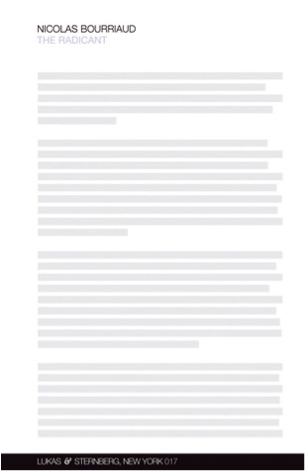
Postcolonial Thoughts: Book Review of Nicholas Bourriaud’s “The Radicant”

by Christopher Hutchinson

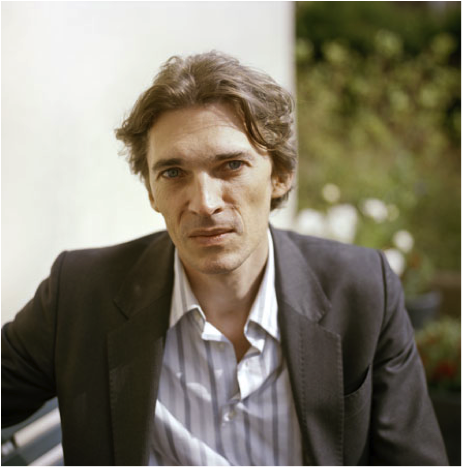
Nicholas Bourriaud is one of the leading art theorists/curators presently.  He is behind the Relational art movement, globalism, and postproduction.  This is a review of his third book The Radicant.

Radicant & Breaking modernity

Rad´i`cant    (răd´ĭ`kant)

a. 1. (Bot.) Taking root on, or above, the ground; rooting from the stem, as the trumpet creeper and the ivy.                           – http://www.thefreedictionary.com/Radicant

Initially, The Radicant was an encouraging read.  It lays out the problematical perspective of the linear Western art world.  Bourriaud’s derision for the immobile art world was very engaging.  The Radicant recognizes the necessity for numerous evaluations that are not based on the canon of Western art history. Let us no longer encourage the formal elements of line, color, shape, space, texture and form.  Permit us to leave the language of white spaces occupied with eye-level paintings, sculptures on pedestals and holy institutions that have become so banal.  Leave the devotion to this practice in the past; all of the rubrics used to add value are out-of-date and exclusionary.

Formalism, abstraction, painting and sculpture in the West all have excluded the vast number of cultures and societies form being equal participants in the world of art.  Bourriaud invites us to have Radicant histories; here all histories are of equal value in globe.

This ethereal concept all falls apart at the end of the book where he suggests that we can achieve this Radicant understanding through the lens of Marcel Duchamp.

“In generating behaviours and potential reuses, art challenges passive culture, composed of merchandise and consumers. It makes the forms and cultural objects of our daily lives function. What if artistic creation today could be compared to a collective sport [play!], far from the classic mythology of the solitary effort? ‘It is the viewers who make the paintings’, Duchamp once said, and incomprehensible remark unless we connect it to his keen sense of an emerging culture of use, in which meaning is born of collaboration and negotiation between the artist and the one who comes to view the work. Why wouldn’t the meaning of a work have as much to do with the use one makes of it as with the artist’s intentions for it? Such is the meaning of what one might venture to call a formal collectivism.”-THE RADICANT

Radicant quote

 Bourriard’s Duchamp suggestion does the most damage to his credibility in changing the thought process of the West.  How could Duchamp be the Radicant history necessary to break modernism, when Duchamp is the Western canon?  This book proves that historians & philosophers, like Bourriaud, even when they try with all their might cannot escape their own linear methodology.  It is in their blood.  This is the reason why, any new concept that actually changes the direction of the West, has been appropriated from some other indigenous culture.  Appropriated without crediting its origins.

This is important to note because they are many who believe that one day West will write something of worth about indigenous non-white people, but here is the proof, it can’t be done.  Bourriaud, a French Art critic, is doing exactly what he is supposed to, expressing National pride and lineage as the way to access the future through Duchamp.  It is up to each culture to document, protect, and preserve its own history before it becomes the newest jewel for the new global West.

Rirkrit Tiravanijia & Globalism

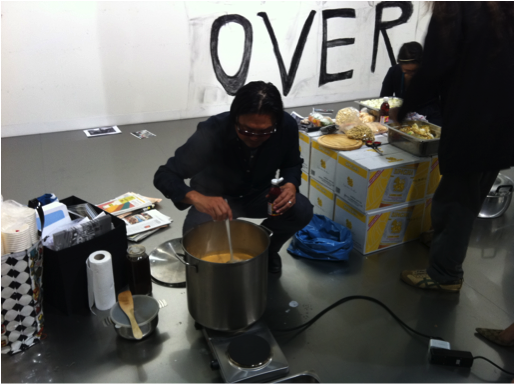
 According to art critic Jerry Saltz, Rirkrit Tiravanija’s works do nothing less than “bridge a mind-body gap that often exists in Western art.” Meaning: Tiravanija’s installations — which often combine food and communion among strangers within intimate, temporary worlds that contain all forms of social interaction from conversation to sex — stimulate the viewers’ brains and their bodies and open them up to experiences beyond just art appreciation. http://stationtostation.com/participants/rirkrit-tiravanija/

So what does this mean for Bourriaud sponsored artists like Rirkrit Tiravanija?  We now have the inclusion of westernized indigenous people interpreted through a Duchampian lens.  These westernized non-white people also look to Duchamp as the example set.  Magical non-white people will show the West once again how to create art that is not dismal. This is not new; by any means it is identical to Gauguin and Tahiti, Picasso and Africa.

The artists, critics, institutions that have been celebrated in this global Radicant history, are indoctrinated in the history of the West. For Bourriaud’s initial Radicant to be realized, there would not be a designation of folk art.  As long as folk art exists we are talking about a commercial viability of indigenous contribution to the West. Not equal respect. The Radicant ends up being just as linear as every other Western art history and philosophy.

“…’globalization.’ Like most terms of political discourse, this term has two meanings: a literal meaning and a technical meaning employed for doctrinal warfare. In the literal sense, ‘globalization’ means international integration. Its leading advocates are those who meet annually at the World Social Forum, coming from countries all over the world and all walks of life, working together to craft and debate forms of international integration—economic, cultural, political—that serve the interests of people: real people, of flesh and blood. But in the doctrinal system, their commitments are called ‘antiglobalization.’ The description is correct if we use the term ‘globalization’ in its technical sense, referring to a particular form of international economic integration, with a mixture of liberal and protectionist measures and many related to investor rights, not trade, all designed to serve the interests of investors, financial institutions, and other centers of concentrated state-private power—those granted the rights of super-persons by the courts.“-Hopes and Prospects – Noam Chomsky


If  you would like to submit a book or essay or an eBook to be reviewed by Christopher in the “Postcolonial Thoughts” column, send an email with your interest to melissa@creativethresholds.com.

Christopher HutchinsonChristopher Hutchinson is an Assistant Professor of Art at Atlanta Metropolitan State College and Archetype Art Gallery Owner in Atlanta, Ga. He received his Master of Fine Arts Degree in Painting from Savannah College of art & Design, Atlanta and his Bachelor of Arts Degree from the University of Alabama in Huntsville, Alabama. He lived in Alabama for 10 years before moving to Atlanta in 2008. His installations mostly consist of black folded paper airplanes.

Learn more about Christopher and his work at Black Flight 144.
all that I had in you was only myself

By Daniel Boscaljon
Image by Melissa D. Johnston
rothko experiment mother and child two for CT

“all that I had in you was only myself” is the fifth letter in a series of posts called Letters to You written by Daniel Boscaljon with images by Melissa D. Johnston (from one of her ongoing projects). Letters to You began in July with “everytime i write i feel myself disintegrate.”

we are said to be meaning-makers–you and i, all of us–who by nature interpret events and things which are given in such a way as to determine their significance for our own lives.  We MAKE meaning, and do not find it.  In former times, these were considered omens and portents, glimpses of the future which the gods would give us.

Lacking a sensitivity to the role which the natural world plays in determining the web of relationships in which i continually am caught up within, I find that I more often engage in making meaning of signs and symbols, finding meaning in languages present or absent.  Despite knowing that such text has no relationship to your relationship with me, I nonetheless persist in attempting to determine SOME sort of connection which nonetheless would exist.  This is my most frequent action.

I read the words which you wrote to a mutual friend, some months ago.  I walk past the place where once we ate lunch.  I hear a song on the radio that you had once played for me.  None of these things have anything to do with your current life, yet you force me to investigate these glyphic scribbles as a way to postulate how you are now.  The song is clear and undistorted: you are having a good day.  I see a child crying in front of the restaurant: you’re having a bad day.  I simple and dichotomized world: this is how you force me to view your life.  Thinking about you is not an option, and so I take what I can to construct a relationship with you.

Often when we talk, those rare moments, you force me to pick through your words and fill in the blanks which you leave, spaces which are events in your mind and nothing within my own.  Because I want to have a relationship with you, I let myself believe that I know how you feel, that I know what you’re talking about.  You force me to make guesses and fill in the blanks of your mad-lib life, and, lo-and-behold!  It always conforms to what I had been thinking about anyway.  It always reveals to me that we had the same connection as ever.  I tell myself that you consciously continue our relationship through such absences in speech, such empty points which give me a blank entrance into your soul.  I tell myself that I see you in how you frame it, and that it is more than just a mirror.  You permit me to tell myself this.  I allow myself to believe it.  …this is what friends are for, right?

Not talking is just an expanded form of this–a sheet of paper filled with blanks.  I tell myself that we’re still friends, that this is still a relationship.  The moments where you break into my life, even indirectly, are caused by you.  I’ll say a prayer, or smile at a memory, and then move on.  I tell myself that you’re doing okay, and remind myself that such miniature affirmations, on a cosmic level, are powerful and have the ability to, where you are and at that time, generate a smile that I can’t see and that you can’t understand, but which exists nonetheless.  We’re magicians, all of us, I suppose.

Without your body, the world around me becomes your face that I investigate to see how you are.  Lacking your voice, I listen to the babble streaming around me, the cacophonic choir which only JUST covers up the words which you speak to me.  I strain and peer to find you: when I find something, I simply accept it lest the dark fear start to grow that all that I had in you was only myself all along.

Daniel Boscaljon has Ph.D.s in Modern Religious Thought and 19th-century American Literature, both from the University of Iowa. His interest is in the fragility and liminality of human experiences. His first book, Vigilant Faith: Passionate Agnosticism in the Secular World was published by the University of Virginia Press this past August.