Recent

Accismus

by Myke Johns

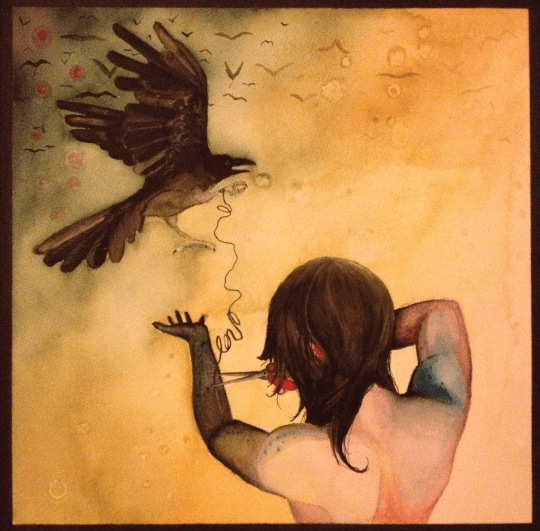
Accismus by Hilary Kelly


The crow took flight, not knowing where it was going.

 
The girl had left home in a similar manner. She had shouted that she was off for a walk, the punctuating door slam throwing up a roadblock between her and home. She realized that she had no plan beyond leaving. So she left.

Eight blocks away was the park, a sprawling green space that eddied and dawdled like a summer afternoon. The trees and grass invited her in and she followed, hoping to lose an hour.


Above, a call and black wings shook the high pines around the east end of the park. The crow pecked at some sap, bored. She walked down the path below and circled the tree, running her hand along the trunk. Her hand strayed behind her and she shouldered the pine, spreading both arms around the rough pillar. She sat down, and as she looked up and scanned the branches, the crow leapt from its perch and spiraled down towards her.

She gasped and nearly lost her balance, her arms giving way behind her back at this sudden break in the still sky. Eyes shaded and narrow, she admired the bird–watching its slow descent. Its wings were spread wide for resistance–a black blade against the green and blue above. It landed at her knees, shook its wings and cawed.

“Hey bird. Hey bird.” she said. It cocked its head back and forth, examining her with both eyes, then looked at her dead-on. “Where have you been today?” The crow ruffled its feathers and rasped and barked. “That sounds exciting.”

A door slammed somewhere–a car on a nearby street. She whipped her head in its direction. She was back at her house–where the yelling was–deep there, in the womb of her beddings and headphones and quiet music. The yelling was usually outside of her room, between the other two. She’d learned to lie low. But every time she heard her name, muffled by all the layers between her and them, she felt like a catalyst. She wanted to explode.

“I’ve been cooped up in a house all day with people who don’t like me much,” she said to the bird. The crow sat still. “They just…” She thought of their faces but could not see them. Their voices rang wordlessly through her, as incomprehensible as the call of the crow. She let it swirl around, quiet, then ease from her nostrils like bitter smoke as she exhaled. “There’s nowhere else for me to go. I’m…” she looked down at the bird. It was staring intently. “I’m talking to a bird. This is the best conversation I’ve had all week.”

The crow stretched its wings to half-span and hopped awkwardly toward her. A flurry of wings and a surprised shudder and it was perched on her arm. “Hey! Hey bird!” It fought to keep balanced on her forearm and looked into her face. The animal’s round black eyes betrayed nothing–she could read nothing in the ancient architecture of feathers and pebbled skin. The crow bent down and pecked at her arm. “Ow! Fuck!” She shook, but the bird gripped tighter, its talons digging in, drawing blood. It pecked again, this time loosing a beakful of skin. She screamed and grabbed at the bird’s neck, but the bundle of muscle and will power drew its head up, pulling a thin strand of flesh.

She pulled at the bird harder, this time yanking it from her bloody arm. It dropped her skin, but managed to snatch it in one claw and hold fast. “What the fuck is wrong with you?” she yelled, and the crow took flight, not knowing where it was going.

The tangle of sinew became wound around the bird’s claw and knotted there. At the other end, she stared in horror as the slender thread pulled from her arm as yarn from a sweater. She found herself focusing on the sensation. The tugging, the pulling away–it felt like a continuous ripping, an old scab being peeled off. The crow flapped against this anchor and pulled more. She gripped the sinew and held fast and raced for a way to free this animal from her body. A sharp yank and a screech of frustration from above and she pulled back defiantly, sank her teeth into her own lost skin and bit hard. It was less painful than she thought, like the flaking end of a hangnail, but the skin stayed firm. The crow pulled harder now as it caught an updraft and soared into the sky. Circling above her, she felt herself unravelling as the bird stole away more and more. The line of tissue travelled up her arm, around her shoulders, and down her back, pulling so fast it nearly lifted her off the ground.

As the tissue tore away from her back and she felt it spiraling away, the pain bore a new sensation. She felt a pressure between her shoulders–pounding from her spine, it felt. Her skin unraveled and thinned and the pounding inside drank in the cool air. Like mountain wind billowing into the mouth of a cave. She inhaled sharply.

As quickly as the strap of flesh had peeled away from its purchase, her skin drew taut–from the slender thread wrapped at the crow’s foot, through the naked air and down down down to the center of her back. An unpleasant twang reverberated through her chest, in sympathy with her reluctant and airborne twin. The thin line of tissue stopped, anchored right between her shoulders.

The bird was surprisingly strong as it strained at her skin. She danced in each direction it pulled as it circled in the air and it in turn flapped and bobbed at this awkward ballast. As the tether strained, she was pulled to her toes. The air involved itself with a gust of wind, pulling hair across her face and as she spat and brushed, the crow followed the breeze. There was stumbling sideways like a newborn fawn, but then her legs were carrying her after the crow. It felt as if she was being lifted off of her feet, her weight reduced, gravity losing grasp. Her strides grew longer as she ran, until she was bounding over hills with barely an effort. Was the bird leading her, she wondered, or were they moving in synchronicity? Leaping from footfall to footfall, she spread her arms, fingers wide and palms flat. The wind moved through her, swept under her and the strain on her back tugged like an invitation.

At the crest of a hill, she jumped and the sky received her. She felt only lift, only equilibrium between land and sky. The crow carried them and she looked at it and it cawed down at her. She reached up and grasped at the tether between them and began to climb, looping her ankles under her, straining to pull up and up and higher still. As she climbed, the crow took to the clouds. They cleared the treetops and the town below. The rush of cool air filled her ears. It stung tears from her eyes and higher she climbed. When she got to the crow’s feet, she held onto them. The bird looked down and opened its beak; its maw yawned wide and engulfed her. The crow struggled to fly with a girl in its belly, but inside, her hollow chest and strong arms found new homes. When she opened her eyes, she saw straight ahead, the blue of the world reaching farther than she’d ever been able to see. Testing her arms, she flapped once and her new wings beat against the wind. She laughed, and a brand new call echoed against the earth.
Myke JohnsMyke Johns is a radio producer at WABE, Consigliere of WRITE CLUB Atlanta, and the man in charge of screaming in the band Mice in Cars. He also writes things down at The Occasional Triumphant.
More Than

by Ilisa M. Millermoon

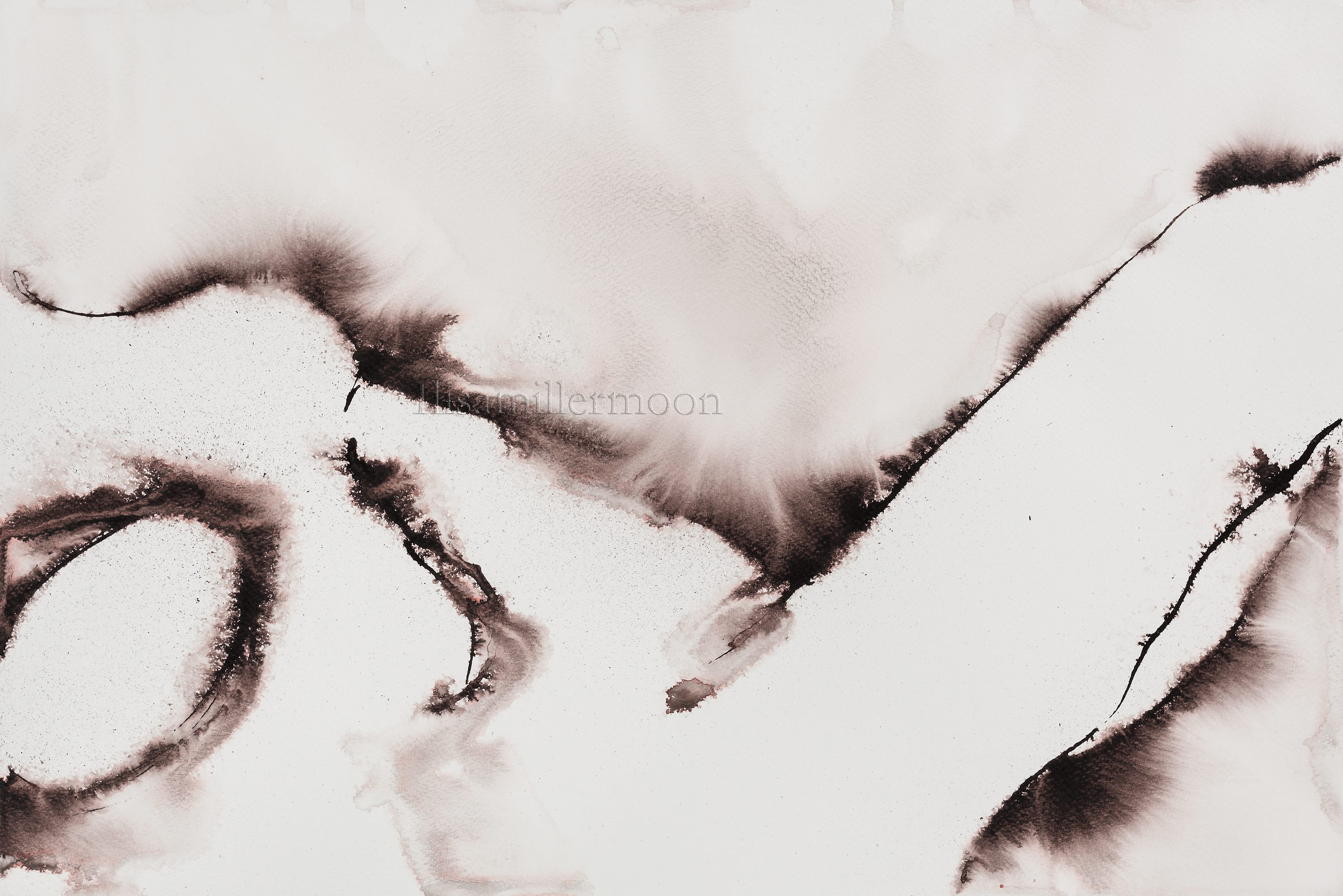
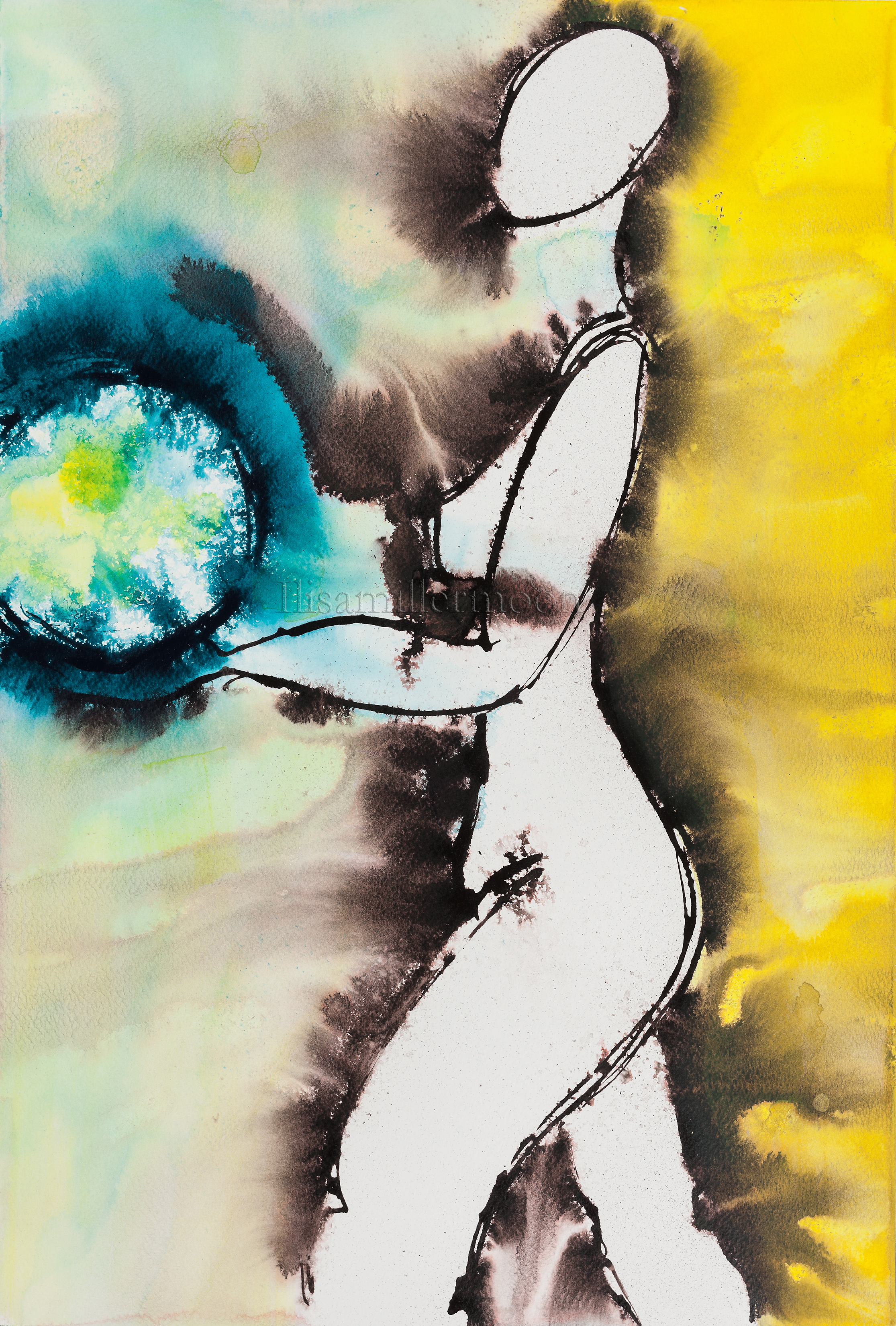
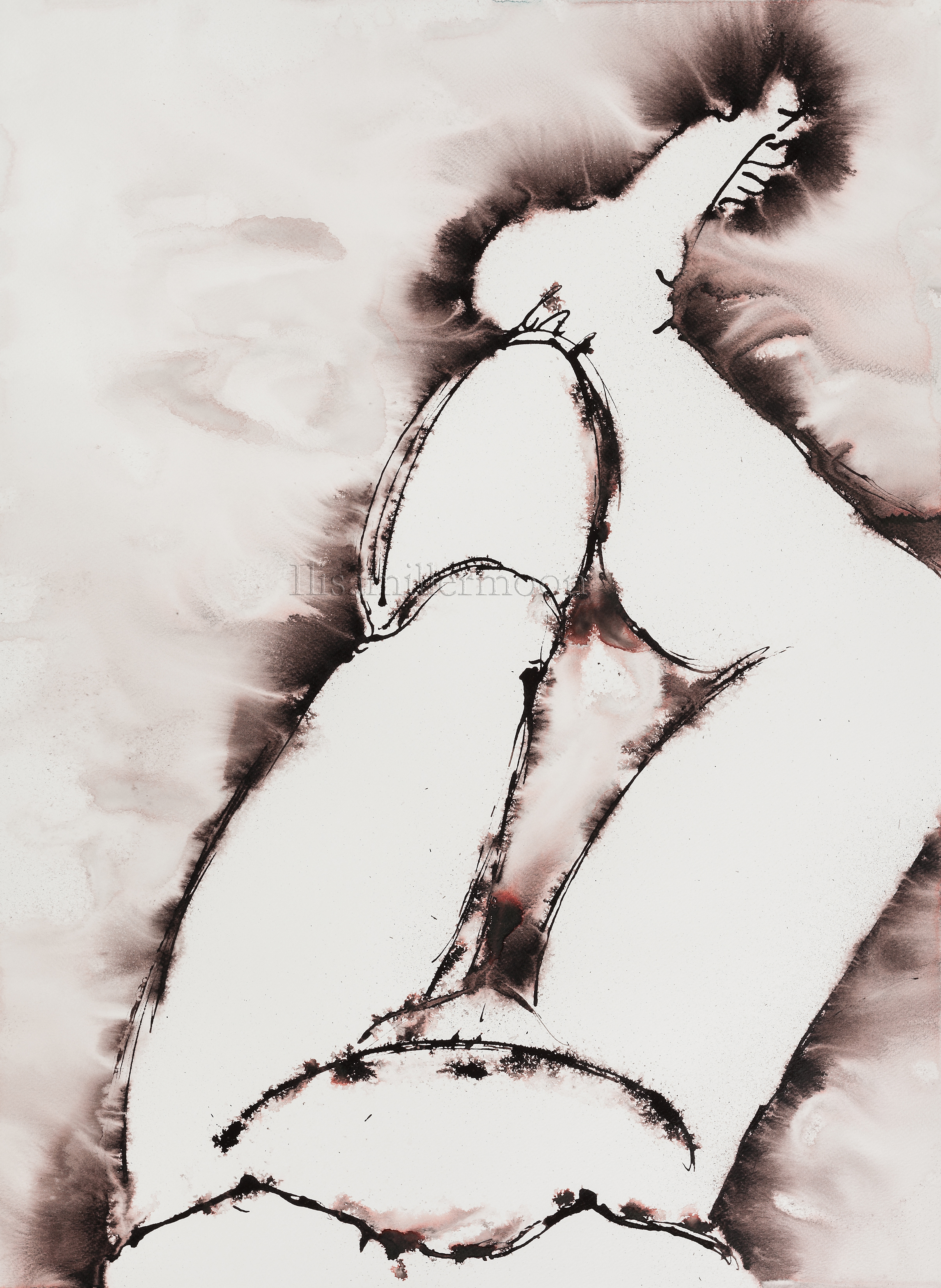
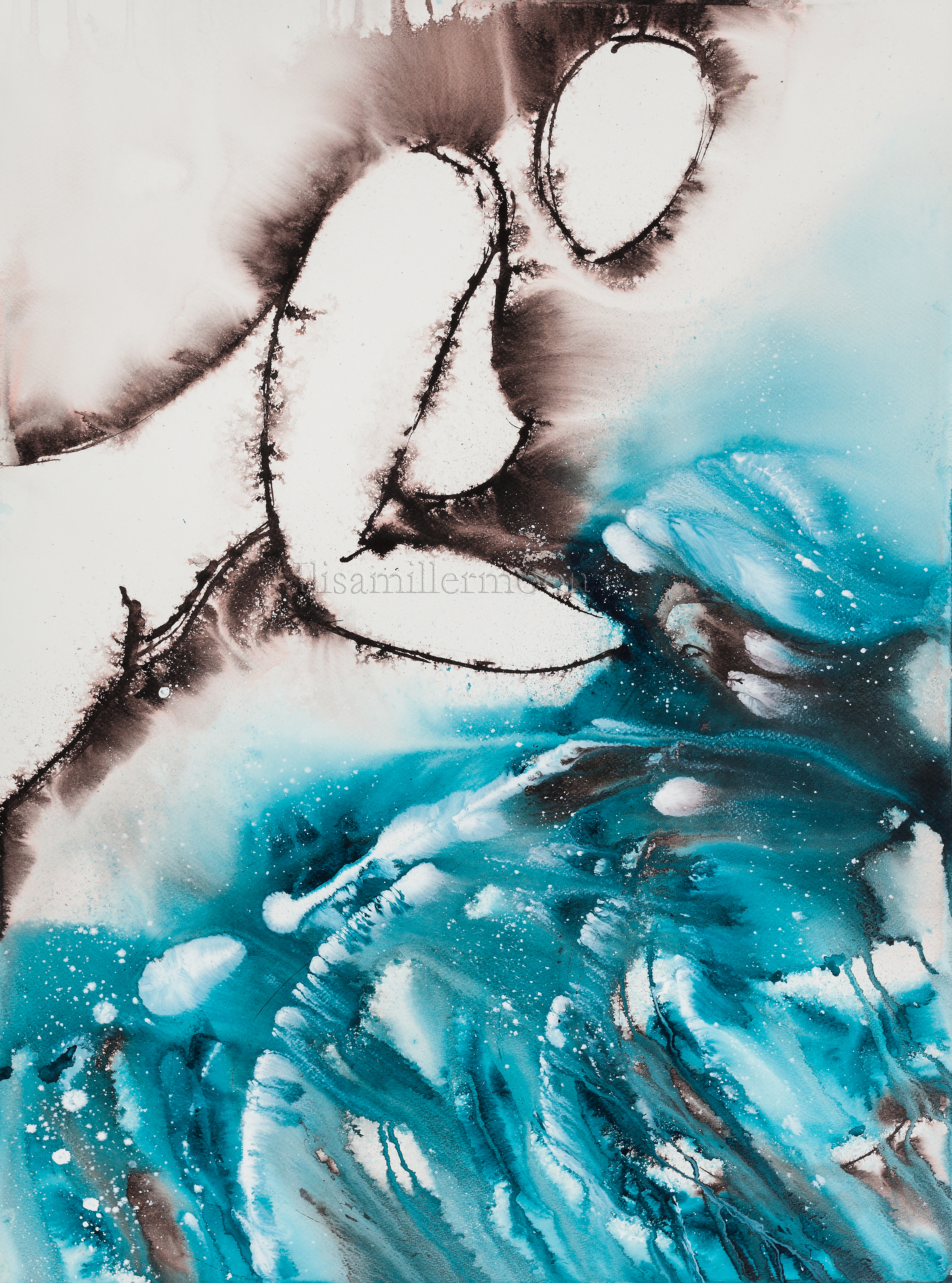
When I began painting female figures I chose to title the series “More Than.”

Ilisa Millermoon, More Than series, No. 2036

Ilisa Millermoon, More Than No. 2036

This was in direct defiance of a notion with which I was inundated growing up: women were less than.

Ilisa Millermoon, More Than Series, No. 2032

Ilisa Millermoon, More Than No. 2032

We are Divine creatures with many facets. The physical is only one facet.

Ilisa Millermoon, More Than series, No. 2044

Ilisa Millermoon, More Than No. 2044

We are physical, spiritual, emotional, intellectual, passionate. We are “More Than.”

Ilisa Millermoon, More Than No.2049

Ilisa Millermoon, More Than No.2049

The moment we embrace ourselves as Divine creatures we know no limits to our creative expression.


Ilisa Millermoon is an intuitive energy artist. When she places acrylic ink on a piece of paper, she has no preconceived notion of what the work will turn out to be. Instead, she invites the ink to dance with her, to go where it may. The results are astounding, and Ilisa loves sharing her joy, experience, and energy with others. Her mission statement is:

Celebrating the Strength, Passion and Divinity

    of Women through Color

Visit her website and check out her portfolio at Fine Art America.


Why I Paint

by Holly Friesen

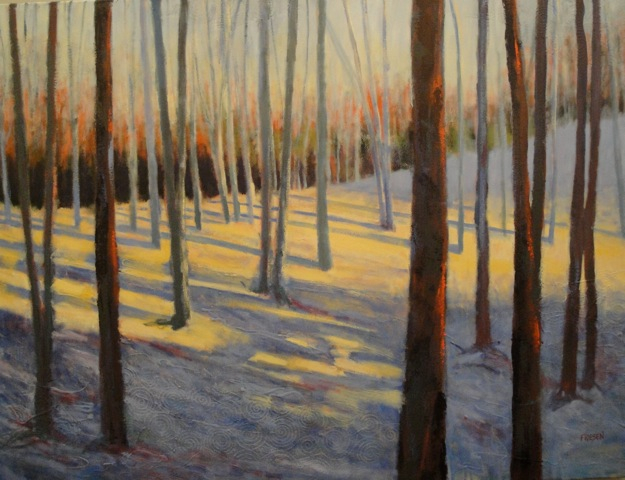
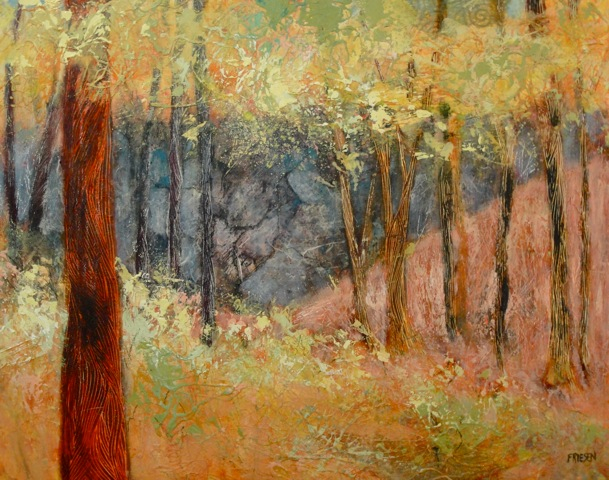
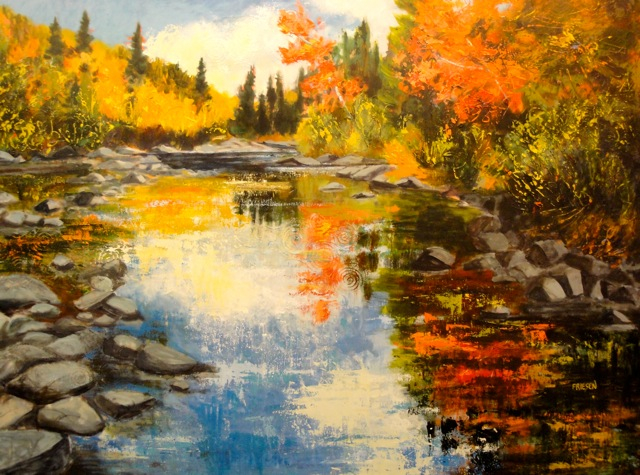
I paint because I have to.  It is like the air I breathe, completely necessary to my brief existence here on earth.  I paint to understand.  Often my mind is far behind understanding what is appearing on the canvas.  There is a body of wisdom that takes over when I hold a brush in my hand.  When I trust this inner wisdom, sometimes I am able to let go and dance with the paint.  I paint to survive.  My deeply felt connection with the earth is my inspiration and the more I listen to the stories within the rocks, trees, rivers, and sky, the more I need to paint.  I paint because I have to.

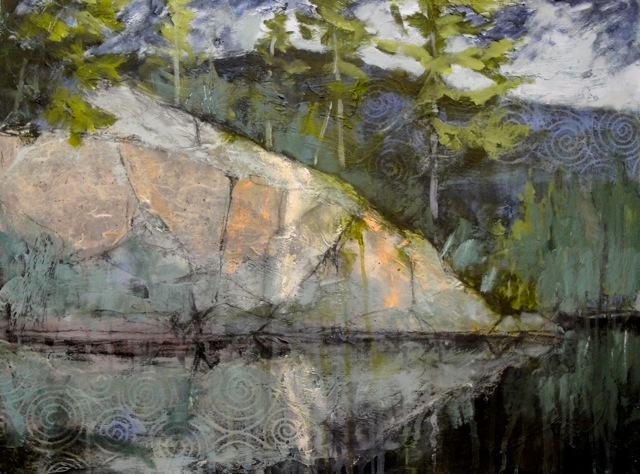
I like to work as large scale as possible because this allows greater movement and physicality with the painting. I often collage spiral patterned Washi (handmade Japanese paper)  into my work.  For me this adds a random and surprising element that says, “look deeper, there is more going on here than meets the eye.”  The spiral is a fascinating, ancient image and a primal symbol in the history of humankind.

My favorite way to paint is to choose from a rather eclectic music mix and allow the sounds to draw me out of my head and into my body.  As my mind stops chattering, colors and shapes become a visceral language and I respond intuitively following my own breath, heartbeat, and movement from within.


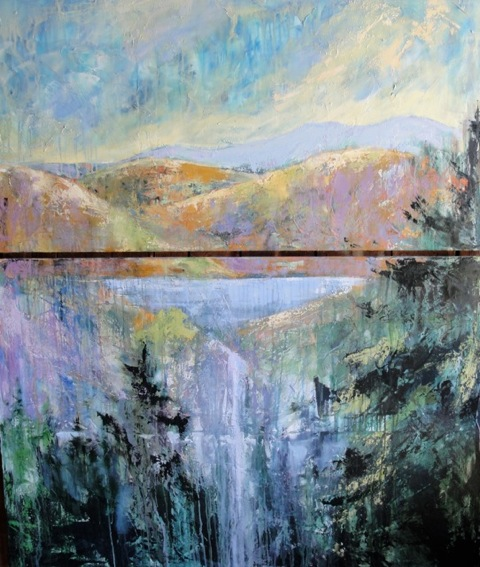
Earth Bowl - Overflow / diptych 100" x 60" / acrylic on canvas

Earth Bowl – Overflow / diptych 100″ x 60″ / acrylic on canvas

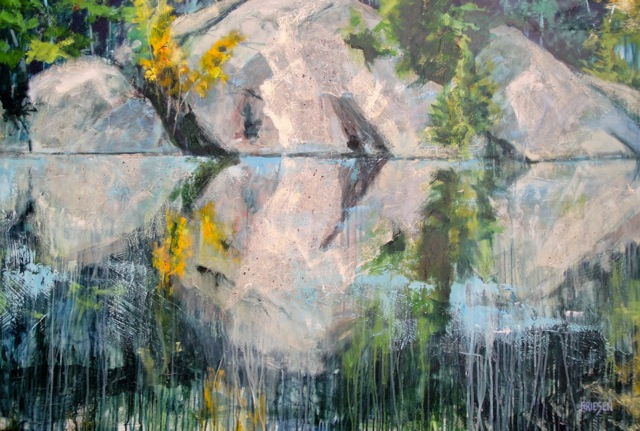
Crying Rocks / 40" x 60" / acrylic on canvas

Crying Rocks / 40″ x 60″ / acrylic on canvas

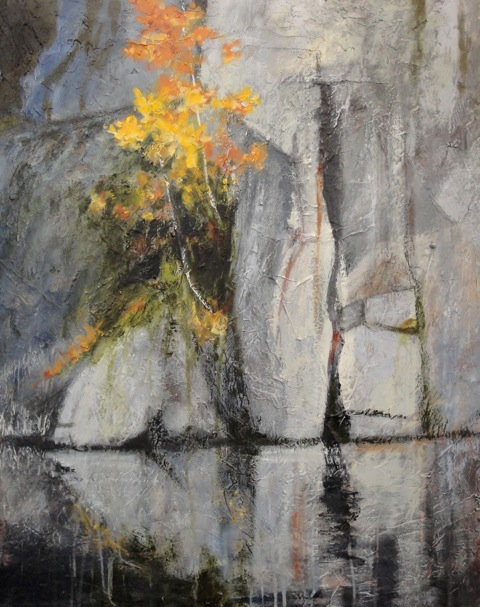
Rocks Attending the River / 18" x 22" / acrylic on panel board

Rocks Attending the River / 18″ x 22″ / acrylic on panel board

Nestled / 30" x 24" / acrylic on panel board

Nestled / 30″ x 24″ / acrylic on panel board

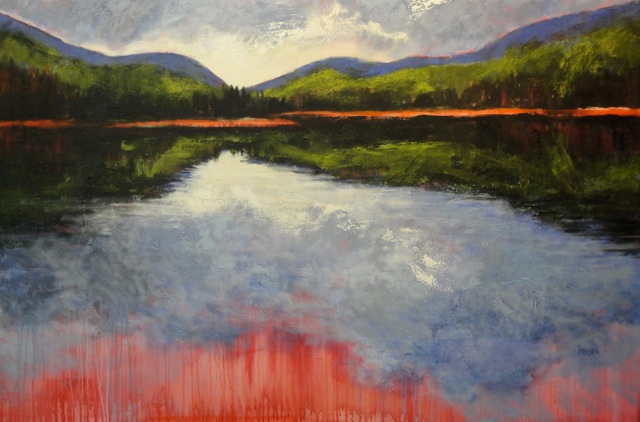
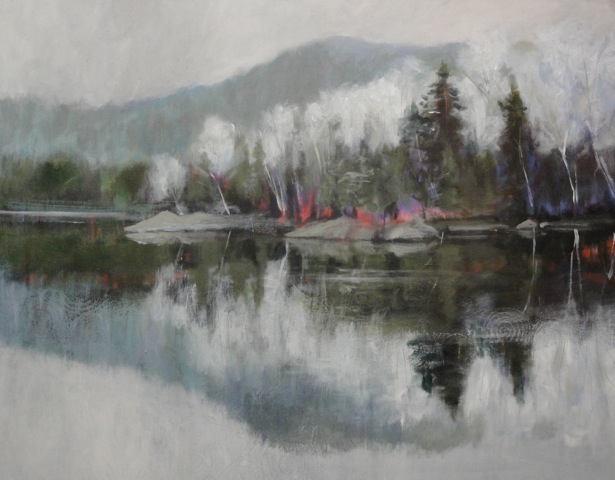
Inward Reflection / 48" x 72" / acrylic on canvas

Inward Reflection / 48″ x 72″ / acrylic on canvas

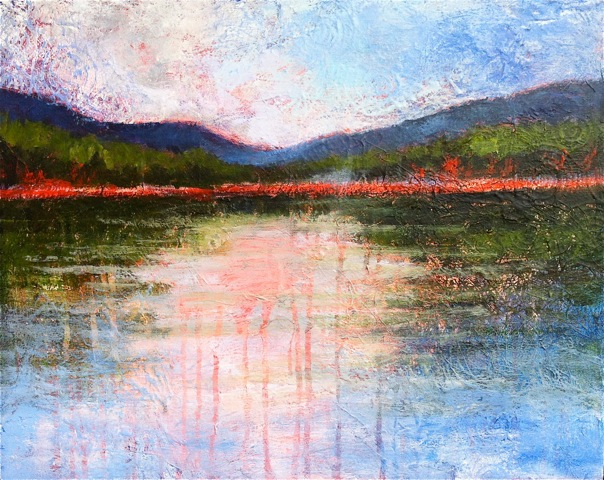
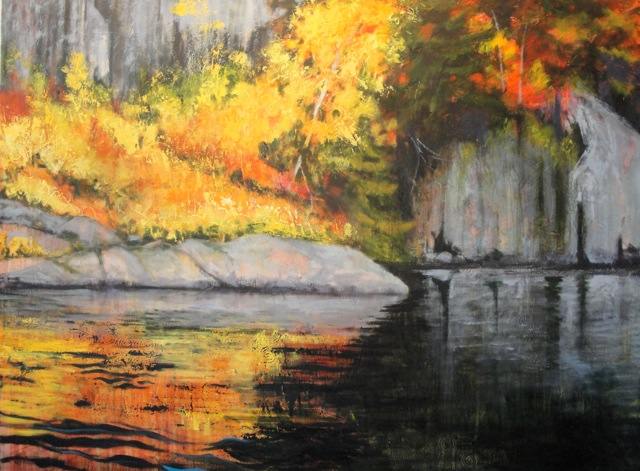
Crying Lake / 16"' x 20" / acrylic on panel board

Crying Lake / 16″‘ x 20″ / acrylic on panel board

Shimmer / 54" x 72" / acrylic on canvas

Shimmer / 54″ x 72″ / acrylic on canvas

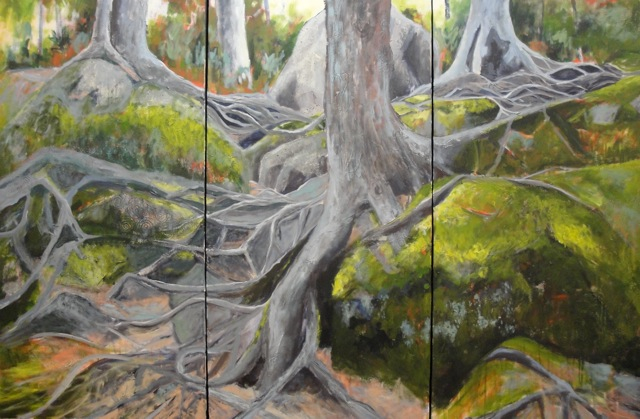
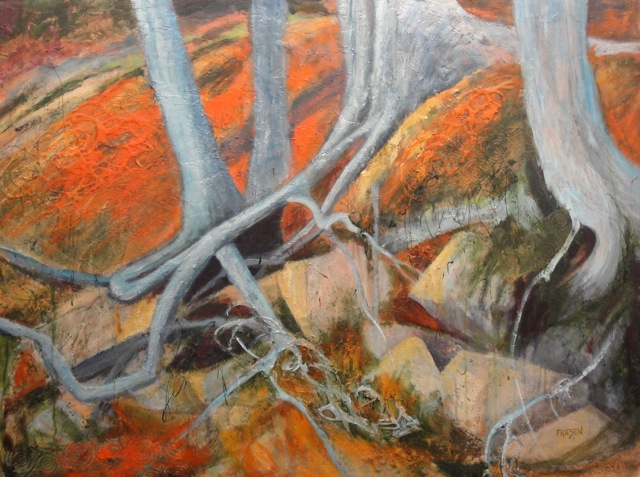
Weaving Roots of Time / triptych 48" x 72" / acrylic on canvas

Weaving Roots of Time / triptych 48″ x 72″ / acrylic on canvas

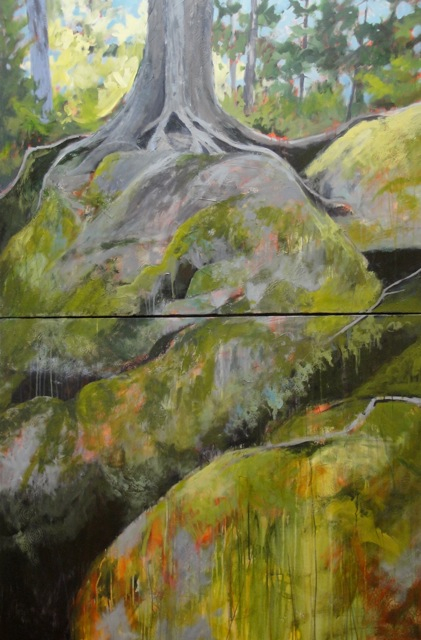
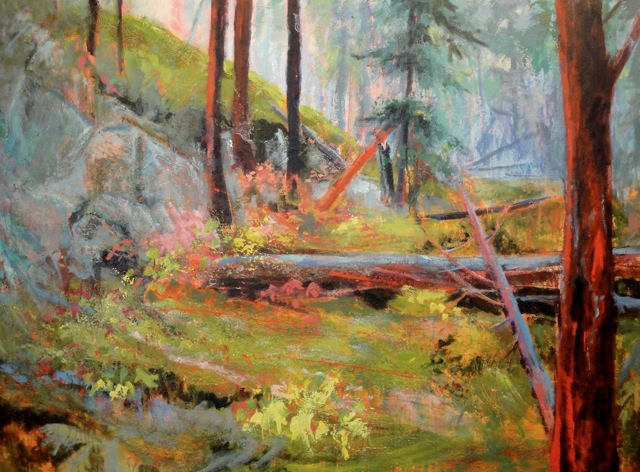
Forest Qualia / diptcyh 72" x 48" / acrylic on canvas

Forest Qualia / diptcyh 72″ x 48″ / acrylic on canvas

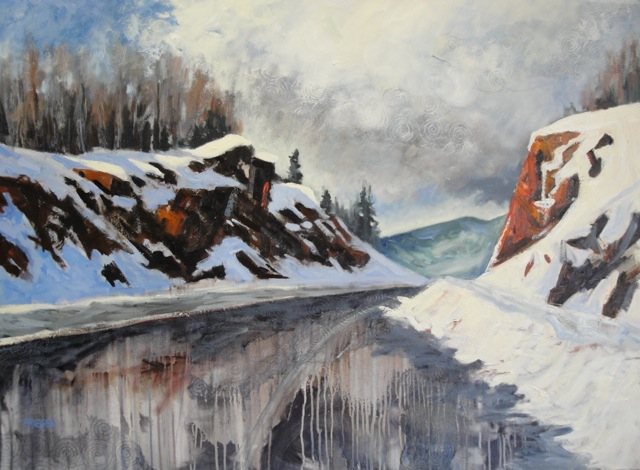
Sky Becoming Road / 36" x 48" / oil on canvas

Sky Becoming Road / 36″ x 48″ / oil on canvas

Spirit Island / acrylic on canvas / 24" x 30"

Spirit Island / acrylic on canvas / 24″ x 30″

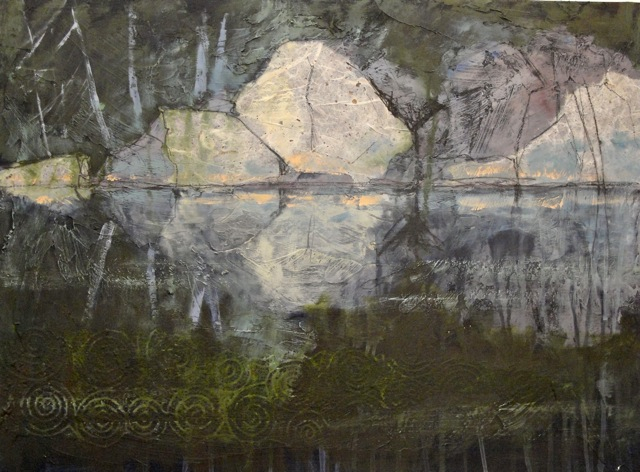
Rocks in Moonlight / 18" x 22" / acrylic on panel board

Rocks in Moonlight / 18″ x 22″ / acrylic on panel board

Lover's Limbs / 36" x 48" / acrylic on canvas

Lover’s Limbs / 36″ x 48″ / acrylic on canvas

Ever Evolving Earth / 54" x 72" / acrylic on panel board

Ever Evolving Earth / 54″ x 72″ / acrylic on panel board

Telluric Rhythm / 36" x 48" / acrylic on canvas

Telluric Rhythm / 36″ x 48″ / acrylic on canvas

Natura Imaginalis / 30" x 24" / acrylic on panel board

Natura Imaginalis / 30″ x 24″ / acrylic on panel board

Blood of the River God / 36" x 48" / acrylic on panel board

Blood of the River God / 36″ x 48″ / acrylic on panel board


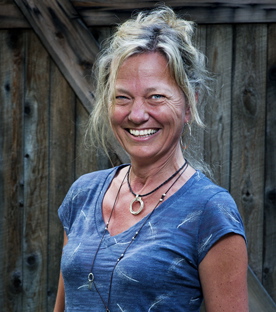
Holly FriesenHolly Friesen

Artist Statement:

My work revolves around earth-honoring images that reflect and instill connection to local bio-regions. These images internalize a reverence for the earth and shift the intent from harming the world to living in a mutually life-enhancing manner.

After 30 years of painting from close observation of the forests, rocks and rivers, I feel I am no longer observing the natural world around me but rather, in a reversal of roles, the natural world seems to be observing me. Direct and spontaneous brushstrokes become intuitive movements that follow breath and echo emotional responses to this living, breathing vitality. Through a dynamic energetic exchange I feel as though I am being held within an intelligent, sentient field that expresses itself through colors, shapes and movement. I am both humbled and awed by this process.

I particularly enjoy the physicality of painting, the intuitive mark making, the hands-on application of collage and sometimes the direct carving into the panel board. They bring me even closer to the work. I enter an unconscious wilderness through my hands and body; a primal, non-verbal process that is rich with metaphor & images. Often as I work vivid dream images arise and replace my rational, thinking brain with sensations and feelings that are experienced physically in my body.

I learn what I need to know by painting. The more I paint the less separation there is between inner and outer ecologies which results in a linking of perceptions with the natural world where attempts to define or control are useless. For me, painting is like deep prayer awakening a reverence for the earth’s inner landscape; the image is in you and you are in the image. Painting is my breath, beauty my compass, and the earth my body.

Check out Holly’s website and online portfolio.

Twitter: @holly59

Email: hollyfriesen@gmail.com

Next Creative Thresholds issue will be Thursday, February 28, 2013 EST

Life doesn’t always go as planned. In 2013, Creative Thresholds changed to a once-a-month format with posts coming out the last Thursday of the month. Unfortunately, I just found out yesterday that the day the posts were to come out in January is the day I will be in surgery, a full week ahead of the earliest date I thought possible. It’s too late to change the deadline of contributors, so the next issue will be in February.

I want to thank our many readers and supporters–and especially all those who’ve subscribed to the blog (well in excess of the number I thought we’d have at this point). Thanks also for the positive feedback and suggestions.

I look forward to seeing you in February!!

Melissa, Editor and contributor

Dream into the New Year…

by Melissa D. Johnston

Onomatopoeia

Onomatopoeia

Happy Holidays from Creative Thresholds. May the new year be the year you dream big…and watch those dreams come true! 

I don’t wanna be a cheerleader no more.

by Rebekah Goode-Peoples

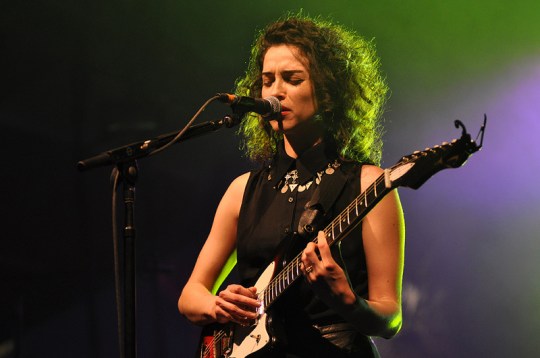
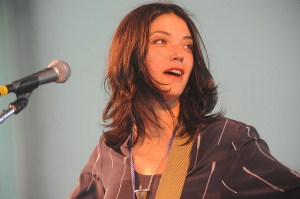
St. Vincent, Coachella 2012. Image by Jason Persse

St. Vincent, Coachella 2012. Image by Jason Persse.

Earlier this year, I made my high school students listen to “Cheerleader” by St. Vincent during a free writing exercise. They were supposed to write anything at all while trying to match the tone of the song. As I listened with them, I realized that almost without exception, I’d been exclusively listening to this song for months—different female vocalists, different lyrics, different instrumentation, but the same tone, same song.

I’ve recognized many images and pieces of my own writing from the past year in these songs: wells, water, boats, waves, divers, lighthouses, ghosts. In more romantic moments when I mix metaphors with abandon, I feel like we’re all mirroring something to each other, a form of musical smoke signals or Morse code. Square by square, I’m watching a quilt of our collective unconscious come together to keep us warm in the night.

But those are my more romantic moments.

Seven of the Billboard top ten albums last year featured solo female artists, and this year is shaping up similarly. While airplay on commercial radio stations has been dominated by the likes of Katy Perry, Adele, Rihanna, Pink, Lady Gaga, Taylor Swift and, god forbid, Ke$ha, fans of more independent artists were often exposed to more status quo fare—four guys with unkempt hair and tight sweaters.

Don’t get me wrong. I have a fine appreciation for musical boys (see: the guy I’m married to), but I believe musical variety makes everything sound better, more itself.

While female artists have always been on my radar, the last time my musical landscape radically changed from listening to albums by women was in 1992-1994, the roaring years of Tori Amos’s “Little Earthquakes,” Bjork’s “Post,” PJ Harvey’s “Dry” and Hole’s “Live Through This.” Though a newly minted teenager full of stereotypical angst, it is no coincidence that I started writing in those years. Notebook after notebook, I found I had something to say.

Now, twenty years later, I feel a similar awakening.

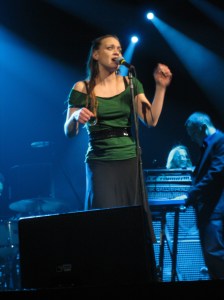
Fiona Apple. Image by Chickey.

Fiona Apple. Image by Chickey.

From Fiona Apple and Emily Wells to St. Vincent and Bat for Lashes, I hear strong, non-babygirl vocals, sonic experimentation, poetic phrasing and playful imagery. Listened to as a group, I get a strong sense of women coming into their own. Emerging from the shadows of big boys, big loves and big troubles. Trying to piece out just who they are and just where they belong. Knowing brokenness but forging ahead.

On St. Vincent’s “Cheerleader,” she simply states, and then radiates, “I don’t know what I deserve…I don’t wanna be a cheerleader no more” while Emily Wells lilts in the hypnotic lullaby “Passenger,” “I’m a passenger, I’m a passenger/ Give me the keys I wanna drive.” But it’s not all floaty wisps of empowerment.

These ladies do not shy away from the barbaric yawp on their latest releases. Their stark, guttural growls and piercing wails take us right into the ugly bits. On “Deep Sea Diver,” Bat for Lashes expresses their comfort with going vulnerable and raw.

You came running out of the dark

With the tears in your eyes

This time I’m not afraid

Cause my heart’s in place

Baby let your scream come.

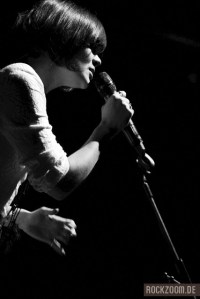
Bat For Lashes - November 2012. Image by Rockzoom.de.

Bat For Lashes. Image by Rockzoom.de.

Most of these stepping-out and see-me-now sentiments are closely balanced with lines of fear and self-doubt. These aren’t perfect people. They are sometimes needy, crazy, antisocial and sappy (read: normal) and completely up-front about it. Unlike many of the commercial stars, there is no perfect package or the expectation of one. There is consciousness and reality in all of its sparkling starlight and dangerous dinge.

The combination of wild and wooly woman-talk, tribal rhythms and fierce, reaching vocal arrangements fill me with a real sense of anticipation. Of being on the brink of a brilliant dive. Of being a little afraid of it too.

It’s scary to branch out, to be something new or create something new and your own, but lately I’ve had the urge to create more deliberately for myself. There are many factors contributing to that urge: a need to cleanse a palate overwhelmed by social-media but lacking in real human connection, a need to redefine my identity post-marrying and breeding, and the realization that while I’ve always been a pretty terrific nurturer, cheerleader and advocate for others, I’ve never really been those things for myself.

I can’t help but think that the music I listened to this year opened the door.

And maybe similar doors are opening up for others. Maybe something is in the water.

I read the posts of dreamwarrior women on Facebook who want to start making music together, to just gather and play like the boys who find it a matter of routine to gather in basements, garages and barns to jam. Or Anna Chandler, co-founder of the now-defunct Savannah band General Oglethorpe & the Panhandlers, who wrote recently in a blog post (personal album of the year: Live through This, Hole), “I pushed myself to write more openly, to break out of my standard of cryptic, hiding lyrics and be blunt.  I didn’t want to sing quietly, I wanted to wail, to howl and seethe, and suddenly I could. And I did.” And my bold-as-hell daughter who sits in her car seat belting out every single word of Fiona Apple’s “Every Single Night,” her tiny throat straining to match Apple’s rolls and calls, a giant smile on her face.

Sharon Van Etten. Image by Weekly Dig.

Sharon Van Etten. Image by Weekly Dig.

All of that feels like a promise. Like the one I’ve made to myself.

And though a year of self-discovery and voice-finding wasn’t easy, I had Sharon Van Etten whisper in my ear that “I’m All Right/ It’s ok to feel/ Everything is real.”

~~~~~~~~~~~~~~~~~~~~~~~~~~~~~~~~~~~~~~~~~~~~~~~~~~~~~~~~~~~~~~~~~~~~~~~~~~~~~~~~~~

In no particular order, except for Apple who was certainly number one for me, here are eight albums that opened the door for me this year.

Fiona Apple “The Idler Wheel…”

St. Vincent “Strange Mercy”

Emily Wells “Mama”

Bat for Lashes “The Haunted Man”

Sharon Van Etten “Tramp”

First Aid Kit “The Lion’s Roar”

Julia Holter “Ekstasis”

Tune-Yards “W H O K I L L”

Check out Rebekah’s Spotify playlist containing songs by these artists: no cheerleader

~~~~~~~~~~~~~~~~~~~~~~~~~~~~~~~~~~~~~~~~~~~~~~~~~~~~~~~~~~~~~~~~~~~~~~~~~~~~~~~~~~

Rebekah Goode-PeoplesRebekah Goode-Peoples is a mother, teacher and writer in Atlanta, GA where she lives in Grant Park with a bunch of superfreaks: Ryan, Sebastian, Izzy and Johnny Cash, the family chihuahua. You can find her at @goodepeoples and her band, Oryx and Crake, at @oryxncrake.
Savage Uncertainties On The Road Home

by Walt Pascoe

And but so yeah.

Having recovered nicely from the insult of surgery to resect 10 inches of my large intestine, I was more or less happily bobbing back up to the surface of my murky little emotional pond. It had been disappointing to learn that cancer cells were already frolicking around my lymph system like unruly children, and that the tender wisdom of western medical modalities dictated a course of prophylactic chemo. But after a brief time for contemplation and acceptance I’d come to terms with “stage 3” and prepared myself accordingly. There was the relatively minor surgery to insert a semi-permanent, sub-cutaneous port in my chest for easy access to a major artery, and the inevitable institutional waltz w/ the doctors office and insurance company to pre-approve this gold-plated poisoning. And finally a couple more visits to the various scan-masters for more complete head to thigh reconnoitering of my tender corpus, in order to be doubly sure there were no other cancerous redoubts hidden under a rock somewhere. All this transpired in a relatively compressed time-frame, the doctors and staff proceeding w/ an admirable, if not entirely reassuring, sense of professional urgency. And so it came to pass that my oncologist only received the latest reports the night before I showed up to begin chemo infusions.

The six-month course of chemo for my particular cancer goes by the vaguely militaristic sounding acronym FOLFOX. Essentially it involves kicking back in the coolest recliner you’ve ever seen while various anti-nausea meds and the main chemical arsenal are deployed sequentially for a few hours. (What is it with all the battle metaphors?) One of the meds is more effective if administered in small bursts over 46 hours, so before you’re allowed to leave a pump is hooked up to your port and you wear this home. Its a robust little programmable squirt machine that looks more or less like the FedEx guys’ scanner, and you get to wear it on a belt around your waist or over your shoulder. So much for any shred of sartorial hipness I might have been clinging to in the waning years of middle age semi-decrepitude. On the bright side, the pump makes a rhythmic clicking sound which, while lying on the bed next to me at night, is not without a certain comforting intimacy…

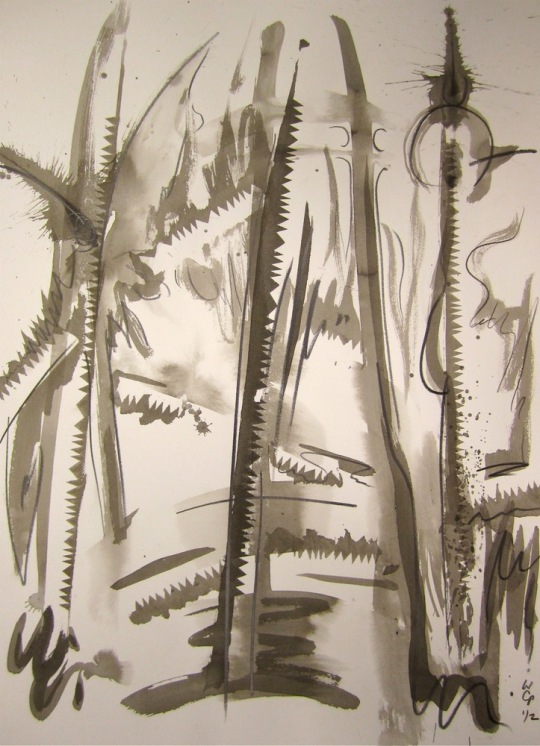
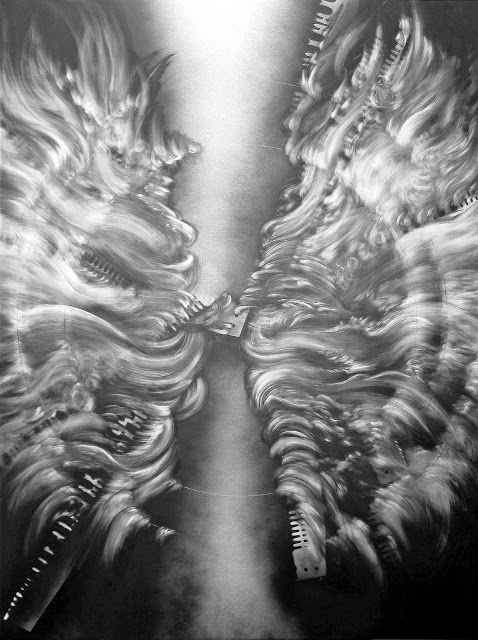
“Incantations on the Road Home” 48”x64” Graphite on gessoed panel

“Incantations on the Road Home” 48”x64” Graphite on gessoed panel

Wait… what?

But I’m getting ahead of myself. Turns out there was in fact a further metastasis. Stage 4. Another decent sized tumor wrapped around a bronchial tube near the entry point into my left lung, snuggly nestled next to my heart; a weirdly poetic location given the stressful mid-life transitions I’d been enduring of late, but one that rendered it inoperable. So a second biotherapy (a monoclonal antibody called Avastin) was added to the FOLFOX chemo regimen, all to be administered over a 6 month period…

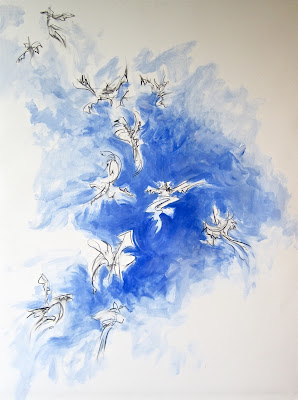
“Raven Gets In” 48”x60” Oil on canvas

“Raven Gets In” 48”x60” Oil on canvas

“I always put lime on the people I kill. Wait… are you calling 911?” ~ Drunk guy in a Mexican restaurant, as related by my friend Melissa Johnston.

And so it seems that cancer has created the mother of all liminal spaces in my life. And it is from this strangely pregnant territory that I peer out into the… I want to say abyss… but like so many words now it seems inadequate, overused, and worked to within an inch of its word-ly life by the incessant hype culture hum we wallow in. The title of some crappy movie, complete with cross-licensed plastic action figures free w/ your next Happy Meal. And seriously, how many of us ever reaches beyond the tremulous shadow of the concept and endeavors to actually process this deep down inside our whirring, buzzing lizard-brains? It crouches at the center of your chest like a cold rock, pulling you down through the turbid water more effectively than the finest cement shoes. Who the heck would want to go there voluntarily? Who…

“Fatal Shore” 48”x64” Acrylic on canvas

“Fatal Shore” 48”x64” Acrylic on canvas

Blaise Pascal wrote in “Pensées,” “We run heedlessly into the abyss after putting something in front of us to stop us from seeing it.”

It’s amazing how emotions flow just like weather.

I can go along doing what I think of as “well”: feeling optimistic, comfortable being alone, celebrating the liminal, accepting the transitory nature of things, handling the chemo, sensing health and wholeness on a walk in Whites Woods, meditating, reading, feeling a measured enthusiasm for the future w/o treating the present like just something to be got through, the master of silver linings, counting my blessings, deeply grateful for the love and support of my friends and family, acquaintances at the Post Office saying “hey, you look great”, relieved by the fact that I haven’t yet assumed the grayish-blue pallor of the wasting.

And then there will be this slow creeping intimation of unease, like a little darkening on the horizon. Just a few clouds on an otherwise sunny day…

Stillness and solitude in White’s Woods, Litchfield

Stillness and solitude in White’s Woods, Litchfield

Willem DeKooning referred to himself as a “slipping glimpser”.

As the storm gathers and starts to darken my interior landscape I can feel the slipping; the accumulation of tension in my heart and body. Fear, longing, and worry… a somatic ache that fluidly transmutes into a profound and painful spiritual dread if not checked quickly by some distraction. This is where it gets tricky being alone. It is so much easier to distract yourself from it when you are with other people. Just ignore and bury it in the cosmopolitan joy of human culture and friendship. Or loose yourself engineering a life.

“[…] almost nothing important that ever happens to you happens because you engineer it. Destiny has no beeper; destiny always leans trenchcoated out of an alley with some sort of ‘psst’ that you usually can’t even hear because you’re in such a rush to or from something important you’ve tried to engineer. ”
~ David Foster Wallace in “Infinite Jest”.

I guess this terror has always been present, and is for every human being. We do with it what we will. Tune it out. Turn it into art or literature. Transmogrify the brutal fact of our inevitable decay into infinite varieties of work and the illusion of progress. Am I thinking too much?! This is not always true. There are times when laughter and joy come in solitude and I can revel in it. But the laughter is hardened and forced when you are filled w/ grief at the prospect of loosing all you love… threatened in such an immediate, tangible way…  I’m attached to my attachments! A lousy Buddhist if ever there was one! It’s amazing how I can go along feeling buoyant about the possibility of remission… and oh the delirious possibility of “durable remission”, held out there like the most seductive of outcomes. And then just tank for awhile… fall into the dark… gazing up into a night sky perversely ornamented with PET scan constellations of cancerous cells awash in radioactively tagged glucose, collaged all over my chest and neck, blinking out an inscrutable code… exhausted from the grasping after some more universal, ever-present , capital “L” Love. God. Some hopeful bulwark against the immensity of the void surrounding my fearful and trembling self. A glimpse perhaps…

The Real Work

It may be that when we no longer know what to do

we have come to our real work,

and that when we no longer know which way to go

we have come to our real journey.

The mind that is not baffled is not employed.

The impeded stream is the one that sings.

~ Wendell Berry ~

(Collected Poems)

And so it goes. Alone with the Alone. It is a choice. A pseudo-monastic exile, punctuated by genuinely caring and helpful visits from my loved ones and the logistics of the chemo rhythm. Simone Weil said “attention is the rarest and purest form of generosity”…

"Exile Study No.4 ~ Perdita" ink and graphite on paper, 22"x 30",

“Exile Study No.4 ~ Perdita” ink and graphite on paper, 22″x 30″

And what exactly is it that I am attending to now?

Seeking Now through mindful solitude. That word, though: seeking! Seeking itself one of the most seductive of attachments. After the briefest foray into the silence, I flee back into the endless loop of intellectual and aesthetic dialogue w/ the dead. With those I’ve chosen to valorize as artistic mentors for 30 years: David Smith and Charles Olson. And into the radiating web of endlessly fascinating threads that fan out from their volcanic productions. Back into yet another painting or drawing, searching searching searching, always searching… wading through a rich but terrifying uncertainty…

“The Secret Life of Wind” 48”x64” graphite on gessoed panel

“The Secret Life of Wind” 48”x64” graphite on gessoed panel

“Sometimes when I start a sculpture, I begin with only a realized part, the rest is travel to be unfolded much in the order of a dream. The conflict for realization is what makes art not its certainty, nor its technique or material.”
–David Smith

In Alex Stein and Yahia Lababidi’s wonderful conversation, “The Artist as Mystic”, Yahia quotes Heidegger: “Longing is the agony of the nearness of the distant.” This resonates now. Not just a little! The words vibrate in my chest as if I were standing alongside a huge, beautifully wrought bell being rung. Small pieces of the rock crouching there begin to fall…

“The Chain of Memory is Resurrection I” 30”x40” graphite and acrylic on bristol board

“The Chain of Memory is Resurrection I” 30”x40” graphite and acrylic on bristol board


Walt PascoeWalt Pascoe is a Montreal-based visual artist who received a B.A. in Fine Art from St. Lawrence University in 1980. You can see more of his work at www.waltpascoe.com

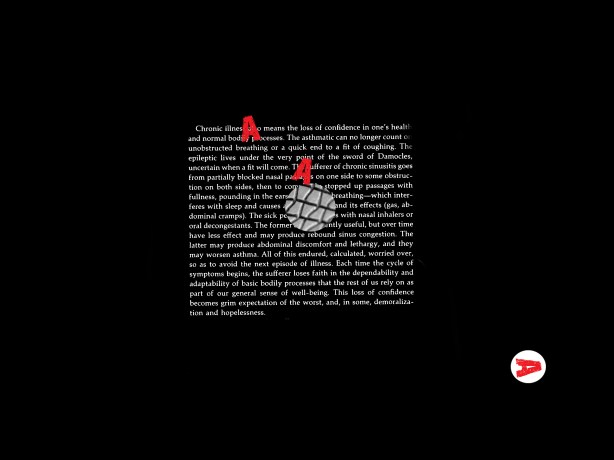
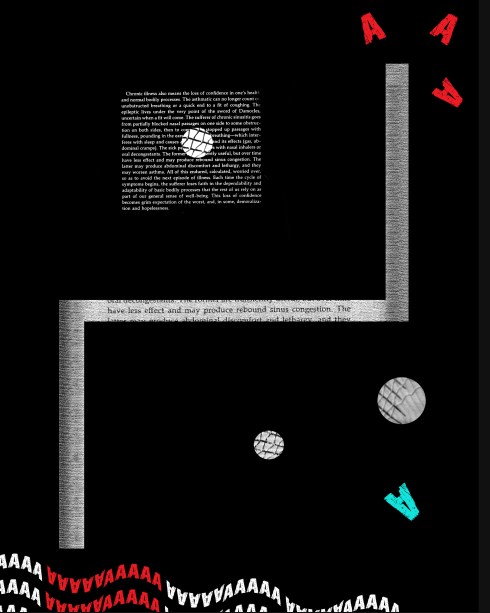
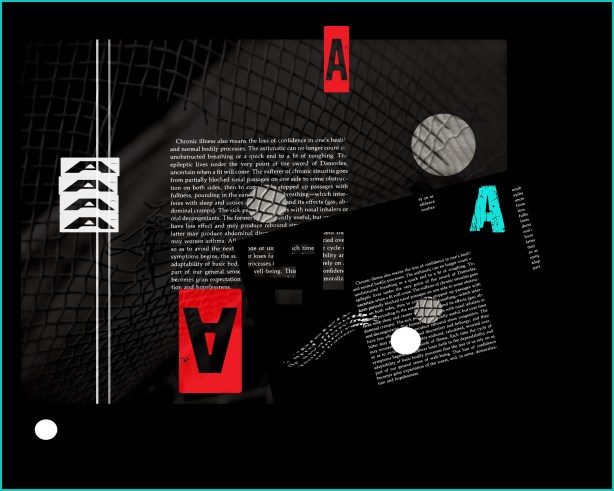
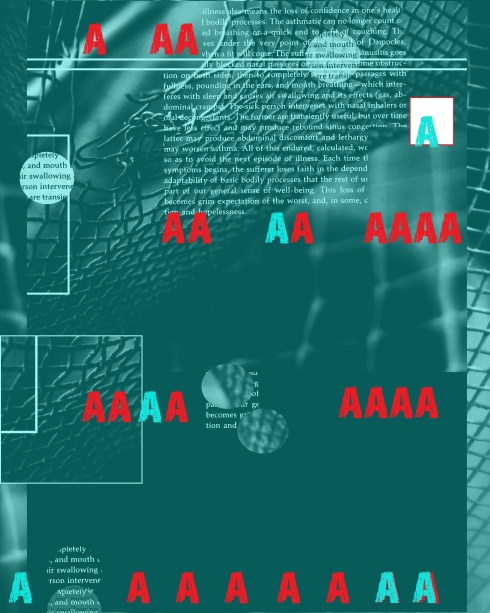
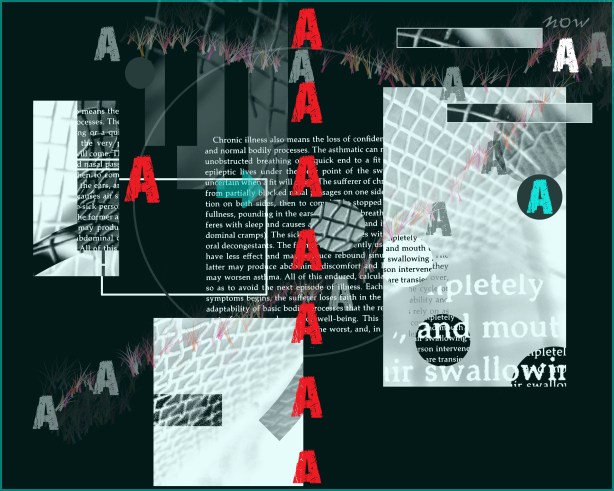
Journey of A: A Graphic Exploration of Self/Other

by Melissa D. Johnston

de-centering

de-centering

refuse from the machine

refuse from the machine

fragmentation and compression

fragmentation and compression

self-other arithmetic

self-other arithmetic

identity in time

identity in time

Anne Carson and the Experiment(al)

by Mark Kerstetter

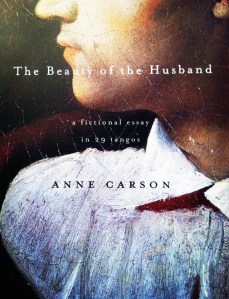
cover-anne carson's beauty of the husband

Art critic and novelist Michael Welzenbach wrote in his wonderful book Conversations with a Clown that, of all of the arts, painting is the most complex. It got me to thinking that the claim is more suited to the language arts. One might begin by saying,

The unique complexity of language arts is rooted to a blindness of their aesthetics due to the commonness of language. We use language in speech and in all kinds of written discourses to convey all kinds of information, but also to make art and essays about all kinds of art. The unique complexity of language arts comes out of the medium’s existence as at once mundane and unimaginably flexible.

So connected in the mind is the relationship of language to context-dependent meaning, to the conveying of information, that a work of language art that does not do this is treated with a deeper more disquieting suspicion than unconventional art in other media. Indeed, it is almost nonsensical today to use the phrase “unconventional art” except as applied to language arts. It has long been the case that people expect the visual arts to be weird. We are far from the days of scandal and protest. Even so dismissals such as “my kid could do that!” or “that’s not art!” persist. Some still manage to be offended by free improvisational music. But if the former are often made out of amusement, and the latter annoyance (“It’s just noise!”) the suspicions leveled against weird language art are something else. This is a suspicion of something which is possibly threatening, possibly subversive. It is one thing to make sounds which skirt all known boundaries of melody and rhythm. It is quite another thing to disregard the conventions of language. Is the person even speaking? Are they thinking? Are they sane?

We associate proper language with rationality. Therefore non-rational language art can simply be dismissed as “nonsense”. But if we are asked to take it seriously what do we say of it? To write an essay about a work of non-rational language art is to use the same medium as the artist. Yes, one reminds one’s self that the use of art and the use of essay are two distinct uses of the medium, but those reminders creep in and get entangled, threatening to pull the wise essayist into the wild deep. Yes, that poem is a mighty fish, taking the poor critic for a ride. The fact is, the essayist may not simply remind himself in silence, or even once, but this reminding—that the poem and its analysis are two distinct uses of language—underlies the whole endeavor like a shadow. And what does one say about a text which combines normative with weird language? Art threatens the essay the way madness threatens reason. Why else is the most common stance of the essayist to play master, to be the one in control, the one who explains, who shines a light into the artist’s blind spots? Because to not do so already looks like concession, a relinquishment, to some degree, of the normative use of language and thus of the possibility of making one’s self understood.

Nothing is more dismissive of weird language art than the designation “experimental writing”. By labeling the text at hand as such one renders it harmless before one has said another word about it. And any positive value that the text might have is only that which is restored to it by the authority of the critic. The very power of the phrase is seen in the offhand manner with which it is thrown around. The function of the word “experimental” is to render the unwieldy and weird text inert and impotent, like a lab specimen, to stifle the mode of inquiry that the text gives rise to. Its effect is to shut the text down, like turning a machine off. The beast is only safe with a spear through its heart. Since it is not turned on, not moving, it is not doing what it is supposed to do, and the reader has no more sense of it than a visitor has a sense of a great stuffed grizzly frozen behind plexiglass. This inert thing sure looks puzzling. Guess who holds the key? In consequence a daunting new difficulty is added to a text that by its very nature challenges the reader. Well, you see, he is told, it’s experimental.

But all works of art are experiments if they are seen as lines of inquiry or as particular responses to problems posed by society and by other works. A novel is the elaboration of an experimental self: such a character will respond in such a way to such a set of problems. A fiction is a hypothetical life, a novel is a rehearsal for an imagined state of affairs. This situation does not exist, but it could; the “could” places it in the realm of the experimental. What the critic does when she singles out a given work as “experimental” is two-fold: first, she ignores the fact that all literary works are experiments. Second, she casts the integrity of the work in question by saying, in effect, it is that much more an experiment than other works, that much more capable of failure. In fact the designation “experimental” almost assumes an aspect of failure.

Daphne Merkin’s review of Anne Carson’s The Beauty of the Husband reveals a prejudice for normative language in poetry. She flatly asserts that “the enterprise of poetry has become almost willfully insular” and that Carson “sometimes seems lost in an enterprise of her own devising.” That sounds like saying Carson is lost in her own mind, which sounds like a description of madness. Carson will write a poem as if it were an essay, an essay as if it were a poem; she weaves Dickinson and Saint Augustine together into a single text; she places a poem that is suggestive, visionary, enigmatic, next to one that is analytical; she sketches great narratives with a few lines, and she reveals the way in which a poet, writing over a thousand years ago, is a contemporary radical. She makes the old appear new and the new appear classical. What, today, seems more new? At one time Emily Dickinson seemed new. When her poems were presented to the world a little over one hundred years ago, her friends and editors were sure to caution the reader that they were not written with publication in mind. Had they been they would not have “inevitably forfeit[ed] whatever advantage lies in the discipline of public criticism and the enforced conformity to accepted ways.” 1 Comparing her work to some of her contemporaries, Mabel Loomis Todd wrote, “Like impressionist pictures, or Wagner’s rugged music, the very absence of conventional form challenges attention.” 2 In the edition from 1948, Carl Van Doren reminds the reader again that Dickinson “did not round them out into accepted forms of verse.” 3 Today such comments are historical anecdotes. Dickinson has become classic. Yet to those, like Carson, who know how to read, Dickinson is still a wild beast. Indeed, Dickinson’s poems, exactly the way she wrote them, do not seem to be the versions most commonly read today.

Making it new is one of the things we expect of artists and by responding in hypothetical ways to contemporary challenges, how can writers fail to be experimenters? Must the twentieth century battles of the avant-gardes be fought and re-fought, then fought again? Haven’t the achievements of the modern era permitted Anne Carson to adopt a variety of styles, forms and voices without anyone raising an eyebrow? Hasn’t all this been settled? Alas, no.

I do not propose the question to diminish the challenges that writers such as Carson offer. It is asked in the same spirit that Milan Kundera said that Diderot and Sterne

were the greatest experimenters of all time in the form of the novel….When I hear learned arguments that the novel has exhausted its possibilities, I have precisely the opposite feeling: In the course of its history the novel missed many of its possibilities. 4

—remembering that the “greatest experimenters” were two founders of the novel. Isn’t it curious that Anne Carson can be perceived as insular when one of her most dramatic effects is to present the new moment of today’s poem as, not merely equivalent, but as essentially the same moment as that of an ancient poem, a classical poem? This experience helps sweep the table clean of the last crumbs of oppressive notions of the avant-garde; it is a new concept of the new.

If we follow this new feeling, and ask in a broad kind of way why the possibilities that Kundera cites have been missed, one answer that offers itself is the blindness to the aesthetic potentials of language due to a prejudice for its normative uses.

The bias is easy to understand. So much so that it is a little odd to even acknowledge it, but acknowledge it we must, since a receptivity to the aesthetic potentials of language requires one to look at language as if it were a weird thing, an untamed beast. From this perspective, the purest form of language art is indeed outside the norm. No full and rich sense of language as art is possible without an open mind to this art. Why then the resistance, even amongst writers, who should know better?

Perhaps part of the answer can be glimpsed by taking a look at Kurt Schwitters. In 1920 he wrote, “I pity nonsense because it has been so neglected.” 5 It is fair to say that by now quite a bit of attention has been paid to it so that one feels that a good deal of sense is welcome. But if some of Schwitters’ texts fizzled out in weak frivolity—too much nonsense—much of today’s poetry and fiction limps along with cumbersome textual attachments designed to make sure that the norms of language are given their proper due. It’s a dull-sounding truism to say that weird language art is meaningless without normative language as a contrast. But it would be a mistake not to recognize that normative language is dead without the life-force of its opposite to infuse it with the energy of new ideas. A conversation between the two is vital. The great writers of today are those, like Carson, who can combine the two primary forms of language into a single text. They are the great experimenters.

1. T. W. Higginson, Editor of Emily Dickinson Poems (The World Publishing Company, Cleveland, 1948), 23
2. Ibid. 125
3. Ibid 16
4. Milan Kundera, Afterword to The Book of Laughter and Forgetting (Penguin Books, 1981), 231. See also Kundera, The Art of the Novel (Grove Press, New York, 1986) 15
5. Kurt Schwitters, PPPPPP (Temple University Press, Philadelphia, 1993) 215.

Mark Kerstetter Mark Kerstetter is restoring a house in Florida, where he writes poetry, fiction and essays and makes art out of wood salvaged from demolition sites.

Fields: Haywire (What is Encounter?)

by Melissa D. Johnston

What is encounter?