Recent

Phantom Sister


by Linda Simoni-Wastila

Marlena comes to me on the cusp of sleep and wakefulness, when the world blurs grey. She soars through yellow-tinted waves, her bald shining skull pushing through water. Although she never speaks, she makes a gurgling sound, high-pitched like the bottle-nosed dolphins at the aquarium. I look but never see her face. When I wake, the bottoms of my feet sting as though I walked over a yard of smoking coals. Those mornings I call in sick and sleep in the boat’s hold. The gentle rocking hugs me.

My twin sister Maria lives halfway around the world in the Catoctin Mountains. She paints and writes poems about trees. We rarely see each other but the internet tethers us. Maria has the same dreams about Marlena – we think of them as visitations — but she feels the ache in her chest, the left side, a sharp pain like someone has plunged in an icy hand and wrested out her heart. Afterwards she also feels an uncommon, exhausting peace. We wonder if this is how we tangled in our mother’s womb: hands to feet to heart.

Thanksgiving Day, I find myself alone on the boat, flipping through scrapbooks, missing my sister. I find an old photo of the two of us, a college road trip to Baltimore. Our smiling faces squeezed together, the Washington monument towers behind us. I scan the picture, push send. The image zips to Maria’s mountaintop. Seconds later, she writes back. “There’s a hole between us.” I look closer at the photograph and my soles burn.

Linda Simoni-Wastila writes from Baltimore, where she also professes, mothers, and gives a damn. Her stories and poem are published or forthcoming at Smokelong Quarterly, Monkeybicycle, Scissors and Spackle, MiCrow, The Sun, The Poet’s Market 2013, Hoot, Connotation Press, Camroc Press Review, Right Hand Pointing, Every Day Fiction, and Nanoism, among others. Senior Fiction Editor at JMWW, she works one word at a time towards her MA in Creative Writing at Johns Hopkins and two novels-in-progress. In between, when she can’t sleep, she blogs at http://linda-leftbrainwrite.blogspot.

Possibilities

by Melissa D. Johnston

Boredom.

A point and shoot camera.

A sunny November day.

The air grille of a whirring heatpump.

Click.

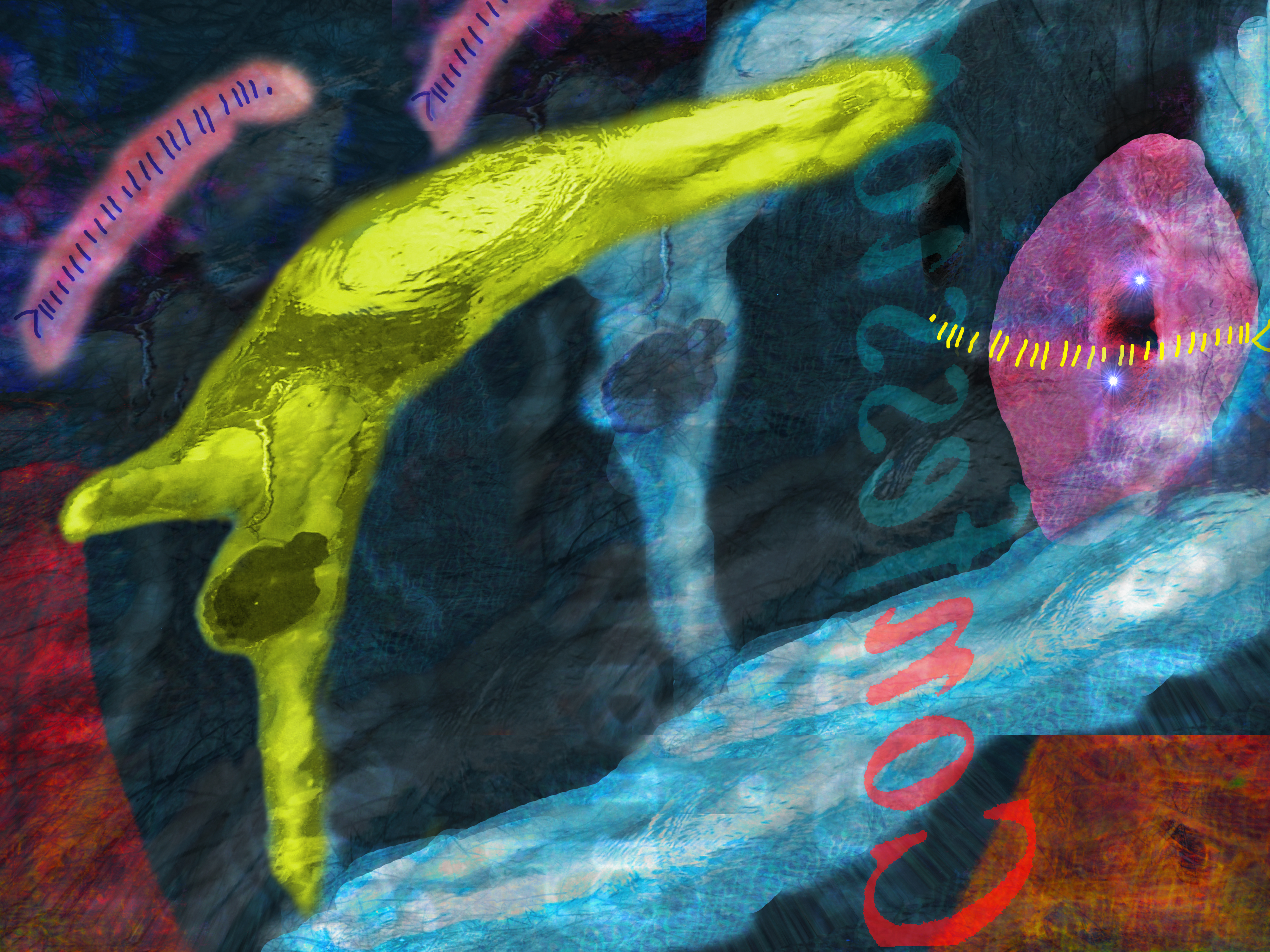
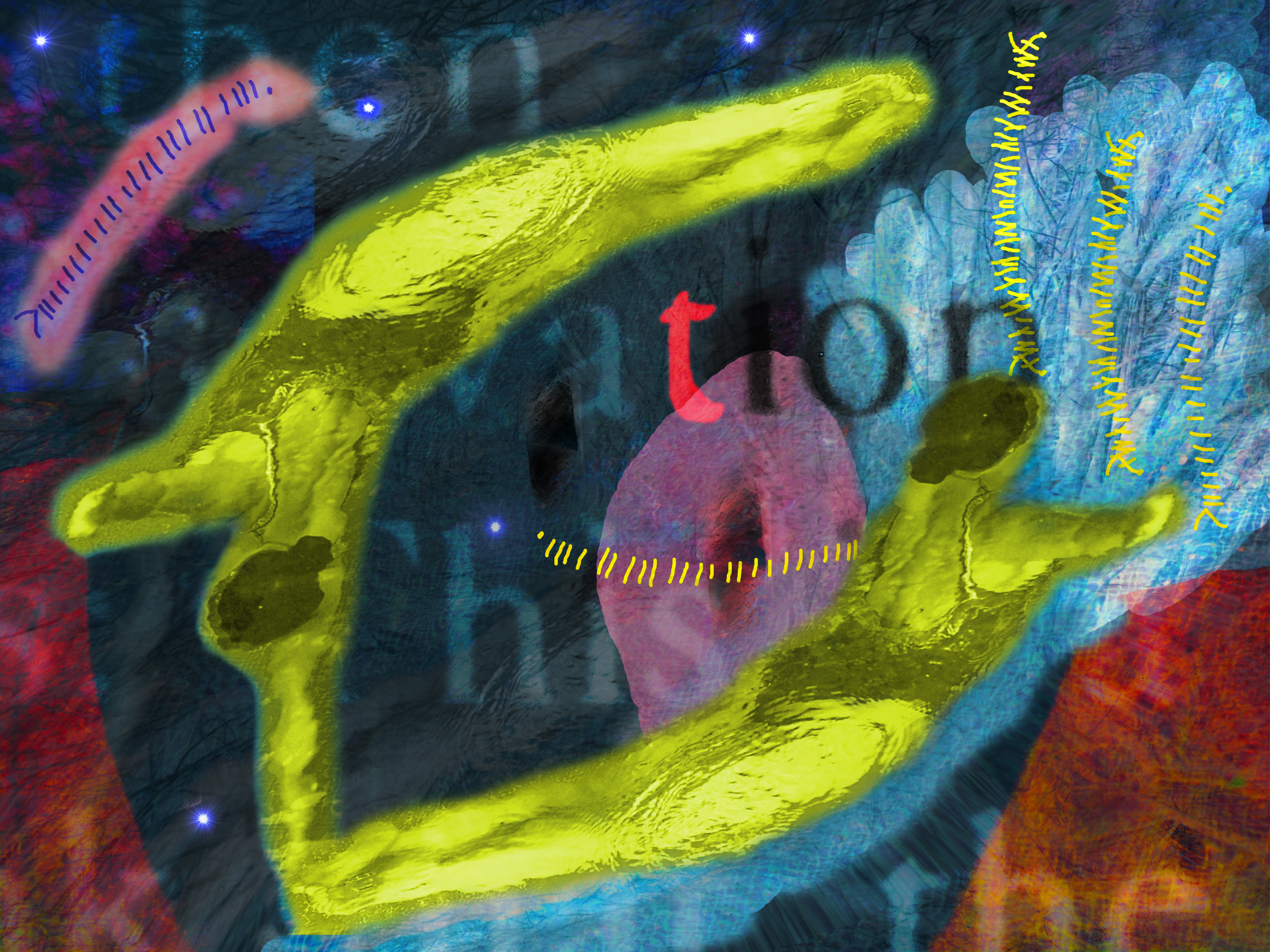
Visual Poetry from Jaume Jorba

This slideshow requires JavaScript.

About Jaume Jorba:
Born in Barcelona, I arrived to Atlanta sixteen years ago. Little I knew about the journey I was about to embark. Applied research in public health was my first eye opener and I decidedly joined the Polio Eradication project. Sometime later I found in Visual Poetry the stream uniting tributaries long abandoned. Facing loss and grief, Visual Poetry emerged in gratitude. Thus, a new journey began. The one I keep telling my soul: Haven’t met you yet.

See more of Jaume’s work at  Journey to Tallulah Falls.


Necks, Scars, Cancer, and Pink Worms

by Melissa D. Johnston

“It’s a giant, juicy, pink worm tied down by Lilliputians.” This was the answer to my friends, post-surgery, of what my scar looked like. To my parents it appeared that my neck had been clotheslined—not metaphorically, but with actual clothesline wire. This belief persisted long after the stitches came out and persists to this day, echoed in the surreptitious glances of strangers who may or may not wonder if I’d once had a particularly unfortunate day playing Red Rover.

In reality, the pink worm was born as the result of a partial thyroidectomy, a procedure in which a surgeon and his team removed part of my thyroid through a 2 ½ inch horizontal incision in order to whisk away a microcarcinoma (a nice, mellifluous word for a small thyroid cancer) and banish it, after much study, into the biohazard waste basket.

And so they did, and now my worm has advanced to middle-aged skin at the height of a dry winter, where moisture must regularly be applied to keep that plump, pink, youthful appearance. The rumor is that he’ll disintegrate to a ripe, flat old age and then into a grave marked by a bright, thin, barely-there line—where I’ll have to be the one to point him out if I want others to make his post mortem acquaintance. That’s the story according to my surgeon, anyway.

I still have a special fondness for his preteen years, though. The awkward stage where he still struggled with wire braces, the stitches that had to set while he lay inflamed but protected by daily swabs of hydrogen peroxide and generous amounts of petroleum jelly. A time when I made my first public appearance after surgery and couldn’t cover his raw body with a scarf because it was still too sensitive—no small deal since I’d known others with thyroidectomies who’d been asked, in all seriousness, “Did you try to slit your throat?” I didn’t fancy appearing extremely qualified as a candidate for Remedial Suicide Methods 101.

Most folks in the southern U.S. are polite. If they did think I qualified for Remedial Methods, I never knew it. That first day out, in fact, I got plenty of furtive glances, but only one direct stare, from a man whose wife tapped his arm and said, “Honey, Honey—Look!” When I turned my head, she immediately averted her eyes but her husband continued to stare until I wondered whether I’d lost a standoff when I looked away.

One person that day hadn’t seemed to notice at all. She took my order at one of my favorite local New York style delis and looked directly into my eyes, as she seemed to do with all the customers. It was only when I was getting my soft drink that she came over and said, “Do you mind my asking—what surgery did you just have?”

“I had a thyroidectomy.”

“What was it for?”

“I had thyroid cancer.”

“Oh.” She looked down and paused for a second. “I could tell it was fresh…” She finally looked back up and into my eyes. “My son was just diagnosed with leukemia.”

We talked for the next several minutes about her son, cancer, and how crazy life can be with kids. We talked about what we both had been through in the past couple of months and how the cancer diagnoses had affected our families. I walked out of the shop feeling support from someone who one hour before had been a total stranger. I hope she felt the same.

That conversation changed how I viewed my scar. These two digital pieces, which are chronicles of my wrestling with what thyroid cancer means for me, feature my preteen worm in all his pinked, stitched glory.

** 11/19/12  Update:  Alas, my worm never made it to old age. He was whipped out mid-life during a second surgery, where the surgeons, due to finding cancer in my lymph nodes, needed to complete the thyroidectomy and perform a central compartment neck dissection.  New skin puckers where he’d  been, forming glued bumpy borders I’ve yet to explore…**

**7/27/14 Update: My worm rode the wheel of life one more time. As much as he loves me and I him, we both hope it’s his last incarnation. After a third surgery and radiation, I’m hoping to get the all-clear (and it looks good!) to be able to say that I’m a one-year cancer survivor. I’ll know in a few weeks….

Dive I: The Journey Within

Dive II: The Journey Expands

Feeling Color

photo by Teia Pearson

by Teia Pearson

I am grateful to be alive and enjoy life as I feel time passing me by. My last sense of innocence was playing under a maple tree at sunset on my fifth birthday. Like dominoes falling, that day set my life on a course of uncertainty. Since then, I faced one challenge after another. Enough to make anyone else lose hope. With every obstacle put in front of me I persevered stronger, never giving up.

The biggest challenge, nearly ten years ago, threw me into a different life with internal head and spinal injuries. My then spouse and I were driving to dinner as a treat for my ovarian cancer recovery. While waiting for a stoplight to turn green, a utility truck slammed into us. Like an overloaded circuit, the impact caused a major fuse to blow in my brain. Surging forward in time, with one last clear memory of flying into the front window, I live on to share my life lessons with others.

At nearly age 40, retraining my brain and body function has been a lifelong process. Every morning I wake up feeling the same as I did after the truck accident. Head spinning ready to explode with a loud high-pitched sound ringing through both my ears. Feeling like a Mack Truck hit me, or that I’m suffering the worst college party hangover ever—times ten. You may be able to relate.

Before pushing myself up from wherever I lay, I savor a brief moment when all pain is quiet and muscles are relaxed. Daydreaming I have a partner to share a dance with all night as I once did before. Such a lovely vision to savor.

Dream over. I use all my strength to push through brain fog and severe fatigue to start my day. Once standing up, all muscles tense as vertigo pulls me back. Starting the day ever so slowly to avoid causing a massive muscle cramp. All of my joints and muscles are stiff causing me to walk like a rusted Tin Man. Ice picks pierce in waves up and down my spine as my body ignites with a hot flash. Immediately I run to a cold bathroom or an open window before I pass out. My stomach starts summersaults while my right brain is asking “Where’s breakfast?” Left brain just wants me to hurl so I can feel better. Not happening!

Strong tea with supplements and medication start my day as long as my hand decides to function and not drop another cup. Having little to no memory of previous days, I open my laptop to help me recall what I am doing. I feel stuck in time, like it is still the year 2003, as if the lives of others move on and I am standing still.

This is what living with constant vertigo, tinnitus and fibromyalgia is like after surviving a traumatic brain injury. There is no Band-Aid and no cure, just hope for a new, brighter day. I enjoy life to the fullest like everyone else. “Where there is a will, there is a way,” words I came to live by growing up.

As my brain functions with a broken memory circuit, I read through old journals revealing shocking things written not too long ago. Feeling like I am reading about someone else, I do not recognizing my own writing or photos. Horse photos remind me of a Secretariat grandson I rescued off the racetrack many years ago. In my younger days, I had a passion for riding dressage and cross-country jumping. I remember living the American dream with my own business and custom-built house out in the country.

After a bitter divorce ending with a black and blue face, I wonder how I ever did it all. I could not have been very happy as I love living, as I do now, in a big city. Where I once had the great physical strength of superwoman, I now have the great mental strength of Anne Frank to make every day count.

When I was young, my biggest inspiration was creating things with color. Every different shade of color and feel of paper provoked my senses. Time disappeared when creativity carried me away from lonely mornings waiting for the bus, or lonely nights waiting for my parents’ safe return.

I hold onto the feeling of innocence, taking me back to the moment spent coloring under the big old maple tree at sunset when I was young. I go back to this feeling before everything changed. The feeling of peace in times of pain and uncertainty. It has kept me alive over so many years.

I was taught to be a perfectionist. “Color in-between the lines,” my mother would say. Yet, little did I know my life would be so full of color inside and outside the lines.

After surviving ovarian cancer and developing vertigo with fibromyalgia and tinnitus, Teia Pearson retired from her lifelong career with horses. She now focuses on her other life passion for writing and art. She currently lives in Chicago helping to promote the arts as director of EscapeIntoLife.com. Currently working on her inspiring new memoir Writing Color, about surviving a very troubled childhood and life’s most tragic events. Teia strives to show everyone the more positive side of life. Read more about Teia at her blog  Just Breathe and learn more about her upcoming memoir at Writing Color.

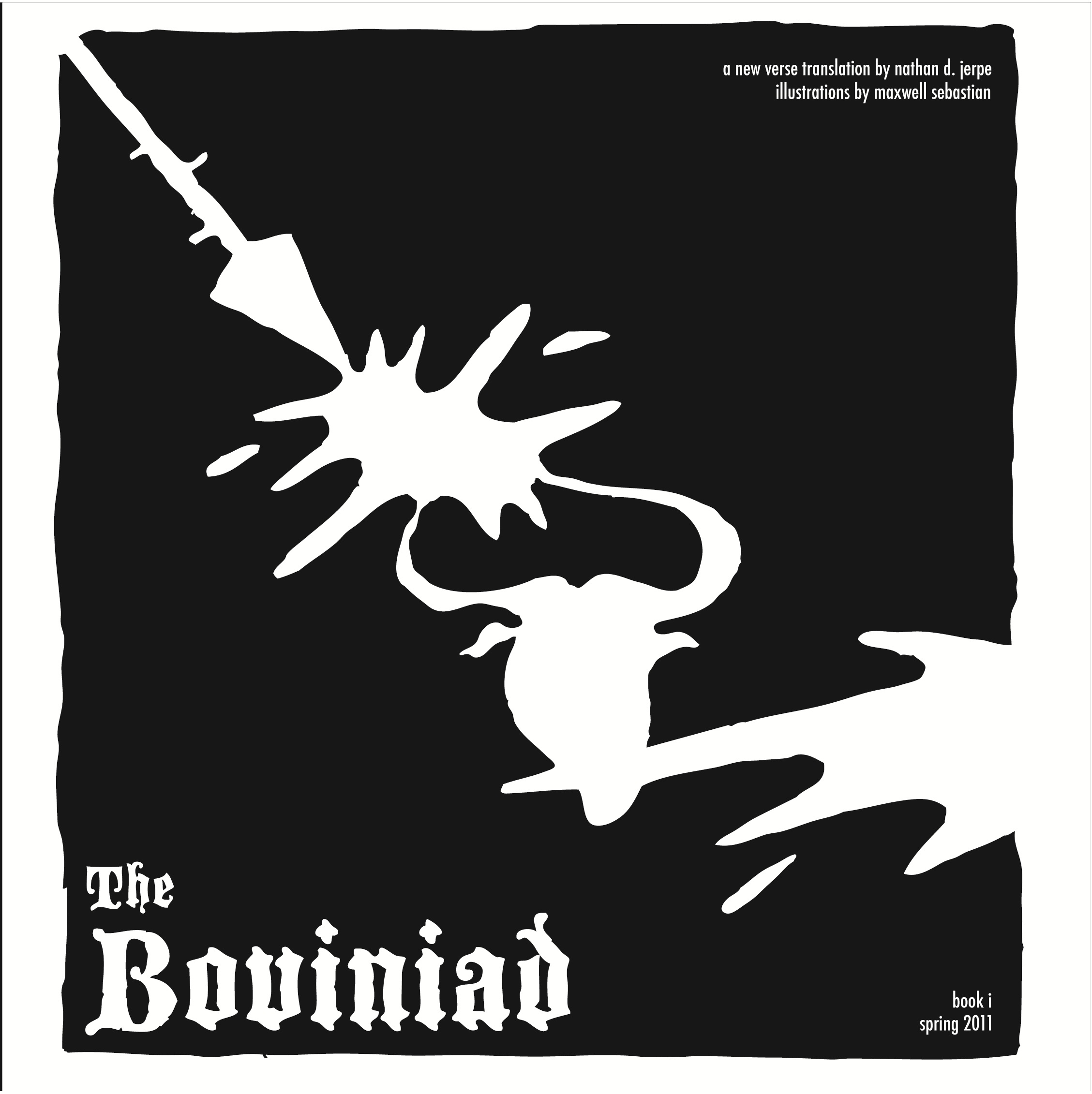
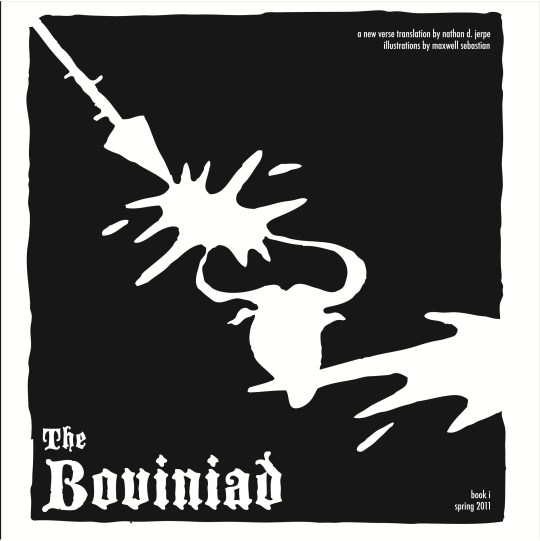
The Boviniad

An excerpt from The Boviniad
by Nathan D. Jerpe
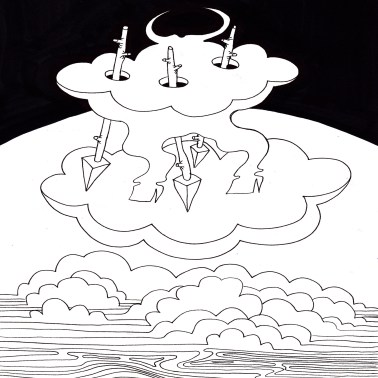
Illustrations by Maxwell Sebastian

BOOK ONE: THE INJECTION
CANTO I

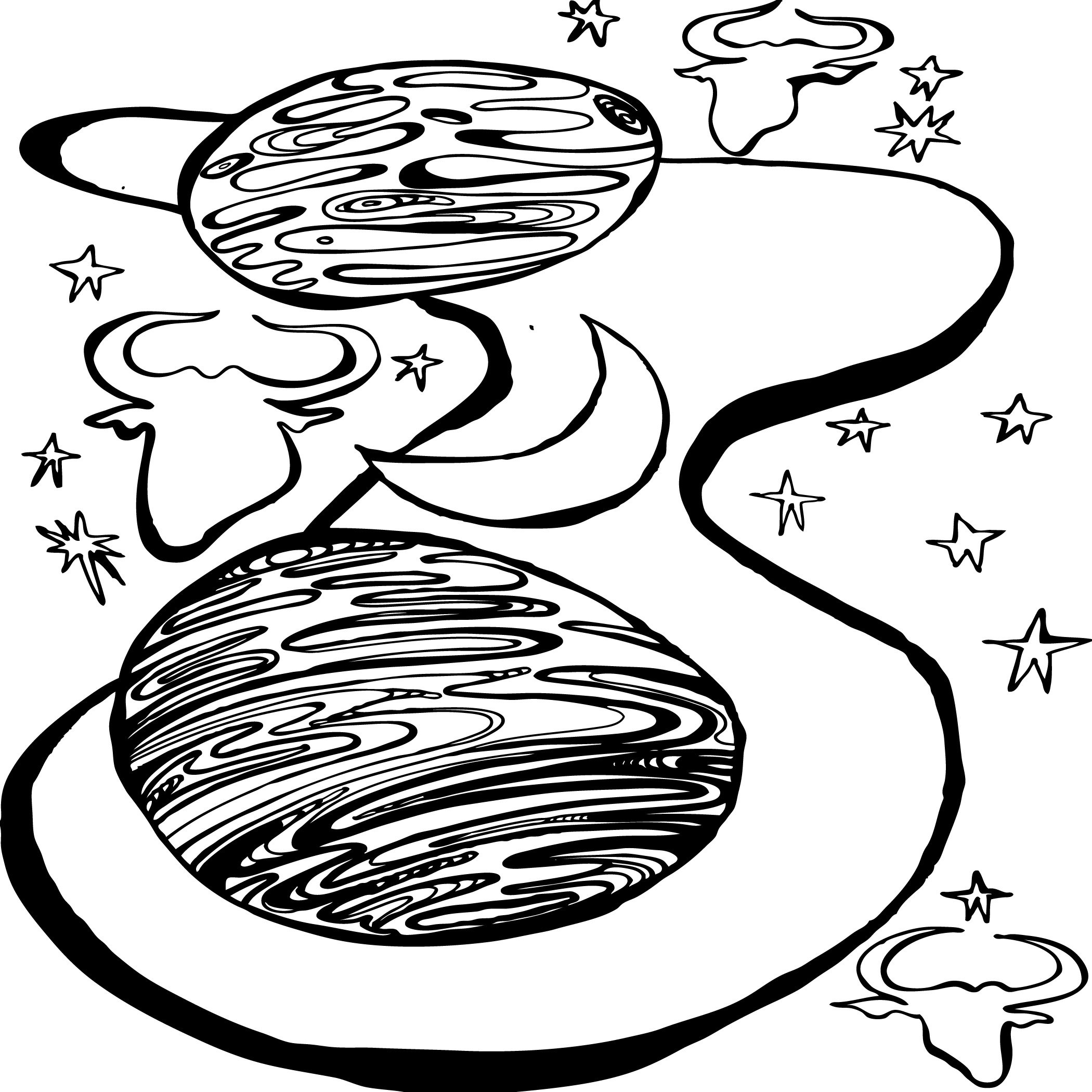
A Venus arrival – Pantamoolian geometry Exploring the interior – An invocation

Dream back, my pupils, to a vanished time,
when rampant did the groves of Venus grow
with multiplying vines and shooting sprouts;
when rain in fat droplets fell soft to nurse
her ranks of teeming moss, and a gauze
of golden cream enwrapped her like a shroud.
Confounding was her dance, and incomplete,
with steps reversed from what her siblings tread,
whom vast walls of distance had left untouched,
except for one, third closest of the brood,
across whom the sons and daughters of Man
had marched and sailed for an age, even then.
Through miles beyond the imponderable wells,
where gravitationís rope can bring all kinds
to clutch her breast, unbeknownst to themselves
and unrehearsed, where shrined in starry vaults
of space she seems a soft and distant ball,
the bovine blimps of old came drifting,
unannounced, slow and full of clout unspent,
perchance to hail from Saturn’s moons
or Pluto’s black and tenebrous caves,
or farther still, beyond the Oort cloud,
connected hence by wormhole gates,
although, truth be told, these children of Man
knew scarcely more of the bovines’ homes
than what intent they had in leaving them.

They were seven in number, and made no sign
to greet, much less strike down, their earthly hosts,
who in recent past had sailed for the Moon
to dredge the vast mares of Imbrium there,
while Venus garlanded with bovines turned.
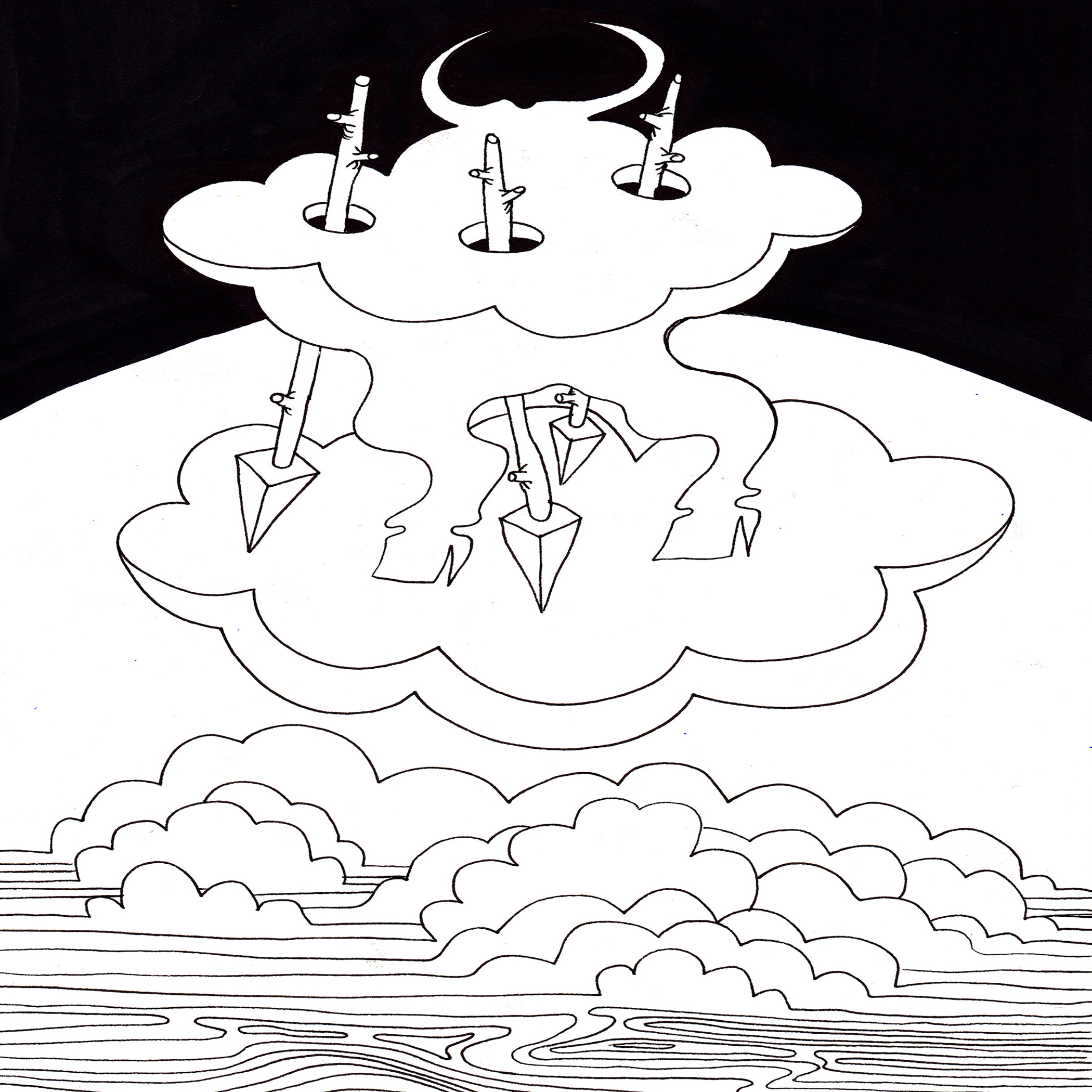
The cows were city-sized, set still as clouds,
and gathered round the known libration points,
their soft hair warmed by the airless breeze
that hides in the furrows of celestial paths.
And from their pale rumps there erupted spikes
of colossal heights and symmetries,
like shards of a mountainous alpine range,
while far away in high cranial realms
beneath globulous eyes, unwinking and wet,
there came such miles of unrolled tongue
to where a bell hung round each neck, never rung.
Farther on then, on a median plane,
and down past the udders to hooves so large
they might trample to dust the very stars,
or sundering fall to valiant seas.
And thus gone to become islands of note,
filled up by men who would gouge them to load
their vats with keratin and glue,
while at the ports of less adhesive lands 
those dreamers, who lacked the means to send
the merest gift by Venusian post
might look to the cows in the starlit skies
with worship glowing in their stares.
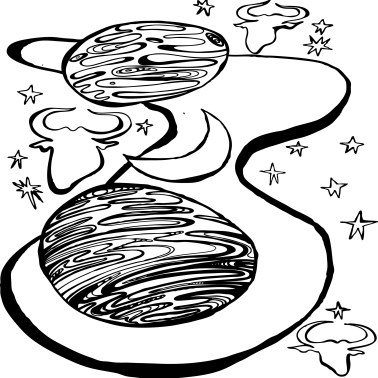
Pantamoolians – in time would Man bequeath
this name to these first of the bovine fleet,
and proclaim the fourth, which as Delta we know
to be their chief, if only for her size,
and the fearsome spikes her valleys made.
Intrepid folk with a luxury of means
went forth to explore, quite cautious at first,
then soon without mishap coming closer,
their fears vanquished by plain curiosity,
and questions that would make a schoolmarm blanch,
so eager to know of the viscera there,
whether they would match those of earthly stock
or were fleeting instead, phantom spleens,
with luminiferous aether inside.
Swift the able seekers came forth to mount
their telescopes on all the ventral parts
where the views of Venus, though much improved,
were still beclouded in the eyes of Man,
who with ardor burned as much for her
as sheep from their herdsman cast adrift.

The inside was next, so often of a place
the last a guest is authorized to see.
They chose the tear duct for the first sally,
but subsequent tours proved the rump
far better, for mounting the needle and syringe.
The needle’s shaft was wide enough to host
a ship intact, and gave them the means
to breach the epidermis in a wink.
In light of this, merchants arrived in droves,
with scents of profits heretofore unwhiffed,
of slices to ship back home as gifts
for those most eager to impress their friends
with the joint of a starfaring beeve.
What was the harm, if some gathering crane
drew out, with its hooks, a pound here or there?
The cows were the size of dominant towns
and larded with much flesh to spare.

And so, such as it was, that in the wake
of such enterprising folk began to form
new companies arrayed with pleasure ships,
not so unlike those which had come before,
but with a mind to spare all pretense of trade;
instead these came with promises and cheer,
a chance for men of a commoner sort
to take in all the sights, to learn the names
of all the newly discovered places.
O heed us then, Calliope our muse!
as we are gathered here to sing the words
of this our epic tale  of one such trip
begun with good intent, but out of which
rich torrents of calamity sprang forth,
as from a sack with fruit too ripe to hold.
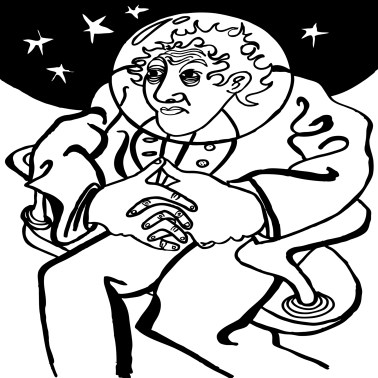
CANTO II

The lineage of Archibald Jenkins – Enjoying a Burgomeister – Patch radius strategies – Descending to the rump – A pair of spikes

To walk an eiderdown of spotted rump
with starry night all hovering above
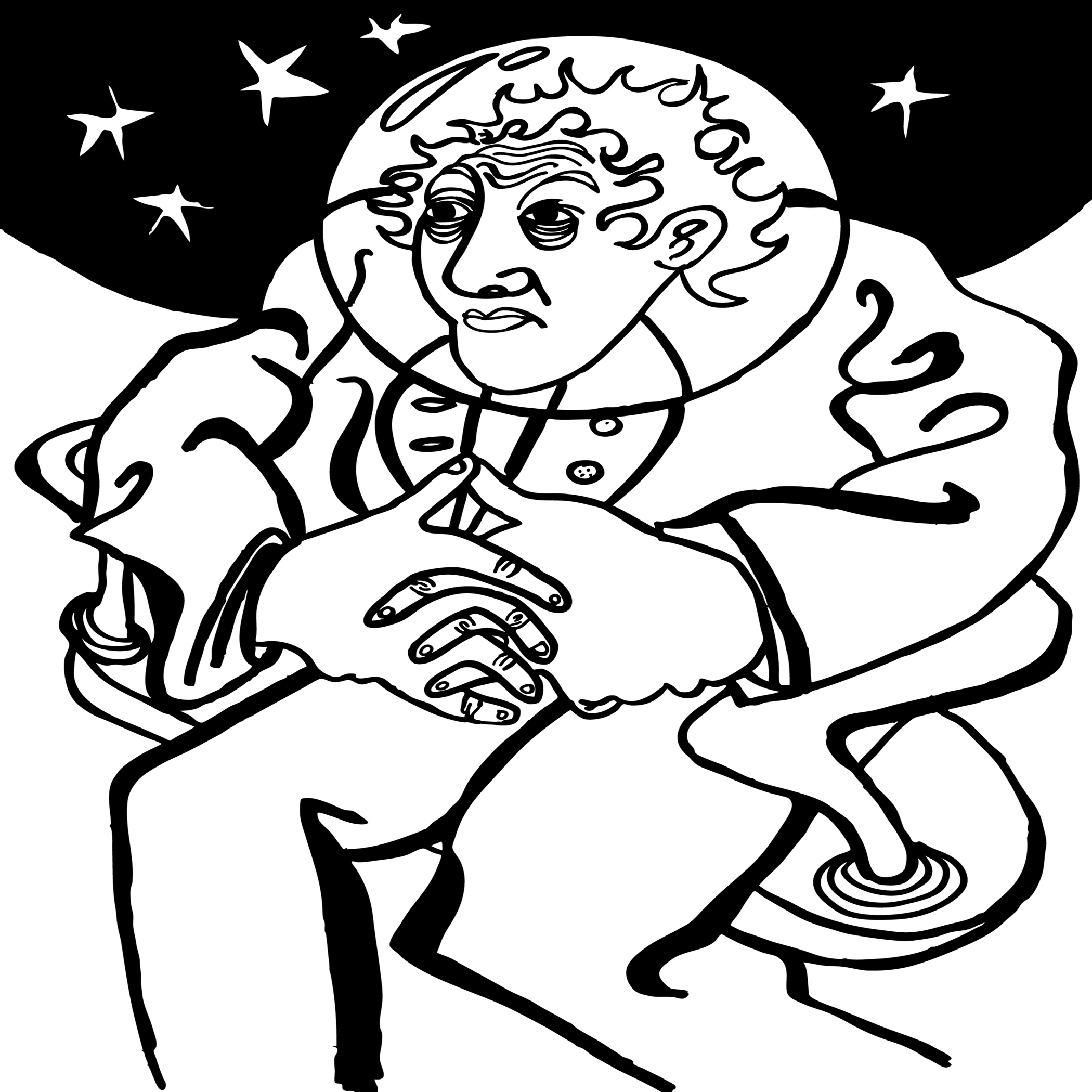
came early to rise one Archibald Jenkins –
the son of Alastair son of Aster,
who was sired by Alfacadabras before him –
a citizen of Earth, and sometime holder
of poker hands fair to middling of worth,
who was dreaming of holidays to come.
Of all the injections heíd ever worked
this was to be his last, quite routine,
with the usual cleanup at the end;
and then farewell to their bovine host –
no underlings, hence, to ferret about,
no invoice stacks to riffle and stamp,
no work lists, lorries, radios to check,
and an end of all those budgets to sign
with those damned low-gravity pens.
Almost he could imagine home again,
his fingers wrapped round a Burgomeister,
so tall and full of froth, a balm for common men
but also for the great; his feet propped high
against a window’s wetted pane.
Then he would gaze upon fields, blissfully free
of cows and men; just the daffodilís smell,
the dawnís sweet breath of grass and thunder,
such were the pleasures to soon be his.

Now Jenkins ran the rump’s injection team,
his charge the patch radius, to lave and shear
its bristling hairs before the needle flew.
Prevailing wisdom had called for a space
a hundred foot wide, as well as could berth
some plenteous stack of ten-odd floors
that gently had toppled on its side,
but Jenkins, subjected to accounts, and time,
preferred to make it larger when he could.
Just a circle of pale and pink, no more,
though it oft-turned the guts of lesser folk,
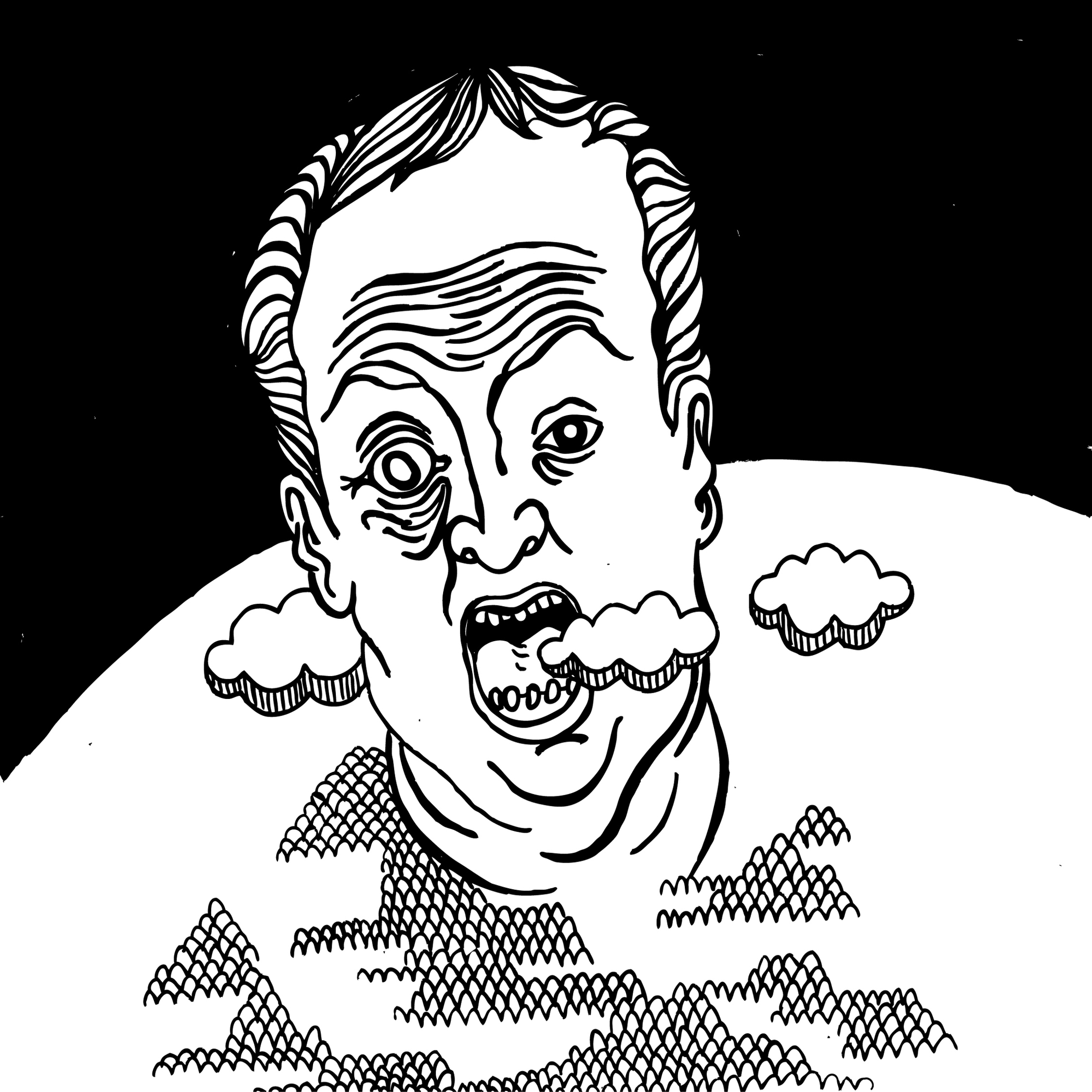
the way it stared right into them.
No time to lose, a new ship had arrived,
and all the papers were spreading the news 
The Daily Charade, The Calcutta Times,
and a line in Komsomolskaya Pravda, too.
Even The Cowís Opinion ran a page,
so rash as to print in twenty point bold
the names of every passenger aboard.
Excited readers wanted much to know
what size the portholes had in all the rooms,
how soft and fine the water-filled beds,
and as for tea, was it brewed as they said
by automatic beverage machines?
Aside from all these questions, rumors flew,
of whose wife or pet would accompany whom,
and where the night promenades would be.
But those who were members of Jenkins’ crew
and even the needleworks team, up top,
they knew far better than to heed such mills
of flimsy gossip and propped up guff;
trips within the cow’s interior
were, if nothing else, a dangerous business,
made possible only by bilious guides
well-seasoned in lymph, and blood-swollen tides.
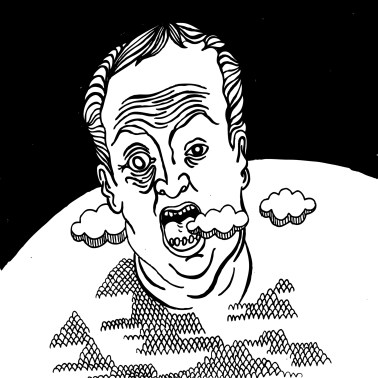
The dawn was coming fast upon the beast
as Jenkins  with a head of hair buzzed gray
and uniform to match, his shirt pocket stitched
with red-lettered pockets informing his name,
stepped into the elevator cage.
Some sixty full fathoms it ran
to join the station and its sprouting hubs
with the frosted hillocks of the beast.
He scans the downs with a vigilant eye,
all its wisps and nacreous cattail clumps,
with thoughts on gathering his crew, and his wits,
though unaware still, of assaults soon to come
from a dubious scoundrel indeed.

A lorry bumbles by, and signs of life
emerge from the brightening needleworks.
It looms a bulbous onion in the night,
graceful in its symmetry but for a pair
of aerotubes that go streaking out the side.
Like filaments partitioning the sky,
side by side, they race above the plain,
in haste to join the bulb out by the rump,
with the station and the welcoming docks
that sprout closer to the neck, and from whence
the newly minted passengers arrive.
Extruding from the bulb’s base comes the shaft
of the terrible needle, ramrod straight,
a lance as unwieldable as any
Giant had ever cast, beyond even
the thews of Ares in his prime, though well
he would rejoice to see it pierce
the tender spot where Septimus Mons
descends to converge with Upsilon Prime 
a pair of spikes that cannot be scaled,
though crews have tried, with miles of fastened rope,
and hopes not to hazard looks down below
where white tumbleweeds went frolicking by.
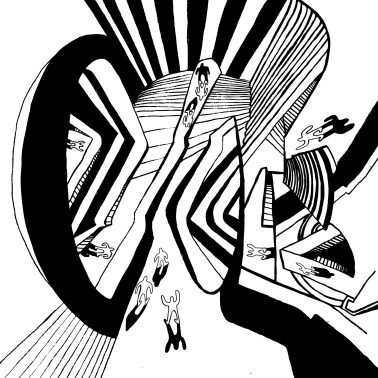
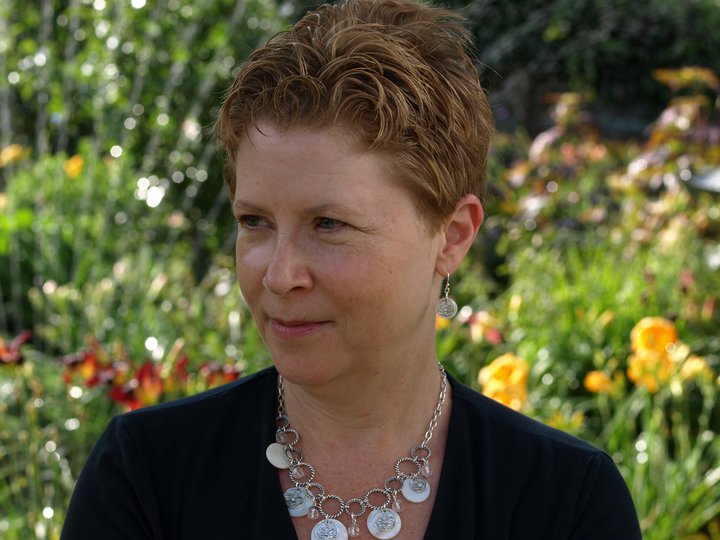
Nathan D. Jerpe is a recovering software engineer with a background in computational electromagnetics from Clemson University. He runs Roguelikefiction: a small press which explores experimental forms of text, narrative, and the spaces where video games and fiction intersect. In 2008 he released Legerdemain: a surreal computer role-playing game featuring a world drawn entirely with Unicode glyphs. He is currently at work translating volumes of weird epic poetry.

Spotlight: An Interview with Nerdkween

Monica Arrington

by Melissa D. Johnston

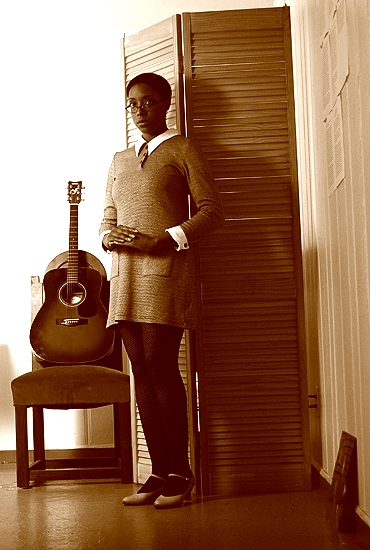
I remember the first time I saw Atlanta-based Monica Arrington, who performs under the name nerdkween, play. Two of the friends accompanying me, both musicians who had seen her before, were already giddy and starstruck. They had good right to be. Monica is a rarity. She is a classically-trained singer/songwriter/composer who freely experiments in both songwriting and performance, blending multiple styles effortlessly and elegantly into a spare and stunning lo-fi sound. Nerdkween released her debut full-length recording, Synergy, in 2008 with Stickfigure Records, which puts out recordings of acts such as Snowden, Deerhunter and Xiu Xiu.  She released a second CD called Profitandloss in November 2010 with Fieldhouse Recordings , a branch of Stickfigure. I got an opportunity recently to ask her a few questions about music and life as an artist.

Even before I heard your music, I was already in love with the name nerdkween. Is there a story behind the name? 

It goes back to high school for me. In school I associated with the smart kids and I guess secretly to myself, I imagined myself the “queen”.  As I started in college, I wanted to start my own label and I was going to call it  Nerd Queen Records.  The lettering has evolved over the years  into the official  (nerdkween)* .

Your music pulls from multiple influences and musical styles. Among your influences you’ve mentioned P.J. Harvey, Sonic Youth, Lisa Germano, The Sundays, Mazzy Star, Low, Cranes, and the early Liz Phair among others. Which were your earliest influences? In general, which do you think have proven or will be proven to be the most enduring in their effect on your writing and performing?

I love noise.  I think I will always find inspiration in it. I love vibrations and it recharges me.  I feel as though the music is born out of that haziness as in from chaos comes order and understanding. I also find the light airy and smothering  voices of Hope Sandoval and Lisa Germano to be  feminine yet strong all at once. My voice is similar and I also find the lyrics from them resonate with me. They celebrate their pensive and uncertain natures which I can also relate to.  It inspires me to dig deeper and not to be so afraid to express myself.

You’ve called your music postmodern pop. One of the interesting characteristics of postmodern music to me is that it can challenge barriers between “low” and “high” styles of music as well as “elitist” and “populist” values. You are a classically trained vocalist with a degree in musical composition. Do you see yourself as purposely playing with the cultural boundaries of pop and classical training either in attitude and/or in the actual creation of music?

Oh yes, my interests in music crosses over to many genres and it continues to grow. I think any creator or performer does themselves a disservice by not exploring  all there is in the world.  And with technology our world is becoming smaller and we can reach out to anyone anywhere. The cultural exchange is amazing for personal growth for anyone.  Yet, people would be surprised how much and often pop music “borrows” from  classical music.

What musical project or projects are you working on now? What most excites you about it? How does it relate to the work you’ve done in the past, particularly that in your last album Profitandloss?

Right now I’m in writing mode, I want to see what I can create just for the sake of writing. I would like to release another recording but I want to make certain I have good material and the best resources  to release under. I am listening to more world music and roots music and I want to find ways to incorporate it into my sound.  Simply songwriting can be very exciting if you are struck with inspiration.  So I’m kind of just enjoying the process without a clear agenda  or goal.  The last album I recorded and released something  within the year and it was a  great growth lesson for me.  At the time I needed to do it. Now, I want to take a bit more time and better myself.

You’ve been very candid about your struggle to live the dream of being an artist. Recently you’ve been putting your gifts and training to “practical” use by teaching music and voice lessons. About that you’ve said, “I have been fearful that finding a practical outlet for my craft equals failure of childhood fantasies” but also “Now, as an adult, I am working on helping my dream to also grow up.” Could you say a bit more about this journey? 

I think I actually surprised myself once I started teaching and coaching.  I am reminded that we as artist ARE teachers  even if we don’t have students. I love  being involved with music so that is what I have come to understand , not just the pursue of  being a so called recognized artist.

The craft of singing is something very dear to me so I don’t mind sharing what I know and experienced over the years.  In fact, I’m very excited when a have a student who displays a yearning to learn as much as possible about music and singing.

Recently you wrote, “I think it’s the ultimate role of an artist: to guide oneself and others through the process of living, to make connections with our ideals and the real world, and to find beauty and peace in conflict.” Do you have some hard-won advice to give to other artists aspiring (but also struggling) to live this role? 

It’s important to listen to your heart., and realize there are many avenues to take your dreams.  Life can get into the way but you can use it to challenge yourself and learn more about who you really are.  Just know that there are other people going through similar struggles in life, your art can help them cope.  Don’t stop creating, you never know who is paying attention. You never know you will need your art.

Thank you, Monica!