Recent

when love blooms, a visual poetry suite for Tom & Charles

by Amanda Earl

001_Amanda_Earl

002_Amanda_Earl

003_Amanda_Earl

004_Amanda_Earl

005_Amanda_Earl

006_Amanda_Earl

007_Amanda_Earl

008_Amanda_Earl

009_Amanda_Earl

010_Amanda_Earl

011_Amanda_Earl

012_Amanda_Earl


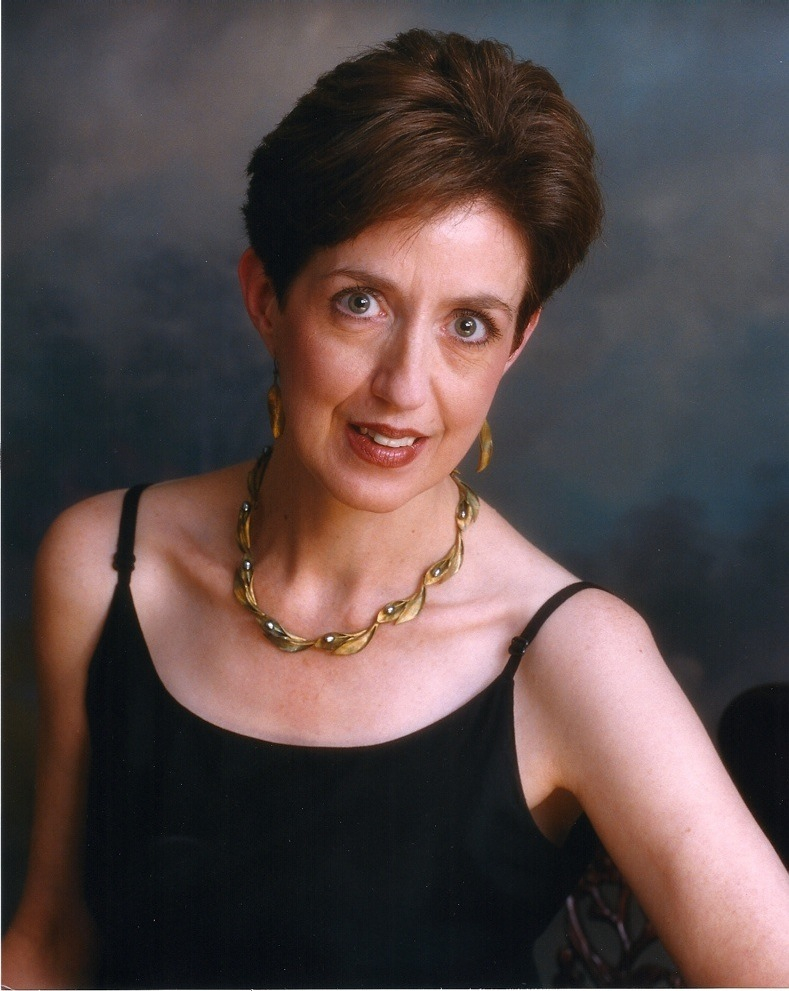
Amanda_Earl_September-2014_smallAmanda Earl is an Ottawa poet, publisher & pornographer who also noodles around with visual poetry. Her first poetry book, “Kiki,” is out with Chaudiere Books this fall & her first collection of short erotic fiction, “Coming Together Presents Amanda Earl,” whose proceeds go to GMHC, the world’s leading provider of HIV/AIDS prevention, care & advocacy, has just been published. Amanda is the managing editor of Bywords.ca, Ottawa’s literary hub & the fallen angel of AngelHousePress and its transgressive imprint, DevilHouse.

Main site: AmandaEarl.com
Kiki: KikiFolle.com
AngelHousePress: AngelHousePress.com
DevilHousePress: DevilHousePress.com
Literary Blog: amandaearl.blogspot.ca
Tumblr: amandaearl.tumblr.com
Vispo blog: eleanorincognito.blogspot.ca
Twitter: @KikiFolle

Coded Textile Design by Michelle Stephens

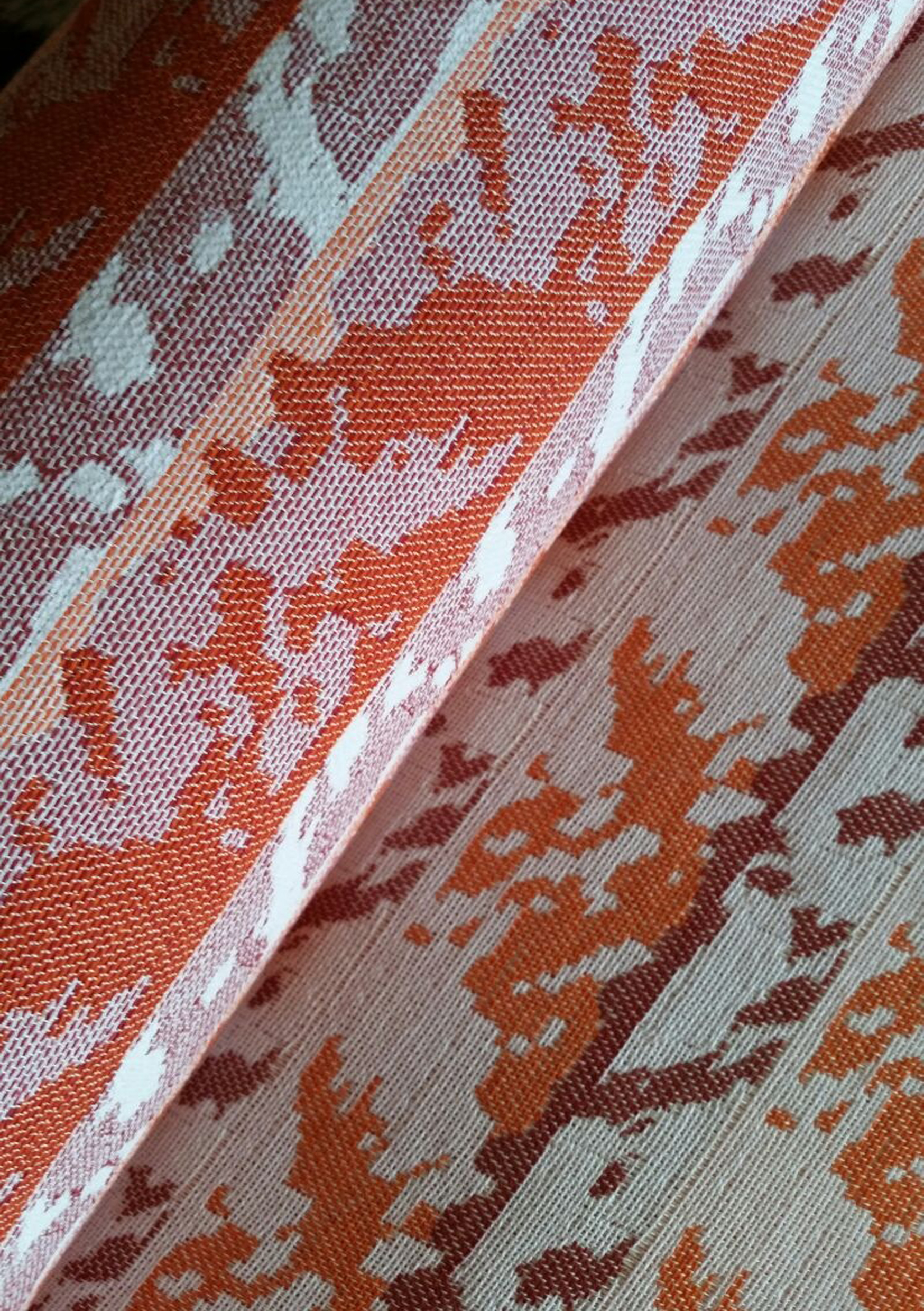
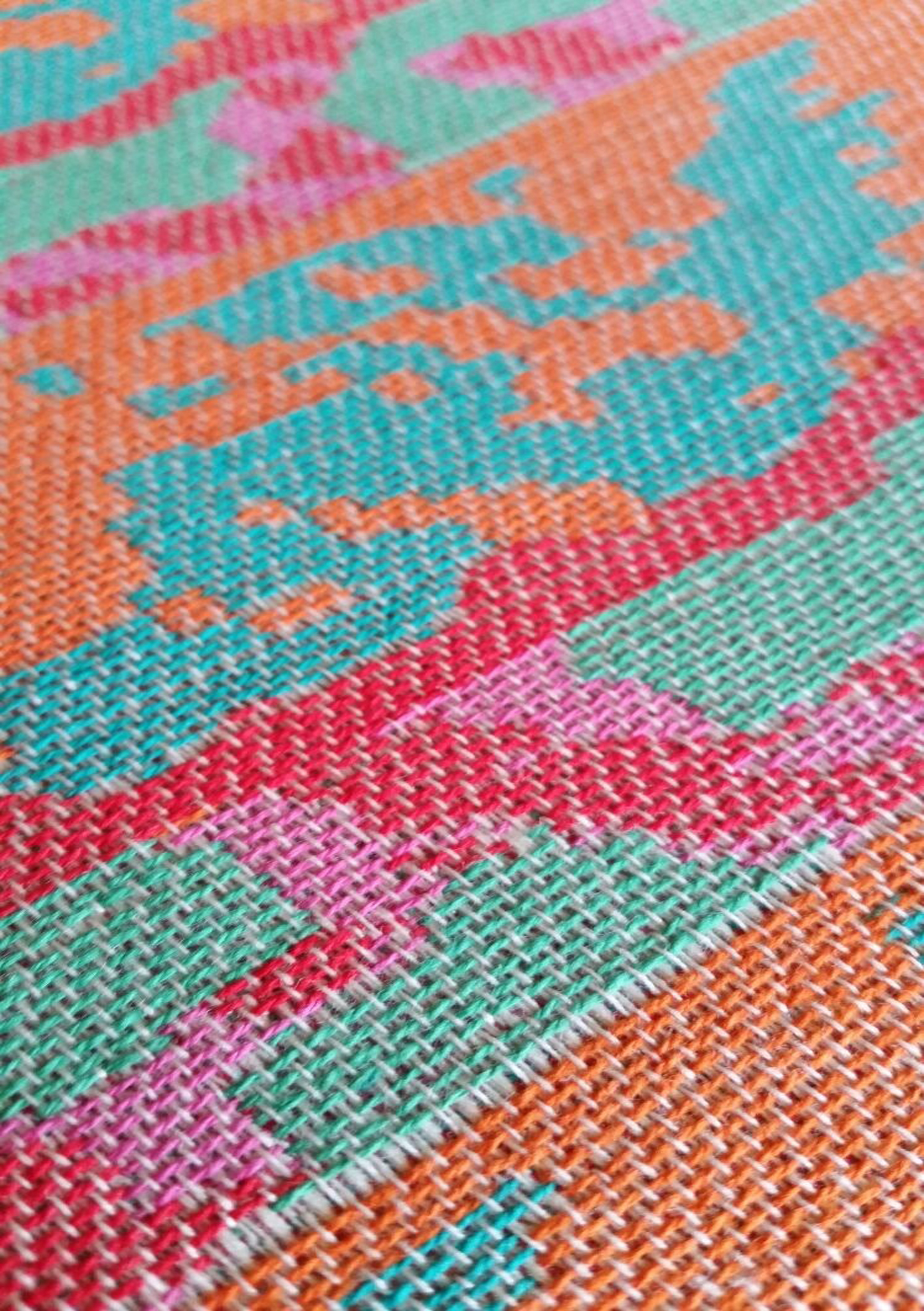
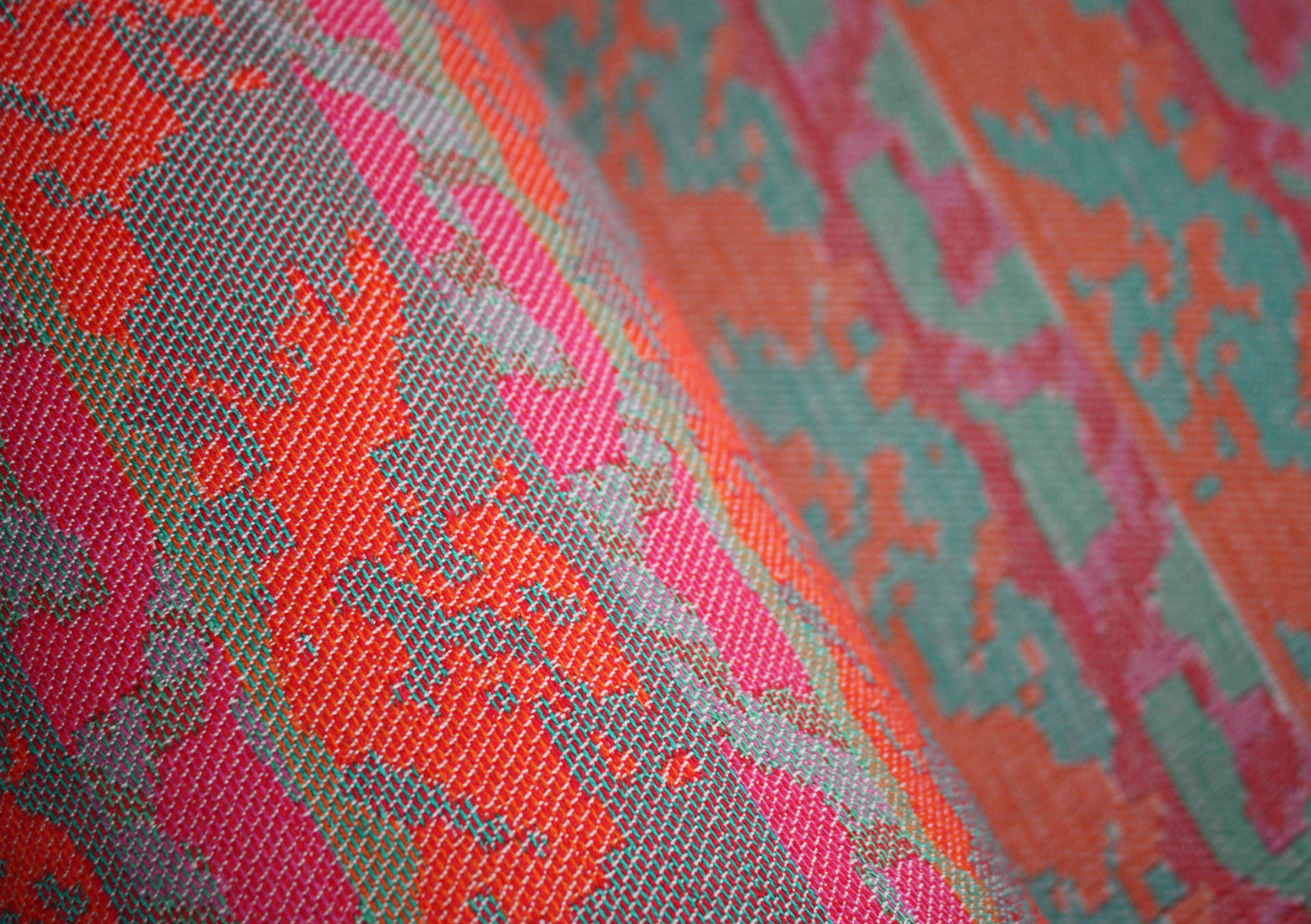
This is textile artist Michelle Stephens’s most recent work. She’s written computer code to manipulate traditional textile patterns into new reanimated patterns for print and weave.

The images show how the work started from a traditional pattern,  changed to a coded print design–and then changed back into woven cloth that appears to be ‘glitched’.

The videos are of the woven cloth made only a few weeks ago and is due to be exhibited in the next month.

Michelle Stephens IMG_1


Michelle Stephens IMG_2


Michelle Stephens IMG_3


Michelle Stephens IMG_4


Michelle Stephens IMG_5


Michelle Stephens IMG_6

Coded Jacquard Design 1:

Coded Jacquard Design 2:

Coded Jacquard Design 3:

Coded Jacquard Design 4:

Coded Jacquard Design 5:

Coded Jacquard Design 6:

Coded Jacquard Design 7:


A&B NI Michelle Stephens Dec '122 copyArtist: Michelle Stephens

BIOGRAPHY:

Michelle Stephens graduated from the University of Ulster, Belfast with First Class Honours from her B.A. (Hons) in Fine and Applied Arts, specialising in Textile Art in 2010. Following this, Stephens was offered a place on the “+1 Hons “ Programme at the University – an artist in residence programme.

Upon completion of this Stephens was accepted onto the ‘making it’ programme with Craft NI 2011-2013 and as a result of the work completed on this programme she is now a member of internationally recognised ‘Sixty Two Group of Textile Artists”.

CURRENT PRACTICE:

A defining characteristic of her work has been the sustained commitment to the conceptual synthesis of contemporary technology and historical textile sources. Currently her work involves the examination of technology as a design tool by using the coding language of processing as a method of reanimating the traditional textile patterns of Paradise Mill, Macclesfield into woven jacquard cloths.

Website: www.michellestephens.co.uk

Twitter: MStephensArtist

Facebook: Michelle Stephens Artist

Email: mail@michellestephens.co.uk


Erasing Infinite Jest: Five Poetic Approaches

by Jenni B. Baker

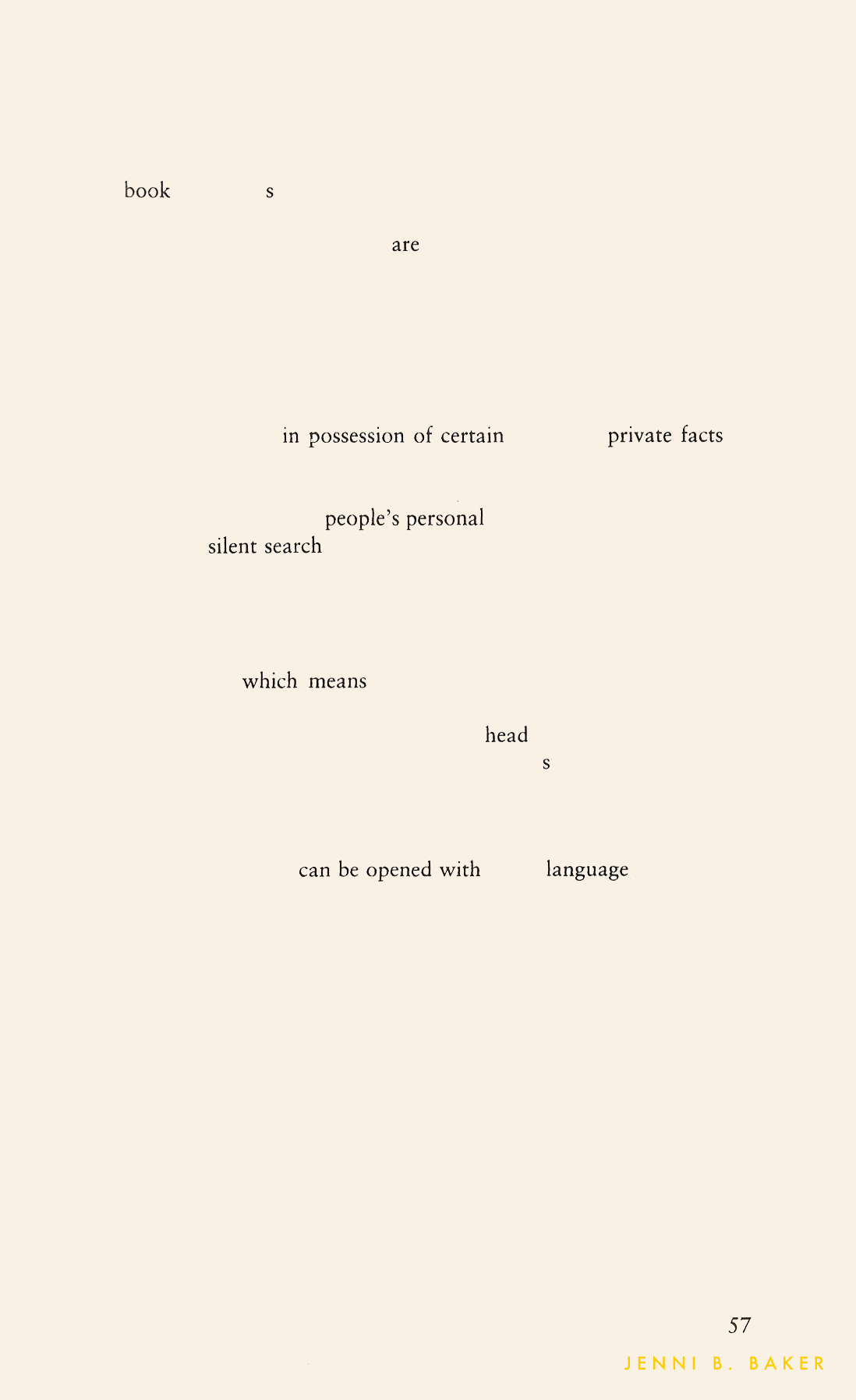
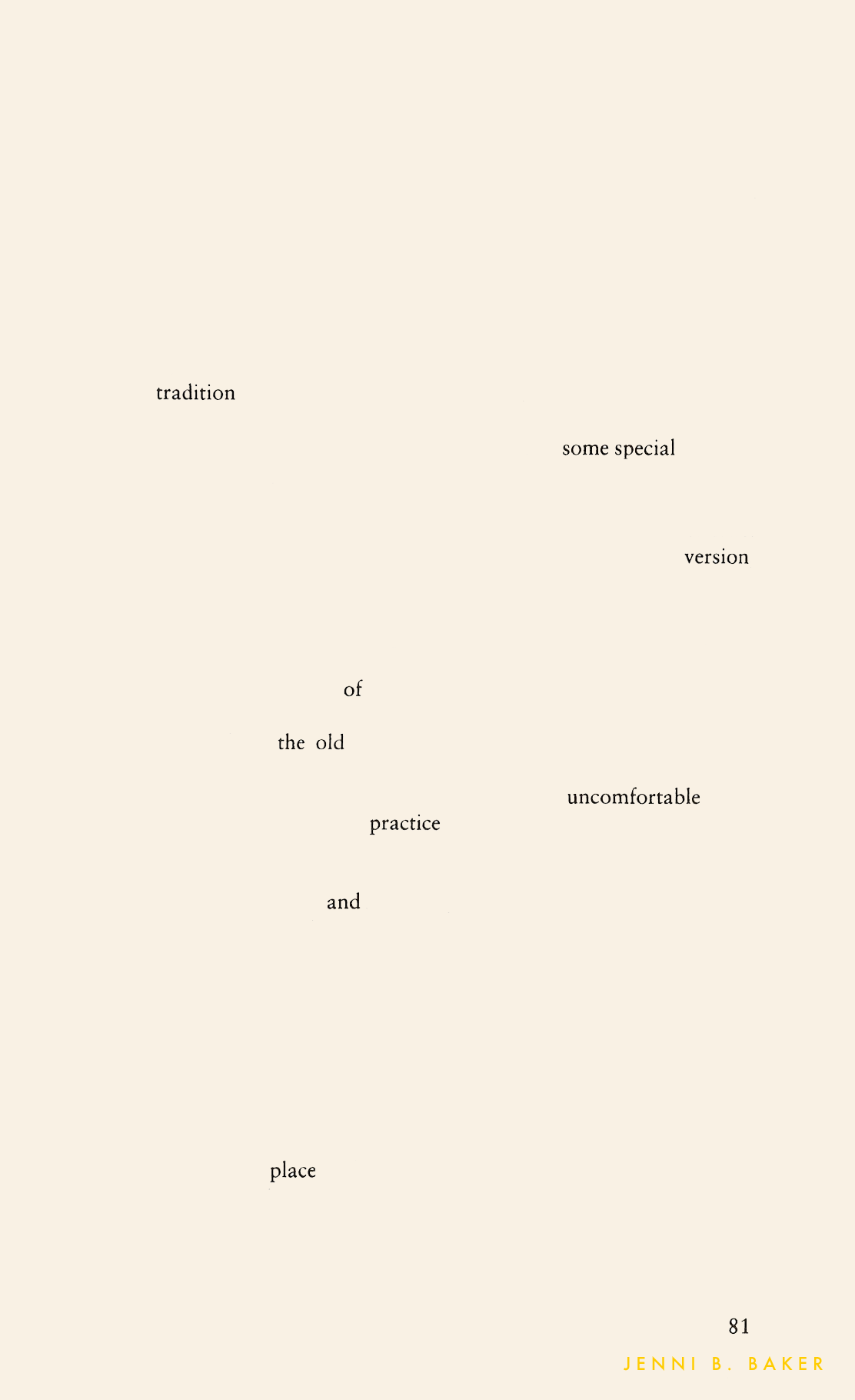
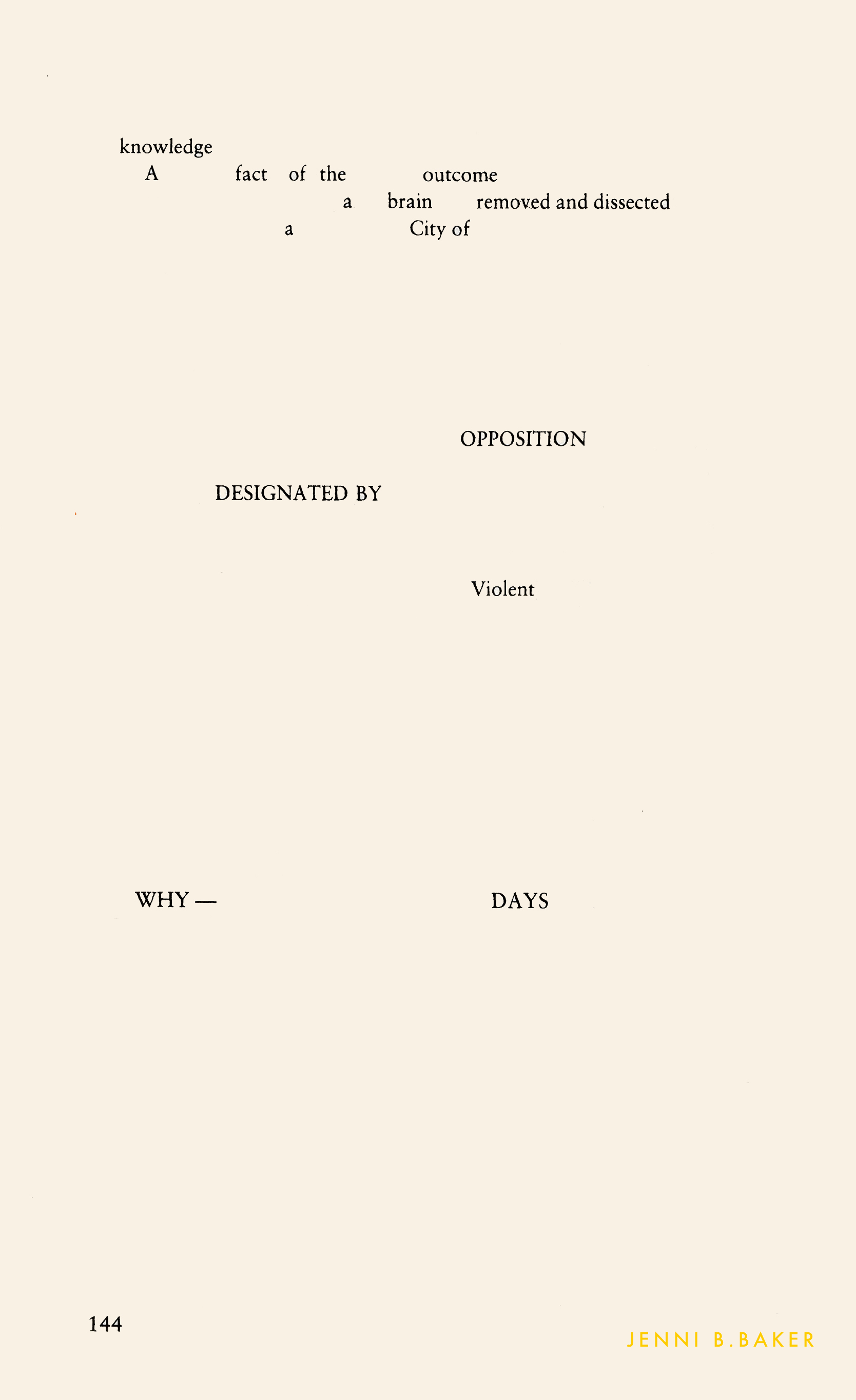
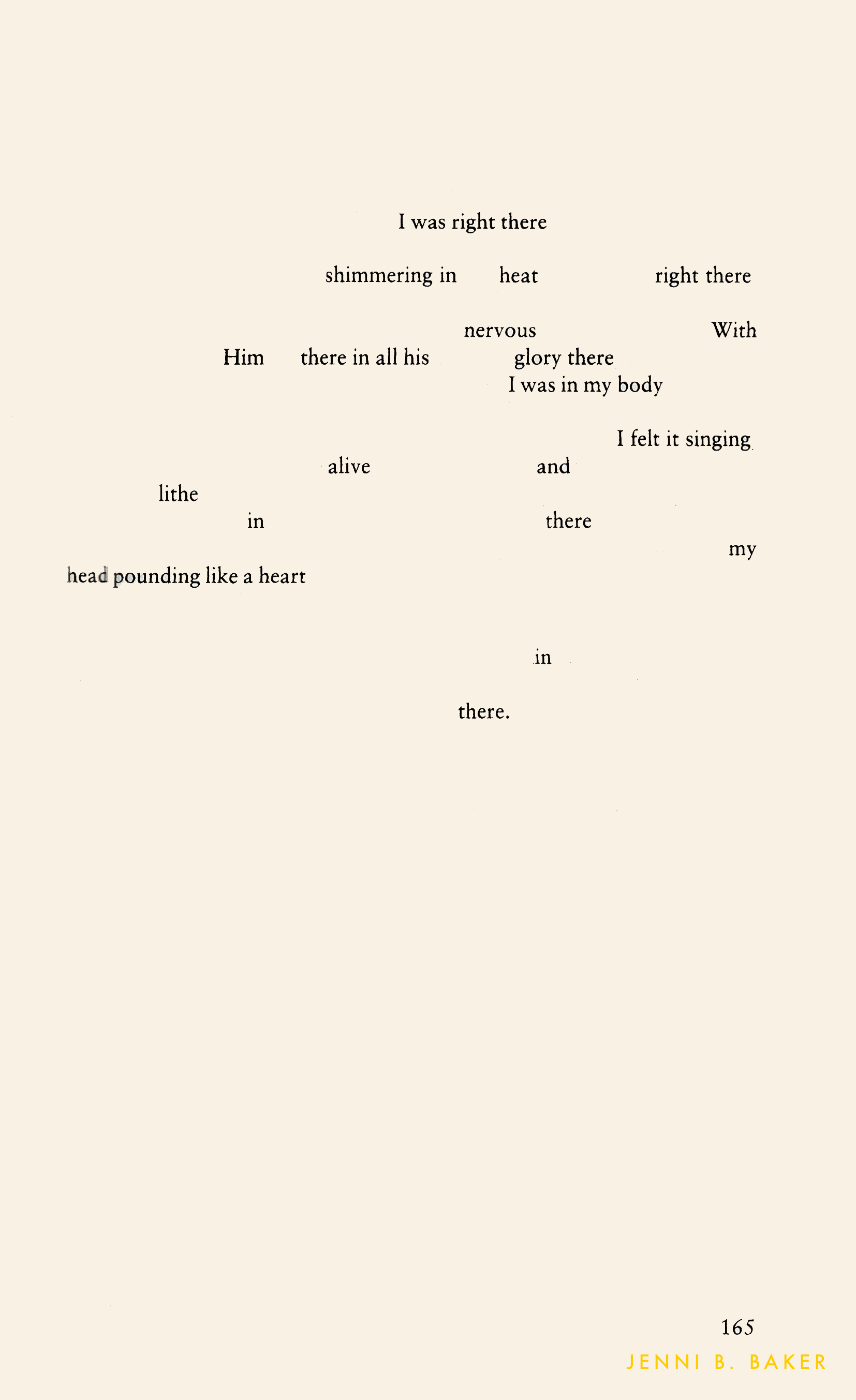
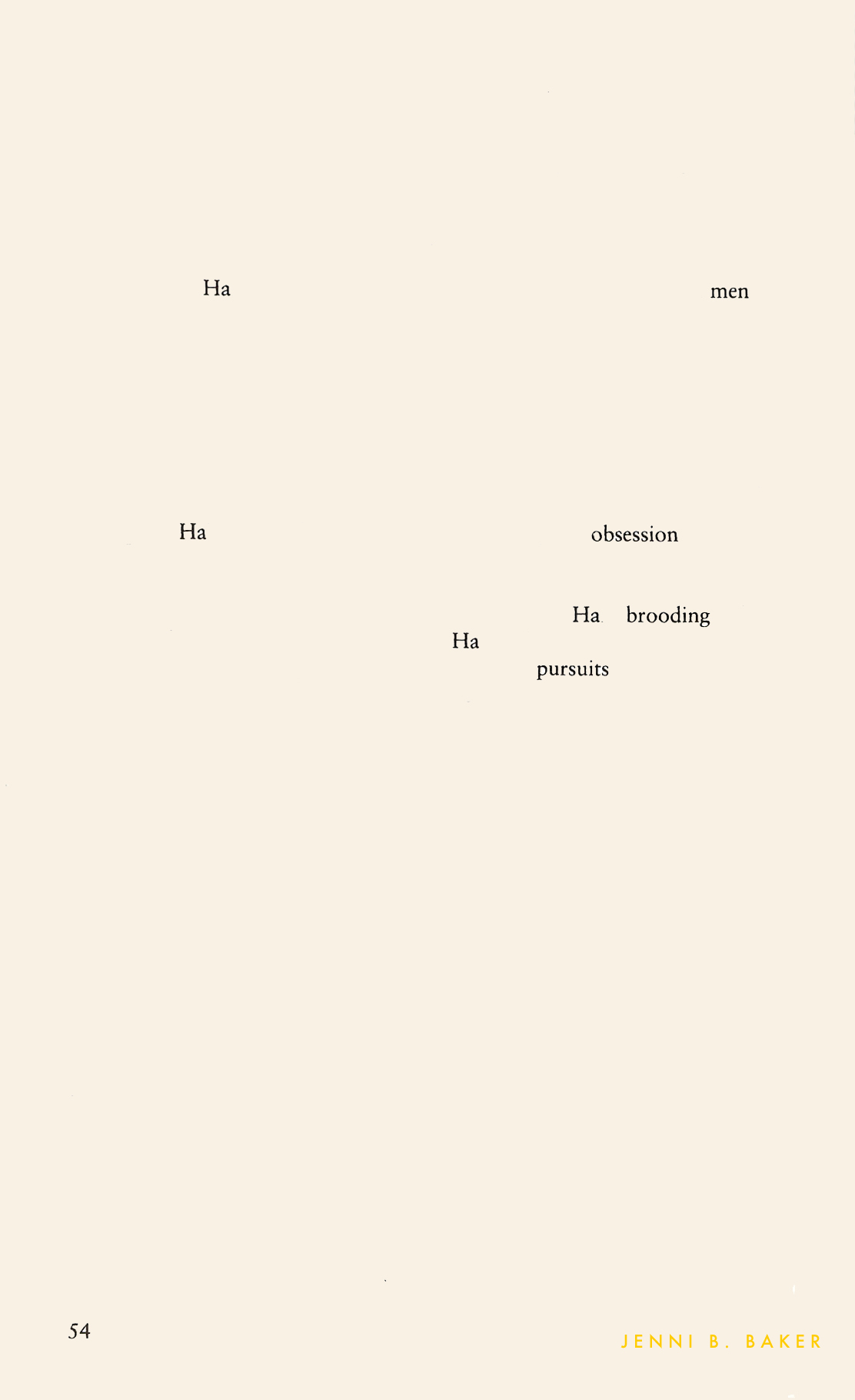
In late 2013, I began creating erasure poetry page by page from David Foster Wallace’s Infinite Jest as a memorial to an author whose death in 2009 had a tremendous impact on me. Erasure poetry, in which I remove words and phrases from Wallace’s text to unearth a new poem in their midst, is at once a metaphor for death and a mechanism for dealing with it.

I’ve written more about the project’s origins and purpose over at The Huffington Post and Nick Maniatis’ wonderful David Foster Wallace site, The Howling Fantods. For this post, however, I want to talk specifically about craft.

In terms of digital execution, my process is straightforward:

1)   I scan the pages of the hard copy edition to an SD card, which I then insert into my computer.

2)   I open the image in Adobe Photoshop and correct any deficiencies in the scan, such as page rotation and coloration.

3)   Finally, I “erase” text from the page by using the paintbrush tool to paint over it with the same color as the page itself. Occasionally, I’ll work in reverse, filling the entire image with the page color, adjusting the transparency to 80 percent or so, and selectively erasing the paint over the words I want to use in my poem.

Here’s a video that shows the process in action:

Knowing how to erase the text is just the first step in the process — the bigger challenge comes in when I’m forced to “find” new poems in each page of Wallace’s novel, ones that aren’t simply distillations of the original text but which reinterpret, respond or react to it in new ways.

In an early iteration of this project, I attempted to craft poems from entire sections of the text at a time. This approach ultimately failed; I found myself reading the text and writing poems whose topics and tone were too close to those in the novel. I have to work one page at a time, removing each page’s contents from the book’s broader context, in order to divorce myself from the literal subject matter.

Once I’ve isolated a page for erasing, I usually apply one of five approaches to arrive at the final poem.

APPROACH #1: FREESTYLE

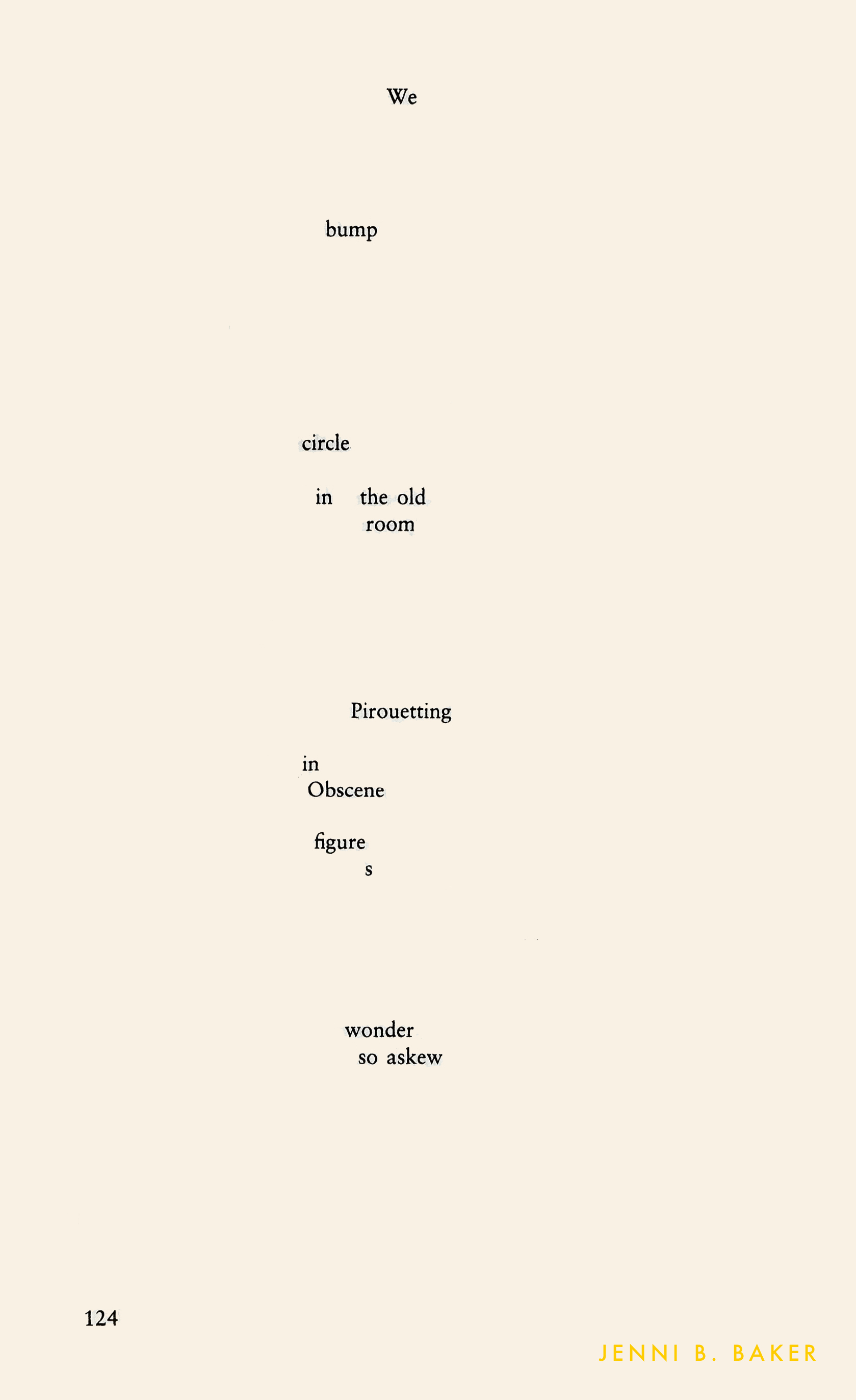
Approach #1 is the loosest and the one I default to when first entering a page of text. Quite simply, I let my eyes quickly scan the page, hoping they land on interesting word combinations or phrases. A compelling juxtaposition of two words can be enough of a seed to grow a poem around.

EPSON MFP image

EPSON MFP image

APPROACH #2: DEFINITION

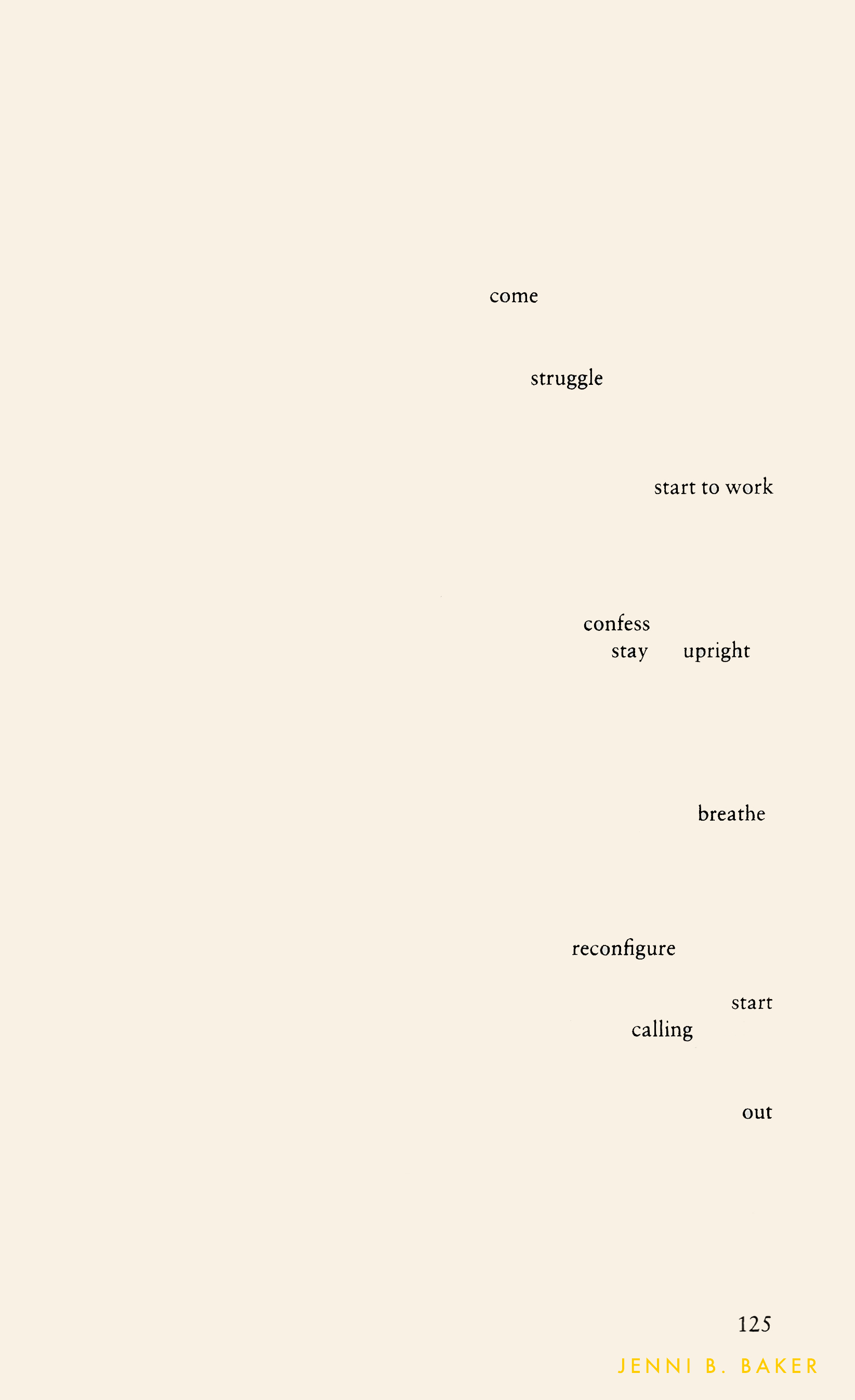
The second approach works well when there’s a compelling word located in the first few lines of the page. When crafting a definition-style poem, I often choose abstract nouns — words that represent concepts rather than objects. You can easily see how choosing a starting term like “love” lends itself to more exposition than one like “coffee.”

Jenni B Baker 3

EPSON MFP image

APPROACH #3: WORD PATTERNS

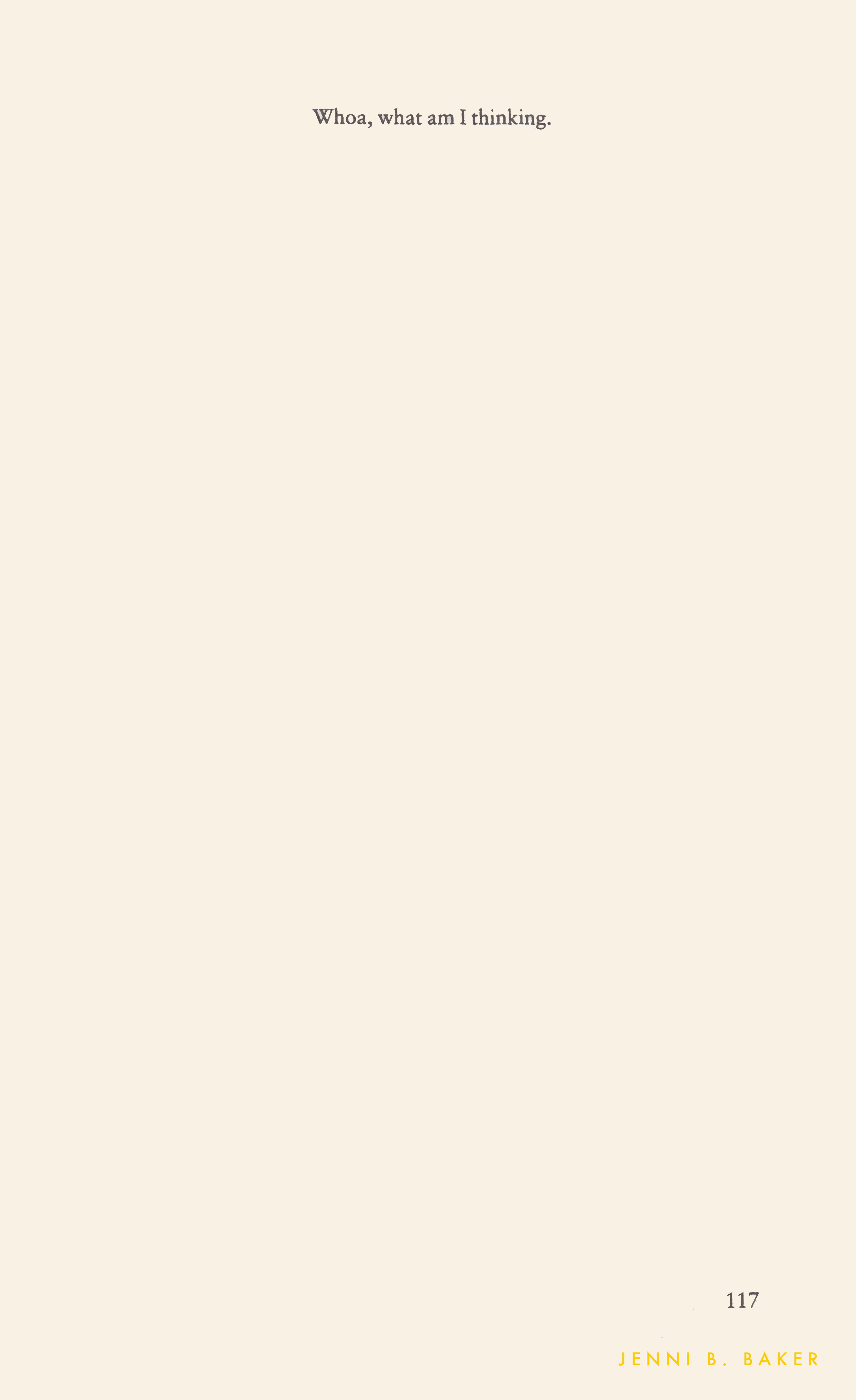
As readers, we often pay more attention to what authors say rather than how they say it. Spending time with Infinite Jest allows me to examine closely Wallace’s stylistic and syntactical choices — constructions which reveal the depths of his writing prowess. I use these recurring words and phrases as jumping off points for erasure poems.

EPSON MFP image

EPSON MFP image

APPROACH #4: ADDITIONAL CONSTRAINT

If you’ve ever stood bewildered in the aisles of a large supermarket, trying to choose between one hundred brands of cereal, you know that fewer options can sometimes lead to quicker decisions. When I’m having a particularly difficult time surfacing a poem from a page, I find it’s usually helpful to restrict my word base even further. I’ll limit myself to words found within a single column inch on the page or those that align along a particular margin.

EPSON MFP image

EPSON MFP image

APPROACH #5: MINIMALISM

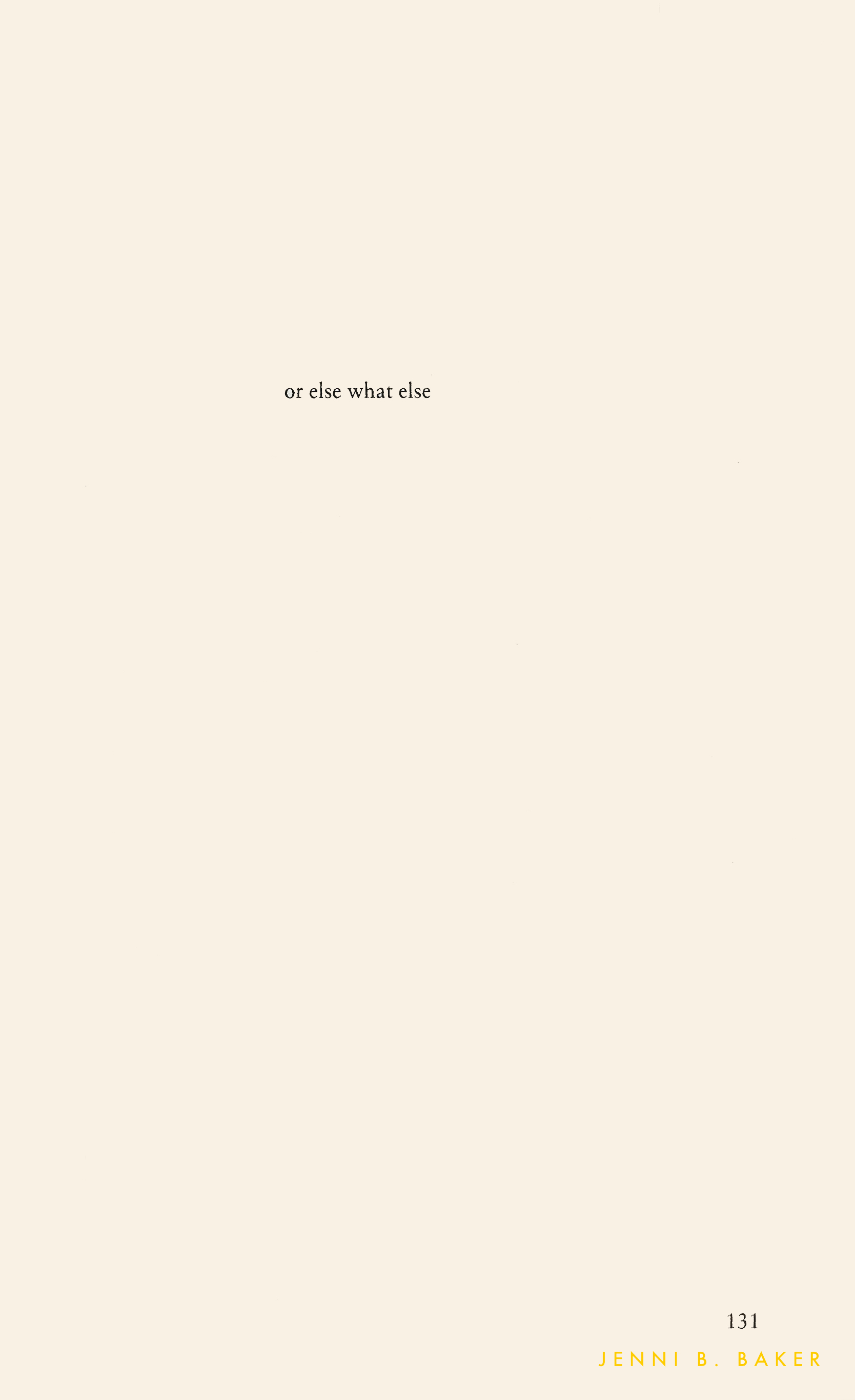
Finally, sometimes a phrase on the page just hits me, and I’ll let that single expression stand as its own piece. These erasures usually garner the greatest number of favorites and re-blogs on Tumblr because of their simplicity. I try not to depend on this approach too much, however. Critics of found and erasure poetry often argue that poets don’t do enough to transform the original text, and I don’t want to give them too much additional ammunition.

Jenni B Baker 9

EPSON MFP image


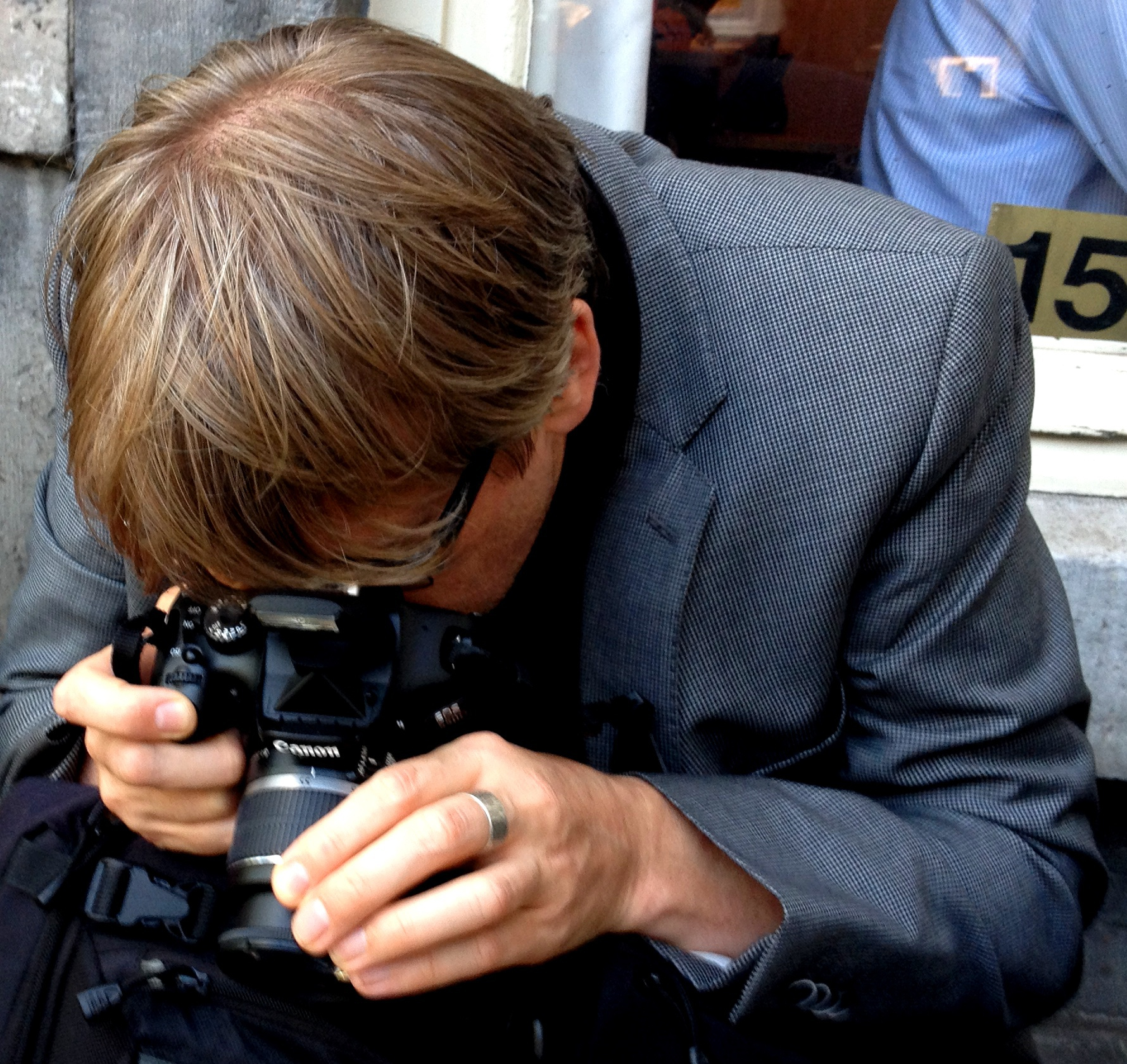
Jenni B. Baker is the founder and editor-in-chief of The Found Poetry Review. Her own poetry has been published or is forthcoming in more than three dozen literary journals including DIAGRAM, Geist, SWARM and InDigest Magazine; her first chapbook, Comings/Goings will be published by Dancing Girl Press in 2015. By day, she works as a nonprofit content manager in the DC area. Follow her on Twitter @jennibbaker.

Websites:

Jenni B. Baker

Erasing Infinite

Found Poetry Review

Postcolonial Thoughts: Contemporary Primitivism: El Anatsui

by Christopher Hutchinson

Formal & Global

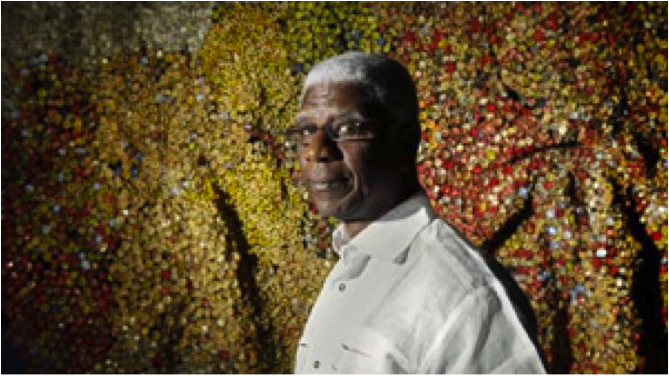
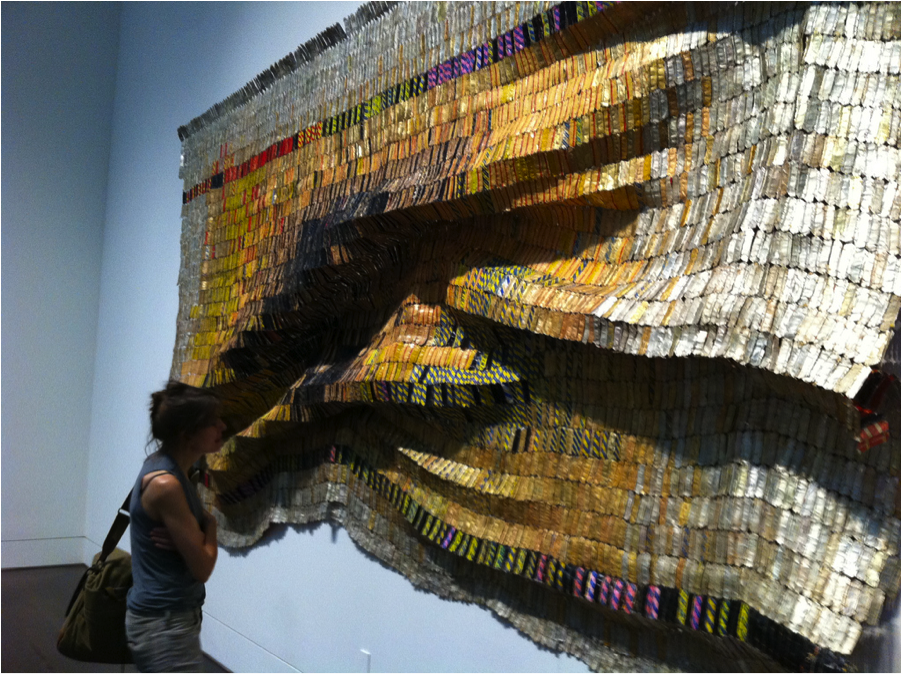
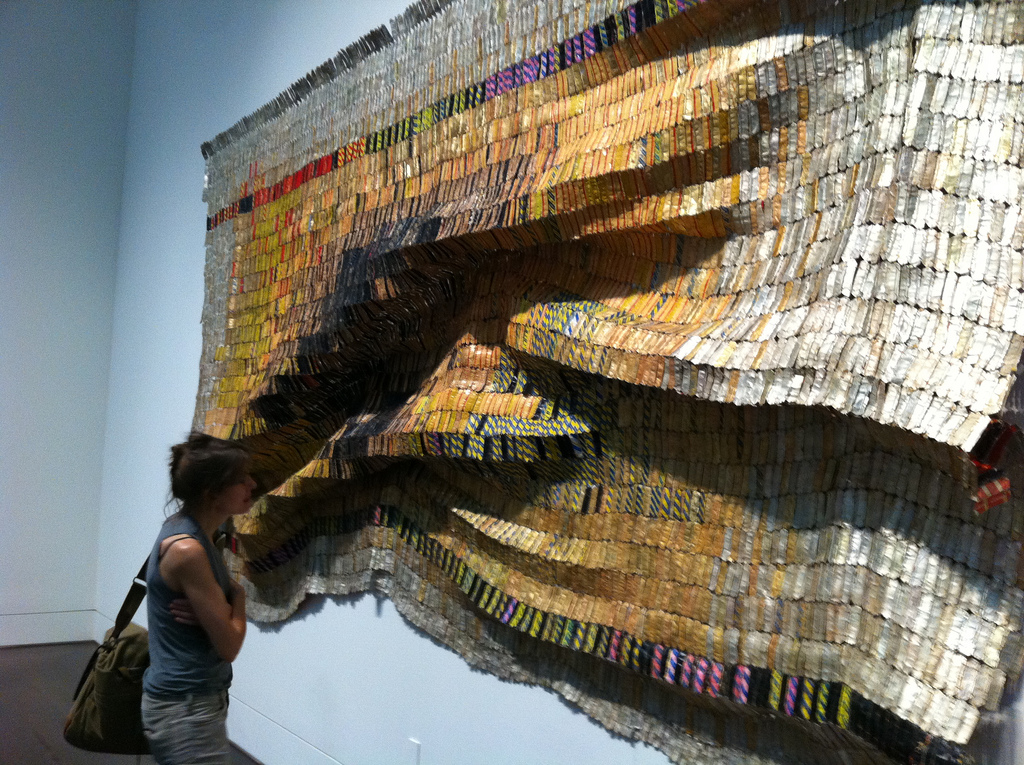
Mr. Anatsui’s wall hangings, majestic as they are, do not use scale as a cudgel. That’s true even of high-profile works like his mural at the High Line and of the wall-spanning, rotunda-filling examples in the Brooklyn show. Only after you have marveled at their intricacy and versatility does the vastness hit you. It helps to know (as many people do, now that Mr. Anatsui is a global star) that these peaked, shimmering fields are made from folded, twisted and linked liquor-bottle caps, at studios in Ghana and Nigeria, and that they have as much to do with post-colonial poverty and strife as they do with opulence. –KAREN ROSENBERG http://www.nytimes.com/2013/03/01/arts/design/gravity-and-grace-by-el-anatsui-at-brooklyn-museum.html

El Anatsui has made his way to the top of the art scene using his famous tapestry technique using beer bottle caps. His work has been well respected for years now and deserves a serious conversation as to how his work really functions in this art world. Anatsui is often considered to be a Global artist and sometimes even a Post-Colonial artist. These two terms are often used synonomously, but that would be a mistake. To become a global artist means something very different than being a post-colonial artist. A global artist refers to “universal” appeal. That “universal” appeal is often decided and upheld by the Western rubric of formalism.

Formalism is a particular mode of art criticism and theory according to which all visual art has an intrinsic value. This value is determined by the artist’s ability to achieve an aesthetic order and balance of certain elemental truths within a painting. These elemental truths are the painting’s use of color, line, composition and texture. No matter how much artistic style and taste may change over time, formalism holds that these truths are constant.” http://www.theartstory.org/section_theory_formalism.htm

This formalism is inseperable from Western academia, which is then applied to Global art and artists. From this point Anatsui is a Global artist by how his works function in the current art world. He does discuss his heritage and significance of African/Ghanian aesthetic, but the process of formalism, and globalization nullify the African/Ghanian voice. His work is firstly discussed through the practice and assembly of his wall sculpture. The dialogue is reduced to formal elements, mainly, color, and form. While formalism is a good way evaluate art, but it also a tool to eradicate identity and ethnicity.

EcoArt & Upcycling

Anatsui’s work also has a dialogue that coincides with green art, ecoart, upcycling, saving the earth one bottle cap at a time. These are all good things for an eco-conscious collector, but what does this have to do with African tapestry? Are the beer bottle caps justified? Could this not have been achieved with African/Ghanian tapestry? Is the labor and process most important? Is this really more or less successful than Sam Gilliam’s work?

These questions beg for more specificity in the work of Anatsui. Is the bottle cap the large red shiny technique? Does this technique add or detract from the concept? Can we even get to the concept? Or are we just enamored by the sparkly, pieces in museum lights? Anatsui’s scale seems haphazard at times. His dimensions are often flat. These are major undergraduate concerns.

Craft & Primitive

“Prinitivism-Term used to describe the fascination of early modern European artists with what was then called primitive art – including tribal art from Africa, the South Pacific and Indonesia, as well as prehistoric and very early European art, and European folk art

Primitivism also means the search for a simpler more basic way of life away from Western urban sophistication and social restrictions. The classic example of this is artist Paul Gauguin’s move from Paris to Tahiti in the South Pacific in 1891. Primitivism was also important for expressionism, including Brücke.

As a result of these artists’ interest and appreciation, what was once called primitive art is now seen as having equal value to Western forms and the term primitive is avoided or used in quotation marks. –TATE http://www.tate.org.uk/learn/online-resources/glossary/p/primitivism

There is a strong element of the “Primitive” present in the dialogue around Anatsui’s work, even though the work itself has been formalized and globalized. The “Primitive” raises its head when his work is exhibited along side the “primitive: African sculpture” collection at the Metropolitan Museum of Art in 2006. Once again questions arise. What is the purpose to put Anatsui’s work side by side? What is being proven by doing this? Here we have an authentic African artist fullfilling the lineage of Gauguin as true “primitivist.” Anatsui himself discusses the use of the bottle caps as bridging the gap between Europe and Africa. The bottle caps being introduced by Europeans who brought beer. Here in lies the truth behind all globalism. If you want to be successful you must first “bridge the gap.” Second you must acknowledge the Western art history directly in your work. This by no means is Post-colonial.


Christopher HutchinsonChristopher Hutchinson is an Assistant Professor of Art at Atlanta Metropolitan State College, Archetype Art Gallery Owner in Atlanta, Ga, and Smoke School of Art Founder. He received his Master of Fine Arts Degree in Painting from Savannah College of art & Design, Atlanta and his Bachelor of Arts Degree from the University of Alabama in Huntsville, Alabama. He lived in Alabama for 10 years before moving to Atlanta in 2008.

Learn more about Christopher and his work at Black Flight 144.


Vacation Time

give up to work

Sometimes it’s time.

Creative Thresholds is taking vacation for the first August issue (which would’ve been next Thursday). Don’t worry, though, we’ll be back full steam ahead for the next issue, which comes out Thursday, August 28. We’ll also be sharing some exciting news in the next few weeks!

Old School Game Hacking as Inspiration

by Ryan Seslow

Ryan Seslow 1


Ryan Seslow 2


Ryan Seslow 3


Ryan Seslow 5


Ryan Seslow 6


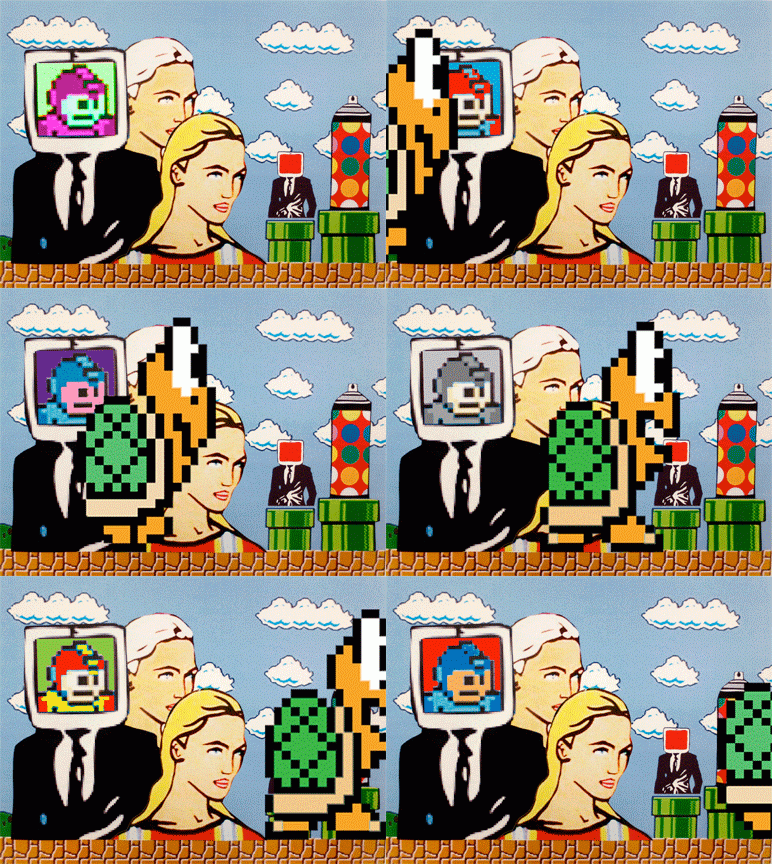
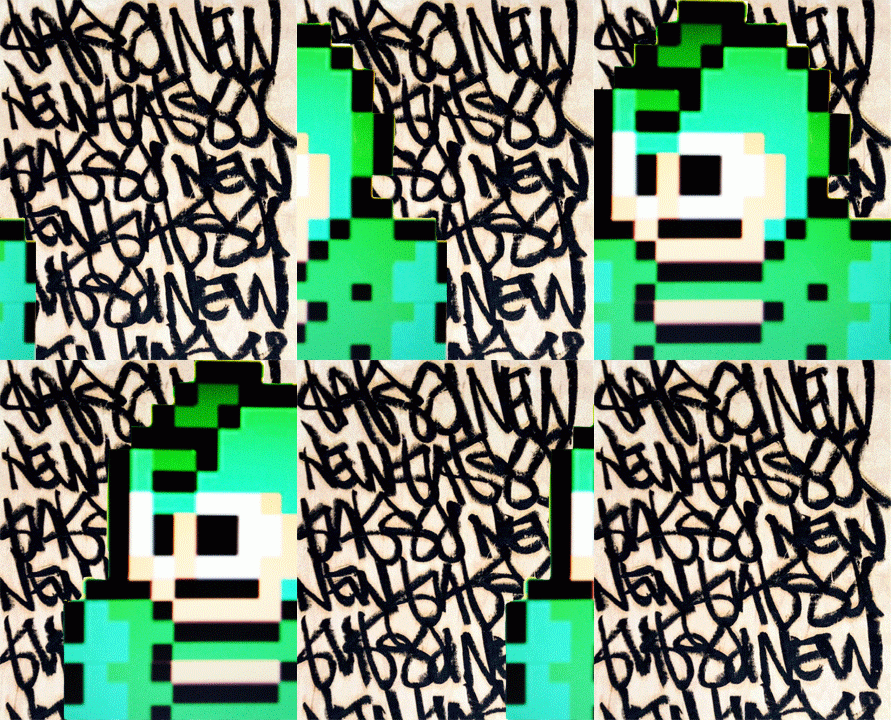
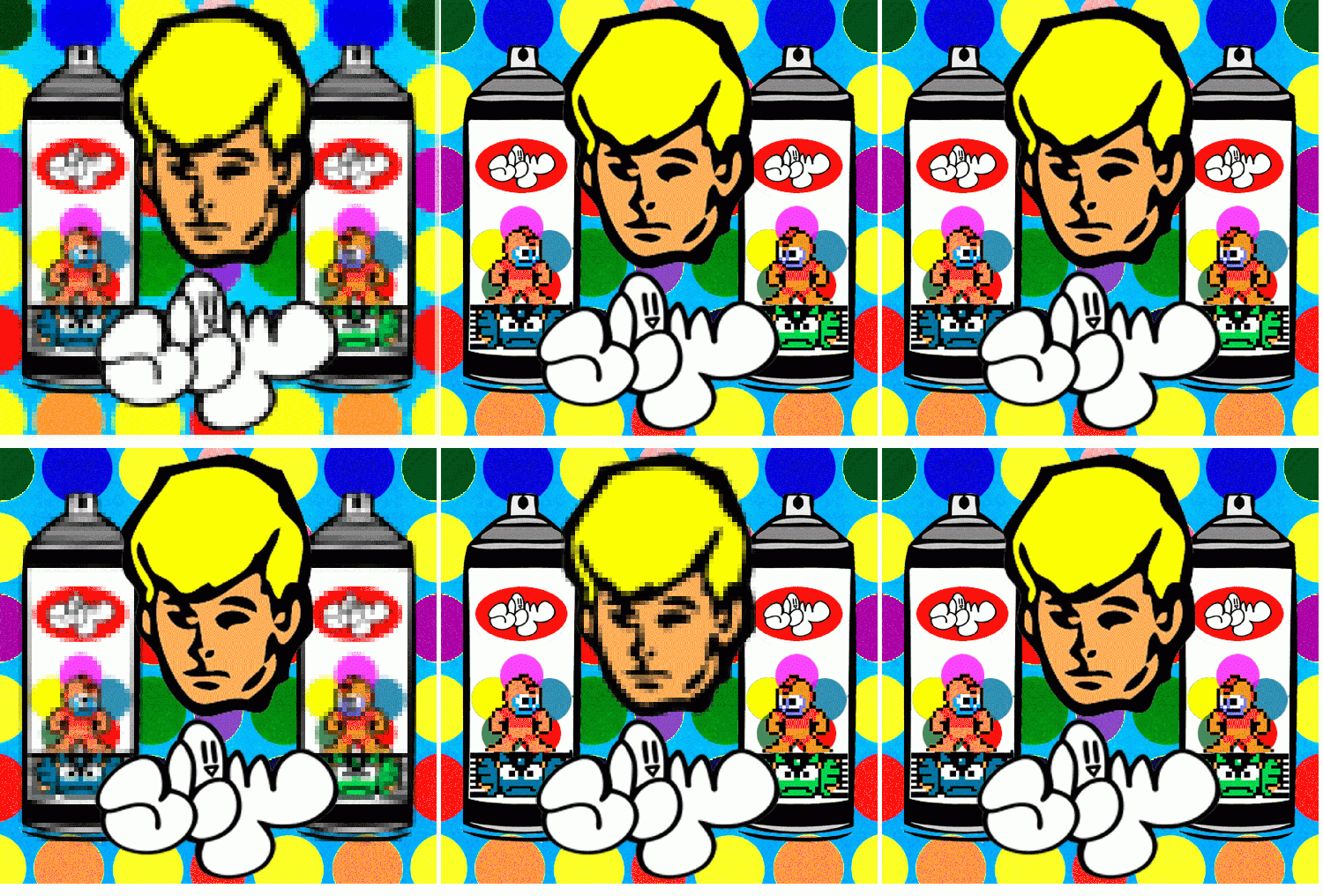
I created the pieces in this post all in immediacy. I’m inspired by the content so things happen fast in that energy. The works in this post have all started off as still images, mostly as manual collages, but I knew that the end result would be a series of GIF animations and Vine pieces. These are still being generated as we speak. As a kid in the 1980’s I always loved the graphics that nintendo had in their video games. I am not a big gamer in terms of actually playing video games. Especially the way I did as a kid, but I absolutely love the art, the art development process and overall visual video game art aesthetic. I love the fact that I can evoke the fun and reflective childhood emotions as I search for my favorite old games on youtube and other sites dedicated to this art form (there are tons of them.) My #GIFIFGHT collaborator General Howe’s recent work has inspired me to take more action on this new series. If you haven’t seen his hacks into the GI Joe animated series, it’s a must see. Check it here.


Ryan Seslow 7


This first series of work brings together elements of super mario world, megaman 2, graffiti and my own characters and  figures. This process will continue to slowly bring in more of my own content to reinvent it and allow me to relearn about it. I find this to be a fun way to start. This seems obvious to me as the artist, but I am interested in feedback from the viewer as well. These pieces are light, fun, and colorful. It is my intention to evoke memories and inspire others with this body of work. So what happens next? Well, this blog post will expand, and expand. Im working with the presentation idea of where these pieces will be shown. Im not thinking 100% of traditional gallery spaces, but more along the lines of displacing the works in areas where you would least expect to see them. Of course I am not going to give this away completely right now so stay tuned. I view this post as an ongoing thread that I will continue to add the new works to.


Ryan Seslow 8


Ryan Seslow 10


Ryan Seslow 24


Ryan Seslow 21


Ryan Seslow 11


Ryan Seslow 13


Ryan Seslow 37


Ryan Seslow 38


Ryan Seslow 26


Ryan Seslow 28


Ryan Seslow 29


Ryan Seslow 39


Ryan Seslow 30


Ryan Seslow 40


Ryan Seslow 31

 More to come.

Ryan Seslow is a visual artist, independent curator, graphic designer, and professor of fine art living and working in New York. Working in a variety of mediums, Seslow shows his work both nationally and internationally. He teaches various fine art graduate and undergraduate level studio courses simultaneously between four colleges in the metropolitan NY area.

Find him on Social Media

Flickr -View the Art of Ryan Seslow:
http://www.flickr.com/photos/rmsmovement

Twitter – @ryanseslow – http://twitter.com/#!/ryanseslow

Tumblr –  http://theartofryanseslow.tumblr.com

Linked In– http://www.linkedin.com/in/ryanseslow

Facebook – http://www.facebook.com/ryan.seslow

Instagram – http://instagram.com/ryanseslow

TechnophemeraRyan is currently working on a project called Technophemera. Technophemera is a technology-inspired installation by street artists Leon Reid IV and Ryan Seslow. Check out the details at Kickstarter.

Concept: Technophemera highlights the speed of technology’s evolution. With new digital devices produced every minute, technology both reinvents itself and renders obsolete at an exponential rate.

Technophemera 2Installation: The installation will be an archaeological site filled with dated computer equipment appearing as a graveyard of old hardware. The technology will be cast in concrete and burrowed in sand suggesting a fossilization process. In adding to the effect are dig site tools such as shovels, brushes, magnifying glasses and caution tape.

Creative Remix – Word in Sound and Image

Marc Neys-Ladder 3

One of the hopes of Creative Thresholds is that different art forms and genres meet and that the convergence inspires creatives of all types, resulting in dialogue and possibly collaboration. In this post, a poem, which had been inspired by a painting, in turn inspires a film. The process and the individual works are…magical.

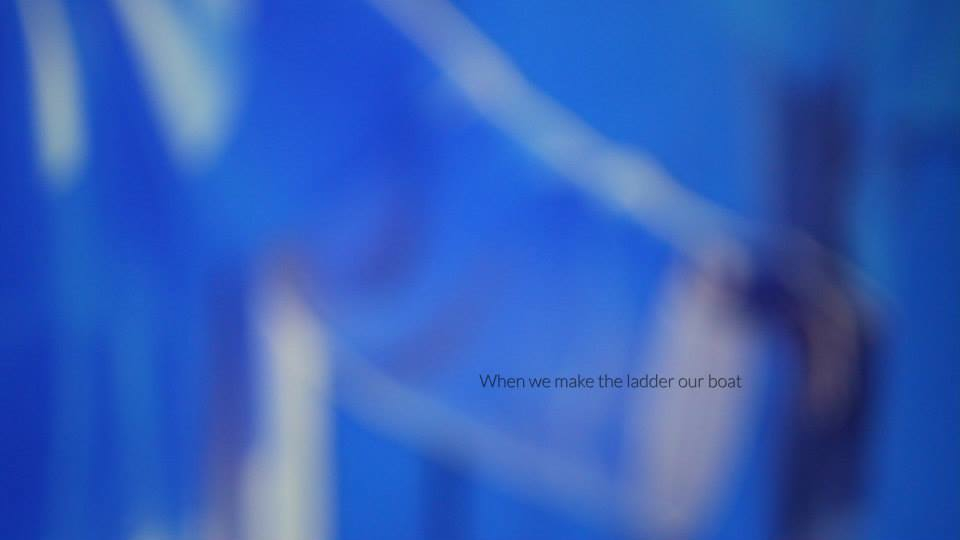
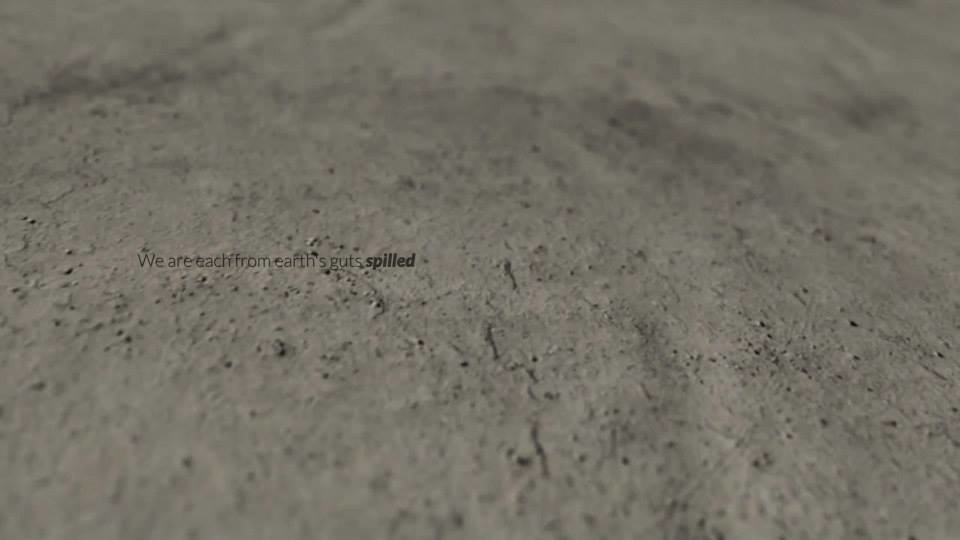
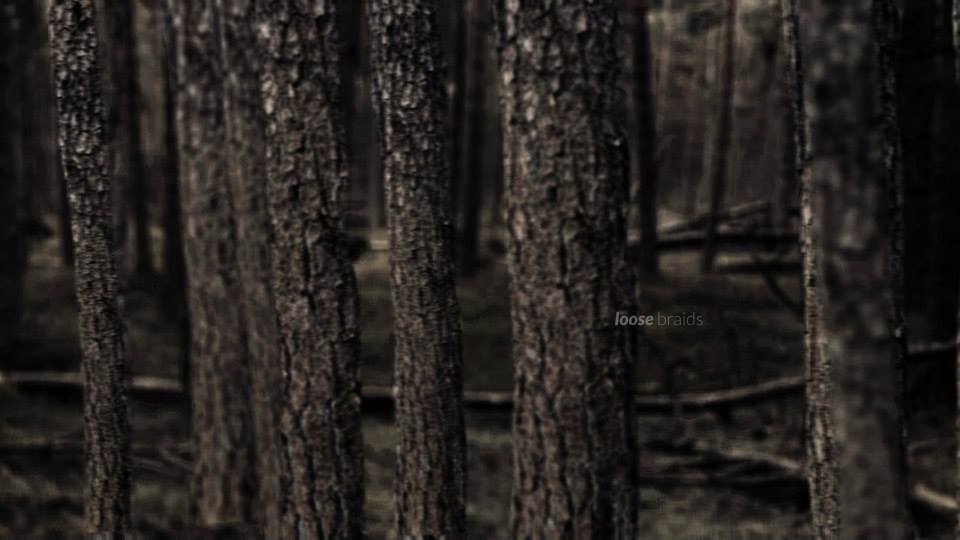
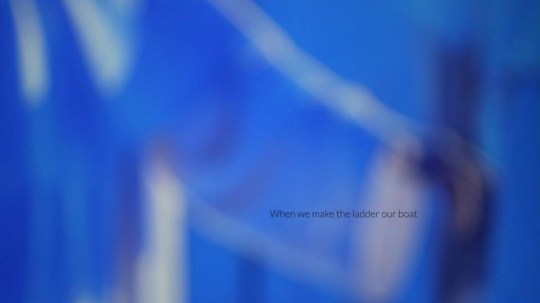
Watch the film, “Ladder Our Boat,” and read about the process from both the poet, Maureen Doallas, and the filmmaker, Swoon (AKA Marc Neys).

The video is best seen on full screen with good volume.

Enjoy!

Melissa, curator and editor

Creative Remix – Word in Sound and Image

by Maureen E. Doallas and Swoon (AKA Marc Neys)


The Poem:

A Ladder Our Boat

after Holly Friesen’s Warrior Canoe

When we make a tree a ladder, we climb
out of the flaming fire, through our fear.
We are each from earth’s guts spilled,
Persephone rising, wild mint lacing
loose braids, sheaves of grain in hand,
spring’s re-welcoming cheered.

When we make the ladder our boat, we sail on
a kiss of wind above the Hades of our making,
spirits water-rocked in Zeus’s arms, seeds
of the pomegranate bursting, our offspring
full-disgorged.

We strike our fevered blessings on the wood,
water-tight, wave at the moon we circle twice:
the light, our safe harbor, shore.

© Maureen E. Doallas
Printed with Permission of Author

Marc Neys-Ladder 1

The Process:

Maureen: Nic Sebastian, an excellent poet herself, is the founder of The Poetry Storehouse, which is dedicated to promoting “new forms and delivery methods for page-poetry”; the site has become a terrific repository of poems in text, audio, and video. I submitted five poems, which Nic accepted, with the understanding that any and all would be made freely available for creative remixing. Among the selections is my poem “A Ladder, Our Boat”. The poem first appeared in the Image-ine series at TweetSpeak Poetry; Image-ine, to which I’ve contributed numerous ekphrastic poems (including a series inspired by Lisa Hess Hesselgrave‘s paintings), is a place for discovering and learning about and sharing poetry that is inspired by paintings or other media. “A Ladder, Our Boat” was inspired by Holly Friesen‘s exquisite painting “Warrior Canoe”; I shared the poem with Holly after I wrote it, and she was kind enough to allow us to use an image of the painting at Image-ine.
Marc Neys-Ladder 2Marc Neys aka Swoon, who is a tremendous talent, first sent me a message via Facebook to listen to a soundtrack he’d composed for my poem “A Ladder, Our Boat”. I expressed my delight, and was thrilled Marc was setting my poem. Marc continued developing his concept for the poem, incorporating images from footage he collected.  Unlike some of Marc’s other remixes, this one has no narration. Marc’s completed videopoem is “Ladder Our Boat”. Marc is entirely responsible for concept, camera, editing, and music. I am very pleased with the result.

Ladder 4Swoon (Marc): For my latest video for a poem taken from The Poetry Storehouse I went back to my early days. That is to say, there was a need to create a videopoem without a voice again (and I hadn’t done that in a long while).

I started with collecting a series of images that could either tell a new story or create a different path to go on when combined with a certain line from the poem. Once I had collected the footage and paired them with certain lines, I needed a timeframe. So I created a soundtrack with a lot of background noises (breathing, scratching, squeaking,…).

With these sounds I started editing the chosen footage. I combined the lines of the poem with the images. Giving the words space and time to take root in or react to the images. I love this way of working and I wonder why I don’t use that technique more often… Yes these works need to be played on a larger screen for full effect!
Maureen E. Doallas

Maureen E. Doallas is the author of Neruda’s Memoirs: Poems (T.S. Poetry Press, 2011). Her work has appeared in the anthologies Open to Interpretation: Water’s EdgeOpen to Interpretation: Love & Lust, and Oil and Water…And Other Things That Don’t Mix; and in Felder Rushing’s book Bottle trees. Her poems also have appeared in Every Day PoemsThe Woven Tale Press MagazineThe Found Poetry Review (special David Foster Wallace edition), The Victorian Violet Press & Journal, The Poetry Storehouse, VerseWrights, Escape Into Life, Poets for Living Waters, Red Lion Square, The Beautiful Due, the sad red earth, The Poetry Tree, and Englewood Review of Books. Her interviews and feature articles have appeared at TweetSpeak Poetry and The High Calling. Maureen writes daily at her blog Writing Without Paper, is an Artist Watch editor for the online arts magazine Escape Into Life, and a contributing writer to Manhattan Arts and TweetSpeak Poetry. An art collector, she owns a small art-licensing company, Transformational Threads.

Social Media: I’m on SheWrites, FaceBook, Twitter, Goodreads, SoundCloud, and LinkedIn.

http://twitter.com/Doallas
https://www.facebook.com/maureen.doallas
http://soundcloud.com/mdoallas
http://www.linkedin.com/in/maureendoallas

Transformational Threads:

Another collaboration of mine: http://juancarloshernandezphotographe.blogspot.com/2011/07/night-stalkingcollaboration-with-poet.html
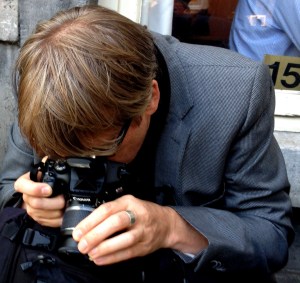
Marc NeysSwoon (AKA Marc Neys) (°1968, Essen, Belgium) is an artist who works in a variety of media; he’s a video-artist / soundscape-constructor. 

“His work is provocative, beautiful and disturbing. Using poems as guidelines, Swoon (Marc Neys) creates video and soundscapes that is instantly recognizable for its dreamlike quality as well as the skill with which the artist extracts new meaning from the poems he illuminates.” (Erica Goss)

Swoon’s work has been featured at film and video-art festivals all over the world.

In 2014 Swoon released his first album of soundscapes ‘Words/No Words’ on Already Dead Tapes. He curates, gives workshops and writes a monthly column for Awkword Paper Cut.

swoonbildos@gmail.com
http://swoon-videopoetry.com/
http://vimeo.com/swoon
https://soundcloud.com/swoon_aka_marc_neys


How is choir

by James Sanders

For the past several years, I’ve been increasingly drawn to “situated poetry”– poems designed to be performed or composed for specific sites or occasions (though by no means restricted to those sites or occasions). Jackson Mac Low’s Pronouns and performance scores, David Antin’s and Steve Benson’s improvisatory pieces, Gertrude Stein’s operas and plays, and the art of Alexander Calder and Robert Smithson are just some examples of work that has pushed me in this direction.  “How is choir” is a poem written for a large multi-media piece called “Island Boy Live” designed and produced by filmmaker Anna Winter and composer-performer Luke Leavitt – both based in Denver. Hovering between music video, sound art installation, and experimental film, “Island Boy Live” pursues connections between Denver’s local dance subcultures and the landscapes – natural, social, and economic – that incubate them. “Island Boy Live” began as a song by Leavitt, which I then used to create the poem here. Performances of the poem were recorded and then mixed into the song, and accompanying video was created.  A dual channel video for “Island Boy Live” can be found here: http://www.swigview.com/Y14mswC.

That video served as a basis for a live performance at Monkey Town in Denver (http://www.monkeytown4.com/) earlier this year. The performance consisted of Leavitt playing the “Island Boy” song live with his keytar, with “How is choir” taped on the ground around him and used for some vocal improvisations, all backgrounded by the video. Leavitt also had four bottles of red-dyed soy sauce, wielding them as a weapon of sorts– a playful splash on the ‘high-dining’ atmosphere of the Monkey Town events (which are curated by professional chefs). A few bottles– and a diner’s carafe– were accidentally smashed in performance. Some diners complained that the smell of the sauce ruined the food, others claimed it enticed their appetites!  Some scattered shots of the performance can be found here: https://vine.co/v/MJ90mqwWzOp and  http://instagram.com/p/m1QeJjw2Kn/.

James Sanders-How is choir_Page_1


James Sanders-How is choir_Page_2


James Sanders-How is choir_Page_3


James Sanders-How is choir_Page_4


James Sanders-How is choir_Page_5


James SandersJames Sanders is a member of the Atlanta Poets Group, a writing and performing collective. His most recent book is Goodbye Public and Private (BlazeVox). His book, Self-Portrait in Plants, is forthcoming in 2015 from Coconut Books. The University of New Orleans Press also recently published the group’s An Atlanta Poets Group Anthology: The Lattice Inside.

See:

atlantapoetsgroup.blogspot.com

www.facebook.com/atlantapoetsgroup

Twitter: @ATLPoetsGroup.


Ensorcelled Moments

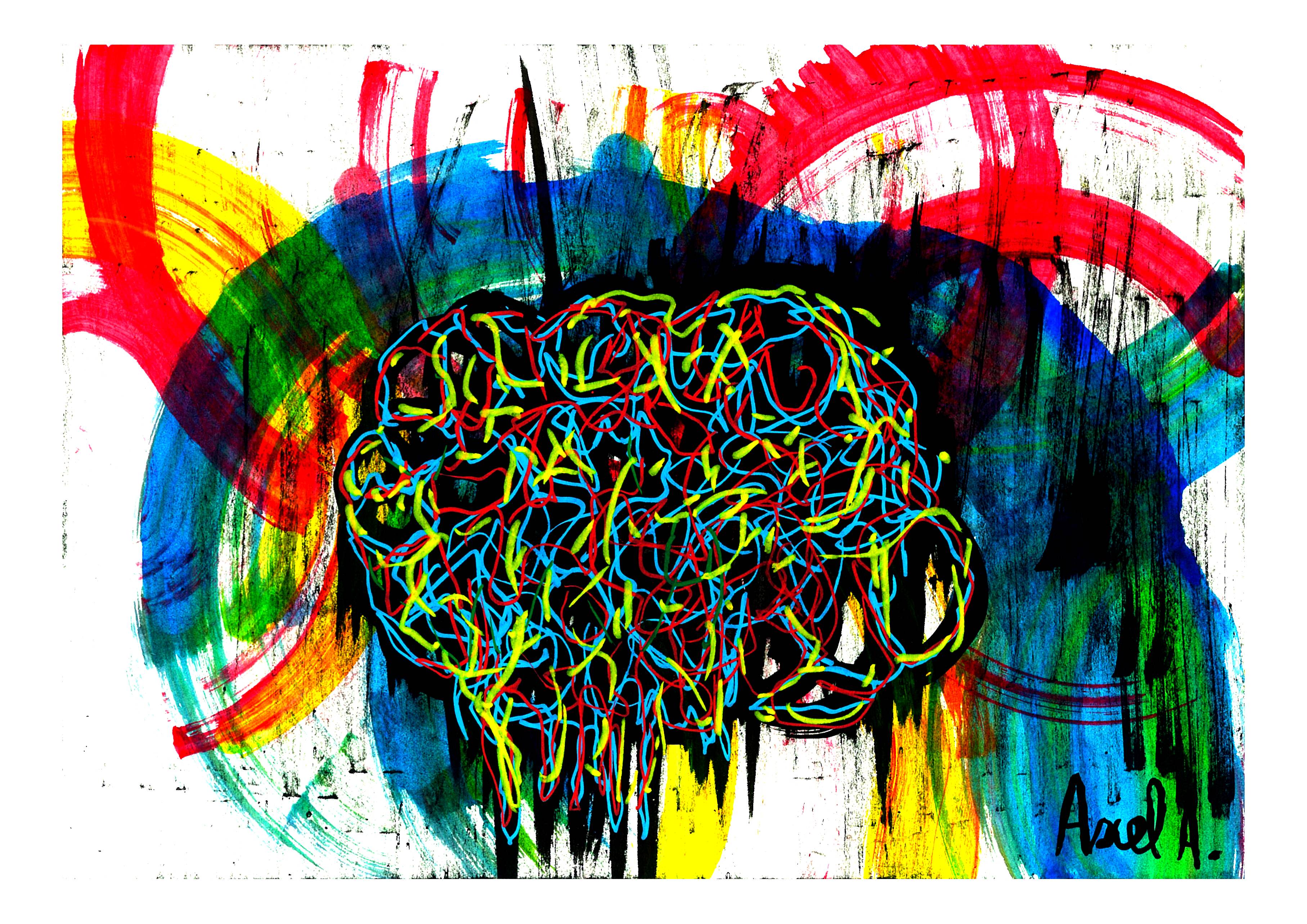
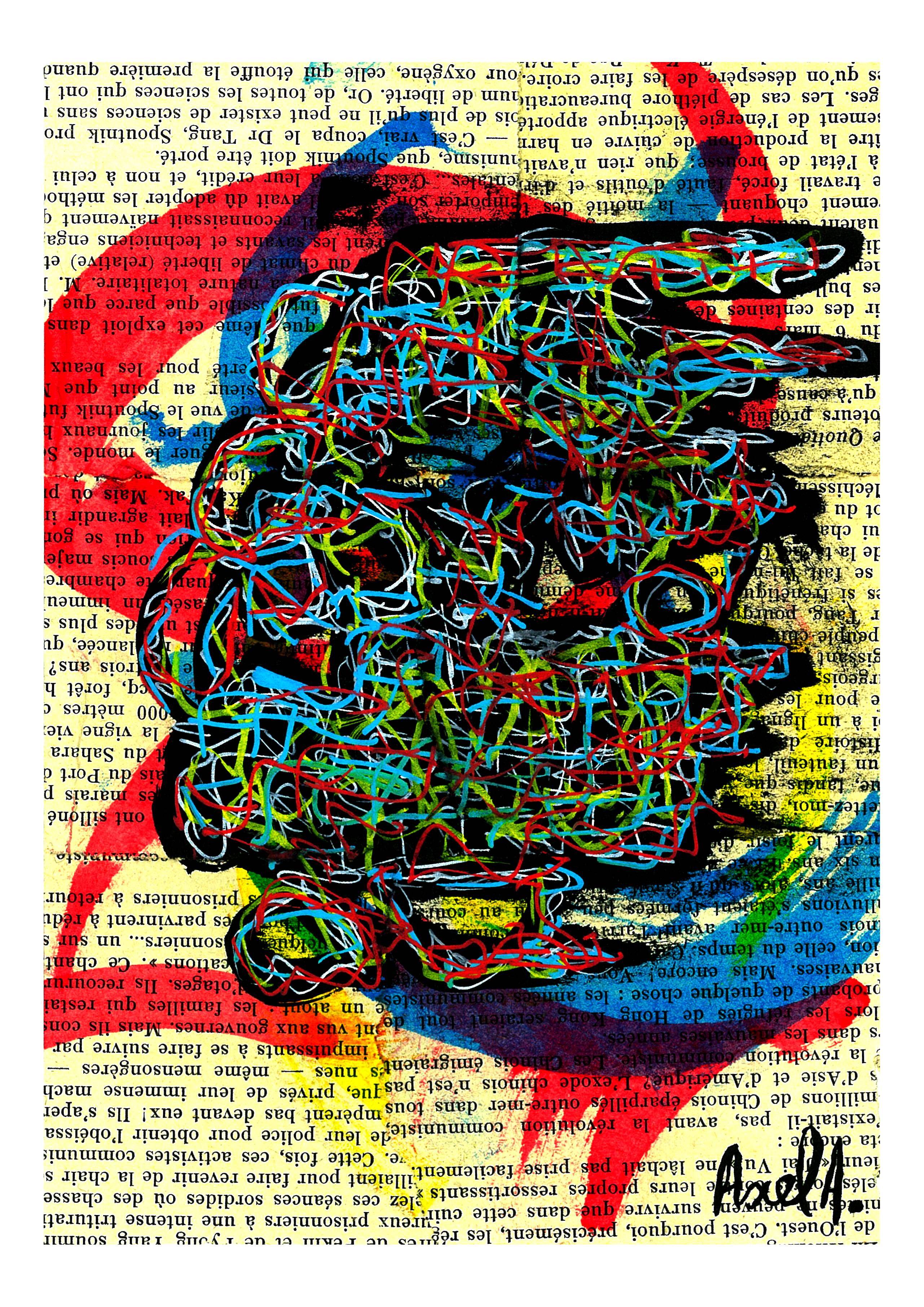
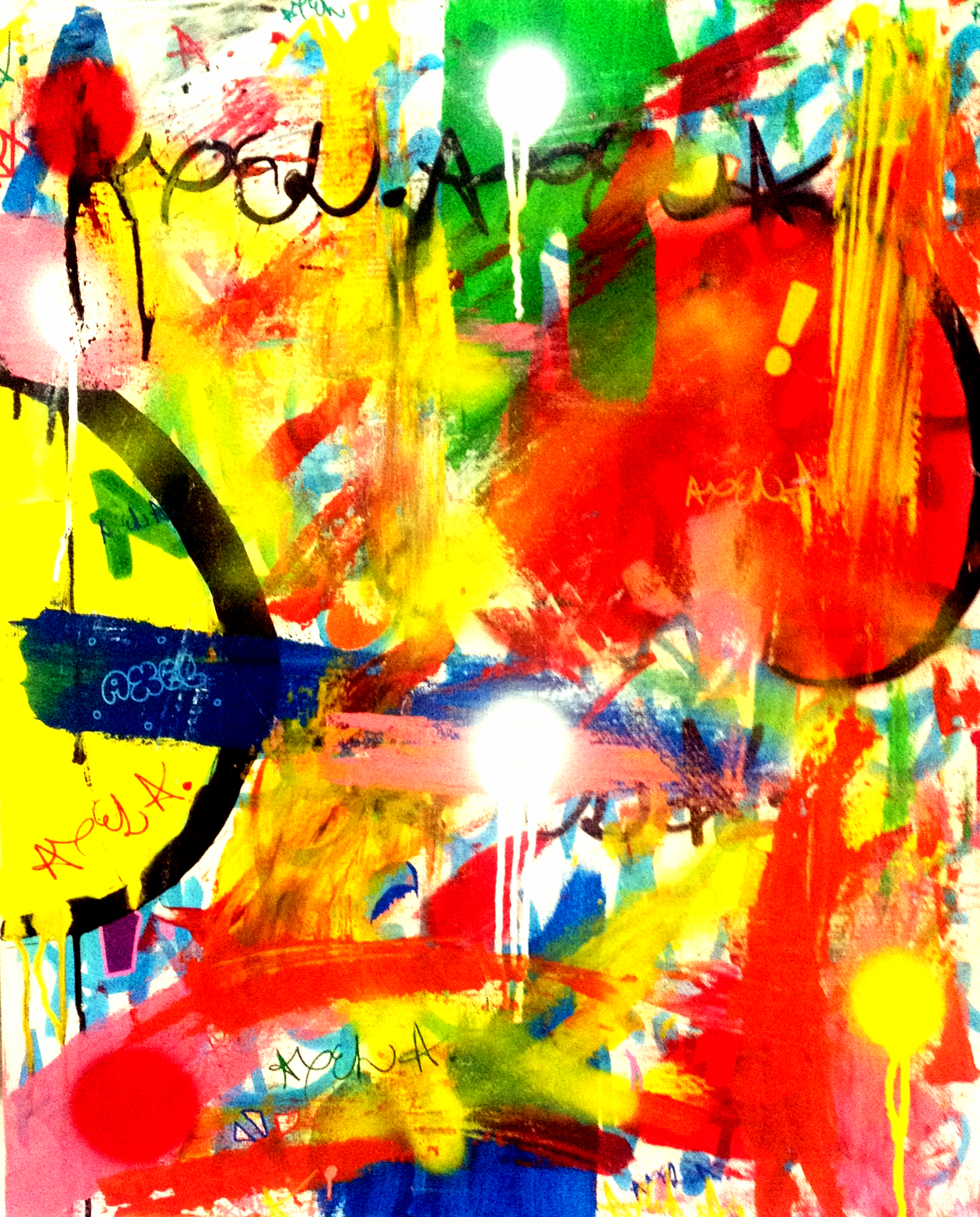
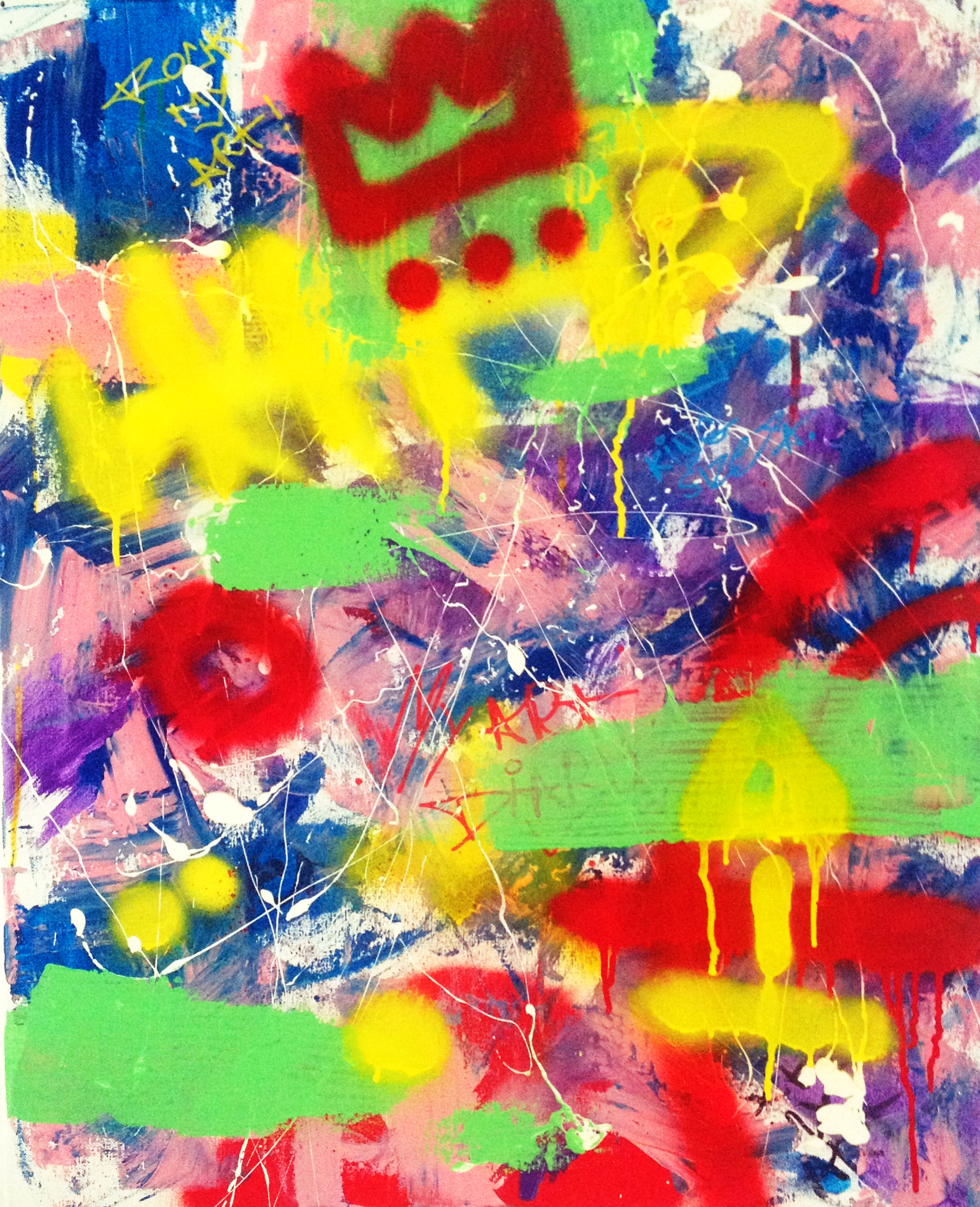
by Axel A.

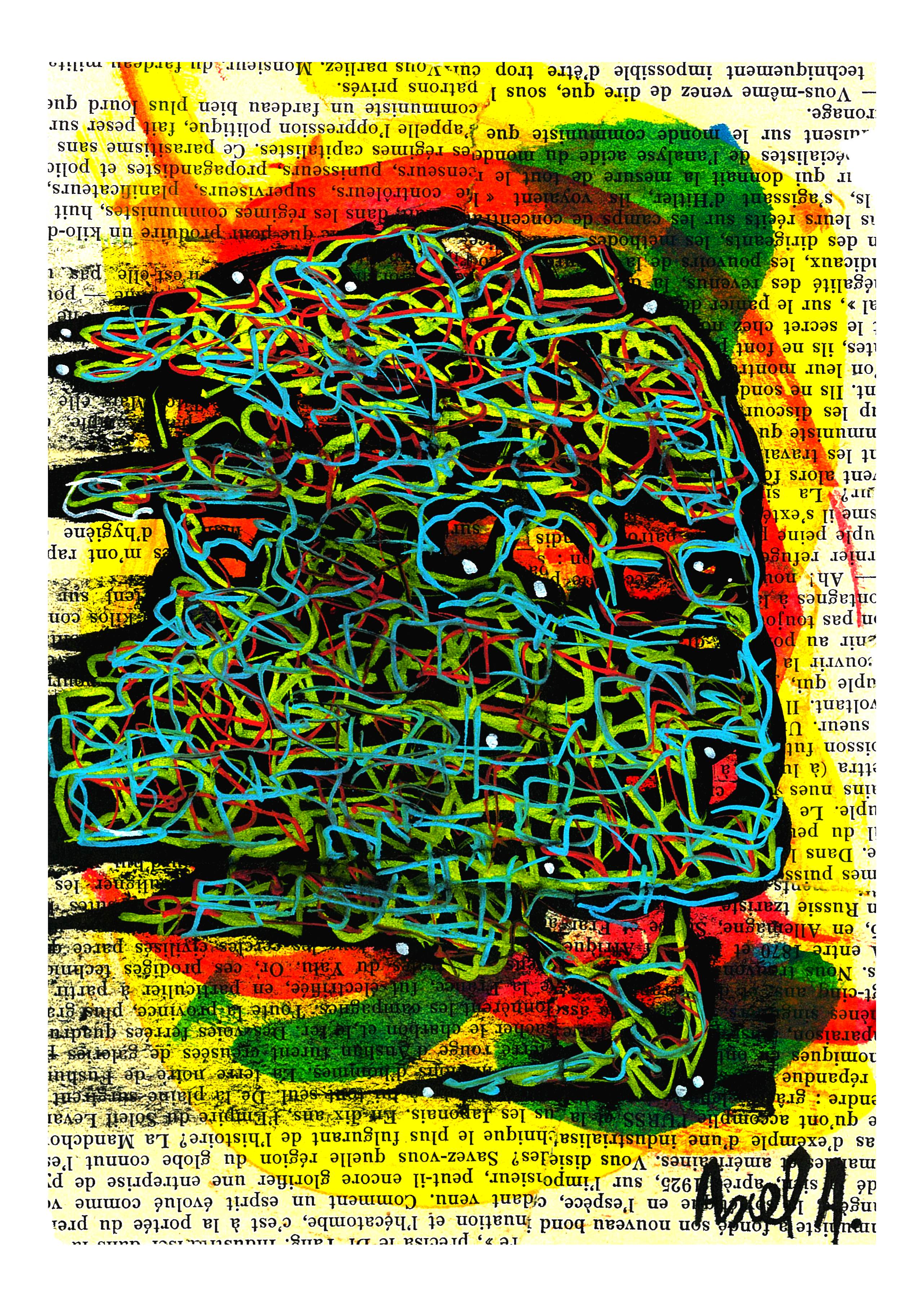
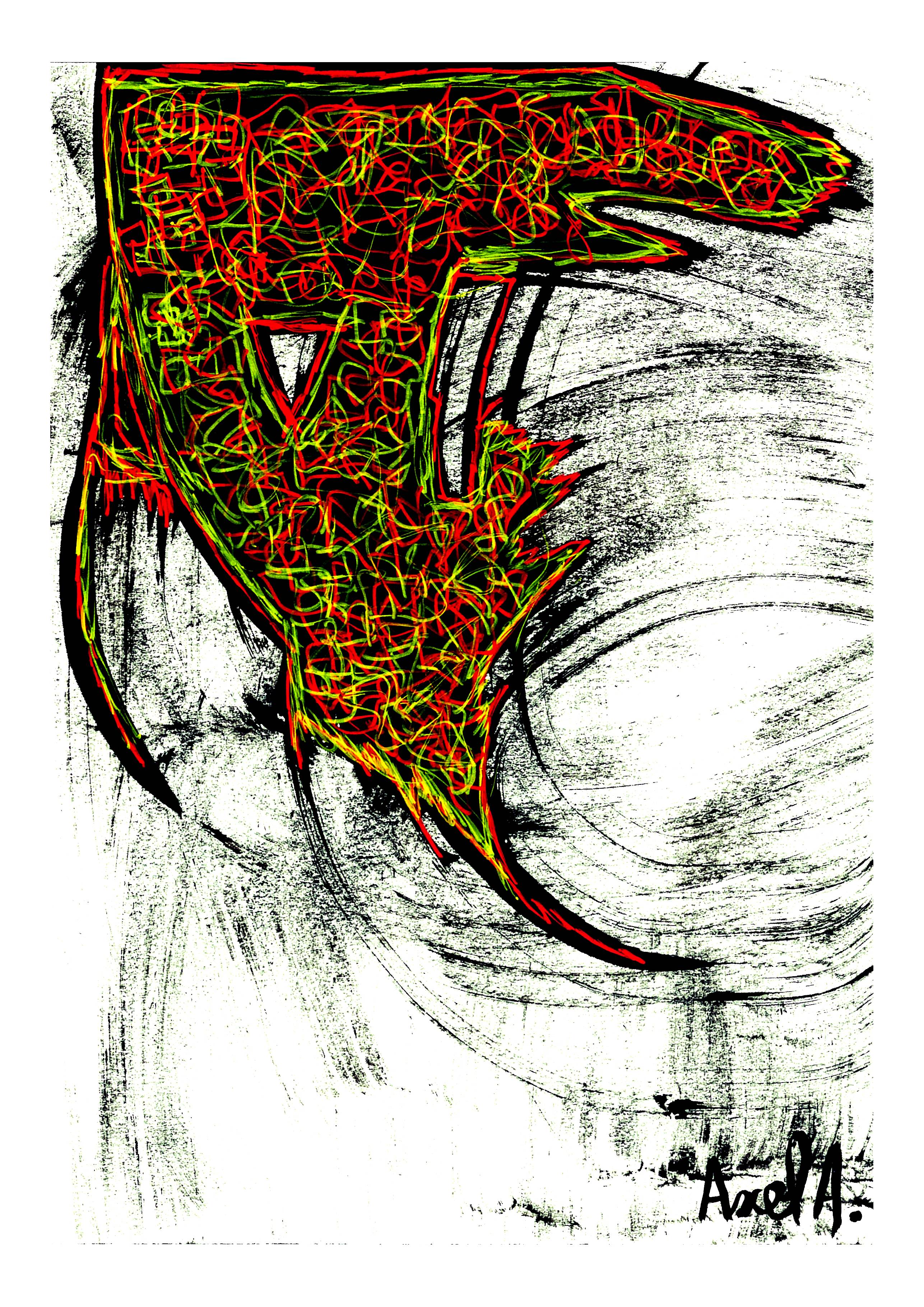
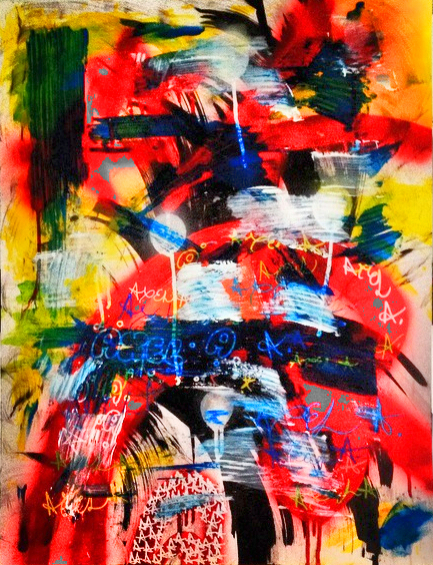
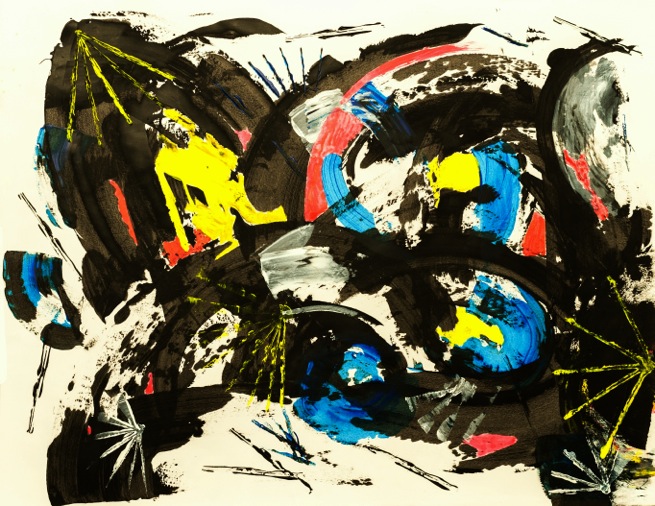
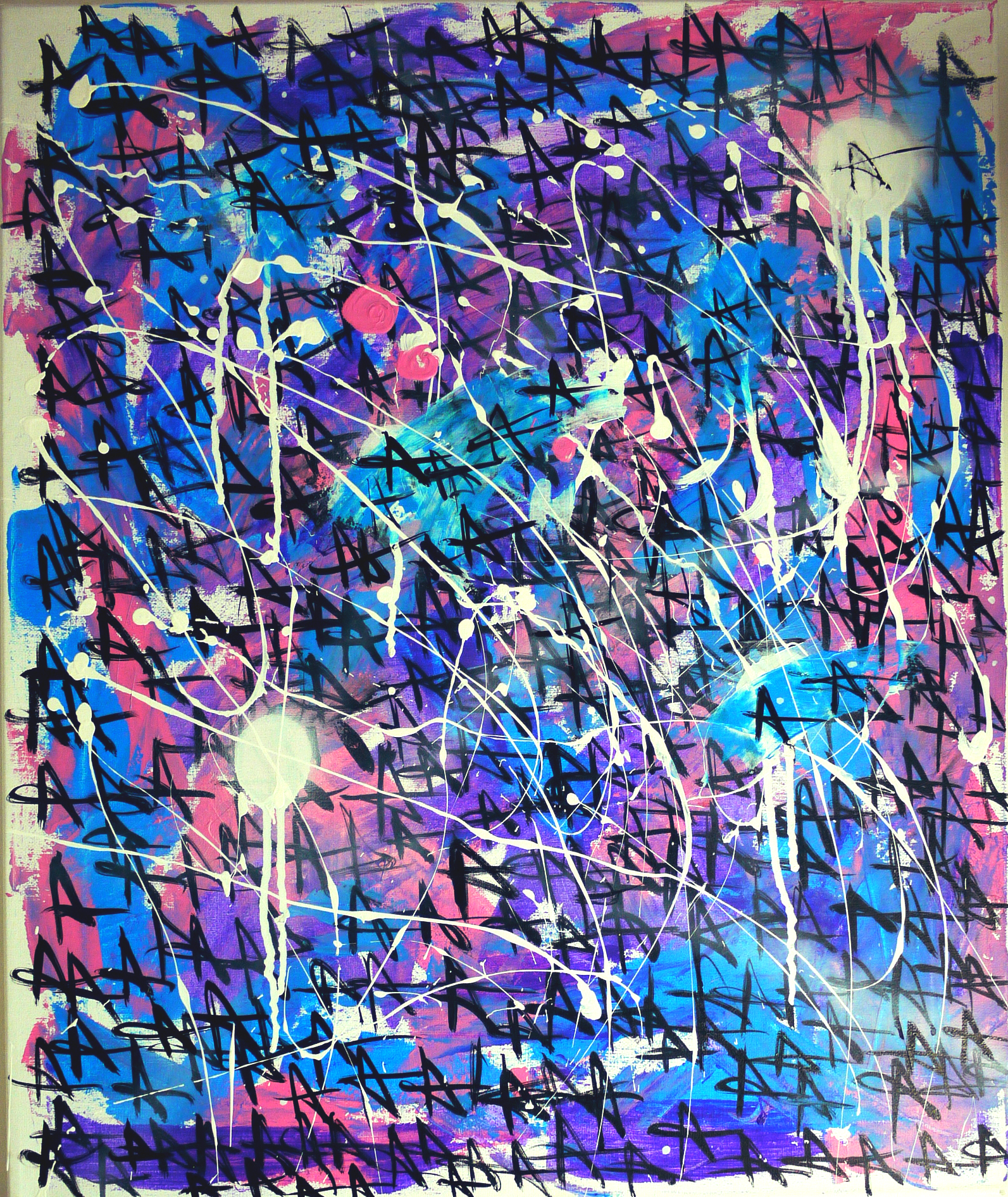
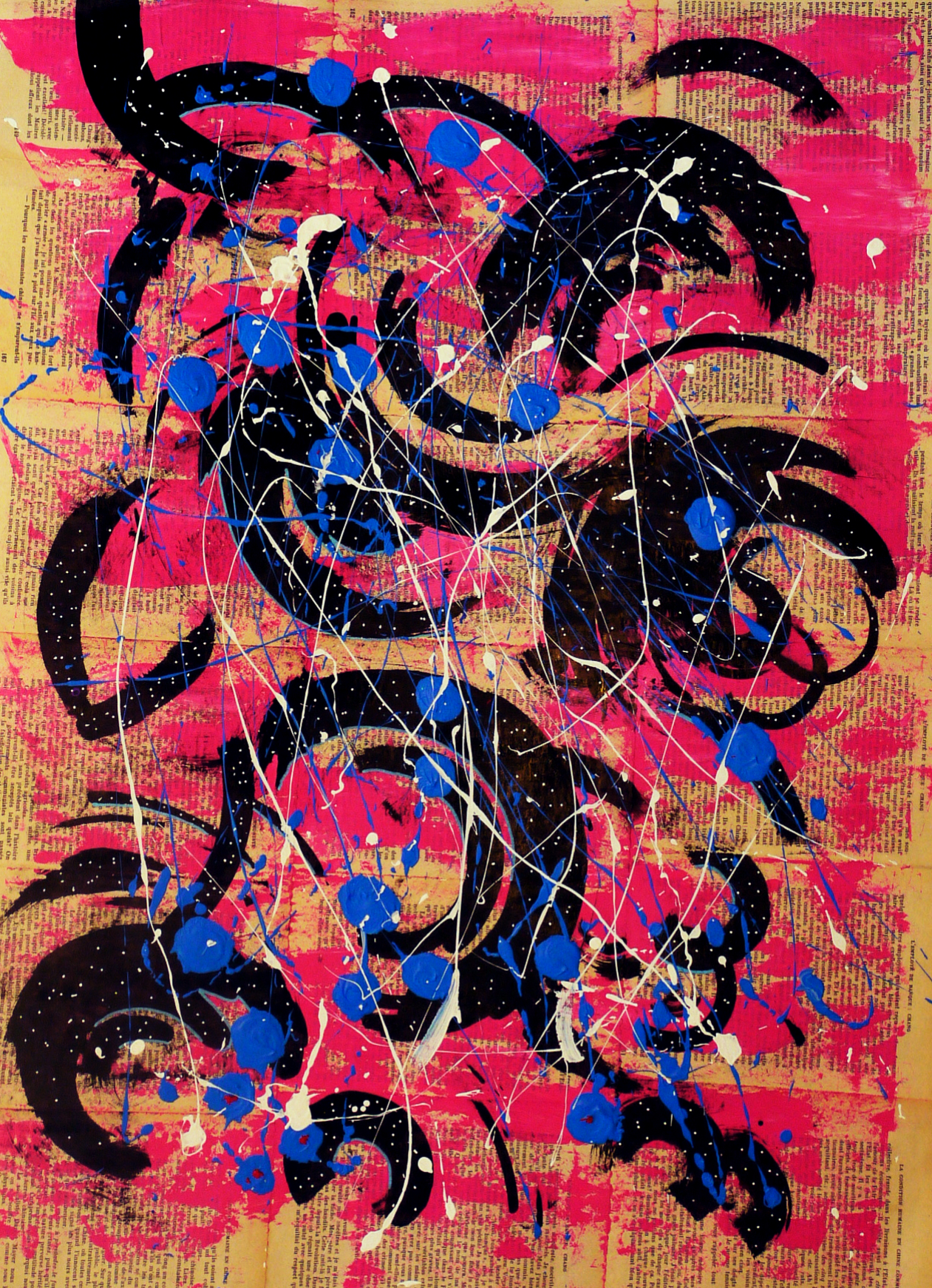
“What inspires and motivates me to paint is exploring, enjoying the world, and telling those ensorcelled moments I experienced using different Art Forms. I’m Caribbean (from FWI) but live in France, and belong to these two places. So I try to find this kind of sense of belonging through my artwork.”


Axel A 1


Axel A 2


Axel A 3


Axel A 4


Axel A 6


Axel A. is a Caribbean / French artist who lives in Paris.

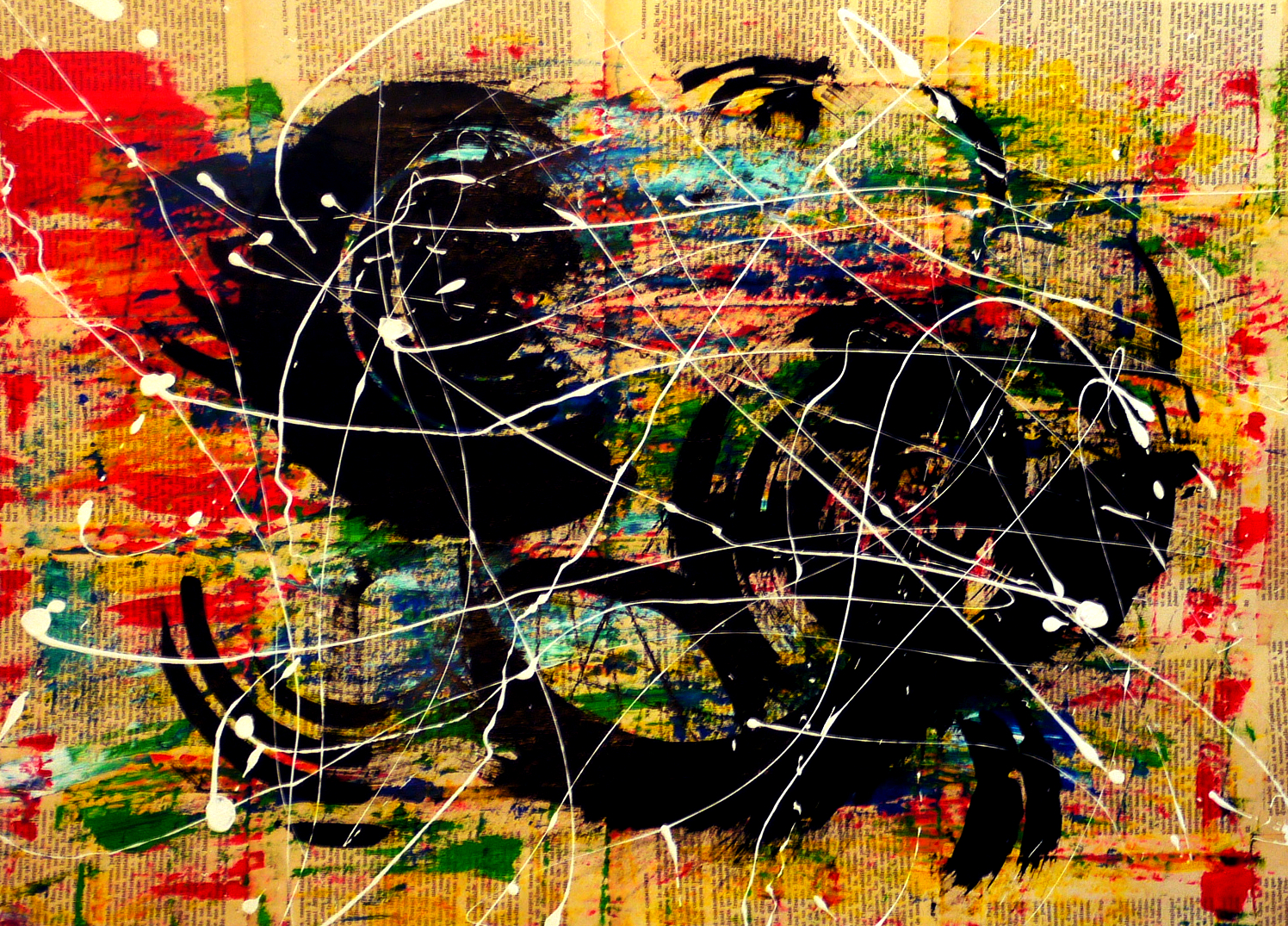
His very personal work is characterized by a very bold use of color and imaginative abstract figures. These colors and figures interact, forming a work of strong visual impact. Axel wants his Art to touch our feelings and brighten our enthusiasm.

Axel wasn’t schooled in painting; he learns while he is discovering the world.

He works in acrylic, oil, and collage. His artwork is based on the “movement” by a cardboard end by way of instruments of paint.


Axel A 8


Axel A 9


Axel A 10


Axel A 11


Axel A 12


Axel A 13


Axel A 14


Axel A 15


“Art gives us a gift into creating, thinking differently, and expressing ourselves–providing others an insight into and appreciation of different cultures. That’s why wherever life takes me I will follow and continue with my Art.”


For more information about Axel A.:


Postcolonial Thoughts: Notes on Judith Butler’s Performativity: Spectacle & Realism

By Christopher Hutchinson


“In the late 80s, a new theorist emerged on the scene. She was called Judith Butler, and she was to revolutionise gender theory so fundamentally, that to write a paper on gender in the 21st century that does not at least reference Butler, is to almost place yourself outside of theoretical intelligibility.”-Caroline Criado-Perez

Sex & Agency

Both Butler and Foucault, leading theorists in queer theory, outline the automatic problems with identifying sex as a morally structured construct. Sex merely wants to “get off”. Sex has no interest in the organization of like sexual beings to engage in politics. Both theorists see the engaging of politics and origination as an agency that is separate from sex. Foucault suggests that the politicizing of homosexuality, for those agencies that are concerned with morality, should be more accurately discussed under birth control and reproduction. Butler goes further to analyze the gender role performed by all. She suggests that once one assumes an identity, then one has to perform the corresponding acts to fulfill that identity. That performance becomes just as binary as the patriarchal structure present. Both theorists see the binary gender roles as problematic. Butler attempts to identify and dismiss the performance in her discussion of performativity.

Judith Butler believed we were all performing gender-Caroline Criado-Perezhttp://www.newstatesman.com/voices/2014/05/caroline-criado-perez-judith-butler-whats-phallus-got-do-it


Performativity

Butler’s performativity is a complicated proposal that ends up being a place of ambiguity. The goal is to operate completely outside of the binary, to become oneself. No labels, no boxes, no campaign, no identity, no agency that can be used as propaganda. Performance functions within those paradigms. Butler’s argument is applicable to all gender roles and stereotypes generated in this culture, and subcultures. Should one assume and wave the flag of the stereotype/gender/ethnicity for an agency? Proving to be authentically a gender/stereotype/ethnicity is merely advocating the spectacle as it relates to patriarchal normalcy. Identity by itself is a lazy excuse to create art.


 Rashaad Newsome

Shade Compositions 2012 SFMOMA (27min. version)

Queer Realism

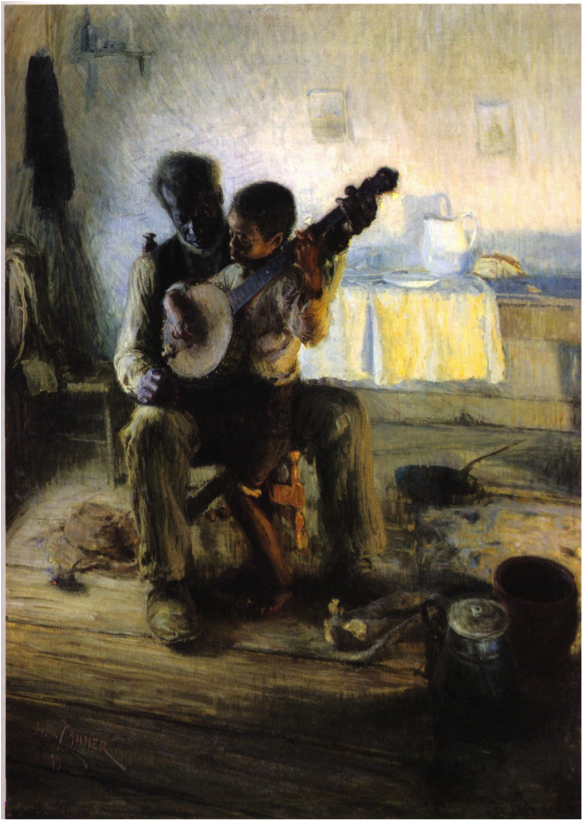
 “Realism is an approach to art in which subjects are depicted in as straightforward a manner as possible, without idealizing them and without following rules of formal artistic theory. The earliest Realist work began to appear in the 18th century, in a reaction to the excesses of Romanticism and Neoclassicism. This is evident in John Singleton Copley’s paintings, and some of the works of Goya. But the great Realist era was the middle of the 19th century, as artists became disillusioned with the artifice of the Salons and the influence of the Academies. Realism came closest to being an organized movement in France, inspiring artists such as Camille Corot, Jean-Francois Millet and the Barbizon School of landscape painters. Besides Copley, American Realists included the painters Thomas Eakins, and Henry Ossawa Tanner, both of whom studied in France. http://www.artcyclopedia.com/history/realism.html


The thoughts developed in realism seem most to encompass both Butler’s and Foucault’s queer theory, which would more accurately be described as queer realism. Butler’s ambiguity attempts to find this realism. Tanner’s Banjo Lesson is not about pity, sympathy, or idealism. It is simply a grandfather teaching his grandson the banjo. Contemporary Black art is today filled with sympathy, pity, and idealism the complete opposite of the Tanner’s realism, now belittled in a romanticized spectacle. So too have many under the banner of queer theory, moved so far away from queer realism to pure spectacle, engaging in the very same binary gender archetypes perfected in patriarchal society. Many have manipulated and abused Butler’s theory to advance their own agency of indulgence, politics, and morality.


Christopher HutchinsonChristopher Hutchinson is an Assistant Professor of Art at Atlanta Metropolitan State College, Archetype Art Gallery Owner in Atlanta, Ga, and Smoke School of Art Founder. He received his Master of Fine Arts Degree in Painting from Savannah College of art & Design, Atlanta and his Bachelor of Arts Degree from the University of Alabama in Huntsville, Alabama. He lived in Alabama for 10 years before moving to Atlanta in 2008.

Learn more about Christopher and his work at Black Flight 144.