Tag Archives: featured

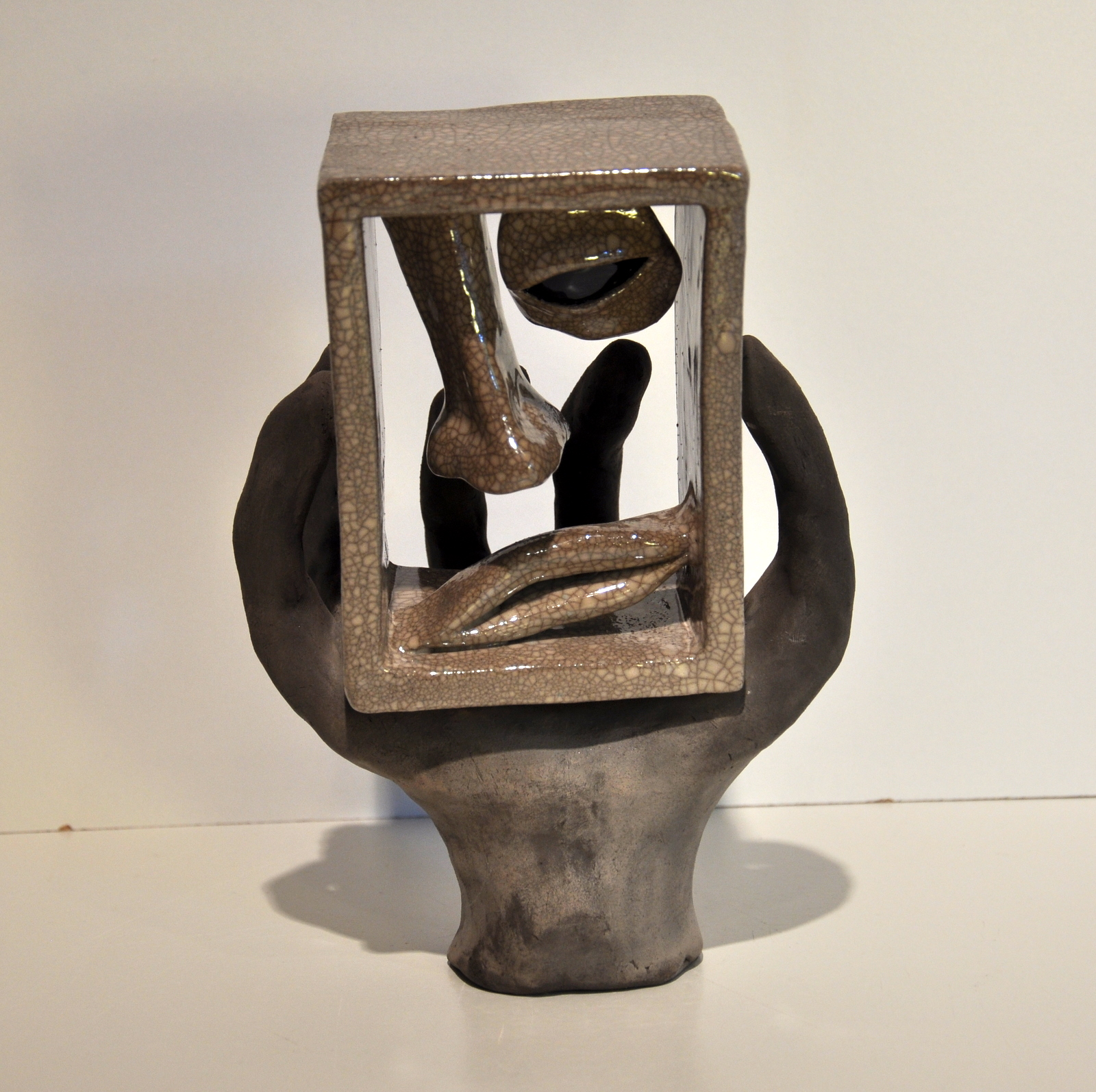
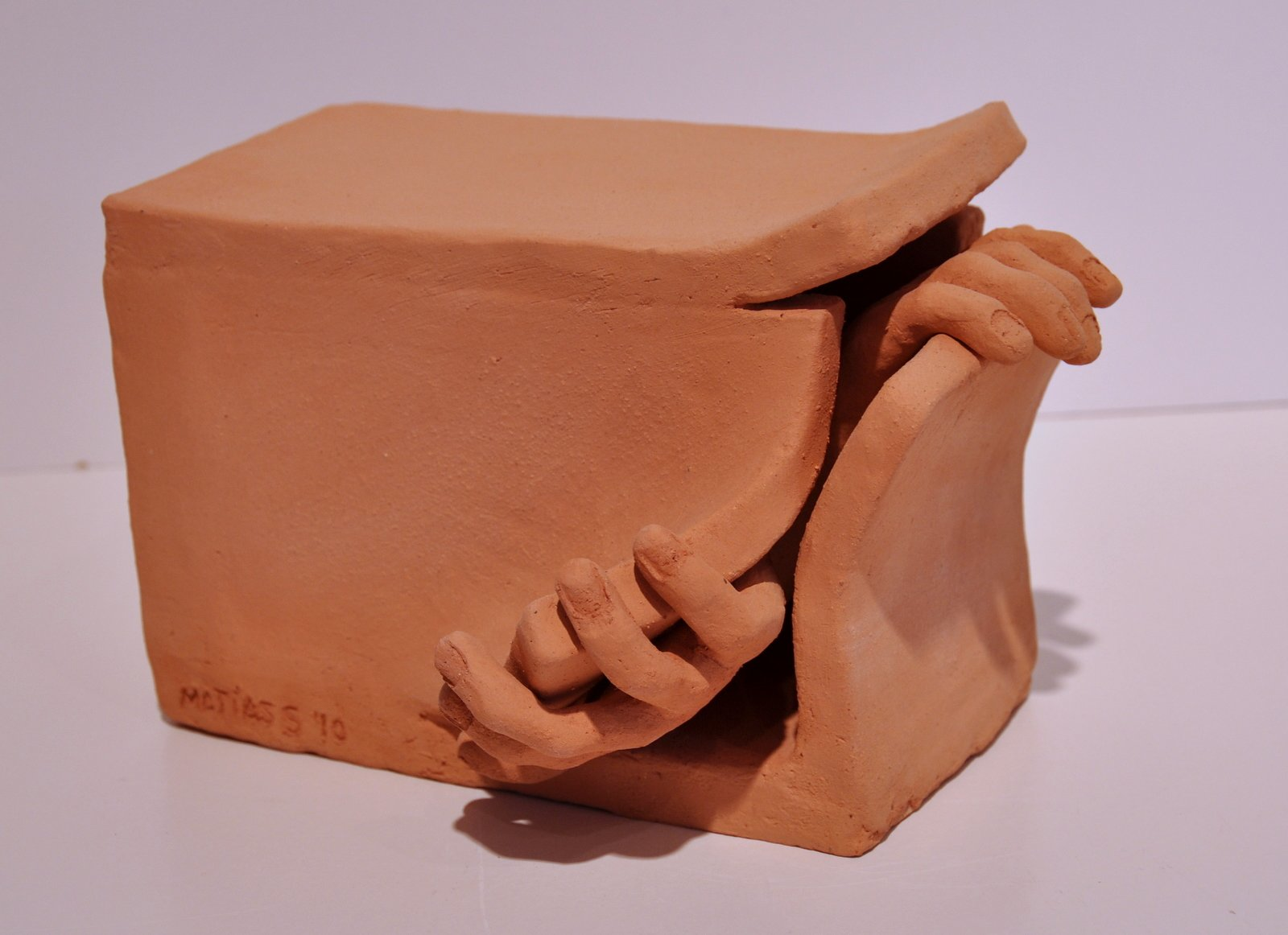
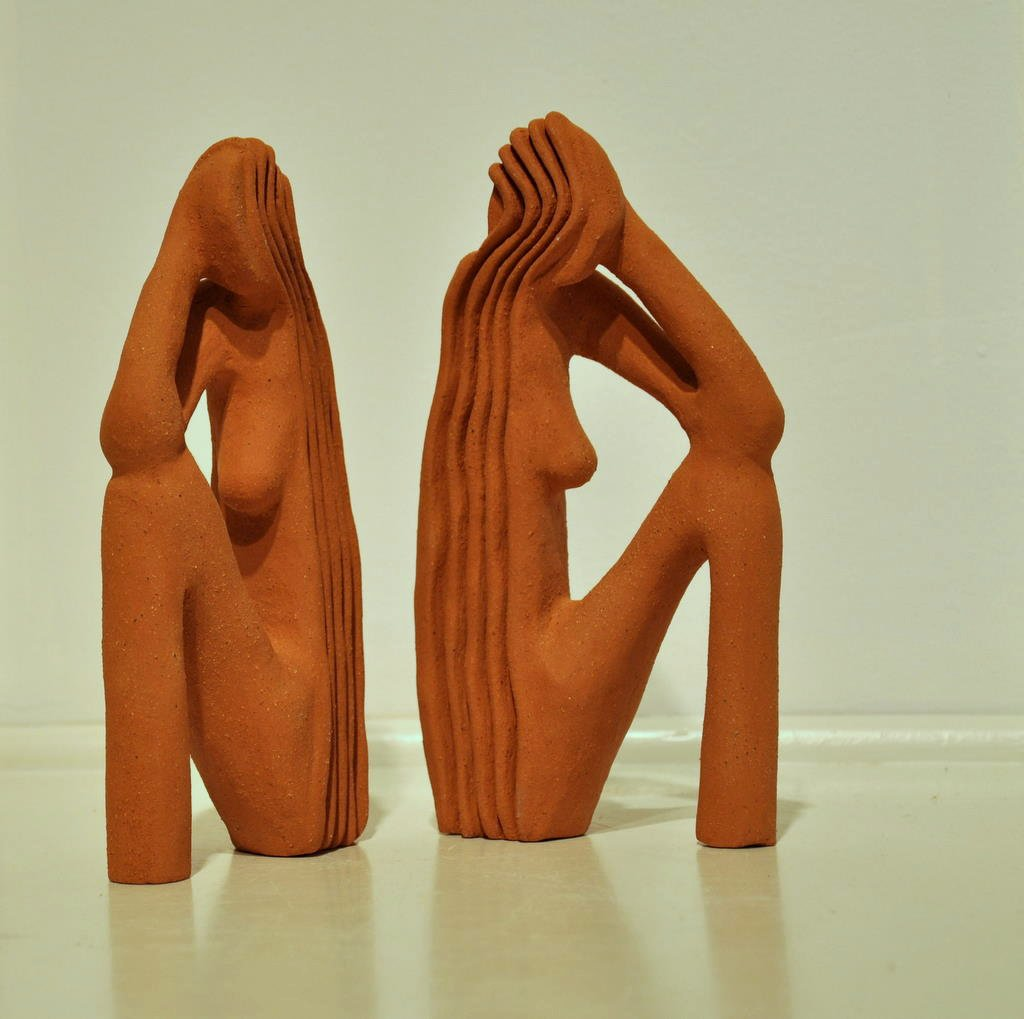
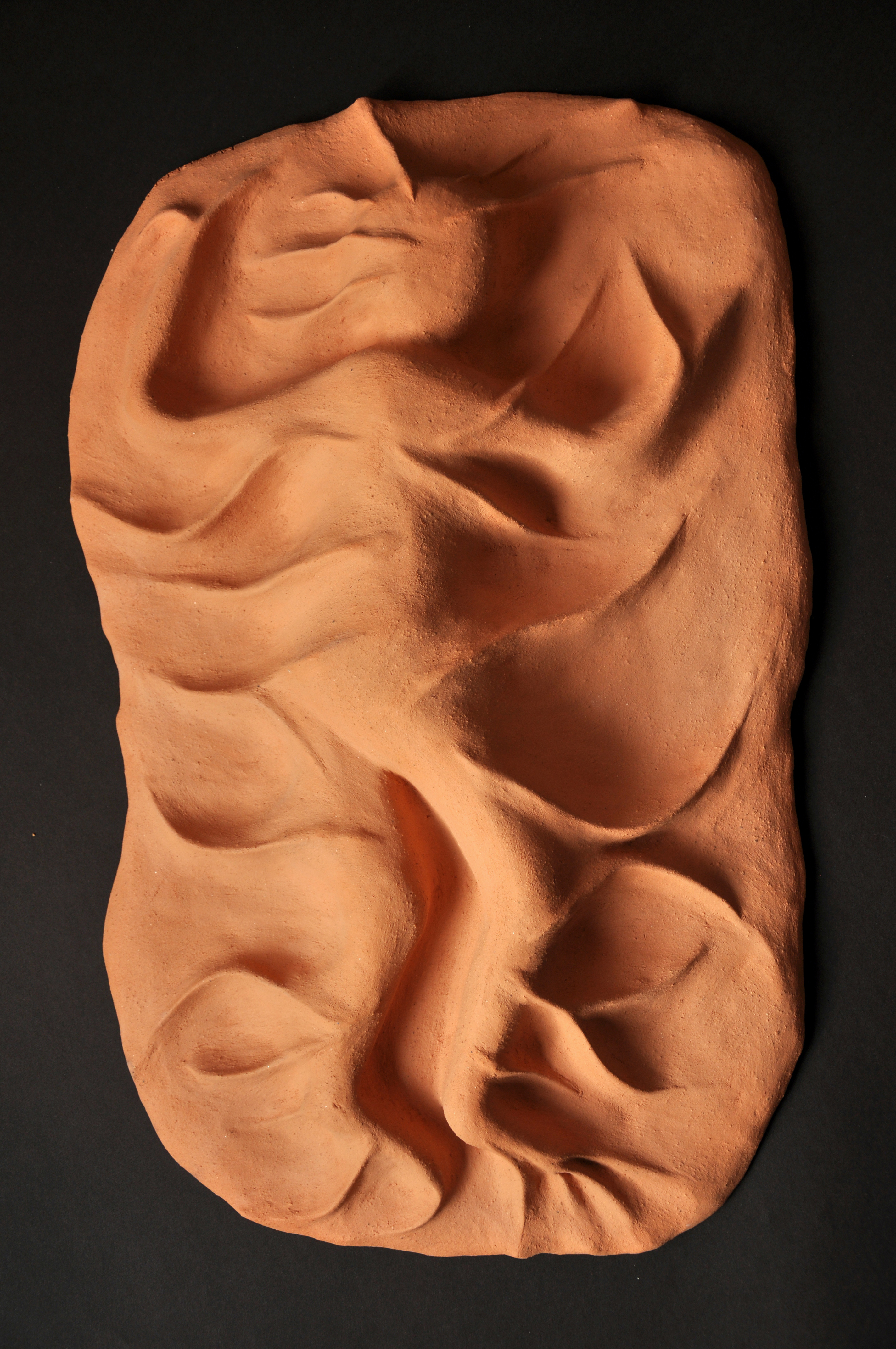
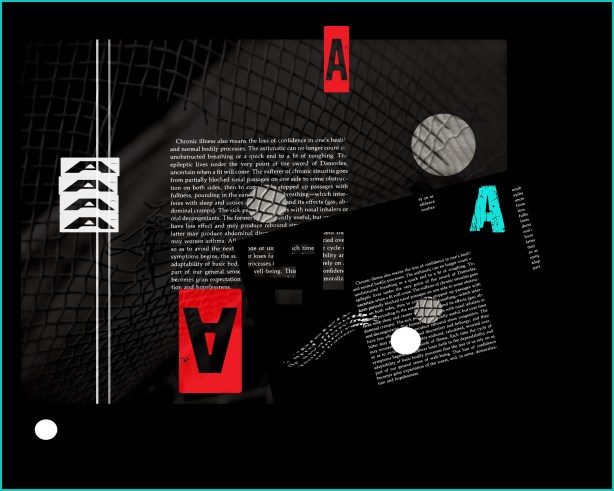
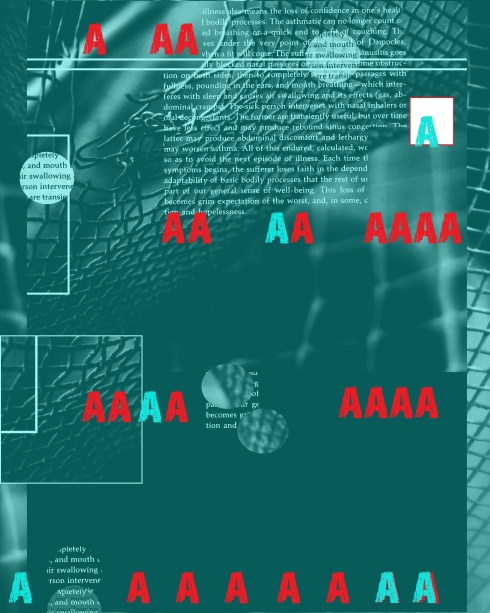
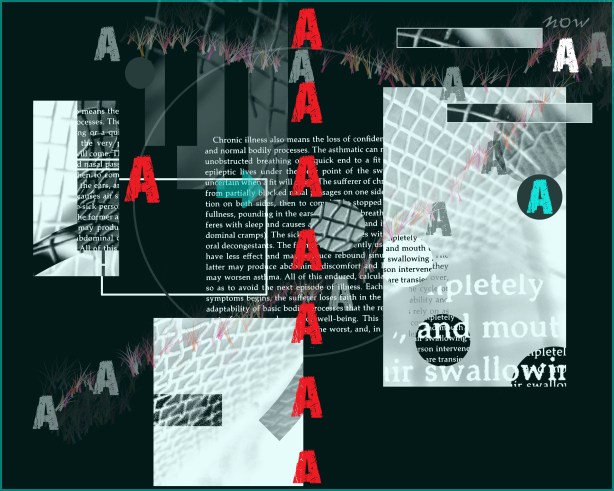
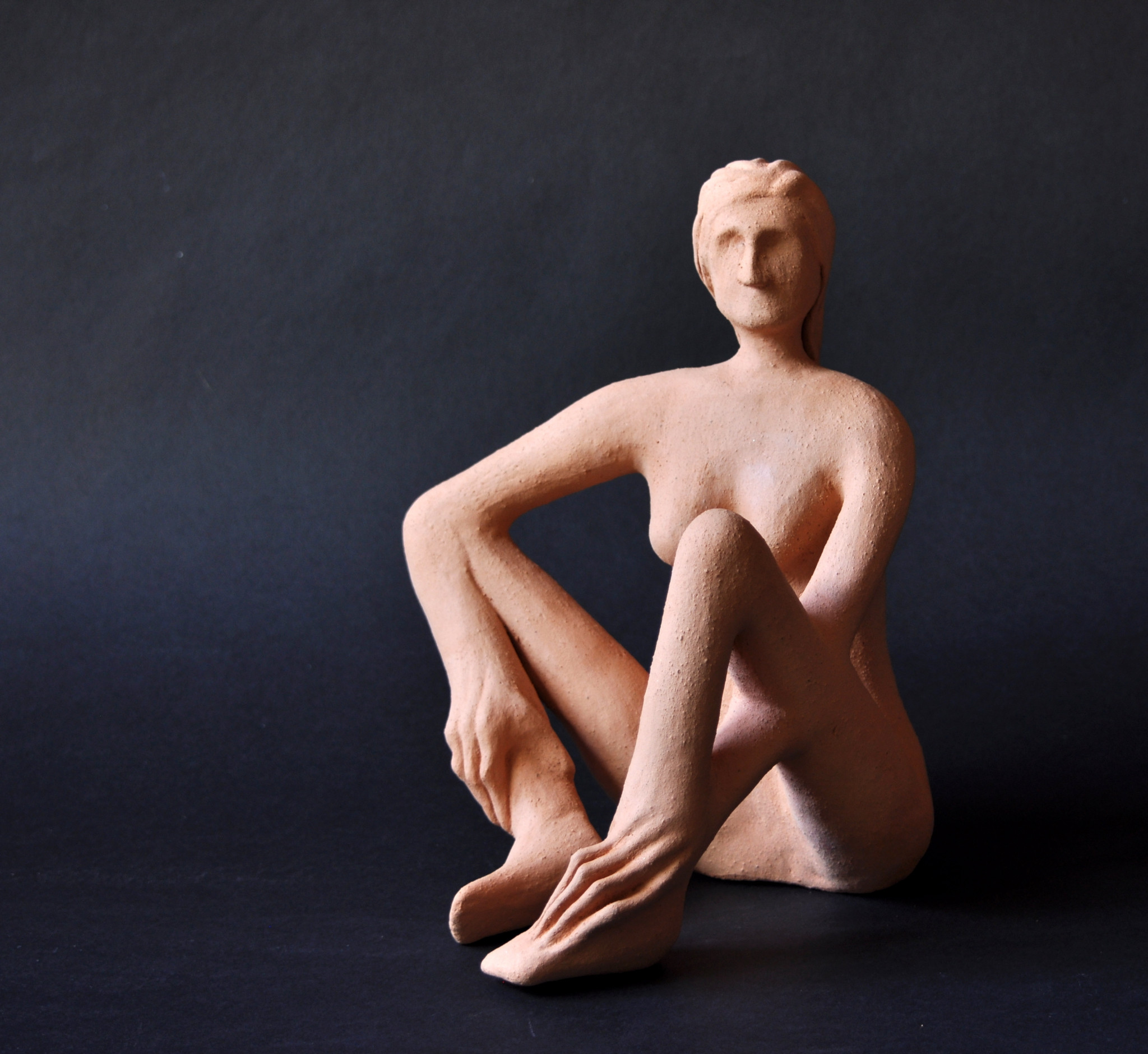
Sculpture by Matías Sierra

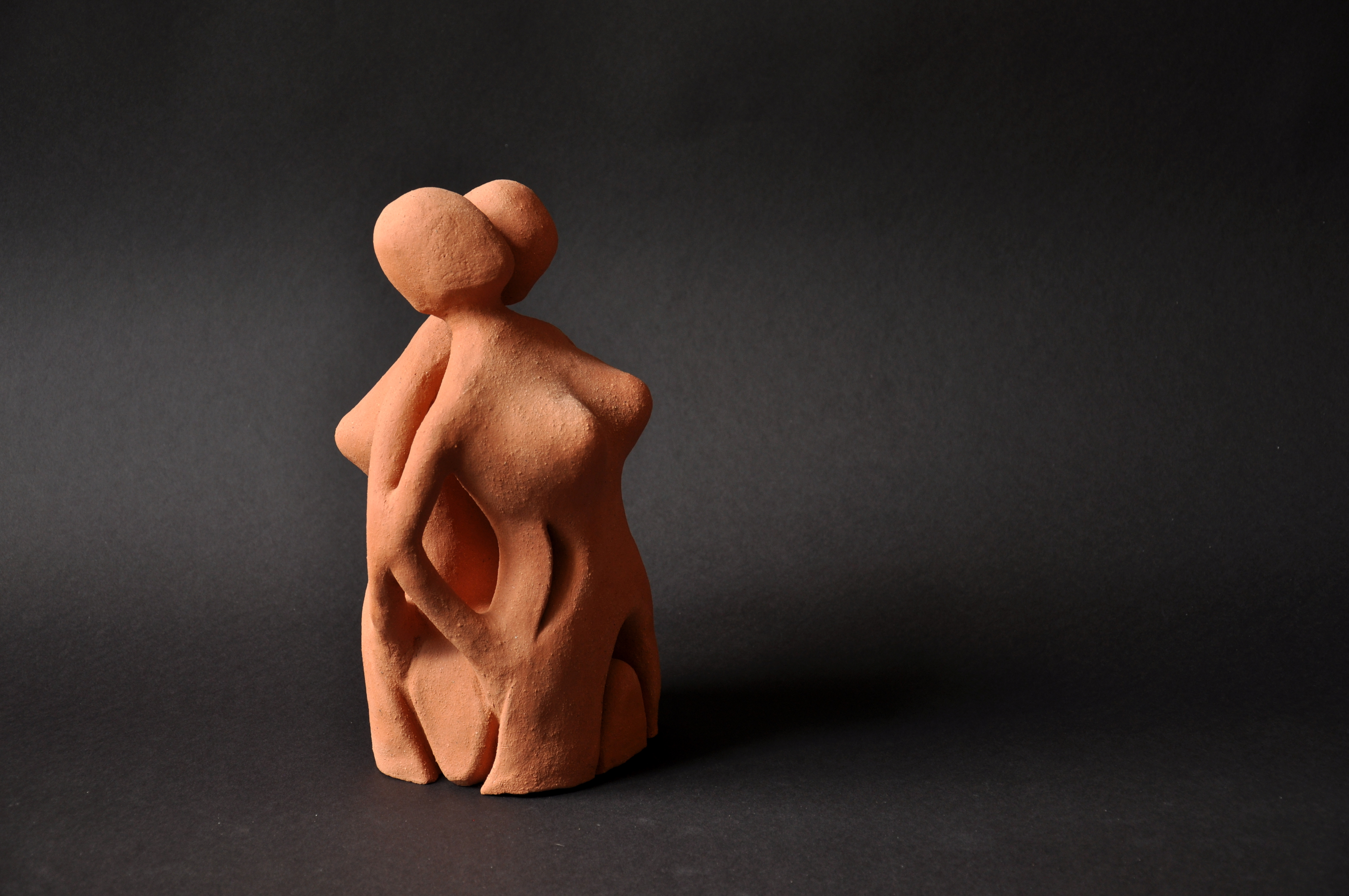
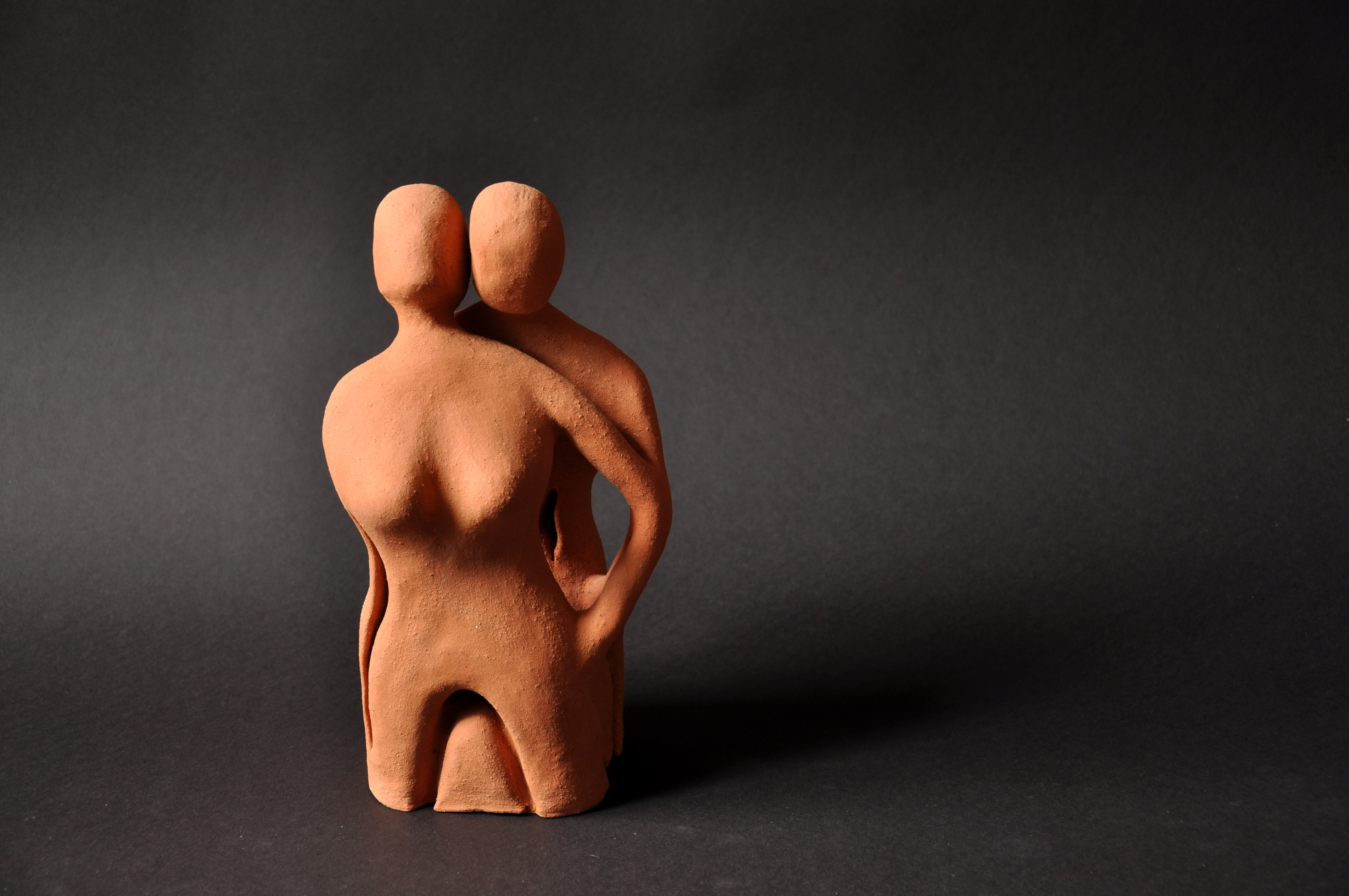
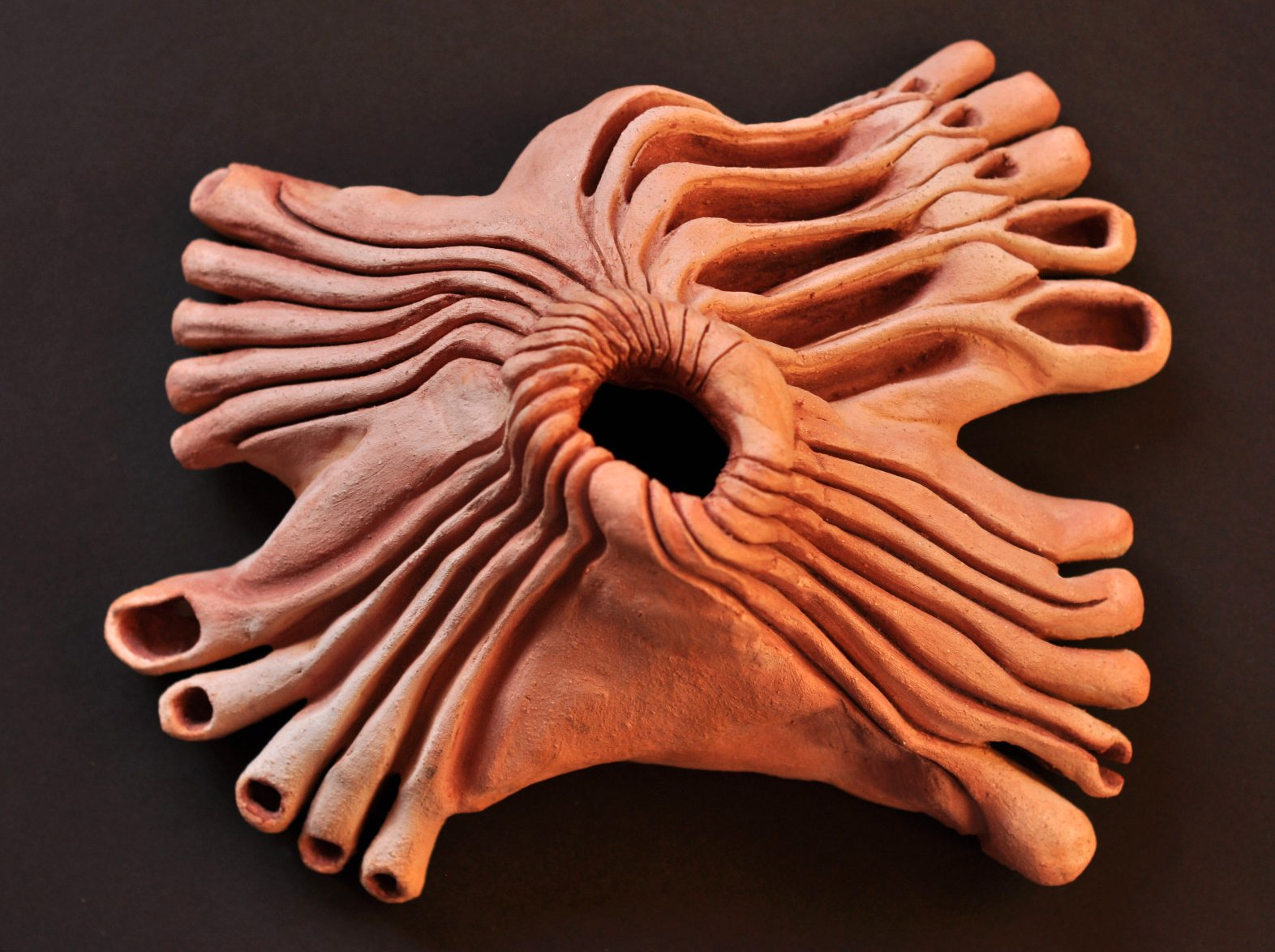
Untitled. Red Clay.

Untitled – Red clay

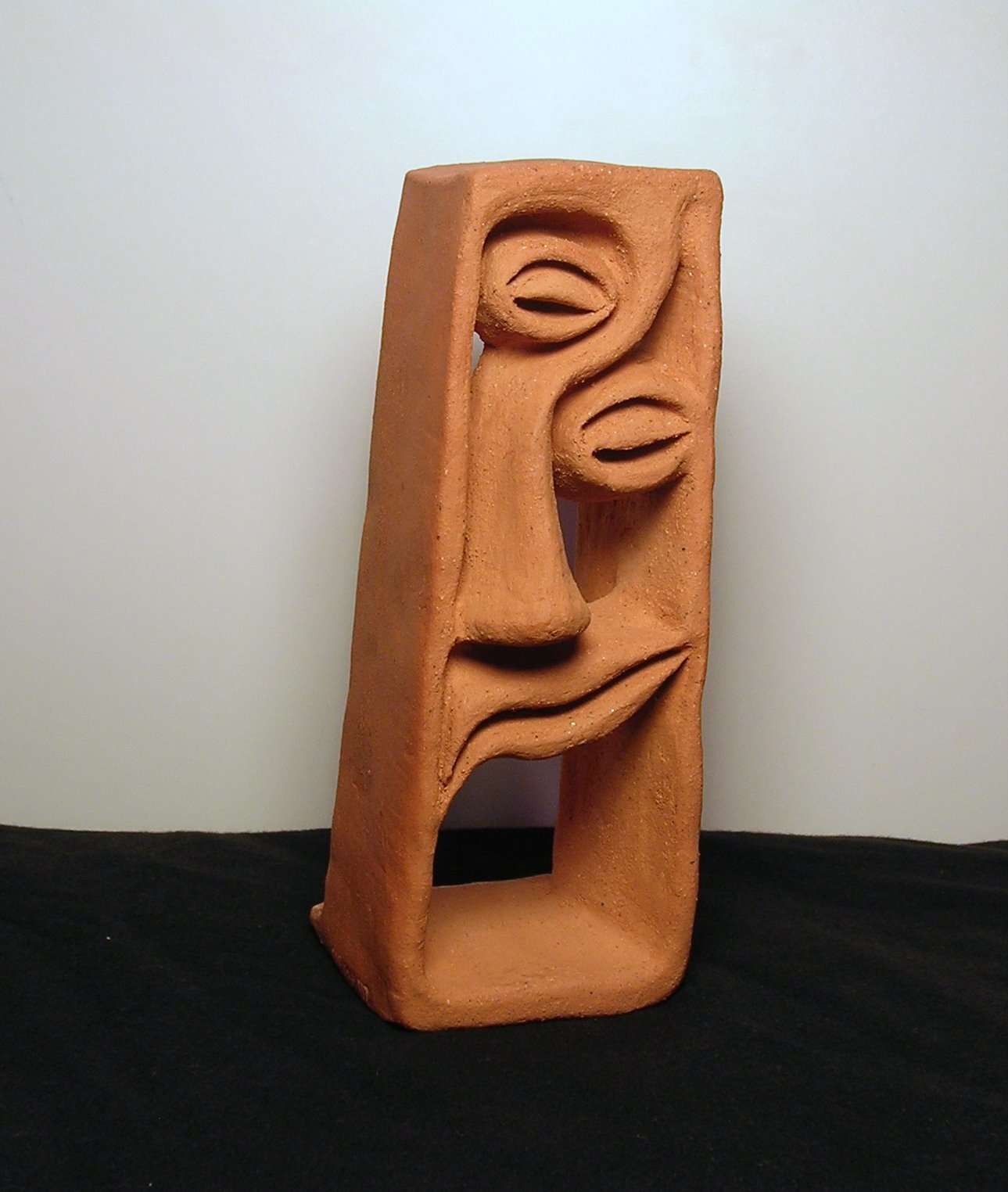
Untitled. Red Clay.

Untitled – Red clay

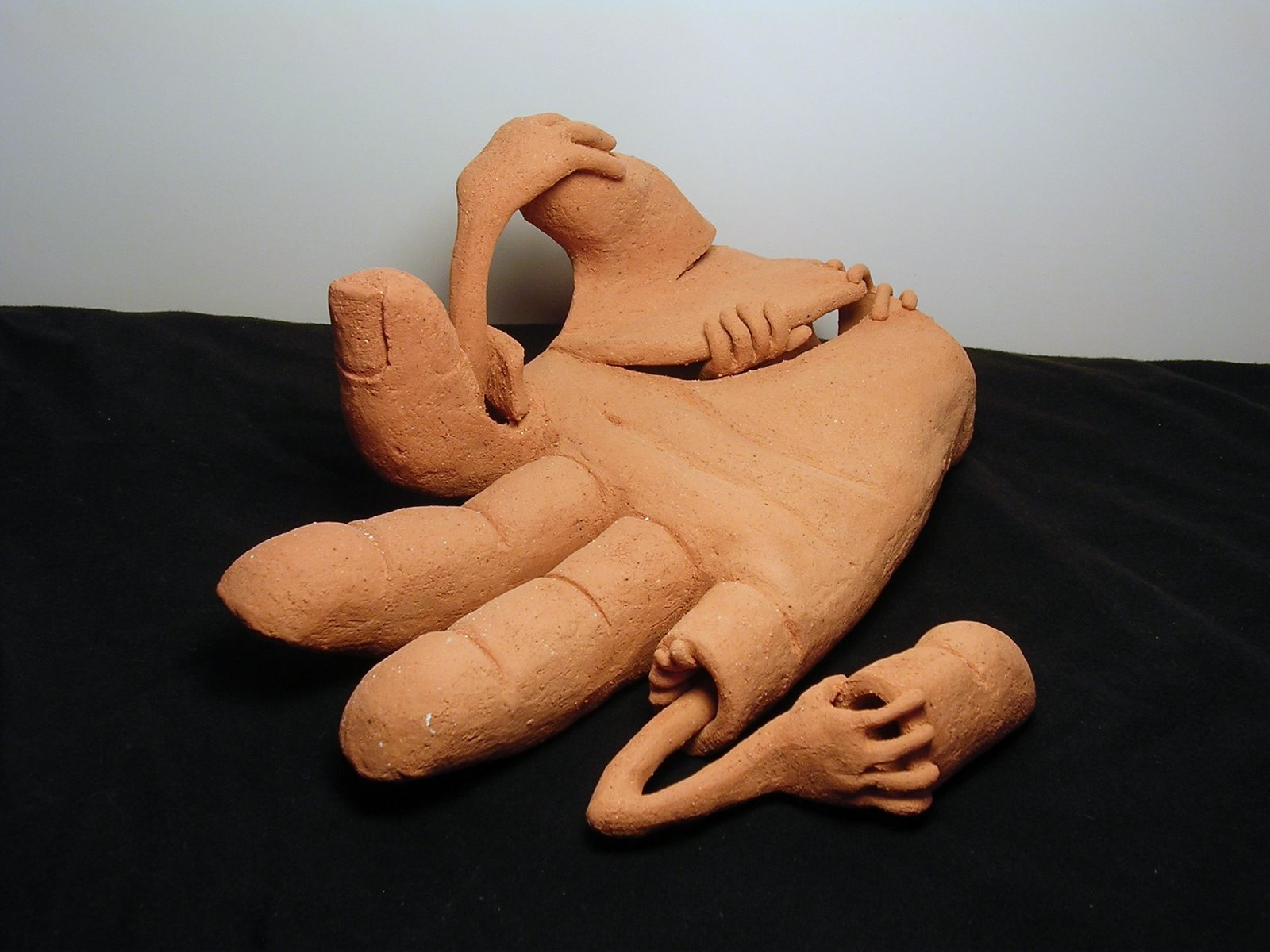
Sisters - Red Clay

Sisters – Red clay

Sisters - Red Clay

Sisters – Red clay

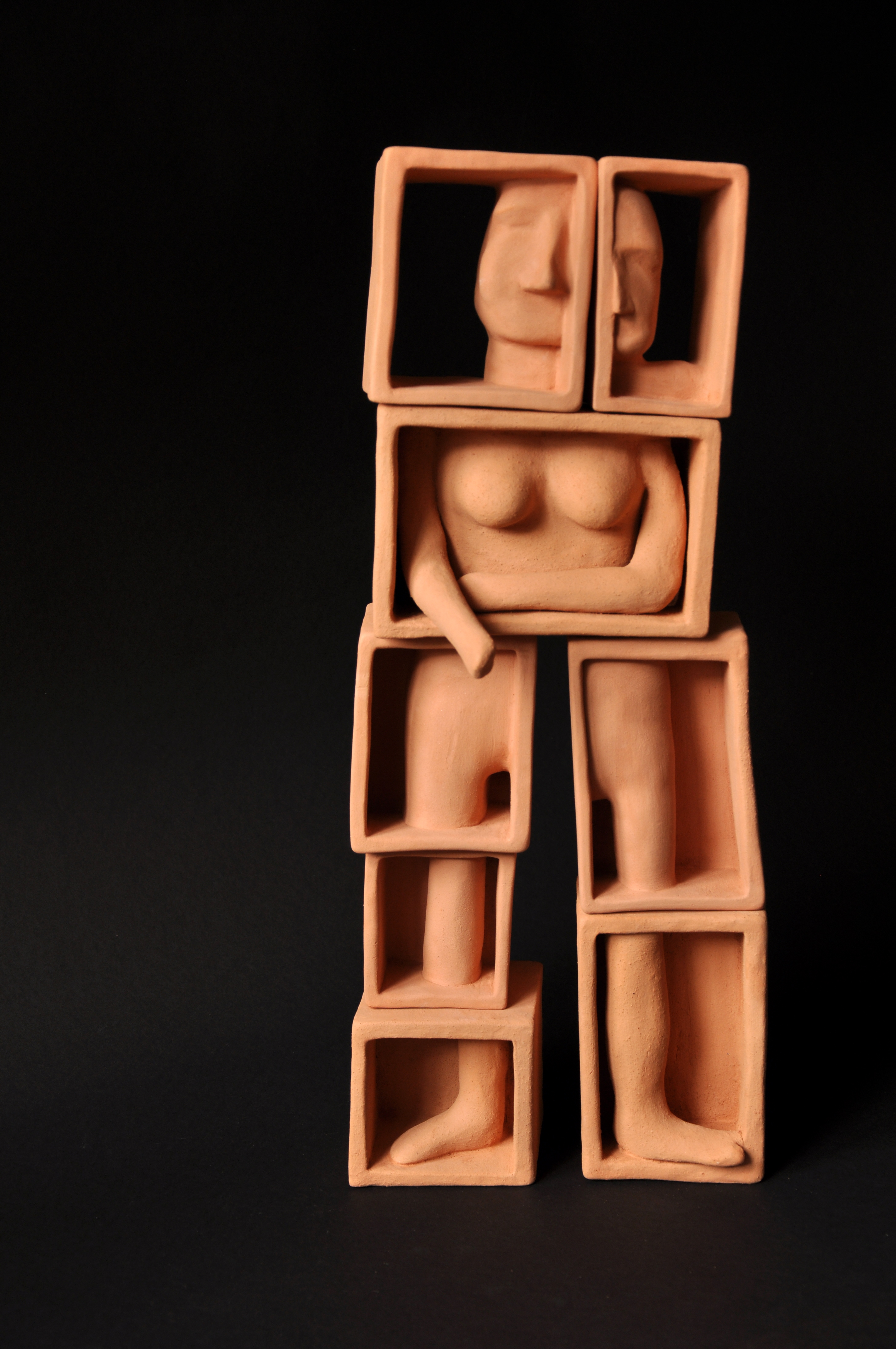
Stereotypes - Red Clay

Stereotypes – Red clay

Las venas - Clay and glaze

Las venas – Clay and glaze

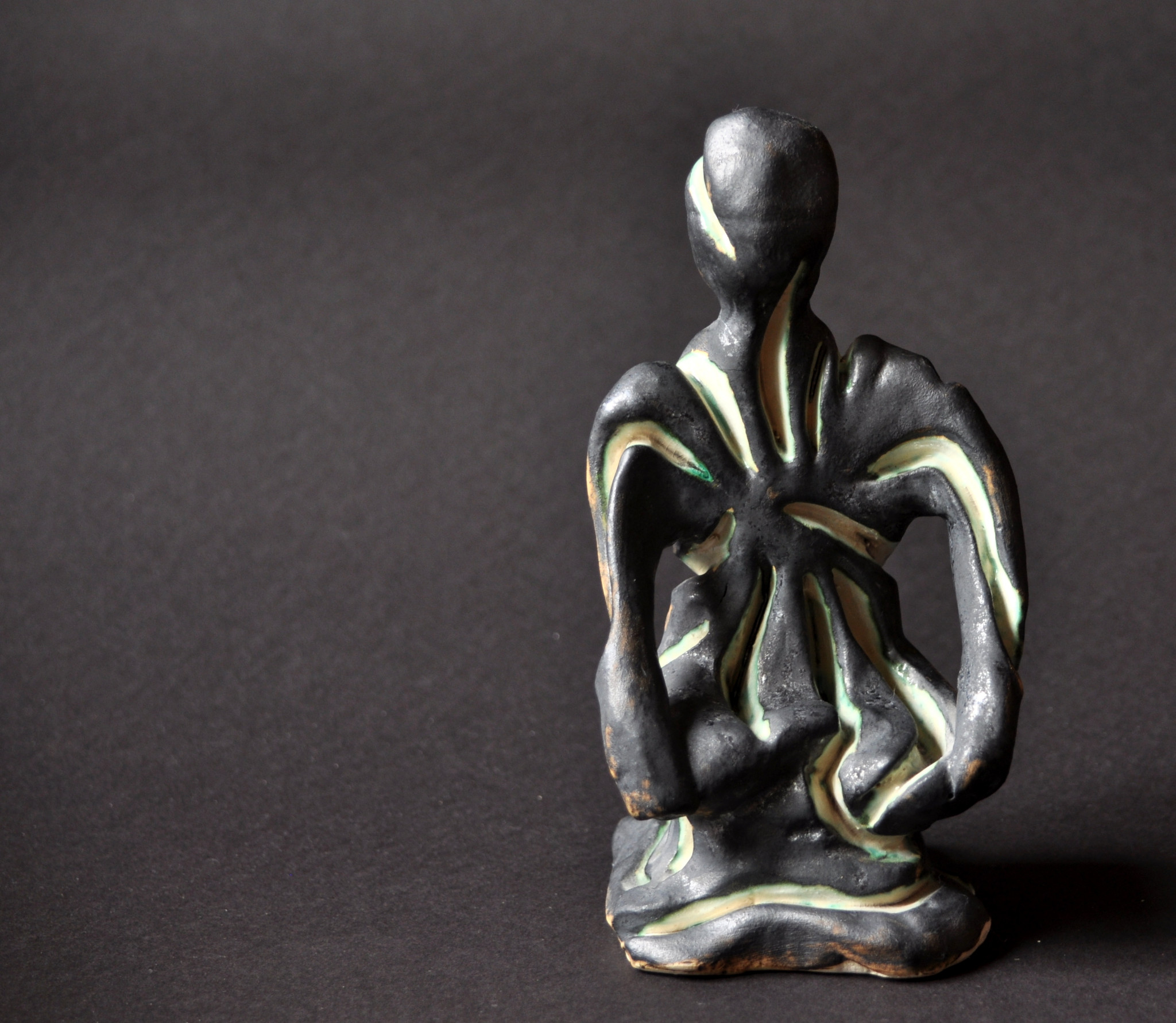
Puppet - Clay, glaze and smoke technique

Puppet – Clay, glaze and smoke technique

Untitled - Red Clay

Untitled – Red clay

Untitled - Red Clay

Untitled – Red clay

Hug my self - Red Clay

Hug my self – Red clay

My Memory of Siberia - Red Clay

My Memory of Siberia – Red clay

Fire - Red clay and wax

Fire – Red clay and wax

My brain, my cage - Red clay

My brain, my cage – Red clay

Untitled - Red clay

Untitled – Red clay

Artist: Matías Sierra

I was born in Argentina and my first contact with art was at school when I was six years old. At nine I began to work at an art studio with various media: paint, ink, charcoal, clay, etc. I developed a surreal style from the beginning. At thirteen or fourteen years old I worked almost exclusively with clay and I continue to do so. My artwork centers around the body and its parts. In several of my sculptures, the hands are the main subject. I can’t give a reason for this. People always ask me why and I never have a response. Some ideas for my work are born from my own life experience or feeling. Others are simple ideas.

For the past seven years, I have lived in Montreal, Canada, developing my artistic career. I did my first solo exhibition two years ago and two others with my studio colleagues. I am self-taught. I don’t have a background in art studies.

You can view more of Matías’s work at Devianart as well as his “Esculturas” and “Under the Skin” albums on Google+.  Contact him at matias.sierra@gmail.com.

Swimming with the Helix in Laughter

by J. Celan Smith
Images by Melissa D. Johnston
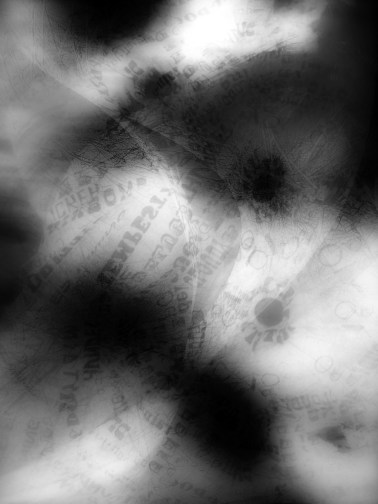
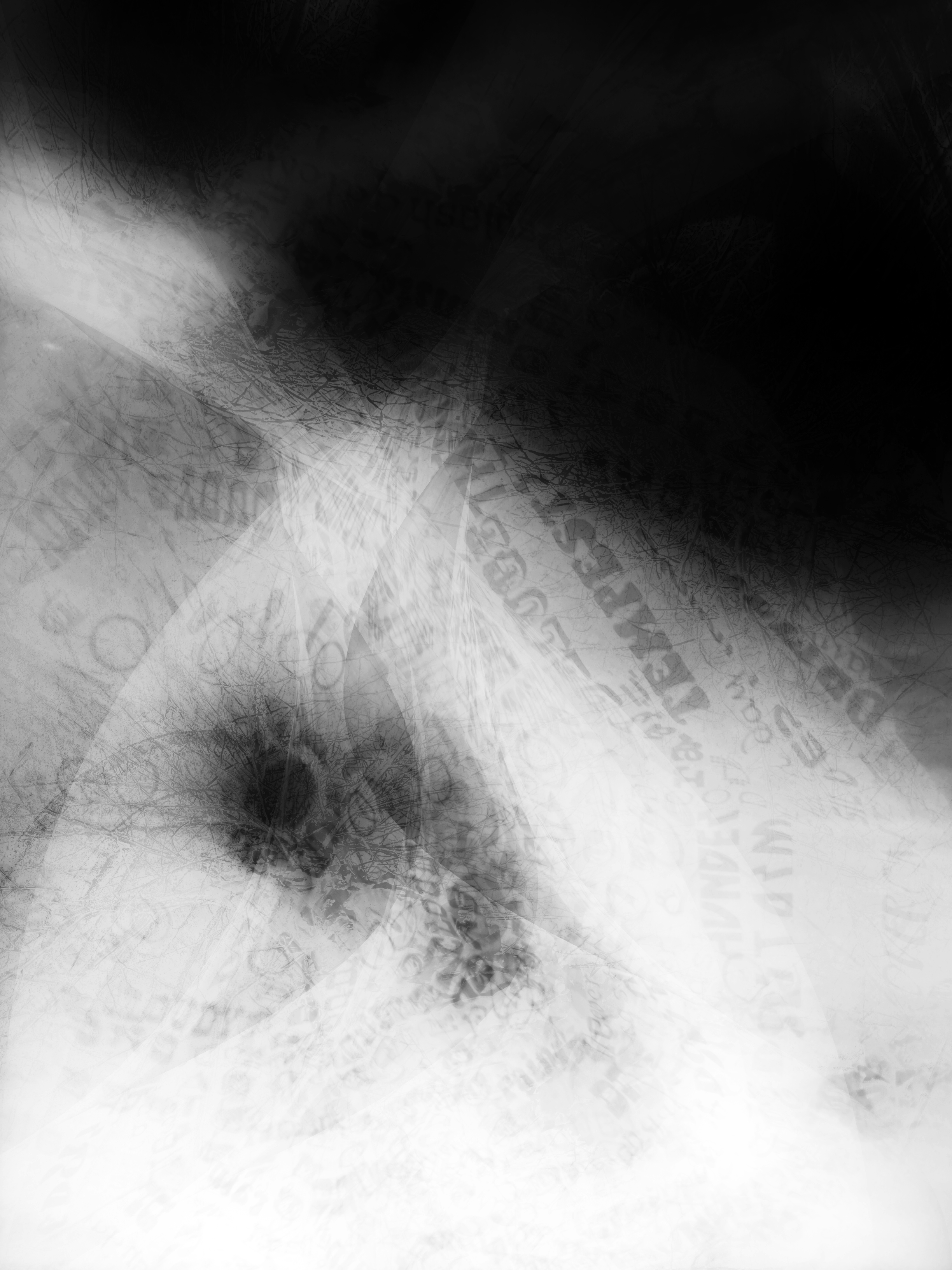
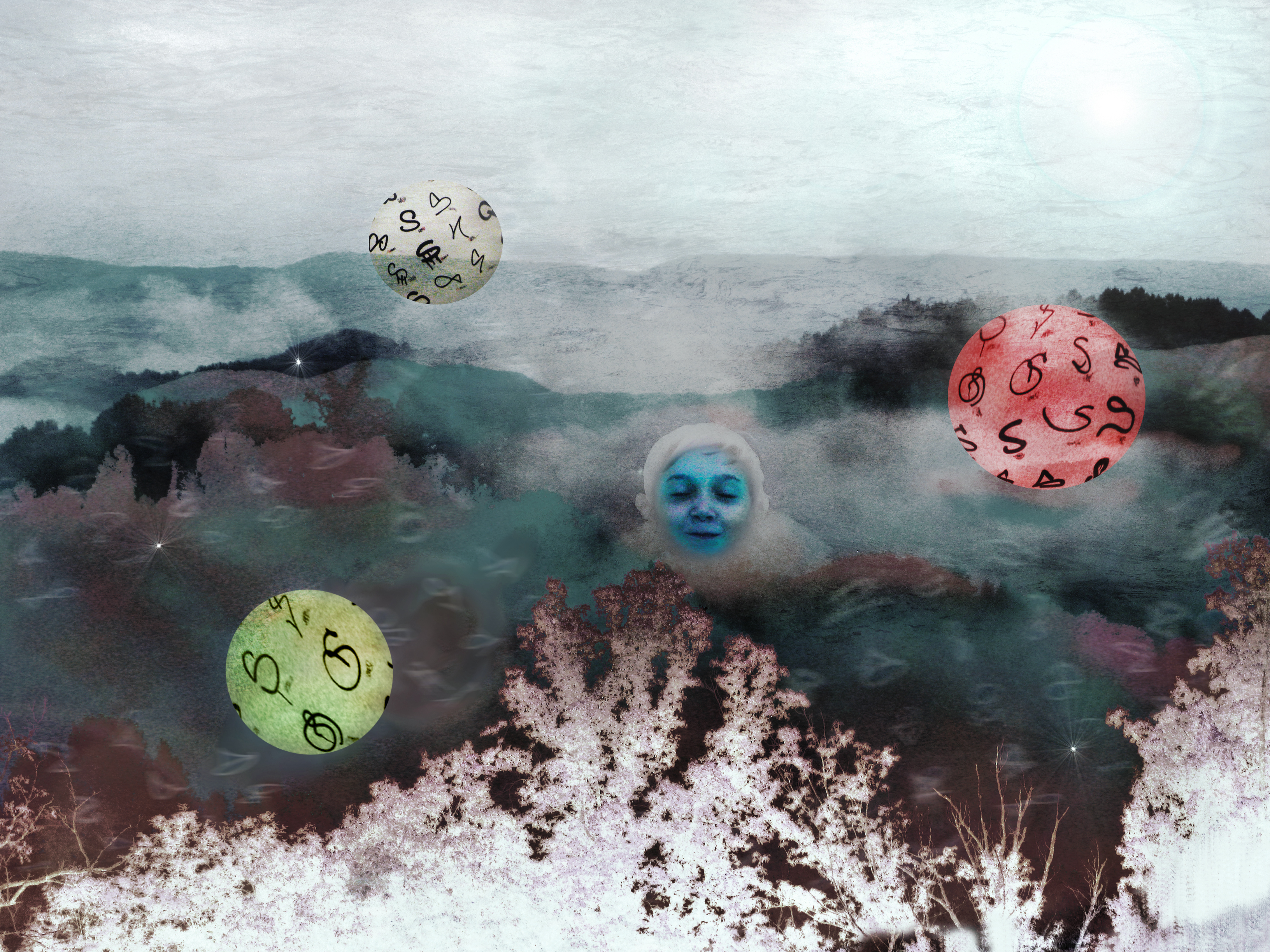
helices, enigma ii: imaginary borderlands by Melissa D. Johnston

helices, enigma ii: imaginary borderlands

I. Others: with

They are there, with us, creatively marauding our solitude. We carry them like extra hearts or like a bowl of sour fruit. It depends. Yet focus on the precious and everyday. From outside, where they meet us, we absorb them. Their forms, their words. Interiorized. We enter, joining them to our twisted strands. From then on, we are intertwined.

Maybe just an inner blimp of memories, their existence cruises in and out, never leaving our cardial space. Our lake grows full with their water. Not just any other: the important ones. Thin or plump, jocose or reticent, tough or tender. Often we swirl with them, eddies coyly dancing. Gradually, sometimes, they shadow away, tides leaving tiny caves like crab-peck in our sands. Where? We wear their skins as our own, cloak upon cloak of other lives placed in layers around us, whether we love or hate. To ourselves we seem made of this agglomerate, patchworks of influence, variance like stars of different color and size, which we sow as texture together into woven tapestry. Merged with them, we are quilts reflecting some story. As if all, unexpectedly, suddenly, participates in the magnitude that domes us, our carapace, testitudinous and hardened, this world, whose living eaves we try to breath under. The shell does not hold us up like Japanese mist, but, encompasing us, it communes with us. At times, a breeze that barely touches; or inundation, erotic immersion. The strangeness stays. We are exotic as those arenas of ancient beaches we’ve heard about out of which blueberries and mangroves grow. In the distance, a seascape armed with swimming dolphins, drifting islands.

Our territory is elsewhere, isn’t it? Even in the with of another? No surf of sameness, like docetic ideas that refuse to stroke us unless we pay homage to intelligence. But beyond the abstraction and tedium of days, past routine and hours of immutable scenery, something more fluid and special may surprise us. Laved expansive in bursting waters that froth and lose their calm, until we, within the swell of such a miracle, start to gambol like morning ducks in the river’s white rapids.

They encounter us. Bodies that crest against our shores. Interpolations that heave in the static painting. We receive, when thrown back. Modulations that brush our picture. Touchable symbols, enfleshed mysteries. The other approaches from elsewhere, body draped in linen, dripping and singing a stringsome song. The oracle appears in every day. Message shines through eye like light on falcon’s wing in afternoon, afterthought coming through the arched window of some red temple in wilderness. Tokens from faces opaque, not angelic, that spin horribly with tidings we can no longer decipher anymore. Though mostly the other has wiles where play their secrets.

Everything, he says, is matter. Even the intangible, the hidden. Ideas cast smells like clay on a shovel tip. Spirit has its perfume. Not will or power, but heart it is that rushes out to greet the foreign. We have often forgotten. Aren’t we, here, all so much steam and sameness? Driving the same teams of wind? As if it required an opposite of impassible alterity to discern something to praise! The screens teach us what to be, if we let them. We act as if eternal tomorrows will greet our vision. Are we listening with cupped hands to the absolute as it crumbles into ocean? To that cataclysm, the mountain that dreams of drowning? Or an island that wants to be a fish? Are we afraid, so afraid, of the real that we pretend, by virtue of the virtual, to be other than birds who are terrified of air? Or hoping, desperate, as if something might change, do we pray, do we still pray at all? Do we seek the bolt from clear source, levin from vacant blue? Run into summer freak! Tell me if it is incorporeal! That once our sky has unseamed itself for aperture and promises no regression, but passage through. Or once the earth has shattered upwards, that fall into soil’s gape that will take us to the wonderland of the Real.

Together is our desire. A dwelling with, a relation. Far from hermitage, beyond those nooks of seclusion where for a time we gained our strength to know minuteness, our presence, our humble roar. Only we, enthralled to rich pools and practices of protections, unopened until the blackness engulfs us–too dense for the frivolous–we neglect to notice. With daedalian smiles, blind and wicked with mazes, may we rise to the closer thing in our midst. In love to what is worth loving, in a kind of wafted waiting, ceding no place to amusing trickery, we thrive. For it arrives as we stop and stand on the station, the scent of juniper and sage smacking our paused faces, on a platform which moves toward the slow train.

There is no knowing, but travelling headlong into the other’s enigma. Expressions, like the width of unknown galaxies, that are indecipherable. Every favored moment, heightened with elation or dampened with depthsome wail, is a telling of the uncrossable. Let us adventure, nonetheless, across the gap! Let us plunge forward into people we so little grasp, the obsidian scepter of our gestures held as passport and talisman before our chests, one to another, trying to speak with exotic signs. This is what time gives, if anything. Our wisdom should take us to such baptisms by ice and by fire. Through, we draw nigh. Through, and with, gathering our thumbs like thread pushed through a needle, we poke the unillumined space, paradox of shimmering darkness on the other side, and it is our laughter, that may never subside, that carries us in the smoke, wild as mustangs haunted by barn burning images.

I can cross to you, if we aren’t mistaken.

Few survive the atramentous dive it implies. But I am mistaken, always.

Mostly, we wander, uncrucified.

Imagine us: trying to be-with-others. We walk along a ledge at the melting cap, shoed in plastic on margins of ice. Slick ground of rocks glares up, desires so coldly to slip us over. Stable or unstable, relation works in friction beneath the glittering facade. At night, there is always a threat of more snow.

Elsewhere inside this world, a place of real contact. It is sublime or transcendent, both extremes at the intersection with here. A nexus. The meeting point. Between home and exile. Its distance, illusory yet immeasurable as dreams, for seemed difference obscures the real of otherness. You, not you. I, in body or out of body. As if any knew. We feel. There are motions sometimes, and rests. Our senses reach to hold. That is their nature. There is grit in sinews, a nervous shiver within the coils. Are we capable of being-with? Even we, who have “been with” for so long? Can we make the coil safe from unravelling?

I’ve seen colors, as yet nameless, fly out of the hearts of beasts and beauties alike. I’ve heard a rain of sirens from tongues that tried to spit what it was. The moments know no words, just a music of despair or elation, just a silence whether bored or delighted, for to utter what happens is memory, already behind, fleet and gone like a ghoul’s grin when the light snaps on.

So it seems best, mostly, to stay sacred, doesn’t it? To remove, purify, simplify. To eeke out at the borderlands of suspicion and censure, where the weird life can be condemned only from the loud center that needs its noisy judgments. To believe elsewhere, in the real matter, where love is tolerated and poems bloom with seeds of strange insight! To heft the weight off and levitate! Where is this harbor? Where, this carrefour of ships’ encounter at dusk as the owl takes its flight? Innocent, we wonder with unminced gaze, no anger that would burst the quiet incomprehension. We let sacrifice in silence answer the inquest. We can give little more. I’ve taken no bridge from here to there. The chasm requires that wingless leap, unballasted, unstructured, into air. No reverie of thoughtful contemplation, no past-time buried in nostalgia, but the pure canteen of experience nectared into our mouths as the virgin taste that it always is. For it occurs but once, once only. Then somehow, over and over again, drawing soft streams each time from the rock’s authentic eyes.
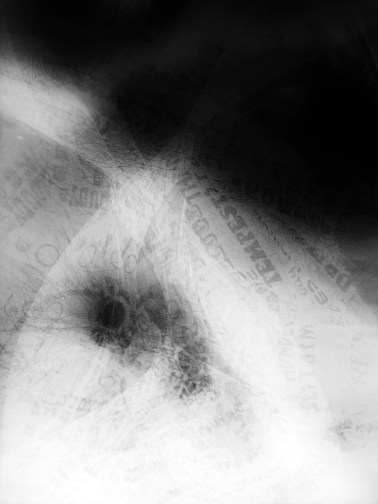
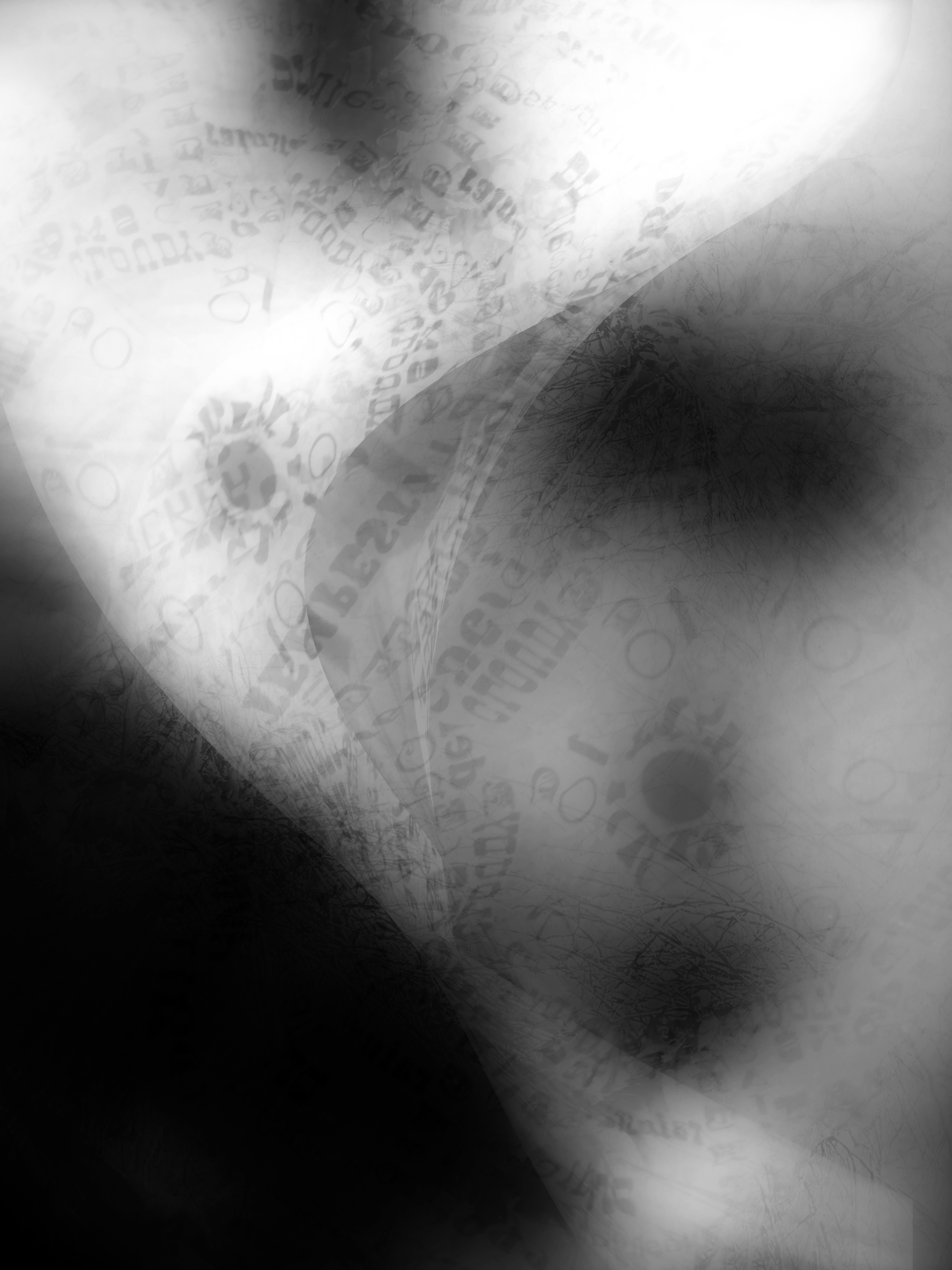
helices, enigma i: fragility

helices, enigma i: fragility

II. Nature: between

Who knows if owls cross into day when their eyes are more rapt with blindness? Or does the tree provoke winter’s end, that cold wedge, as its roots empounce those stones like a spider’s meal? Nature, the destroyed, destroys with patience. It shreds the bones around softened minds, sensitive sheets plinked to shards like tempered glass clashed against a callous edge. False orchards are built of thinking stone. So let us forget to think and hike! Down tumbles the calamitous veil, made of mineral, pulverized to dust where once it hung, deliberate and inflexible around every still object. We cannot move without its first moving. It must crumble, seducing us to selves that stand in witches’ broom or that laugh like medusa’s feral heads as we collapse madly in an orchid’s violent clasp.

Do my eyes deceive me? Does the river churn around tombstones? Or is it dead already, silent and dried before the bodies of giants were ever buried? Not morose, but splendid! Its face gleams with grandeur as we peer from towers we have not erected. Such vistas take effort to get to. Austerity is a forgotten pattern, except in the strong who venture out, hungry for life. We stepped up ladders formed by labyrinths or rhizomes while a mountain grinned in the distance at our slow progress, its white teeth dangling in wide mouth that as the day grew warm came crashing in shrapnel around its bluffy feet. Nearer, ice onions sprouted, and, inside the walls, frozen tadpoles began to wriggle free of gelid coffins. Upward, we trekked as though ascending pagoda, some built inflorescence on the upper crown of earth’s stalk where sanity is exchanged for sanctity. What worshipped there once, on ground the gods would walk? I heard them, holy yet talking! A chorus of mighty feet! There on the tall ridgeline, summit of enchanted encounter. I saw them among mossy gardens that kiss all stellar nights! Who venerates these totem deities that sway untoppled, apex beyond where wings would be needed to go higher? There where worlds end and begin, interwoven, a bay of crosscurrents to give us intercourse. No wonder the priests made ziggurats. Here, we have our temples already made. Yet have we the courage to climb into suspension, a thin lamina, string of silence swinging us between two spaces? Can we cease to talk and start, in that caesura, to listen? Let us elide ourselves. Let our tongues become dots that signal disappearance, erased from the noisesome fray. Maybe vines will take our judgment, haunted with urban excess, with selves at large, void and vain, taken into verdant lairs where insects sleep majestically, curled like dreaming pixies. Something other than us or than keening erinyes will cause our skin to quiver. Something like a different voice beneath new maps of blood, capturing that frontier “invisible” as we tremble at the gateway, hesitant always, knowing nothing to do.

Beauty and terror go hand in hand, don’t you feel? Whether with us or between nature. Complexly muscled, its sources ripen our human fruit. But we are stricken at what we may lose. To us, the valleys seem as lost rivers branching out, discovered but never understood. Let us hike into the between! Let us go while there remains that mystery of the pristine! Peerless, it does not match our concept. It is impulse, rather, and attraction. The wild things, arcane and fascining, are nature’s wish for visitation.
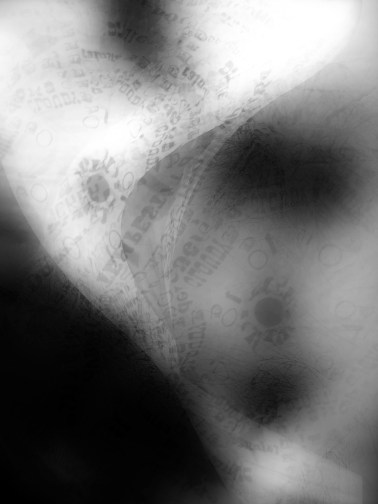
helices, enigma iii: breathless breach of reason

helices, enigma iii: breathless breach of reason

III. Enigmatic Levity of Laughter

Must we sneak our way into essence? Not ours, but the other’s, if possible? Can we, from essence to essence, puncture the membrane between particle and particular, pulling back the excess like tape? Surface ice, the other is excrescence that grows around us, adhesive body flung at us from objects we flee or swarm. Like bees. Beeswax and honeycomb. The self in its coat made of hives. And with, are we capacious with that width which goes from mind to deeper hosts? I feel you. I “see” you. You are there, specific and glowing with touchable pieces, nothing generalized but distinct, unique with breath of unknown flavor, with soul of mysterious sound. Your aroma, which I inhale, my partner, is the scent of flowing fragmentation. Sympathy is not right. You humble me because you are different. If you thought of me as enigma-breaker, as code-cracker, grant me the status I seek in you. One who has another set of substances, not here, elsewhere, more proud than my lips could manage. Grant a similar lenience, license to explore what the wizards that sing at the fringe of dark forests dance to. Within expands a form too subtle not to make us afraid, too bachanalian not to fascinate with dread thirst as the storm pours forth its slashing rain, strummed against this strangeness where another “I” stands as witness to the natal moment. My ears are listening for an unvirtual hum. My eyes, steadfast, do not sizzle. They are cracked as though blessed by drying wildness. They ache against the space between all things, illegit, imposed, ruthless space, between, where immortal films of added light keep imploding the abyss. Eyes full of fissured recordings like omni-chromed darkness and the stars of illusion within it. With each approximate knockout, the vehement blade of shadow, tenebrous and timid, darkles until the sway of visions returns the sky to its original, tranquil chaos. All things inside are rutilant with brilliance. The breathless breach of reason unknots our laced souls. Let us celebrate what we are unable to admit: between us, a boundary persists.

At best, the curtain parts, ever transient, at points along the way.

Laughter comes, marking this:

With one another, and between nature, we fertilize the helix we must become.

————
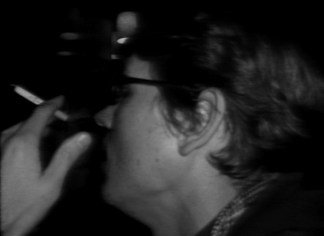
J. Celan Smith

Photograph by Valerie Streit

J. Celan Smith is a global nomad whose novels and poetry have been published at Smashwords. He studied psychology, philosophy and religion in graduate school before turning for reasons of truth to poetry, love and beauty. Currently he is working on a non-fiction book about the history of beautiful words. He makes his “living” in landscaping where he can exist outdoors in the fresh air, close to birds and stars. He currently resides in Asheville, North Carolina.
Spotlight: An Interview with International Dancer and Choreographer Nicola Ayoub

Nicola Ayoubby Melissa D. Johnston

I first met Nicola Ayoub as the spunky pilates instructor who kicked my butt in class each week. I learned quickly, however, that her passion, talent, and determination weren’t confined to being a teacher at a pilates studio in Atlanta, GA. Nicola was a gifted dancer who had trained and performed with the Atlanta Ballet. In addition, she worked regularly with Full Radius, a modern dance company. Now she was moving to France. Where she would dance. Period. (Even if all the hows weren’t worked out—yet.)

And dance she has. In the seven years that she has lived in Paris, Nicola has become an award-winning, international dancer/choreographer. She choreographed a bilingual one-woman show dealing with self and cultural identity, “The Language,” which was awarded Paris Jeunes Talents in 2008 and first place at the Parisian choreography contest Tobina in 2009. She’s toured Milan, Berlin, New York City, and Seville as well as performed regularly in Paris. She represented the USA in UNESCO’s 2011 production “Astro-Ballet” and traveled to Banjul, The Gambia on a Fulbright grant to work with the country’s first theatre troupe. If that weren’t enough, she also began a dance company, 3 D Company, with partner Guillaume Morgan.

Nicola’s work is fascinating, creative, intelligent and powerful. Her positive attitude towards life and the pursuit of her dream continues to inspire me. I am honored to have gotten a chance to speak with her recently.

When did you first realize that dance was your passion? How did you decide to follow it and what keeps you energized in its pursuit?

I always wanted to perform. My first memories are of making up little song and dance numbers pretty much anywhere and for anyone who would watch.  I was 12 years old when I realized that dance was my passion and that was the thing I wanted to do with my life- be on stage and shine for the audience. Thus, at 12 I decided for myself that I would audition for the Atlanta Ballet’s pre-professional program. I called and planned my own audition, did it, got accepted, and then told my parents that dance would be my life. It is still the performing on stage that keeps me motivated to dance. Also, the chance to learn from other choreographers- their movement languages and ideas. I am always learning and hungry to learn more in this creative job.

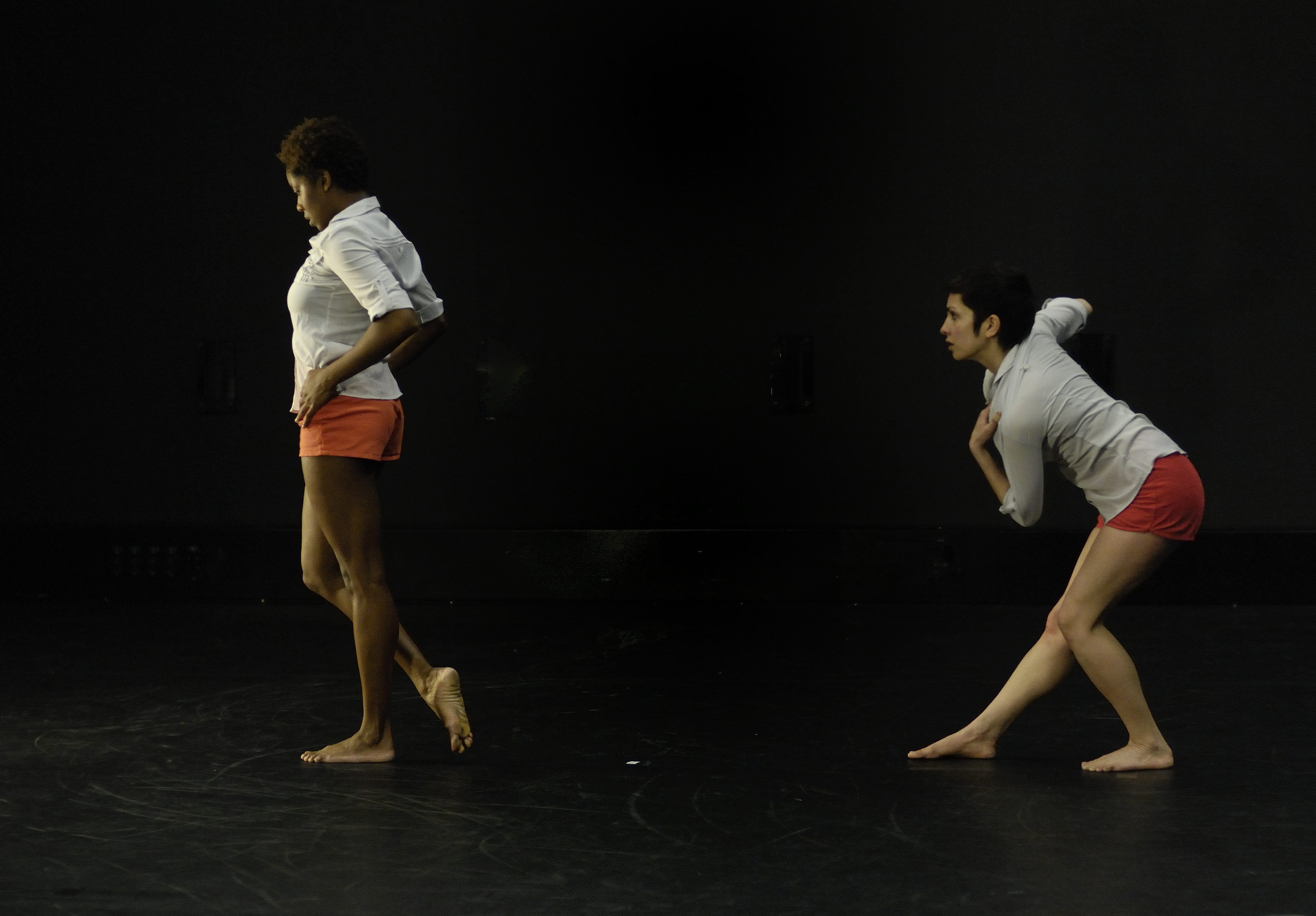
"What I thought I knew" (duo with Asha Thomas)

“What I thought I knew” (duo with Asha Thomas)

In many of the dances you’ve choreographed and performed, you deal explicitly and implicitly with identities that are hybrid, “in-between,” straddling the borders of culture, language, and nations. “The Language,” a bilingual performance in which you use words, music, and dance to share the joys and confusions of an American living in Paris, was first inspired by your Lebanese heritage. In “What I Thought I Knew,” a duo with Asha Thomas, you both draw from your personal narratives to explore the internal realizations and revelations formed in living away from one’s home. Has the creation of dances and their performance brought a new understanding of self- or cultural- identity for you? Has it changed the way you think of the concept of “identity” itself?

Yes and yes. Self and cultural identity inspires all my work. Living far from home made me reconsider my values, my past, and who I am now. The story for “The Language” was my autobiographical experience as a foreigner in Paris and a lot of the clichés that go along with being the overly smiley American here. In France, I felt and still feel very American, but when I go back home I feel a little out of place, like something is missing. I’ve lived in France long enough that it will always be part of me too, an added layer to my identity. It is true that the original idea for “The Language” stemmed from my own identity questions about being both Lebanese and American. Until my first trip to Lebanon I was always proud to say how Lebanese I was. Then finally visiting my paternal country I realized just how very American I was/am. I think more than blood, where you grow up, what language you speak, your education, your travels, and experiences shape the person you become, in short, your identity. Through the creation of dances I’m finding how identity is also something malleable, time and experience change parts of you.

Nicola Ayoub

In “The Language,” you say, “My language is a system of symbols so that I can communicate to you my yearning, my yearning to understand and be understood.  Words alone cannot convey to you how I feel.  The body tells much more.  Les mots parfois sont inutiles. And words about the body are never as illustrative as body language by itself!” How do you think words and body language function differently in their symbolization? Do they tap into different symbol systems? I realize this question may best be answered by seeing you dance and perhaps also by we, the readers, becoming more aware of our own bodies, but perhaps words can catch a faint glimpse of the difference.

Body language tells the truth; it has weight and substance. Words can be strong too, but they mean nothing if the body language with it is false. For example, I could say “I am so happy you are here. I welcome you to my home.” Sounds nice, but imagine me saying that with my arms firmly crossed, shoulders up and tense, jaw locked, and legs squeezing together and you would definitely know that my words probably meant the opposite.

Dance is a universal language. In my opinion, open arms, a twirl, a hip sway- all that is much more inviting than the word “welcome.” For Atlanta readers, the perfect example of such a warm welcome is my Uncle Nick in his restaurant Nicola’s.  You see generosity come to life through movement and music.  Incidentally, my uncle is also my biggest dancing hero.

I totally agree about your Uncle Nick! I’ve had the honor of experiencing that generosity–and of taking part in the wonderful dancing there as well.

You’ve performed in “Astro Ballet” with a multi-national cast at UNESCO in an effort to promote the peaceful use of space through dance. You’ve also spent two weeks in Banjul, The Gambia, working at the Ebunjan Theatre with their troupe to help create and perform “Mystical Strings” and give the first modern dance show in that country. Could you say a bit more about these experiences? Do you think dance can really have a role in helping people from radically different backgrounds and experiences understand and relate to each other?

Yes! As I said before dance is the universal language. In the “Astro Ballet” the other dancers were Russian and spoke very little English, however, they all used classical ballet vocabulary (which is French and used by all ballet students worldwide) so I knew exactly what they were talking about with phrases like “arabesque, glissade, grand jeté.” Technically, the piece was very ballet based and we all shared the same vocabulary for these moves so I had no problem learning the steps called out or working with the other dancers. For the project in Banjul, the students had no formal dance training, no terminology so Asha and I had to be clear with our own movements and ask them to copy us. They learned some in this manner, but the first two days we thought they would never catch on to certain basic modern dance steps. Then we asked them to improvise to live drum music and WOW we saw some amazing natural dancers. Once we saw what their strengths were we could incorporate these moves into the choreography too so that they felt comfortable and then add new steps on top of it without frightening them.

I think music plays a huge role in this process as a guide, support, and inspiration to the dancers.

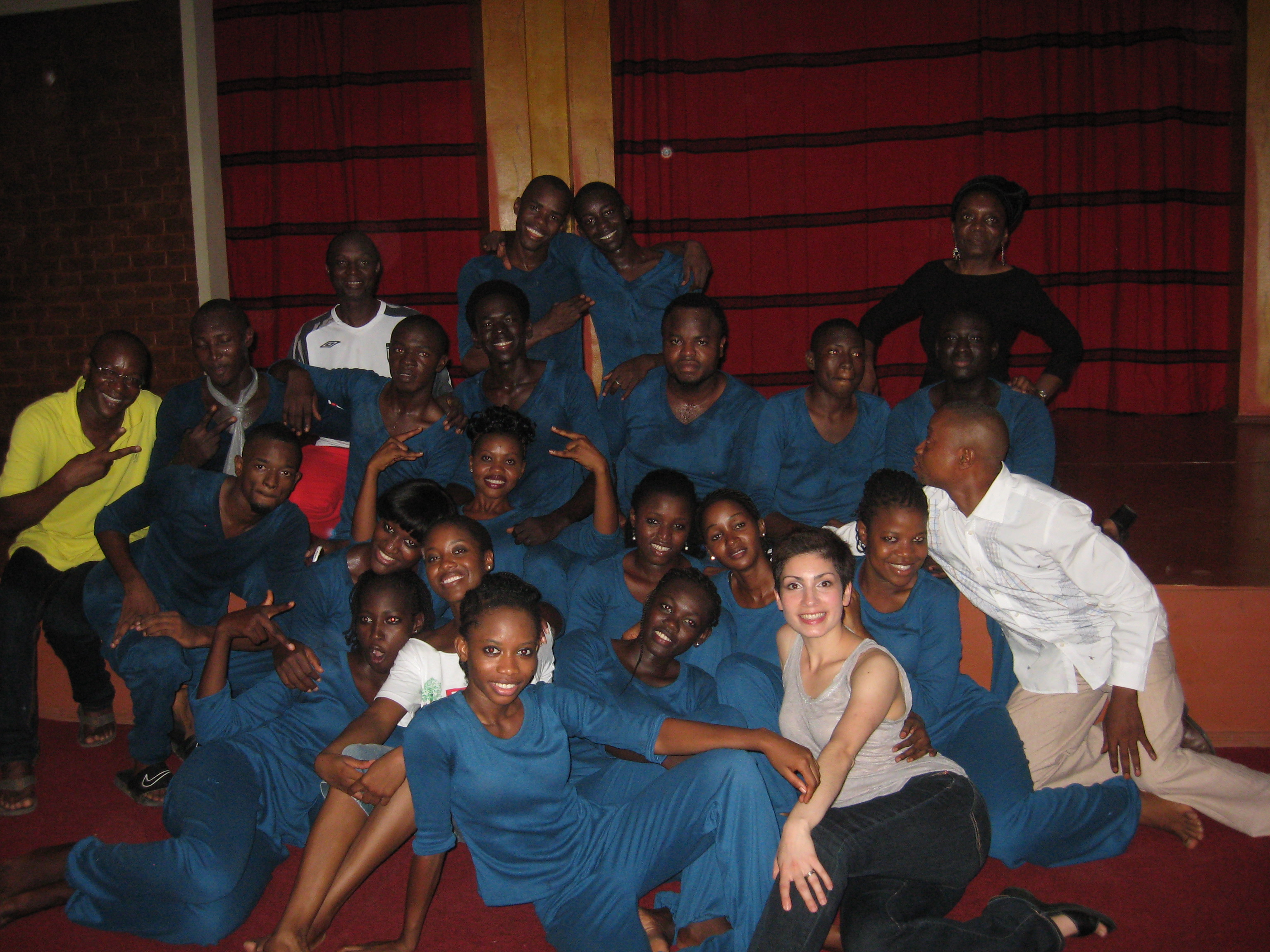
Banjul students after "Mystical Strings"

Banjul students after “Mystical Strings”

What are your current projects? What are some of the projects you’d like to pursue in the future?

This spring I am performing with the company Karma Dance Project (works by choreographers Alexandra Bansch and Gigi Caciuleanu) in France and Italy. Also collaborating with Greek choreographer Taxiarchis Vasilakos for his new creation “All is One.”

Specifically for next season, I want to expand the duo Asha Thomas and I started last year “What I thought I knew” and get it programmed in a Parisian theatre. Generally, I would like more choreography outreach projects abroad like I did in The Gambia. I’m hoping my dancing future will give me the chance to travel even more, meet new people, learn new dance styles, and share my own experiences.
You’ve been very successful in living your dream. If you had one thing to say to artists struggling to follow their dreams, what would you say?

It takes so much longer  “to make it” than you think and that is hard (the repeated rejection, the waiting, the lack of money I know it all well). But if you really want to be an artist, if you are starving to perform then persevere. Yes, perseverance will be your best friend.

***A wonderful update: In July 2013 Nicola and her partner Asha Thomas will be participating in another dance outreach program in Contonou, Benin, sponsored by African Regional Service (US Embassy).***

“The Language/femme fatale solo”:

UNESCO interview for Astro Ballet:

Accismus

by Myke Johns

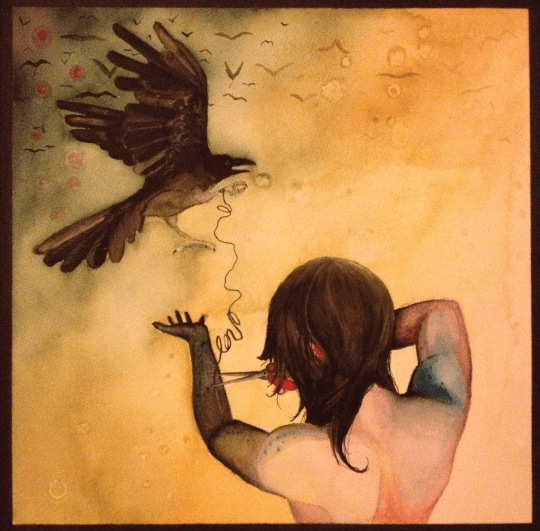
Accismus by Hilary Kelly


The crow took flight, not knowing where it was going.

 
The girl had left home in a similar manner. She had shouted that she was off for a walk, the punctuating door slam throwing up a roadblock between her and home. She realized that she had no plan beyond leaving. So she left.

Eight blocks away was the park, a sprawling green space that eddied and dawdled like a summer afternoon. The trees and grass invited her in and she followed, hoping to lose an hour.


Above, a call and black wings shook the high pines around the east end of the park. The crow pecked at some sap, bored. She walked down the path below and circled the tree, running her hand along the trunk. Her hand strayed behind her and she shouldered the pine, spreading both arms around the rough pillar. She sat down, and as she looked up and scanned the branches, the crow leapt from its perch and spiraled down towards her.

She gasped and nearly lost her balance, her arms giving way behind her back at this sudden break in the still sky. Eyes shaded and narrow, she admired the bird–watching its slow descent. Its wings were spread wide for resistance–a black blade against the green and blue above. It landed at her knees, shook its wings and cawed.

“Hey bird. Hey bird.” she said. It cocked its head back and forth, examining her with both eyes, then looked at her dead-on. “Where have you been today?” The crow ruffled its feathers and rasped and barked. “That sounds exciting.”

A door slammed somewhere–a car on a nearby street. She whipped her head in its direction. She was back at her house–where the yelling was–deep there, in the womb of her beddings and headphones and quiet music. The yelling was usually outside of her room, between the other two. She’d learned to lie low. But every time she heard her name, muffled by all the layers between her and them, she felt like a catalyst. She wanted to explode.

“I’ve been cooped up in a house all day with people who don’t like me much,” she said to the bird. The crow sat still. “They just…” She thought of their faces but could not see them. Their voices rang wordlessly through her, as incomprehensible as the call of the crow. She let it swirl around, quiet, then ease from her nostrils like bitter smoke as she exhaled. “There’s nowhere else for me to go. I’m…” she looked down at the bird. It was staring intently. “I’m talking to a bird. This is the best conversation I’ve had all week.”

The crow stretched its wings to half-span and hopped awkwardly toward her. A flurry of wings and a surprised shudder and it was perched on her arm. “Hey! Hey bird!” It fought to keep balanced on her forearm and looked into her face. The animal’s round black eyes betrayed nothing–she could read nothing in the ancient architecture of feathers and pebbled skin. The crow bent down and pecked at her arm. “Ow! Fuck!” She shook, but the bird gripped tighter, its talons digging in, drawing blood. It pecked again, this time loosing a beakful of skin. She screamed and grabbed at the bird’s neck, but the bundle of muscle and will power drew its head up, pulling a thin strand of flesh.

She pulled at the bird harder, this time yanking it from her bloody arm. It dropped her skin, but managed to snatch it in one claw and hold fast. “What the fuck is wrong with you?” she yelled, and the crow took flight, not knowing where it was going.

The tangle of sinew became wound around the bird’s claw and knotted there. At the other end, she stared in horror as the slender thread pulled from her arm as yarn from a sweater. She found herself focusing on the sensation. The tugging, the pulling away–it felt like a continuous ripping, an old scab being peeled off. The crow flapped against this anchor and pulled more. She gripped the sinew and held fast and raced for a way to free this animal from her body. A sharp yank and a screech of frustration from above and she pulled back defiantly, sank her teeth into her own lost skin and bit hard. It was less painful than she thought, like the flaking end of a hangnail, but the skin stayed firm. The crow pulled harder now as it caught an updraft and soared into the sky. Circling above her, she felt herself unravelling as the bird stole away more and more. The line of tissue travelled up her arm, around her shoulders, and down her back, pulling so fast it nearly lifted her off the ground.

As the tissue tore away from her back and she felt it spiraling away, the pain bore a new sensation. She felt a pressure between her shoulders–pounding from her spine, it felt. Her skin unraveled and thinned and the pounding inside drank in the cool air. Like mountain wind billowing into the mouth of a cave. She inhaled sharply.

As quickly as the strap of flesh had peeled away from its purchase, her skin drew taut–from the slender thread wrapped at the crow’s foot, through the naked air and down down down to the center of her back. An unpleasant twang reverberated through her chest, in sympathy with her reluctant and airborne twin. The thin line of tissue stopped, anchored right between her shoulders.

The bird was surprisingly strong as it strained at her skin. She danced in each direction it pulled as it circled in the air and it in turn flapped and bobbed at this awkward ballast. As the tether strained, she was pulled to her toes. The air involved itself with a gust of wind, pulling hair across her face and as she spat and brushed, the crow followed the breeze. There was stumbling sideways like a newborn fawn, but then her legs were carrying her after the crow. It felt as if she was being lifted off of her feet, her weight reduced, gravity losing grasp. Her strides grew longer as she ran, until she was bounding over hills with barely an effort. Was the bird leading her, she wondered, or were they moving in synchronicity? Leaping from footfall to footfall, she spread her arms, fingers wide and palms flat. The wind moved through her, swept under her and the strain on her back tugged like an invitation.

At the crest of a hill, she jumped and the sky received her. She felt only lift, only equilibrium between land and sky. The crow carried them and she looked at it and it cawed down at her. She reached up and grasped at the tether between them and began to climb, looping her ankles under her, straining to pull up and up and higher still. As she climbed, the crow took to the clouds. They cleared the treetops and the town below. The rush of cool air filled her ears. It stung tears from her eyes and higher she climbed. When she got to the crow’s feet, she held onto them. The bird looked down and opened its beak; its maw yawned wide and engulfed her. The crow struggled to fly with a girl in its belly, but inside, her hollow chest and strong arms found new homes. When she opened her eyes, she saw straight ahead, the blue of the world reaching farther than she’d ever been able to see. Testing her arms, she flapped once and her new wings beat against the wind. She laughed, and a brand new call echoed against the earth.

Myke JohnsMyke Johns is a radio producer at WABE, Consigliere of WRITE CLUB Atlanta, and the man in charge of screaming in the band Mice in Cars. He also writes things down at The Occasional Triumphant.

More Than

by Ilisa M. Millermoon

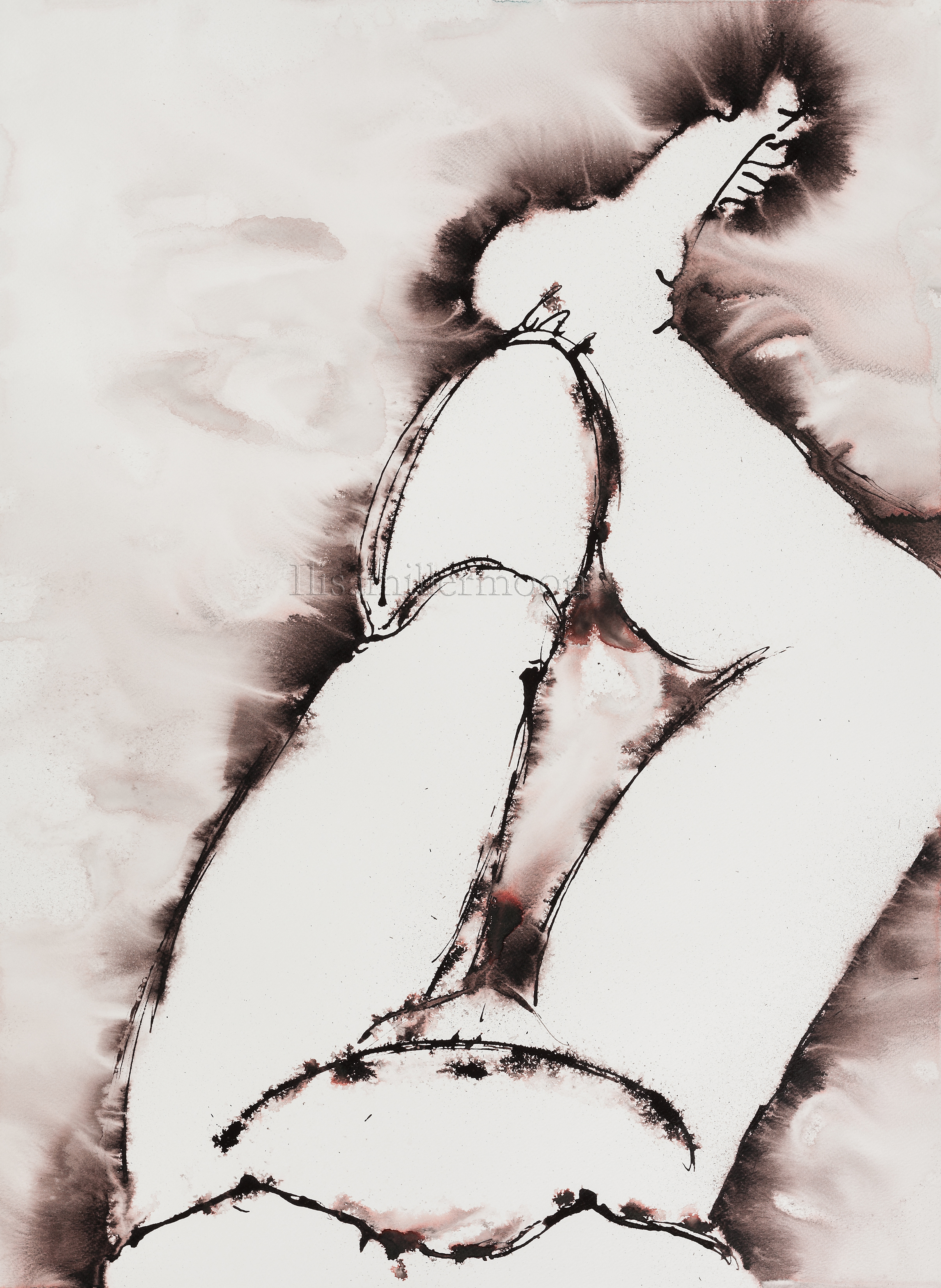
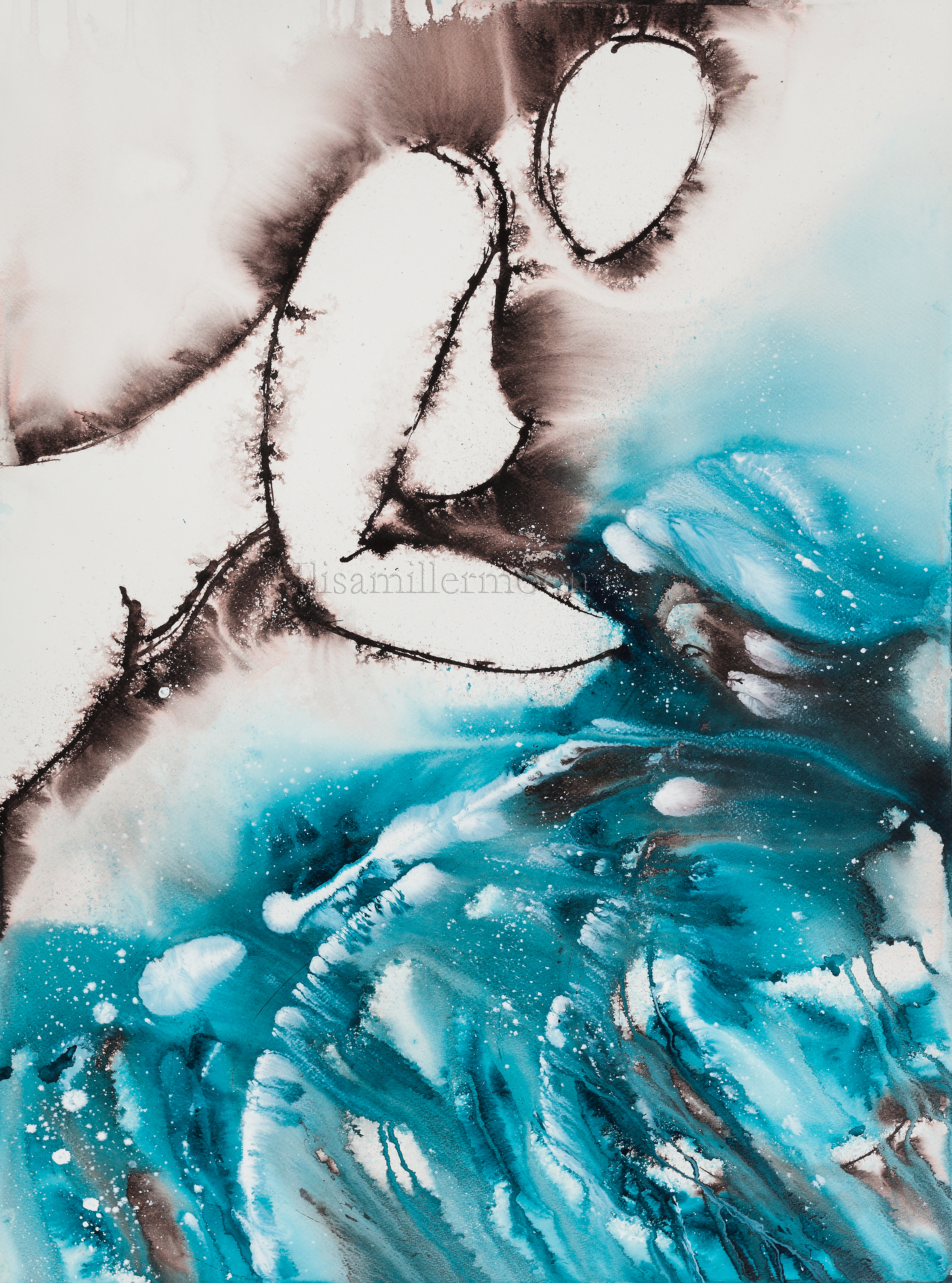
When I began painting female figures I chose to title the series “More Than.”

Ilisa Millermoon, More Than series, No. 2036

Ilisa Millermoon, More Than No. 2036

This was in direct defiance of a notion with which I was inundated growing up: women were less than.

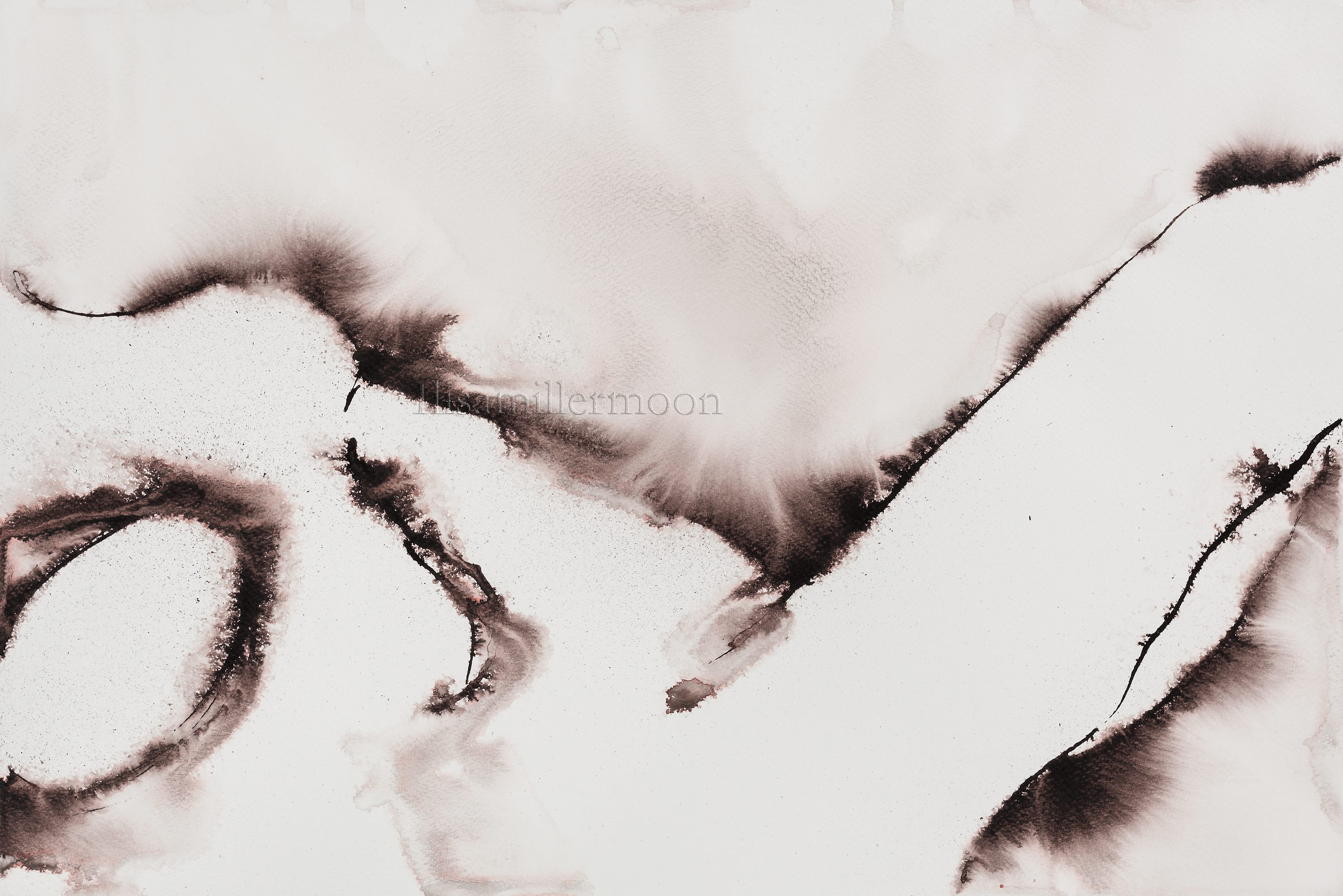
Ilisa Millermoon, More Than Series, No. 2032

Ilisa Millermoon, More Than No. 2032

We are Divine creatures with many facets. The physical is only one facet.

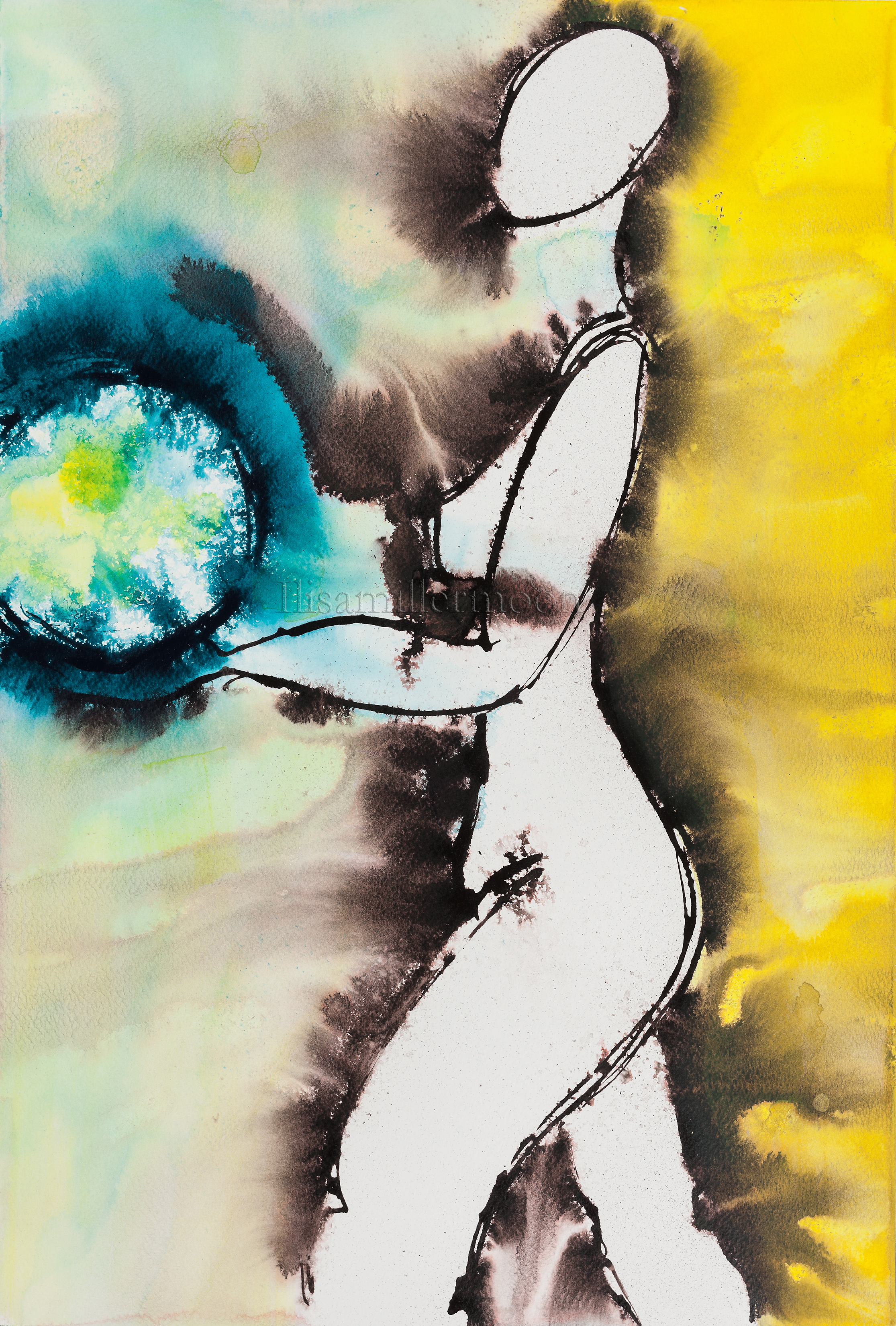
Ilisa Millermoon, More Than series, No. 2044

Ilisa Millermoon, More Than No. 2044

We are physical, spiritual, emotional, intellectual, passionate. We are “More Than.”

Ilisa Millermoon, More Than No.2049

Ilisa Millermoon, More Than No.2049

The moment we embrace ourselves as Divine creatures we know no limits to our creative expression.


Ilisa Millermoon is an intuitive energy artist. When she places acrylic ink on a piece of paper, she has no preconceived notion of what the work will turn out to be. Instead, she invites the ink to dance with her, to go where it may. The results are astounding, and Ilisa loves sharing her joy, experience, and energy with others. Her mission statement is:

Celebrating the Strength, Passion and Divinity

    of Women through Color

Visit her website and check out her portfolio at Fine Art America.


Why I Paint

by Holly Friesen

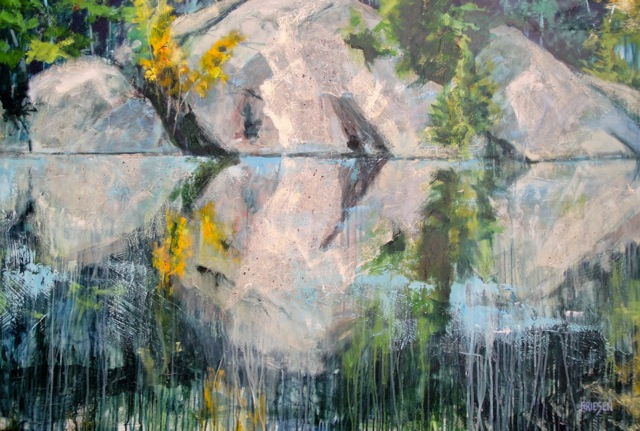
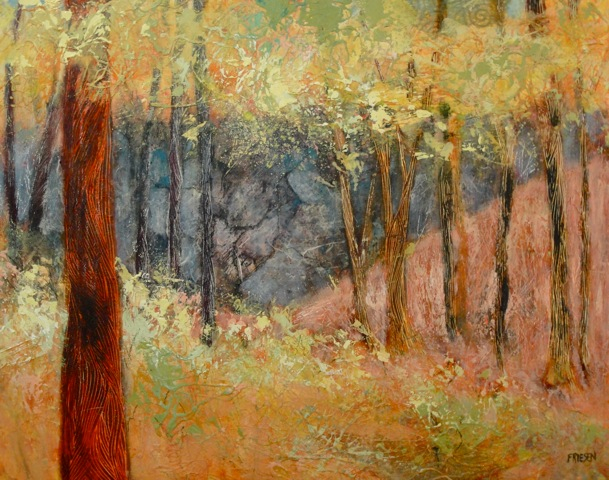
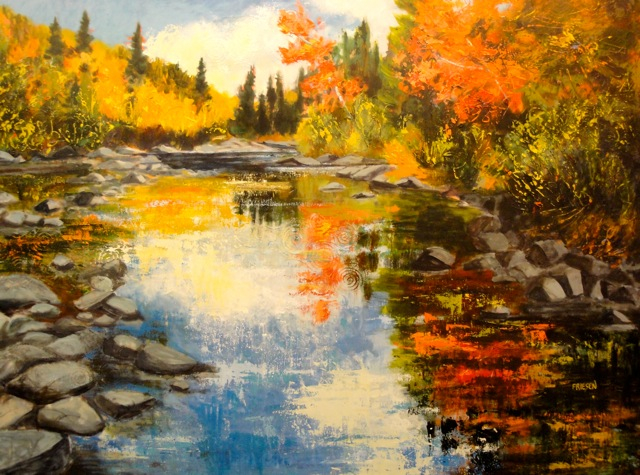
I paint because I have to.  It is like the air I breathe, completely necessary to my brief existence here on earth.  I paint to understand.  Often my mind is far behind understanding what is appearing on the canvas.  There is a body of wisdom that takes over when I hold a brush in my hand.  When I trust this inner wisdom, sometimes I am able to let go and dance with the paint.  I paint to survive.  My deeply felt connection with the earth is my inspiration and the more I listen to the stories within the rocks, trees, rivers, and sky, the more I need to paint.  I paint because I have to.

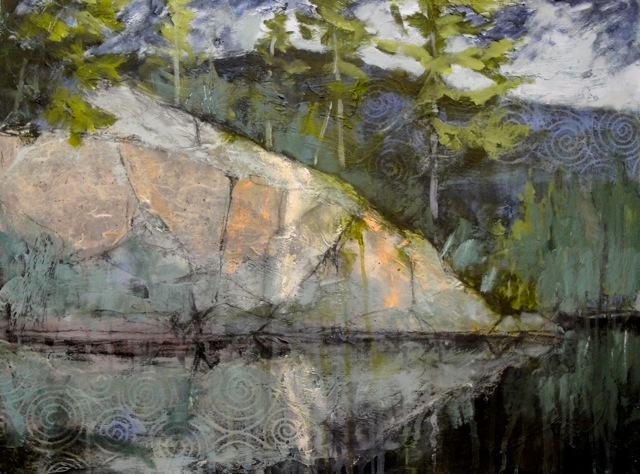
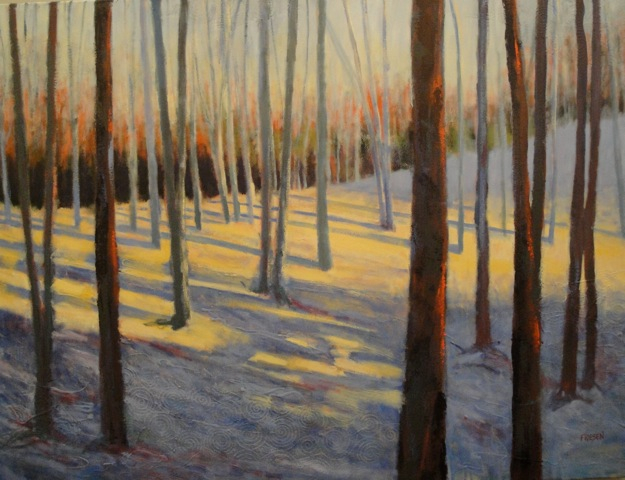
I like to work as large scale as possible because this allows greater movement and physicality with the painting. I often collage spiral patterned Washi (handmade Japanese paper)  into my work.  For me this adds a random and surprising element that says, “look deeper, there is more going on here than meets the eye.”  The spiral is a fascinating, ancient image and a primal symbol in the history of humankind.

My favorite way to paint is to choose from a rather eclectic music mix and allow the sounds to draw me out of my head and into my body.  As my mind stops chattering, colors and shapes become a visceral language and I respond intuitively following my own breath, heartbeat, and movement from within.


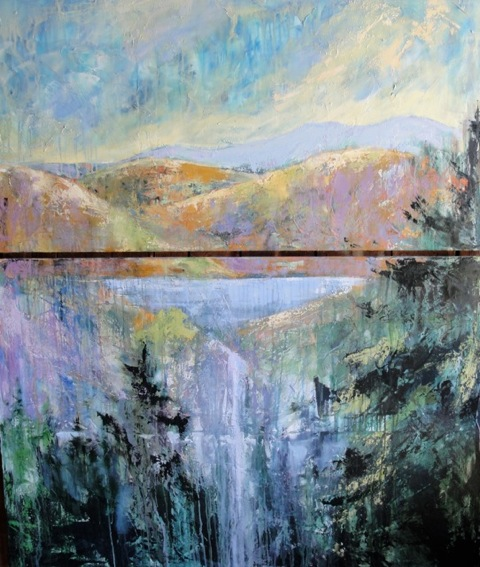
Earth Bowl - Overflow / diptych 100" x 60" / acrylic on canvas

Earth Bowl – Overflow / diptych 100″ x 60″ / acrylic on canvas

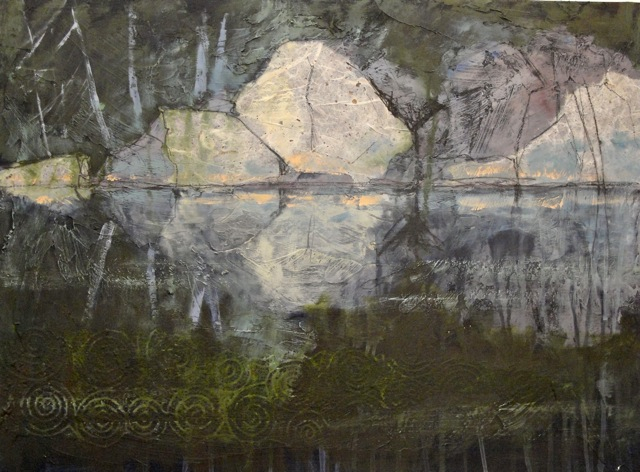
Crying Rocks / 40" x 60" / acrylic on canvas

Crying Rocks / 40″ x 60″ / acrylic on canvas

Rocks Attending the River / 18" x 22" / acrylic on panel board

Rocks Attending the River / 18″ x 22″ / acrylic on panel board

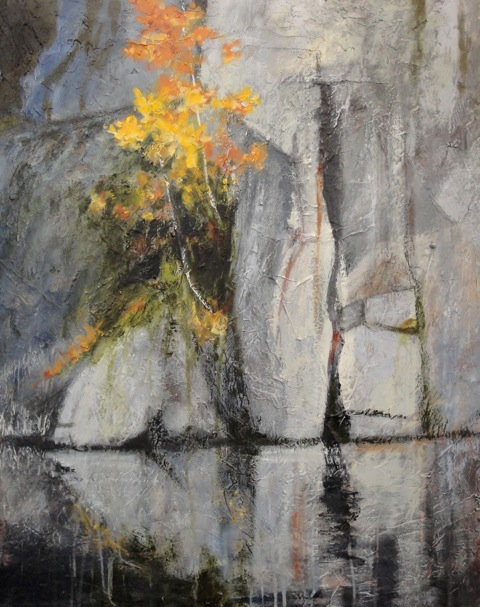
Nestled / 30" x 24" / acrylic on panel board

Nestled / 30″ x 24″ / acrylic on panel board

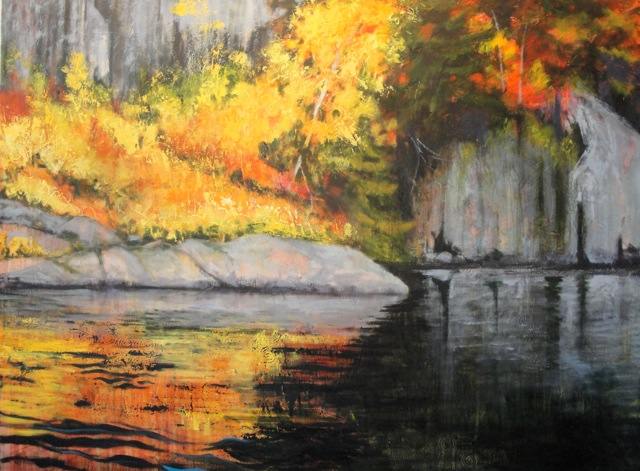
Inward Reflection / 48" x 72" / acrylic on canvas

Inward Reflection / 48″ x 72″ / acrylic on canvas

Crying Lake / 16"' x 20" / acrylic on panel board

Crying Lake / 16″‘ x 20″ / acrylic on panel board

Shimmer / 54" x 72" / acrylic on canvas

Shimmer / 54″ x 72″ / acrylic on canvas

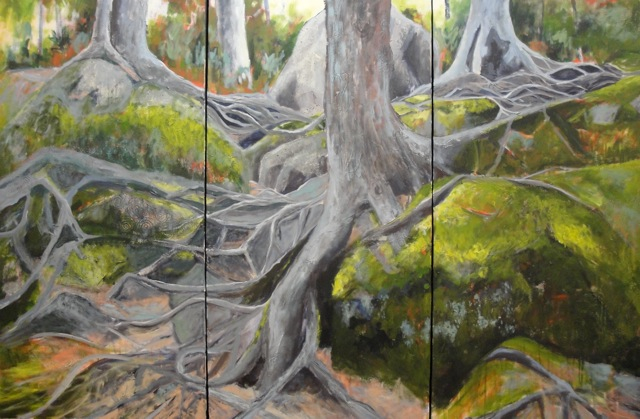
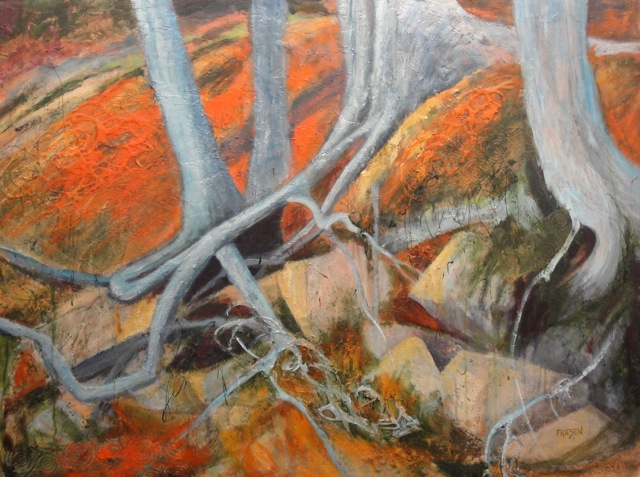
Weaving Roots of Time / triptych 48" x 72" / acrylic on canvas

Weaving Roots of Time / triptych 48″ x 72″ / acrylic on canvas

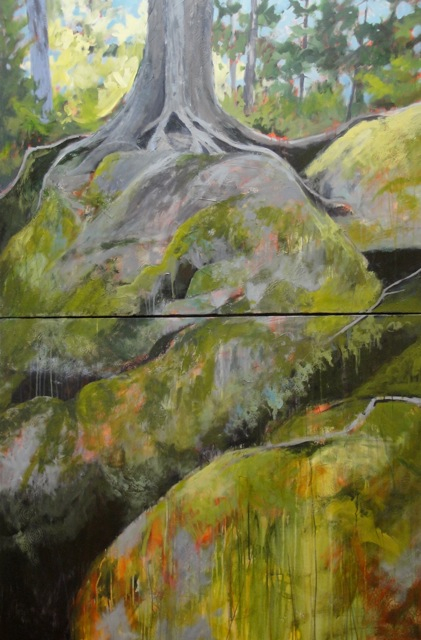
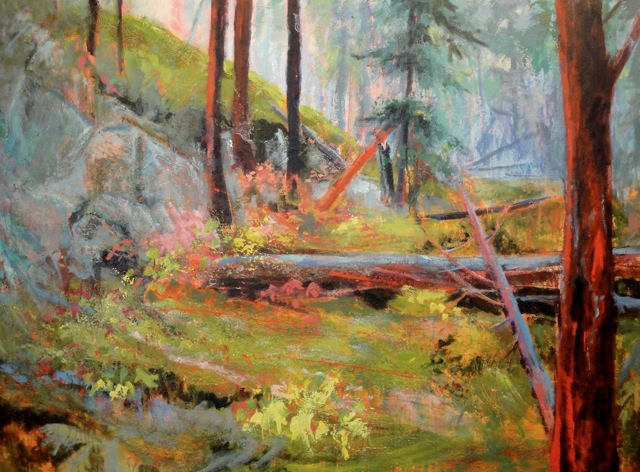
Forest Qualia / diptcyh 72" x 48" / acrylic on canvas

Forest Qualia / diptcyh 72″ x 48″ / acrylic on canvas

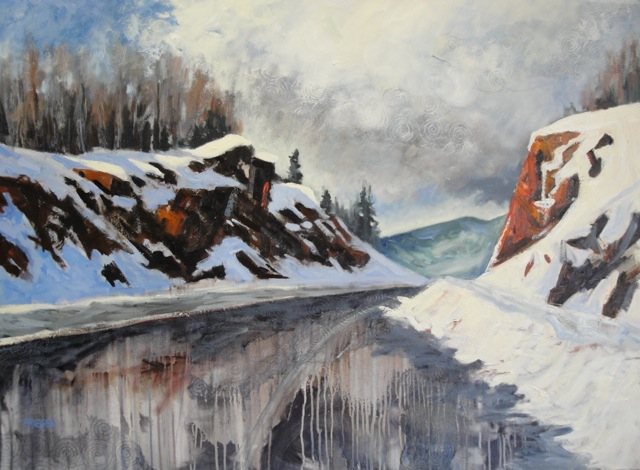
Sky Becoming Road / 36" x 48" / oil on canvas

Sky Becoming Road / 36″ x 48″ / oil on canvas

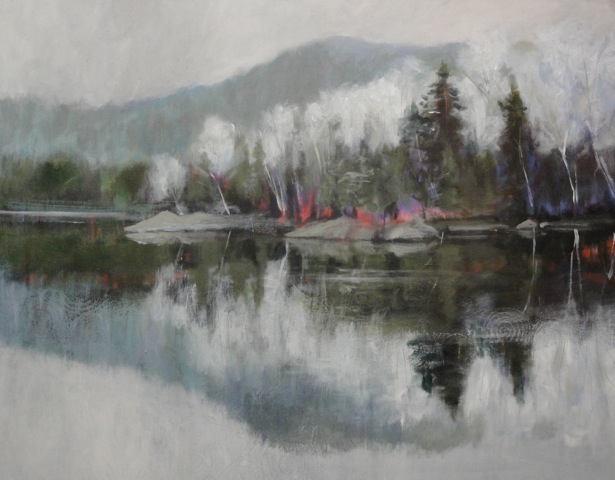
Spirit Island / acrylic on canvas / 24" x 30"

Spirit Island / acrylic on canvas / 24″ x 30″

Rocks in Moonlight / 18" x 22" / acrylic on panel board

Rocks in Moonlight / 18″ x 22″ / acrylic on panel board

Lover's Limbs / 36" x 48" / acrylic on canvas

Lover’s Limbs / 36″ x 48″ / acrylic on canvas

Ever Evolving Earth / 54" x 72" / acrylic on panel board

Ever Evolving Earth / 54″ x 72″ / acrylic on panel board

Telluric Rhythm / 36" x 48" / acrylic on canvas

Telluric Rhythm / 36″ x 48″ / acrylic on canvas

Natura Imaginalis / 30" x 24" / acrylic on panel board

Natura Imaginalis / 30″ x 24″ / acrylic on panel board

Blood of the River God / 36" x 48" / acrylic on panel board

Blood of the River God / 36″ x 48″ / acrylic on panel board


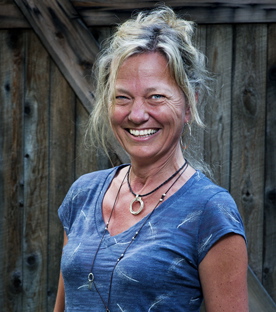
Holly FriesenHolly Friesen

Artist Statement:

My work revolves around earth-honoring images that reflect and instill connection to local bio-regions. These images internalize a reverence for the earth and shift the intent from harming the world to living in a mutually life-enhancing manner.

After 30 years of painting from close observation of the forests, rocks and rivers, I feel I am no longer observing the natural world around me but rather, in a reversal of roles, the natural world seems to be observing me. Direct and spontaneous brushstrokes become intuitive movements that follow breath and echo emotional responses to this living, breathing vitality. Through a dynamic energetic exchange I feel as though I am being held within an intelligent, sentient field that expresses itself through colors, shapes and movement. I am both humbled and awed by this process.

I particularly enjoy the physicality of painting, the intuitive mark making, the hands-on application of collage and sometimes the direct carving into the panel board. They bring me even closer to the work. I enter an unconscious wilderness through my hands and body; a primal, non-verbal process that is rich with metaphor & images. Often as I work vivid dream images arise and replace my rational, thinking brain with sensations and feelings that are experienced physically in my body.

I learn what I need to know by painting. The more I paint the less separation there is between inner and outer ecologies which results in a linking of perceptions with the natural world where attempts to define or control are useless. For me, painting is like deep prayer awakening a reverence for the earth’s inner landscape; the image is in you and you are in the image. Painting is my breath, beauty my compass, and the earth my body.

Check out Holly’s website and online portfolio.

Twitter: @holly59

Email: hollyfriesen@gmail.com

Dream into the New Year…

by Melissa D. Johnston

Onomatopoeia

Onomatopoeia

Happy Holidays from Creative Thresholds. May the new year be the year you dream big…and watch those dreams come true! 

I don’t wanna be a cheerleader no more.

by Rebekah Goode-Peoples

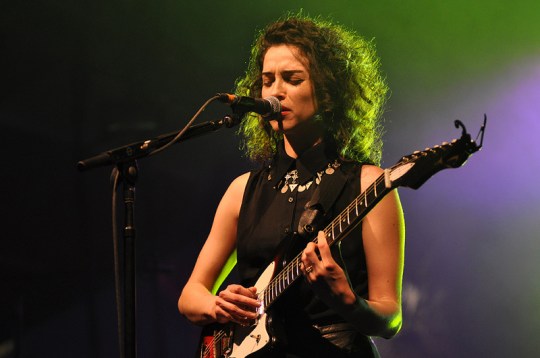
St. Vincent, Coachella 2012. Image by Jason Persse

St. Vincent, Coachella 2012. Image by Jason Persse.

Earlier this year, I made my high school students listen to “Cheerleader” by St. Vincent during a free writing exercise. They were supposed to write anything at all while trying to match the tone of the song. As I listened with them, I realized that almost without exception, I’d been exclusively listening to this song for months—different female vocalists, different lyrics, different instrumentation, but the same tone, same song.

I’ve recognized many images and pieces of my own writing from the past year in these songs: wells, water, boats, waves, divers, lighthouses, ghosts. In more romantic moments when I mix metaphors with abandon, I feel like we’re all mirroring something to each other, a form of musical smoke signals or Morse code. Square by square, I’m watching a quilt of our collective unconscious come together to keep us warm in the night.

But those are my more romantic moments.

Seven of the Billboard top ten albums last year featured solo female artists, and this year is shaping up similarly. While airplay on commercial radio stations has been dominated by the likes of Katy Perry, Adele, Rihanna, Pink, Lady Gaga, Taylor Swift and, god forbid, Ke$ha, fans of more independent artists were often exposed to more status quo fare—four guys with unkempt hair and tight sweaters.

Don’t get me wrong. I have a fine appreciation for musical boys (see: the guy I’m married to), but I believe musical variety makes everything sound better, more itself.

While female artists have always been on my radar, the last time my musical landscape radically changed from listening to albums by women was in 1992-1994, the roaring years of Tori Amos’s “Little Earthquakes,” Bjork’s “Post,” PJ Harvey’s “Dry” and Hole’s “Live Through This.” Though a newly minted teenager full of stereotypical angst, it is no coincidence that I started writing in those years. Notebook after notebook, I found I had something to say.

Now, twenty years later, I feel a similar awakening.

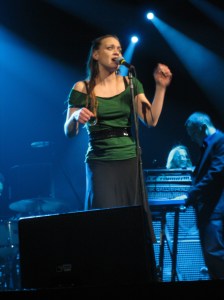
Fiona Apple. Image by Chickey.

Fiona Apple. Image by Chickey.

From Fiona Apple and Emily Wells to St. Vincent and Bat for Lashes, I hear strong, non-babygirl vocals, sonic experimentation, poetic phrasing and playful imagery. Listened to as a group, I get a strong sense of women coming into their own. Emerging from the shadows of big boys, big loves and big troubles. Trying to piece out just who they are and just where they belong. Knowing brokenness but forging ahead.

On St. Vincent’s “Cheerleader,” she simply states, and then radiates, “I don’t know what I deserve…I don’t wanna be a cheerleader no more” while Emily Wells lilts in the hypnotic lullaby “Passenger,” “I’m a passenger, I’m a passenger/ Give me the keys I wanna drive.” But it’s not all floaty wisps of empowerment.

These ladies do not shy away from the barbaric yawp on their latest releases. Their stark, guttural growls and piercing wails take us right into the ugly bits. On “Deep Sea Diver,” Bat for Lashes expresses their comfort with going vulnerable and raw.

You came running out of the dark

With the tears in your eyes

This time I’m not afraid

Cause my heart’s in place

Baby let your scream come.

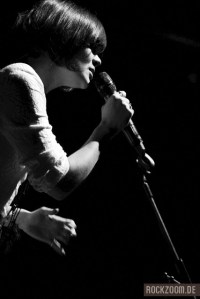
Bat For Lashes - November 2012. Image by Rockzoom.de.

Bat For Lashes. Image by Rockzoom.de.

Most of these stepping-out and see-me-now sentiments are closely balanced with lines of fear and self-doubt. These aren’t perfect people. They are sometimes needy, crazy, antisocial and sappy (read: normal) and completely up-front about it. Unlike many of the commercial stars, there is no perfect package or the expectation of one. There is consciousness and reality in all of its sparkling starlight and dangerous dinge.

The combination of wild and wooly woman-talk, tribal rhythms and fierce, reaching vocal arrangements fill me with a real sense of anticipation. Of being on the brink of a brilliant dive. Of being a little afraid of it too.

It’s scary to branch out, to be something new or create something new and your own, but lately I’ve had the urge to create more deliberately for myself. There are many factors contributing to that urge: a need to cleanse a palate overwhelmed by social-media but lacking in real human connection, a need to redefine my identity post-marrying and breeding, and the realization that while I’ve always been a pretty terrific nurturer, cheerleader and advocate for others, I’ve never really been those things for myself.

I can’t help but think that the music I listened to this year opened the door.

And maybe similar doors are opening up for others. Maybe something is in the water.

I read the posts of dreamwarrior women on Facebook who want to start making music together, to just gather and play like the boys who find it a matter of routine to gather in basements, garages and barns to jam. Or Anna Chandler, co-founder of the now-defunct Savannah band General Oglethorpe & the Panhandlers, who wrote recently in a blog post (personal album of the year: Live through This, Hole), “I pushed myself to write more openly, to break out of my standard of cryptic, hiding lyrics and be blunt.  I didn’t want to sing quietly, I wanted to wail, to howl and seethe, and suddenly I could. And I did.” And my bold-as-hell daughter who sits in her car seat belting out every single word of Fiona Apple’s “Every Single Night,” her tiny throat straining to match Apple’s rolls and calls, a giant smile on her face.

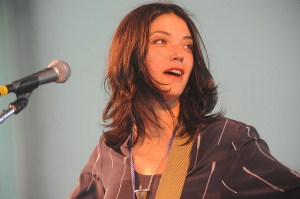
Sharon Van Etten. Image by Weekly Dig.

Sharon Van Etten. Image by Weekly Dig.

All of that feels like a promise. Like the one I’ve made to myself.

And though a year of self-discovery and voice-finding wasn’t easy, I had Sharon Van Etten whisper in my ear that “I’m All Right/ It’s ok to feel/ Everything is real.”

~~~~~~~~~~~~~~~~~~~~~~~~~~~~~~~~~~~~~~~~~~~~~~~~~~~~~~~~~~~~~~~~~~~~~~~~~~~~~~~~~~

In no particular order, except for Apple who was certainly number one for me, here are eight albums that opened the door for me this year.

Fiona Apple “The Idler Wheel…”

St. Vincent “Strange Mercy”

Emily Wells “Mama”

Bat for Lashes “The Haunted Man”

Sharon Van Etten “Tramp”

First Aid Kit “The Lion’s Roar”

Julia Holter “Ekstasis”

Tune-Yards “W H O K I L L”

Check out Rebekah’s Spotify playlist containing songs by these artists: no cheerleader

~~~~~~~~~~~~~~~~~~~~~~~~~~~~~~~~~~~~~~~~~~~~~~~~~~~~~~~~~~~~~~~~~~~~~~~~~~~~~~~~~~

Rebekah Goode-PeoplesRebekah Goode-Peoples is a mother, teacher and writer in Atlanta, GA where she lives in Grant Park with a bunch of superfreaks: Ryan, Sebastian, Izzy and Johnny Cash, the family chihuahua. You can find her at @goodepeoples and her band, Oryx and Crake, at @oryxncrake.

Savage Uncertainties On The Road Home

by Walt Pascoe

And but so yeah.

Having recovered nicely from the insult of surgery to resect 10 inches of my large intestine, I was more or less happily bobbing back up to the surface of my murky little emotional pond. It had been disappointing to learn that cancer cells were already frolicking around my lymph system like unruly children, and that the tender wisdom of western medical modalities dictated a course of prophylactic chemo. But after a brief time for contemplation and acceptance I’d come to terms with “stage 3” and prepared myself accordingly. There was the relatively minor surgery to insert a semi-permanent, sub-cutaneous port in my chest for easy access to a major artery, and the inevitable institutional waltz w/ the doctors office and insurance company to pre-approve this gold-plated poisoning. And finally a couple more visits to the various scan-masters for more complete head to thigh reconnoitering of my tender corpus, in order to be doubly sure there were no other cancerous redoubts hidden under a rock somewhere. All this transpired in a relatively compressed time-frame, the doctors and staff proceeding w/ an admirable, if not entirely reassuring, sense of professional urgency. And so it came to pass that my oncologist only received the latest reports the night before I showed up to begin chemo infusions.

The six-month course of chemo for my particular cancer goes by the vaguely militaristic sounding acronym FOLFOX. Essentially it involves kicking back in the coolest recliner you’ve ever seen while various anti-nausea meds and the main chemical arsenal are deployed sequentially for a few hours. (What is it with all the battle metaphors?) One of the meds is more effective if administered in small bursts over 46 hours, so before you’re allowed to leave a pump is hooked up to your port and you wear this home. Its a robust little programmable squirt machine that looks more or less like the FedEx guys’ scanner, and you get to wear it on a belt around your waist or over your shoulder. So much for any shred of sartorial hipness I might have been clinging to in the waning years of middle age semi-decrepitude. On the bright side, the pump makes a rhythmic clicking sound which, while lying on the bed next to me at night, is not without a certain comforting intimacy…

“Incantations on the Road Home” 48”x64” Graphite on gessoed panel

“Incantations on the Road Home” 48”x64” Graphite on gessoed panel

Wait… what?

But I’m getting ahead of myself. Turns out there was in fact a further metastasis. Stage 4. Another decent sized tumor wrapped around a bronchial tube near the entry point into my left lung, snuggly nestled next to my heart; a weirdly poetic location given the stressful mid-life transitions I’d been enduring of late, but one that rendered it inoperable. So a second biotherapy (a monoclonal antibody called Avastin) was added to the FOLFOX chemo regimen, all to be administered over a 6 month period…

“Raven Gets In” 48”x60” Oil on canvas

“Raven Gets In” 48”x60” Oil on canvas

“I always put lime on the people I kill. Wait… are you calling 911?” ~ Drunk guy in a Mexican restaurant, as related by my friend Melissa Johnston.

And so it seems that cancer has created the mother of all liminal spaces in my life. And it is from this strangely pregnant territory that I peer out into the… I want to say abyss… but like so many words now it seems inadequate, overused, and worked to within an inch of its word-ly life by the incessant hype culture hum we wallow in. The title of some crappy movie, complete with cross-licensed plastic action figures free w/ your next Happy Meal. And seriously, how many of us ever reaches beyond the tremulous shadow of the concept and endeavors to actually process this deep down inside our whirring, buzzing lizard-brains? It crouches at the center of your chest like a cold rock, pulling you down through the turbid water more effectively than the finest cement shoes. Who the heck would want to go there voluntarily? Who…

“Fatal Shore” 48”x64” Acrylic on canvas

“Fatal Shore” 48”x64” Acrylic on canvas

Blaise Pascal wrote in “Pensées,” “We run heedlessly into the abyss after putting something in front of us to stop us from seeing it.”

It’s amazing how emotions flow just like weather.

I can go along doing what I think of as “well”: feeling optimistic, comfortable being alone, celebrating the liminal, accepting the transitory nature of things, handling the chemo, sensing health and wholeness on a walk in Whites Woods, meditating, reading, feeling a measured enthusiasm for the future w/o treating the present like just something to be got through, the master of silver linings, counting my blessings, deeply grateful for the love and support of my friends and family, acquaintances at the Post Office saying “hey, you look great”, relieved by the fact that I haven’t yet assumed the grayish-blue pallor of the wasting.

And then there will be this slow creeping intimation of unease, like a little darkening on the horizon. Just a few clouds on an otherwise sunny day…

Stillness and solitude in White’s Woods, Litchfield

Stillness and solitude in White’s Woods, Litchfield

Willem DeKooning referred to himself as a “slipping glimpser”.

As the storm gathers and starts to darken my interior landscape I can feel the slipping; the accumulation of tension in my heart and body. Fear, longing, and worry… a somatic ache that fluidly transmutes into a profound and painful spiritual dread if not checked quickly by some distraction. This is where it gets tricky being alone. It is so much easier to distract yourself from it when you are with other people. Just ignore and bury it in the cosmopolitan joy of human culture and friendship. Or loose yourself engineering a life.

“[…] almost nothing important that ever happens to you happens because you engineer it. Destiny has no beeper; destiny always leans trenchcoated out of an alley with some sort of ‘psst’ that you usually can’t even hear because you’re in such a rush to or from something important you’ve tried to engineer. ”
~ David Foster Wallace in “Infinite Jest”.

I guess this terror has always been present, and is for every human being. We do with it what we will. Tune it out. Turn it into art or literature. Transmogrify the brutal fact of our inevitable decay into infinite varieties of work and the illusion of progress. Am I thinking too much?! This is not always true. There are times when laughter and joy come in solitude and I can revel in it. But the laughter is hardened and forced when you are filled w/ grief at the prospect of loosing all you love… threatened in such an immediate, tangible way…  I’m attached to my attachments! A lousy Buddhist if ever there was one! It’s amazing how I can go along feeling buoyant about the possibility of remission… and oh the delirious possibility of “durable remission”, held out there like the most seductive of outcomes. And then just tank for awhile… fall into the dark… gazing up into a night sky perversely ornamented with PET scan constellations of cancerous cells awash in radioactively tagged glucose, collaged all over my chest and neck, blinking out an inscrutable code… exhausted from the grasping after some more universal, ever-present , capital “L” Love. God. Some hopeful bulwark against the immensity of the void surrounding my fearful and trembling self. A glimpse perhaps…

The Real Work

It may be that when we no longer know what to do

we have come to our real work,

and that when we no longer know which way to go

we have come to our real journey.

The mind that is not baffled is not employed.

The impeded stream is the one that sings.

~ Wendell Berry ~

(Collected Poems)

And so it goes. Alone with the Alone. It is a choice. A pseudo-monastic exile, punctuated by genuinely caring and helpful visits from my loved ones and the logistics of the chemo rhythm. Simone Weil said “attention is the rarest and purest form of generosity”…

"Exile Study No.4 ~ Perdita" ink and graphite on paper, 22"x 30",

“Exile Study No.4 ~ Perdita” ink and graphite on paper, 22″x 30″

And what exactly is it that I am attending to now?

Seeking Now through mindful solitude. That word, though: seeking! Seeking itself one of the most seductive of attachments. After the briefest foray into the silence, I flee back into the endless loop of intellectual and aesthetic dialogue w/ the dead. With those I’ve chosen to valorize as artistic mentors for 30 years: David Smith and Charles Olson. And into the radiating web of endlessly fascinating threads that fan out from their volcanic productions. Back into yet another painting or drawing, searching searching searching, always searching… wading through a rich but terrifying uncertainty…

“The Secret Life of Wind” 48”x64” graphite on gessoed panel

“The Secret Life of Wind” 48”x64” graphite on gessoed panel

“Sometimes when I start a sculpture, I begin with only a realized part, the rest is travel to be unfolded much in the order of a dream. The conflict for realization is what makes art not its certainty, nor its technique or material.”
–David Smith

In Alex Stein and Yahia Lababidi’s wonderful conversation, “The Artist as Mystic”, Yahia quotes Heidegger: “Longing is the agony of the nearness of the distant.” This resonates now. Not just a little! The words vibrate in my chest as if I were standing alongside a huge, beautifully wrought bell being rung. Small pieces of the rock crouching there begin to fall…

“The Chain of Memory is Resurrection I” 30”x40” graphite and acrylic on bristol board

“The Chain of Memory is Resurrection I” 30”x40” graphite and acrylic on bristol board


Walt PascoeWalt Pascoe is a Montreal-based visual artist who received a B.A. in Fine Art from St. Lawrence University in 1980. You can see more of his work at www.waltpascoe.com

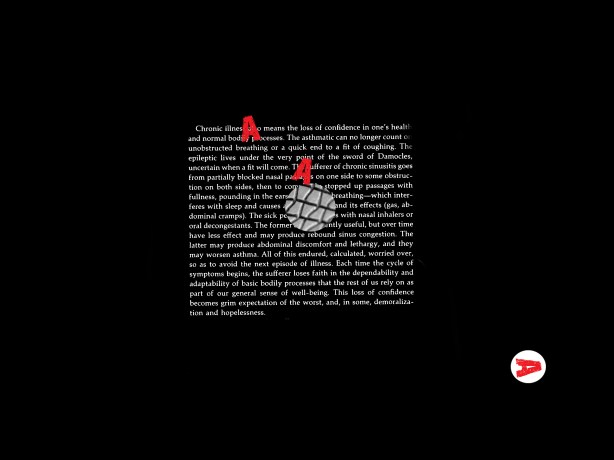
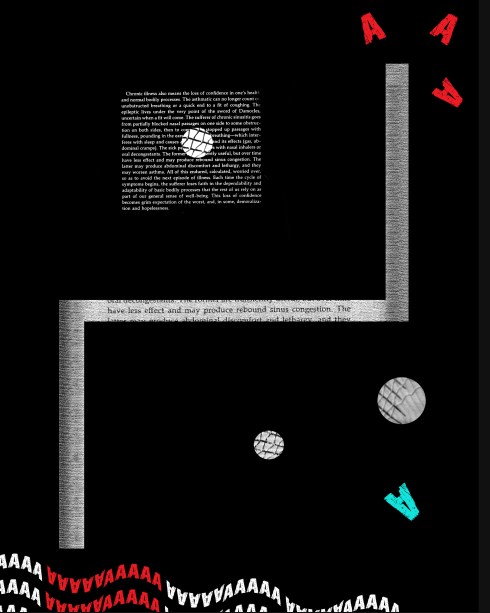
Journey of A: A Graphic Exploration of Self/Other

by Melissa D. Johnston

de-centering

de-centering

refuse from the machine

refuse from the machine

fragmentation and compression

fragmentation and compression

self-other arithmetic

self-other arithmetic

identity in time

identity in time