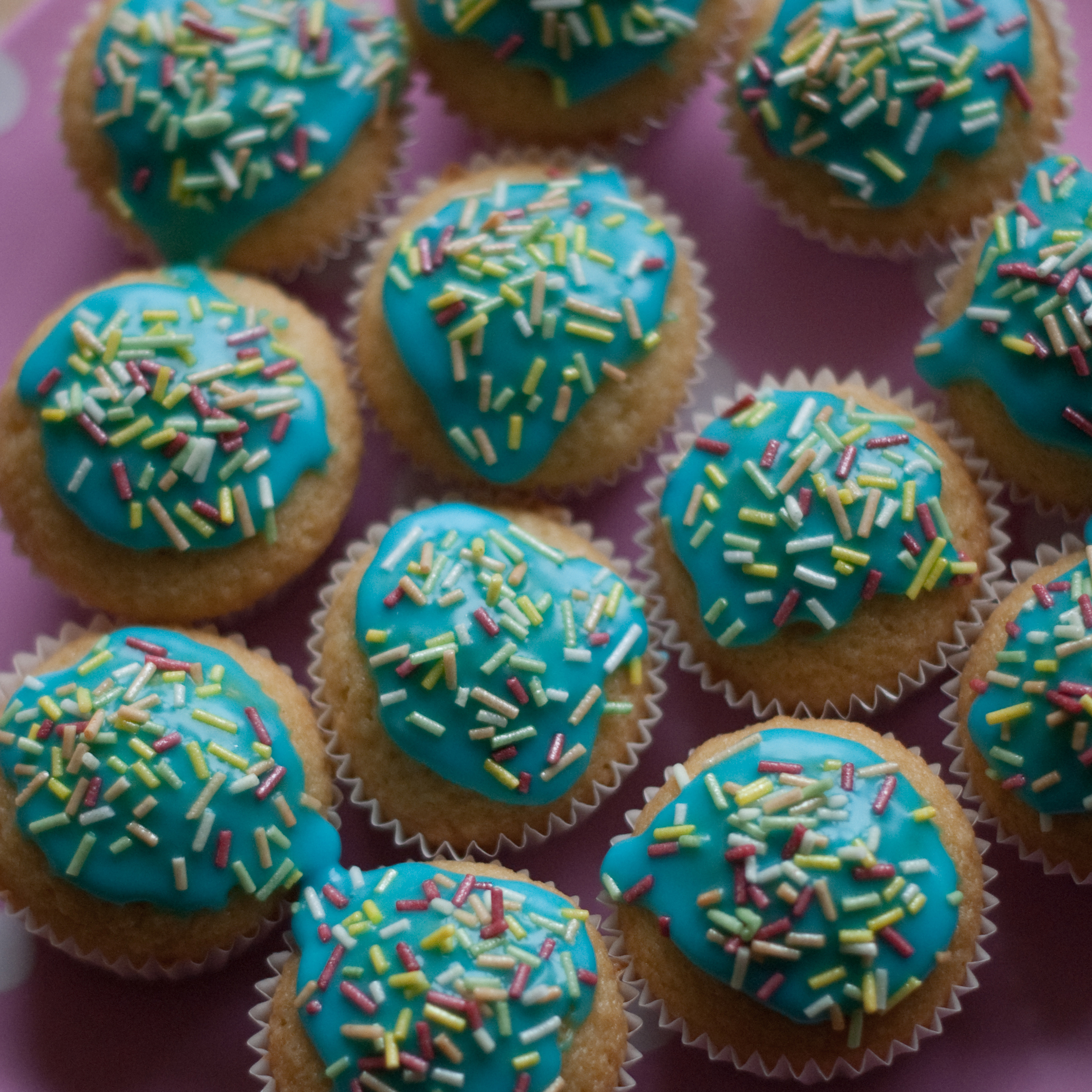
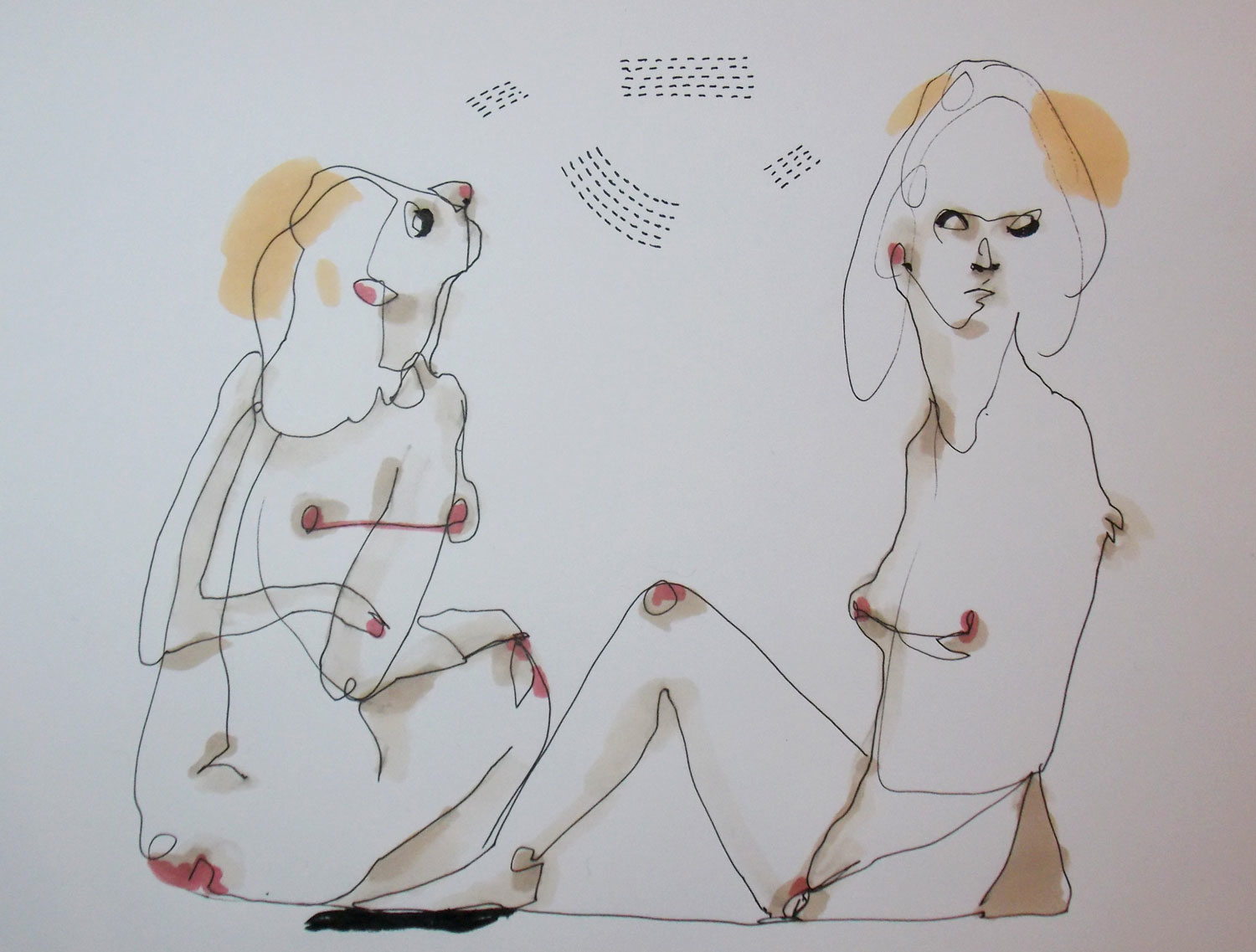
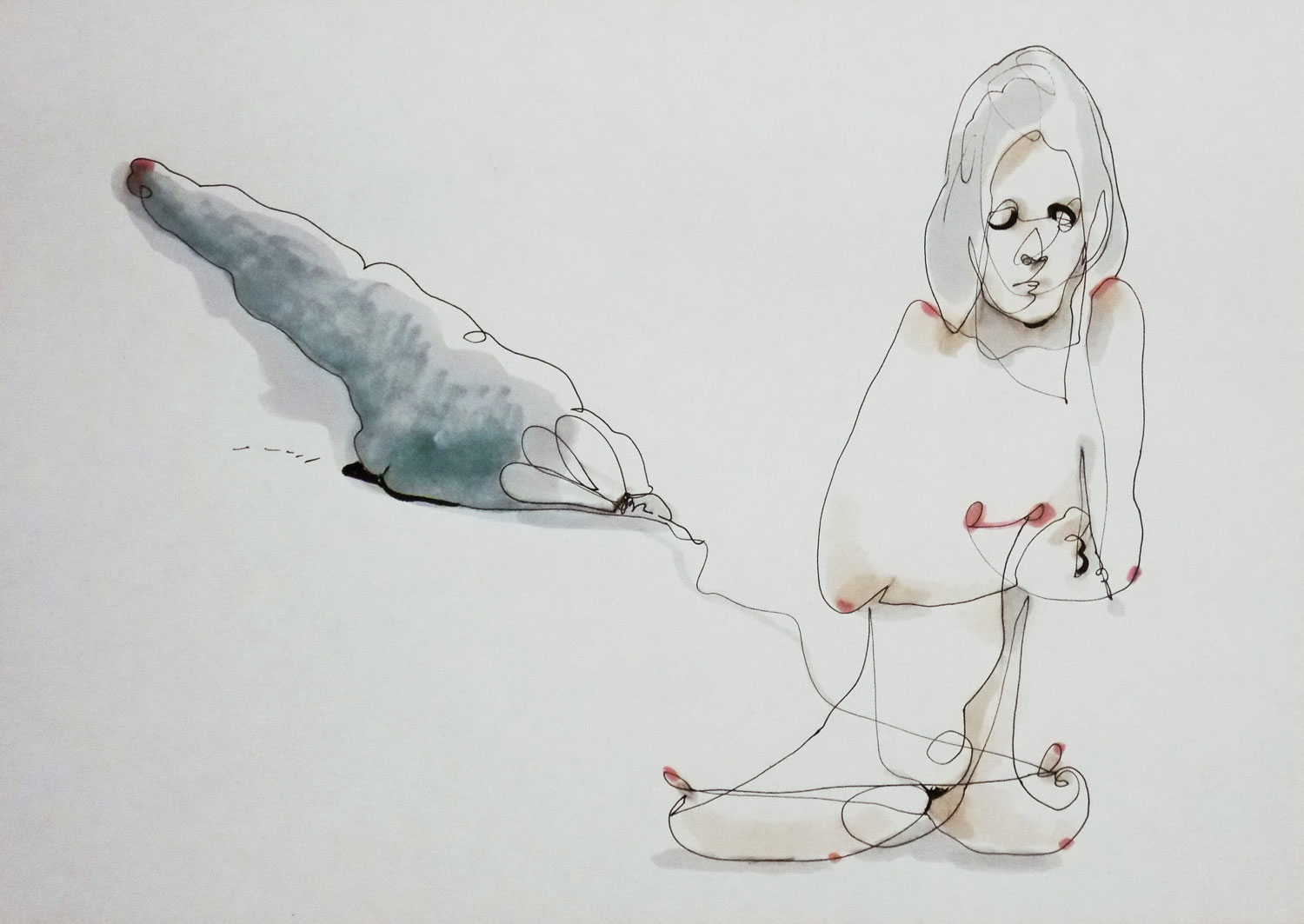
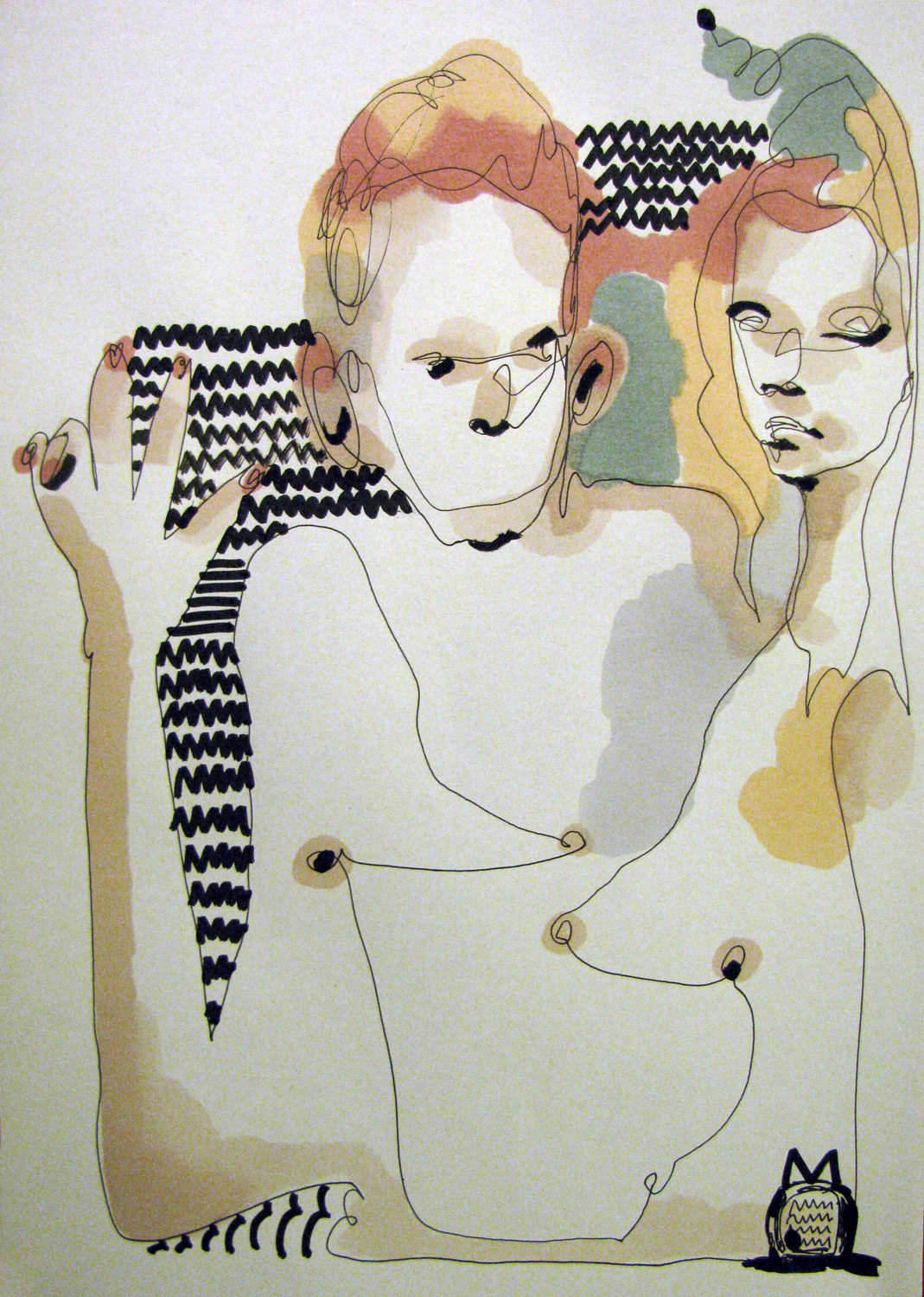
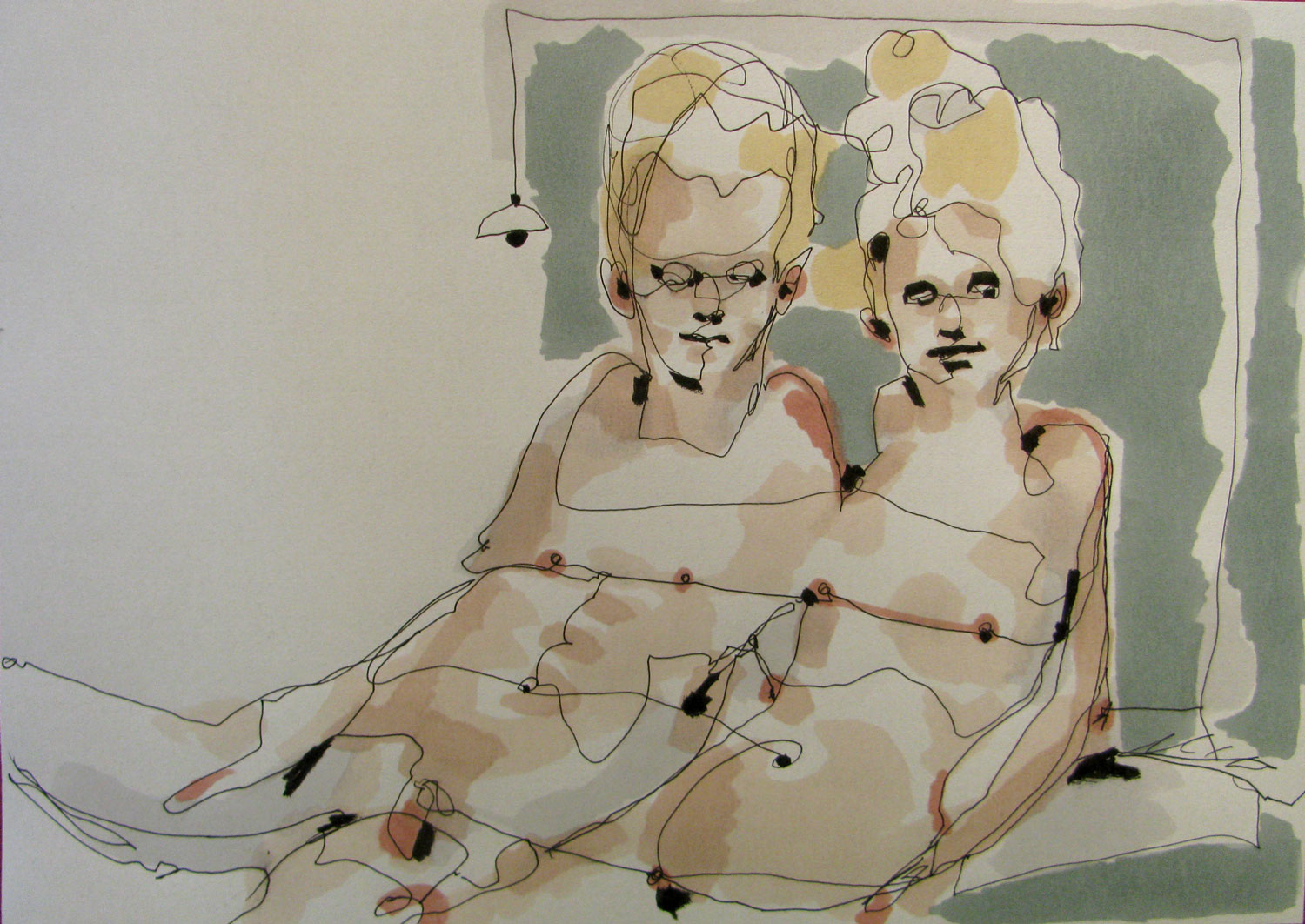
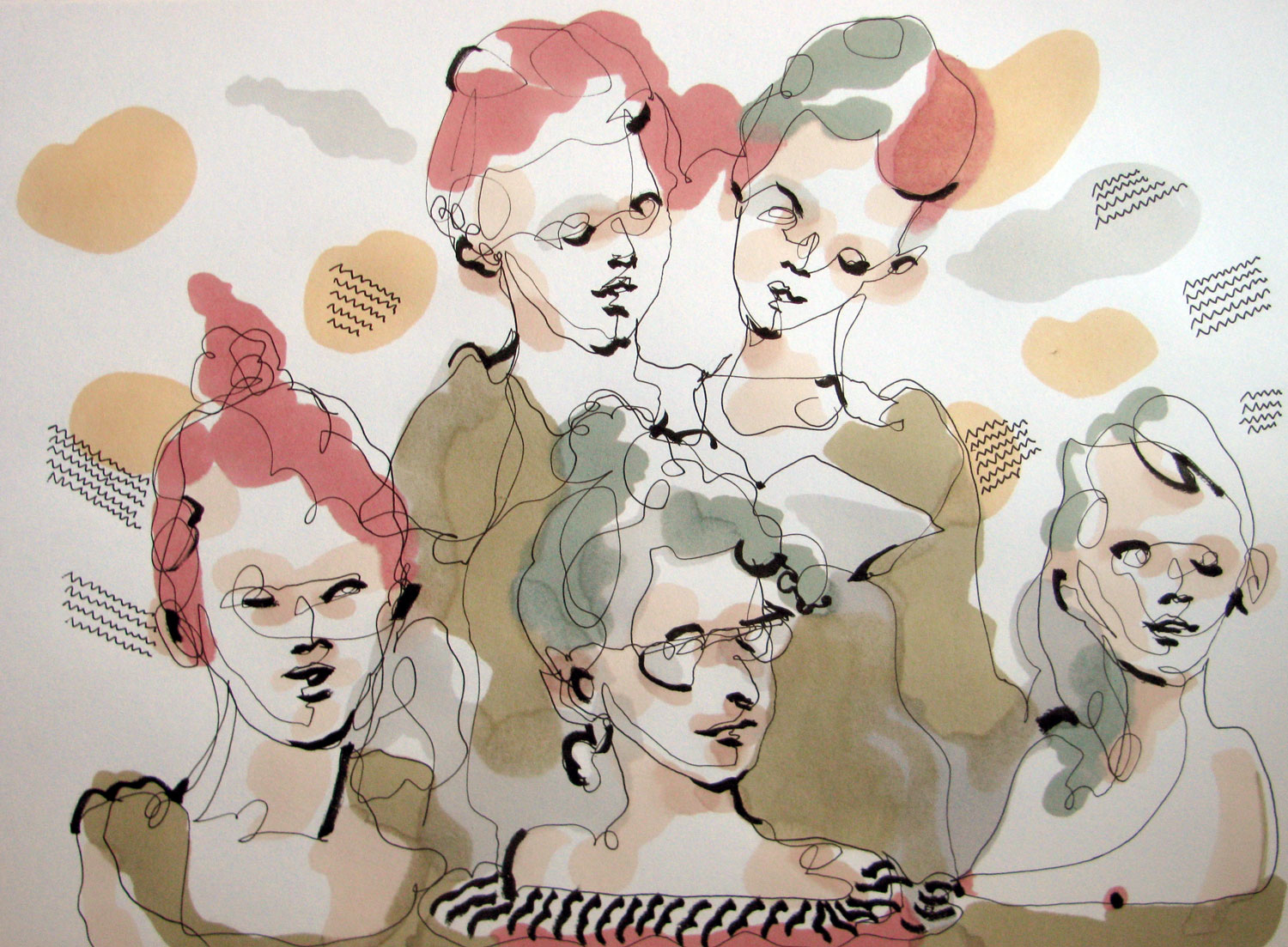
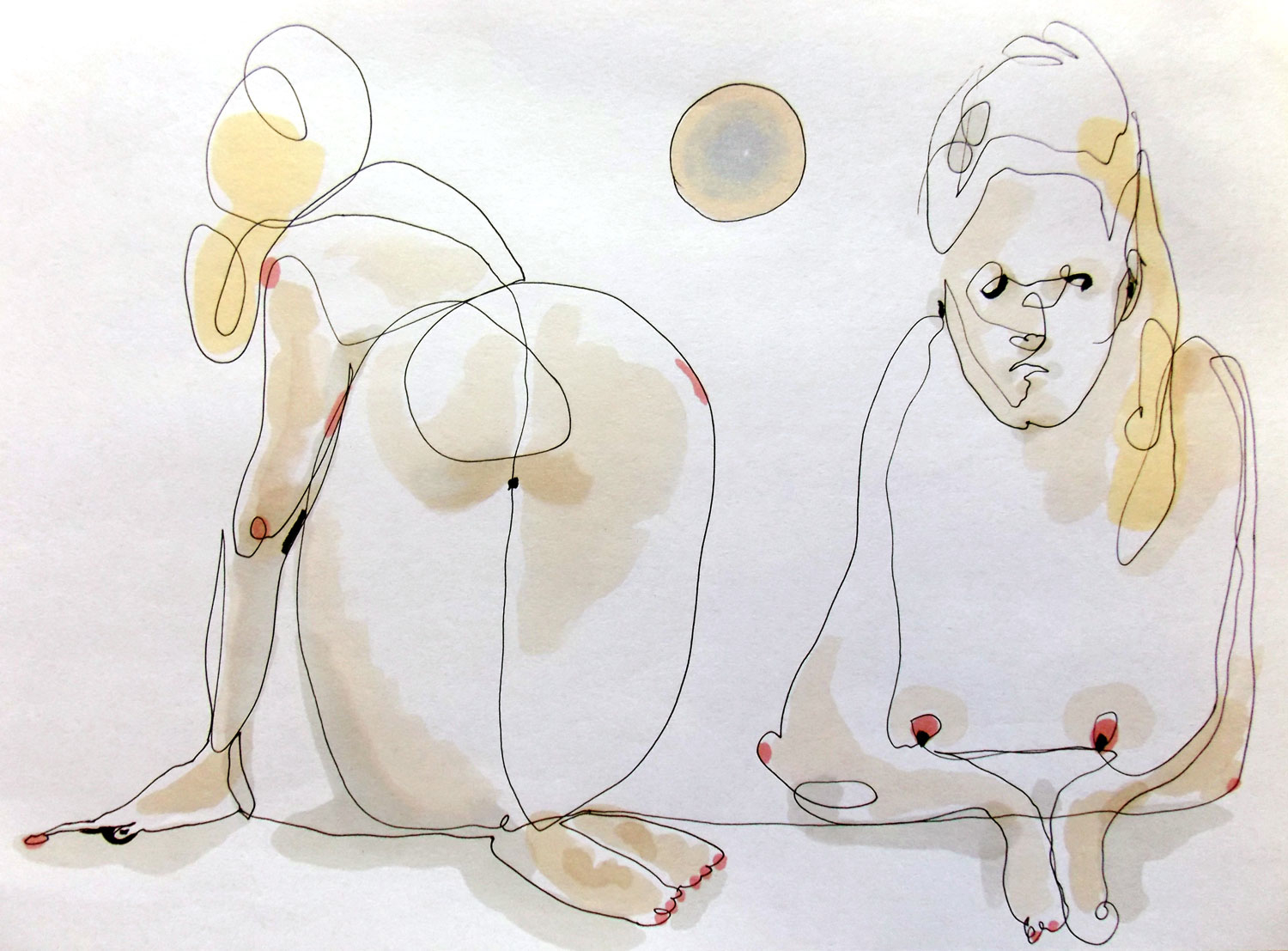
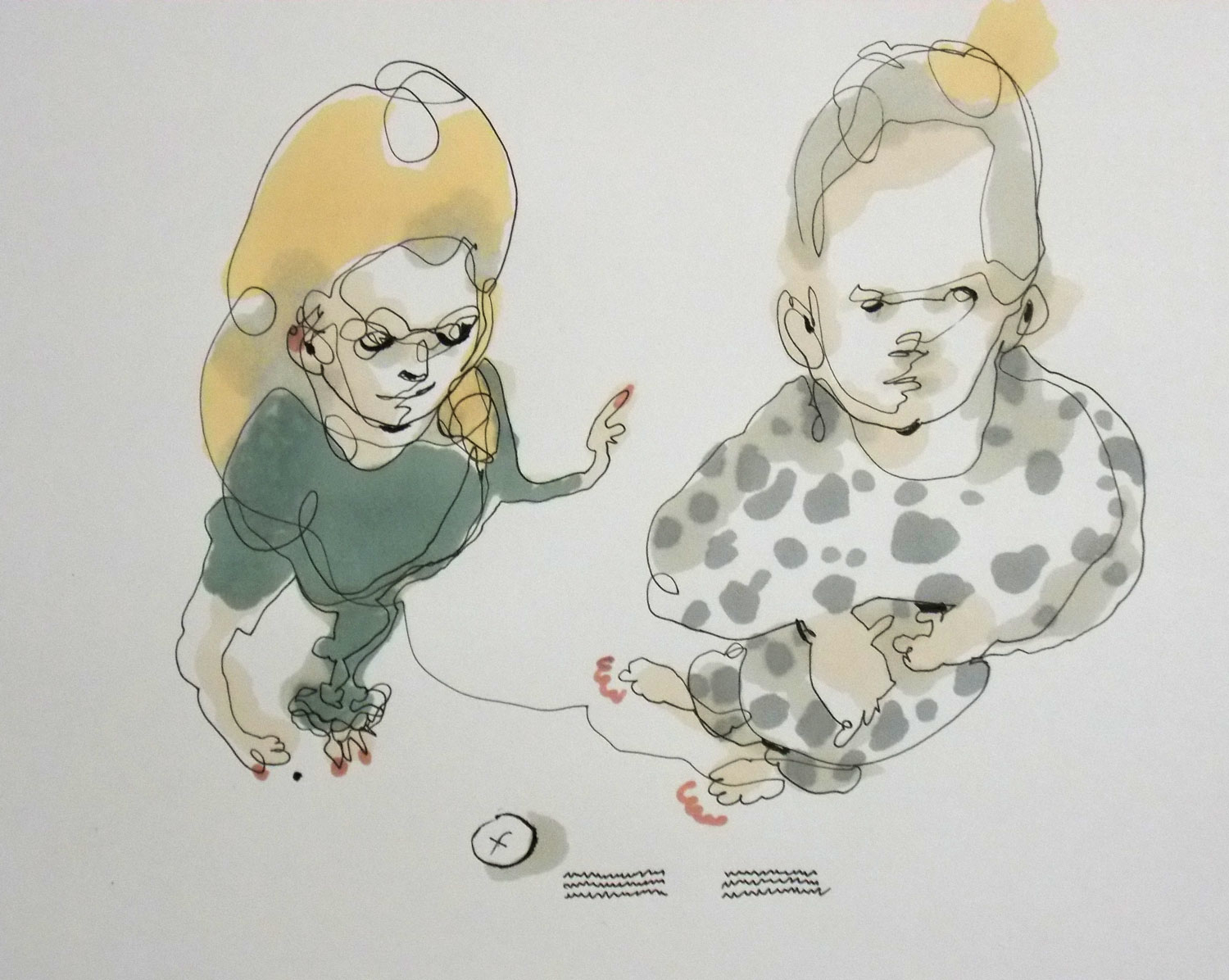
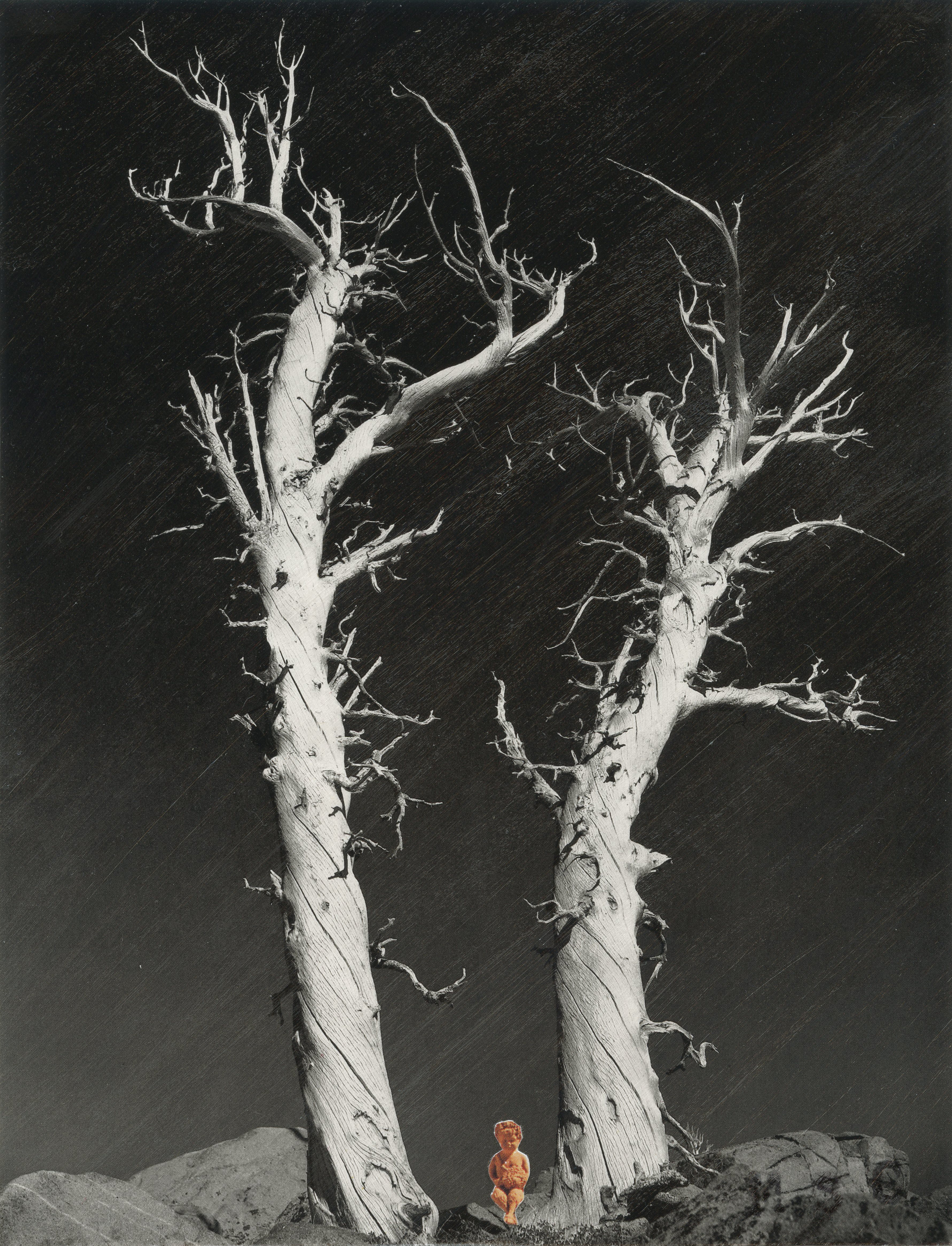
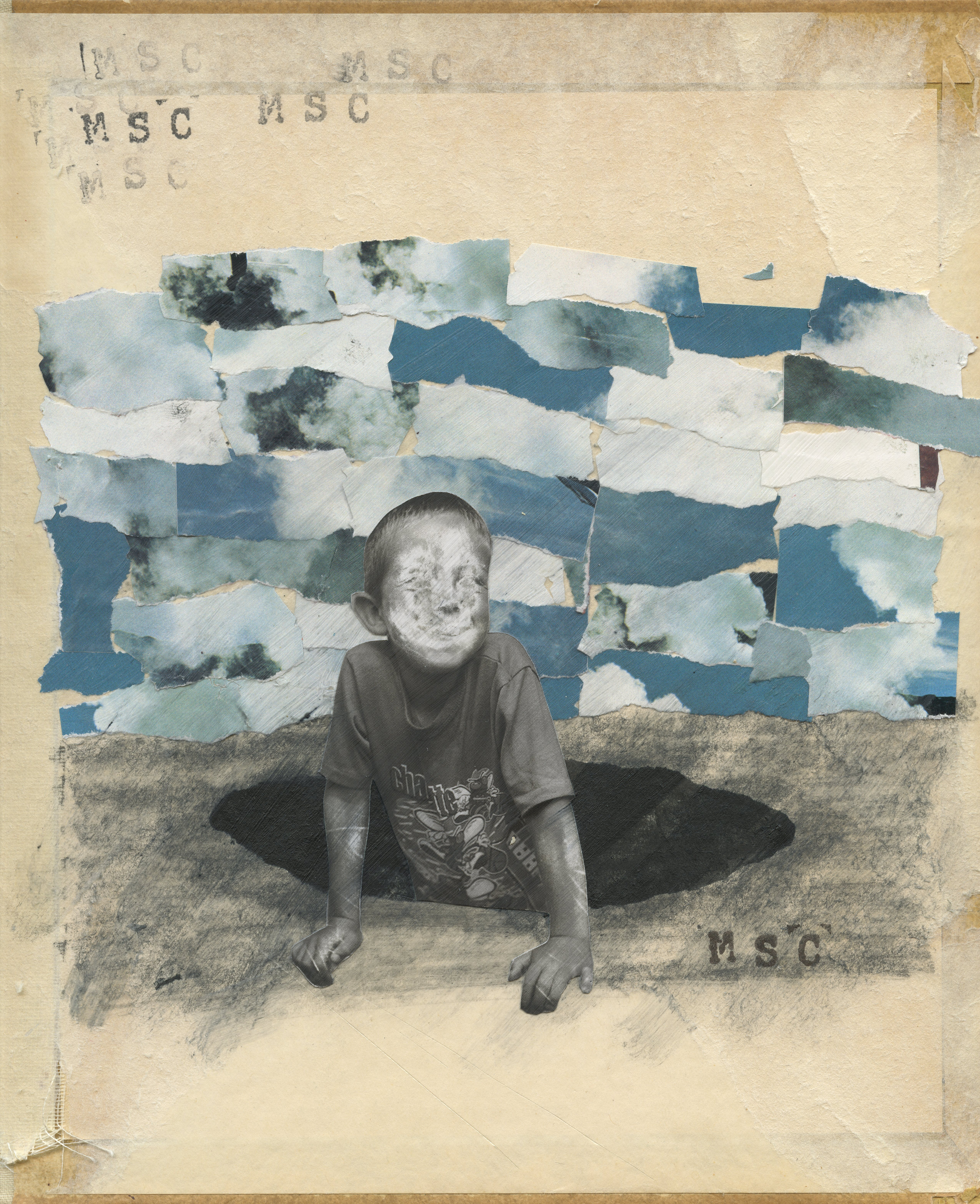
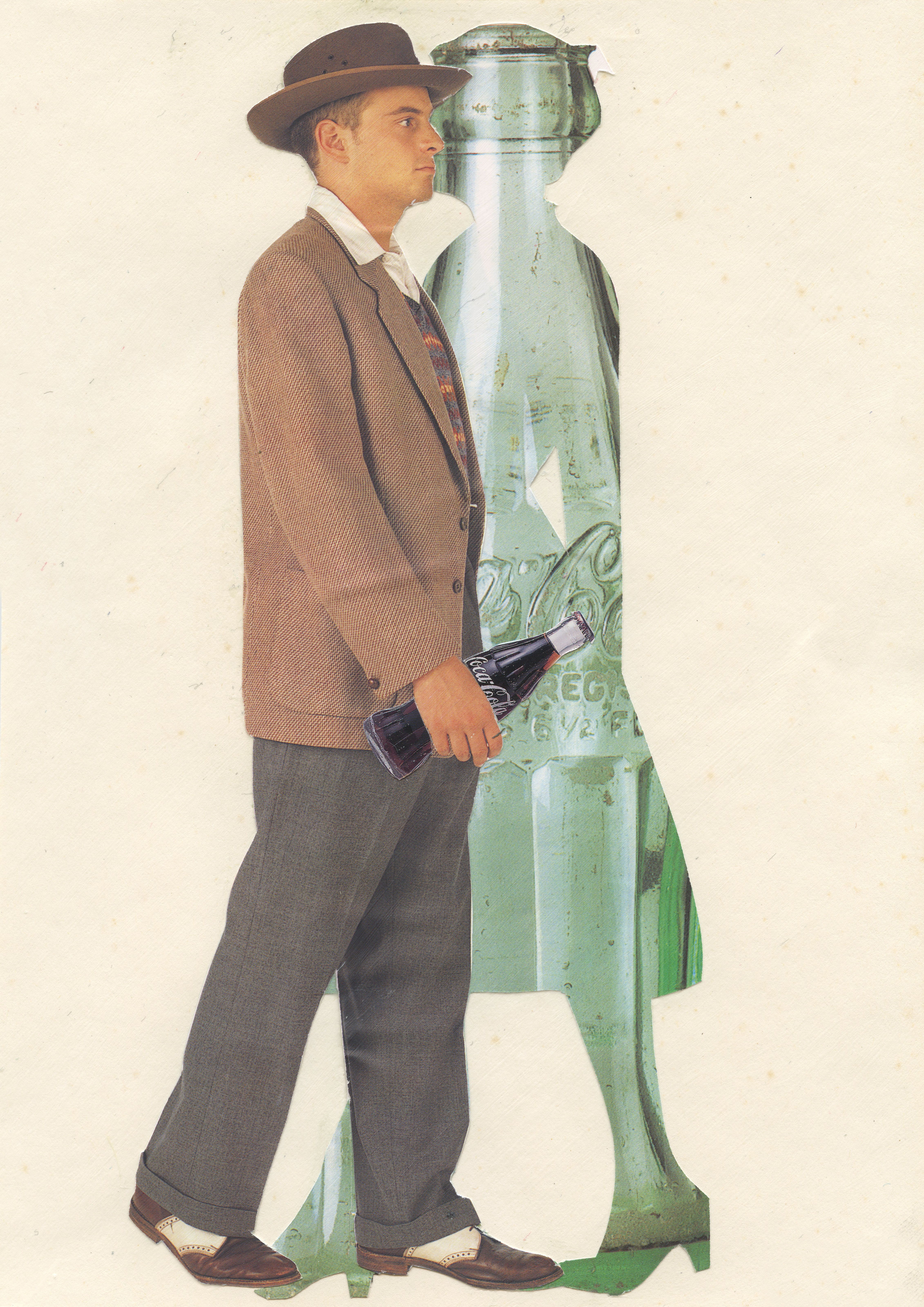
Since 20th December 2014, Ashley Lily Scarlett (in Sydney, Australia) and Richard Guest (in London, UK) have been having a conversation in pictures. They each take it in turn to post an image as a response to the other’s previous post. There is no set schedule; the blog follows the rhythm of a conversation. Some days there is nothing new, on others a flurry of questions, answers, jokes, and echoes, back and forth, on and on until…
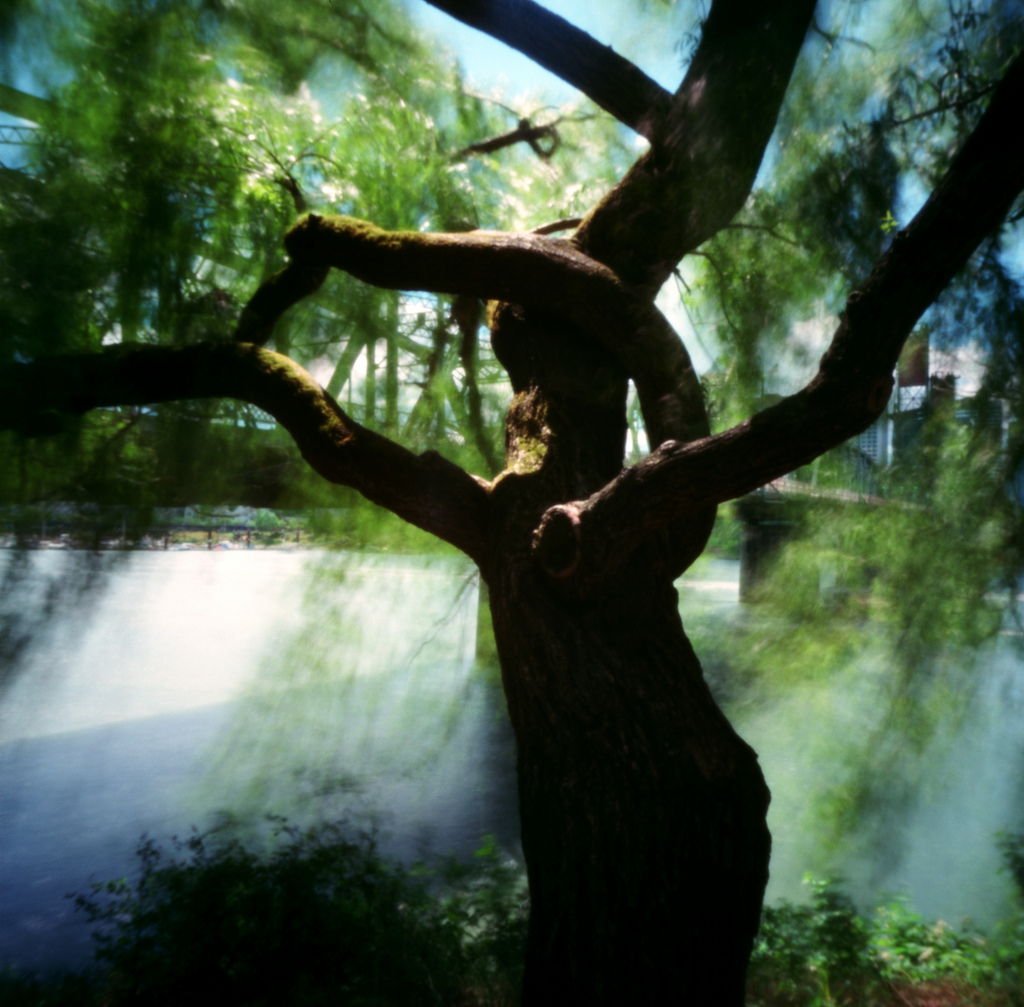
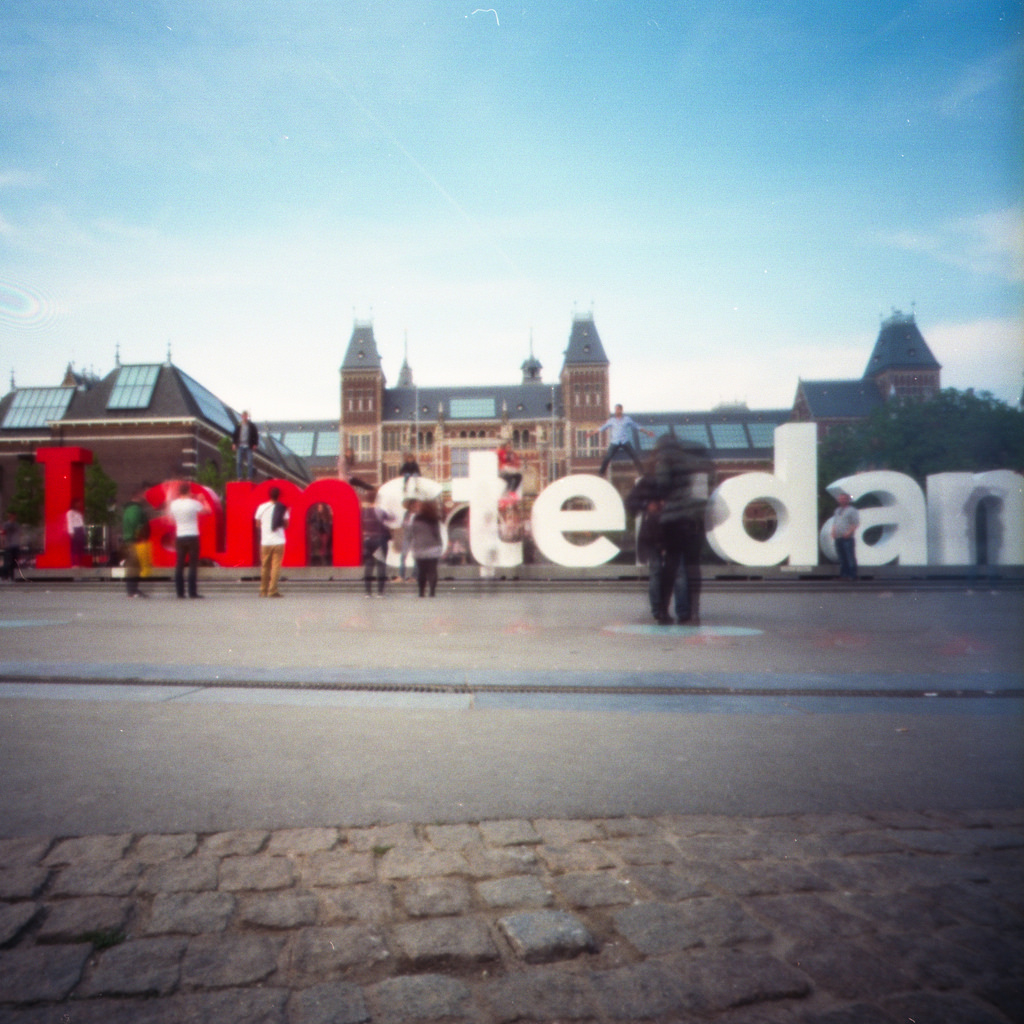
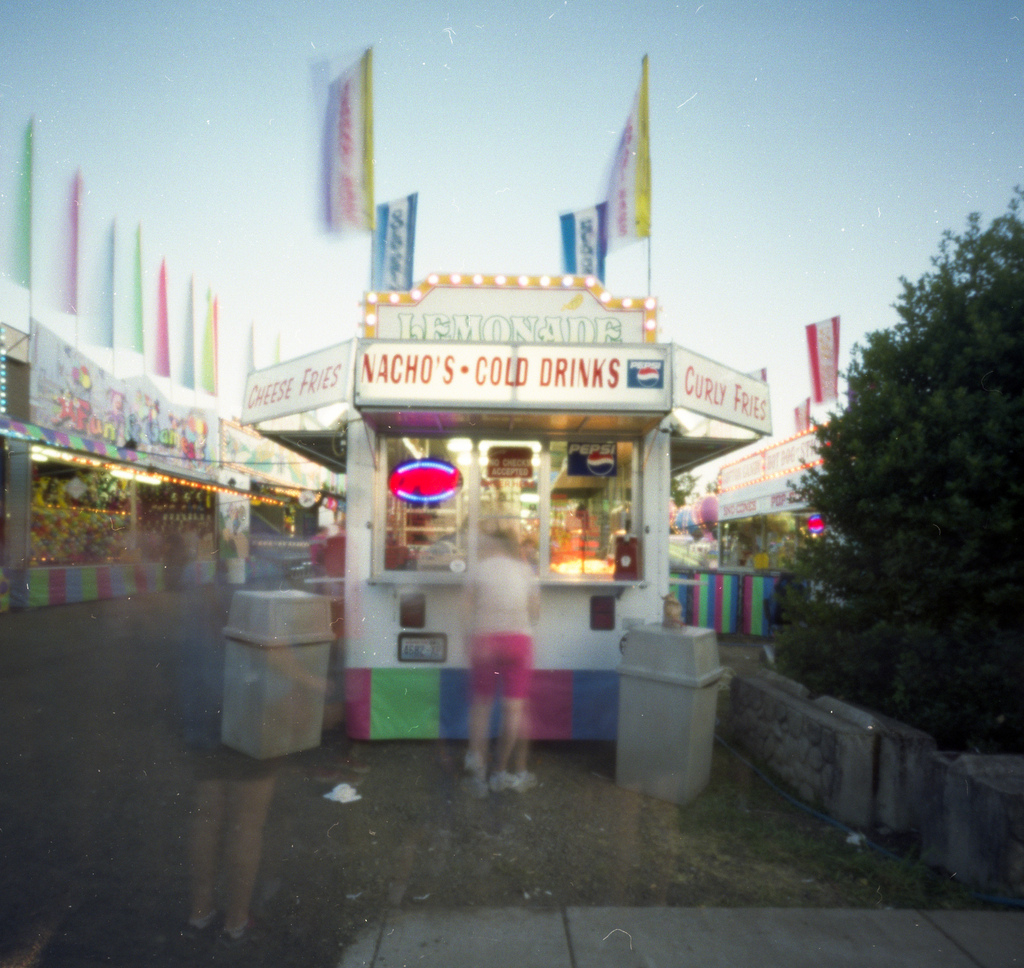
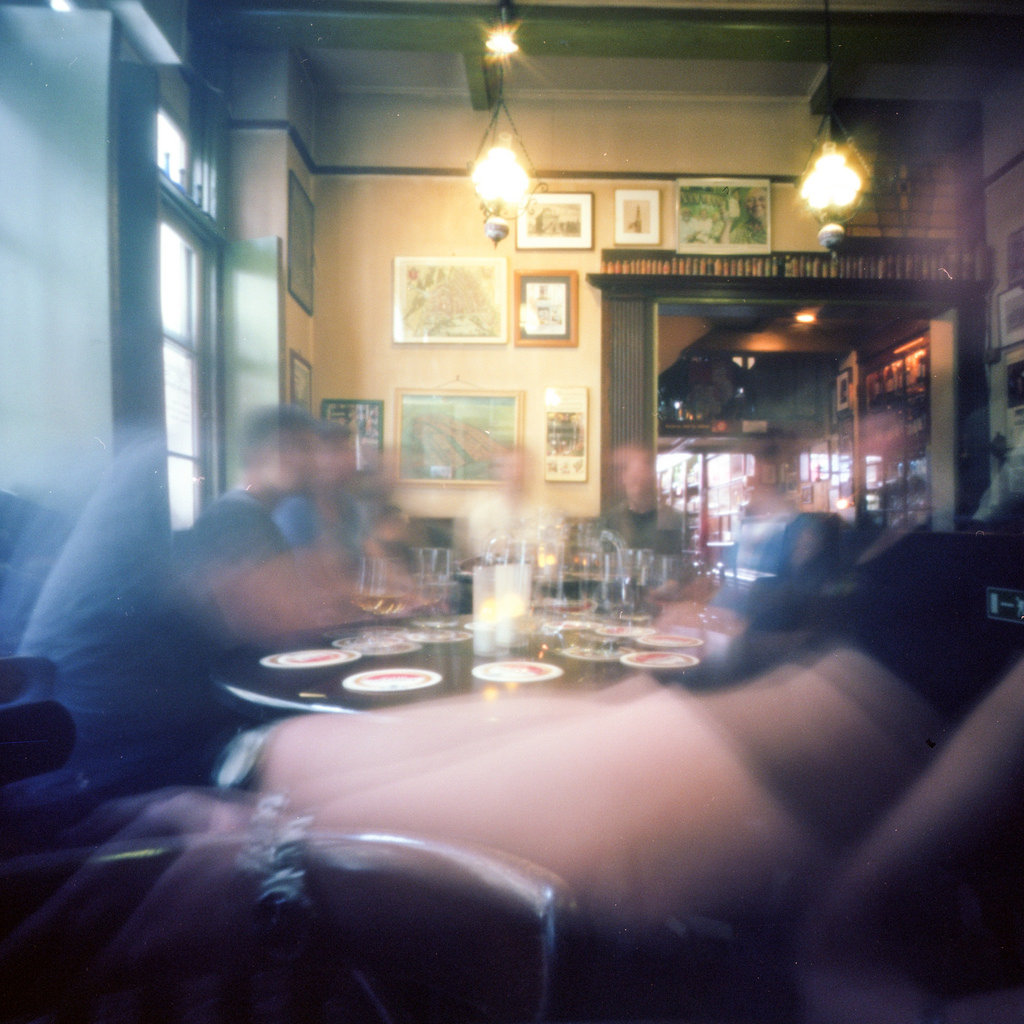
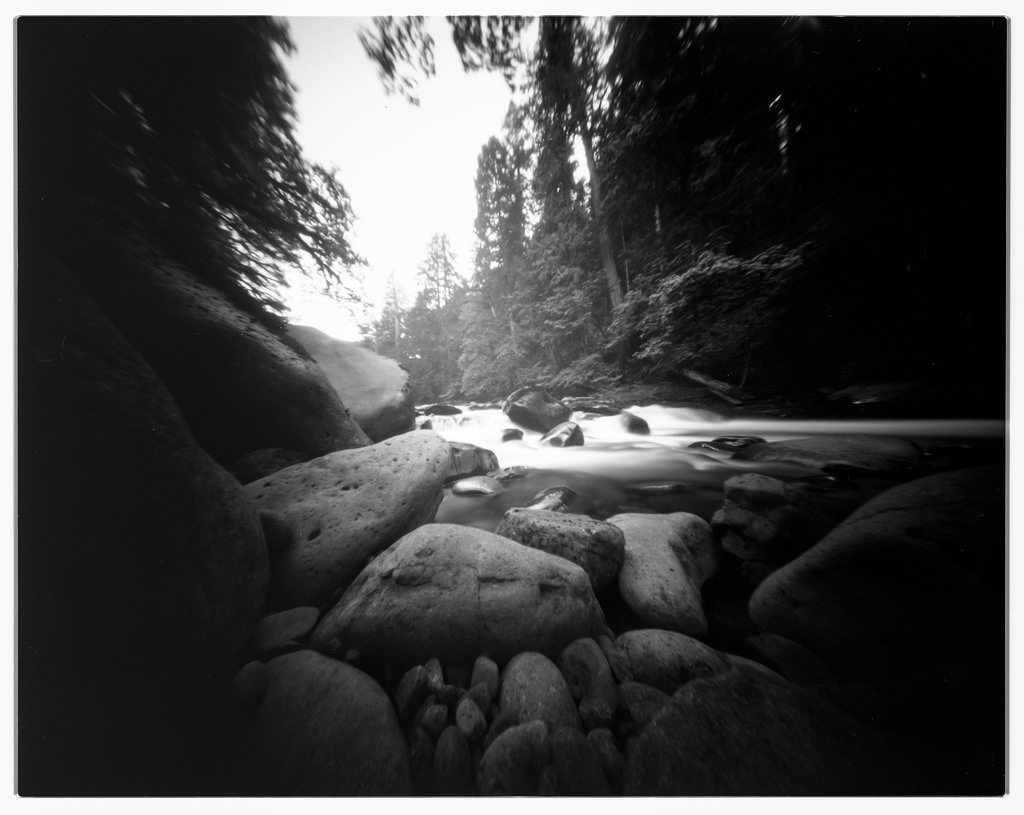
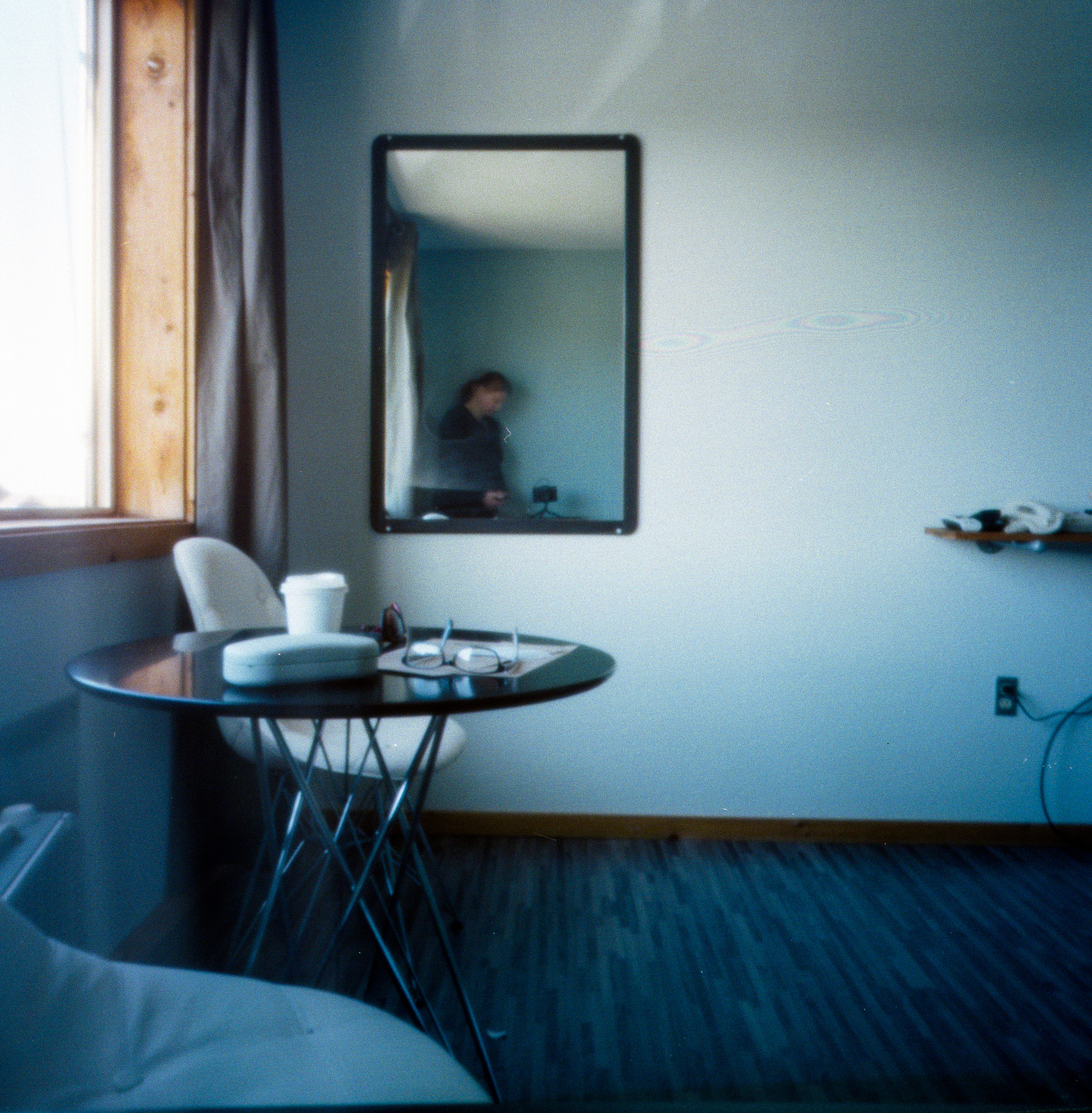
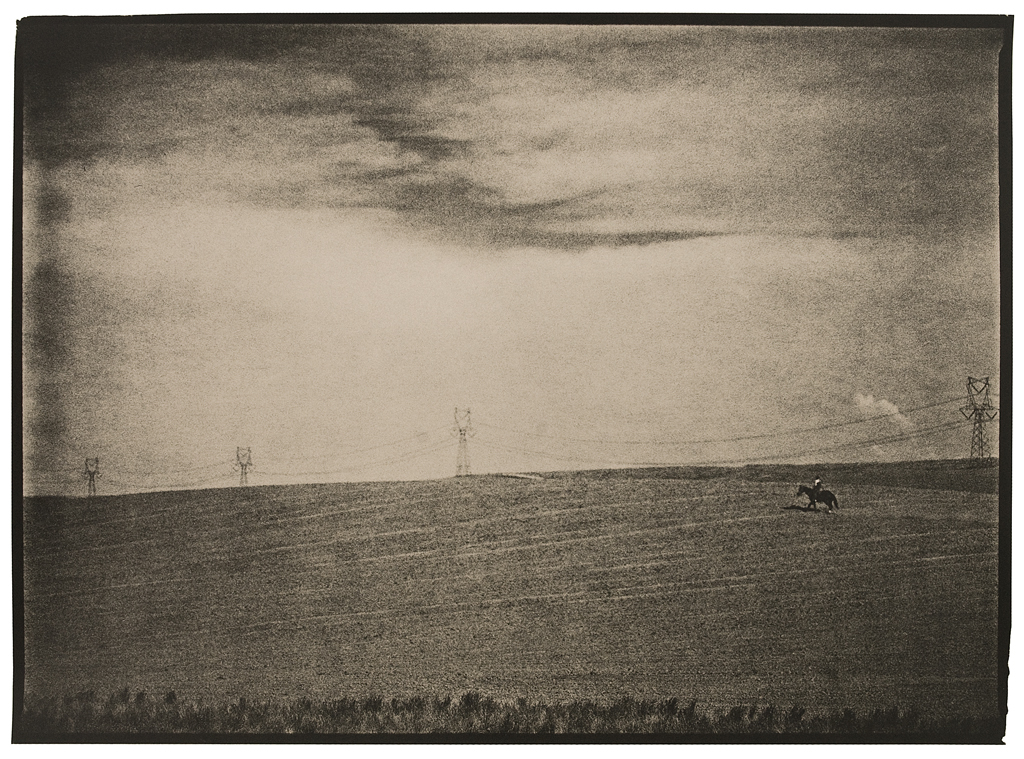
Pinhole photography is, essentially, an in-depth study in exposure. The only thing you have control over is exposure time. A pinhole camera is simply a box with a tiny hole to let in light. It is photography in its very basic form. Since the aperture on pinhole cameras is so small it allows for very long exposures in daylight. These long exposures are what fascinates me about this type of photography. A lot can happen in the seconds that tick away while an exposure is being made.
blowin’ in the wind
I Am Amsterdam
Lemonade Nachos and Cold Drinks
Pinholers Enjoying Jenever
River Watching
Self Portrait In a Hotel Room Mirror
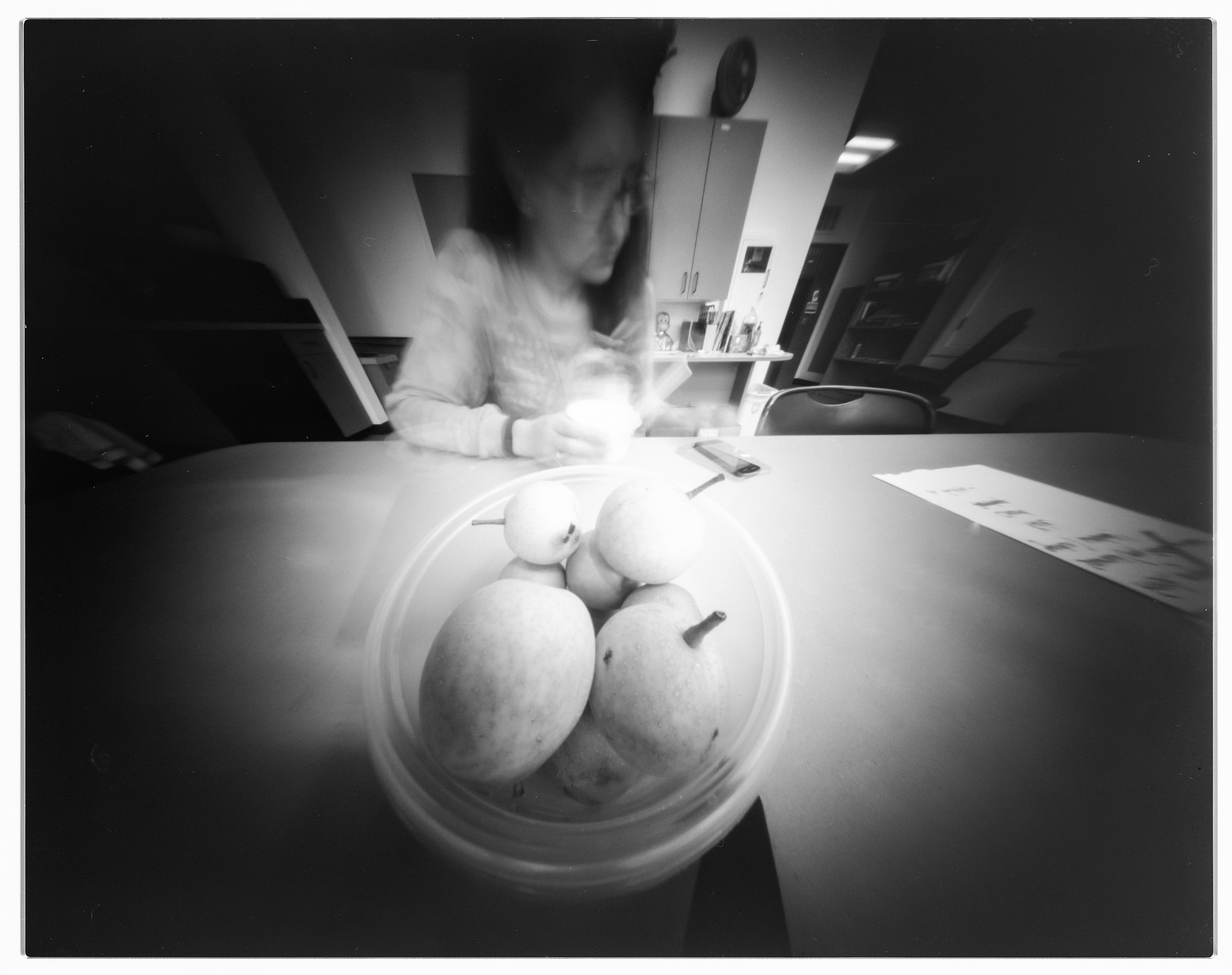
Self With Pears
The Truth Is Behind The Kale and Yogurt
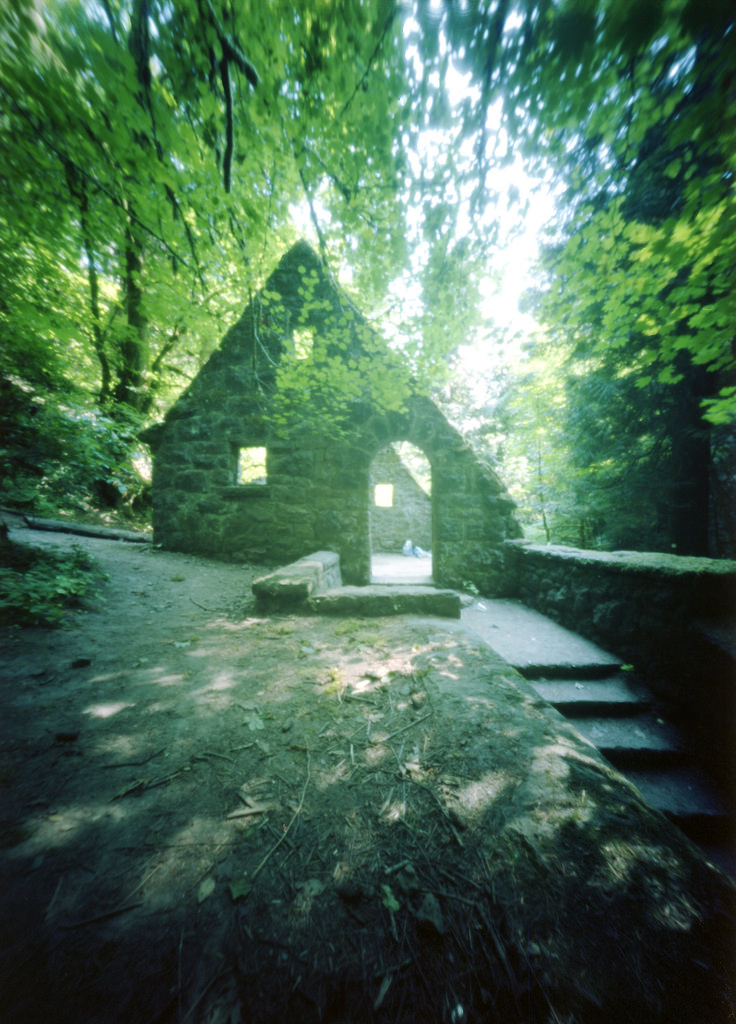
The Witches Castle
During the day, Moni Smith is a Children’s Librarian who lives in the Pacific Northwest of the USA. When she is not wearing her librarian hat she likes to wander around with one of her many pinhole cameras to see what she can capture on film.
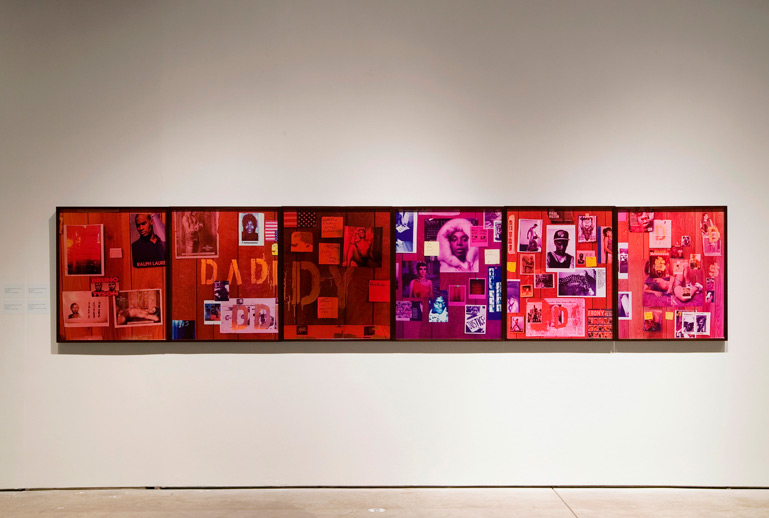
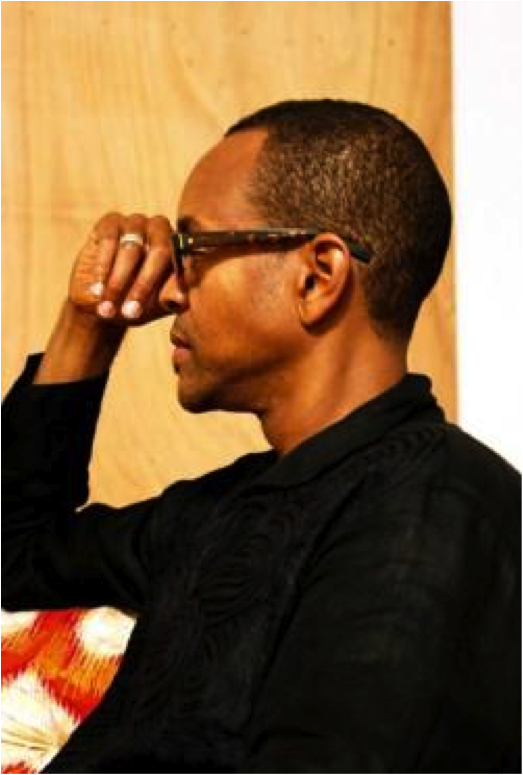
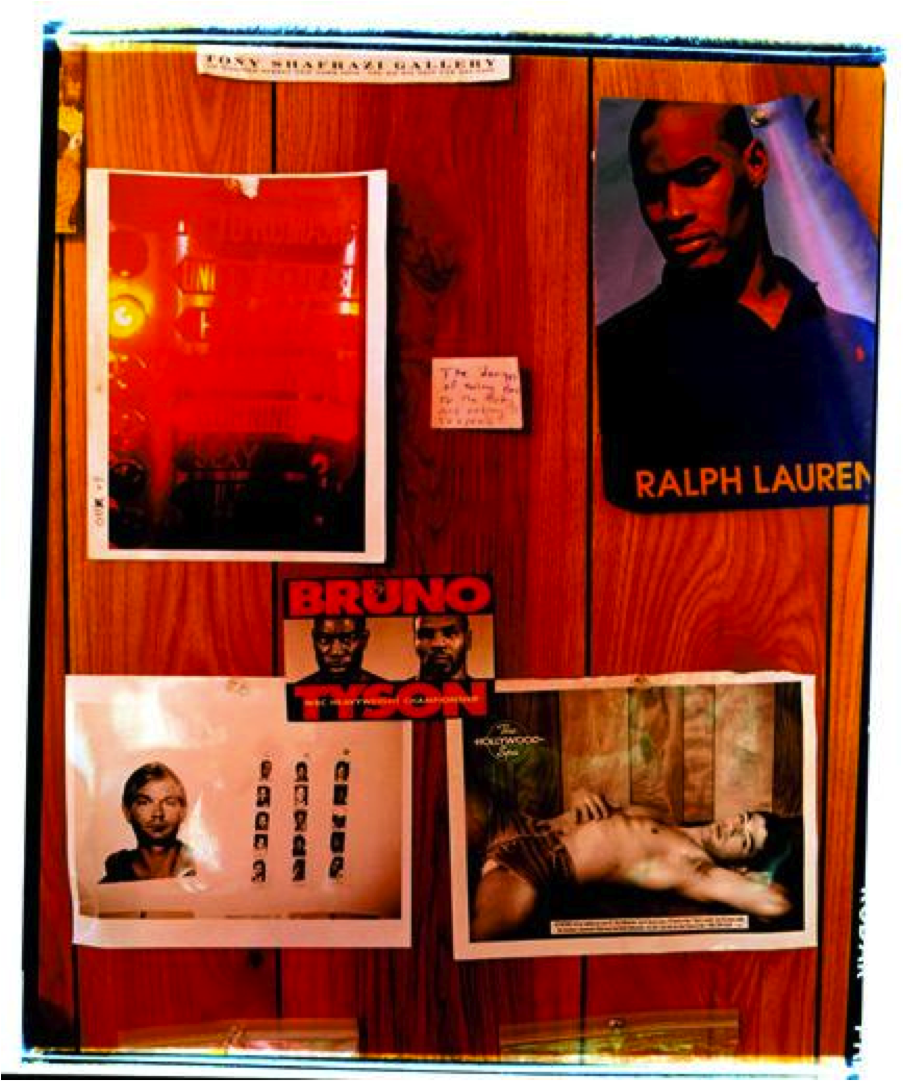
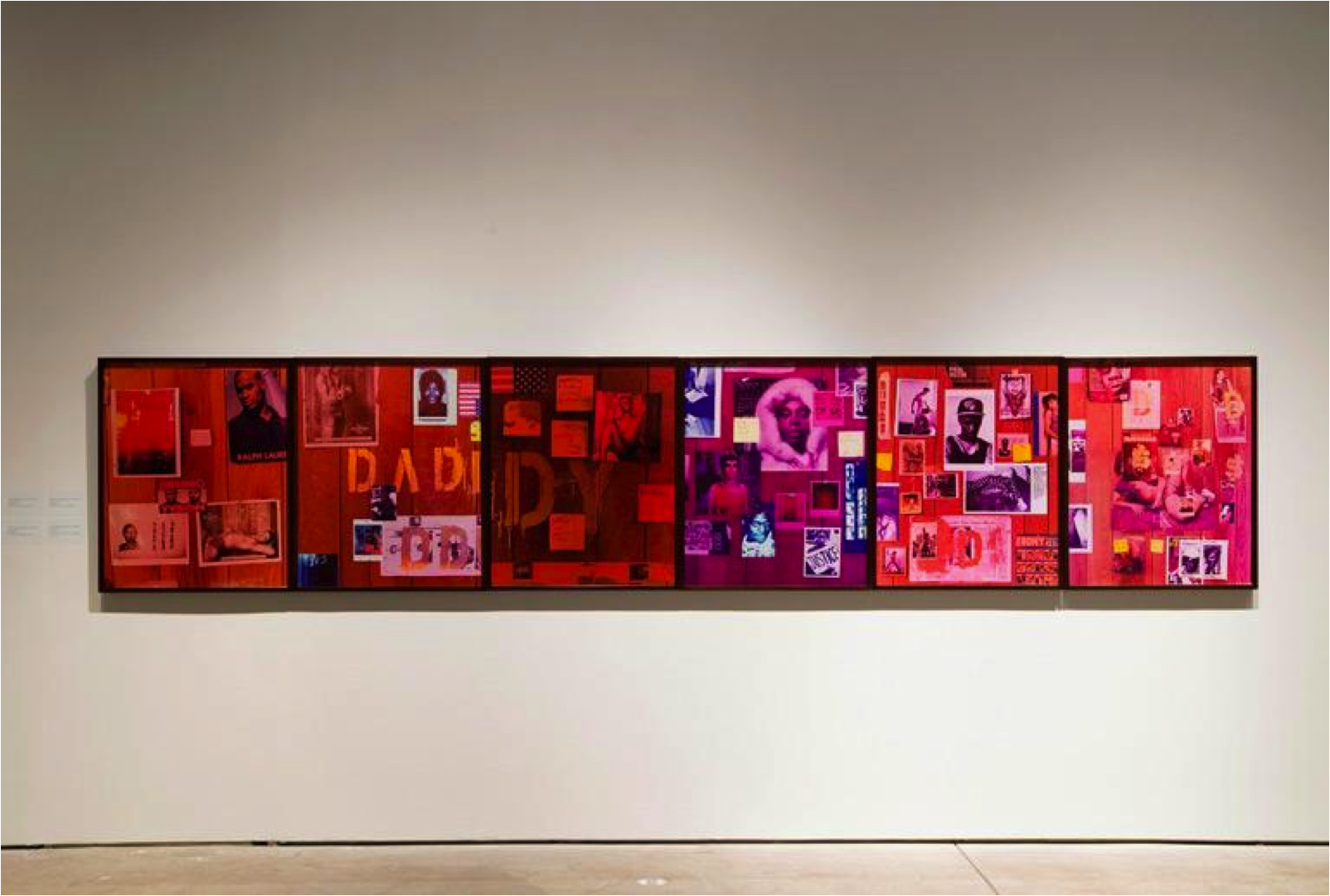
For more than two decades Lyle Ashton Harris has cultivated a diverse artistic practice ranging from photographic media, collage, installation and performance. His work explores intersections between the personal and the political, examining the impact of ethnicity, gender and desire on the contemporary social and cultural dynamic. Known for his self-portraits and use of pop culture icons (such as Billie Holiday and Michael Jackson), Harris teases the viewers’ perceptions and expectations, resignifying cultural cursors and recalibrating the familiar with the extraordinary. His work has been exhibited internationally, including at the Whitney Museum of American Art, the Solomon R. Guggenheim Museum and the 52nd Venice Biennale. His work has been acquired by major international museums, most recently by the Museum of Modern Art in New York. His commissioned work has been featured in a wide range of publications, including The New York Times Magazine and the New Yorker. In 2014 Harris joined the board of trustees at the American Academy in Rome and was named the 10th recipient of the David C. Driskell Prize by the High Museum of Art in Atlanta. Born in New York City, Harris spent his formative years in Dar Es Salaam, Tanzania. He received his Bachelor of Arts with Honors from Wesleyan University in 1988 and a Masters in Fine Arts from the California Institute of the Arts in 1990. He currently lives and works in New York City and is an Associate Professor at New York University.http://www.lyleashtonharris.com/about/
Lyle Ashton Harris is considered to be a pioneer in Postcolonial art, in which his collaboration with Renee Cox has a very important dialogue about blackness with the residue of Colonialism. One of the goals of Postcolonialism is to be aware of the far reaching effects of Colonialism and then ultimately to rewrite that history. To this end Lyle Ashton Harris has an important place in the legacy of art history. It was with this knowledge and hope that attendance to the HIGH museum lecture in Atlanta on January 15, 2015 became mandatory.
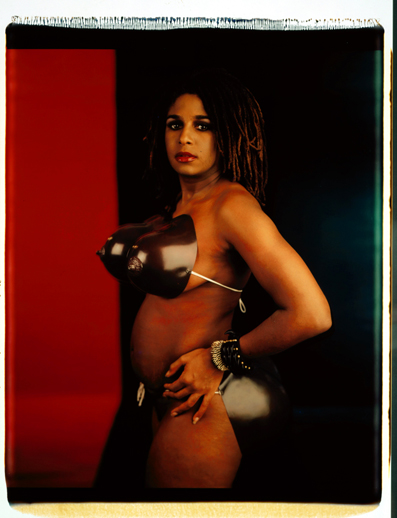
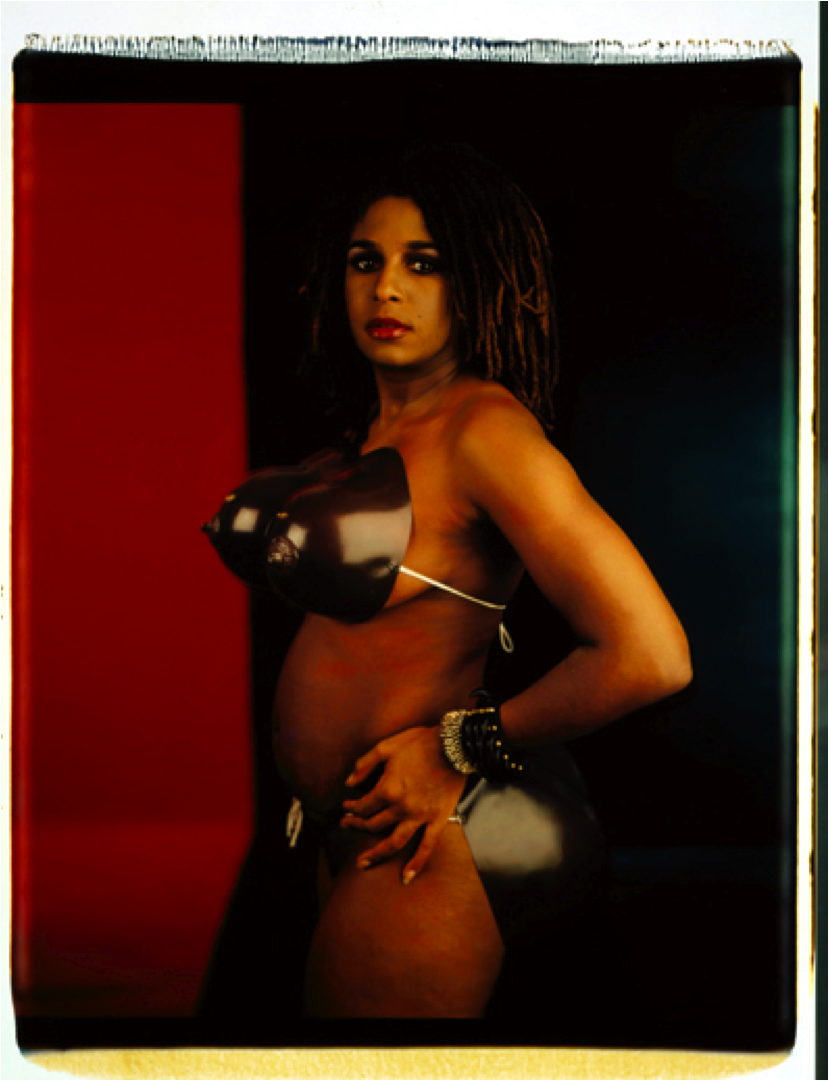
For the exhibition Mirage: Enigmas of Race, Difference and Desire (1995), Lyle Ashton Harris in collaboration with Renee Valerie Cox created the photograph, “Venus Hottentot 2000.” In this futuristic reinterpretation of the Hottentot Venus, Renee Valerie Cox directly inserts her own body into the historical matrix of Western representations that configured black female sexuality. In the photograph Cox’s body is transformed, recalling the Hottentot Venus, with the addition of protruding metallic breasts and an accompanying metal butt extension. The white strings that delicately hold these metallic body parts in place with bow, seem to emphasize the artists’ complex and ambivalent relationships to representations of black female sexuality. Cox wears the metallic appendages like a costume or disguise, but her own nude body is simultaneously revealed to the viewer. She stands in profile emphasizing her bodily dimensions, hands akimbo, and stares directly at the viewer.“Hottentot 2000″ is one photograph in a series by Harris called The Good Life, 1994. https://scholarblogs.emory.edu/postcolonialstudies/2014/06/21/postcolonial-performance-and-installation-art/
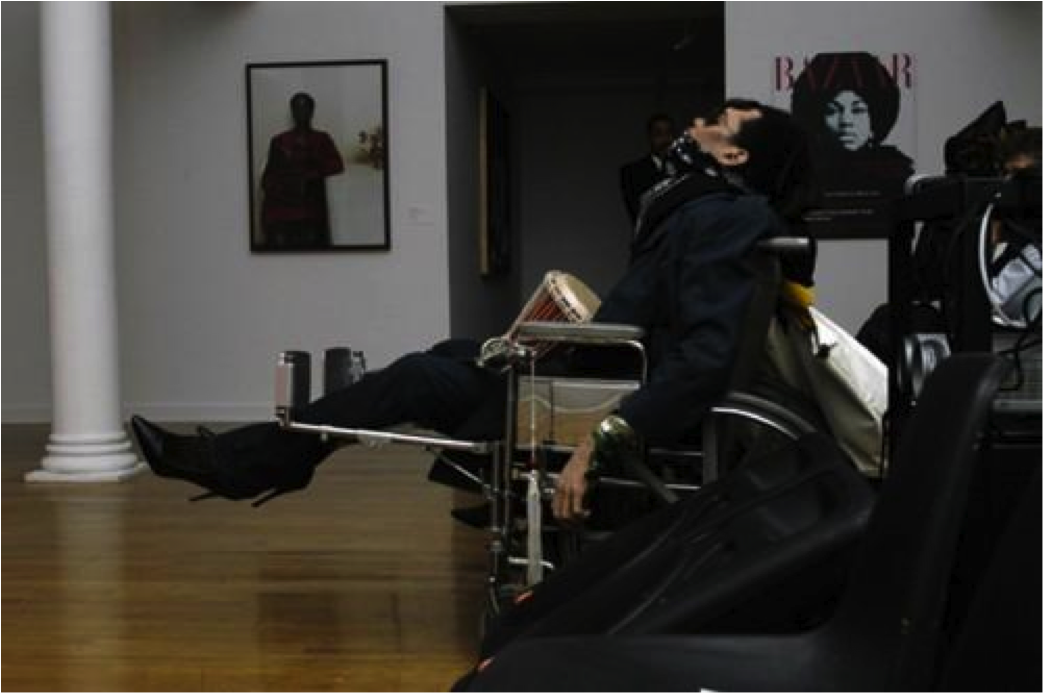
Harris then proceeded to deliver one of the most disappointing and disturbing lectures, a litany of name-dropping and external references to other famous artists and philosophers that was far from Postcolonial thoughts except for the engagement of the “Other”–the “Other” is not the only point of Postcolonialism. He bounced from topic to topic in flurry of art speak that was intended to connect conflicting concepts that did not really apply to his own praxis. Harris discussed his overall career as a photographer moving through collage, portraiture, and performance art. The audience suffered through an amateurish performance about Michael Jackson and the homeless that was poorly executed. The lecture ended with a slideshow of all his notable acquaintances over an amped up Grace Jones track with his voice competing with it. After suffering though, it became clear the one consistent in Harris’ methodology is appropriation of established Western thought. Postcolonialism is not interested in appropriating the West. Appropriating the West can only result in the promotion of the residual effects of colonialism, not ending them.
What exactly is special to Harris’ art practice to be so well received?
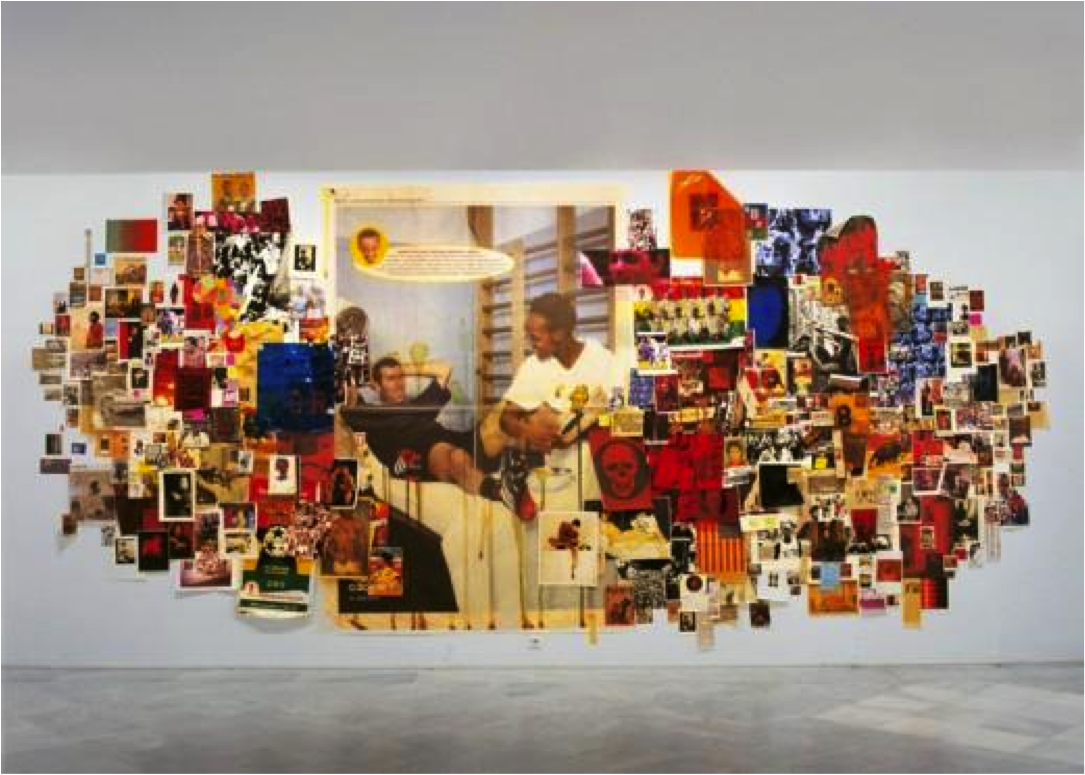
Harris’s collages aren’t technically collages at all; a rebus picture puzzle would be more accurate. These “collages” don’t overlap, are relatively the same-sized images, with almost the exact same space around each image. All point to a lack of mastery of medium/process. It is a visual dumbing down of two-dimensional space while referencing Picasso and Duchamp. So what if the images were rephotographed. How does that knowledge add to the importance of the concept? During the lecture Harris went into great detail when it came to the medium and rambled when it came to the work, overcompensating with name-dropping and large scale. The lecture had all the earmarks of the student who has not taken the time to write out his artist statement.
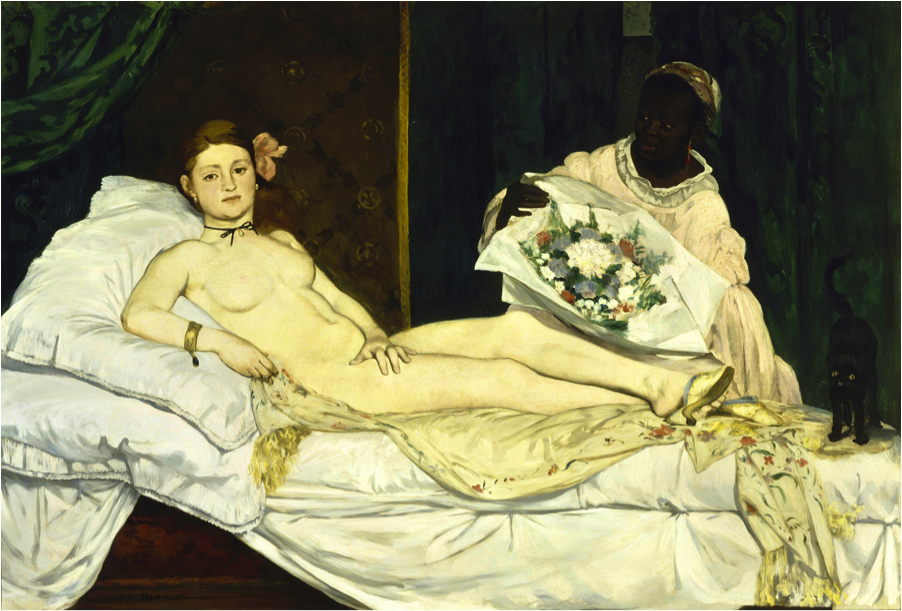
Harris discussed his collage Blow Up IV and how the main image relates to Manet’s Olympia and how the drips in the middle are semen. Once again an external reference used to lend importance to a sloppily executed artwork.
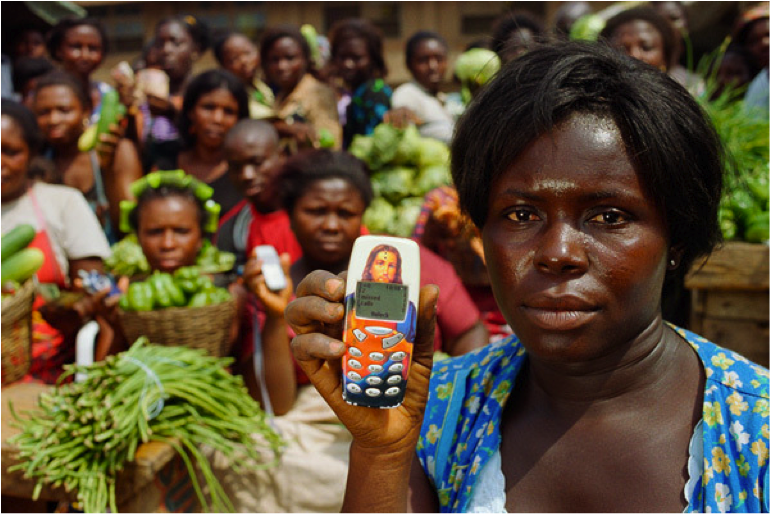
Harris described this NY Times commission on which he was charged to go to Africa and document Africans with some form of technology to which the above image and others were taken. This is no different than Manet’s Olympia with the spectacle of Blackness. Something that was intended to prove Africans modernity actually promotes Otherness.
The Decisive Moment
Henri Cartier-Bresson is considered to be the father of modern photojournalism. His style of “street photography,” using small format cameras, still influences modern photojournalists to this day.
In the documentary above, Henri Cartier-Bresson describes the elusive decisive moment, which cannot be staged or faked. Once it’s happened, that’s it. Bresson allows for this moment to occur while paying attention to composition. His composition affirms the narrative of the decisive moment. Lyle Ashton Harris relies only upon shock and icon to force the viewer into a narrative that he has constructed. It’s a burden that shock and icon cannot satisfy.
Christopher Hutchinson is an accomplished Jamaican conceptual artist, professor and contributor to the art community as a writer, critic and founder of the nonprofit Smoke School of Art. He is a Professor of Art at Atlanta Metropolitan State College and has been featured as a lecturer including prestigious engagements at University of Alabama and the Auburn Avenue Research Library. For two decades, Chris has been a practicing artist. His works have been exhibited in internationally recognized institutions including City College New York (CUNY) and featured at the world’s leading international galleries such as Art Basel Miami. He has always had an innate passion for creating spaces where Africans and people of African descent contribute to an inclusive contemporary dialogue—ever evolving, not reflexive but pioneering. This requires challenging the rubric of the canon of art history, a systemic space of exclusion for the Other: women and non-Whites, and where necessary he rewrites it. He received his Master of Fine Arts Degree in Painting from Savannah College of Art & Design, Atlanta and his Bachelor of Arts Degree from the University of Alabama in Huntsville, Alabama.
1. to fasten, join, or attach (usually followed by to):
to affix stamps to a letter.
2. to put or add on; append:
to affix a signature to a contract.
3. to impress (a seal or stamp).
4. to attach (blame, reproach, ridicule, etc.).
noun
5. something that is joined or attached.
6.
Grammar. a bound inflectional or derivational element, as a prefix, infix, or suffix, added to a base or stem to form a fresh stem or a word, as -ed added to want to form wanted, or im- added to possible to form impossible.
Big World
Blue Sky
Chance Meeting
Coleus
Every Time
Hope
Maplewood Drive
Morning Coffee
Morning Light
One
Queen
Signal
Slug Bug
Touchdown
Wake Me When It’s Over
Weather
Withered
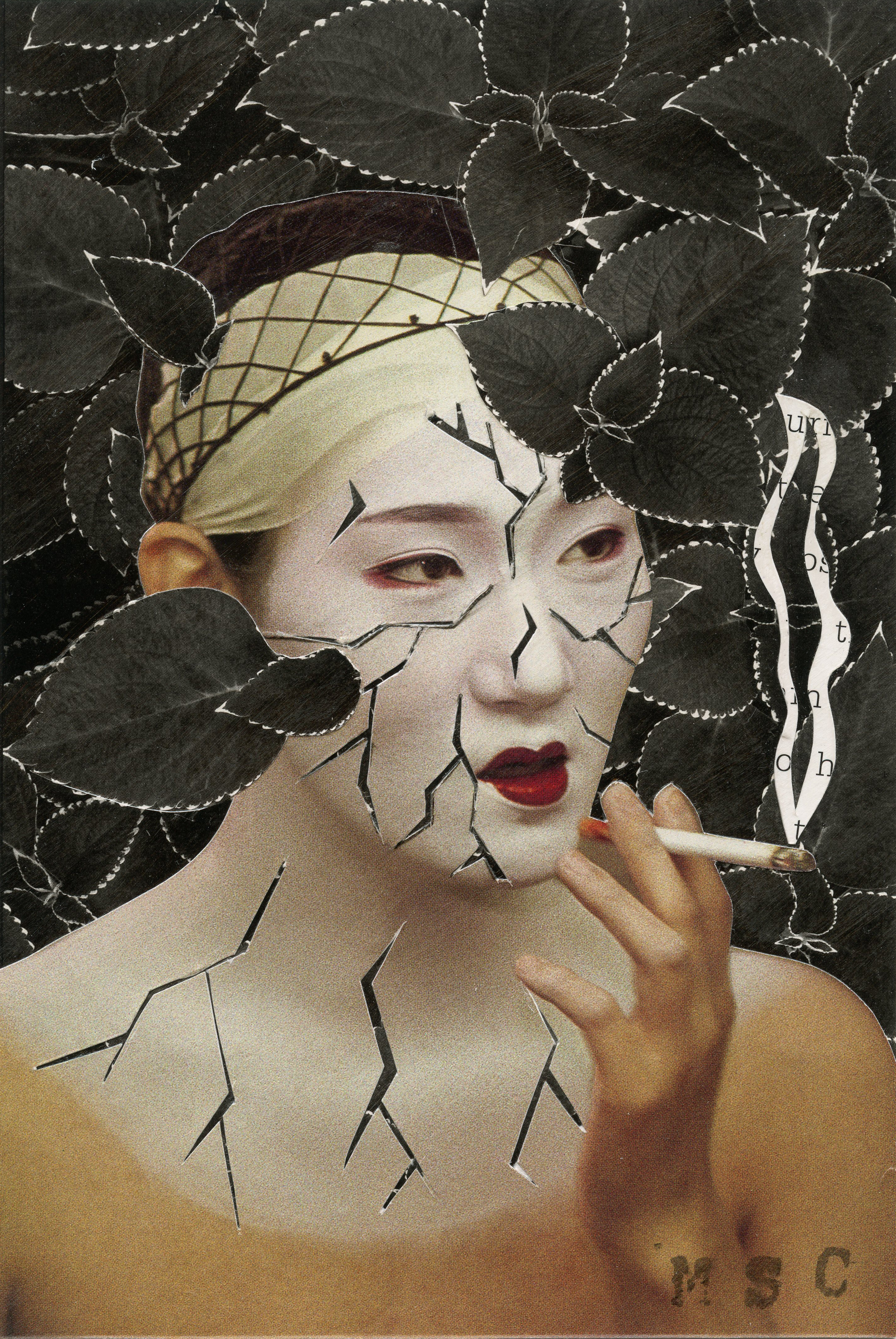
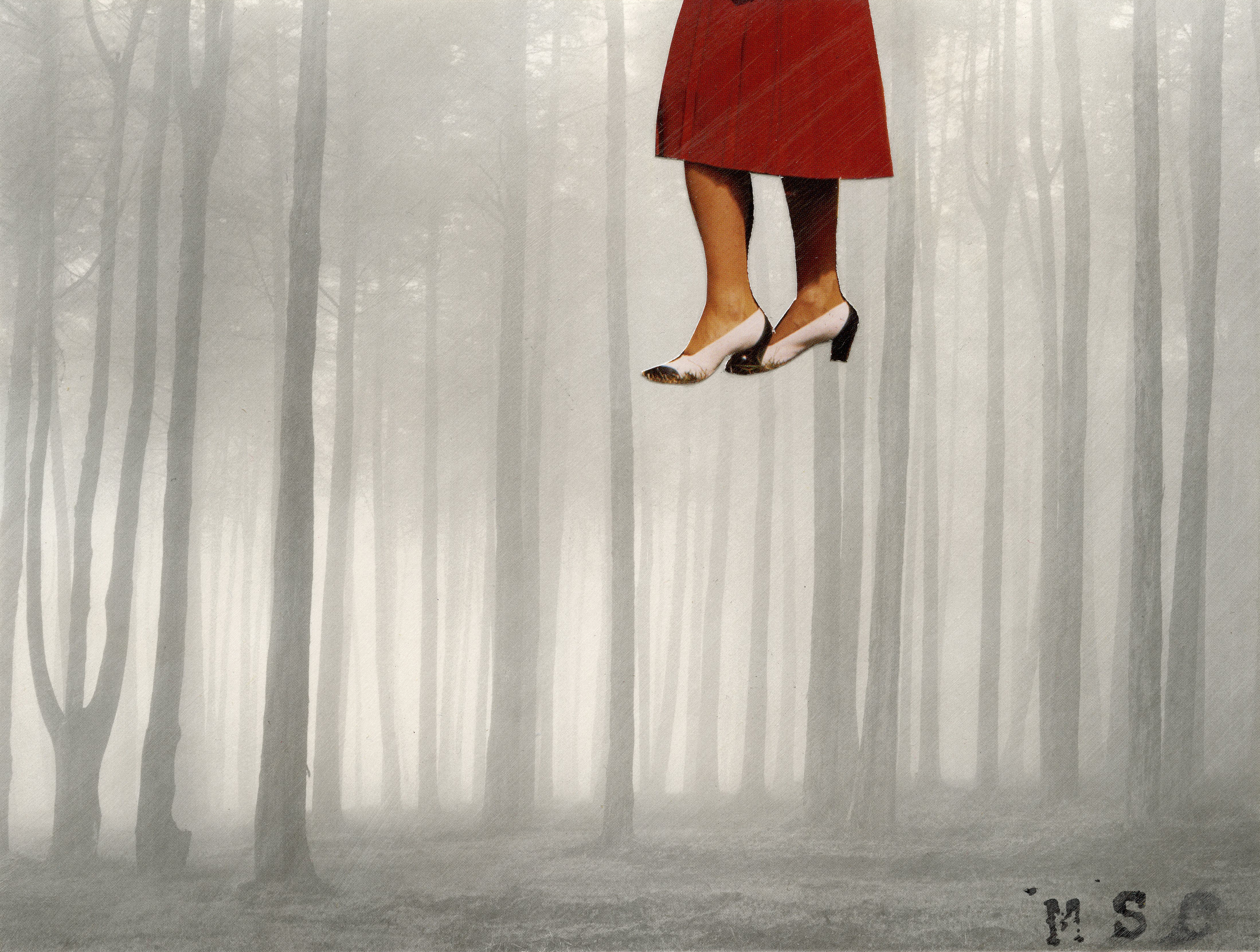
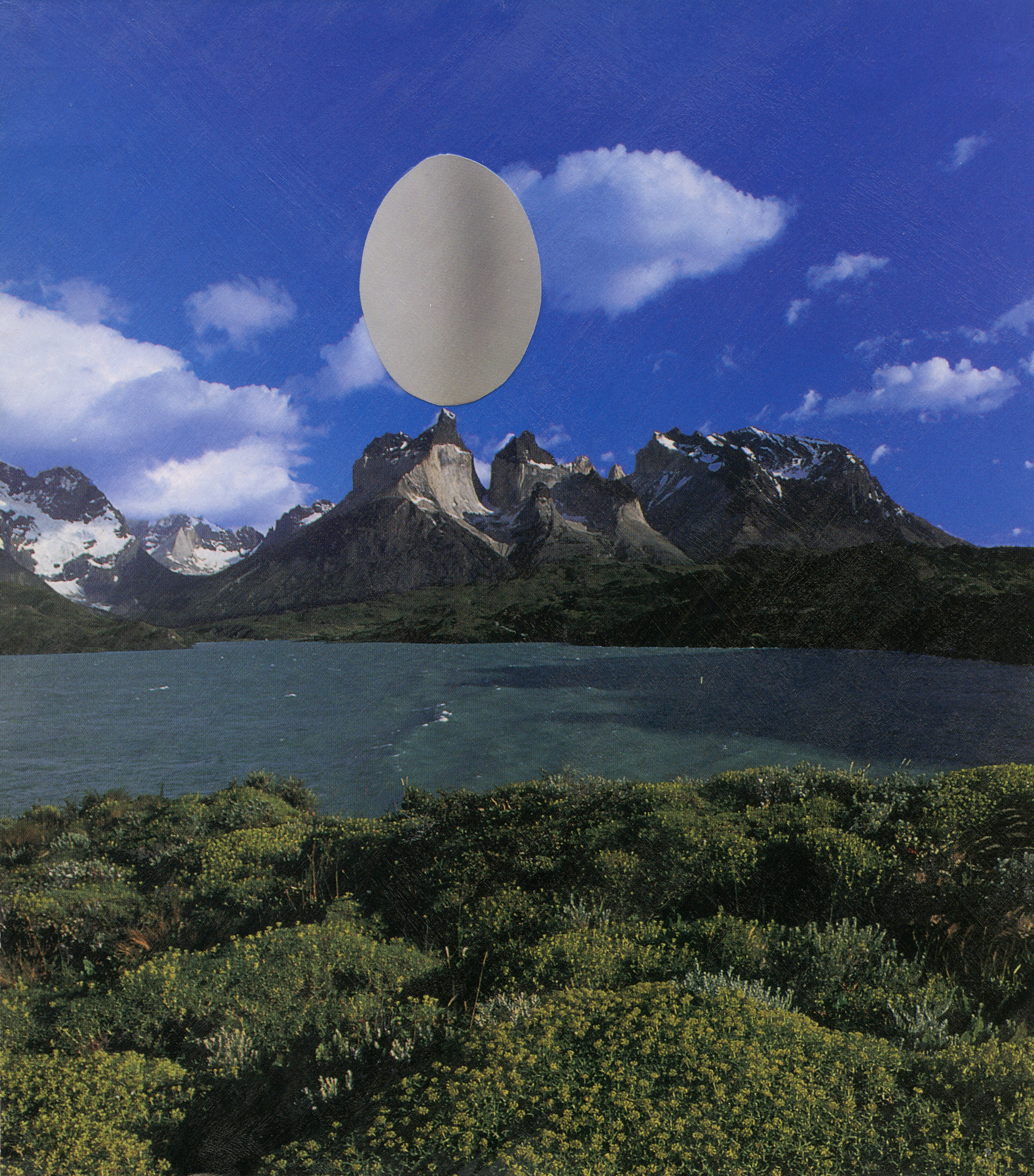
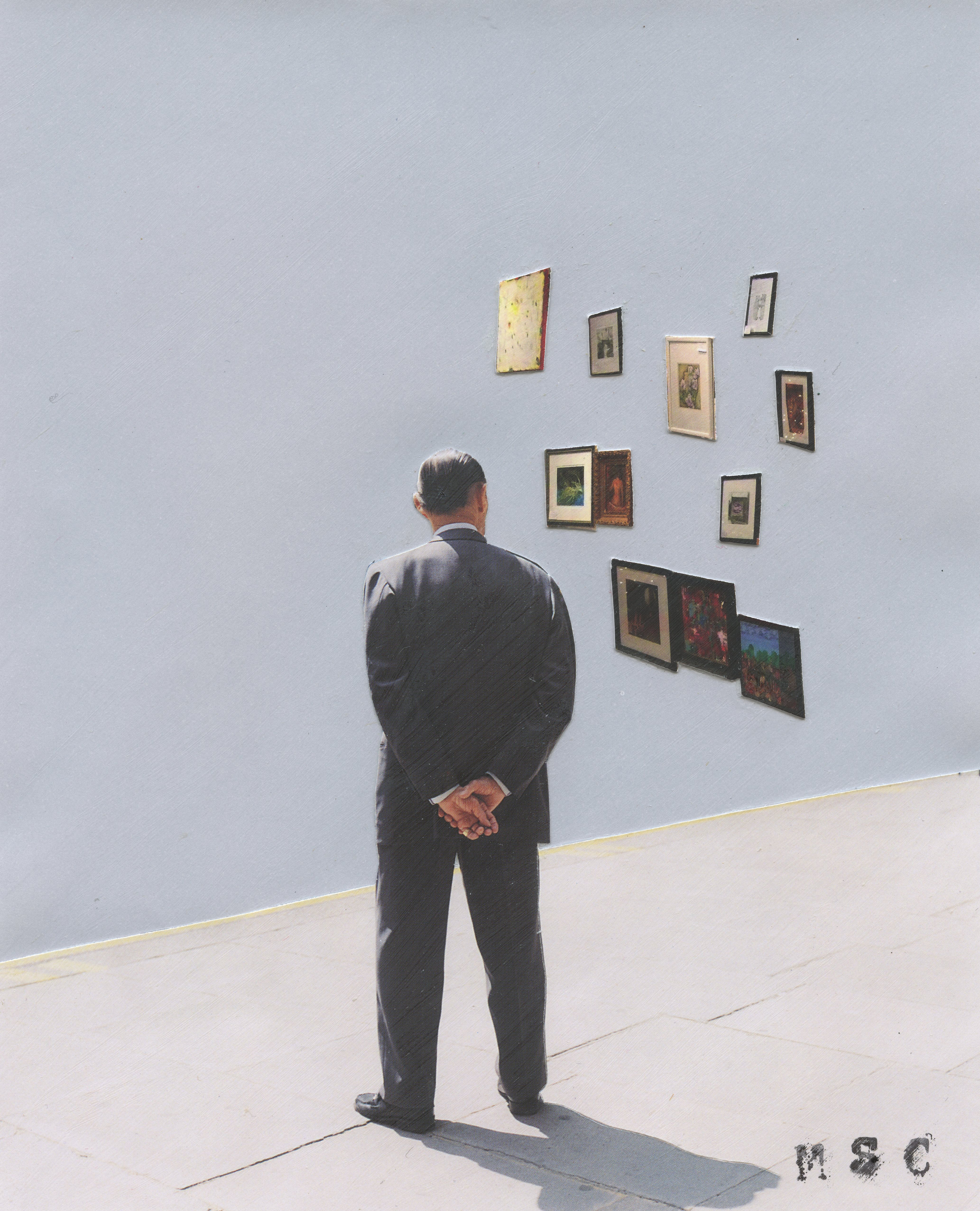
Michael S Church
The urgent connection between creation and destruction are on display within the
pieces I’ve broken apart, then reconnected.
It is in this space that I speak of the world around me, and to the voice within
myself simultaneously.
“I have no desire to understand art. I do however have a strong desire to confront
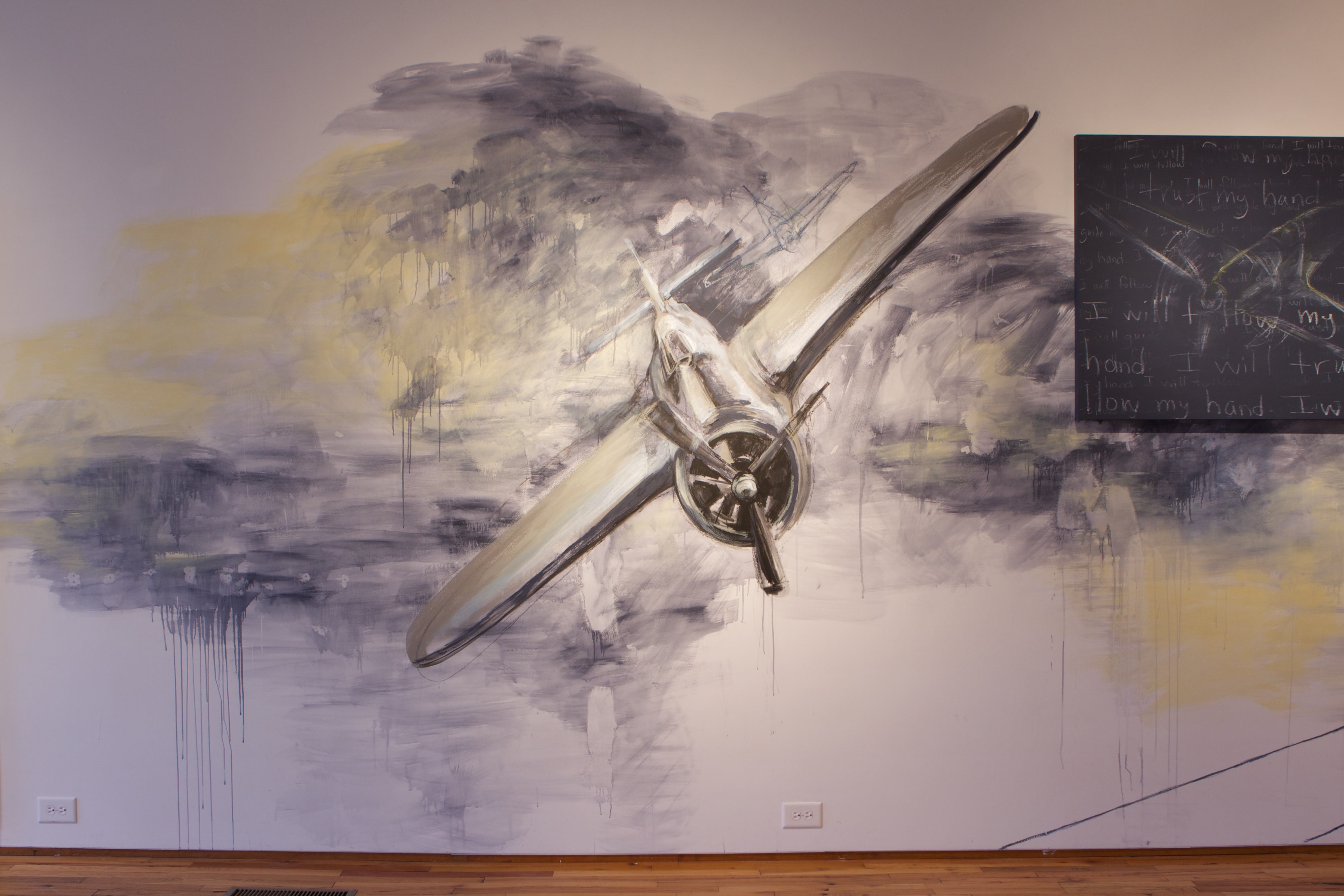
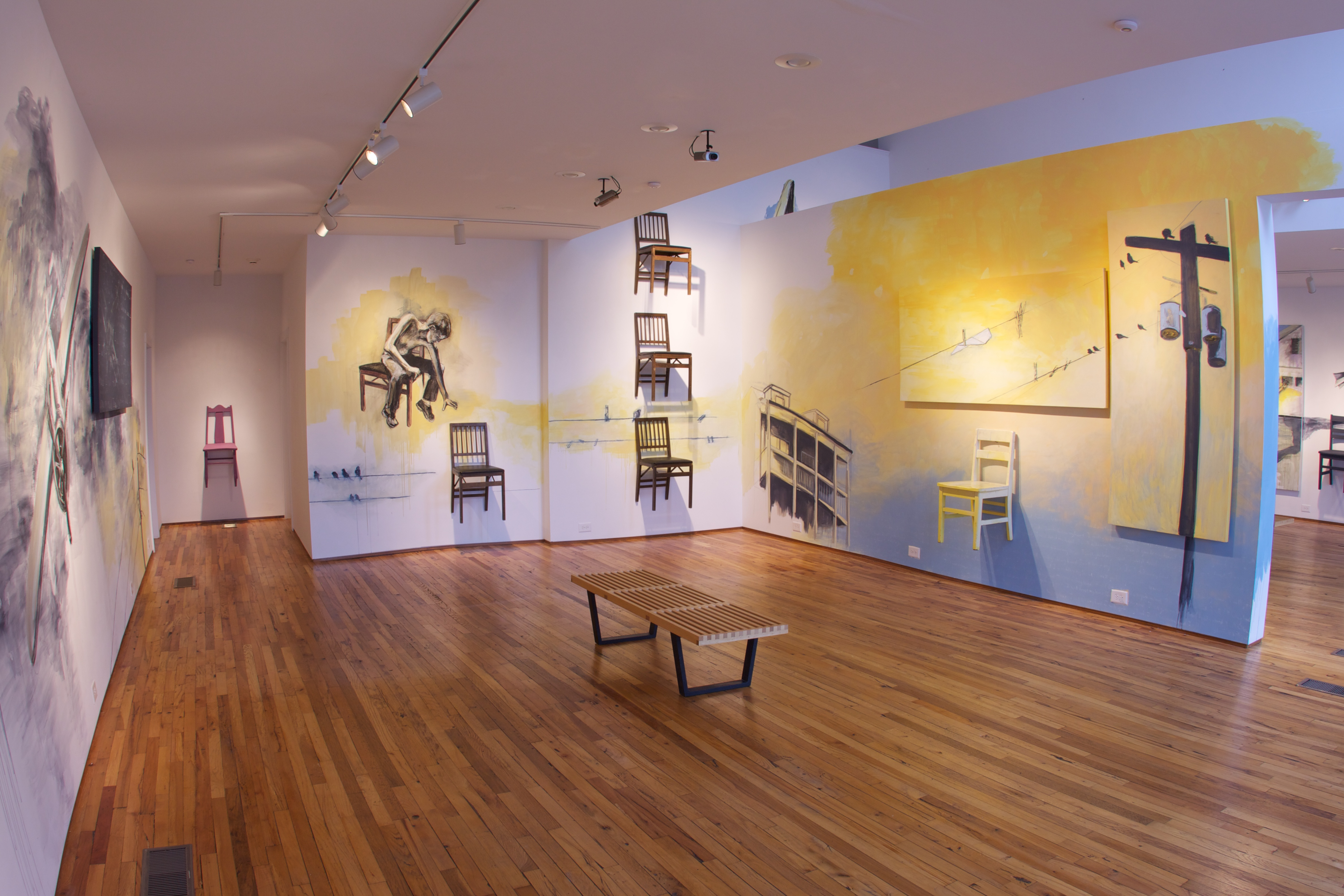
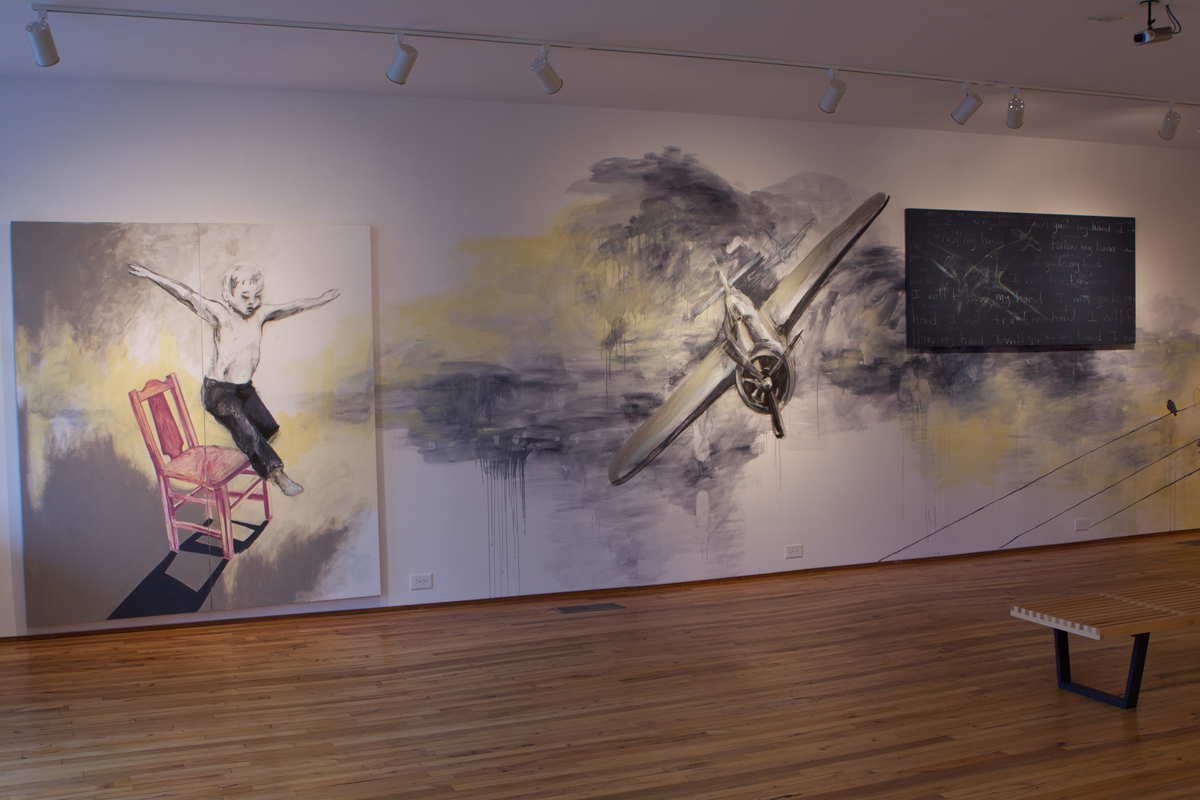
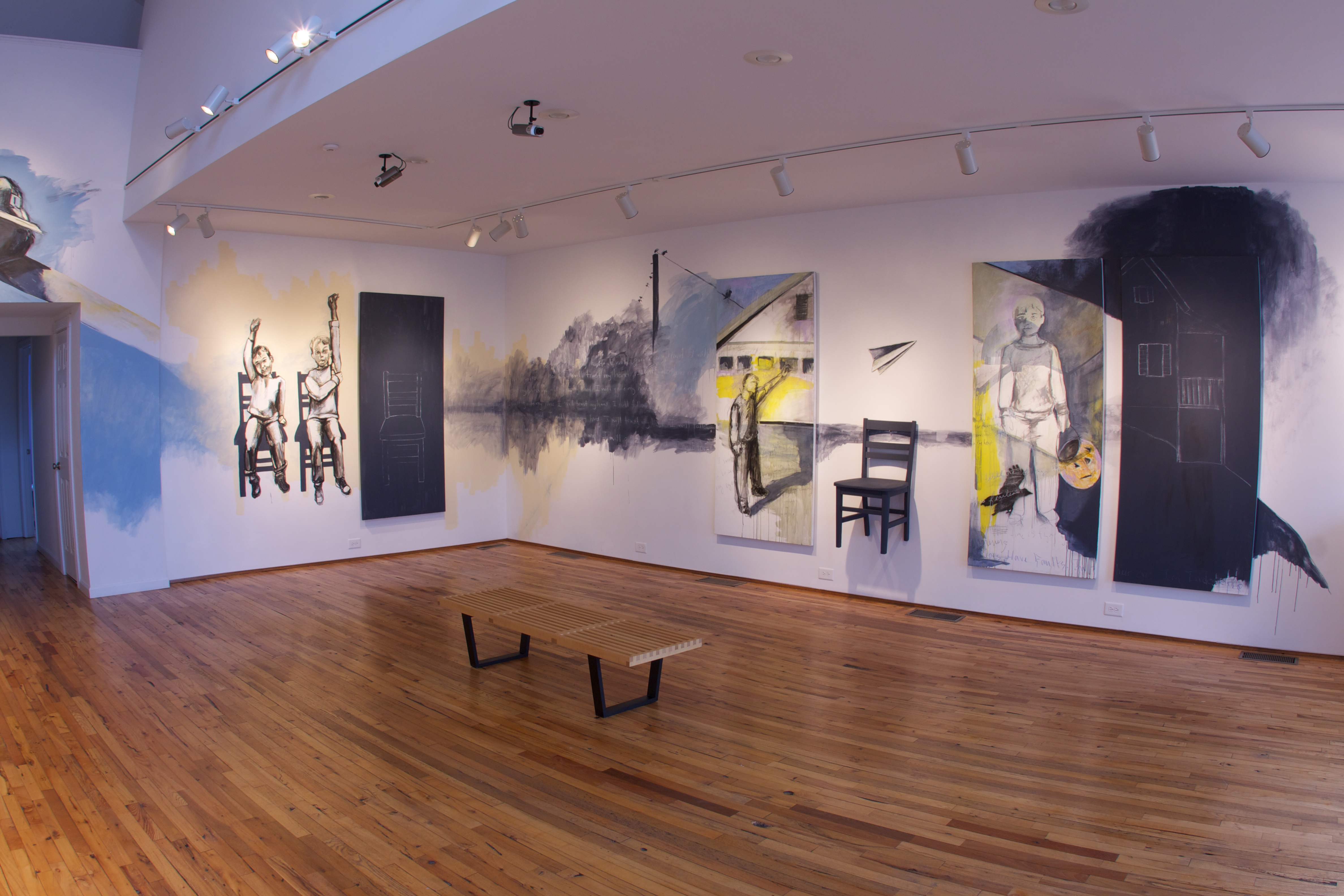
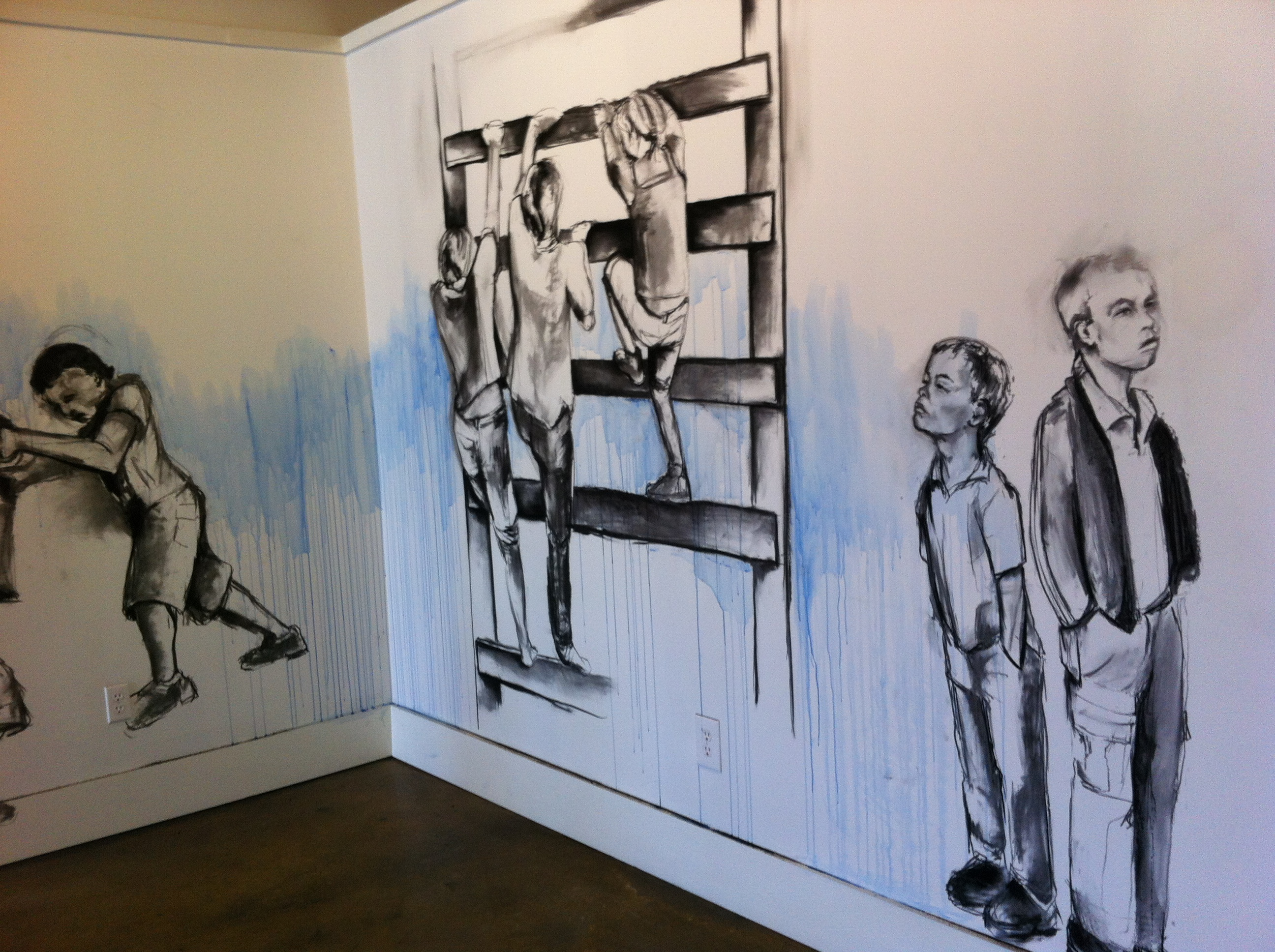
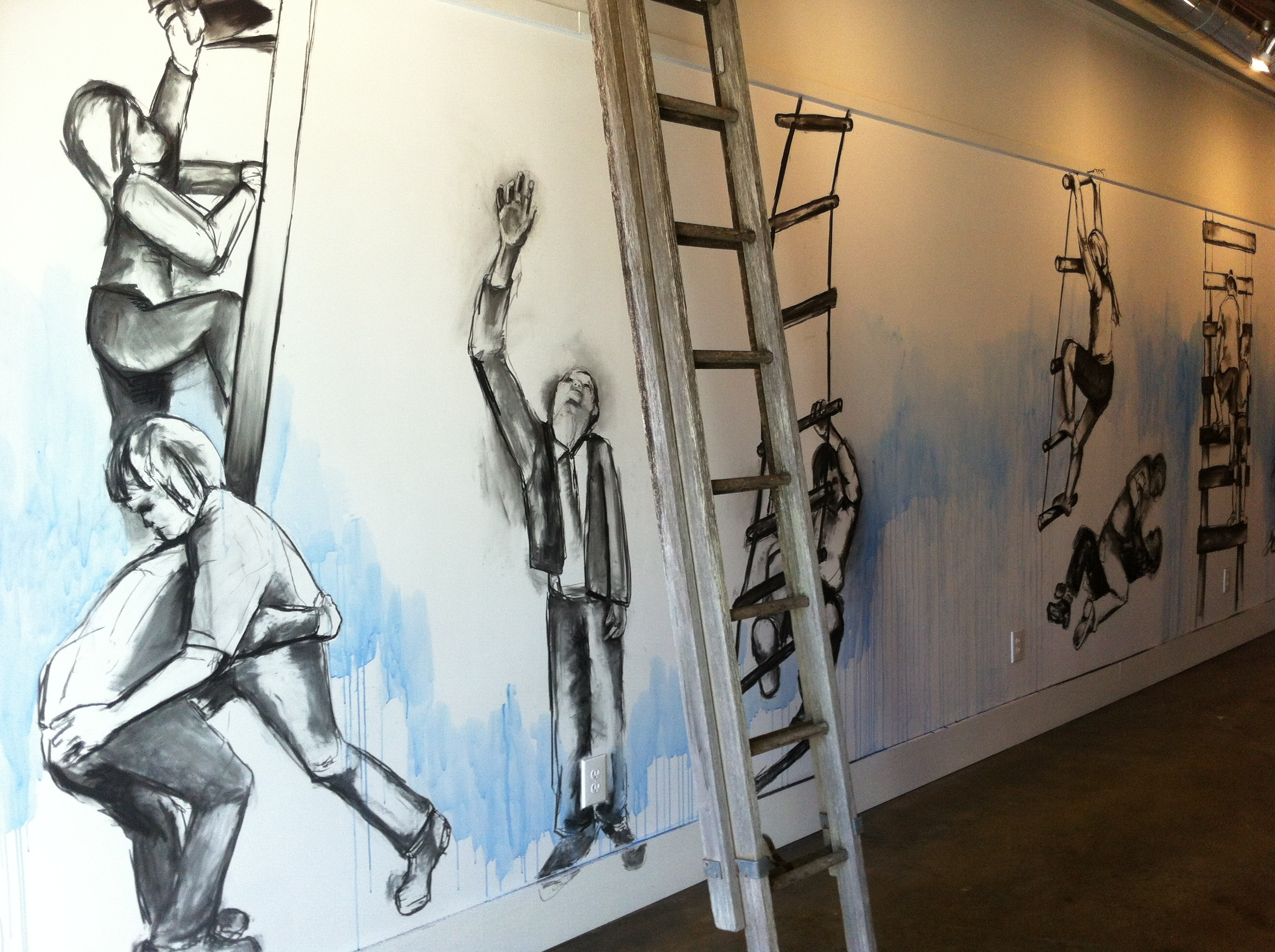
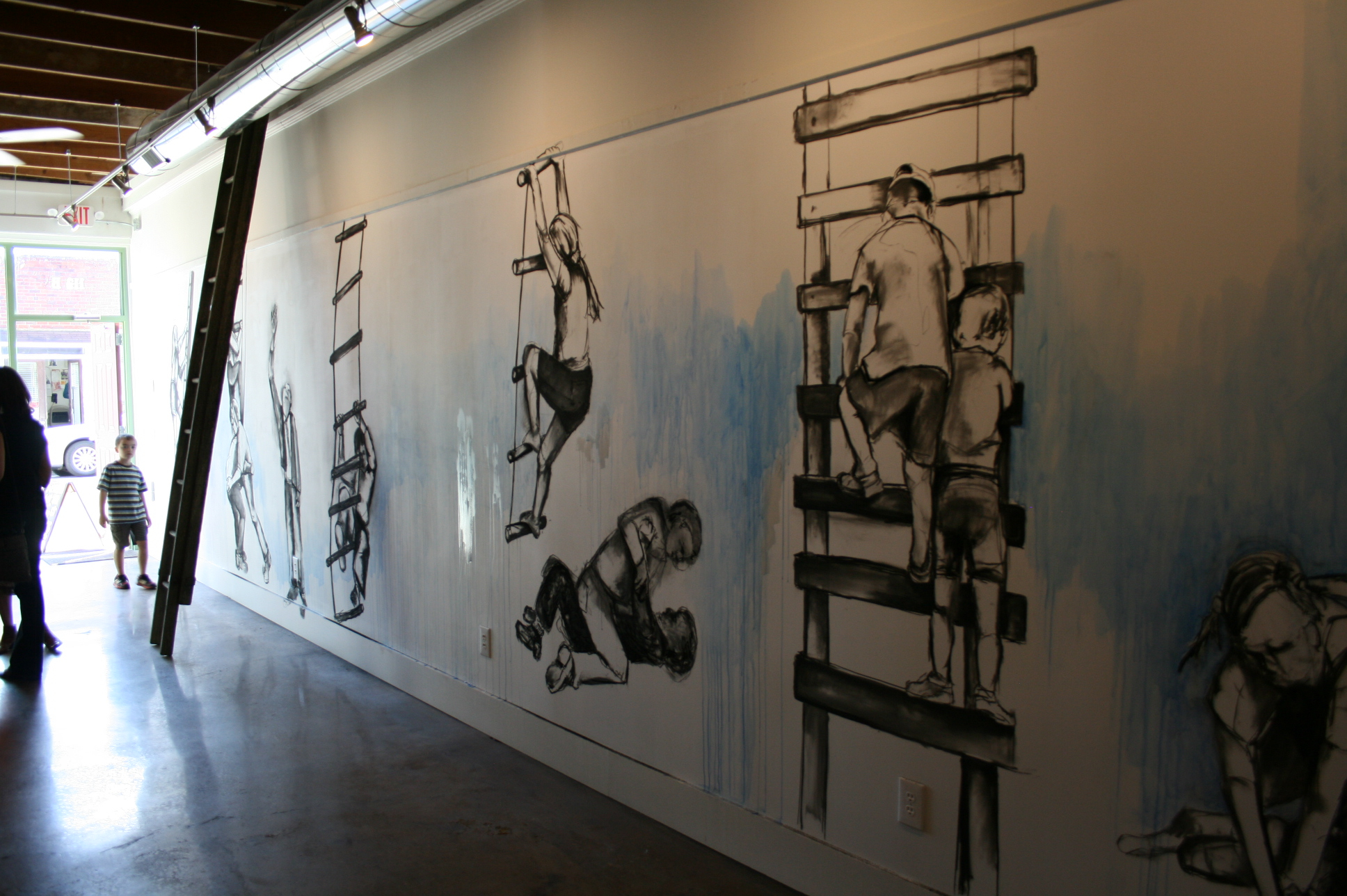
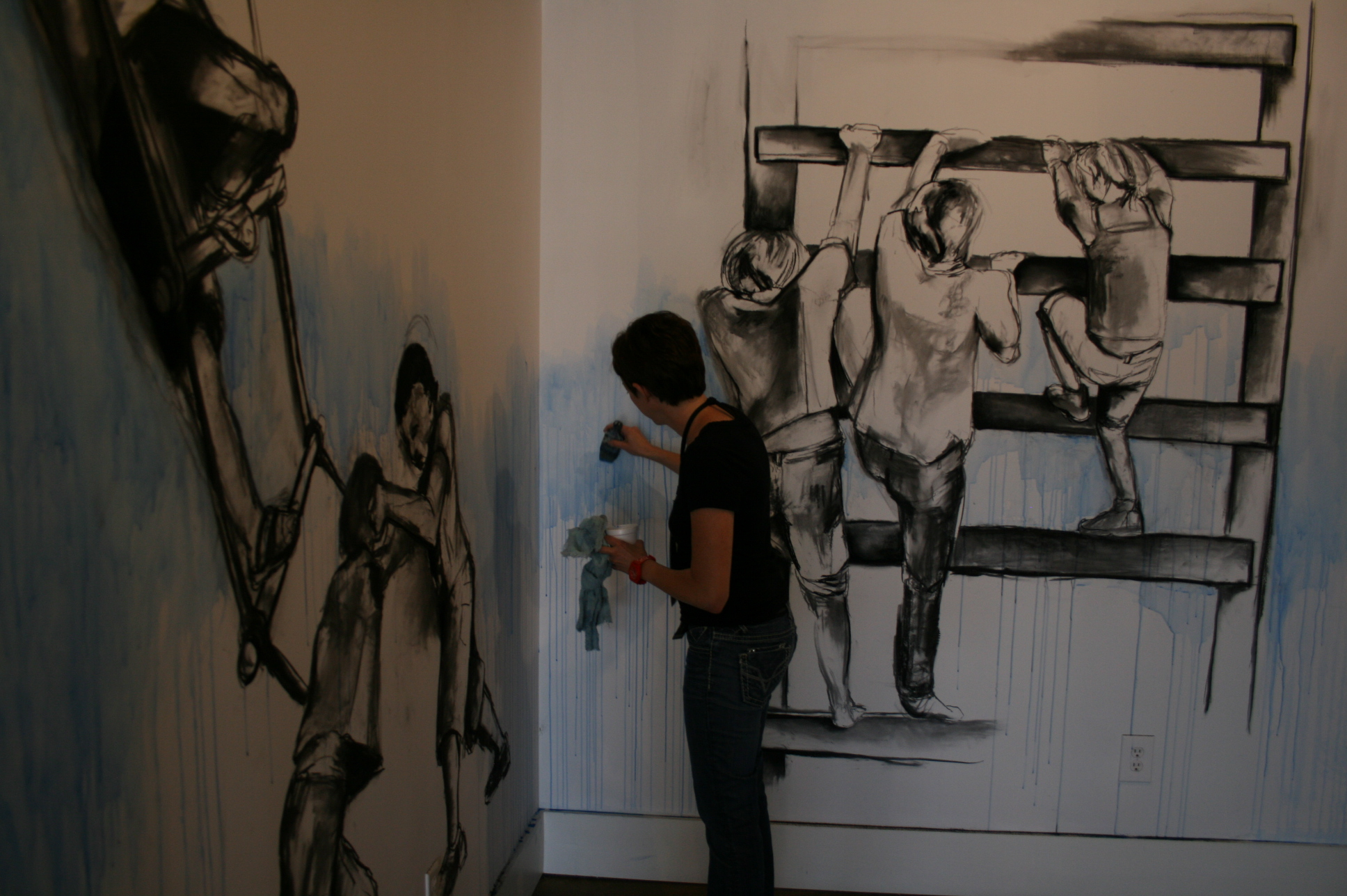
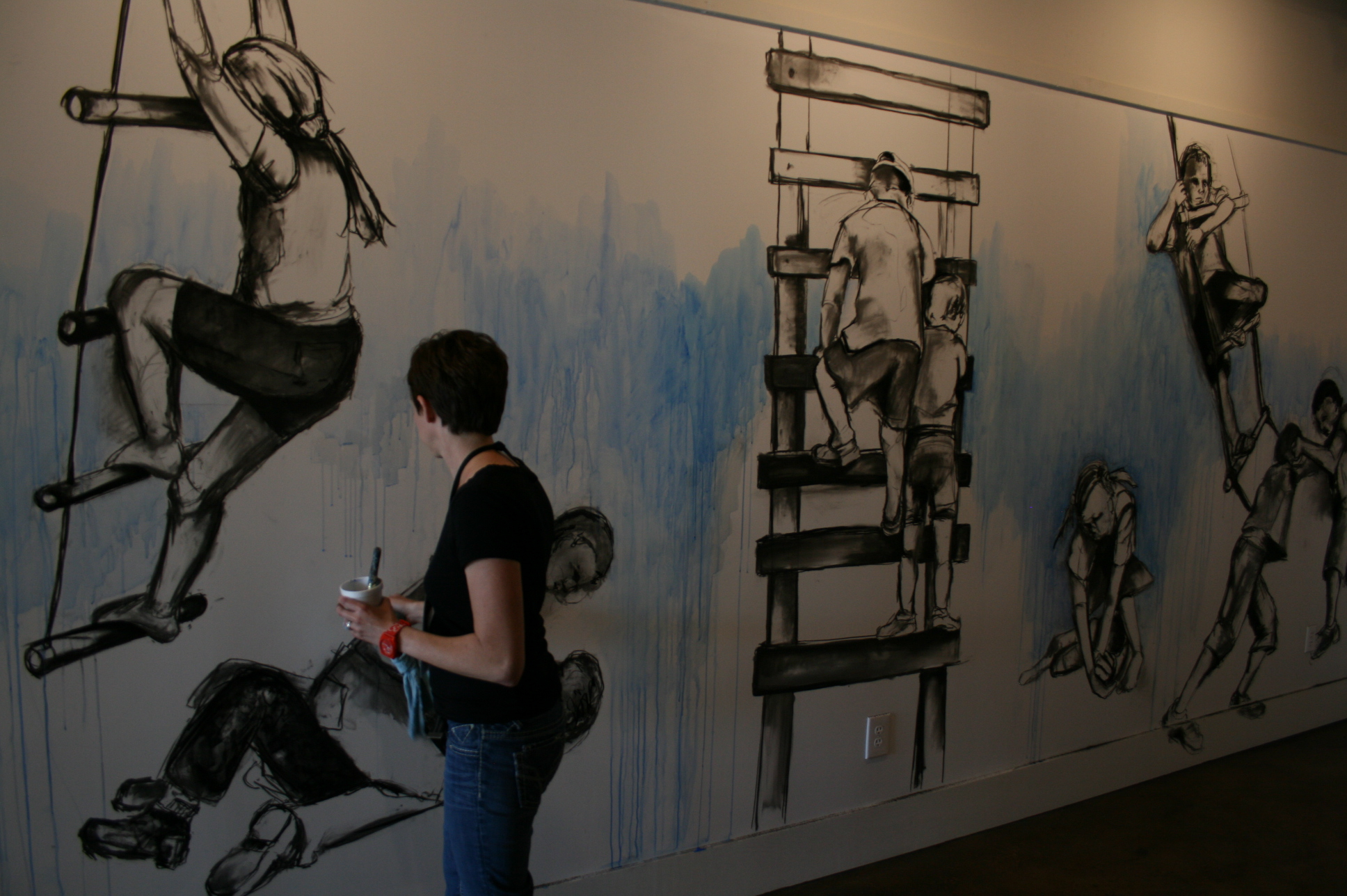
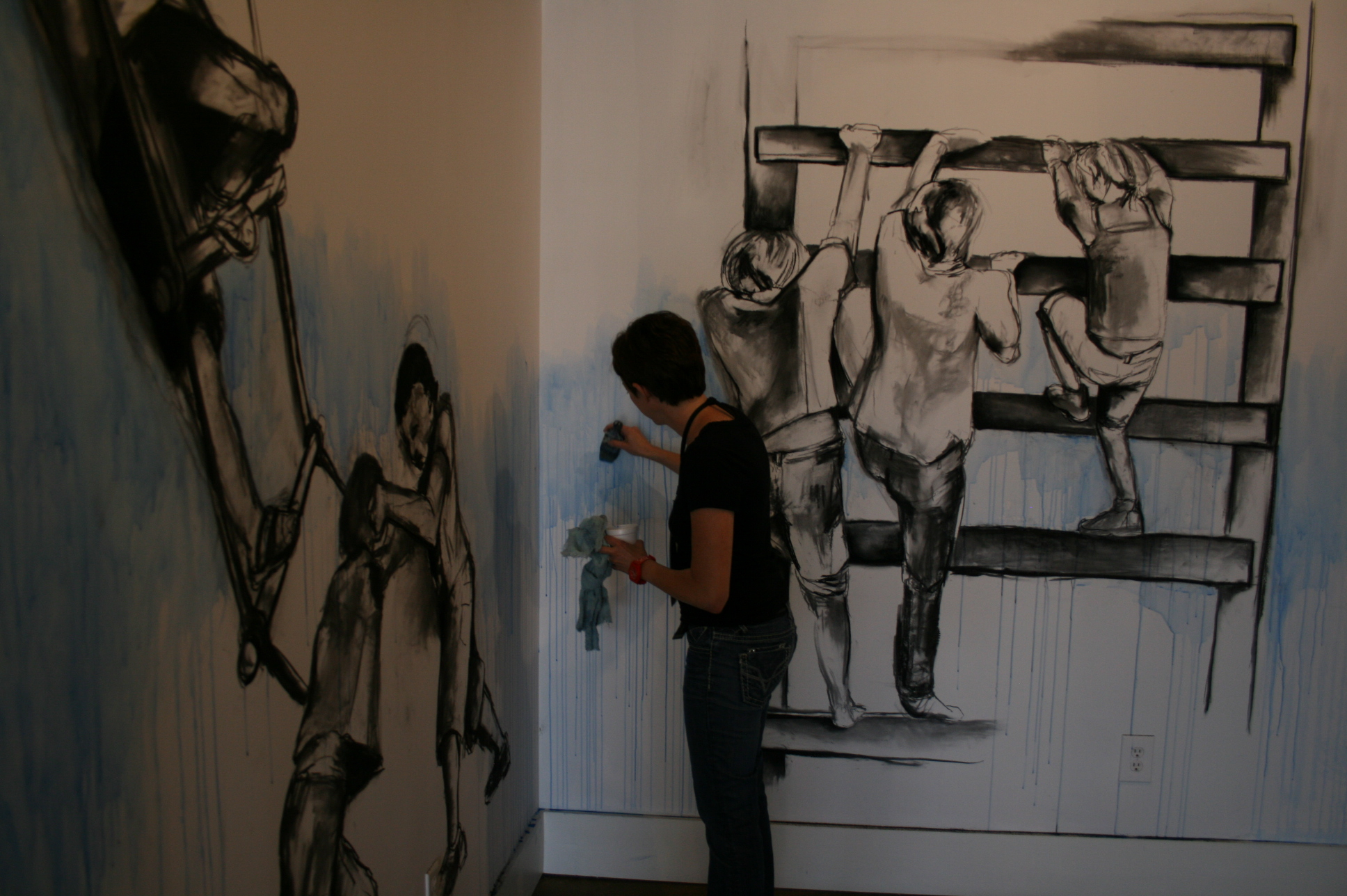
I’ve always known that I am a drawer. I love every aspect of drawing, from the technical to the conceptual. I love the physical act of drawing; with the sound of a graphite stick as it is dragged across a wood panel, the scent of a warm eraser that has been heavily used and the smearing of dense charcoal on white paper. I love drawing’s ability to encompass bold marks and quiet subtleties simultaneously. When drawing, I use my entire arm and body for physical, expressive marks and then engage closer to the paper or wood for minute detail. I prefer to vary my materials to involve the viewer as much as possible.
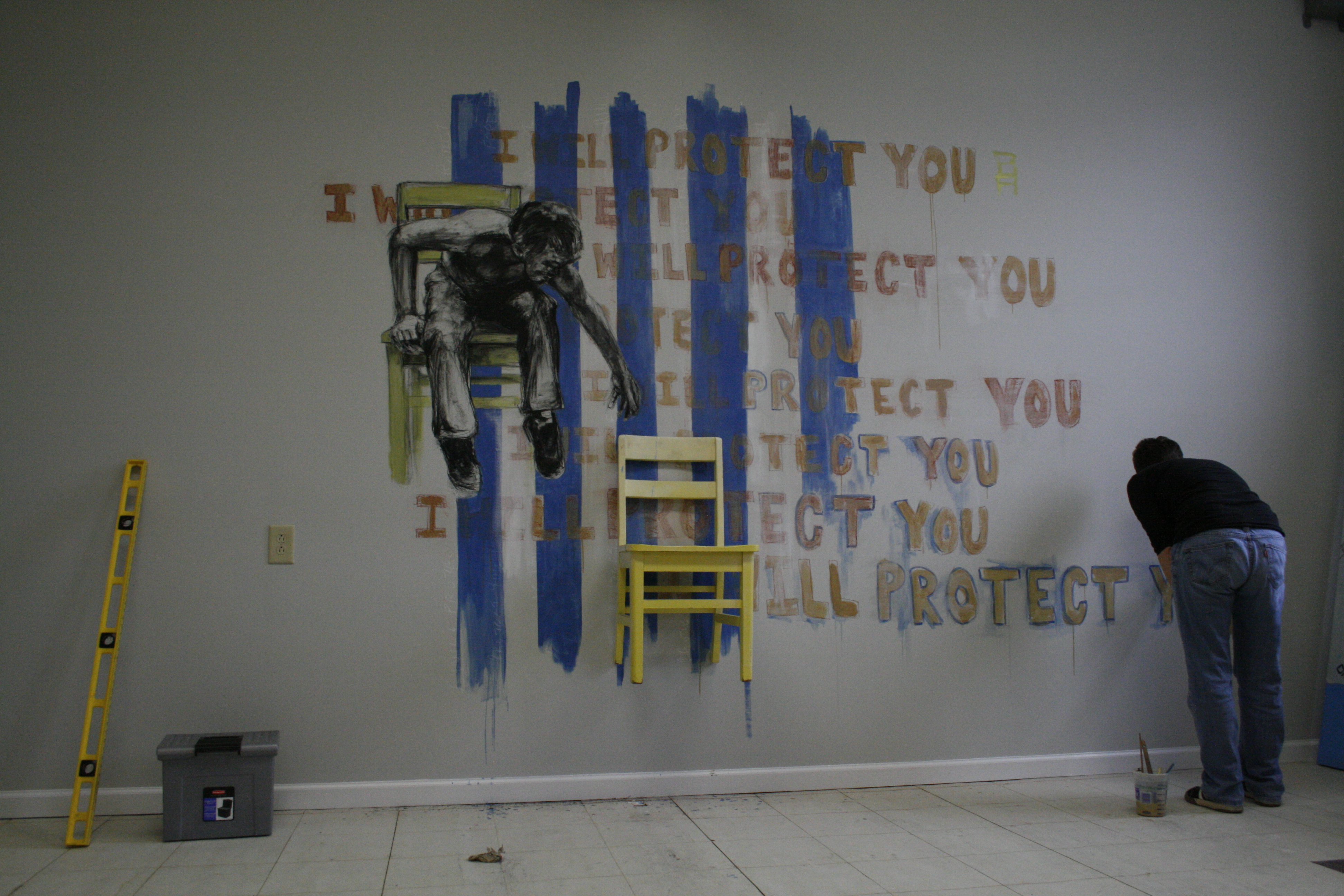
Though I love drawing, I also love the possibilities of space and involving the viewer. I often add three-dimensional objects to challenge the space and break the plane of the wall. I love the performative nature of drawing large scale in public spaces, which allows the viewer to experience the evolution of the drawing. My goal is not to create permanent art works, but to create experiences.
Follow and Guide: Wall Drawing, Campus Gate Art Gallery, Young Harris, GA
Follow and Guide: Wall Drawing, Campus Gate Art Gallery, Young Harris, GA
Follow and Guide: Wall Drawing, Campus Gate Art Gallery, Young Harris, GA
Follow and Guide: Wall Drawing, Campus Gate Art Gallery, Young Harris, GA
Follow and Guide: Wall Drawing, Campus Gate Art Gallery, Young Harris, GA
Rough Housing, Artfields, Lake City, SC
Rough Housing, Artfields, Lake City, SC
Rough Housing, Artfields, Lake City, SC
Rough Housing, Artfields, Lake City, SC
Rough Housing, Artfields, Lake City, SC
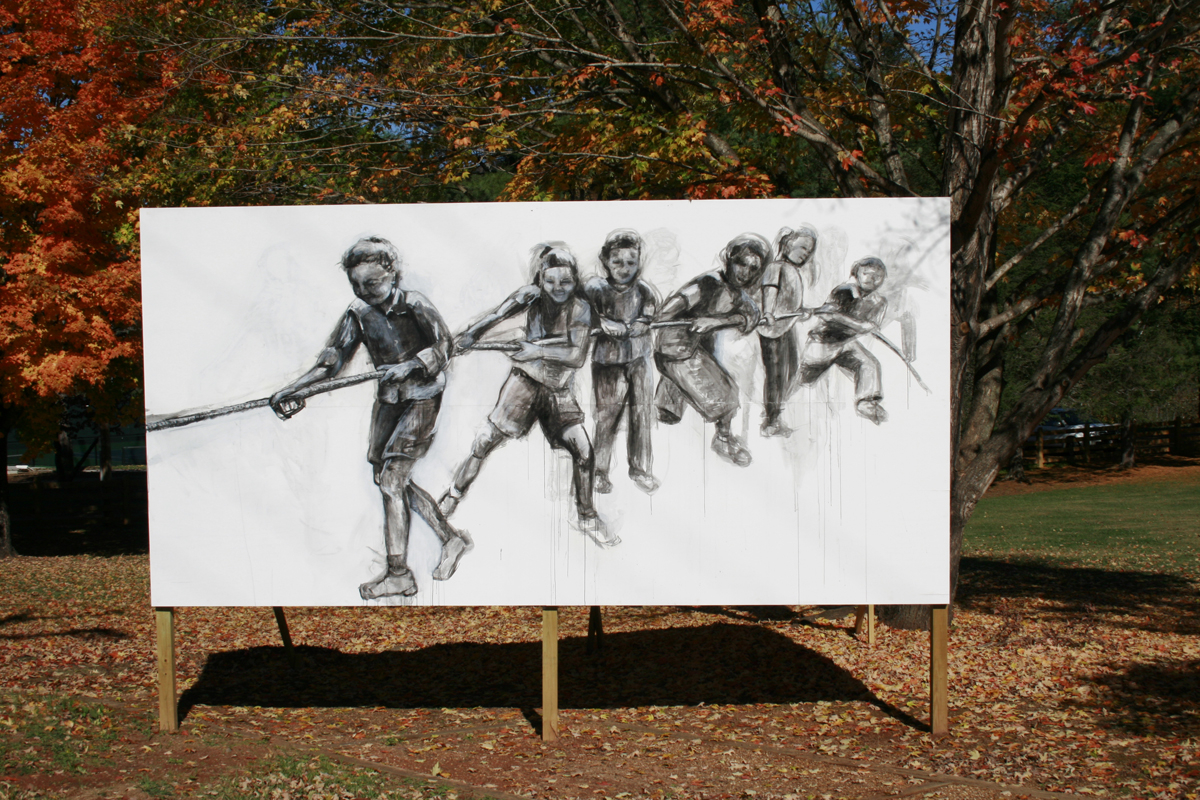
Tug of War, Mayors Park, Young Harris, GA (outdoor drawing, children playing tug of war)
Tug of War, Mayors Park, Young Harris, GA (outdoor drawing, children playing tug of war)
Dawn Martin Dickins working in studio
Artist: Dawn Martin Dickins
I grew up in a small South Georgia town, surrounded by old buildings, peanut fields, and silence. I studied drawing at Georgia Southern University. Wanting to continue to learn and create, I attended graduate school at the University of South Carolina in Columbia. I currently teach at Middle Tennessee State University in the Art Foundations Program.
Krueger’s images often present as the convergence of dual moments emanating from disparate worlds. At the precise point of collision, they create singular integrated images that are at once surreal and experiential; the history of abandonment is revealed and celebrated in what Krueger interprets as its present day narrative of hope. His commentary is simultaneously innocent and dark, humorous and eerie.
Krueger’s work reflects his culturally diverse upbringing with a Japanese mother whose family descends from a long line of Kimono makers, and an American father stationed at a Navy base in Yokosuka, Japan. Krueger’s aesthetic and vision was cultivated at an early age when his father gave him a camera at age eight which eventually led to his first professional job as a staff photographer for The Seahawk, a Naval newspaper.
Paying tribute to both cultures, Krueger combines both traditions in the signing of his work with his American surname signature Krueger and his mother’s Hanko signature (Japanese ancestral name stamp) Niiro, a Samurai family name.
Krueger delves in various mediums but prefers film, both color and B&W. He enjoys perfecting his craft in the darkroom. He says, “In growing as a fine art photographer, I have embraced traditional darkroom techniques which I feel that one day may become a lost art in this world of digital technology. Time spent alone in the darkroom allows me to reflect and connect with my art.”
Krueger moved to Seattle in 1994 to study at The Art Institute of Seattle where he received a Degree in Commercial Photography.
Krueger is the recipient of multiple awards for his art. His work has been shown in solo and juried shows throughout Seattle, NYC, Miami, Atlanta, Switzerland, and Finland and has been featured in numerous publications internationally. Thomas continues to exhibit his work all over Seattle.
Tullio DeSantis, born in Reading, PA in 1948, graduated with an interdisciplinary major from Gettysburg College on a Woodrow Wilson Fellowship. Upon graduation, he moved to the west coast and, in the early 1970s, began exhibiting his artwork in galleries in San Francisco, Tokyo, the Smithsonian Institution Traveling Exhibition Service (SITES), while he was completing his MFA at the San Francisco Art Institute. Since his arrival on the west coast, he had been publishing his art and writing for the Rip Off Press, one of the premier underground publishers of that era.
After moving back to the East Coast, Tullio rented a studio in Chelsea, and mounted his first one-man show in New York at the Tradition Three Thousand Gallery in the East Village in 1987. By that time, He had received a Pennsylvania Council of the Arts grant for a collaborative project initiated with Keith Haring. DeSantis was one of the first writers to publish extensively on Haring while he was still an anonymous graffiti writer.
From the late 1960s through his death in 1994, poet Allen Ginsberg and Tullio DeSantis carried on a philosophical and aesthetic relationship yielding several poems and drawings. Tullio’s interest in collaborative art continued throughout the 1990’s, as he worked anonymously on the Internet in various art collectives. His work was reviewed in the Village Voice (All Hands off the Keyboard, 10/24/2000) and represented in the International Prix Art Electronica in 1999.
Since the turn of the millennium, Tullio has continued to produce and participate in a long list of collaborative Internet projects, including The Facebook Show, produced by the Detroit Museum of New Art, The Internet Archive, a multimedia art/science project with Pery Burge, who worked as artist in residence in the Thermofluids Lab of the University of Exeter, UK, and currently, a series of works in traditional and digital media produced in collaboration with artist Dee Shapiro.
Tullio is an Adjunct Professor of Art at Reading Area Community College. He also owns, with a partner, MindReflector Technologies, LLC, a brain-computer interface company specializing in neurofeedback, brain and mind training software.
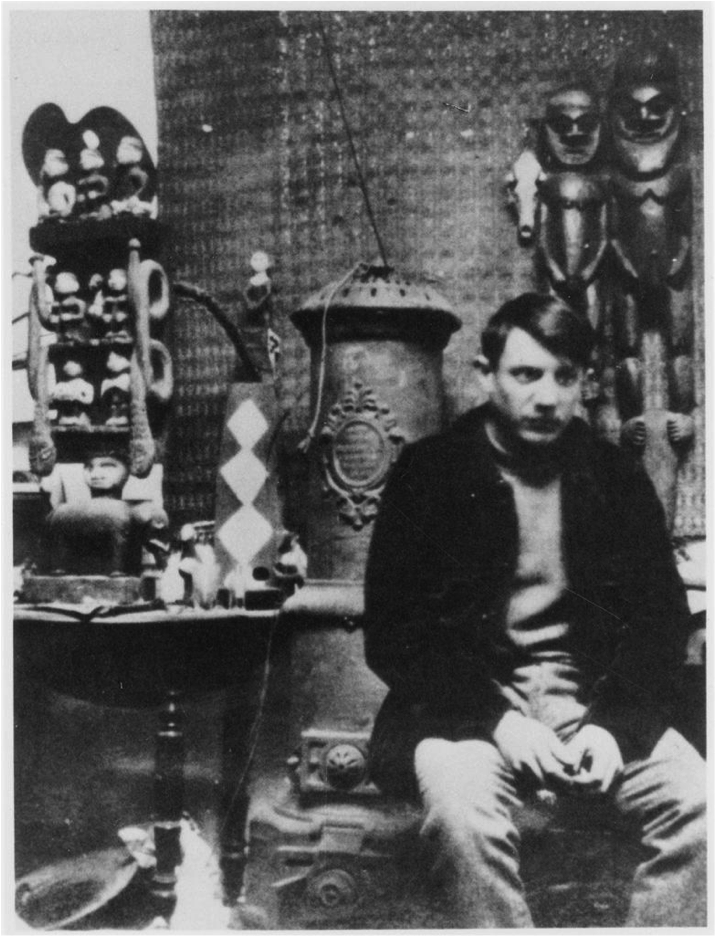
Picasso’s “genius” also stems from his singular contribution that results in the end of the Western tradition of painting. Picasso is credited with the break from classical forms, proportions, and the tradition of rendering the perfect figure. This places Picasso as a heroic figure in art history. The “one” who took art upon himself to charter new territories and inspire new broken traditions.
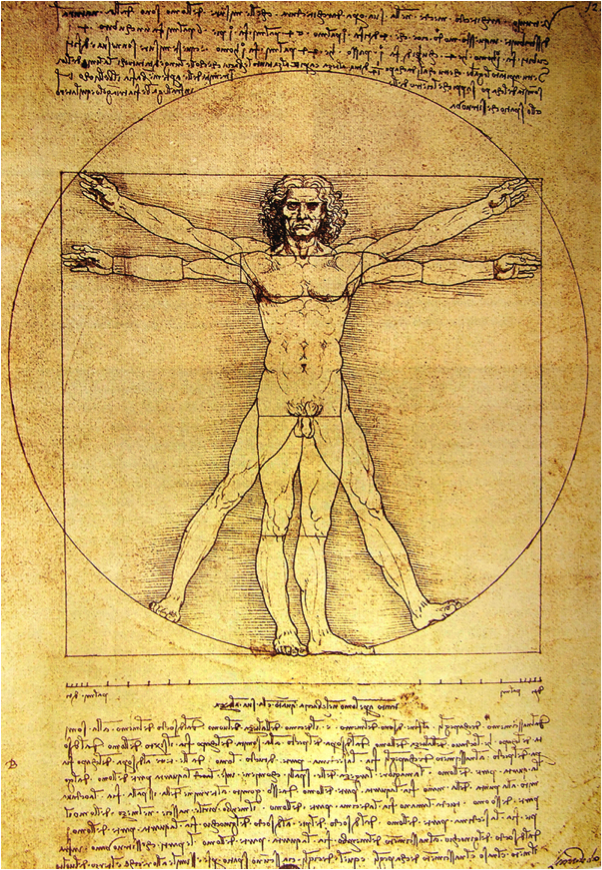
This image provides the perfect example of Leonardo’s keen interest in proportion. In addition, this picture represents a cornerstone of Leonardo’s attempts to relate man to nature. Encyclopaedia Britannica online states, “Leonardo envisaged the great picture chart of the human body he had produced through his anatomical drawings and Vitruvian Man as acosmografia del minor mondo (cosmography of the microcosm). He believed the workings of the human body to be an analogy for the workings of the universe.”http://leonardodavinci.stanford.edu/submissions/clabaugh/history/leonardo.html
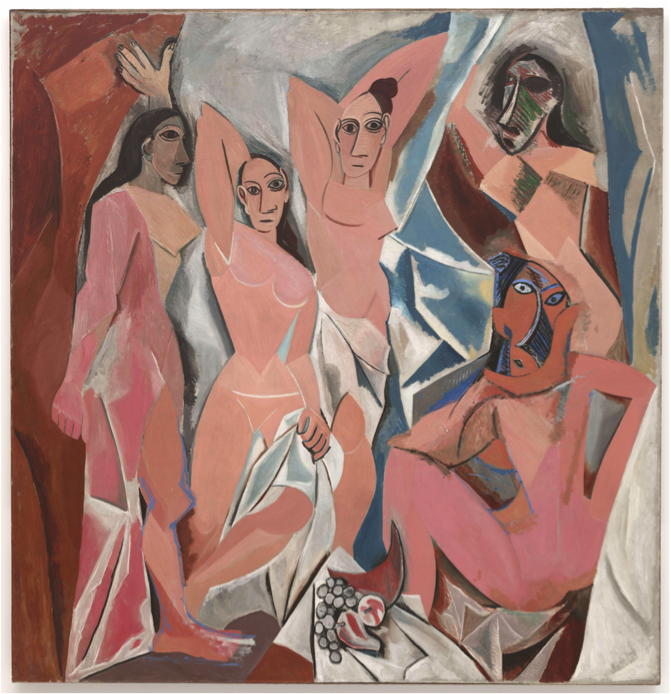
The leading piece of these broken traditions is evidenced by Picasso’s Les Demoiselles d’Avignon 1907, considered to be the precursor to cubism. Picasso’s “genius” is cemented in this singular piece where proportion, flatness, dimension are all broken in the new tradition Picasso sees.
“Les Demoiselles d’Avignon marks a radical break from traditional composition and perspective in painting. It depicts five naked women with figures composed of flat, splintered planes and faces inspired by Iberian sculpture and African masks. The compressed space the figures inhabit appears to project forward in jagged shards; a fiercely pointed slice of melon in the still life of fruit at the bottom of the composition teeters on an impossibly upturned tabletop. These strategies would be significant in Picasso’s subsequent development of Cubism, charted in this gallery with a selection of the increasingly fragmented compositions he created in this period.”http://www.moma.org/collection/object.php?object_id=79766
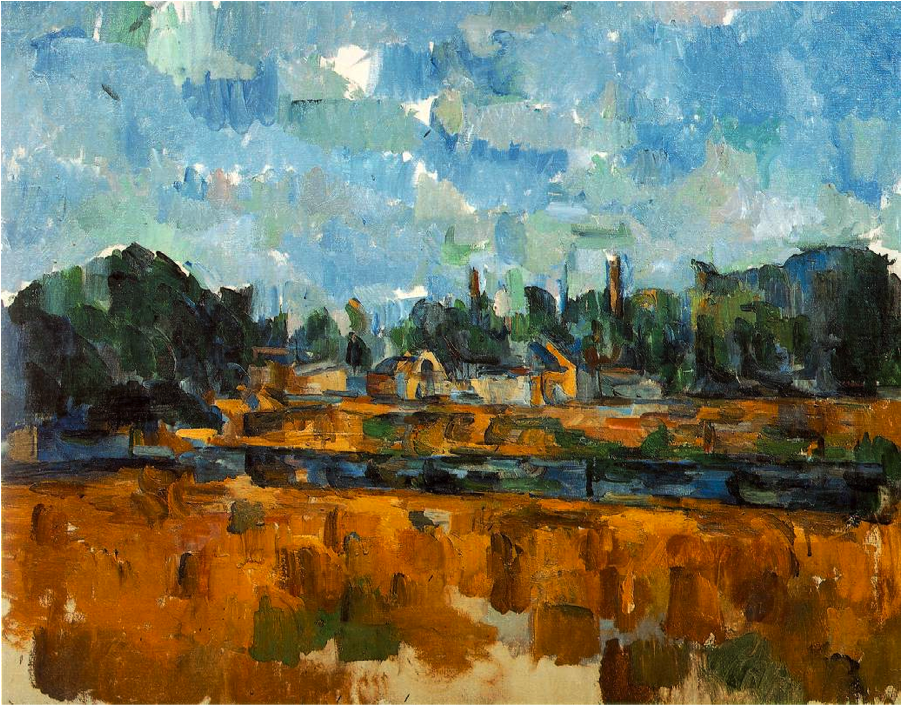
Picasso is then credited with inventing cubism, along with Georges Braque, the backbone of the legend of Picasso. Cubism cements Picasso’s legacy. We are led to believe that Picasso’s venture into cubist practice was a natural progression improved upon the foundation provided by Paul Cézanne landscapes, where Cézanne used large geometric shapes, and block of color. This is a plausible explanation only for people who have no idea what it takes to paint, and or blind. There is no way to achieve Cubism without direct appropriation African Sculpture.
Cubism was one of the most influential visual art styles of the early twentieth century. It was created by Pablo Picasso(Spanish, 1881–1973) and Georges Braque (French, 1882–1963) in Paris between 1907 and 1914. The French art critic Louis Vauxcelles coined the term Cubism after seeing the landscapes Braque had painted in 1908 at L’Estaque in emulation of Cézanne. Vauxcelles called the geometric forms in the highly abstracted works “cubes.” Other influences on early Cubism have been linked to Primitivism and non-Western sources. The stylization and distortion of Picasso’s ground-breaking Les Demoiselles d’Avignon (Museum of Modern Art, New York), painted in 1907, came from African art. Picasso had first seen African art when, in May or June 1907, he visited the ethnographic museum in the Palais du Trocadéro in Paris.http://www.metmuseum.org/toah/hd/cube/hd_cube.htm
Avant-Garde Africa
Dr. Gus Casely-Hayford is a curator and cultural historian. He is a King’s College Institute Associate and a Research Associate at the University of London’s School of Oriental and African Studies (SOAS).
As part of the Wonderful Africa Season in 2010, he presented Lost Kingdoms of Africa, four 60-minute programmes for BBC 2 and BBC 4. He presented a second series in 2012. Gus presented The Genius of British Art for Channel 4 in 2010 and hosted The Culture Show on BBC 2 in 2012.http://www.petersfraserdunlop.com/factual_tv/gus-casely-hayford
The contribution of Africa is not an afterthought; it is primary. The reduction of form, geometric vocabulary, multiple perspective, bulbous and inverted shapes on the same form, as well as the analytical investigation of form, and abstracted form, is all apart of African sculpture praxis. The intellectual credit that is heaped upon cubism and at the primitive label on Africa is unacceptable. The Museum placement of Cubism as modern and Africa in the basement is unacceptable. All modern art derives from Africa.
It is even more disturbing when people—the very people affected by this direct cultural appropriation—support these notions. The tradition is now upheld by their naiveté, their hoping to achieve intellectual social status through the same process that claims them to be primitive.
JAY Z “Picasso Baby: A Performance Art Film.” Directed by Mark Romanek.Performed at PACE gallery
What happens when a Ming dynasty porcelain vase is displayed in America without the Chinese knowledge? A Native American artifact? African art has been physically and intellectually appropriated without recognition. This practice must stop.
Christopher Hutchinson is an Assistant Professor of Art at Atlanta Metropolitan State College, Archetype Art Gallery Owner in Atlanta, Ga, and Smoke School of Art Founder. He received his Master of Fine Arts Degree in Painting from Savannah College of art & Design, Atlanta and his Bachelor of Arts Degree from the University of Alabama in Huntsville, Alabama. He lived in Alabama for 10 years before moving to Atlanta in 2008.
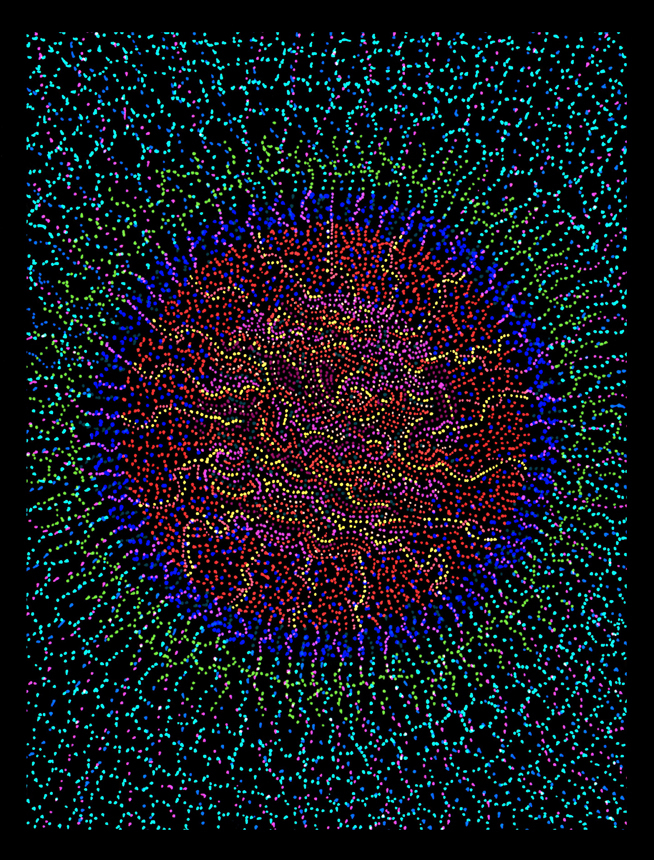
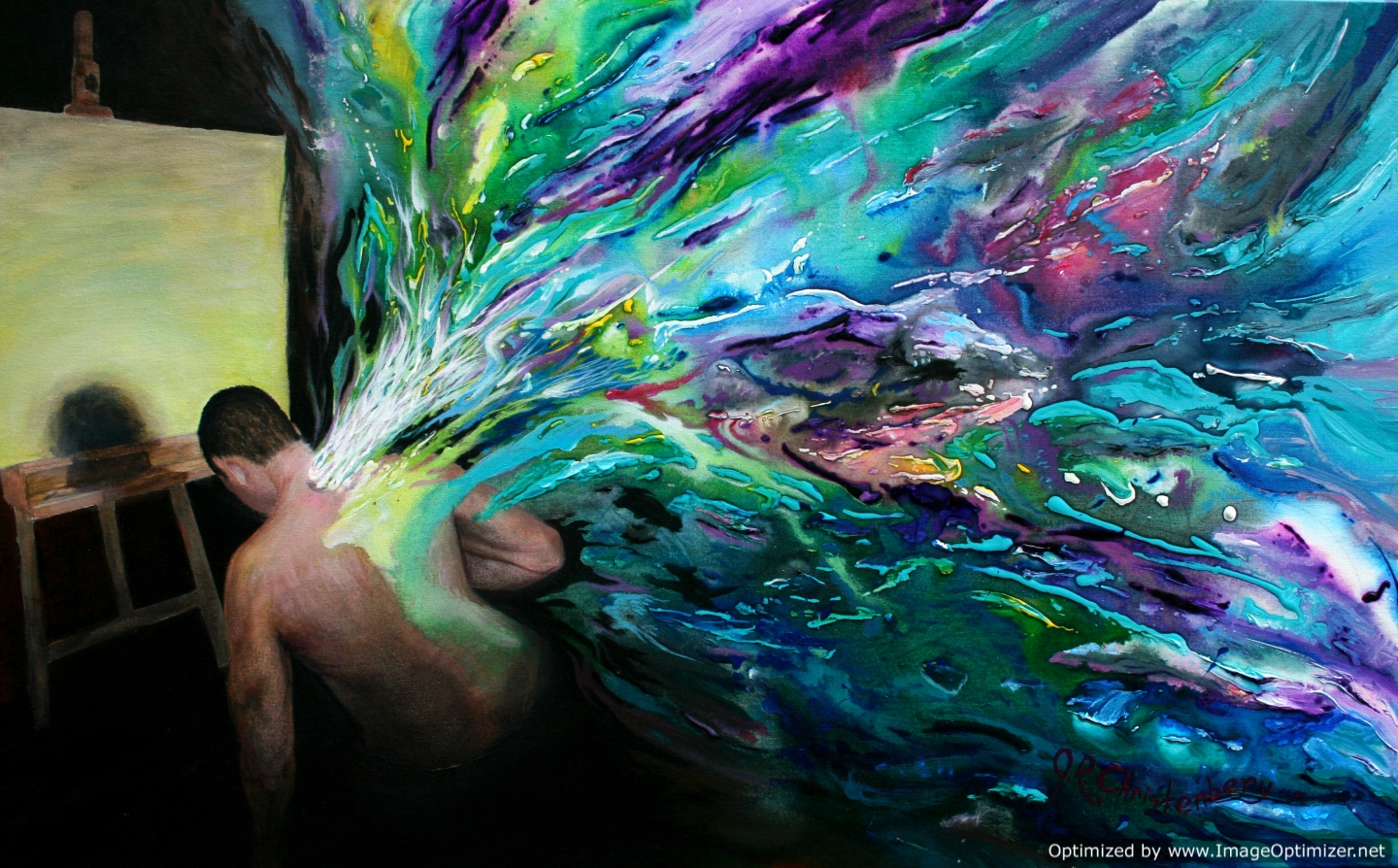
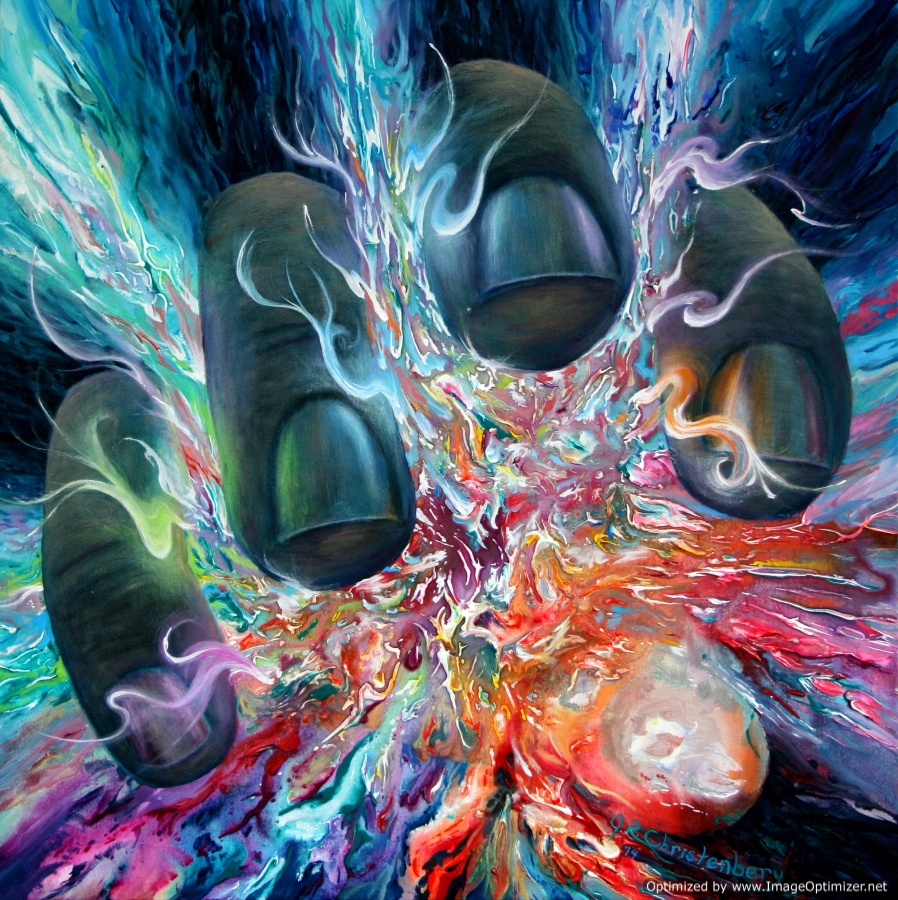
Looking within, potential can be acknowledged and worked with. The fire of the heart-mind is stoked and the image is forged, quenched, and re-forged a thousand times within the mind’s eye before a move has even been made.
Forward, 36″x48″ acrylic on canvas (10/2011)
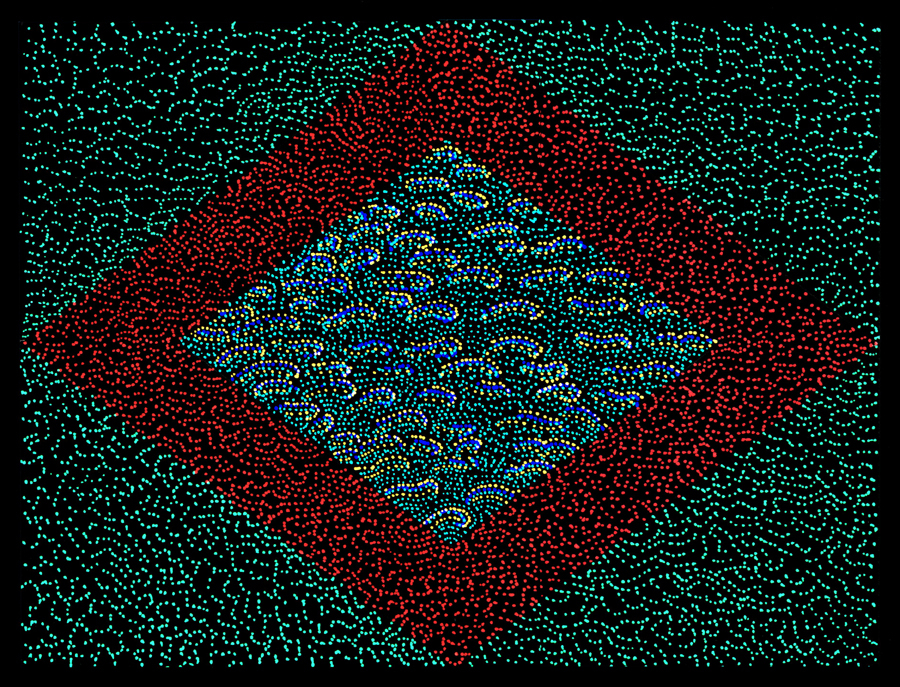
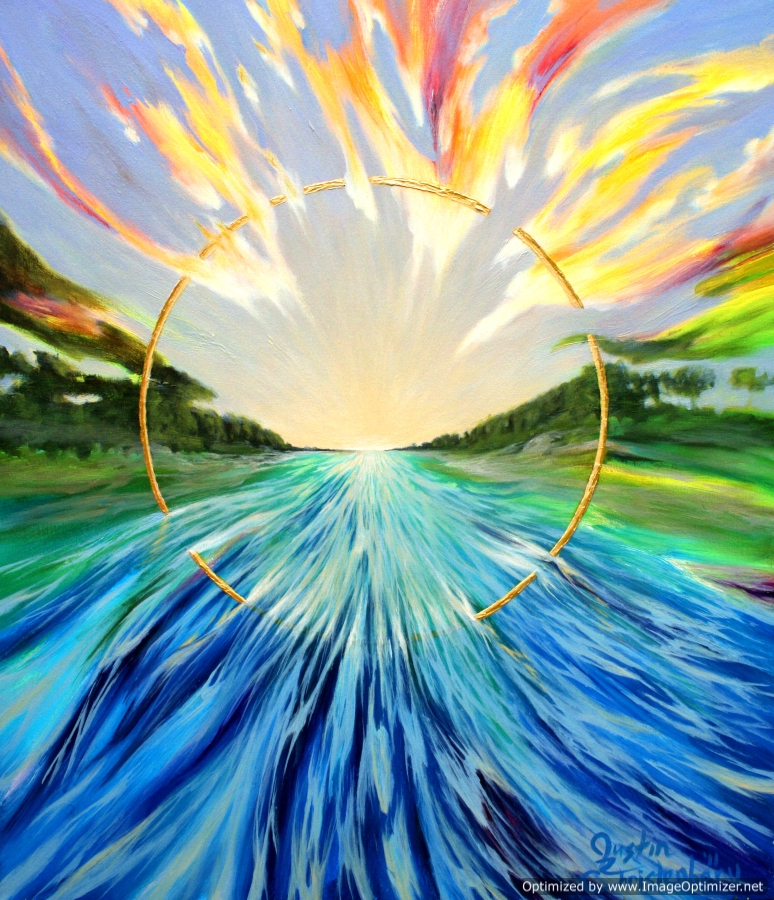
Through the common link between all things, we flow.
Movement in Blue, 30″x40″ acrylic on canvas (7/2014)
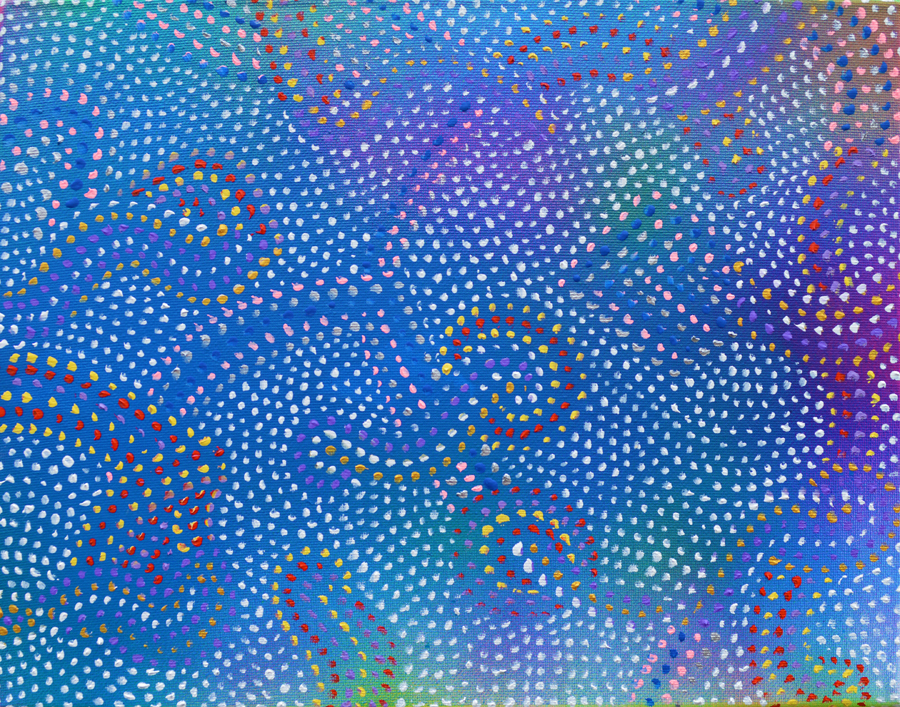
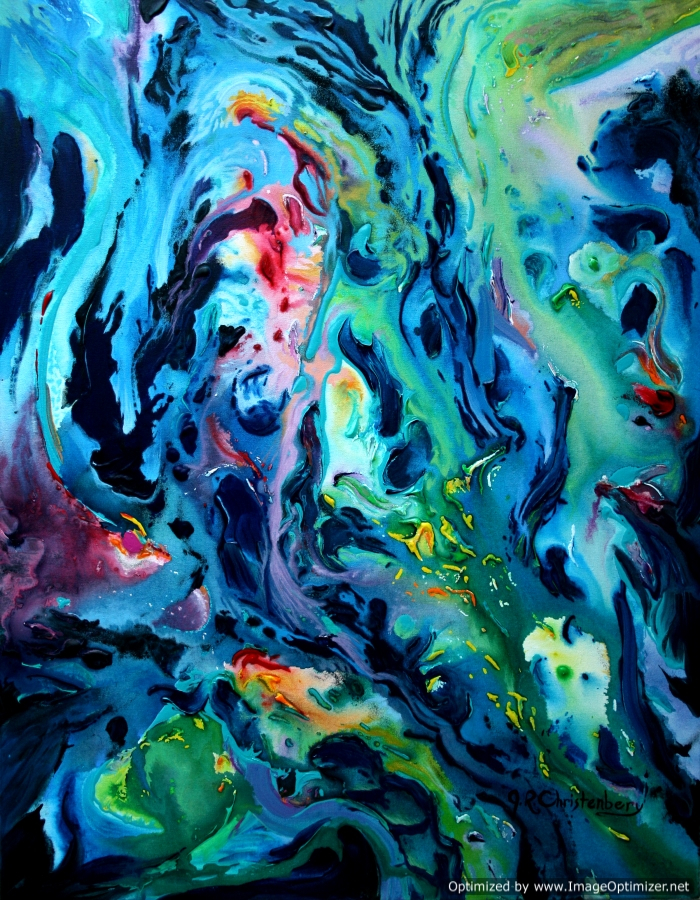
The style that I’ve been cultivating for the last several years continues to evolve and seems to finally be crystallizing into something worthwhile here. Consciousness sings into form the formless. Then, being gently takes consciousness’s hand and leads the song into an undreamt of place where the clouds of confusion are forgotten.
Incurrence, 42″x54″ acrylic on canvas (2010)
Within our sometimes tumultuous lives and inner worlds, calm remains forever present and available.
The Abandonment of Doubt, 42″x42″ acrylic on canvas (9/2014)
Life is Surging at this very moment. Around you- through you… As you. Your mind is a tool slowly & tenuously mastered- a lens, of sorts, that you use to focus this Life-that-you-are. This is where many trip up: The mind only ever remains a tool, and as powerful as it can become, it will never compare to or replace the Pure Life that we are. If the mind is a lens, how much greater is your Self which puts it to work? The mind is useful. YOU are essential- and quite skilled at Living w/out minding your mind.
Stop trying to listen to your heart so that It can become you. Forget thinking and embrace knowing. Flow happens… Mind is first absorbed and then blended into Being, and Life’s sweetest nectar is tasted.
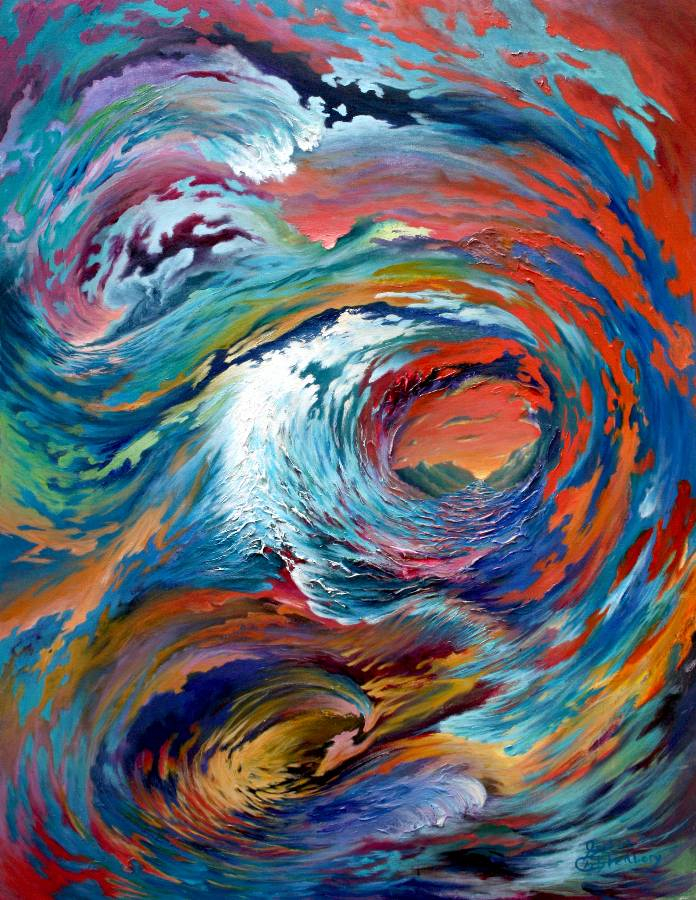
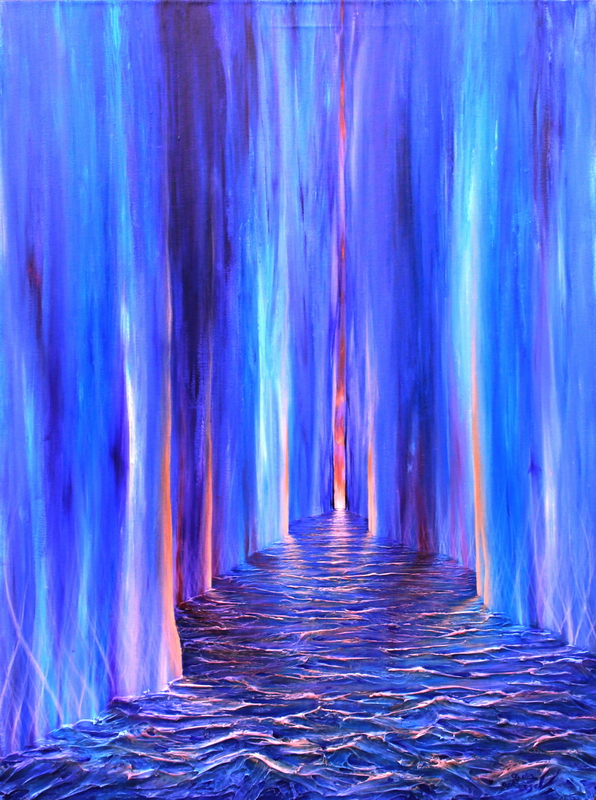
The Return, 33″x44″ acrylic on canvas (2009)
This piece marked a fork in the road of my development as an artist. In 2009 I was doing a lot of blended directional work (hence the strong verticals here) with the goal being to get my mind to stop worrying so much about what the image would become. Having covered the canvas, I noticed a great sense of depth near the middle and decided to pursue that sense of perspective and immersion within a saturated environment and was rewarded with a painterly evolution.
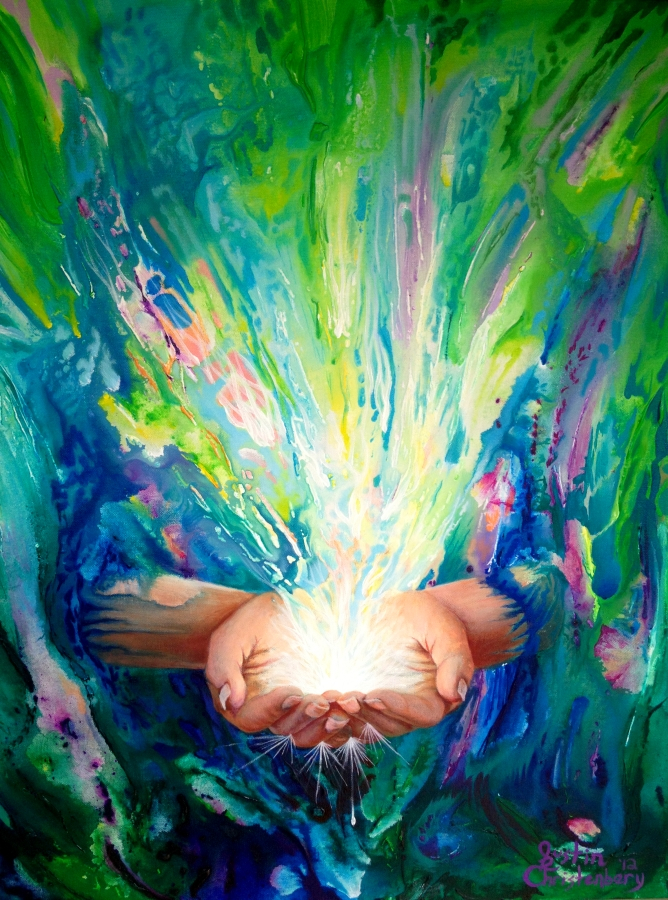
The Offering, 24″x30″ acrylic on canvas (3/2013)
This piece was commissioned by a Family & Marriage therapist and now hangs in her office. I am constantly amazed by and forever grateful for the gift which, in having been given to me, I am able to multiply and re-gift to so many others.
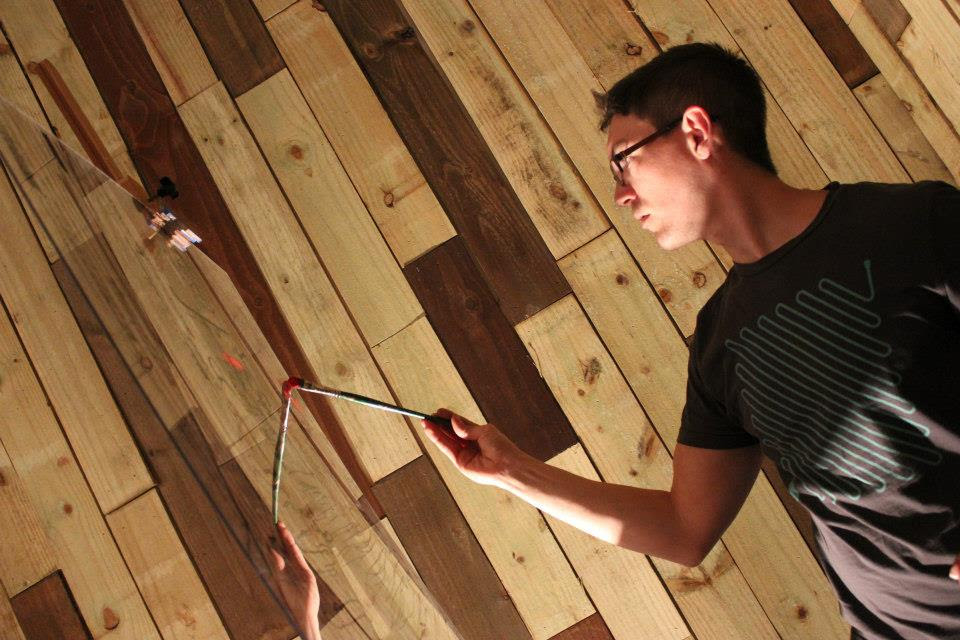
Justin Christenbery lives in Cornelius, NC where he works out of a home studio and maintains an active presence in the creative community. He regularly does live paintings alongside various bands and musicians with hopes of sharing his inspiration with audience goers. He is currently exhibiting new works at Kadi in Downtown Cornelius’s Historic Oak Street Mill. The show runs through March 12th, 2015.
More of his work can be seen on his personal (under-construction) website: http://JustinChristenbery.com. He has a secondary online portfolio which is overflowing with work from the last 10 years, and where prints of his art can be purchased: JRChristenbery Portfolio
CT explores the creative potential of borders, boundaries, difference, and limitation. It's a playground for multiple genres and diverse points of view. And like any good playground, it provides space for more than one person to have a good time. So I have friends here as well, contributing quirky, serious, playful, innovative, eclectic, and imaginative work.
Enjoy!
Melissa
Join 5,443 other subscribers
Subscribe/Connect
Subscribe to our RSS feed and social profiles to receive updates.
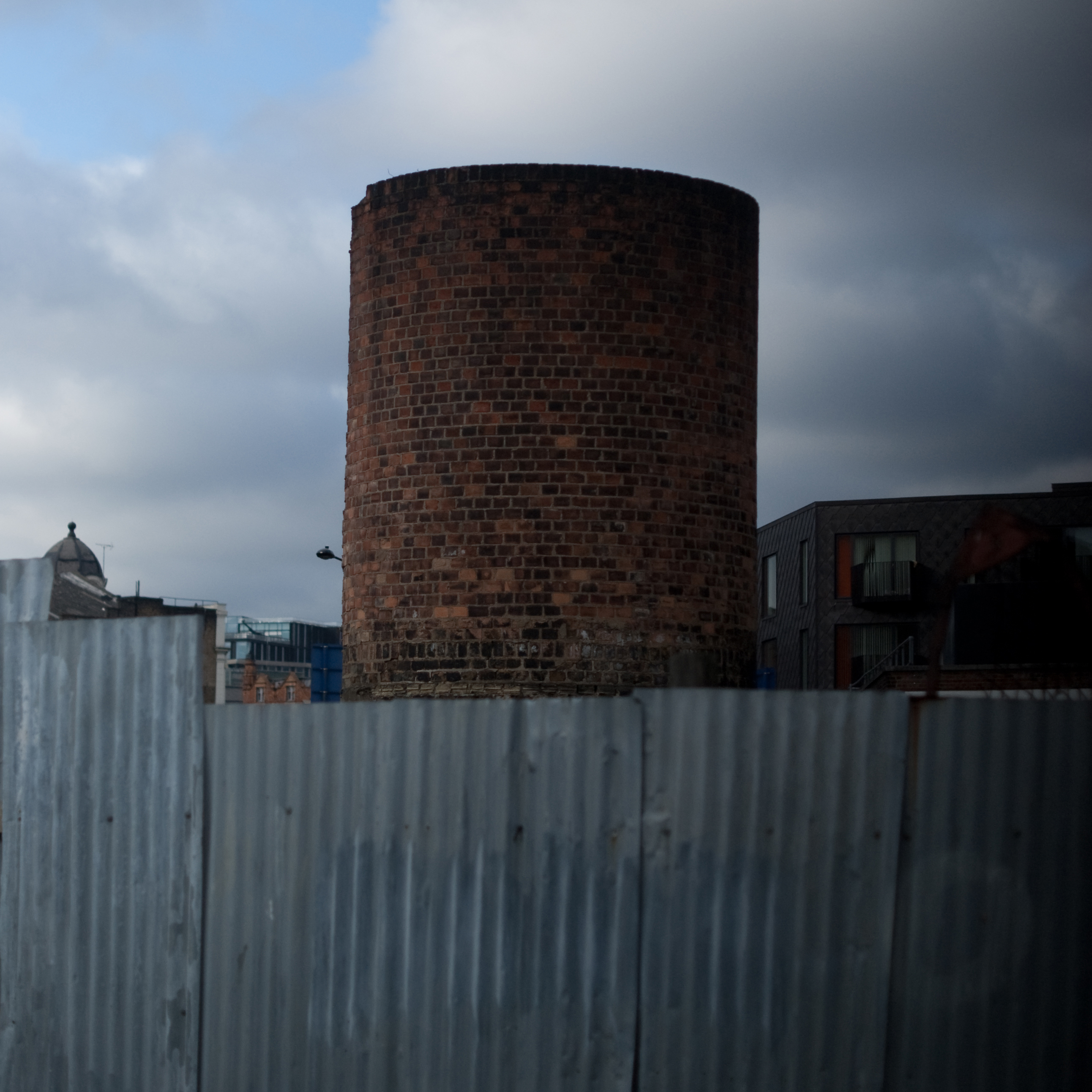
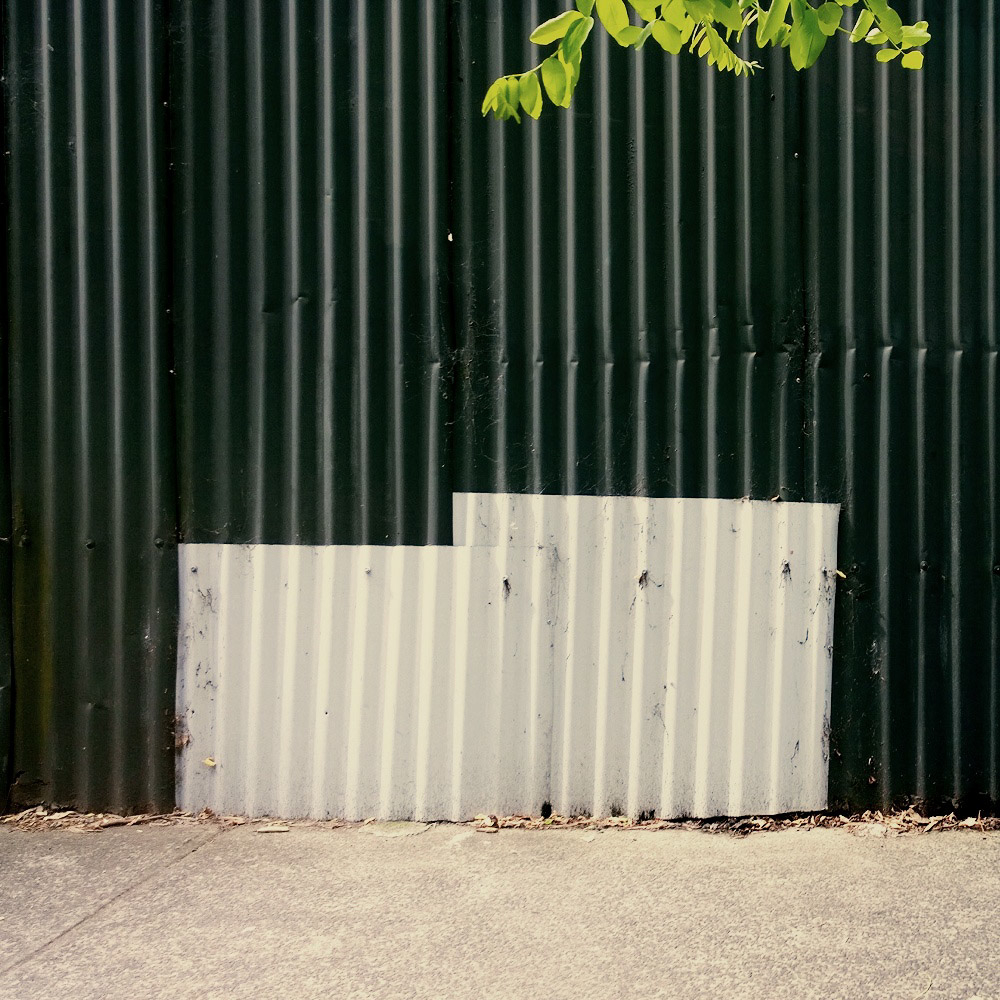
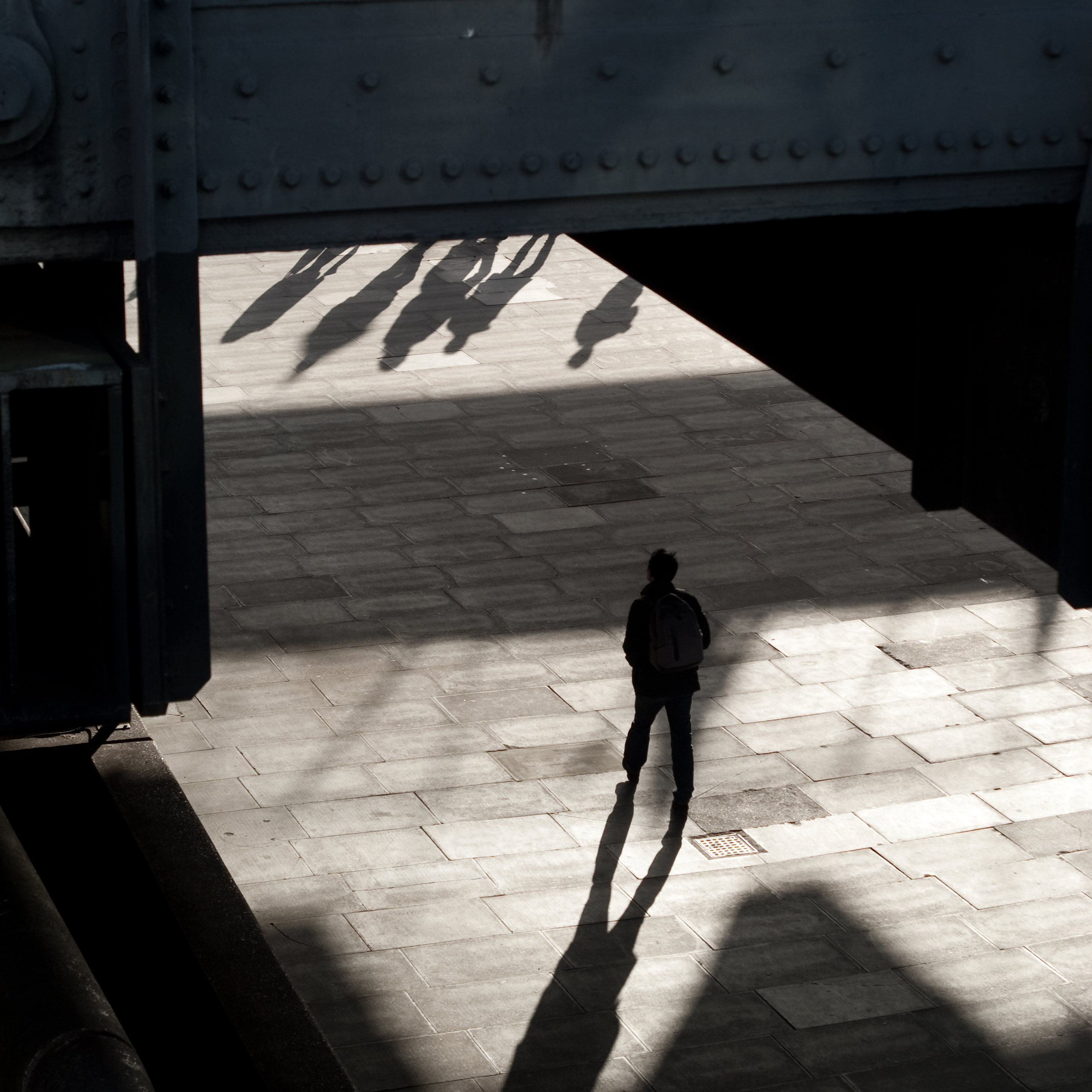
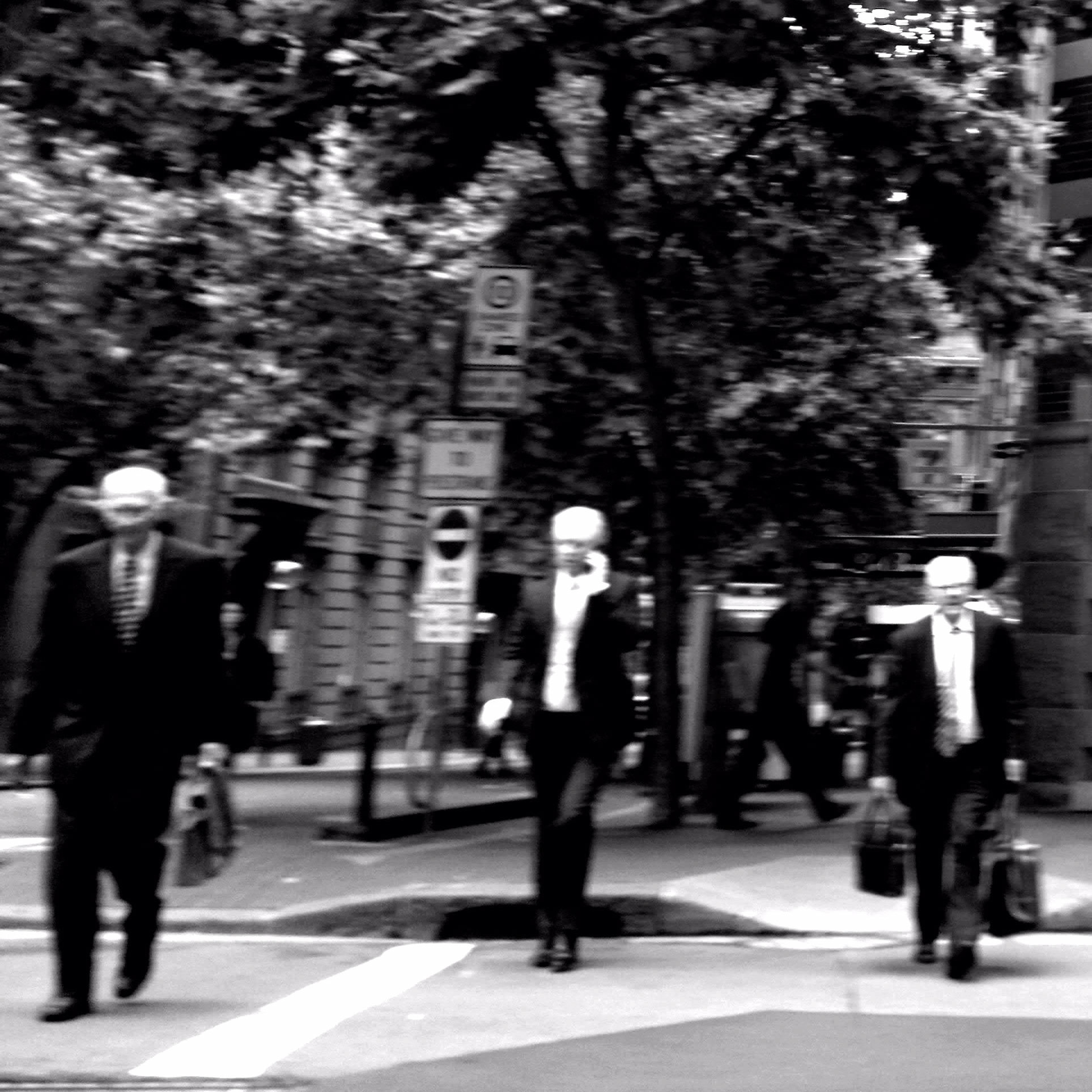
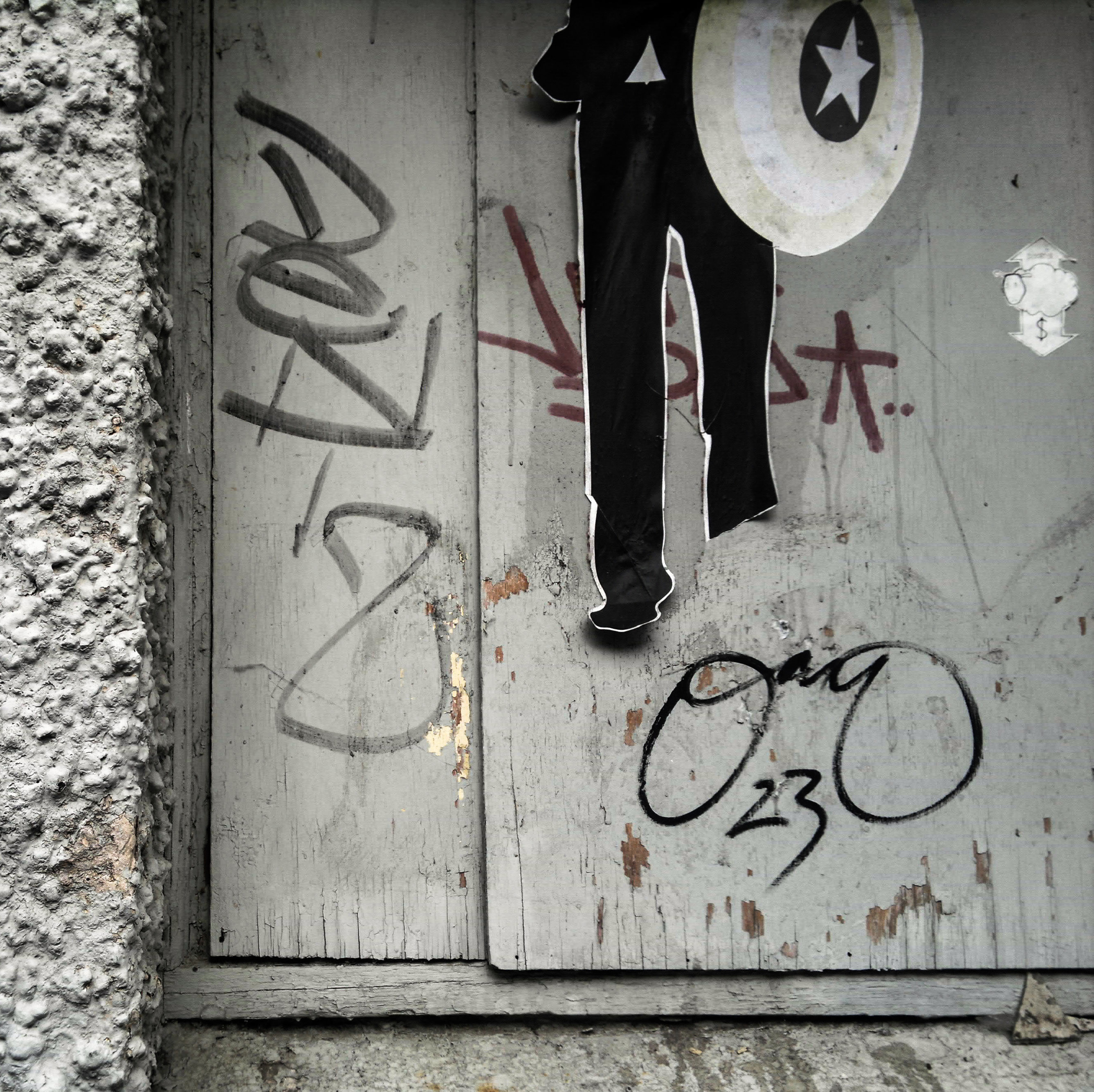
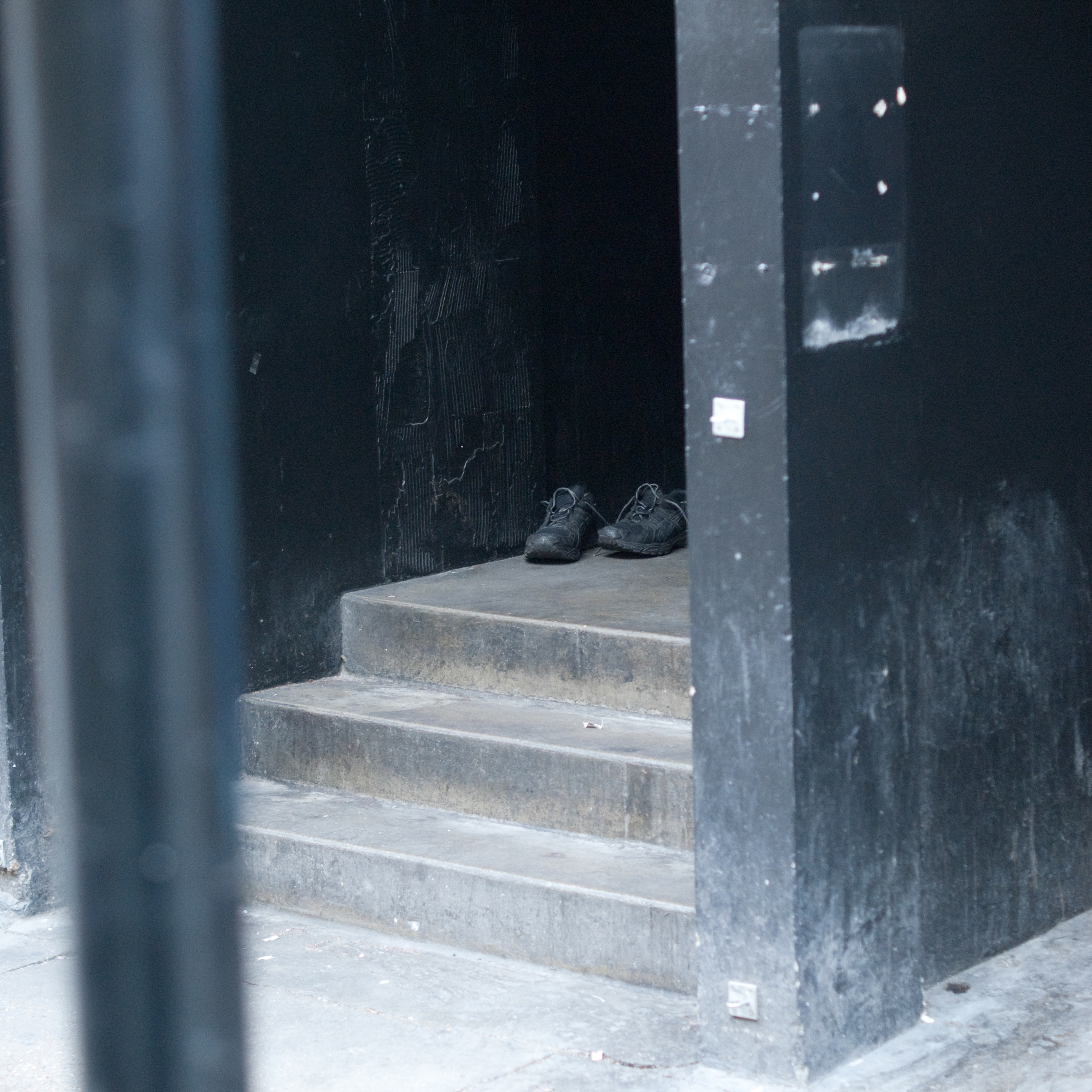
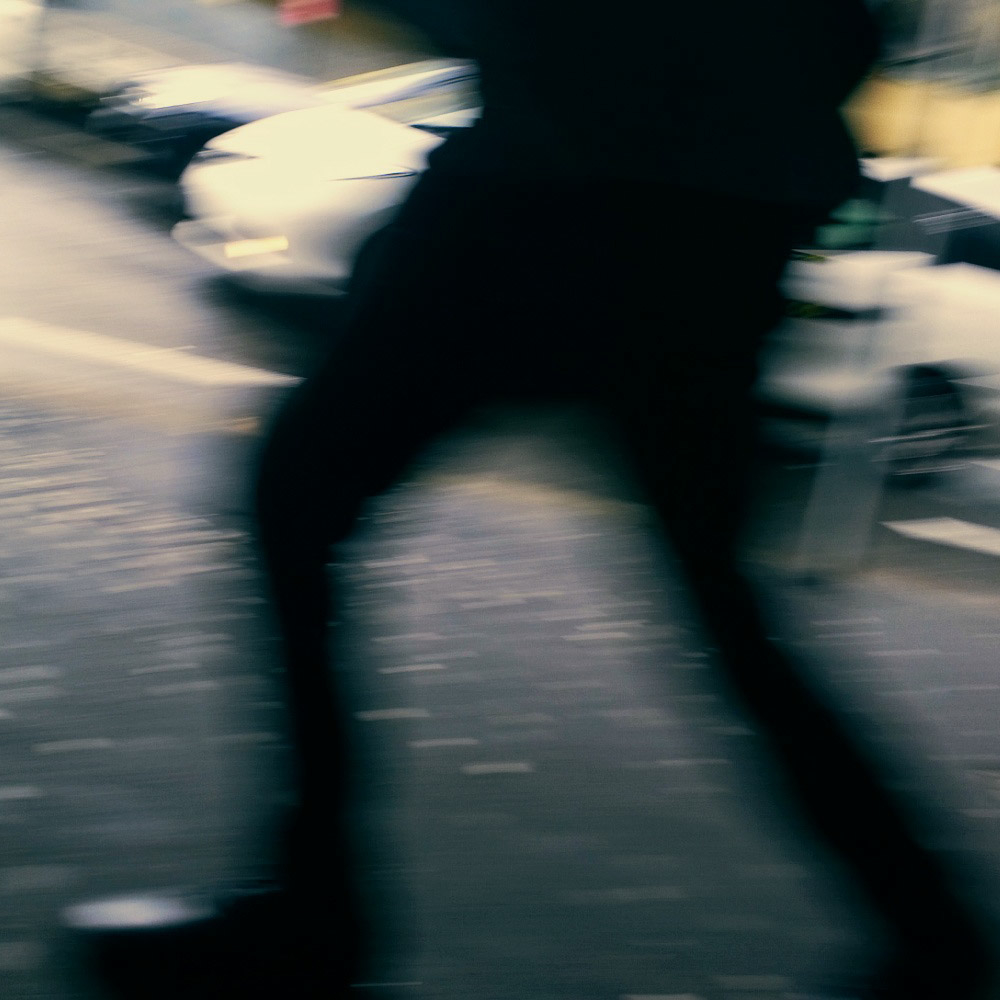
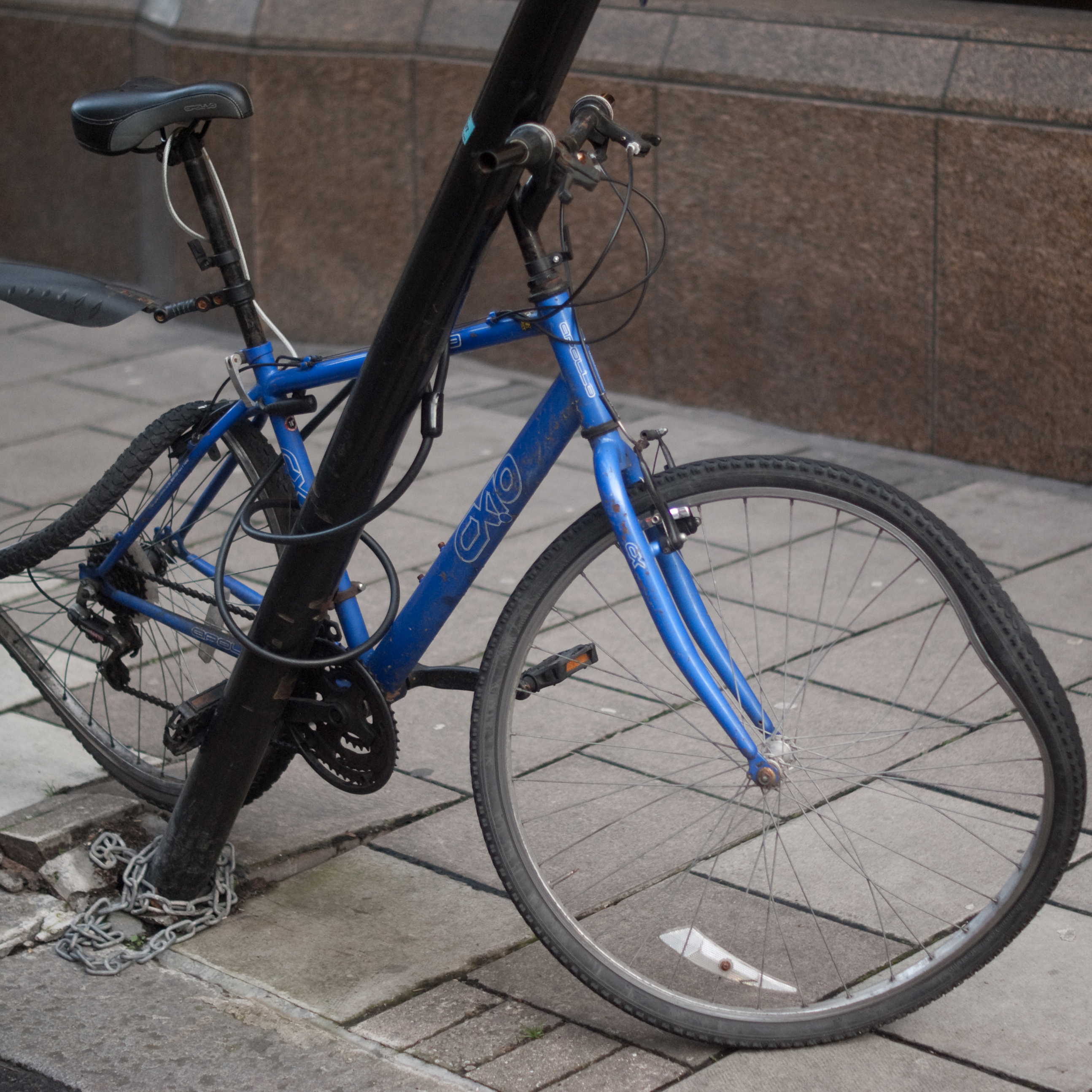
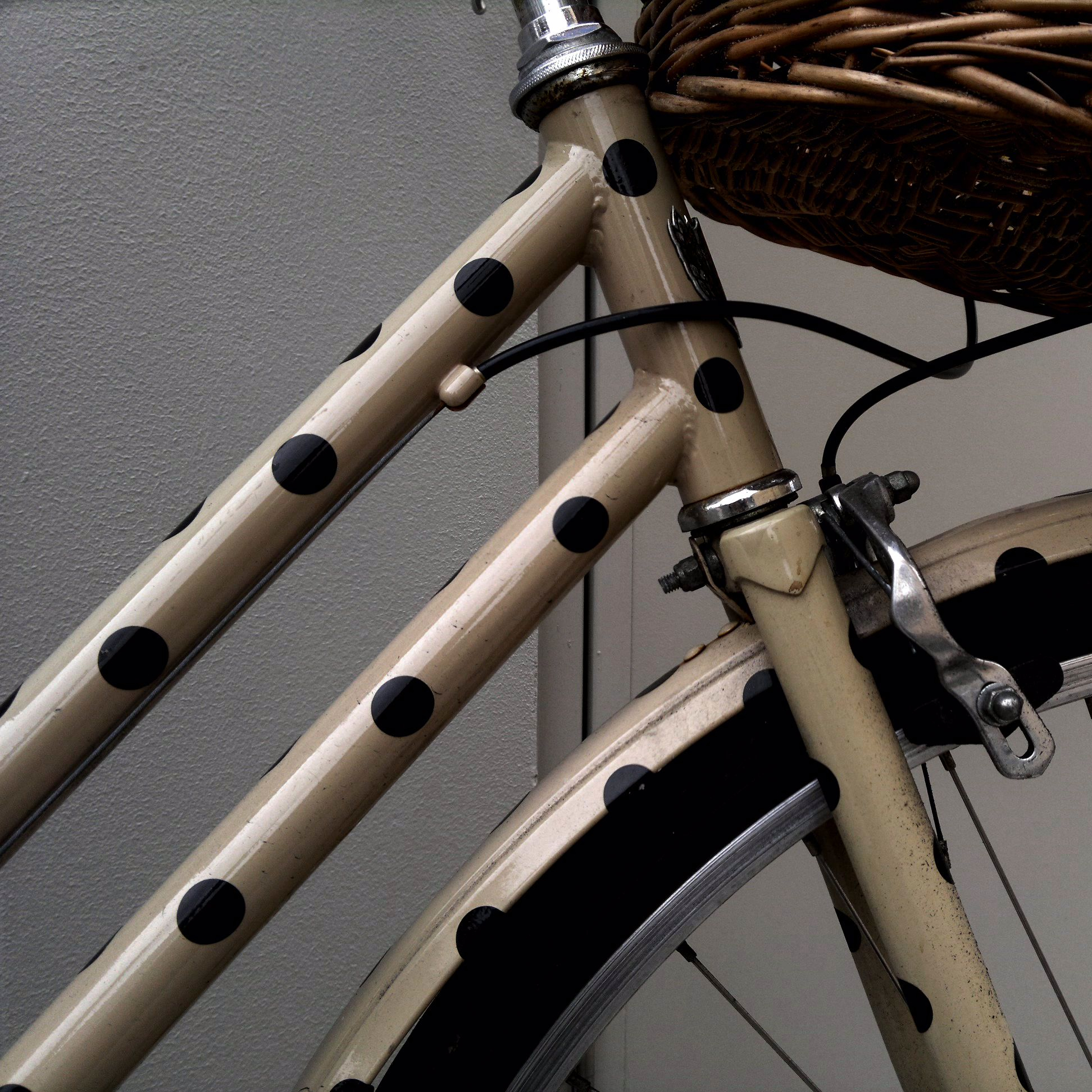
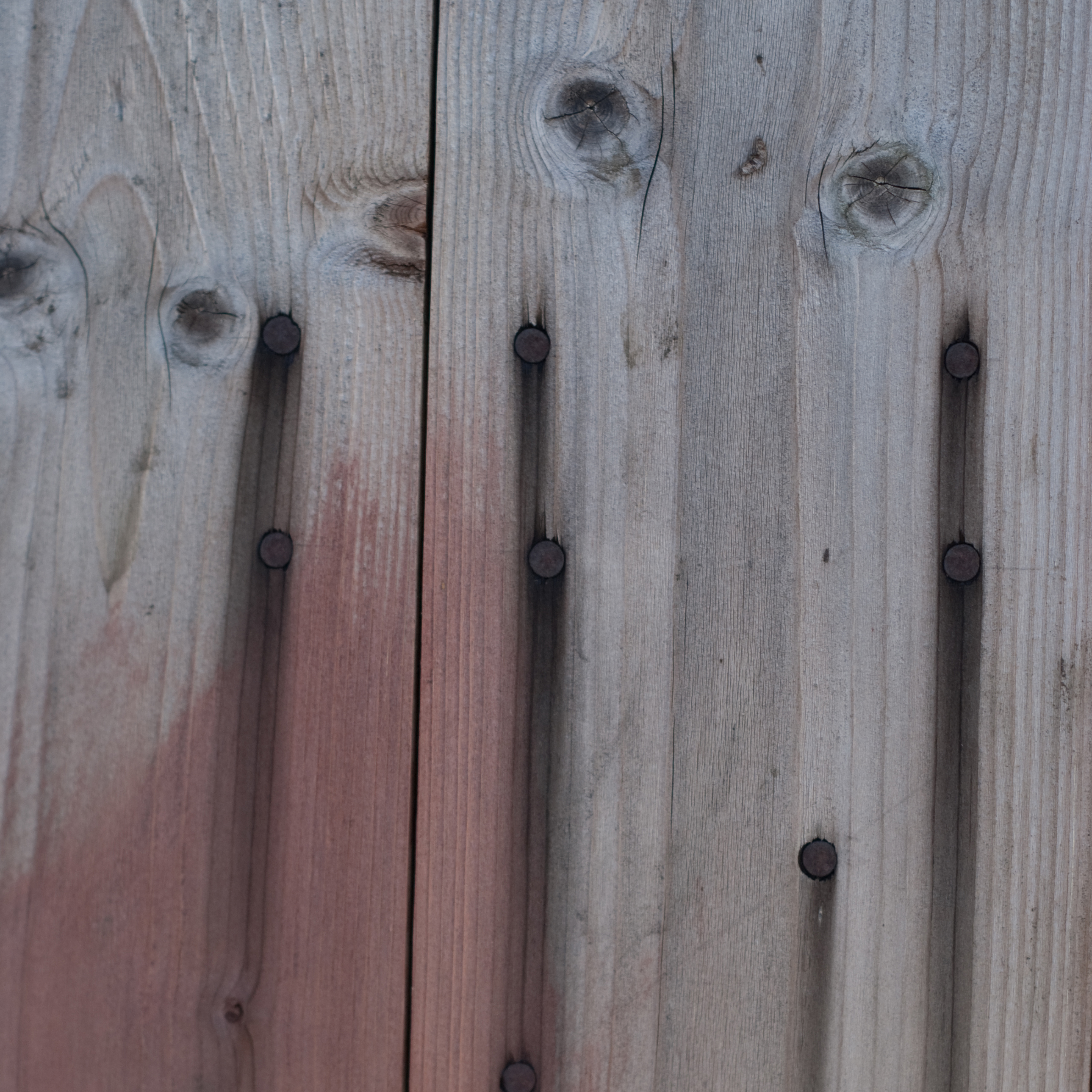
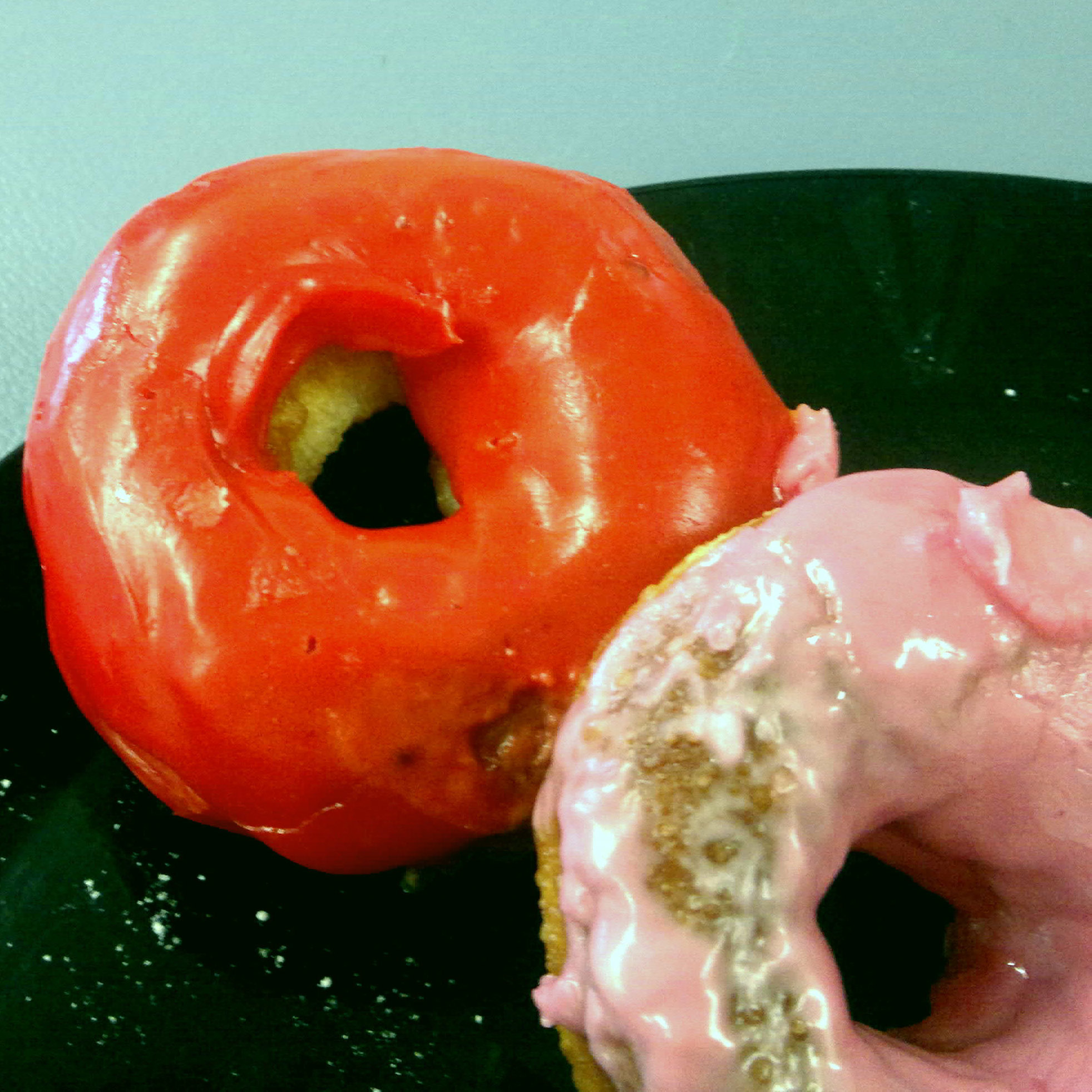
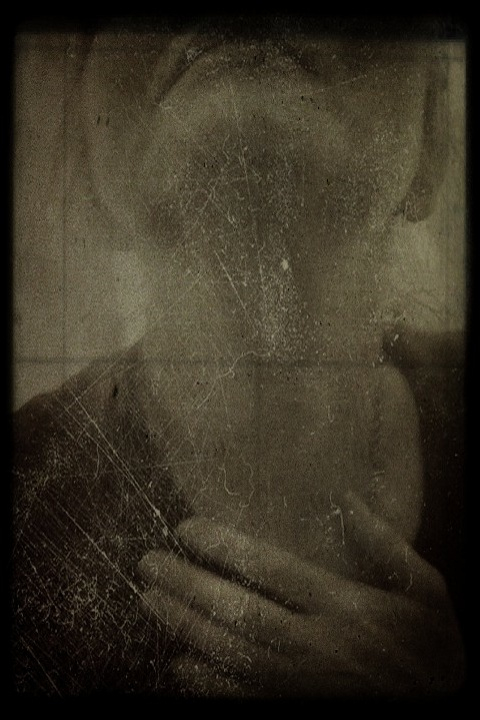 Ashley Lily Scarlett is an artist, who lives and works in Sydney. She uses a Nokia camera phone to shoot and edit her images.
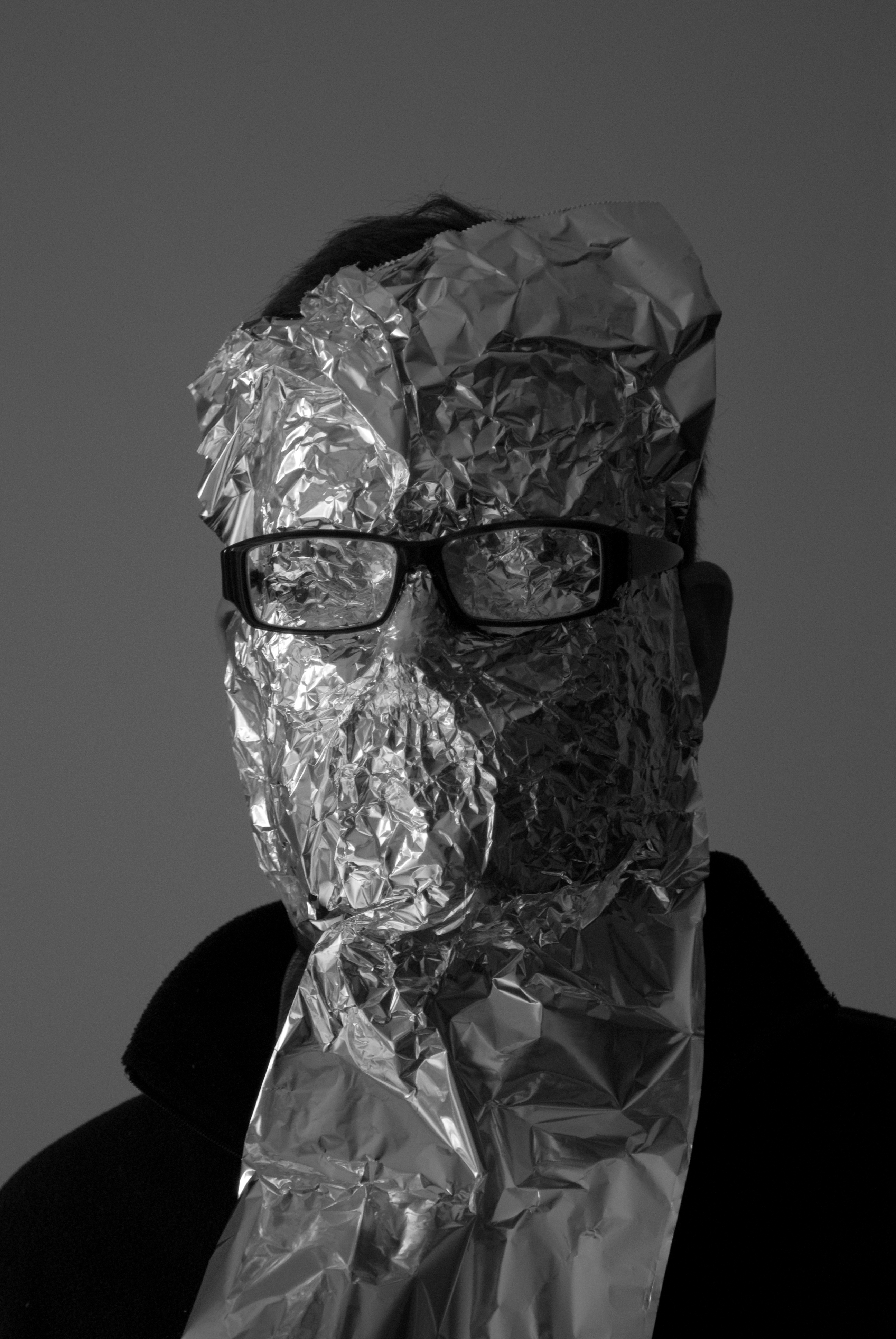 Richard Guest is an artist, who lives and works in London. He uses a Sony a200 to take his shots, and Photoshop to edit them.













 Creative Thresholds