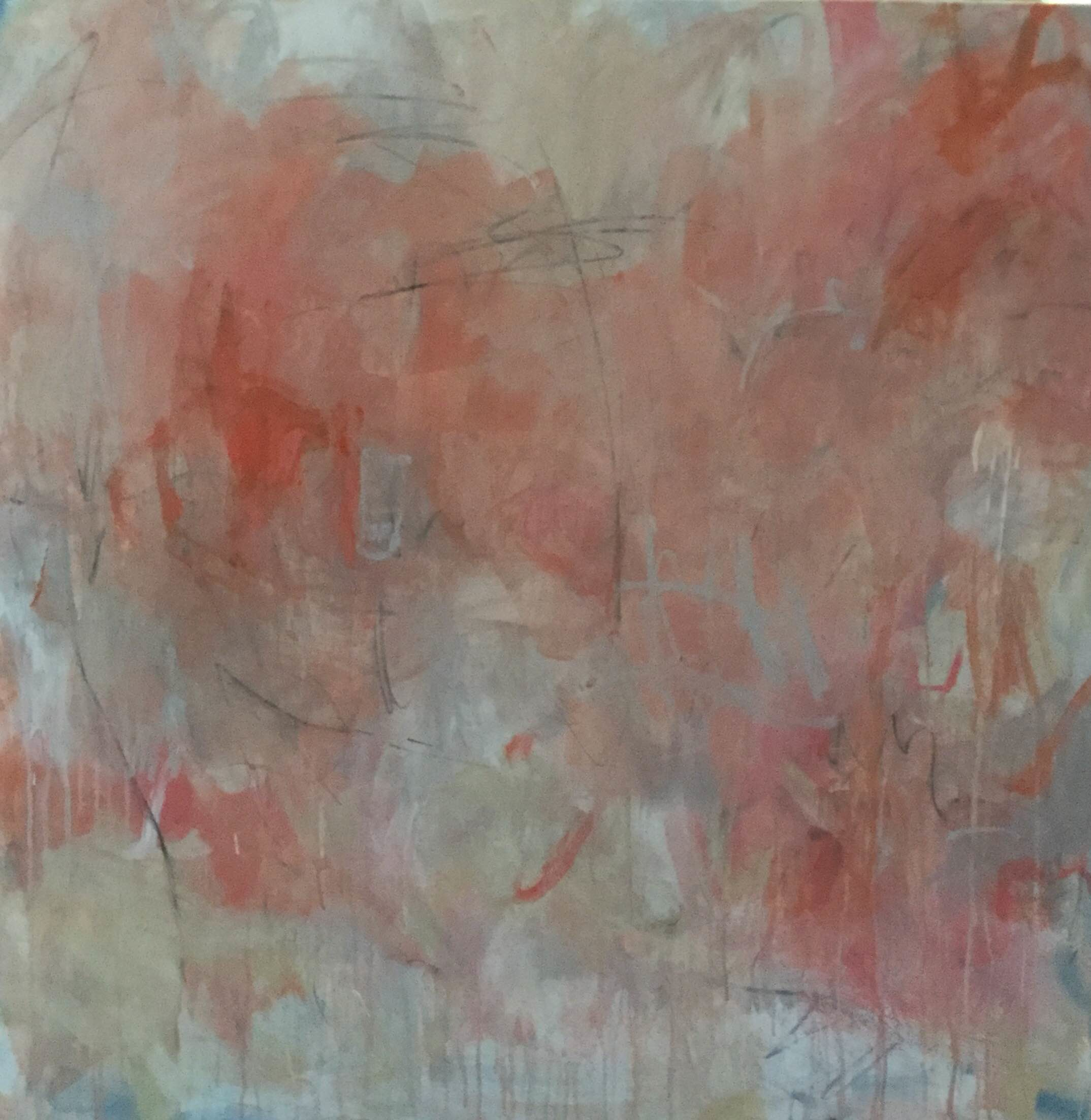
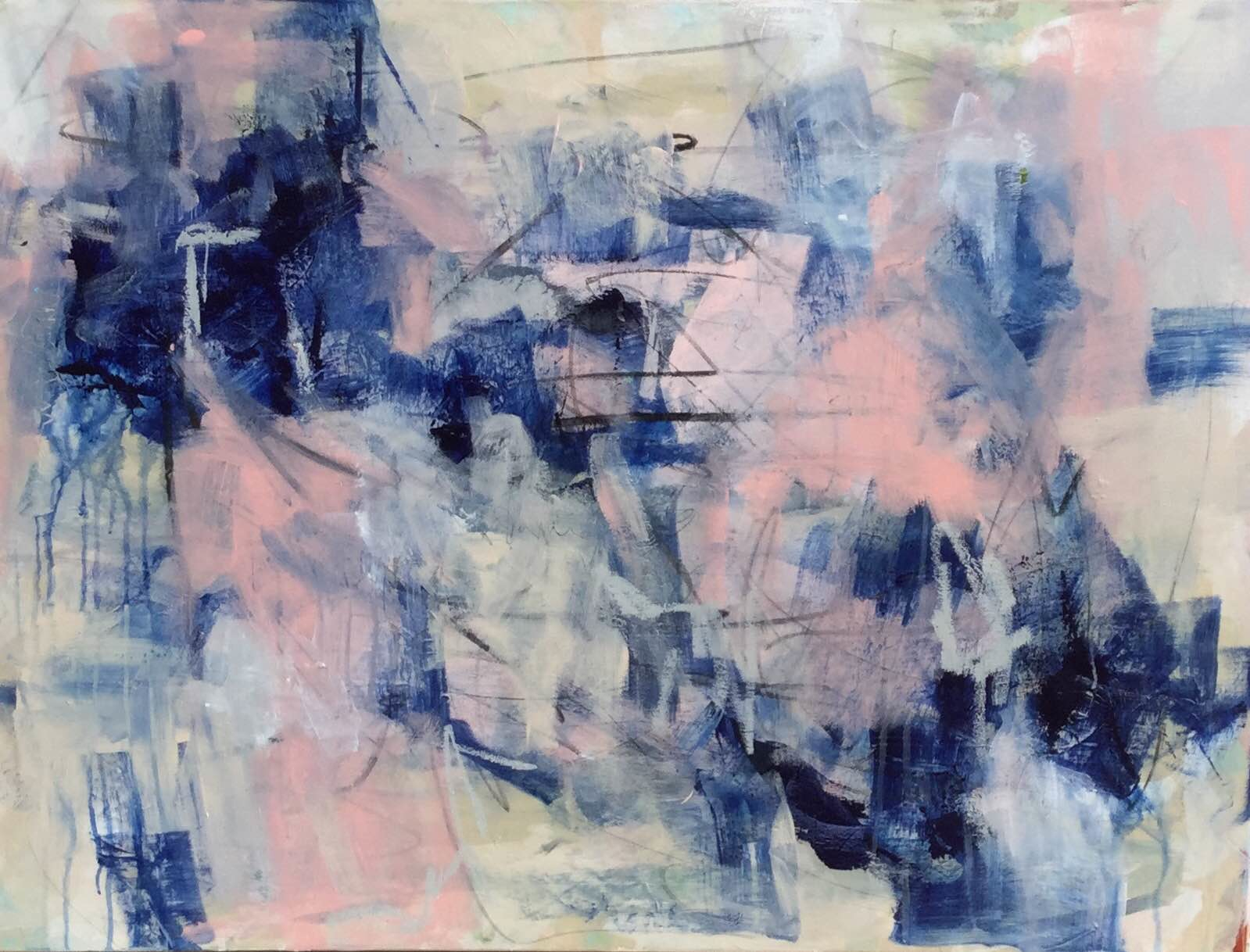
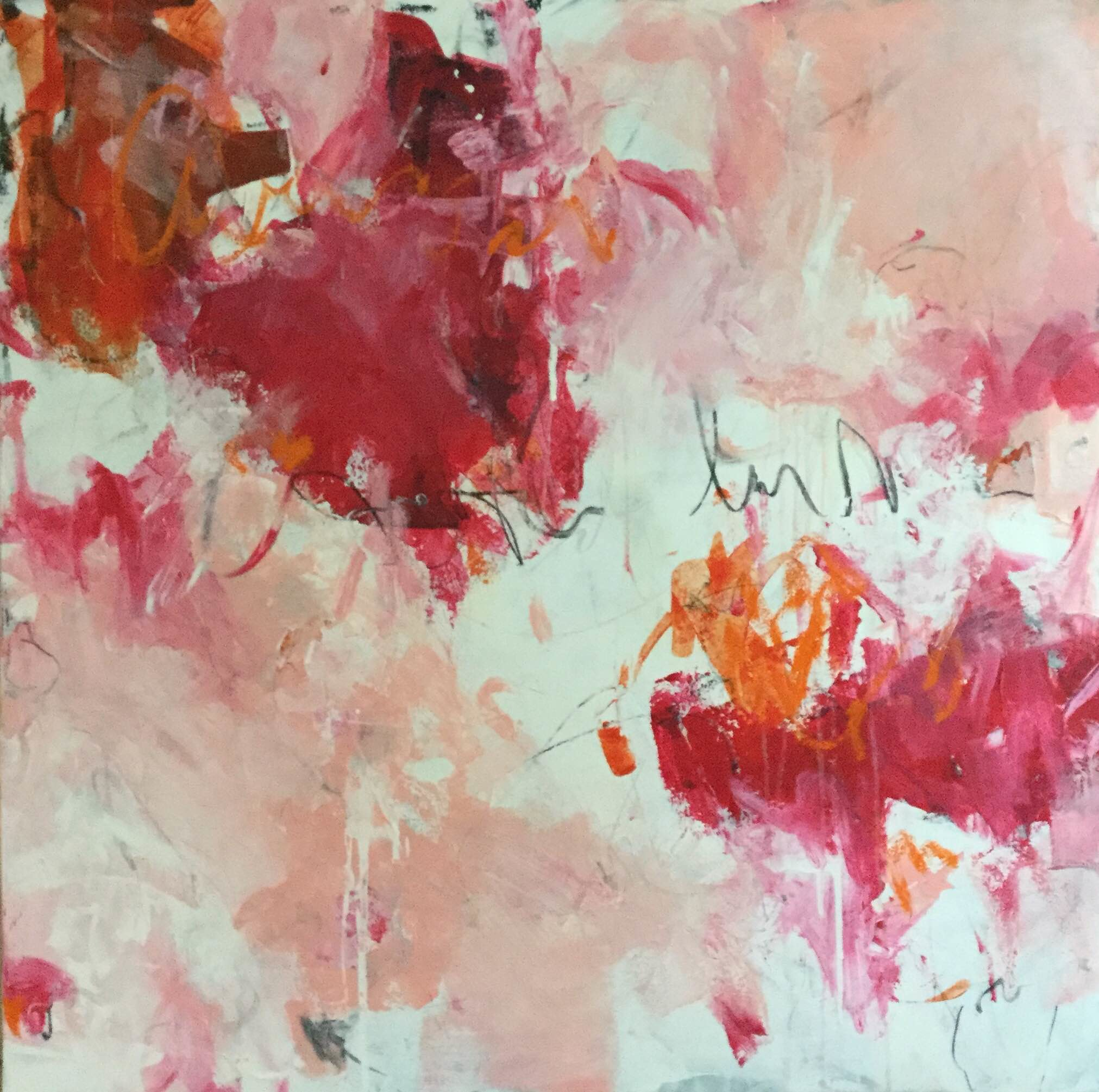
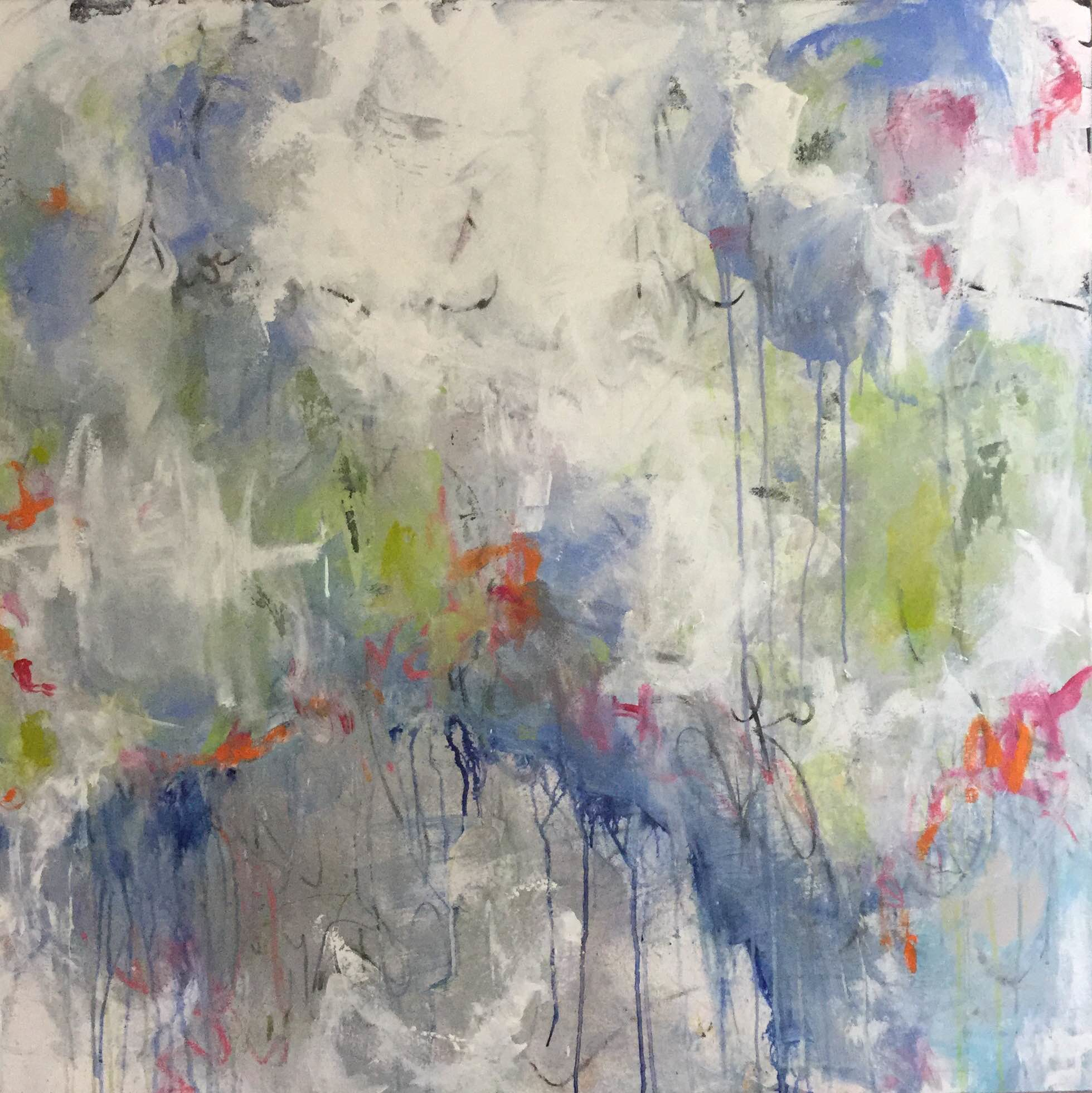
Recent

Flux

by David Feingold and Michael Quaintance

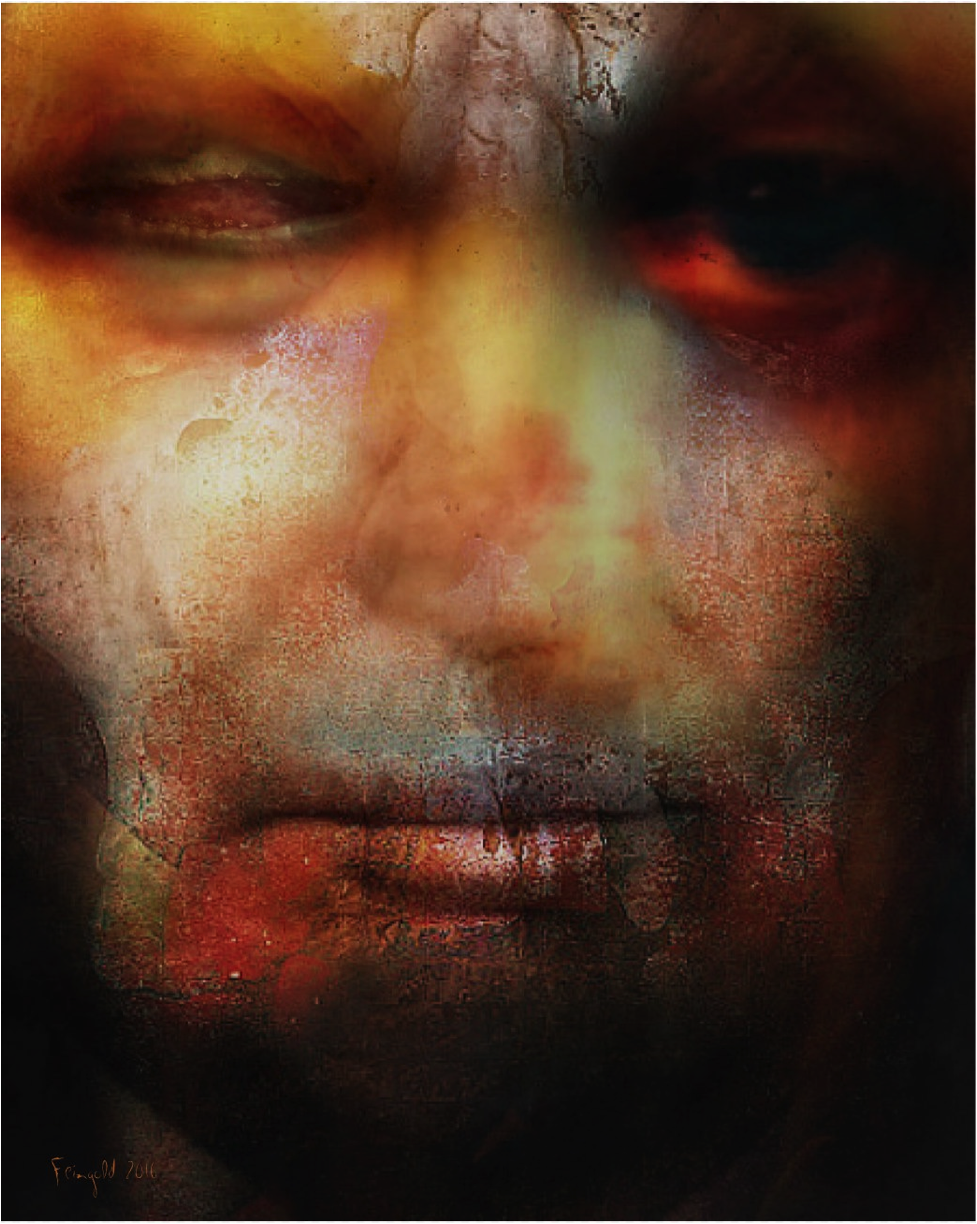
“Flux” is the third in the collaboration series “Teeth is Tears,” created by artists David Feingold and Michael Quaintance. Michael writes poetry in response to David’s images. As Michael says in his bio, “Feingold’s images act as doorways, as pathways to those avenues of thought and feeling that have been sequestered in the corners of my efforts to belong and be seen… as.” Both artists’ works are informed by their lived experience of disability.
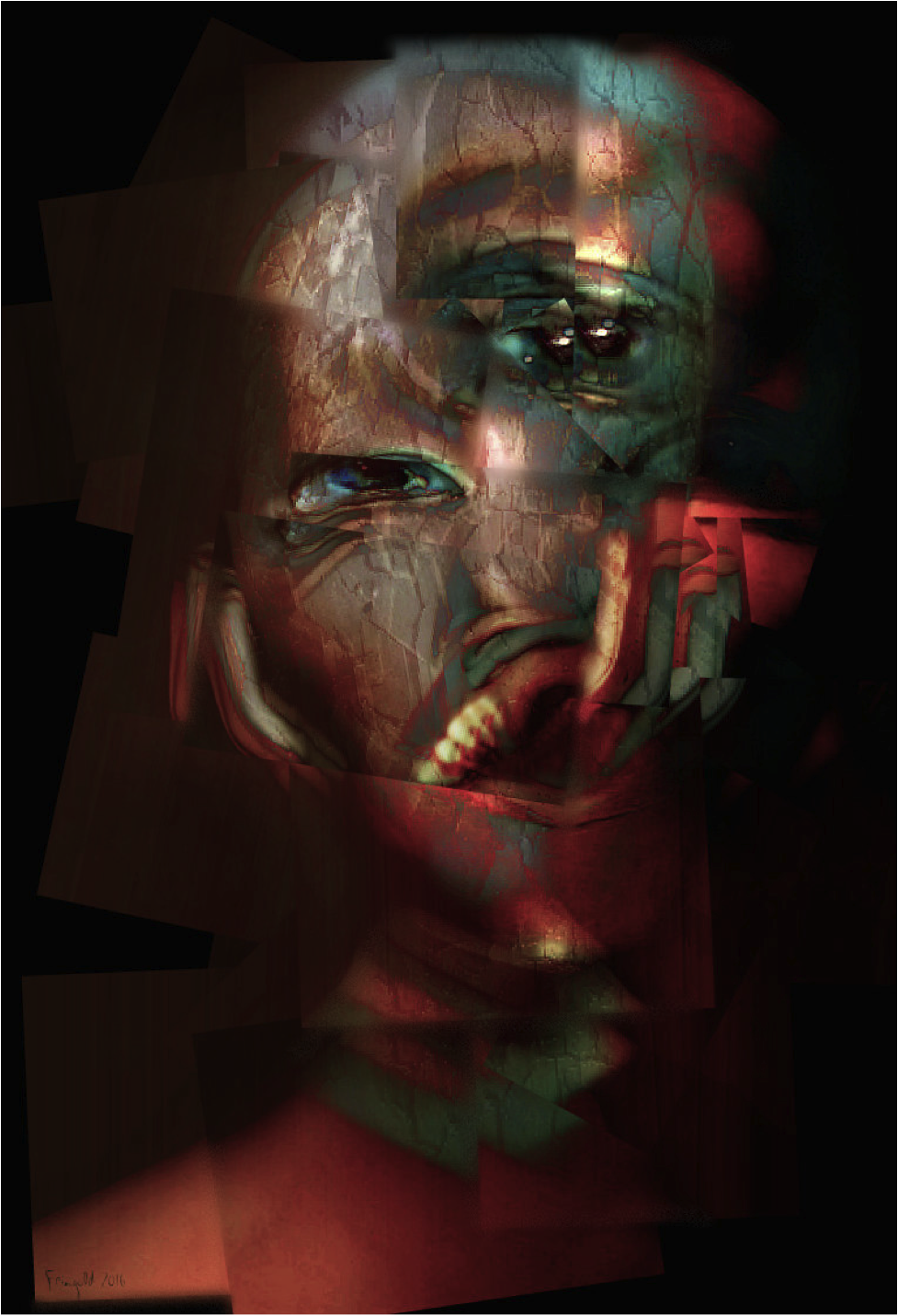
david-feingold-flux

Flux

Flux
Nothing is initiated
No points of origin
That aren’t reflections
That aren’t responses
To
The need to please
That rests at the core of I in absentia.

Flux
The pieces move to satisfy
The assumption
The predisposition toward
Vacancy
And the relegation of person
To the ownership of the itinerant
To the ownership of the dispenser that determines design.

There is no
I—she—he
No
Me—my—or mine
Only quantity
And the relevancy of pieces
At the time that the puzzle
Is aligned to confirm the presumption and assumption.

There is no need to know
Nothing to know
It moves to confirm
To confine itself to the affirmation of confirmation
So that they
Are free
To rub the head of the dying and the dead
In celebration of their insight.

Flux
Faces within faces
Faces upon faces
Without the complexity of identity
Without the confusion of consciousness
Or the need to be conscious
That this might not be as simple as
As simple as its allowed—as it required to be.

The red is essential
Rhythmic surges
Pulsations promising continuity
Promising the continuance of continuity
Irrespective
Of the passage of time
And the gentrification
Of the periodically human landscape.

The neck is essential
The pedestal and the pivot
The pillar of vulnerability
Should the illusion need to be terminated
The foundation
On which replacements can be made If
Too much time is taken
And history takes purchase and infects the moment.

The mouth is vaginal
Receptacle and deliverance of
Utterances
Raped—ravaged and reviled
Should the “ists” fail to convulse
Rapt in the afterglow
Of their urgent need to impose their hungers
Into gaping mouths before they forget to remain silent.

Flux
Freedom through depression and repression
The careful calculation of denied
Yet essential balances
Abuse
Use
Allowance
The careful writing of the fading promises of truce.
 

david-feingold-2Artist: David Feingold

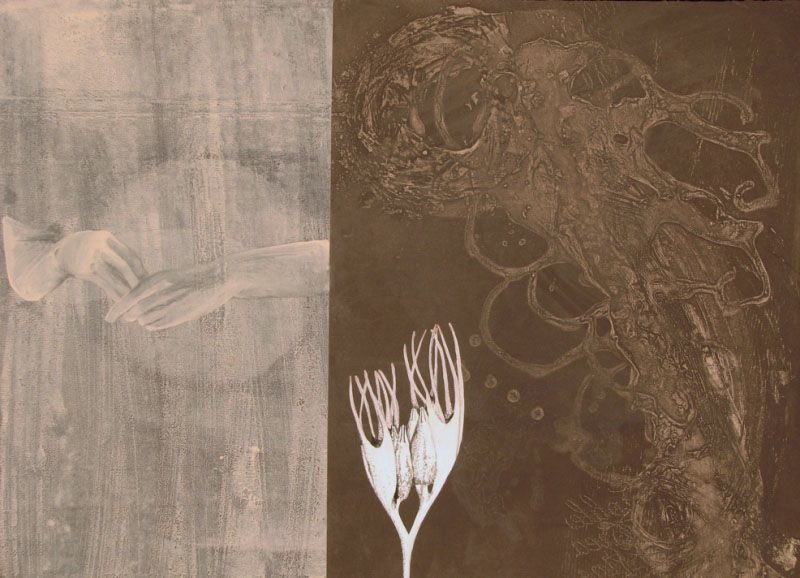
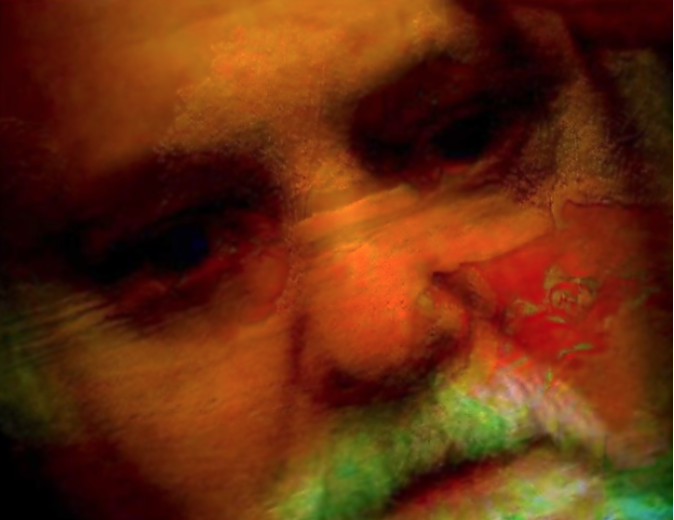
David Feingold was born in Chicago, Illinois in 1951.  Feingold works in the medium of digital art.  Much of his art is used in conjunction with his anti-stigma awareness campaigns to the lay public as well as professionals and academicians.

Feingold has a varied education and professional background, which along with his personal experience with bipolar disorder, influence much of his art: Bachelors in Art Education; Masters in Visual Design; Masters in Social Work; and a Doctorate in Disability Studies.

His work has been represented both nationally and internationally in both brick and mortar and online galleries. His ultimate purpose in creating “bipolar art” is to present the inner struggles of those with psychiatric disorders and through understanding and acceptance, reduce the stigma and prejudice associated with all mental illness.

Feingold worked for 15 years as a visual designer and 15 years as a school social worker, when he had to take early retirement, due to advancing cognitive impairments stemming from a closed head injury from a hit-and-run accident in his teens. The closed head injury was the genesis of Feingold’s temporal lobe epilepsy and bipolar disorder. He resides in rural Michigan in a simple, one room dwelling, complete with a wood burning stove and a pond in the back yard. Feingold states that his home provides a perfect environment in which to produce his artwork as well as a harmonious balance and stability in light of the unpredictable challenges associated with his diagnoses of bipolar and seizure disorders.

This is Feingold’s second art collaboration. His first collaboration was with a musician/composer, whose music was informed by his own seizure activity as well as Feingold’s art imagery.

Website: www.feinart.me

 

blog-hotsauceanddill-blogspot-comArtist: Michael Quaintance

How long has “depression” been a central part of your life experience? Before answering, I need to respond to the assumptions and preconceptions that haven’t be voiced, but have proven to be inherent in this kind of question.   “Depression” (for me) is a region of sight and insight that exists outside of the constraints of belonging and the constructs of being used to set the terms and conditions of normalcy.  I also need to add that I use the term “depression” for the sake of convenience, so that you and I can begin our conversation from a shared point, even though our interpretations will differ at the outset.

So, what is depression… for you? Depression is not—depression does not—depression will not.  Is, does and will, belong to form, formality and functionality; the need to assert, discern and determine.  What you call depression, I call imposition and the limitation of the unique by mandates of compliance that have little to no tolerance for difference, or that which cannot/will not be defined.

My work, my writing is motivated by this unfinished—recently began—lifelong discussion. Feingold’s images act as doorways, as pathways to those avenues of thought and feeling that have been sequestered in the corners of my efforts to belong and be seen… as. The gift of isolation and aloneness over the past few years, has opened doorways and pathways that I’ve only begun to discover; and in word, design.

Ex-Dancer—Actor, Bachelors in Philosophy and Performing Arts, Masters in Education, presently completing a Doctorate in Disability Studies

Blog: hotsauceanddill.blogspot.com
 

The Journey and the Conversation

by Jenny Schultz

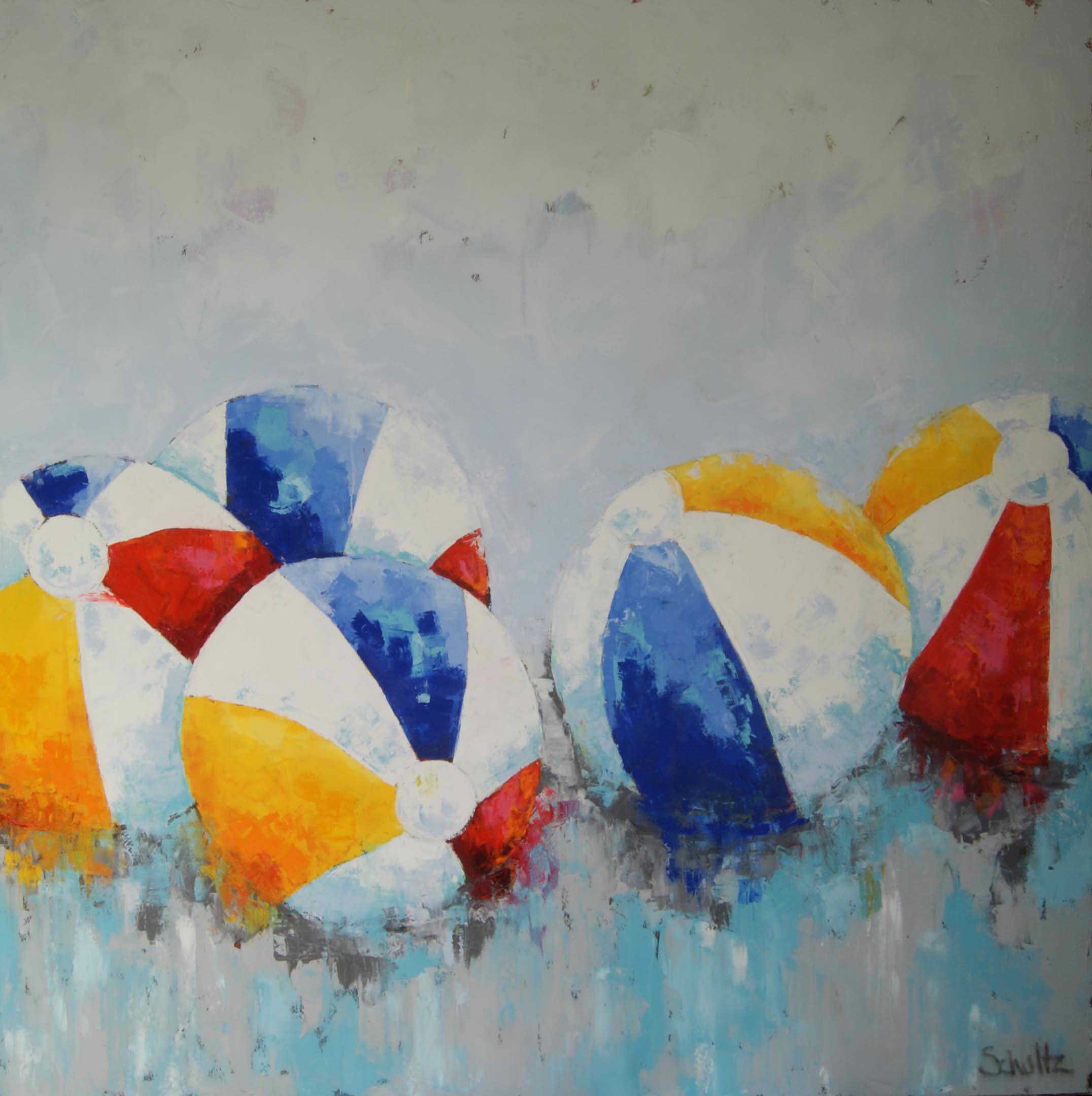
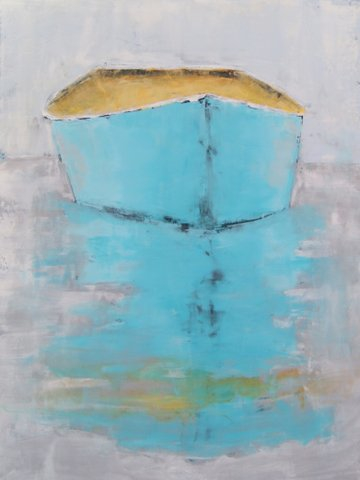
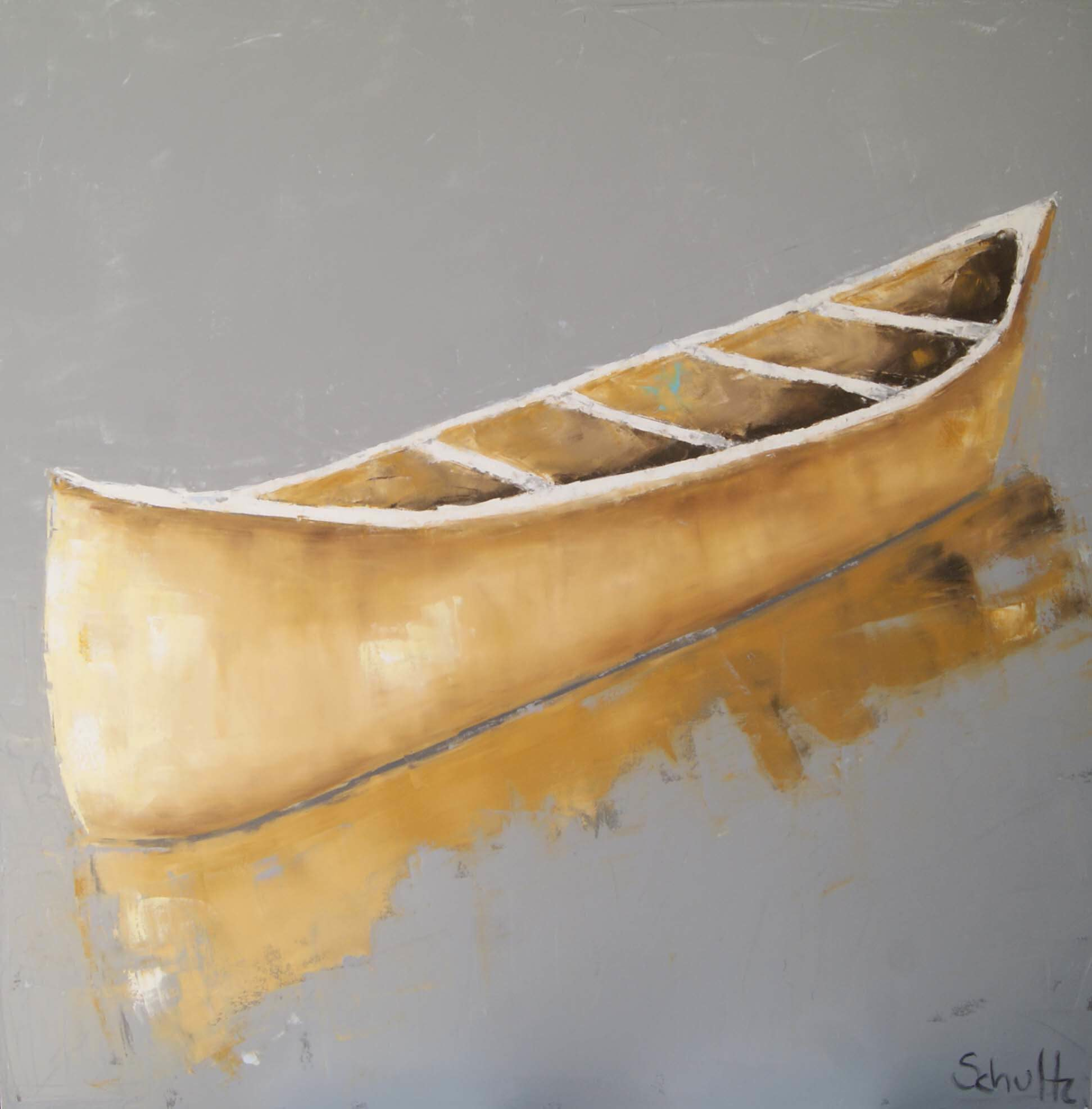
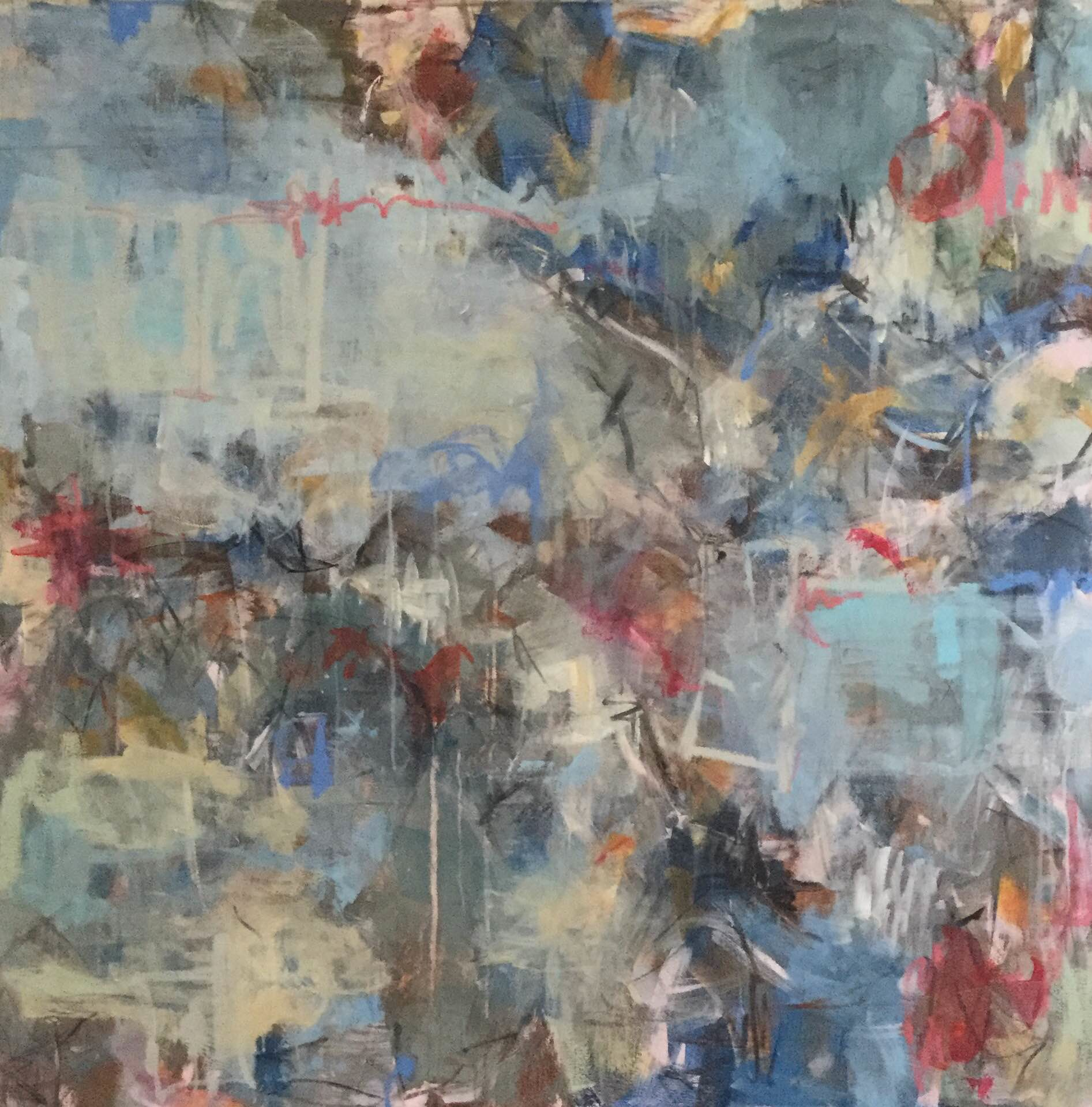
Four years ago I was living a great life as an artist, mom, wife and fun, energetic friend. My art was just gaining ground and was featured in several galleries across the southeast. My painting style was happy, bright and colorful. Then I was diagnosed with late stage, neurological Lyme disease.

Joyous creation was essential to my psyche pre-illness, and work would really just evolve on my easel. The action of painting and interacting with the canvas and mediums truly made me happy. Angst did not figure into my work. I just never experienced it. This showed in the end result.

I could no longer feel those joyful emotions after the illnesses took hold. The ease of creation was lost to me. My actual vision and depth perception had changed. Hand tremors made the actual movement of representational painting difficult. I could no longer see or feel or experience the synergy that was once there.

My Lyme Doctor is located in New York, which gave me the opportunity to finally visit the various museums that I had always dreamed about. I would schedule time after each appointment to sit and soak in the work of the art masters.

I became obsessed with the mid century modernists. Pollack, de Kooning, Hoffman, Klein, Krasner, Freud, and Klee all spoke to me. I understood what they were saying but try as I might, I couldn’t make the jump from my happy, Impressionism to a dialogue via abstraction.

Finally, after four years of healing, I was able to start that conversation with my art. I understood what I needed to say. After four years of fighting to get my brain back, I sure had a lot to say. I began, slowly, to rebuild my life and my art career, with the help of many doctors, friends and two amazing gallery owners.

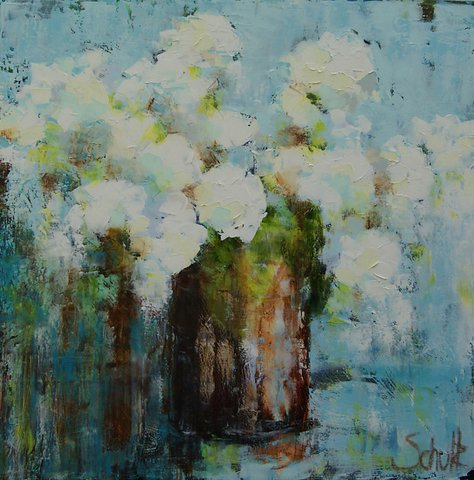
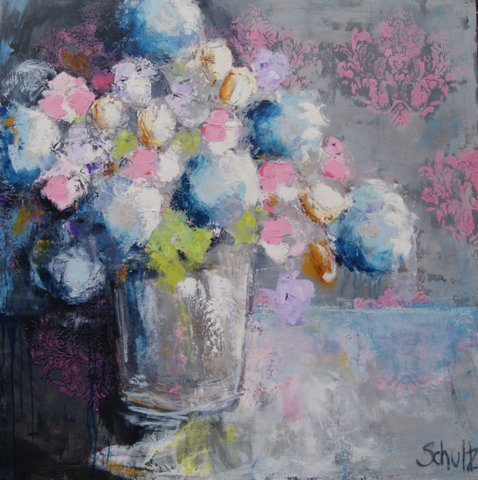
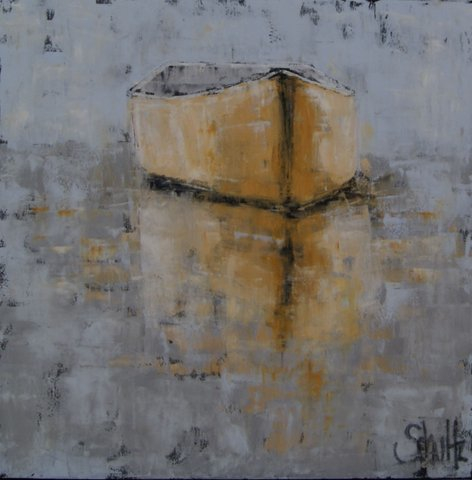
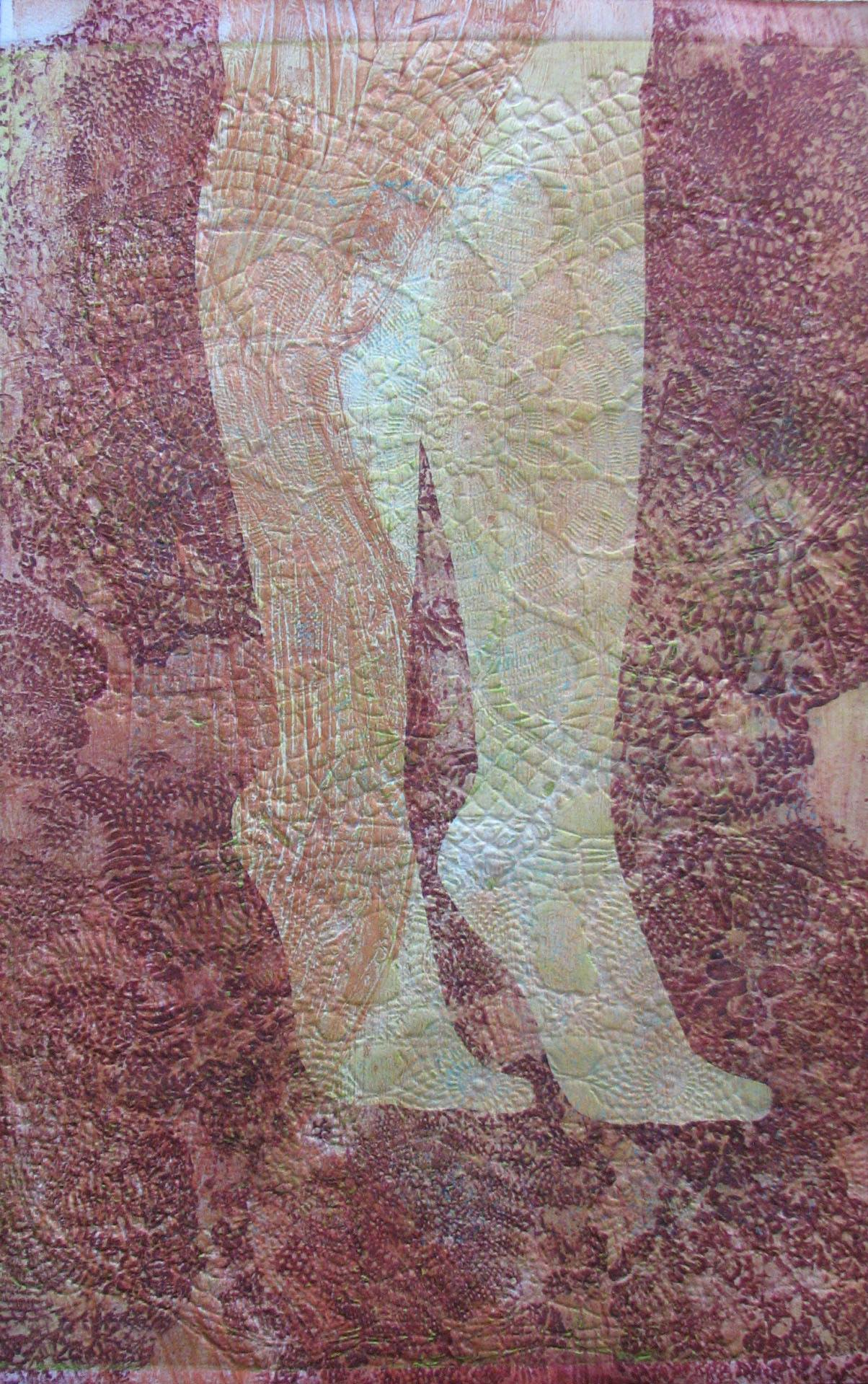
I actually write about my journey onto my canvas. I write about love and frustrations and the joy of being alive. I then use paint to communicate more, either over or under my words. I sand and scrape and carve, depending on the emotions and thoughts that are trying to reach the canvas. Some days the creation comes easily and I feel the past peek through a bit. Other days, more frequently than not, the bacteria in my body take charge and I have to wait for the healing to happen again.


jenny-schultz-1

jenny-schultz-2

jenny-schultz-3

jenny-schultz-4

jenny-schultz-5

jenny-schultz-6

jenny-schultz-7

jenny-schultz-8

SONY DSC

SONY DSC

SONY DSC

SONY DSC


jenny-schultz-bio-photo


Artist: Jenny Schultz

Website: http://jennyschultz.com/

Email: jennyschultz1121@gmail.com


Postcolonial Thoughts: Basel 2016 Pilgrimage

by Christopher Hutchinson

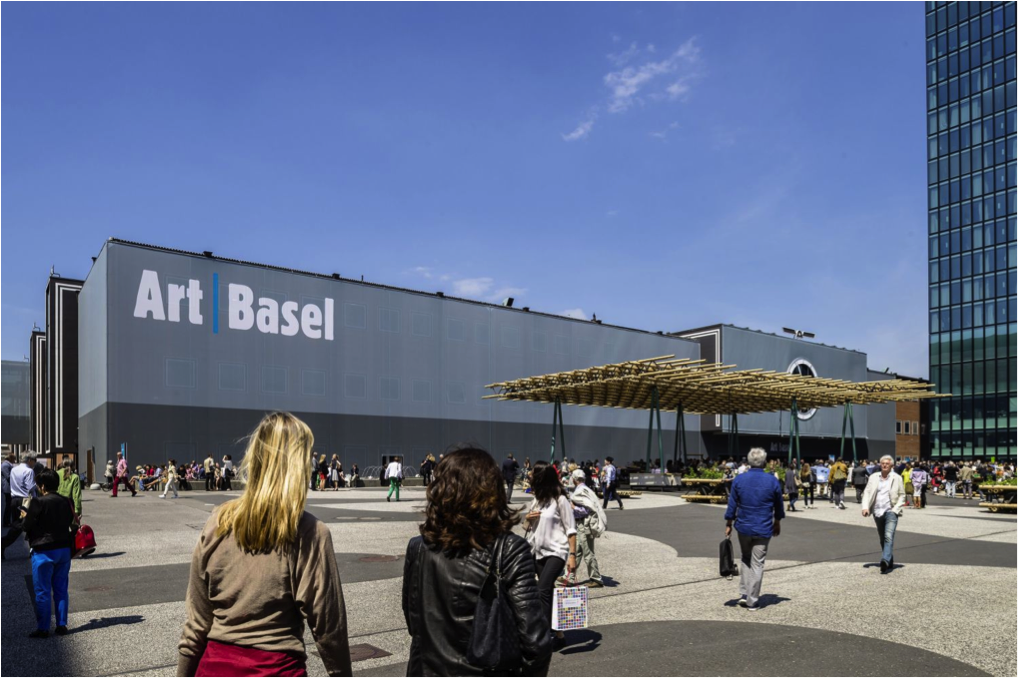
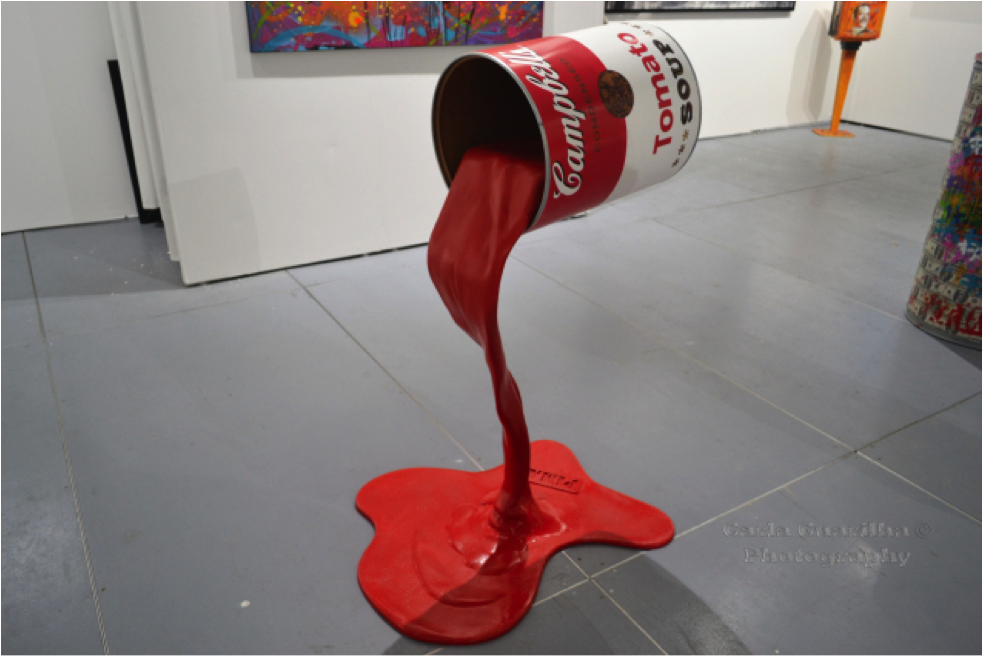
Art Basel in America is a 4 days art fair that is being held from 01 December 2016, Thursday to 04 December 2016, Sunday. This art fair is being organized by M. C. H. Swiss Exhibition (Basel) Limited. The venue of this event is Miami Beach Convention Center (MBCC) which is situated in Miami Beach, Florida, United States of America. Art Basel in America 2016 will showcase a wide range of products and services related to art and collectibles sectors from the leading exhibitors, for example, premier paintings, drawings, sculptures, installations, prints, photography, film, video, and digital art. Over 250 exhibitors are expected at this event to showcase their products and services. Over 70,000 visitors are expected at this art fair. Visitor profile of this event includes collectors, artists, dealers, curators, critics and art enthusiasts. The recurrence of Art Basel in America is annual. The first year of this art fair is 2002. https://tradeshowz.com/art-basel-miami-beach


Reaffirmation


It’s always good to go to Art Basel Miami. The first time one goes as an artist one is simply overwhelmed with the quantity and quality of the works only experienced before in books. The first year your feet hurt from actually trying to see everything. You come in contact with real artworks that had a profound influence on you and are curious to see if they still have the same impact.

The art fan comes out and you are transported back to when you were purely in love with every aspect of being an artist. While you are having these spiritual encounters, thousands of people are mobbing through these spaces and they are just as zealous as you to reaffirm and acquire the impact of these art works. And while your favorite pieces are bringing back that nostalgia, two feet away is a gaudy monstrosity that has a completely jarring effect that breaks nostalgia–until two seconds later when you fall again for another piece.


Confirmation


You could spend everyday for a week just at the main Art Basel convention center. But there is literally tons more art to see. At the satellite fairs like SCOPE, CONTEXT, ART MIAMI etc.


These Satellite fairs are where you actually begin to see your and your peers’ work and in whose galleries. These fairs also include many of the same works at the main Basel but, for example, may contain the drawings and paintings of Richard Serra versus an actual full-scale sculpture. There is a sense of confirmation that you are on the right path. You also see the total and complete embrace of technology and art. There is a lot of 3d printed work, super-slick experimental materials, and florescent colors. This also confirms that you don’t need any of that either.


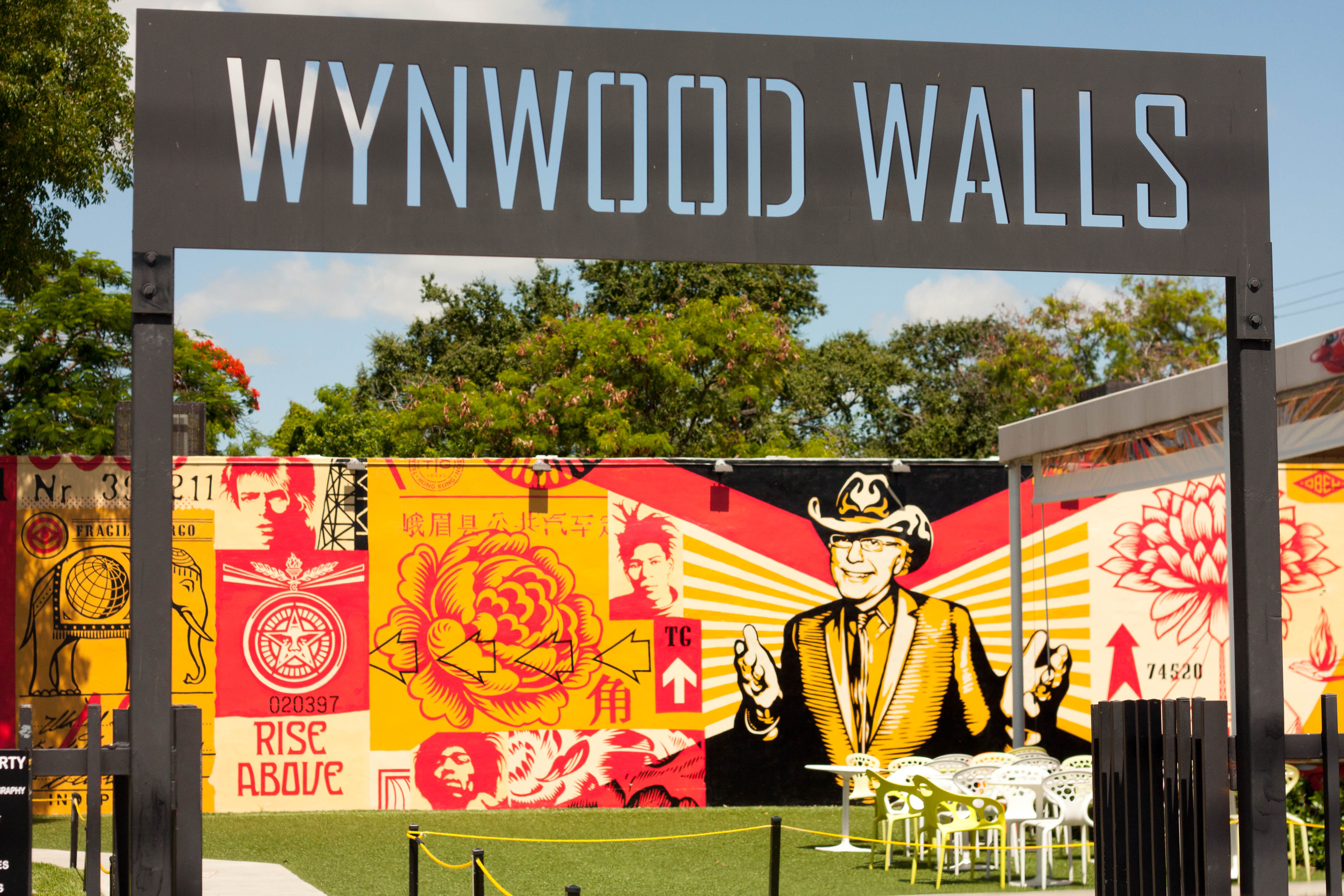
Wynwood Walls

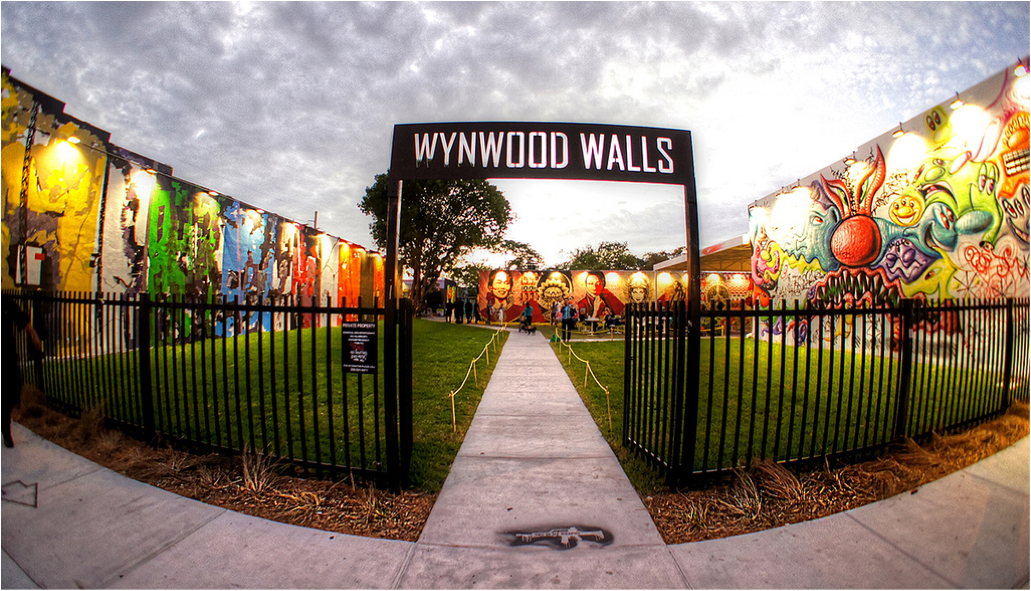
The Wynwood Walls was conceived by the renowned community revitalizor and placemaker Tony Goldman in 2009. He was looking for something big to transform the warehouse district of Wynwood, and he arrived at a simple idea: “Wynwood’s large stock of warehouse buildings, all with no windows, would be my giant canvases to bring to them the greatest street art ever seen in one place.” Starting with the 25th–26th Street complex of six separate buildings, his goal was to create a center where people could gravitate to and explore, and to develop the area’s pedestrian potential.

The Wynwood Walls became a major art statement with Tony’s commitment to graffiti and street art, a genre that he believes is under appreciated [sic] and not respected historically. He wanted to give the movement more attention and more respect: “By presenting it in a way that has not been done before, I was able to expose the public to something they had only seen peripherally.” Murals by renowned street artists have covered the walls of the Wynwood Walls complex since 2009, and to create more canvases and bring more artists to the project, Tony opened the Wynwood Doors in 2010 with 176 feet of roll-up storefront gates. The painted exteriors and interiors of the doors reveal a portrait gallery. Murals have also been commissioned for Outside the Walls through 2011, in key locations outside the park itself. http://wynwoodmiami.com/listing_details.php?id=82


The Wynwood Walls have changed in 2016. A couple years ago it was bouncing with grimy street/graffiti artists and the walls stayed open all night. This year there is evidence that commercialism has spread. The scene is much more conservative than years past. While you can still find graffiti artists still there doing work, it was more curated, as opposed to other years.

The Wynwood basel is on the other side, across the water from South beach. There is a definite push going all the way to little Haiti, Miami.


Prizm Art Fair

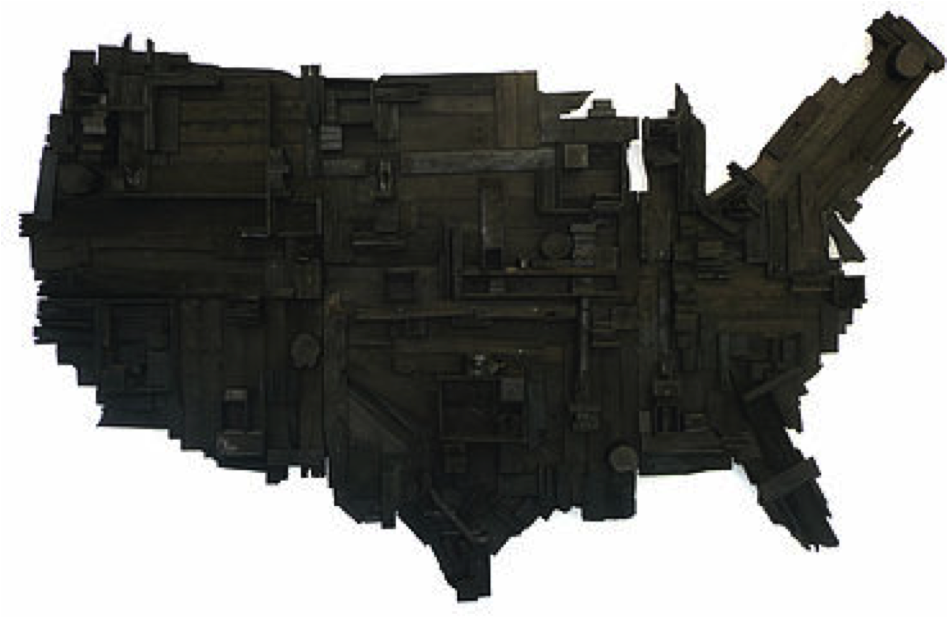
WESLEY CLARK My Big Black America 84” x 144” x 14” salvaged and stained wood 2011 http://www.prizmartfair.com/prizm-program

WESLEY CLARK
My Big Black America
84” x 144” x 14”
salvaged and stained wood
2011
http://www.prizmartfair.com/prizm-program

Curated by Mikhaile Solomon

 Prizm Art Fair presents the work of international emerging artists with a select focus on solo presentations by artists from the Global African Diaspora. The theme for the fourth edition will explore the global impact of Africa’s cultural DNA.

Alexandra Smith, Alexis Peskine, Allison Janae Hamilton, Alonzo Davis, Amber Robles-Gordon, Ariston Jacks, Asser Saint Val, Cleveland Dean, Cosmo Whyte, Deborah Jack, Duhirwe, Ezra Wube, Felandus Thames, Francks Deceus, Ify Chiejina, Jamal Ince, James A Rush, Jayson Keeling, LaToya Hobbs, MahlOt Sansosa, Morel Doucet, Marvin Toure, Maya Amina, Musa Hixson,  Nadia Huggins, Nyugen Smith, Olalekan Jeyifous, Sharon Norwood, Shaunte Gates, Shawn Theodore, Sheena Rose, T. Eliott Mansa, Terry Boddie, Vickie Pierre, Wesley Clark, Wole Lagunju http://www.prizmartfair.com/2016-schedule-of-events


Little Haiti is where you find the Prizm Art Fair 2016. Prizm is where you have to go to see your global African and African-American contemporaries in the same space. This means one has to travel from South Beach across the water to Wynwood and a few miles more. This still illustrates the gap between the Global African diaspora and the Western art canon. African art is still in the basement of many museums. This fact is a sobering reminder.

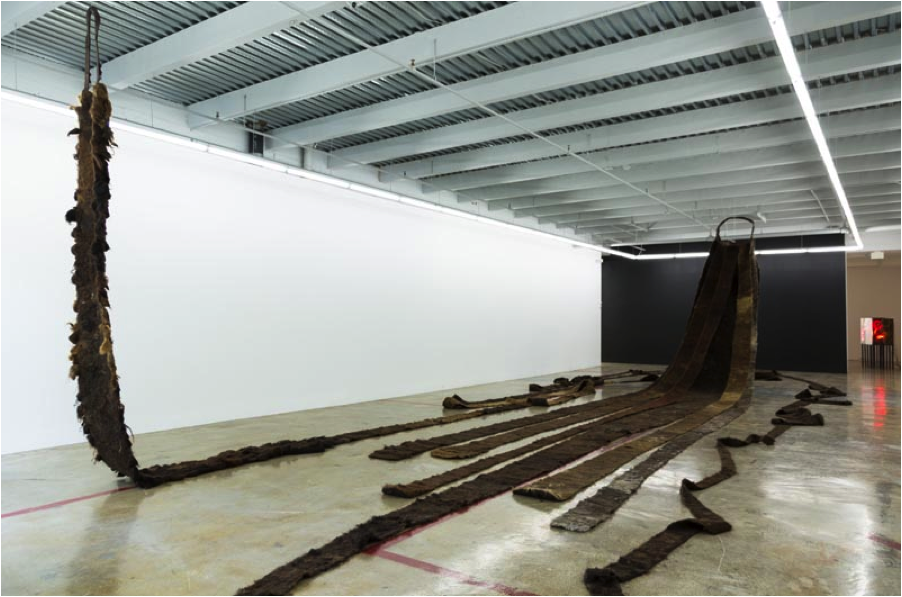
It was worth traveling across the water, through Wynwood, and a few miles more to see a common visual aesthetic shared by many African diaspora countries working in the same vein. The work could have been presented better but was worth it. The William Cordova curated space was especially interesting.

The most worthwhile were the panel discussions that got a little rowdy with opposing views on the actual state of the black arts movement, and a generational gap or lack there of, in that movement.


Rubell Family Collection

High Anxiety: New Acquisitions
November 30, 2016 — August 25, 2017

High Anxiety: New Acquisitions presents selections of artworks from 32 artists acquired since 2014, many of whom explore polarizing social and political concerns through a broad spectrum of contemporary artistic practices. In gauging the output and energies of these artists we find creative currents that speak to our shared state of uncertainty, nervousness and pessimism. “Artists help us comprehend and grapple with the critical issues in our lives,” says Mera Rubell. https://rfc.museum/exhibitions/current-exhibitions/high-anxiety


The Rubell Family Collection consistently provides a challenging and pointed view every year. It’s a great space to cleanse the palette and reset after seeing so much art at Basel. The space and lighting are ideal to view the work. And the mob isn’t quite as pushy. Of all the artworks you remember in a year at Basel, the ones from RFC will be amongst them.

Basel is great to recharge your theory and practice. You get a chance to engage with your art inspirations as well as recognize what the current trends are. It’s a gathering of thousands of art minds. At Basel, art dialogue and methodology is the majority. Art lectures and talks are filled with genuine interest and responses. It is the equivalent of attending 50 museums and 20 artist talks in four days. You are able see trends from Denmark to Canada. That can be overwhelming so you learn to pace yourself the next year. Making the Basel pilgrimage is a mandatory.


Christopher Hutchinson 2Christopher Hutchinson is an accomplished Jamaican conceptual artist, professor and contributor to the art community as a writer, critic and founder of the nonprofit Smoke School of Art. He is a Professor of Art at Atlanta Metropolitan State College and has been featured as a lecturer including prestigious engagements at University of Alabama and the Auburn Avenue Research Library. For two decades, Chris has been a practicing artist. His works have been exhibited in internationally recognized institutions including City College New York (CUNY) and featured at the world’s leading international galleries such as Art Basel Miami. He has always had an innate passion for creating spaces where Africans and people of African descent contribute to an inclusive contemporary dialogue—ever evolving, not reflexive but pioneering. This requires challenging the rubric of the canon of art history, a systemic space of exclusion for the Other: women and non-Whites, and where necessary he rewrites it. He received his Master of Fine Arts Degree in Painting from Savannah College of Art & Design, Atlanta and his Bachelor of Arts Degree from the University of Alabama in Huntsville, Alabama.


Mourning Light

by Holly Friesen

An exhibition of recent paintings by Holly Friesen
Les Mots Tremblant, Friday, Dec 16, 5 to 7 pm

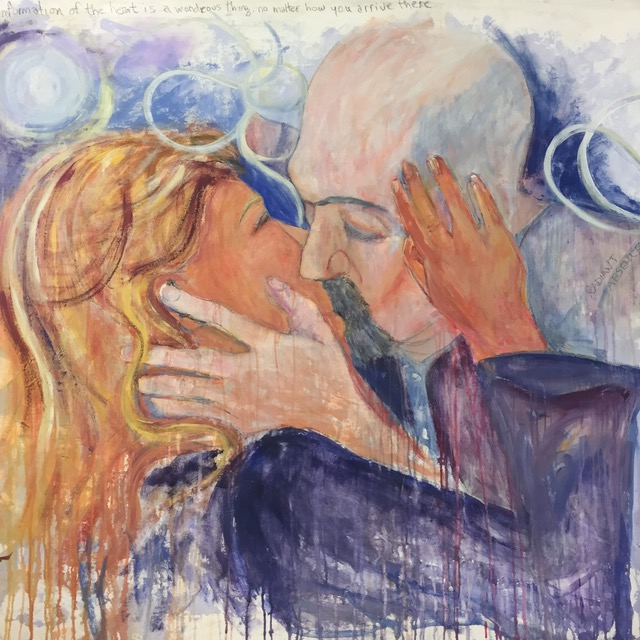
The transformation of the heart is a wondrous thing, no matter how you arrive there. ~Patti Smith

This exhibition is dedicated to Walt Pascoe, the love of my life, whose passing from the earth on the solstice of last year has been mourned in the sweetest light possible. The only way my heart could survive this loss was to paint my way through it. After having mourned his absence for a full year I find his presence in everything I see and touch.

I recently attended a month long artist residency program at the Vermont Studio Centre in Johnson, Vermont. This was a transformative experience. I was able to paint day and night in a gorgeous studio without interruptions or distractions. Meals were provided and the interaction with the 50 other attending writers and visual artists was inspiring and stimulating. The first thing I painted was “Good-Bye Kiss”. The reference photo I painted from was taken by a close photographer friend of mine who passed away three months after Walt. This painting allowed me to process a lot of sadness for the loss of both these dear souls. Once this painting was complete I felt released and lighter as though the studio had been blessed with a newfound radiance that was filled with love and gratitude.


holly friesen-good-bye kiss


To live in this world

you must be able
to do three things:
to love what is mortal;
to hold it

against your bones knowing
your own life depends on it;
and, when the time comes to let it
go,
to let it go.

~ Mary Oliver

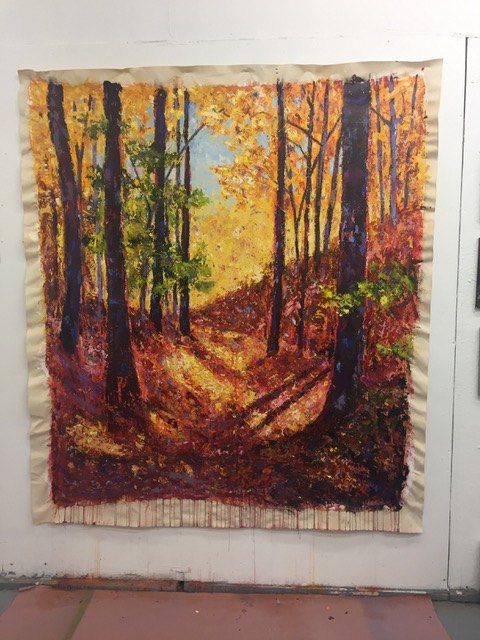
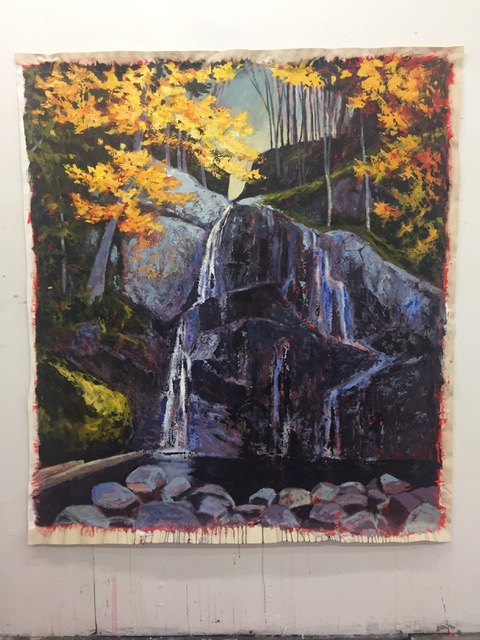
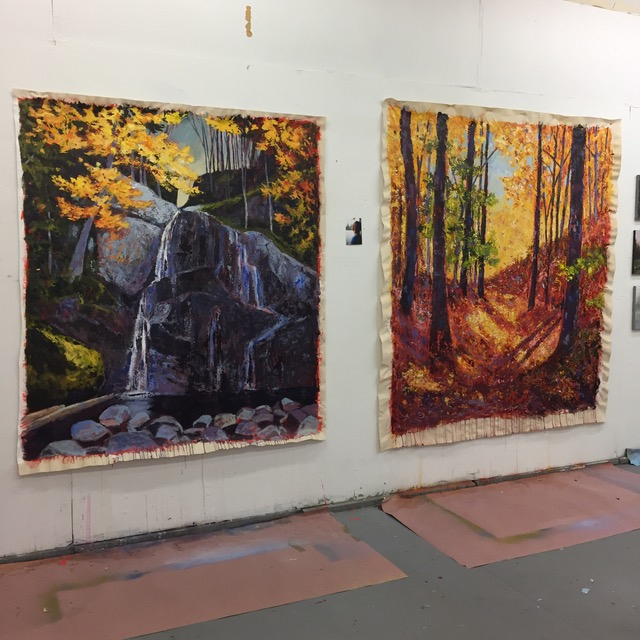
I unrolled some large swaths of canvas from a roll that had belonged to Walt, stapled them to the wall and started to paint light filled landscapes of colour and joy. These paintings came bursting forth with a gratitude for life so large it was almost hard to contain it.


Unbound Joy / 84" X 70"

Unbound Joy / 84″ X 70″

Mysteries Too Marvellous to be Understood / 72" X 60"

Mysteries Too Marvellous to be Understood / 72″ X 60″


I intend to exhibit these pieces un-stretched and unframed, just as they were in the studio. I love the raw edges that seem to extend the painting into the room and allow their energy to spill out into the space around them. I want the viewer to experience the painting  as an expansive invitation to enter the painting with their own heart.


holly-friesen-paintings


Next I felt as though I was between stories, a liminal space. A story of presence and absence co-existing in one space. A tension filled existence of opposites; movement and stillness, light and dark, colour and neutrality. A space full of potential yet oddly empty. It was at this time I came across a photograph by friend and colleague Melissa Johnston I couldn’t stop thinking about it. I rarely paint from another person’s imagery as I find “image gathering” to be very personal but this one just wouldn’t stop
calling out to me. I contacted Melissa and she very generously gave me permission to use her sublime photo as reference for a painting. “Liminal Space” is the resulting painting and I am grateful for Melissa’s vision that resonated with my own at that moment in time and space.


Liminal Space / 36" X 48"

Liminal Space / 36″ X 48″


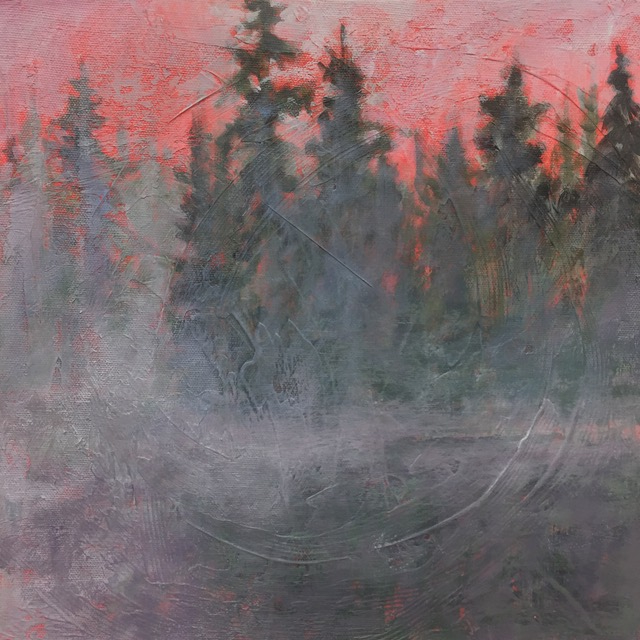
Then came a more subdued palette as I started on a new series of paintings. These works were more modest in size and inspired by a series of photos and memories from a 5 a.m. September morning paddle on Pink Pond in the Adirondacks. As my photographer friend and I waited for the fog to lift we were rewarded with some of the most sublime glimpses  of landscape revealed at whim from behind a shifting veil of mist. This ambiguous vision of the the horizon appearing and disappearing was poetic and dreamlike.


Infinite Possibilities / 48" X 36"

Infinite Possibilities / 48″ X 36″

Pink Pond #1 / 12" X 12"

Pink Pond #1 / 12″ X 12″

Morning Offering / 12" X 12"

Morning Offering / 12″ X 12″

Pink Pond #4 / 12" X 12"

Pink Pond #4 / 12″ X 12″


The following paintings are several that I have selected from this past year of searching, exploring and reaffirming the interconnectedness of our inner and outer landscapes. The present moment seems to intersect with the past and the future and linear time dissolves into a web of moments.


The Present Moment Becomes Long Ago / 24" X 48"

The Present Moment Becomes Long Ago / 24″ X 48″

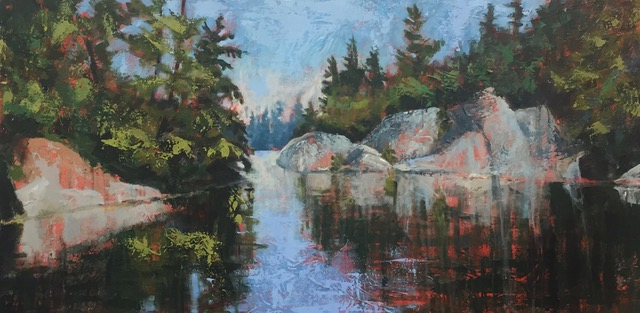
Dark Water Cove / 24" X 48"

Dark Water Cove / 24″ X 48″

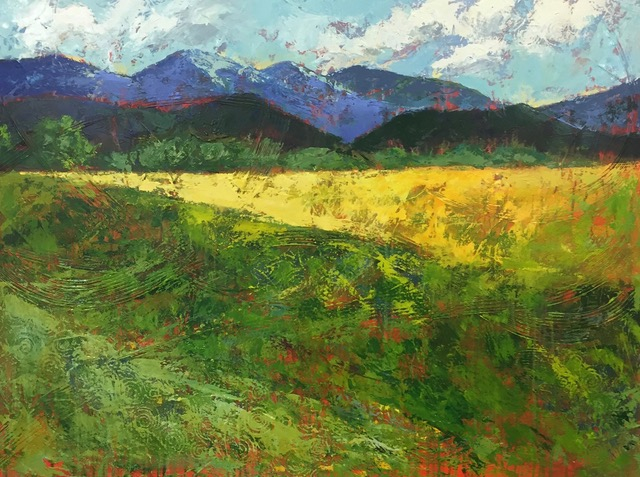
Field Flow

Field Flow


My painting practice continues as a form of deep prayer which reconnects me to that which is vital in this life and beyond. Painting teaches me what I need to learn. Like breath, painting has become intuitive and essential to my own survival. I am humbled and awed by this invitation to participate in the Great Mystery through moments of numinous beauty that I am gifted with on a daily basis.


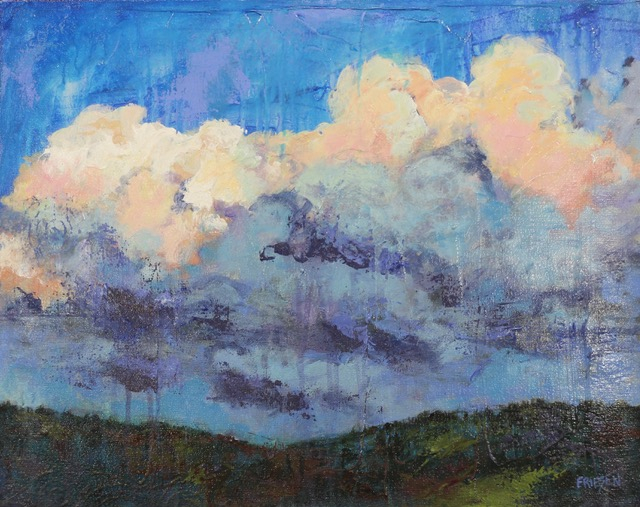
Un Peu Perdu dans les Nuages / 16" X 20"

Un Peu Perdu dans les Nuages / 16″ X 20″

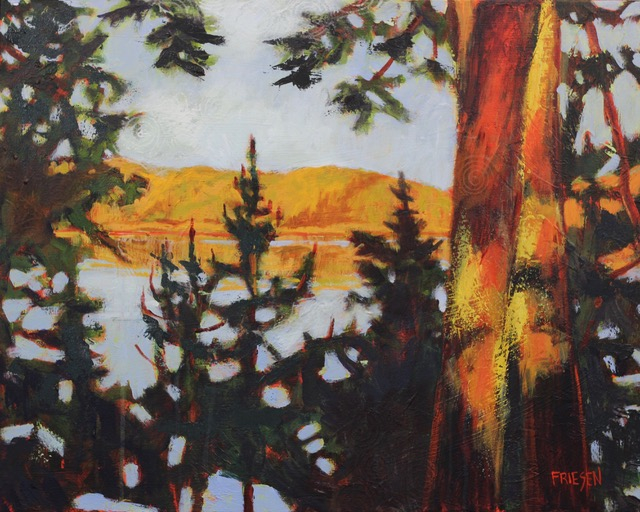
When Warmth Fell from the Sky / 24" X 30"

When Warmth Fell from the Sky / 24″ X 30″

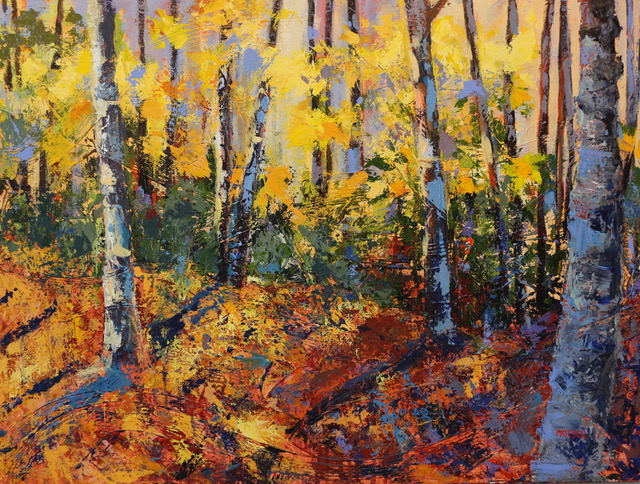
Landscape in Motion / 36" X 48"

Landscape in Motion / 36″ X 48″

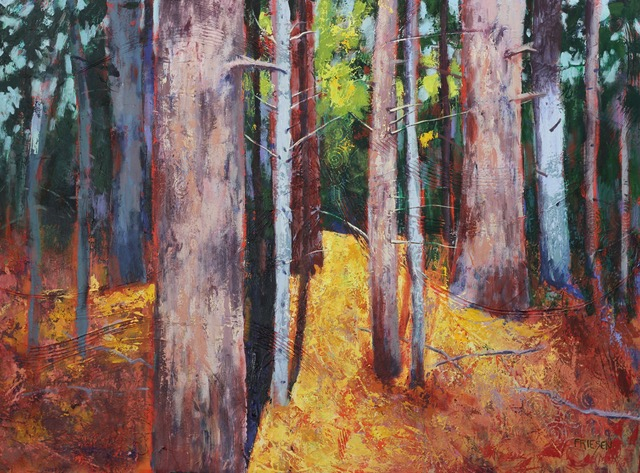
Yellow Pool of Light / 36" X 48"

Yellow Pool of Light / 36″ X 48″


holly-friesen-bio-picArtist: Holly Friesen

www.hollyfriesen.com

hollyfriesen@gmail.com

Holly Friesen was born in Saskatchewan, studied Visual Arts at John Abbott College in Montreal and painting at York University in Toronto. After many years of travel and study she settled in Mont-Tremblant, QC and opened ArtBeat Studio where she painted and taught for 15 years. Four summer seasons saw Holly as artistic director and curator of The Art Barn in Mont-Tremblant. In 2010 she was curator and project manager of Ateliers du Village, an artist run gallery in Mont-Tremblant village.  From 2012-13 she worked as the Montreal curator for an online art auction ArtBomb. The artist’s studio is currently based out of Montreal QC where she also works as artistic director and curator of E.K. Voland Art Gallery. Her paintings are collected internationally and part of both corporate and private collections. Holly’s passion is painting vibrant landscapes from the inside out while collaborating with other artists to make art more visible in our everyday world.

Artist Statement:  My work revolves around earth-honoring images that reflect and instill connection to local bio-regions. These images internalize a reverence for the earth and shift the intent from harming the world to living in a mutually life enhancing manner. I learn what I need to know by painting. The more I paint the less separation there is between inner and outer worlds. For me, painting is like deep prayer awakening an inner wilderness that reflects the earth’s landscape; the image is in you and you are in the image. Painting is my breath, beauty my compass and the earth is my body.

Facebook: https://www.facebook.com/HollyFriesenArtist/?pnref=lhc

Instagram: https://www.instagram.com/hollyfriesenart/

Twitter: https://twitter.com/Holly59

Online Portfolio: https://www.artworkarchive.com/artwork/holly-friesen


Bruise

by David Feingold and Michael Quaintance

“Bruise” is the second in the collaboration series “Teeth is Tears,” created by artists David Feingold and Michael Quaintance. Michael writes poetry in response to David’s images. As Michael says in his bio, “Feingold’s images act as doorways, as pathways to those avenues of thought and feeling that have been sequestered in the corners of my efforts to belong and be seen… as.” Both artists’ works are informed by their lived experience of disability.

david-feingold-bruise


Bruise

I blend
Not because I fit
But because I’ve learned to hide
Effectively
Allowing only select orifices to seep and bleed
Select thoughts to register
On a face well hidden
Beneath a face well-rehearsed.

Versed in verse
It’s all a matter of cadence not content
How rather than what
When rather than why,
Maintained for audience
My absence of authenticity
Goes unnoticed
And I am given name, place and a seat
At the table of bones.

I have loved
An agent provoking myself
Waiting for the moment when the mask will slip
And the effluvia of my other self seeps out
Onto her—never our sheets,
While the stench of my incarceration
Softly enters her pores
suffocating, debilitating all of the dreams shared
when my role was believed and played
So effectively.

That time is gone
So many twists
So many turns
Breaking bones, stretching muscles beyond points
Of endurance,
It’s only the bleeding that oils the engine of my continuance
It’s only the bleeding that softens the impact of each step
Taken
In an effort to belong.

The question I ask myself is why
Do I
After all these years
Bother,
Knowing that I seep when I sleep
That my voice is vacant
That the blindness of my left eye will one day
Be overtaken by the insight of my right,
Why do I
Play in a field of children afraid of monsters
When I am and have always been
The monster they and I were taught to fear?

Comfortable in dark rooms
Caressed by the arms and eyes of shadow
I am
Despite the absence of a name
Someone,
Distressed and bruised
A decayed semblance of the first step taken
I am story and truth
Memory
Without the need
Beyond the mandate
To lie to myself for the sake of everyone
Anyone
Else.

Home
I have no need for lock or key
As no one wants
To come here
My laughter—my tears
A commentary that no one wants to hear.

So why then do I bother
To be, simply not to be
To be seen, knowing that I am never seen
To exit
When I know that every entrance returns me
Here?


david-feingold-2Artist: David Feingold

David Feingold was born in Chicago, Illinois in 1951.  Feingold works in the medium of digital art.  Much of his art is used in conjunction with his anti-stigma awareness campaigns to the lay public as well as professionals and academicians.

Feingold has a varied education and professional background, which along with his personal experience with bipolar disorder, influence much of his art: Bachelors in Art Education; Masters in Visual Design; Masters in Social Work; and a Doctorate in Disability Studies.

His work has been represented both nationally and internationally in both brick and mortar and online galleries. His ultimate purpose in creating “bipolar art” is to present the inner struggles of those with psychiatric disorders and through understanding and acceptance, reduce the stigma and prejudice associated with all mental illness.

Feingold worked for 15 years as a visual designer and 15 years as a school social worker, when he had to take early retirement, due to advancing cognitive impairments stemming from a closed head injury from a hit-and-run accident in his teens. The closed head injury was the genesis of Feingold’s temporal lobe epilepsy and bipolar disorder. He resides in rural Michigan in a simple, one room dwelling, complete with a wood burning stove and a pond in the back yard. Feingold states that his home provides a perfect environment in which to produce his artwork as well as a harmonious balance and stability in light of the unpredictable challenges associated with his diagnoses of bipolar and seizure disorders.

This is Feingold’s second art collaboration. His first collaboration was with a musician/composer, whose music was informed by his own seizure activity as well as Feingold’s art imagery.

Website: www.feinart.me


blog-hotsauceanddill-blogspot-comArtist: Michael Quaintance

How long has “depression” been a central part of your life experience? Before answering, I need to respond to the assumptions and preconceptions that haven’t be voiced, but have proven to be inherent in this kind of question.   “Depression” (for me) is a region of sight and insight that exists outside of the constraints of belonging and the constructs of being used to set the terms and conditions of normalcy.  I also need to add that I use the term “depression” for the sake of convenience, so that you and I can begin our conversation from a shared point, even though our interpretations will differ at the outset.

So, what is depression… for you? Depression is not—depression does not—depression will not.  Is, does and will, belong to form, formality and functionality; the need to assert, discern and determine.  What you call depression, I call imposition and the limitation of the unique by mandates of compliance that have little to no tolerance for difference, or that which cannot/will not be defined.

My work, my writing is motivated by this unfinished—recently began—lifelong discussion. Feingold’s images act as doorways, as pathways to those avenues of thought and feeling that have been sequestered in the corners of my efforts to belong and be seen… as. The gift of isolation and aloneness over the past few years, has opened doorways and pathways that I’ve only begun to discover; and in word, design.

Ex-Dancer—Actor, Bachelors in Philosophy and Performing Arts, Masters in Education, presently completing a Doctorate in Disability Studies

Blog: hotsauceanddill.blogspot.com
 

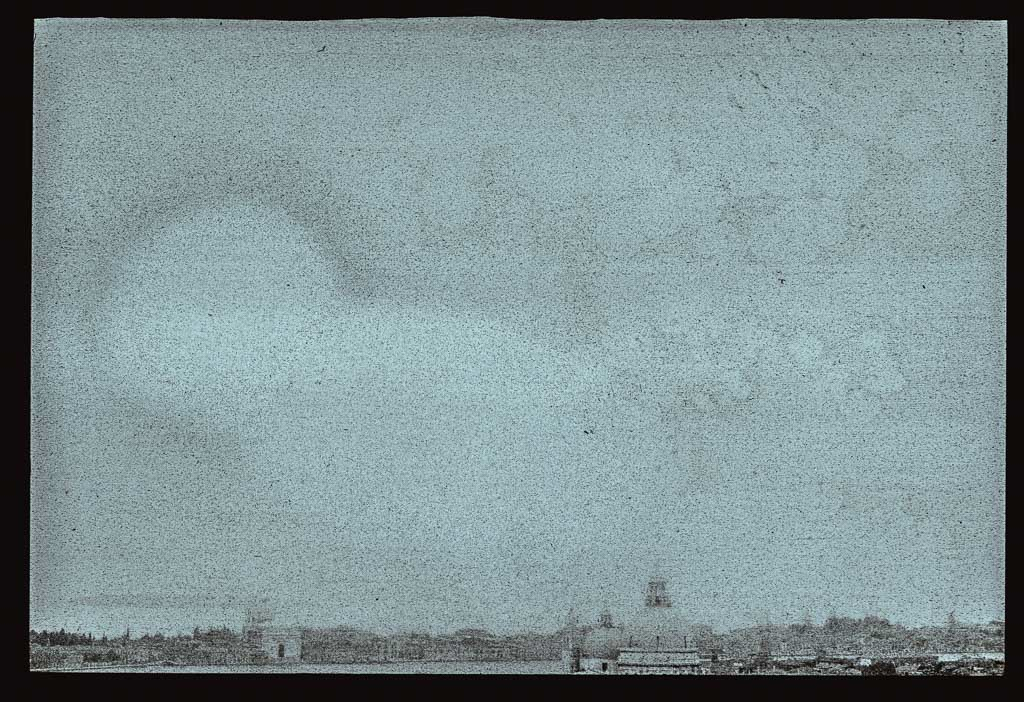
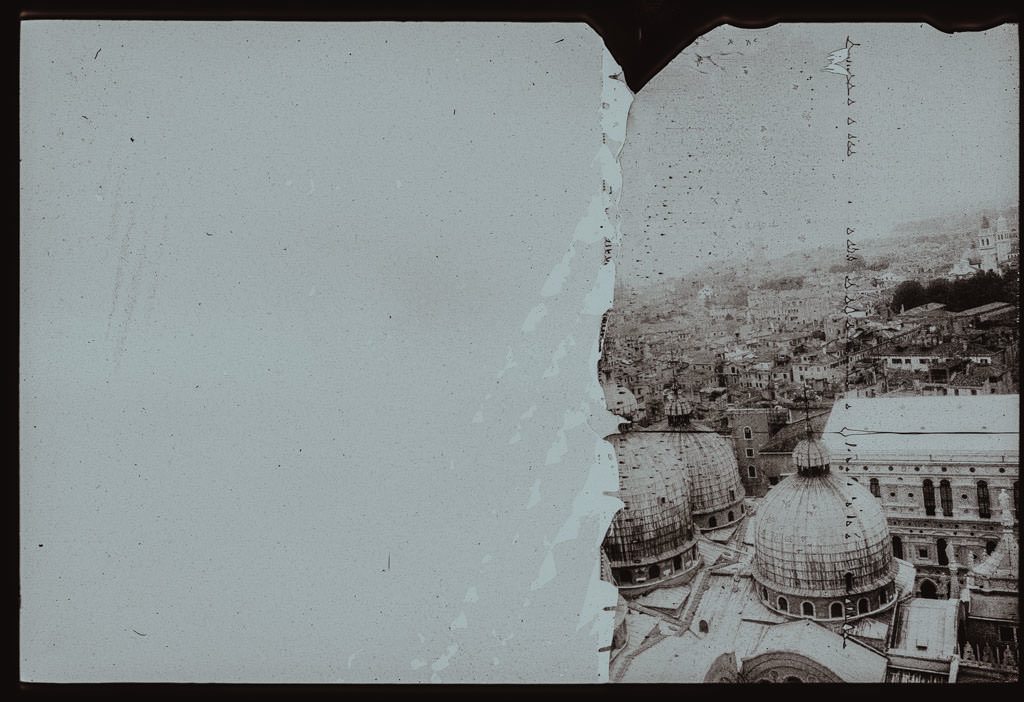
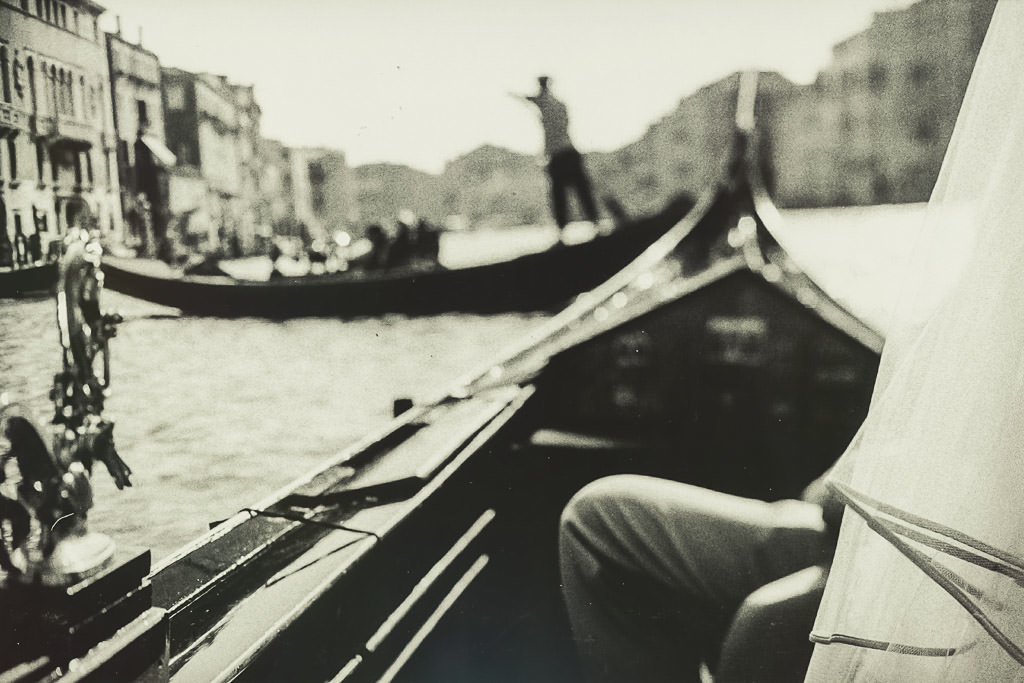
Fantasie Sopra la Città di Venezia (Fantasy upon the City of Venice)

by Luca Rajna

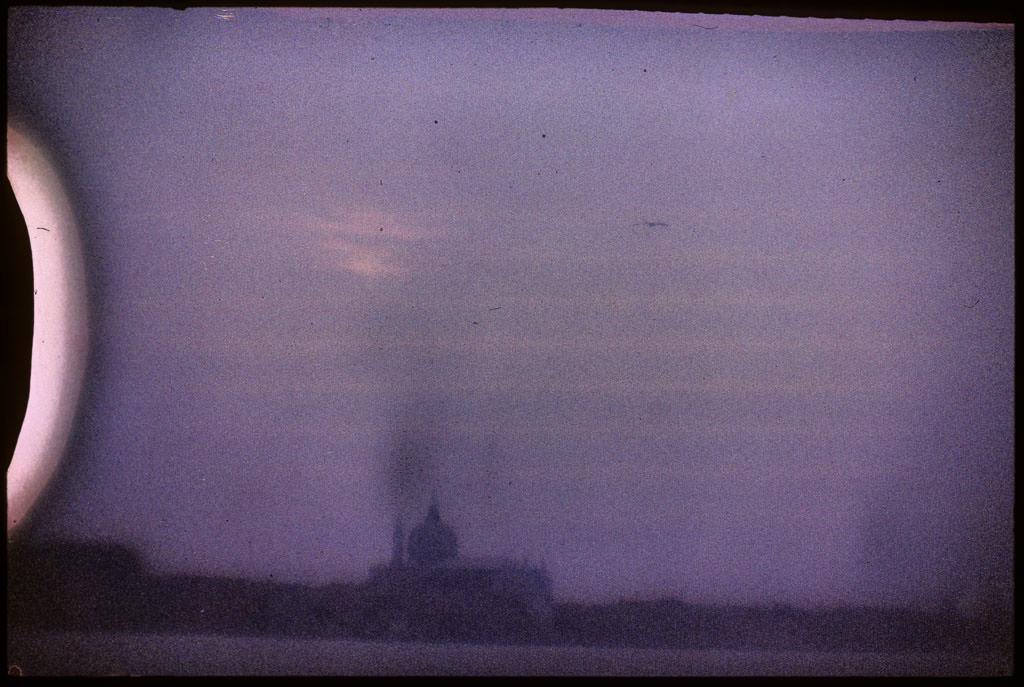
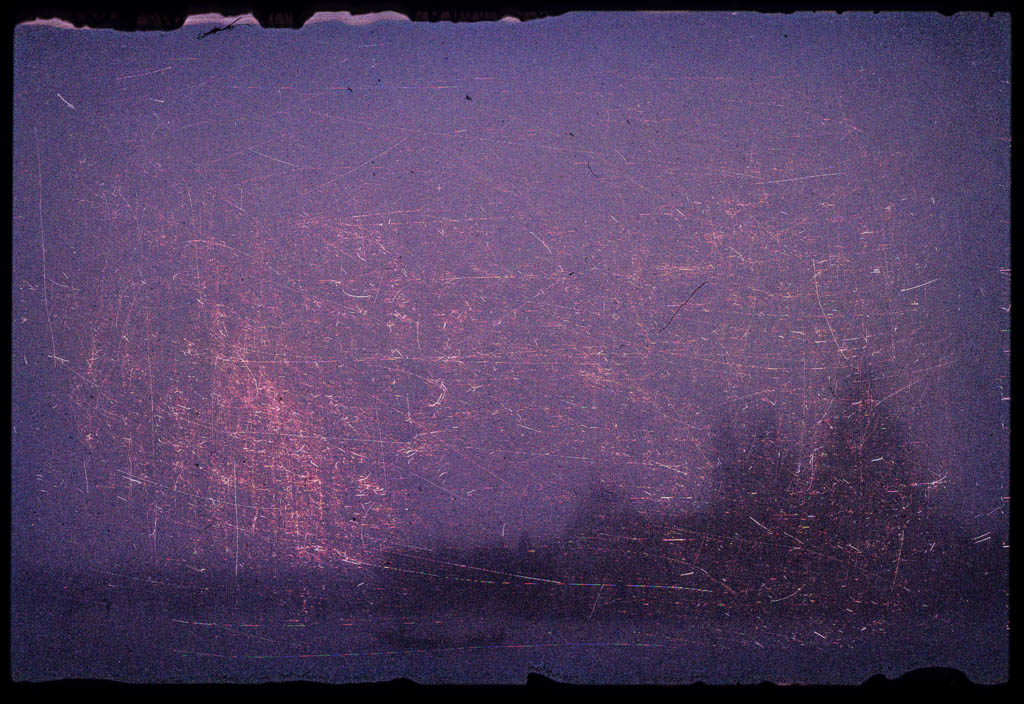
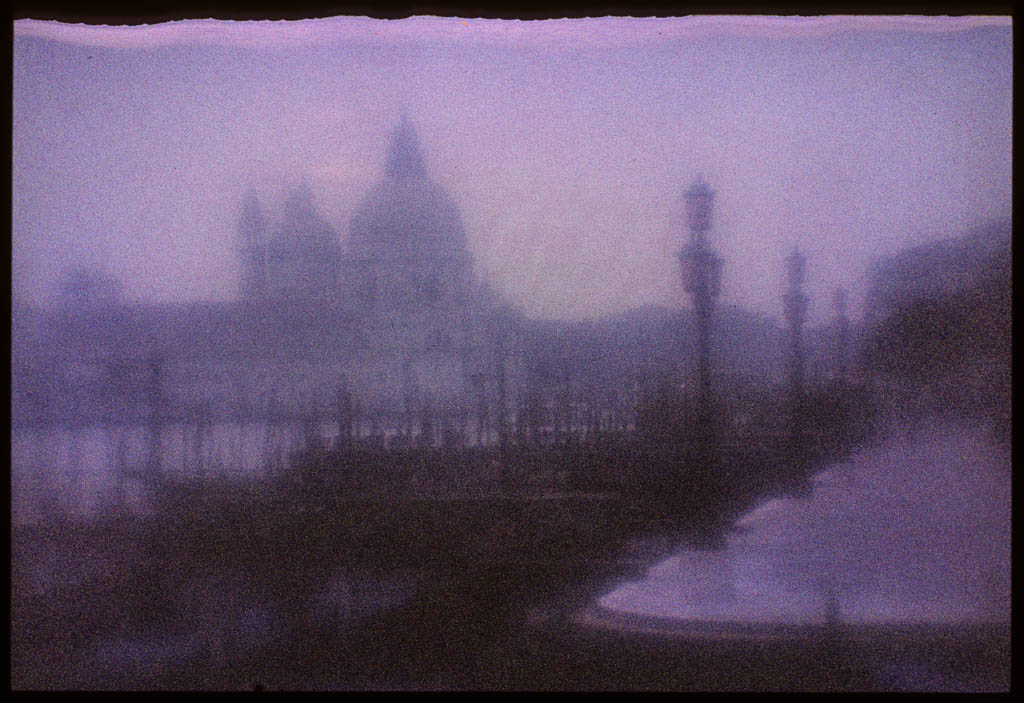
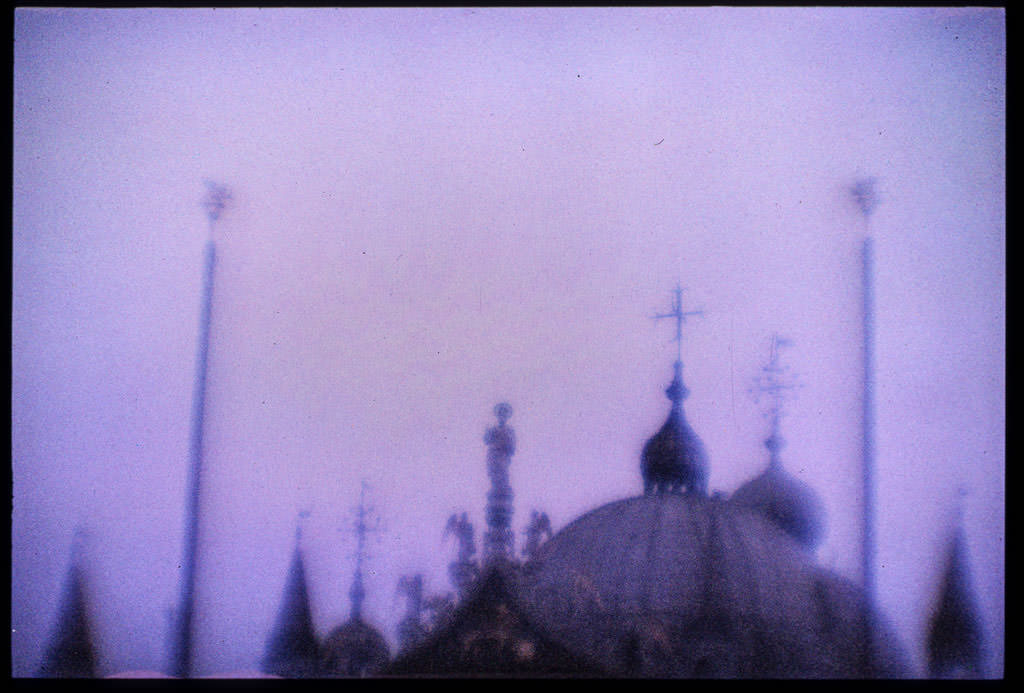
These three sequences are inspired by what Wolfgang Goethe wrote about the gondoliers’ songs during his Italian tour.


luca-rajna-_01_ven74_d2_1995

luca-rajna-_02_ven76_c1_1995

luca-rajna-_03_ven76_c2_1995

luca-rajna-_04_ven76_b3_1995

luca-rajna-_05_ven73_b4_1995


luca-rajna-_01_ven45_a1_1994_01

luca-rajna-_02_ven45_c4_1994_01

luca-rajna-_03_ven45_d1_1994_01

luca-rajna-_04_ven45_e1_1994_01

luca-rajna-_05_ven46_b4_1994_01


luca-rajna-_01_unconventional_wedding_venice

luca-rajna-_02_unconventional_wedding_venice

luca-rajna-_03_unconventional_wedding_venice

luca-rajna-_04_unconventional_wedding_venice

luca-rajna_05_unconventional_wedding_venice


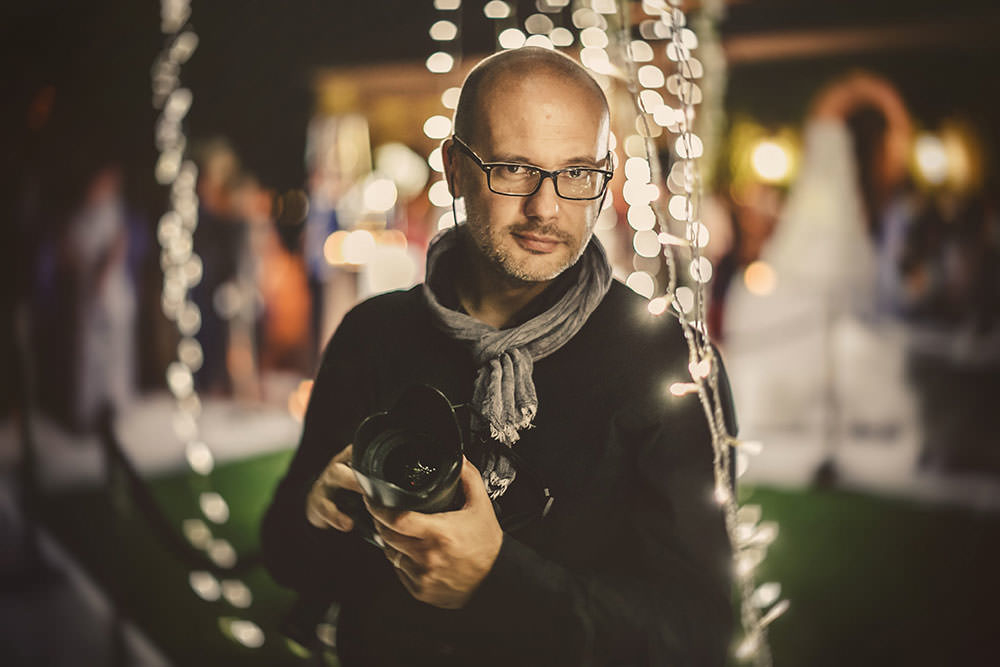
luca_rajna_3_bio_picLuca Rajna is the founder of the photographic studio Luca Rajna Progetti Fotografici (Photographic Projects) and works mainly with weddings and photo shootings. His team of world-class professionals consists of storytellers who have won all the most important awards: World Press Photo, Sony World Photography Awards and so on. The know-how of his team allows him to avoid a single standardized working methodology, getting the most suitable style for every client.

When he takes photographs he always looks for conveying emotions and feelings beyond what is represented: “There is a road from the eye to the heart that does not go through the intellect” taught G.K. Chesterton. Before to become a photographer Luca was a musician and researcher specialized in baroque Venetian music. His wife Maria Rosa is from Venice: her slang easily stands out, so…They got married in 1996, the year in which he did his last concert and was already the leader of a photography studio since two years, after studying photography in Milan from 1992 to 1994 at the CFP Ricccardo Bauer.

At the end of the 90s he was among the first Italian photographers to have a full website and after noticing on the Internet the work of his colleagues from abroad he made the wedding photojournalism philosophy famous in Italy, which was virtually unknown in his country then. In private life he is still fond of ancient (and ethnic) music, loves to translate the Bible from the ancient Hebrew and Greek texts and… would never stop playing Subbuteo (a kind of “Table Soccer” very common in Italy). Luca and his wife chose to live in the country, out of a big city. Their children names are Mattia (Matthew) and Noemi.

Among famous names, Luca learned to framing his images reading the treatises of Vasily Kandinsky, looking at the cinema of Andrei Tarkovsky, and to discover the poetry of the light from the black and white of William Eugene Smith. His favorite photography books are from the analogue era: “L’Isola Intima” [The Intimate Island] by Carmelo Bongiorno and “Venice” by David Hamilton. Recommended Movies: Ushpizin (2004), Fireproof (2008) and Courageous (2011).

Main Website › www.progettifotografici.com

Instagram › luca.rajna https://www.instagram.com/luca.rajna

Facebook › https://www.facebook.com/LucaRajnaProgettiFotografici

Google+ › https://plus.google.com/+ProgettiFotografici


Variations on a Theme

by Susan Heggestad

susan-heggestad-1

susan-heggestad-2

susan-heggestad-3

susan-heggestad-4

susan-heggestad-5

susan-heggestad-6

susan-heggestad-7

susan-heggestad-8

susan-heggestad-9

susan-heggestad-10

susan-heggestad-11

susan-heggestad-12

susan-heggestad-13


susan-heggestad-bio-picSusan M Heggestad received her Bachelors of Fine Arts degree in Printmaking from the University of South Dakota, and her Masters of Fine Arts degree, with an emphasis in Printmaking, from SUNY at Buffalo.  She creates mixed-media works on paper utilizing collagraph, monotype, screen-printing, and relief processes, as well as larger works in sculpture and installation.  Her work has been showcased at the Washington Pavilion of Arts and Sciences in Sioux Falls, the Haydon Art Center in Lincoln, Neb., North Dakota State University in Fargo, as well as numerous other venues. In addition, she is the recipient of several awards, including a South Dakota Arts Council Artist Grant in 2007 and 2011, and is currently on the Artists in Communities and Schools roster for the South Dakota Arts Council.

Susan lives with her family in Vermillion, where she maintains a private studio, and works in public relations for her local public library.  For the past twelve years she has worked in this region with a particular focus on creating opportunities for artists, advocating for arts education at the state and local level, and working toward cultural development in her community.

Website: susanheggestad.com

Facebook: facebook.com/SusanHeggestadArtworks


Next Creative Thresholds in two weeks

Due to illness, there will not be a Creative Thresholds issue today. We will be back with a wonderful issue full of art and writing in two weeks. 

Teeth is Tears: A Collaboration Series

by David Feingold and Michael Quaintance

“Teeth is Tears” is a collaboration series between artists David Feingold and Michael Quaintance. Michael writes poetry in response to David’s images. As Michael says in his bio, “Feingold’s images act as doorways, as pathways to those avenues of thought and feeling that have been sequestered in the corners of my efforts to belong and be seen… as.” Both artists’ works are informed by their lived experience of disability. This is the first in a series of their collaborations to appear on Creative Thresholds.

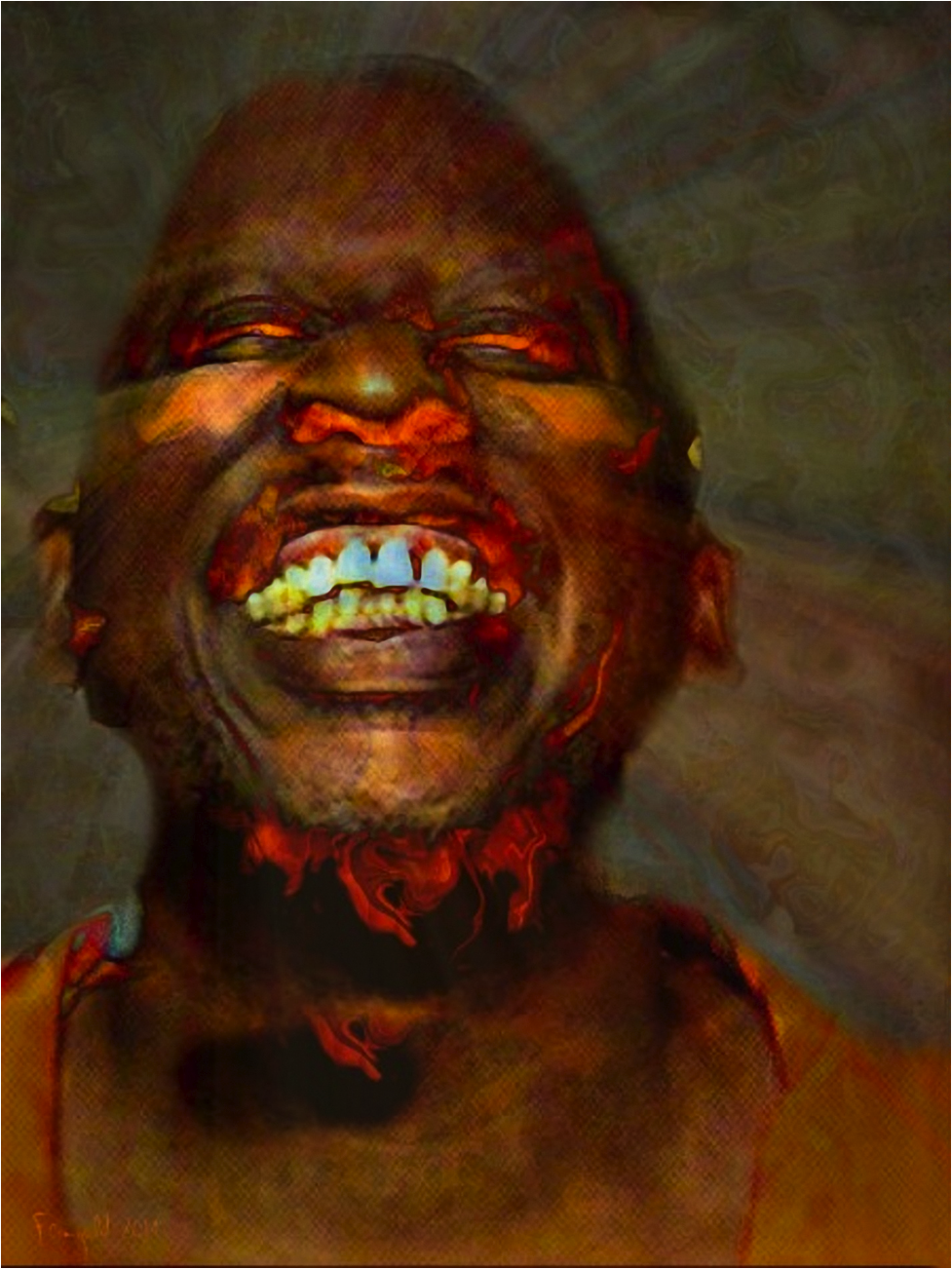
David Feingold, Seeing the Light

David Feingold, Seeing the Light


Teeth is Tears

The first thing you learns
Before the silence and the shame
Is the high cost of suffering and the impudence of pain
That god’s gone a-callin’
and the devil’s home to stay
That the hurt gon’ hurt forever
But you bes’ laugh hard today.

The second thing you learns
Is you a ditch for irrigation
A furrow in the fields
So all the blood run fresh and free,
Wait, with yo’ legs spread
For the plow to split you open
Pray the Lord gon keep his promise
That you be free, one day, to flee.

My daddy was a teeth man
My granddaddy too
They smiled for Mr. Charlie’s
Number one and number two,
They tilted they heads backward
While they smiled and smiled and smiled
So they tears fell back behind they thoughts
And their rage got washed to ground.

My daddy was a teeth man
My mamma cried in pain
She told him it was sorrow
But he knew that it was shame,
That everythang he loved he’d lose
Get stripped and passed away
If they saw the fire in his eyes
If the laughter turned to rage.

My daddy died a toothless man
My granddaddy did too
He never brushed the stains away
Kept proof of their abuse,
He ate the rot
Day after day, felt the grit rough on his tongue
He kept his breath rank and stale
So they breathed in what they’d done.

The first thing you learn
Before the silence and the shame
Is the high cost of suffering and the impudence of pain,
So, our niggers, keep on smiling
Niggers new and niggers old
All our bent and limp and cracked and gimped
Made to stand out in the cold.

The second thing you learn
Is those yellowed teeth, are tears
Lines of carefully coded history
Passed down through generations
And ignored
year after year.


david-feingold-2Artist: David Feingold

David Feingold was born in Chicago, Illinois in 1951.  Feingold works in the medium of digital art.  Much of his art is used in conjunction with his anti-stigma awareness campaigns to the lay public as well as professionals and academicians.

Feingold has a varied education and professional background, which along with his personal experience with bipolar disorder, influence much of his art: Bachelors in Art Education; Masters in Visual Design; Masters in Social Work; and a Doctorate in Disability Studies.

His work has been represented both nationally and internationally in both brick and mortar and online galleries. His ultimate purpose in creating “bipolar art” is to present the inner struggles of those with psychiatric disorders and through understanding and acceptance, reduce the stigma and prejudice associated with all mental illness.

Feingold worked for 15 years as a visual designer and 15 years as a school social worker, when he had to take early retirement, due to advancing cognitive impairments stemming from a closed head injury from a hit-and-run accident in his teens. The closed head injury was the genesis of Feingold’s temporal lobe epilepsy and bipolar disorder. He resides in rural Michigan in a simple, one room dwelling, complete with a wood burning stove and a pond in the back yard. Feingold states that his home provides a perfect environment in which to produce his artwork as well as a harmonious balance and stability in light of the unpredictable challenges associated with his diagnoses of bipolar and seizure disorders.

This is Feingold’s second art collaboration. His first collaboration was with a musician/composer, whose music was informed by his own seizure activity as well as Feingold’s art imagery.

Website: www.feinart.me


blog-hotsauceanddill-blogspot-comArtist: Michael Quaintance

How long has “depression” been a central part of your life experience? Before answering, I need to respond to the assumptions and preconceptions that haven’t be voiced, but have proven to be inherent in this kind of question.   “Depression” (for me) is a region of sight and insight that exists outside of the constraints of belonging and the constructs of being used to set the terms and conditions of normalcy.  I also need to add that I use the term “depression” for the sake of convenience, so that you and I can begin our conversation from a shared point, even though our interpretations will differ at the outset.

So, what is depression… for you? Depression is not—depression does not—depression will not.  Is, does and will, belong to form, formality and functionality; the need to assert, discern and determine.  What you call depression, I call imposition and the limitation of the unique by mandates of compliance that have little to no tolerance for difference, or that which cannot/will not be defined.

My work, my writing is motivated by this unfinished—recently began—lifelong discussion. Feingold’s images act as doorways, as pathways to those avenues of thought and feeling that have been sequestered in the corners of my efforts to belong and be seen… as. The gift of isolation and aloneness over the past few years, has opened doorways and pathways that I’ve only begun to discover; and in word, design.

Ex-Dancer—Actor, Bachelors in Philosophy and Performing Arts, Masters in Education, presently completing a Doctorate in Disability Studies

Blog: hotsauceanddill.blogspot.com
 

Postcolonial Thoughts: Thoughts on Pedagogy-the Apprentice

by Christopher Hutchinson

Note 8- the foundations are the foundations


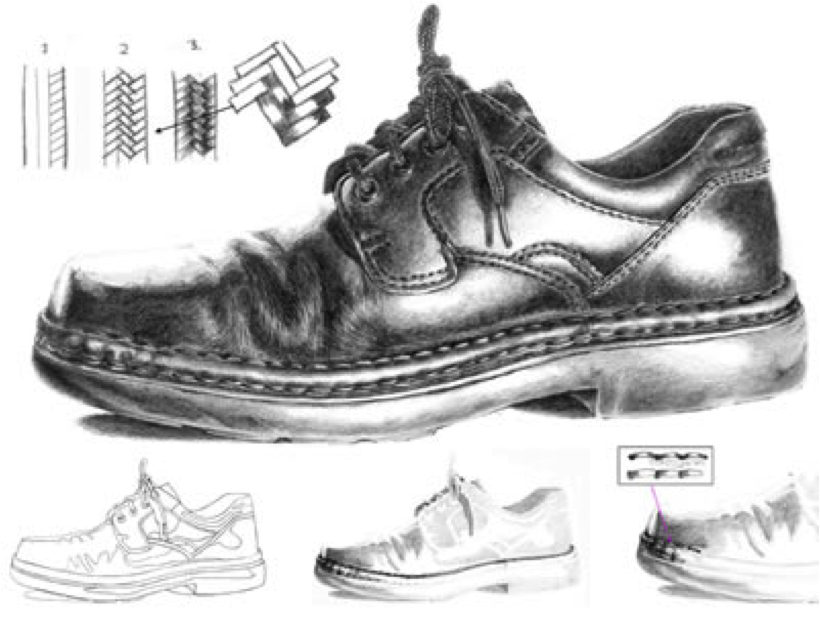
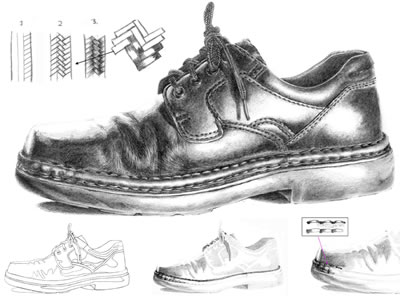
Many students start off with a foundation course with the wrong intentions, perfection being one of them. This idea of being a perfectionist actually slows the learning process and sometimes renders that foundation course useless. The “perfectionist” student is having a philosophical debate about something that actually has linear steps to grow in art pedagogy. The steps of the foundation course cannot be skipped without proper understanding of the previous lesson.

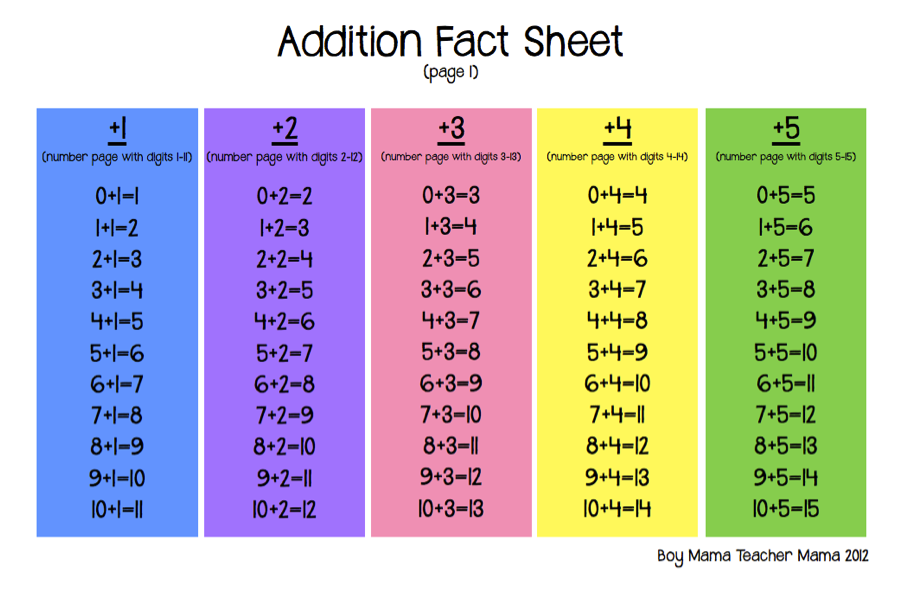
The foundations are repetitive exercises to build the individual artist’s tool bag. Questioning these foundation steps confuses the “perfectionist” student, not the professor. The professor already knows how to accomplish these steps. The foundations are the foundations. These courses are arranged to crescendo based on the previous lessons learned. Foundation courses work much like learning your addition and subtraction math facts. Imagine trying to learn addition and they constantly challenge the previous fact learned. That is the difficulty with challenging the foundation classes, especially when there are so many facts to be learned before a true challenge to the art-making practice can be articulated. In the foundation courses you get the tips and tricks to make the steps easier and gain actual repeatable knowledge that becomes second nature.


Many of these “perfectionist” students may grasp one lesson and then have a hard time getting the next lesson. The classes crescendo. The stopping and starting, coming late, setup time, and flow of the class have a lot to do with grasping all the facts necessary to move on effectively. These students complete the course and move on to another art class only to run into the same “art facts” skipped in the previous course. These students are choosing to accept only the lessons they feel suit them. This then breeds an incomplete artist with limited experience and low-confidence to attempt things they feel to be too difficult. This person ends up not challenging anything, becomes super sensitive during critique, and ends up quitting or changing majors. Confidence begins with knowing as many foundation art facts as possible. Develop the patience and drive to achieve and exceed every lesson—that is the “perfectionist” that is a joy to teach.


Note 9-The Apprentice

apprentice

[uhpren-tis]

noun

1.a person who works for another in order to learn a trade: an apprentice to a plumber.
2.History/Historical. a person legally bound through indenture to amaster craftsman in order to learn a trade.
3.a learner; novice; tyro.
4.U.S. Navy. an enlisted person receiving specialized training.
5.a jockey with less than one year’s experience who has won fewer than40 races.verb (used with object), apprenticed, apprenticing.
6.to bind to or place with an employer, master craftsman, or the like, forinstruction in a trade.verb (used without object), apprenticed, apprenticing.
7.to serve as an apprentice: He apprenticed for 14 years under a master silversmith.

http://www.dictionary.com/browse/apprentice


Today’s lack of work ethic, required of an apprentice, may derive from the success of postmodern ideals. Ideals that advocate the erasure of craft and praise celebrity rather than grueling art practice. This generation of students wants to completely skip the foundation process and go directly to postmodern conceptual practice.  A real artist would enjoy every bit of every mundane exercise presented in foundation courses.  Only in going through and mastering those exercises will the artist begin to develop a vocabulary that could articulate a postmodern discussion. Postmodernism and conceptual art are only two movements in the history of art already dated.
Once again one may want to have a discussion on postmodernism and conceptual practice but run into the same issues that were not mastered in their foundation.  If students do not achieve smooth transitions in their compositions of still lifes, their postmodern and conceptual ideas will certainly be rough as well.  An artist has to have had exhausted the foundations to begin their art theory practice.  One has to learn multiplication and division before being ready to solve for x or do calculus.  One has to practice communicating successfully before achieving the subtlety of irony.


Christopher Hutchinson 2Christopher Hutchinson is an accomplished Jamaican conceptual artist, professor and contributor to the art community as a writer, critic and founder of the nonprofit Smoke School of Art. He is a Professor of Art at Atlanta Metropolitan State College and has been featured as a lecturer including prestigious engagements at University of Alabama and the Auburn Avenue Research Library. For two decades, Chris has been a practicing artist. His works have been exhibited in internationally recognized institutions including City College New York (CUNY) and featured at the world’s leading international galleries such as Art Basel Miami. He has always had an innate passion for creating spaces where Africans and people of African descent contribute to an inclusive contemporary dialogue—ever evolving, not reflexive but pioneering. This requires challenging the rubric of the canon of art history, a systemic space of exclusion for the Other: women and non-Whites, and where necessary he rewrites it. He received his Master of Fine Arts Degree in Painting from Savannah College of Art & Design, Atlanta and his Bachelor of Arts Degree from the University of Alabama in Huntsville, Alabama.