Archive | Art RSS feed for this archive

My Father Walking, and Twenty-Four Other Things

by William Michaelian

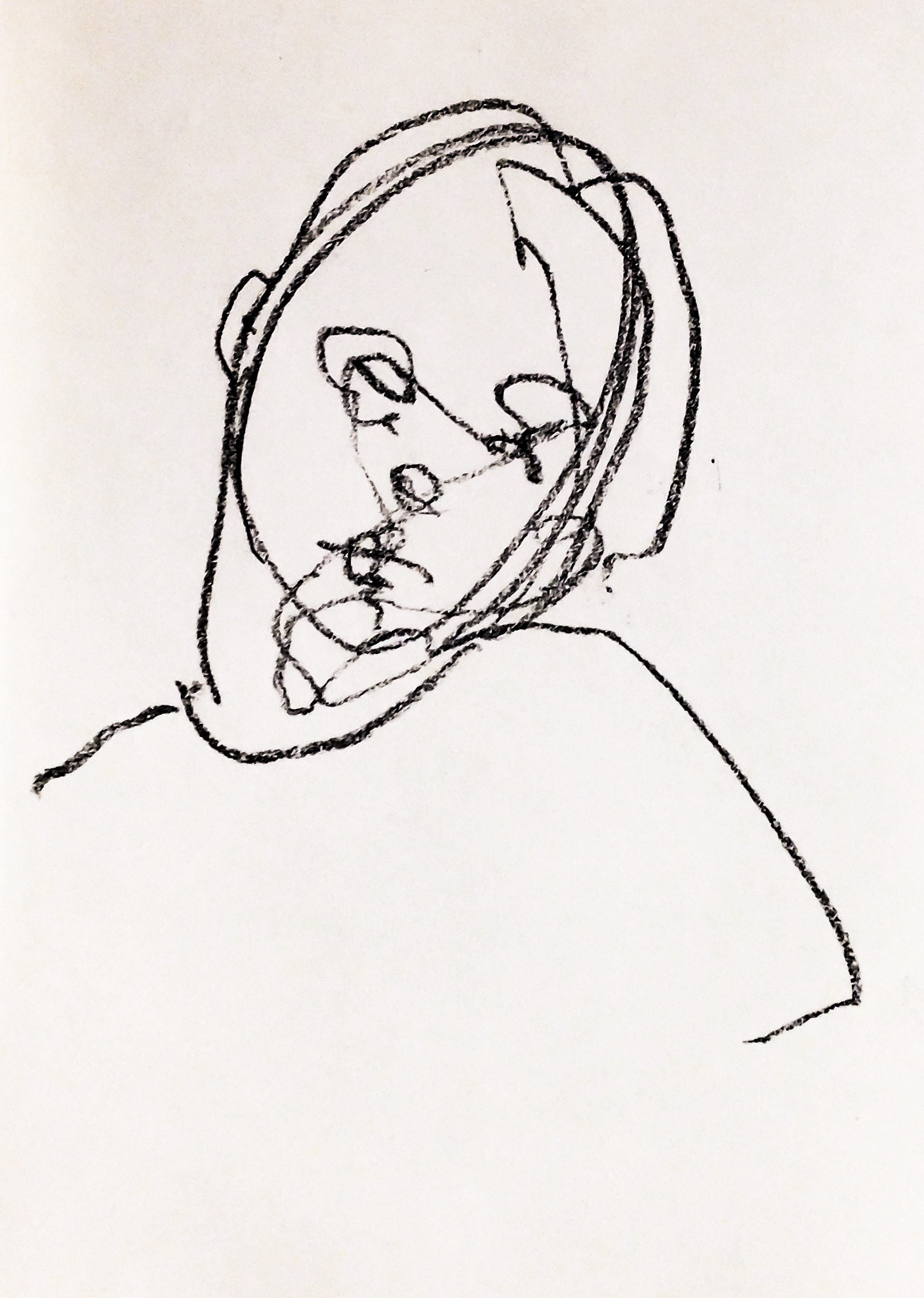
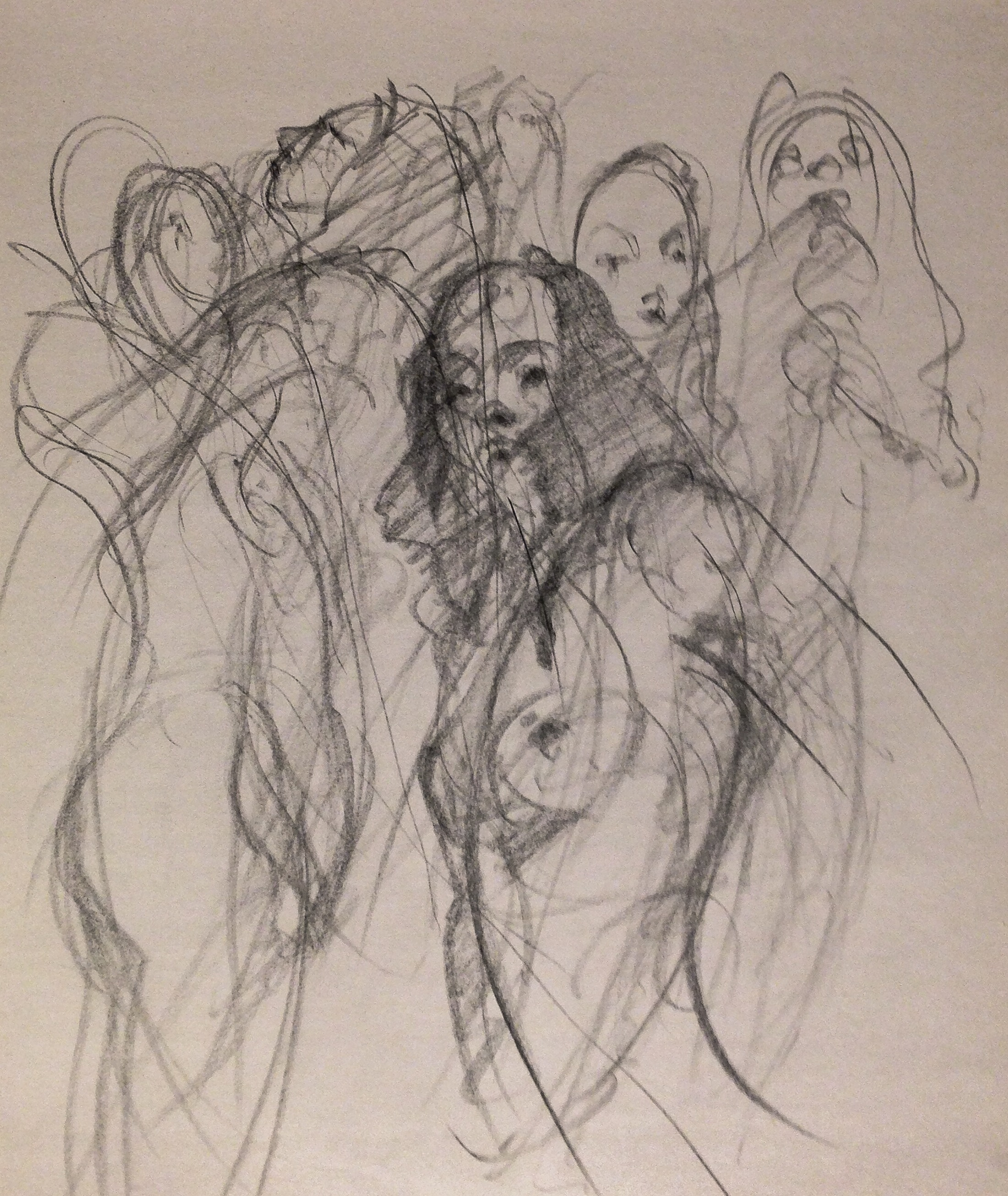
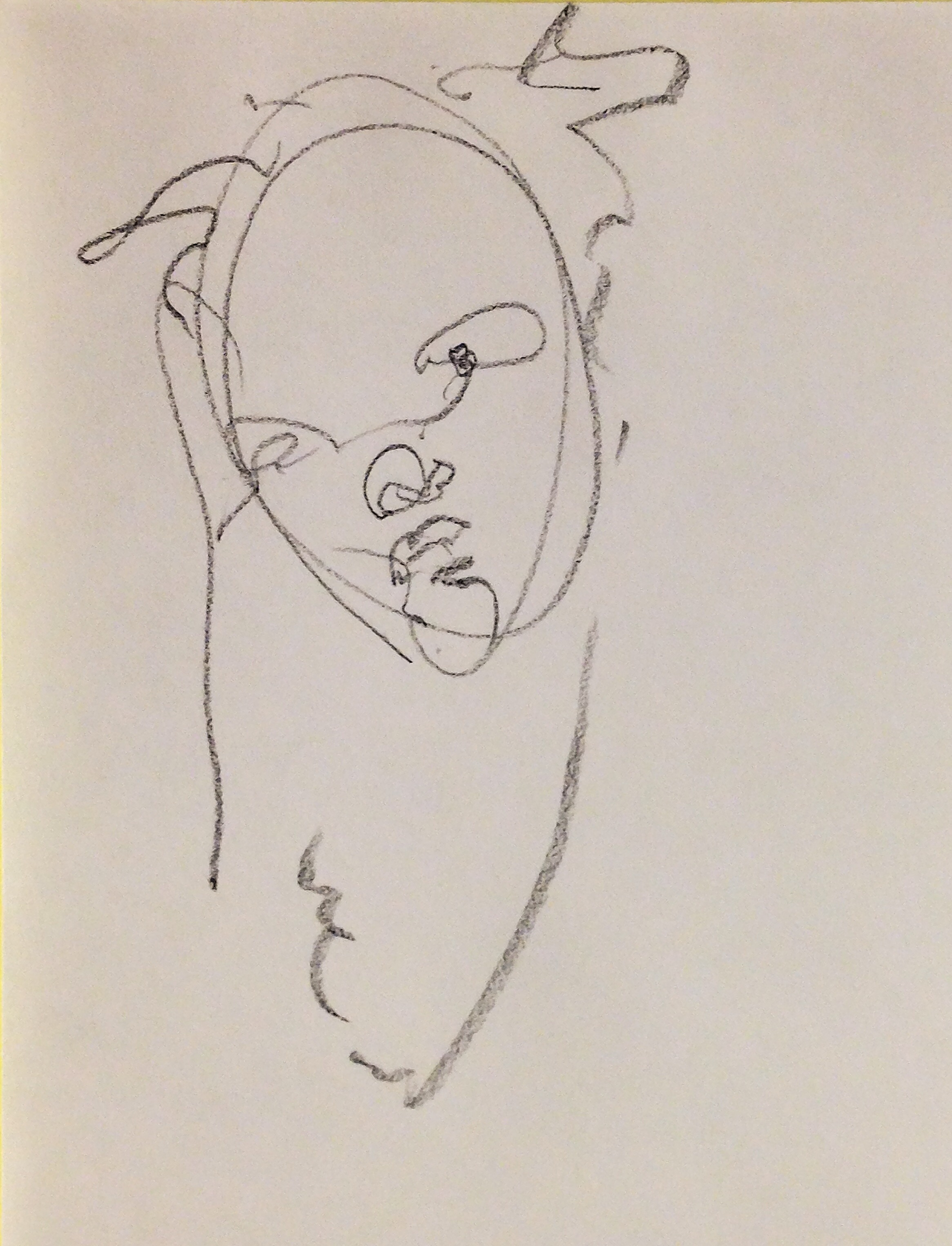
Am I truly limited by my senses, or are they, too, imagined? Can I prove my own existence? Is such proof desirable, or even necessary? What of my childhood, and everything else I am in the habit of believing I remember? Is memory a thing of the present? Is it a story told, and then countless times retold, changing and continuing of its own volition and accord? Drawing and writing; waking and dreaming; fiction and reality; life and death — I simply feel no need to know where, or if, one ends and the other begins. Does that make me strange? And yet what is strangeness, but the very delight of a beautiful, unaccountable world, ever the more vivid once we have learned to let it go?


Going Home

Going Home


By firmly gripping a pencil in grade school and beyond, I developed a callous on the middle finger of my right hand. It’s still there, to the left and just below the nail, despite the fact that I’ve been typing almost exclusively for decades.

When I was small, my father found a clump of white asparagus growing in the vineyard. He dug it out and planted it by our house well. It fed us faithfully each spring.

I remember my father
walking on the hard dirt avenue
at the end of the vineyard
rows behind our
house,

the cuffs turned up
on his jeans, the dust and sticks
and weeds, his impatient
stride, having to run
to stay beside
him

that hot July when I was four
and he was thirty-seven,

but I don’t recall our destination,
or what he did when we
arrived, what I said,

or his reply.

Once, on a hot summer evening, I aimed a BB gun at our old wooden basketball goal and fired. The shot bounced back and hit me in the forehead. I fished it out of the dust and put it in my pocket. I don’t remember what I did after that.

When I was about ten, I took nine snails from the irrigation ditch that ran alongside the east end of our farm and put them in the aquarium on top of my chest of drawers. A few weeks later, the aquarium was teeming with snails.

My first car was a bicycle. My first bicycle was a scooter. My first scooter was a tricycle. My first bus ride was in a dusty red wagon.

One night, my mother’s Aunt Mildred took out her teeth and showed them to me.

In the kitchen during a family get-together, with my mother looking on, I ate a piece of uncooked marinated lamb intended for shish kebab. It tasted good and I didn’t feel ill at all, but I never did it again.

We grew all of our tomatoes back then, and bought all of our onions and parsley.

Same as now, there were stars in those days that had no need of names.

If I were a lizard on a woodpile, I would still be able to write, but I would do it differently.

If I were a pumpkin on a vine, I would want to face east so I could watch the sun rise.

If I were a faithful old hound, my name would be Bill.

Late one night, driving home with some friends from the mountains, I pulled off the road, stopped the car, and told everyone to get out and look at the stars. They did, in amazed silence. I wonder if they remember that now.

I still feel thrilled when I find a marble.

Back in his heyday, Willie Mays lived near my cousin’s house in San Francisco. We rang his doorbell. No one answered.

My father used to chase them when he was a kid, but I myself have never seen a roadrunner.

The first thing I smoked was a nickel cigar.

To this day, I feel funny referring to myself as a man. A man was always someone older, someone responsible. My father and grandfather were men. I am still a boy.

I cannot blow my nose using my right hand. It has to be the left.

I always tie my left shoe first.

I kick with my left foot.

The first poem I remember reading is “O Captain! My Captain!”

When I first started piano lessons, I used to sing with every note. The teacher told my mother I had perfect pitch.

There are some things I will never write about. That, too, is how you will know me.


William Michaelian is an American writer, artist, and poet. His most recent book is the Tenth Anniversary Authorized Print Edition of his first novel, A Listening Thing. He lives in Salem, Oregon.

Website: http://www.william-michaelian.com

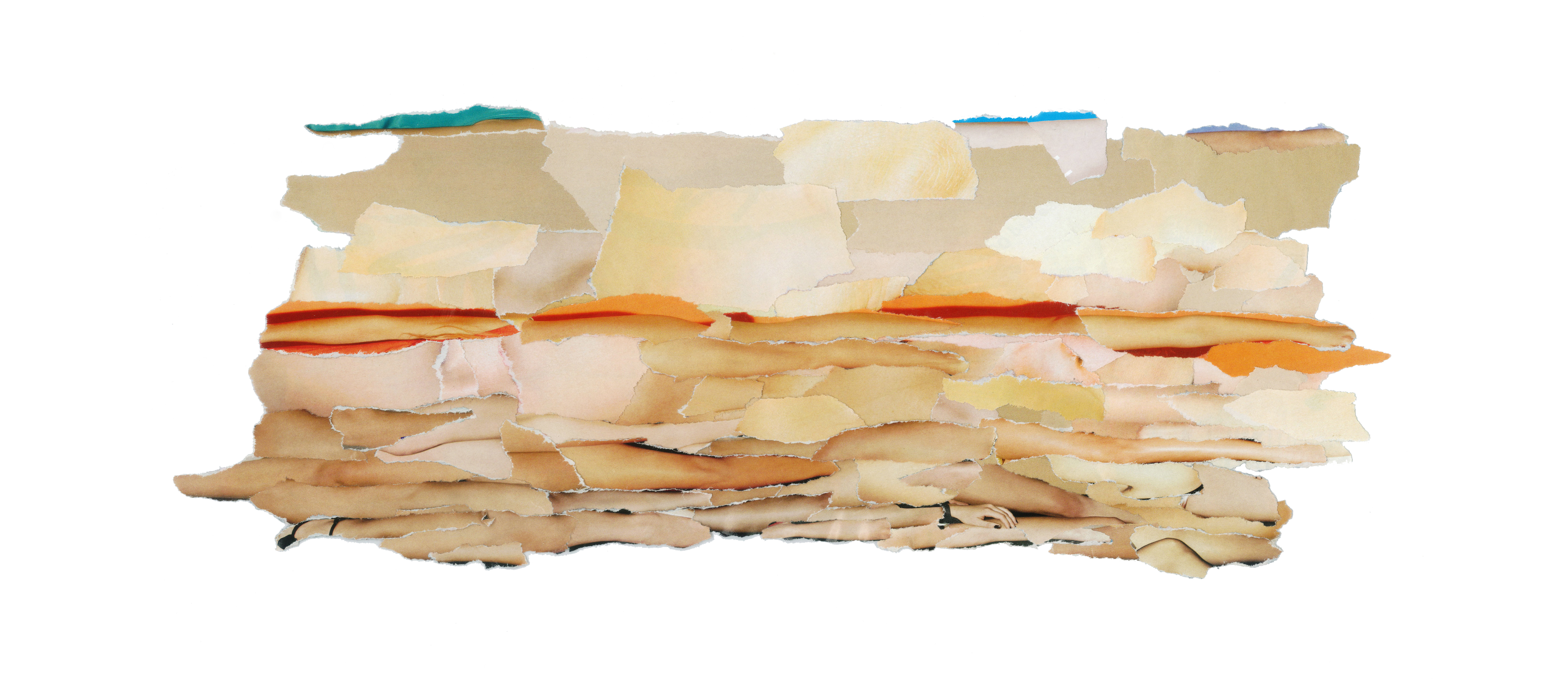
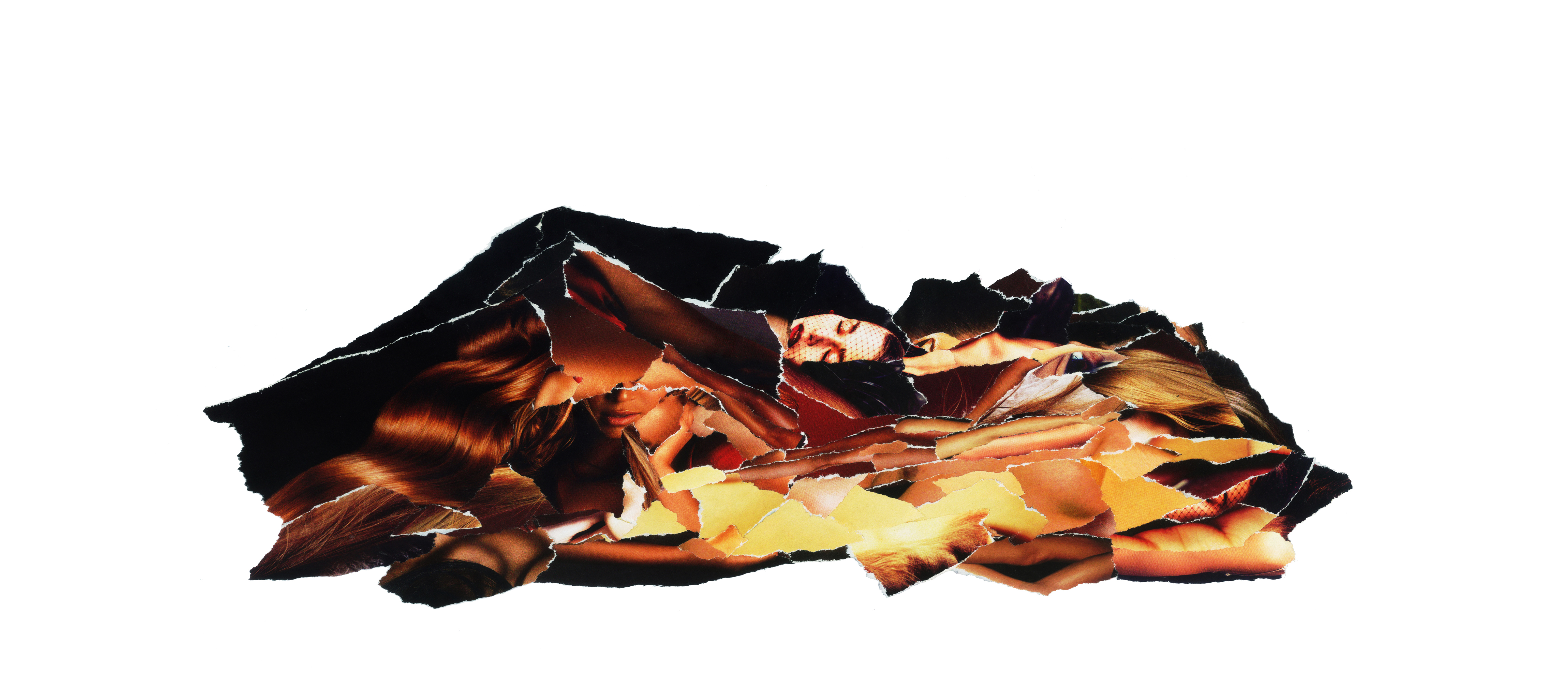
Zest Fest: Tempting Flesh In Landscapes by Lita Poliakova

by Lita Poliakova

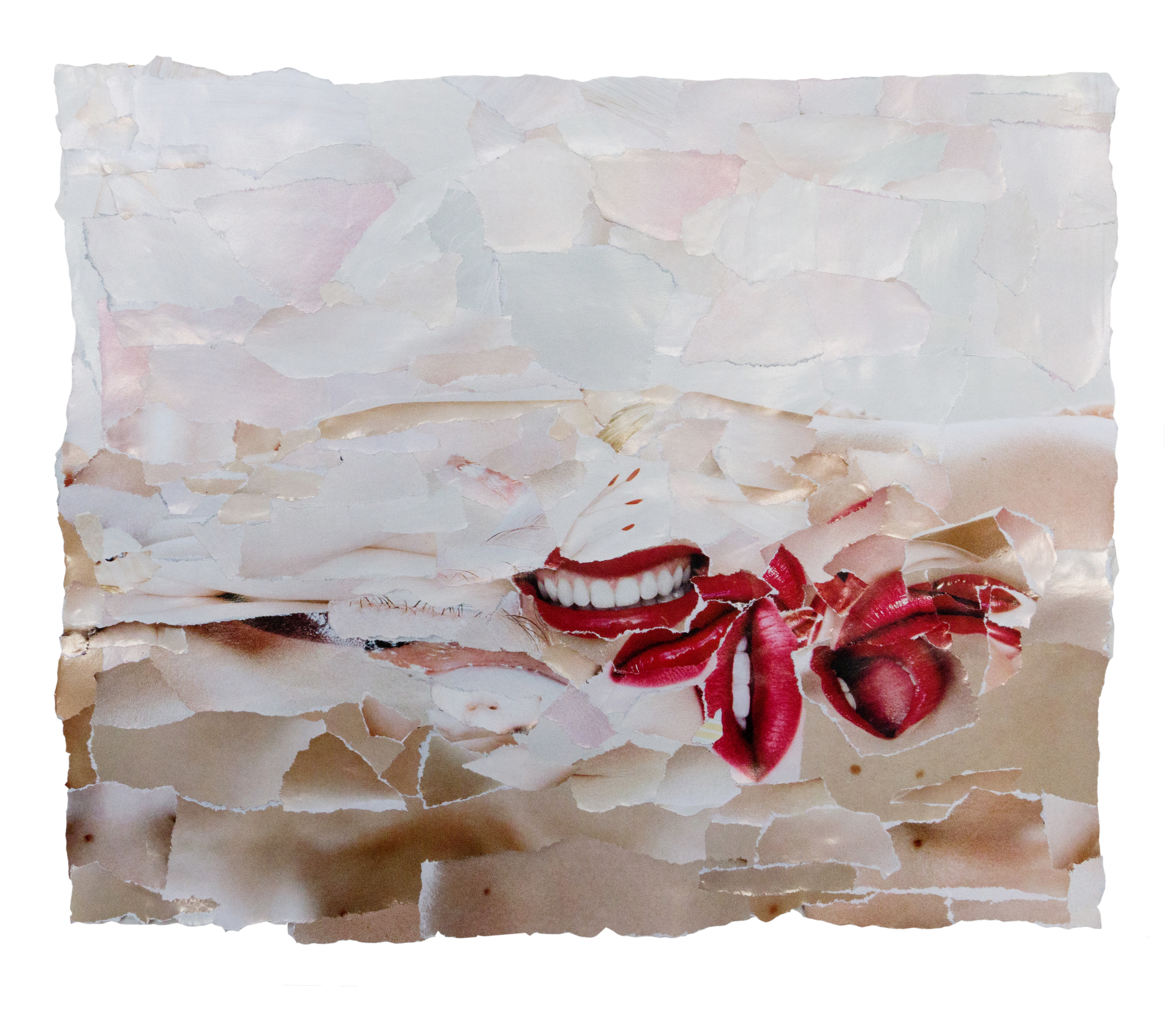
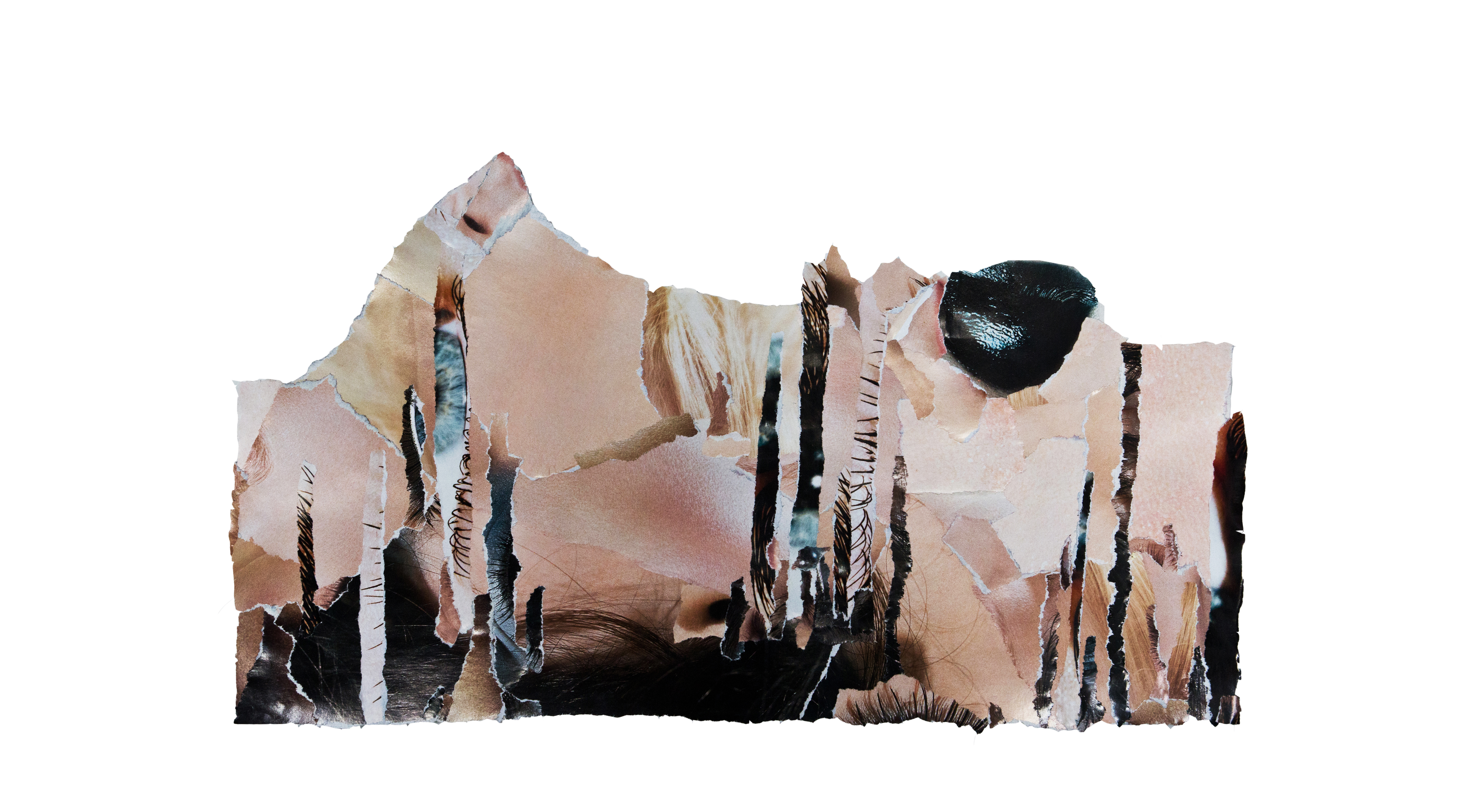
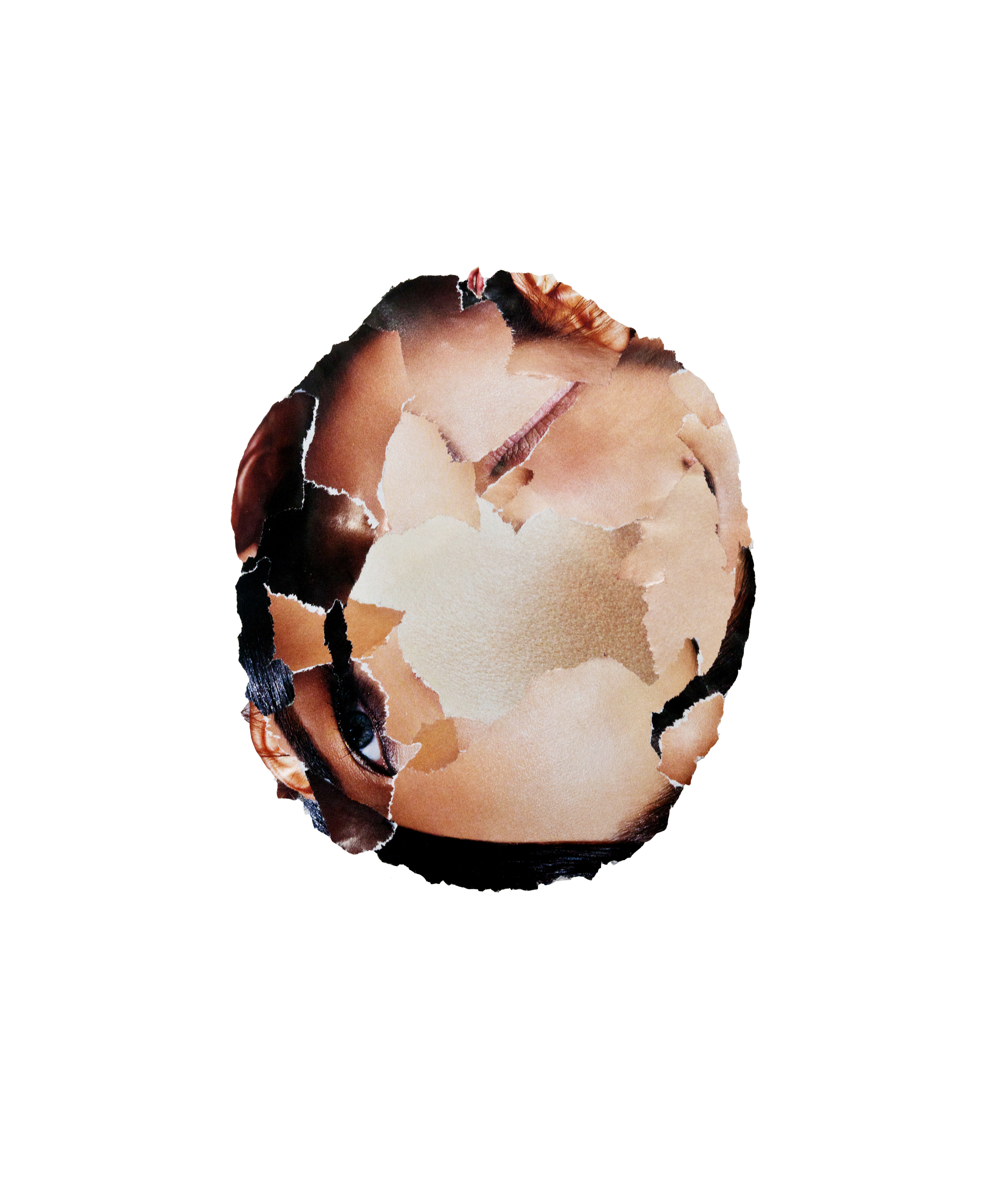
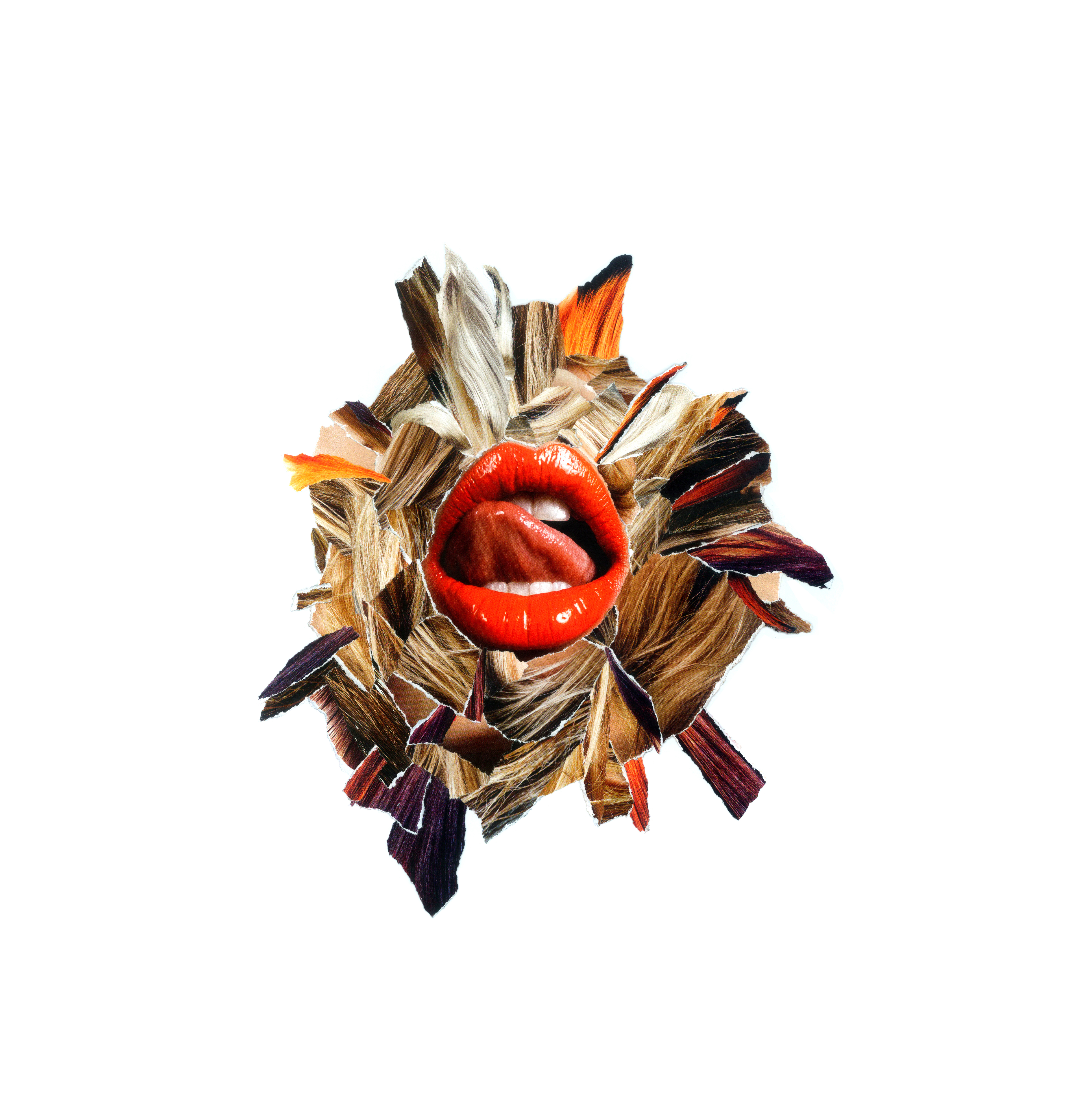
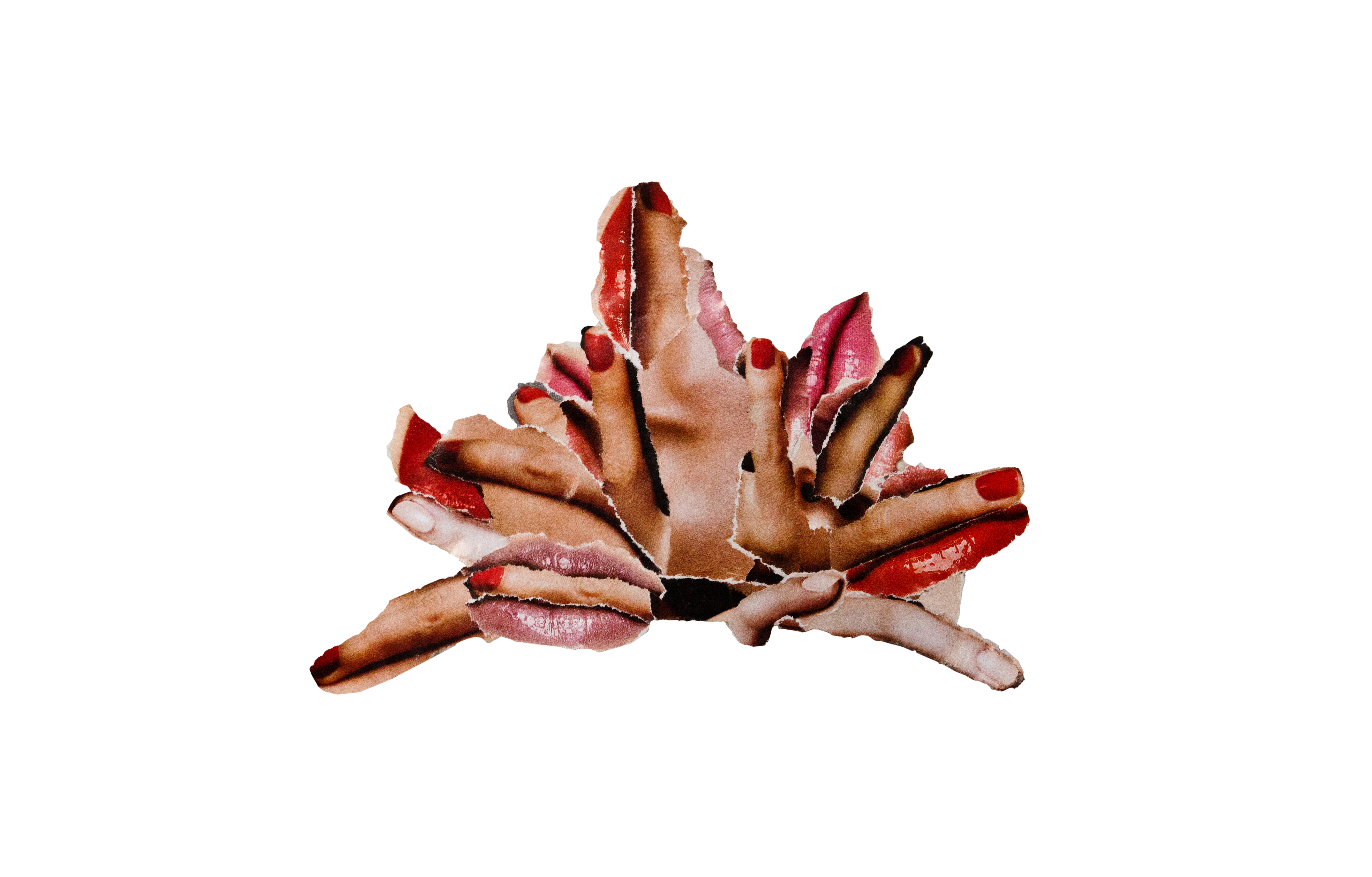
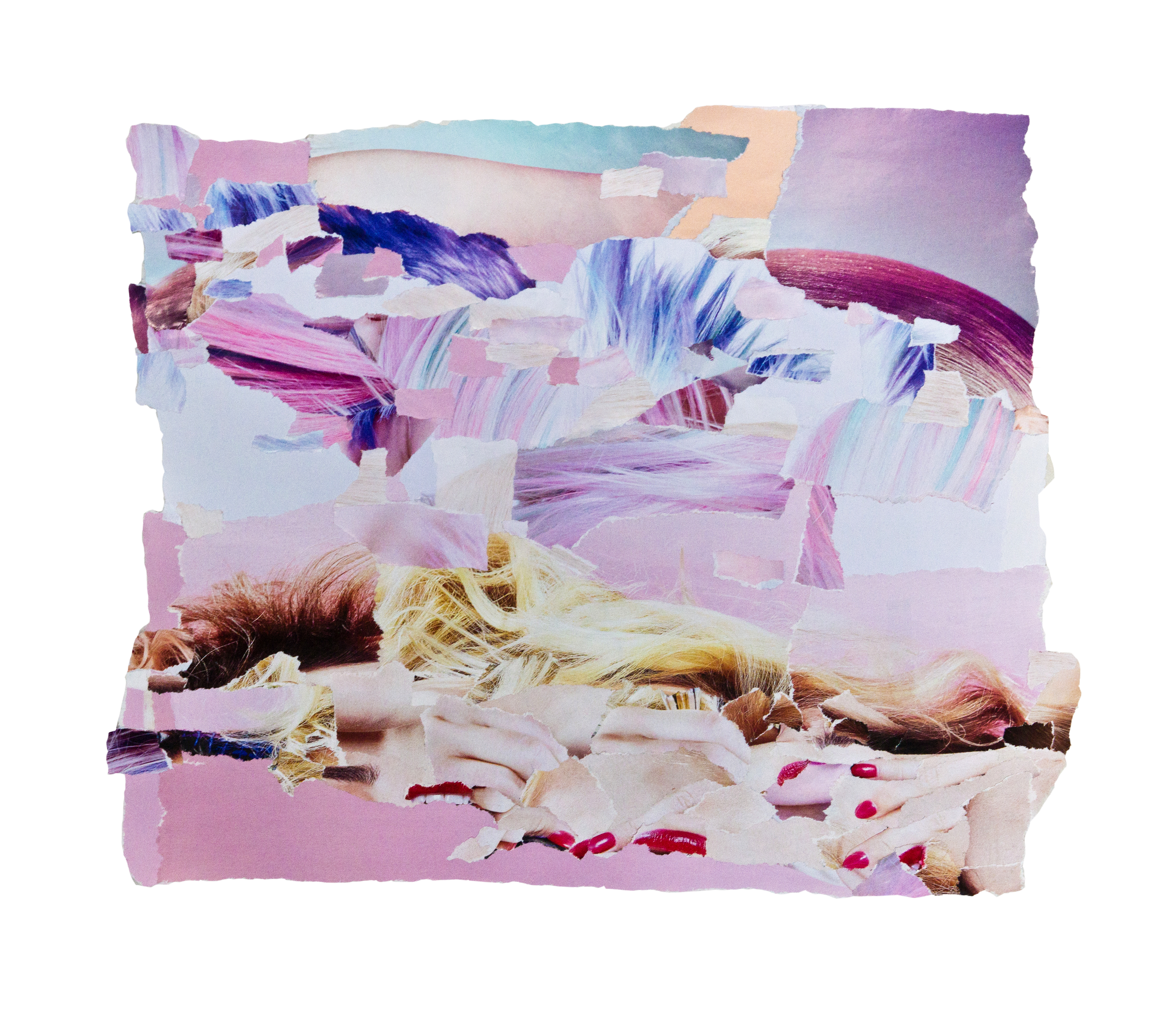
01_Landscape_Lita_Poliakova_35x15

02_Landscape_Lita_Poliakova_43x18

03_Landscape_Lita_Poliakova_40x34

04_Landscape_Lita_Poliakova_43x25

05_Landscape_Lita_Poliakova_19x23

06_Landscape_Lita_Poliakova_26x28

07_Landscape_Lita_Poliakova_21x14

08_Landscape_Lita_Poliakova_32x27


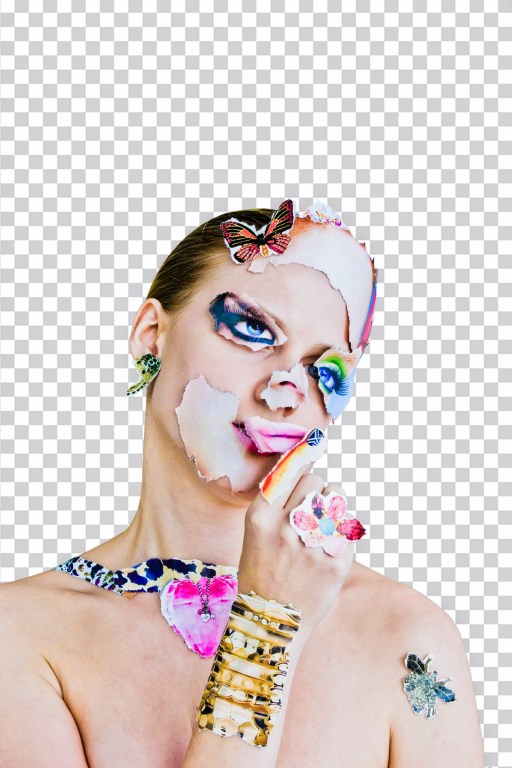
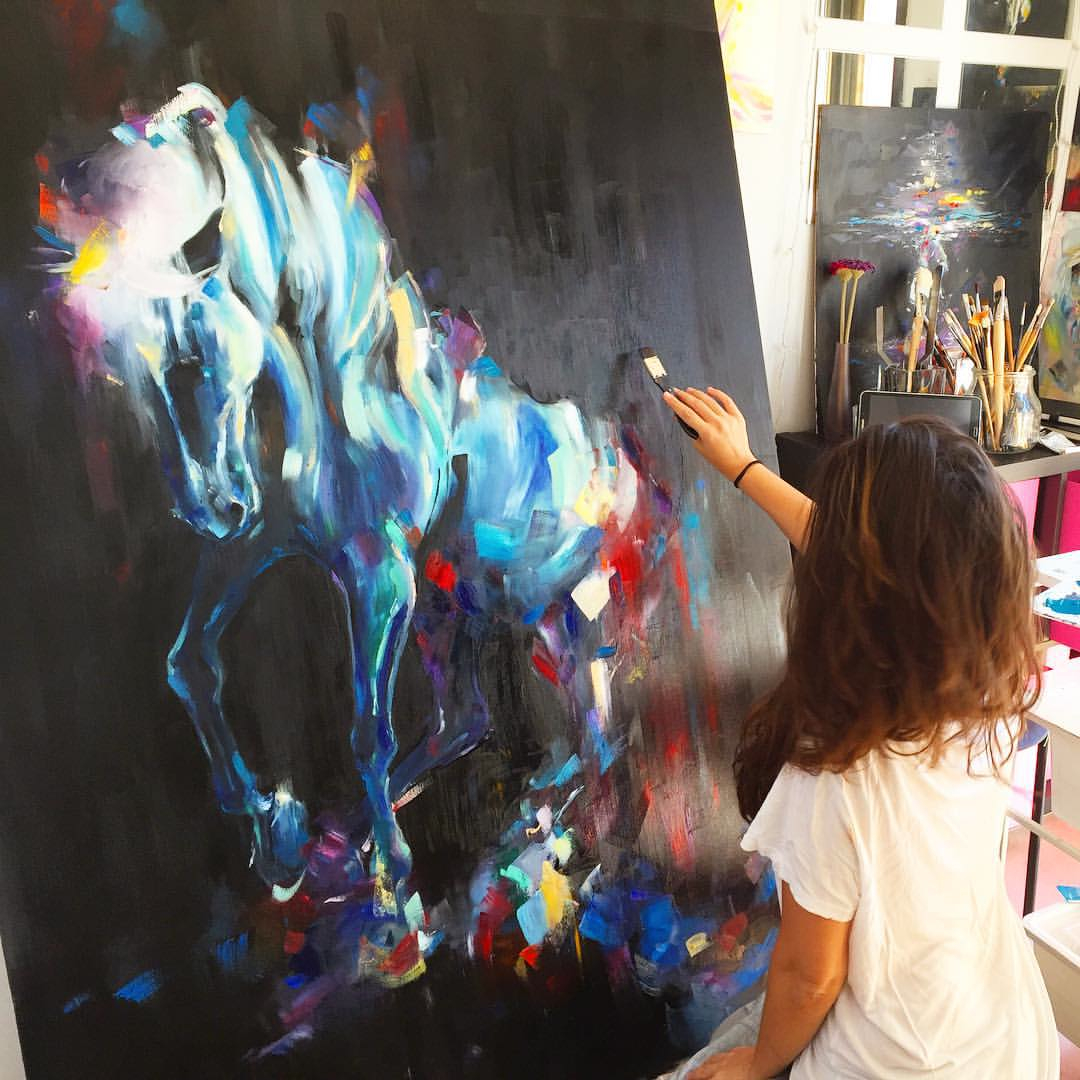
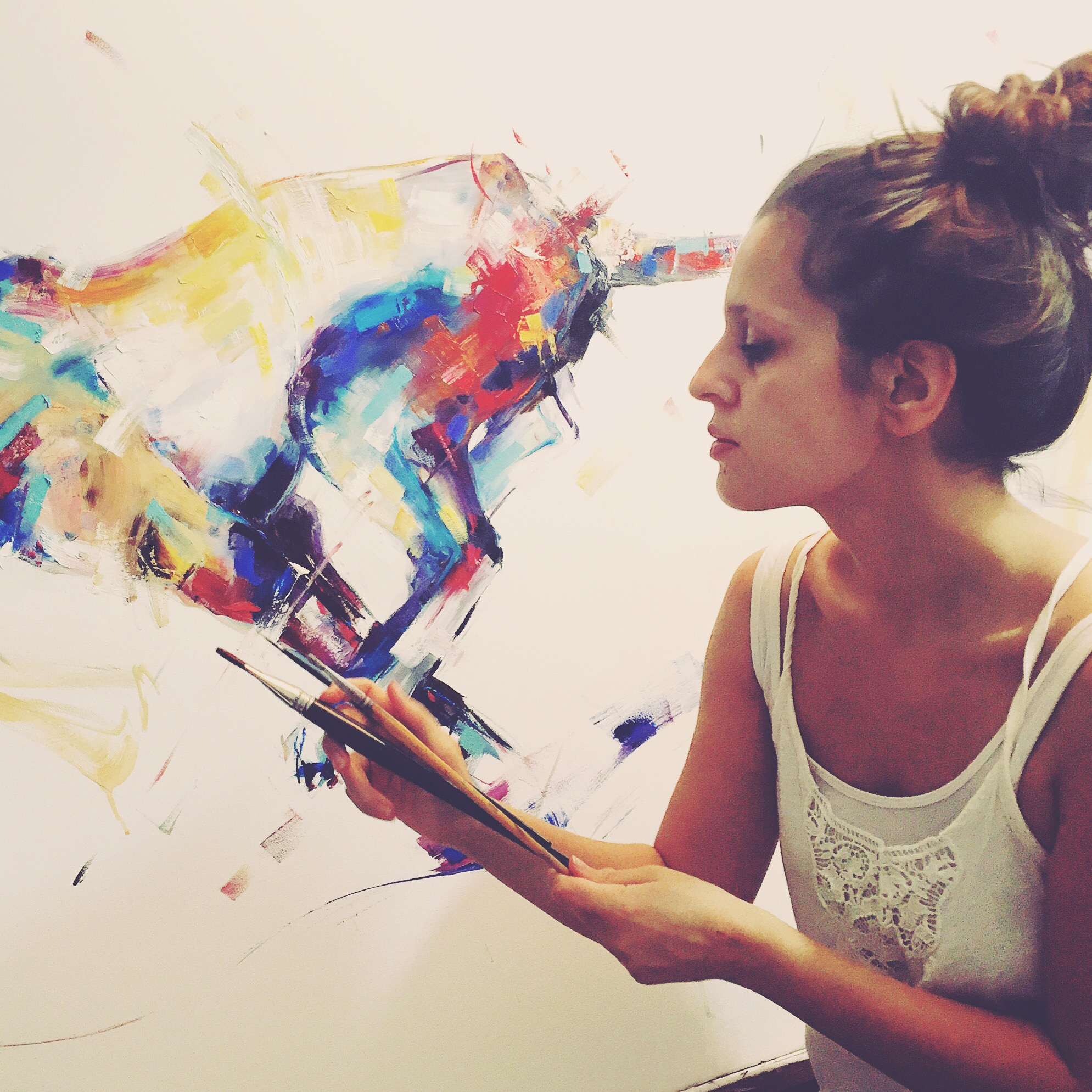
2014_Cover_Litaj_PoliakovaArtist: Lita Poliakova

LITA (Life Is Torturing Awesome)

**.**.**** – **.**.****

Created from restless remains, void-originated, Lita is an intrusive person, yes, she cares! She
prettifies her carnal residence by digestion and contemplations. Trances daily and composes,
carves, paints, and tears to shreds. Recklessly destroys order, desperately creates meanings,
and painfully broadens the track. Lives afield. Ecstatically respects alive!

http://www.litapoliakova.com
https://www.facebook.com/litapoliakova
https://www.instagram.com/litapoliakova/

A Tribute to Walt Pascoe: Savage Uncertainties On The Road Home Reprise

Walt PascoeOn December 21, 2015–Winter Solstice, the day with the longest night of the year–a dear friend and an extraordinary human being said goodbye to life on earth. His name is Walt Pascoe and many of you know of his very human, honest, luminescent, and soaring artwork–artwork that matches his spirit completely. Many of you also knew the man himself–and, if so, feel the loss keenly.

Walt wrote an essay, accompanied by artwork, for Creative Thresholds three years ago–it ran December 21, 2012 (this is uncanny, perhaps fitting)–about his struggle with colon cancer. A searing, poignant, and brutally honest account of his experience. I’m choosing to run it again in honor of this amazing human being and friend.

We miss you, Walt.

Melissa
Curator/editor

Savage Uncertainties On The Road Home

by Walt Pascoe

And but so yeah.

Having recovered nicely from the insult of surgery to resect 10 inches of my large intestine, I was more or less happily bobbing back up to the surface of my murky little emotional pond. It had been disappointing to learn that cancer cells were already frolicking around my lymph system like unruly children, and that the tender wisdom of western medical modalities dictated a course of prophylactic chemo. But after a brief time for contemplation and acceptance I’d come to terms with “stage 3” and prepared myself accordingly. There was the relatively minor surgery to insert a semi-permanent, sub-cutaneous port in my chest for easy access to a major artery, and the inevitable institutional waltz w/ the doctors office and insurance company to pre-approve this gold-plated poisoning. And finally a couple more visits to the various scan-masters for more complete head to thigh reconnoitering of my tender corpus, in order to be doubly sure there were no other cancerous redoubts hidden under a rock somewhere. All this transpired in a relatively compressed time-frame, the doctors and staff proceeding w/ an admirable, if not entirely reassuring, sense of professional urgency. And so it came to pass that my oncologist only received the latest reports the night before I showed up to begin chemo infusions.

The six-month course of chemo for my particular cancer goes by the vaguely militaristic sounding acronym FOLFOX. Essentially it involves kicking back in the coolest recliner you’ve ever seen while various anti-nausea meds and the main chemical arsenal are deployed sequentially for a few hours. (What is it with all the battle metaphors?) One of the meds is more effective if administered in small bursts over 46 hours, so before you’re allowed to leave a pump is hooked up to your port and you wear this home. Its a robust little programmable squirt machine that looks more or less like the FedEx guys’ scanner, and you get to wear it on a belt around your waist or over your shoulder. So much for any shred of sartorial hipness I might have been clinging to in the waning years of middle age semi-decrepitude. On the bright side, the pump makes a rhythmic clicking sound which, while lying on the bed next to me at night, is not without a certain comforting intimacy…

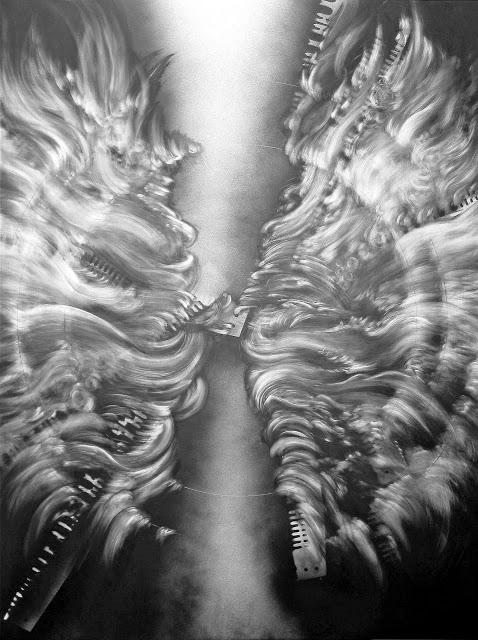
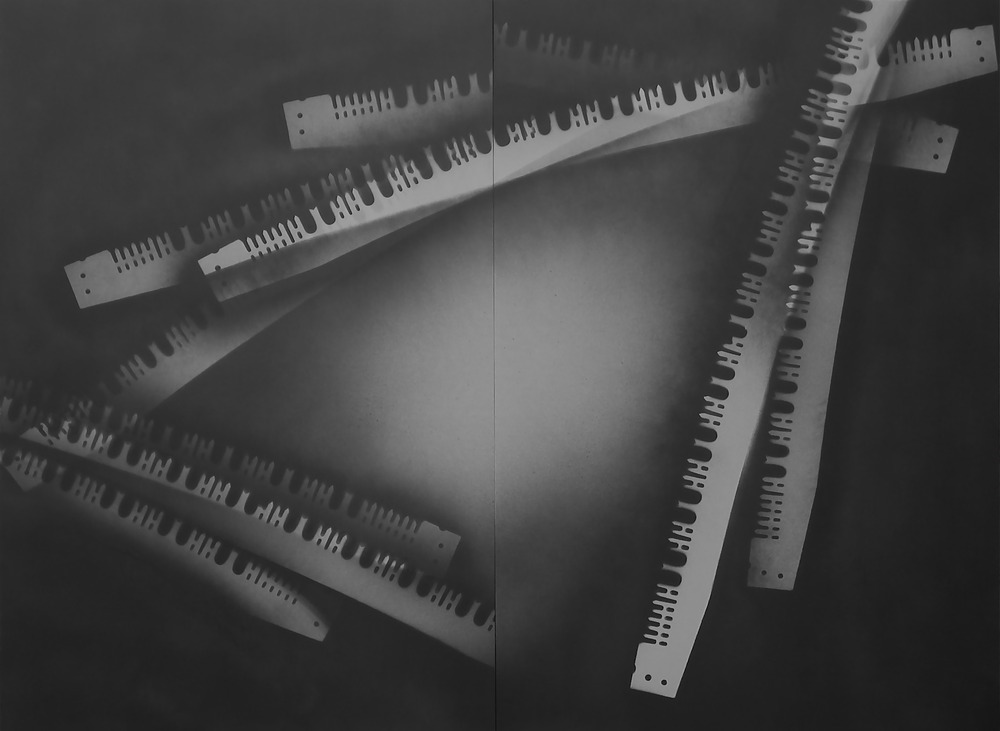
“Incantations on the Road Home” 48”x64” Graphite on gessoed panel

“Incantations on the Road Home” 48”x64” Graphite on gessoed panel

Wait… what?

But I’m getting ahead of myself. Turns out there was in fact a further metastasis. Stage 4. Another decent sized tumor wrapped around a bronchial tube near the entry point into my left lung, snuggly nestled next to my heart; a weirdly poetic location given the stressful mid-life transitions I’d been enduring of late, but one that rendered it inoperable. So a second biotherapy (a monoclonal antibody called Avastin) was added to the FOLFOX chemo regimen, all to be administered over a 6 month period…

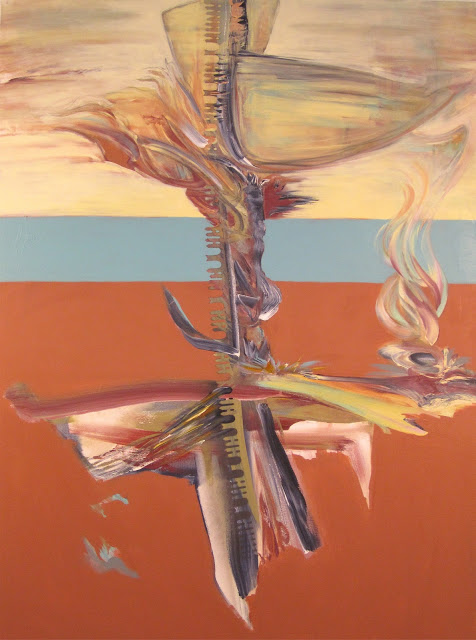
“Raven Gets In” 48”x60” Oil on canvas

“Raven Gets In” 48”x60” Oil on canvas

“I always put lime on the people I kill. Wait… are you calling 911?” ~ Drunk guy in a Mexican restaurant, as related by my friend Melissa Johnston.

And so it seems that cancer has created the mother of all liminal spaces in my life. And it is from this strangely pregnant territory that I peer out into the… I want to say abyss… but like so many words now it seems inadequate, overused, and worked to within an inch of its word-ly life by the incessant hype culture hum we wallow in. The title of some crappy movie, complete with cross-licensed plastic action figures free w/ your next Happy Meal. And seriously, how many of us ever reach beyond the tremulous shadow of the concept and endeavors to actually process this deep down inside our whirring, buzzing lizard-brains? It crouches at the center of your chest like a cold rock, pulling you down through the turbid water more effectively than the finest cement shoes. Who the heck would want to go there voluntarily? Who…

“Fatal Shore” 48”x64” Acrylic on canvas

“Fatal Shore” 48”x64” Acrylic on canvas

Blaise Pascal wrote in “Pensées,” “We run heedlessly into the abyss after putting something in front of us to stop us from seeing it.”

It’s amazing how emotions flow just like weather.

I can go along doing what I think of as “well”: feeling optimistic, comfortable being alone, celebrating the liminal, accepting the transitory nature of things, handling the chemo, sensing health and wholeness on a walk in Whites Woods, meditating, reading, feeling a measured enthusiasm for the future w/o treating the present like just something to be got through, the master of silver linings, counting my blessings, deeply grateful for the love and support of my friends and family, acquaintances at the Post Office saying “hey, you look great”, relieved by the fact that I haven’t yet assumed the grayish-blue pallor of the wasting.

And then there will be this slow creeping intimation of unease, like a little darkening on the horizon. Just a few clouds on an otherwise sunny day…

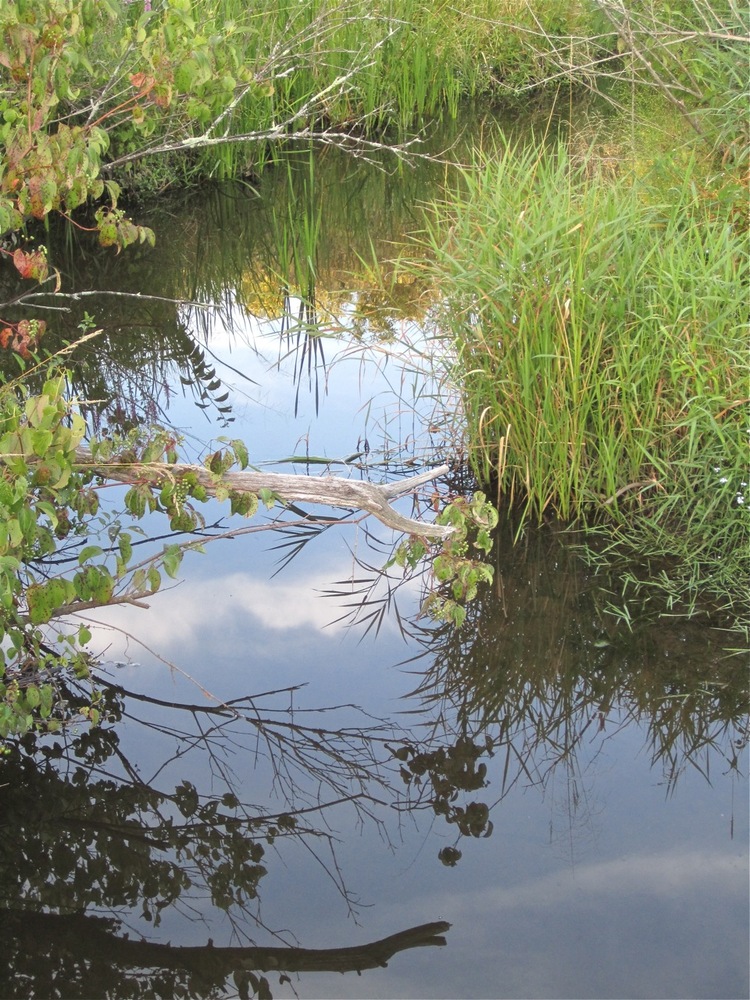
Stillness and solitude in White’s Woods, Litchfield

Stillness and solitude in White’s Woods, Litchfield

Willem DeKooning referred to himself as a “slipping glimpser”.

As the storm gathers and starts to darken my interior landscape I can feel the slipping; the accumulation of tension in my heart and body. Fear, longing, and worry… a somatic ache that fluidly transmutes into a profound and painful spiritual dread if not checked quickly by some distraction. This is where it gets tricky being alone. It is so much easier to distract yourself from it when you are with other people. Just ignore and bury it in the cosmopolitan joy of human culture and friendship. Or loose yourself engineering a life.

“[…] almost nothing important that ever happens to you happens because you engineer it. Destiny has no beeper; destiny always leans trenchcoated out of an alley with some sort of ‘psst’ that you usually can’t even hear because you’re in such a rush to or from something important you’ve tried to engineer. ”
~ David Foster Wallace in “Infinite Jest”.

I guess this terror has always been present, and is for every human being. We do with it what we will. Tune it out. Turn it into art or literature. Transmogrify the brutal fact of our inevitable decay into infinite varieties of work and the illusion of progress. Am I thinking too much?! This is not always true. There are times when laughter and joy come in solitude and I can revel in it. But the laughter is hardened and forced when you are filled w/ grief at the prospect of loosing all you love… threatened in such an immediate, tangible way… I’m attached to my attachments! A lousy Buddhist if ever there was one! It’s amazing how I can go along feeling buoyant about the possibility of remission… and oh the delirious possibility of “durable remission”, held out there like the most seductive of outcomes. And then just tank for awhile… fall into the dark… gazing up into a night sky perversely ornamented with PET scan constellations of cancerous cells awash in radioactively tagged glucose, collaged all over my chest and neck, blinking out an inscrutable code… exhausted from the grasping after some more universal, ever-present , capital “L” Love. God. Some hopeful bulwark against the immensity of the void surrounding my fearful and trembling self. A glimpse perhaps…

The Real Work

It may be that when we no longer know what to do

we have come to our real work,

and that when we no longer know which way to go

we have come to our real journey.

The mind that is not baffled is not employed.

The impeded stream is the one that sings.

~ Wendell Berry ~

(Collected Poems)

And so it goes. Alone with the Alone. It is a choice. A pseudo-monastic exile, punctuated by genuinely caring and helpful visits from my loved ones and the logistics of the chemo rhythm. Simone Weil said “attention is the rarest and purest form of generosity”…

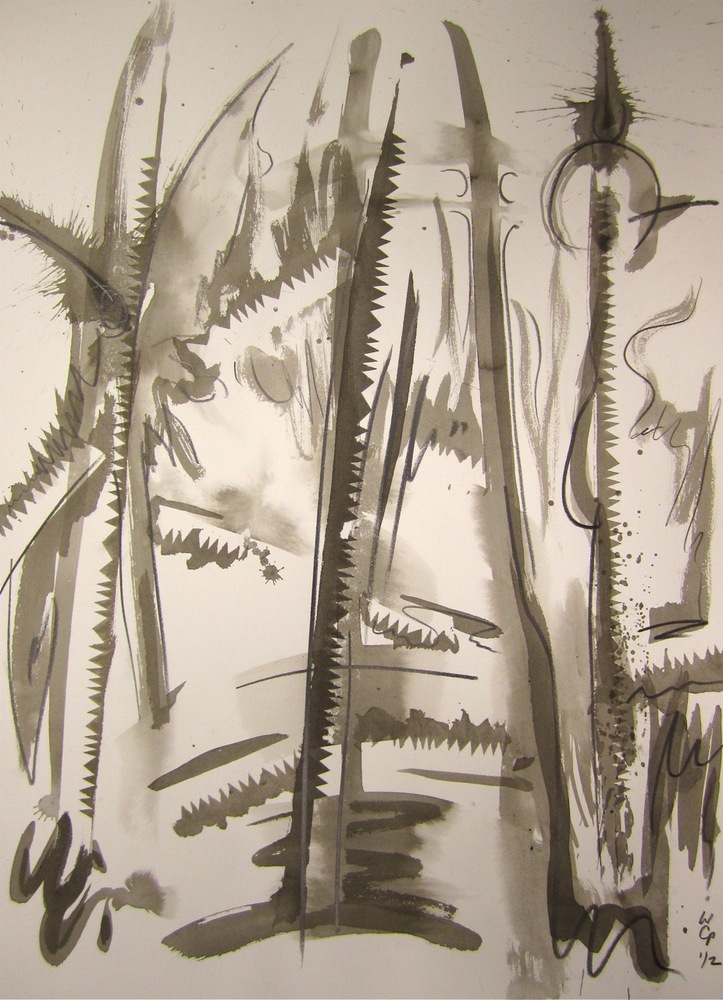
"Exile Study No.4 ~ Perdita" ink and graphite on paper, 22"x 30",

“Exile Study No.4 ~ Perdita” ink and graphite on paper, 22″x 30″

And what exactly is it that I am attending to now?

Seeking Now through mindful solitude. That word, though: seeking! Seeking itself one of the most seductive of attachments. After the briefest foray into the silence, I flee back into the endless loop of intellectual and aesthetic dialogue w/ the dead. With those I’ve chosen to valorize as artistic mentors for 30 years: David Smith and Charles Olson. And into the radiating web of endlessly fascinating threads that fan out from their volcanic productions. Back into yet another painting or drawing, searching searching searching, always searching… wading through a rich but terrifying uncertainty…

“The Secret Life of Wind” 48”x64” graphite on gessoed panel

“The Secret Life of Wind” 48”x64” graphite on gessoed panel

“Sometimes when I start a sculpture, I begin with only a realized part, the rest is travel to be unfolded much in the order of a dream. The conflict for realization is what makes art not its certainty, nor its technique or material.”
–David Smith

In Alex Stein and Yahia Lababidi’s wonderful conversation, “The Artist as Mystic”, Yahia quotes Heidegger: “Longing is the agony of the nearness of the distant.” This resonates now. Not just a little! The words vibrate in my chest as if I were standing alongside a huge, beautifully wrought bell being rung. Small pieces of the rock crouching there begin to fall…

“The Chain of Memory is Resurrection I” 30”x40” graphite and acrylic on bristol board

“The Chain of Memory is Resurrection I” 30”x40” graphite and acrylic on bristol board


Writer and artist: Walt Pascoe

Please check out more of Walt’s art at http://www.waltpascoe.com/.

Postcolonial Thoughts: Wendy Red Star’s Native Spectacle & Satire

by Christopher Hutchinson

Satire

There is a persistent problem that emerges amongst marginalized artists. The attempt to use satire as a clever way to expose the inadequacies of systematic colonialism often only succeeds in proving the accuracy of the colonial structure. The Harlem Renaissance artists and thinkers were accused of assimilating and practicing the traits of the same colonial regime they tried to separate themselves from. This problem is present in the work of Wendy Red Star. The satire she employs simply does not exceed the status quo native propaganda proposed by the Western depictions.

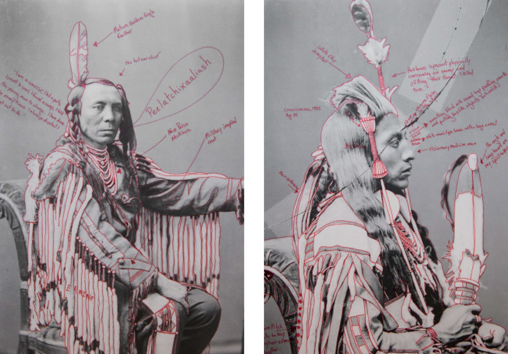
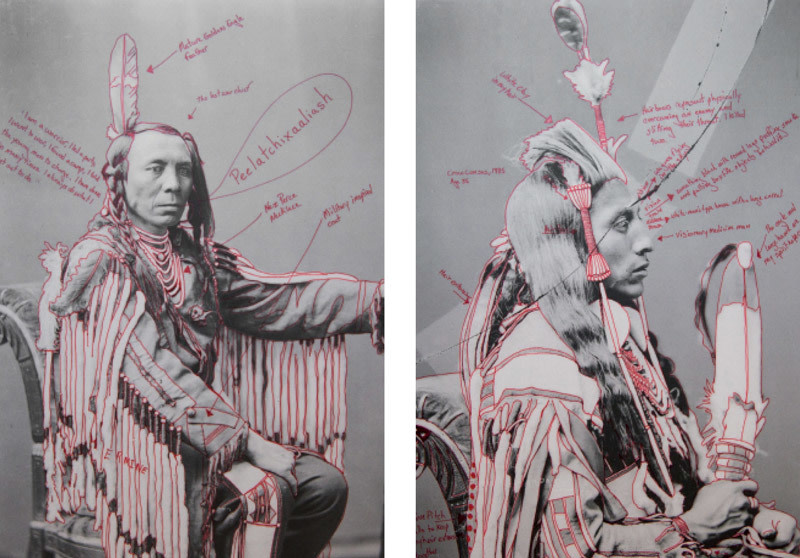
Wendy Red Star’s socially critical installation draws inspiration and employs imagery from growing up on the Crow Indian Reservation in south-central Montana. Historic photographs and regalia are juxtaposed with tapestries, text, and objects she has constructed to re-humanize a past tribal leader whose image has been appropriated for commercial use. Photographs of Chief Medicine Crow (c. 1848-1920) were taken in Washington, D.C., when he and four other tribal leaders were coerced into signing a treaty ceding a portion of tribal lands to the United States Government. His image has frequently been used to represent a stereotypical, nameless, Indian “brave.” Red Star’s newest installation is an extension of her earlier work, which employed gender-focused, political self-imagery, not unlike the art of Cindy Sherman, Ana Mendieta, and Frida Kahlo, to draw attention to the marginalization of Native Americans.-http://portlandartmuseum.org/exhibitions/apex-wendy-red-star/

“In APEX, by replicating a historical museum diorama, she names and honors Medicine Crow, and revises the white man’s historical paradigm.” http://portlandartmuseum.org/exhibitions/apex-wendy-red-star/

Red Star’s naming of chief Medicine Crow is a lateral move from artifact to artifact. She wants to reclaim the image but has reprinted the image, which has notes in red scribbled all over the image. This is the same complaint with which she convicts Whites–the use and over use of the image of Medicine Crow. Red Star’s use of this image, while she intends it to be different, is no different than the sea of generalized depictions of Natives.

This points to another major factor that affects marginalized artists, the process of academia. Natives that attend art programs without peers in their nationality often feel the need for their counterparts to understand and communicate in Western language while receiving no feedback within their own language. That process often produces a native artist which has successfully communicated in a colonial way with very little of their own language present in the work. Academia should clarify one’s own language, not assimilate to the norm. Red Star is a self-proclaimed research artist and ends up with the same conclusions anyone else would from any google search about Crow Native. Nothing is added here except for the fact that she is a Native Crow. Her work is generic.

Spectacle

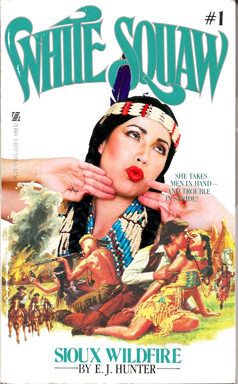
Wendy Red Star’s satire of White Squaw is a reinforcement of Native iconography as spectacle rather than a critique of the colonial. Many artists who deal with identity art only succeed at a reinforcement, not a critique. Red Star fulfills the directive of the original White Squaw novel narrative. Squaw being the half White and half Native that infiltrated and coerced Natives to acquiesce to the Whites.

Once again the clever trick in role playing here is not successful in surpassing the original intent of Western propaganda. The original novel has a White woman pretending to be an authentic Native. Red Star is an authentic Native assuming the role. That is a problem because it gives validation to the original novel, not an investigation to actual relations between Whites and Natives. Marginalized artists must be careful not to have so much of the colonial in their dialogue that it overshadows the dialogue of the indigenous.

Authority to name primitive

August 29, 2009–January 10, 2010

The objects featured in this exhibit, ones seen publicly for the first time, are drawn from a private collection developed over the past 30 years by an adventuresome couple from Ten­nes­see. What started as a simple memento of the Southwest—a pair of small kachina dolls purchased in Santa Fe, New Mexico—eventually led to a remarkably rich and diverse collection of items produced by Indian peoples throughout all culture areas of Native North America. http://mcclungmuseum.utk.edu/exhibits/american-indian-art/

As well-intentioned as the McClung museum in Tennessee may be, the mere fact that contemporary Native exhibitions still are attempting to “discover” the Natives is a problem. This leads to the most disturbing aspect of Red Star, the documentary at the McClung museum is actually more thorough than Red Star’s own accounts.

The West has long held the power to name a culture as primitive. This is the problem of the “Other.” How can “Others,” including Native Americans, name and control their own dialogue? –Not with Satire & Spectacle.


Christopher HutchinsonChristopher Hutchinson is an accomplished Jamaican conceptual artist, professor and contributor to the art community as a writer, critic and founder of the nonprofit Smoke School of Art. He is a Professor of Art at Atlanta Metropolitan State College and has been featured as a lecturer including prestigious engagements at University of Alabama and the Auburn Avenue Research Library. For two decades, Chris has been a practicing artist. His works have been exhibited in internationally recognized institutions including City College New York (CUNY) and featured at the world’s leading international galleries such as Art Basel Miami. He has always had an innate passion for creating spaces where Africans and people of African descent contribute to an inclusive contemporary dialogue—ever evolving, not reflexive but pioneering. This requires challenging the rubric of the canon of art history, a systemic space of exclusion for the Other: women and non-Whites, and where necessary he rewrites it. He received his Master of Fine Arts Degree in Painting from Savannah College of Art & Design, Atlanta and his Bachelor of Arts Degree from the University of Alabama in Huntsville, Alabama.

End Hate Series

by V.L. Cox

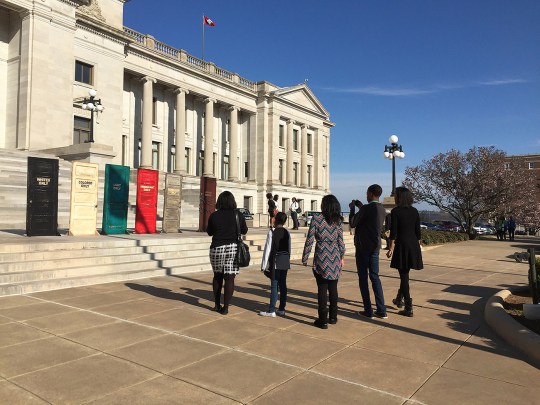
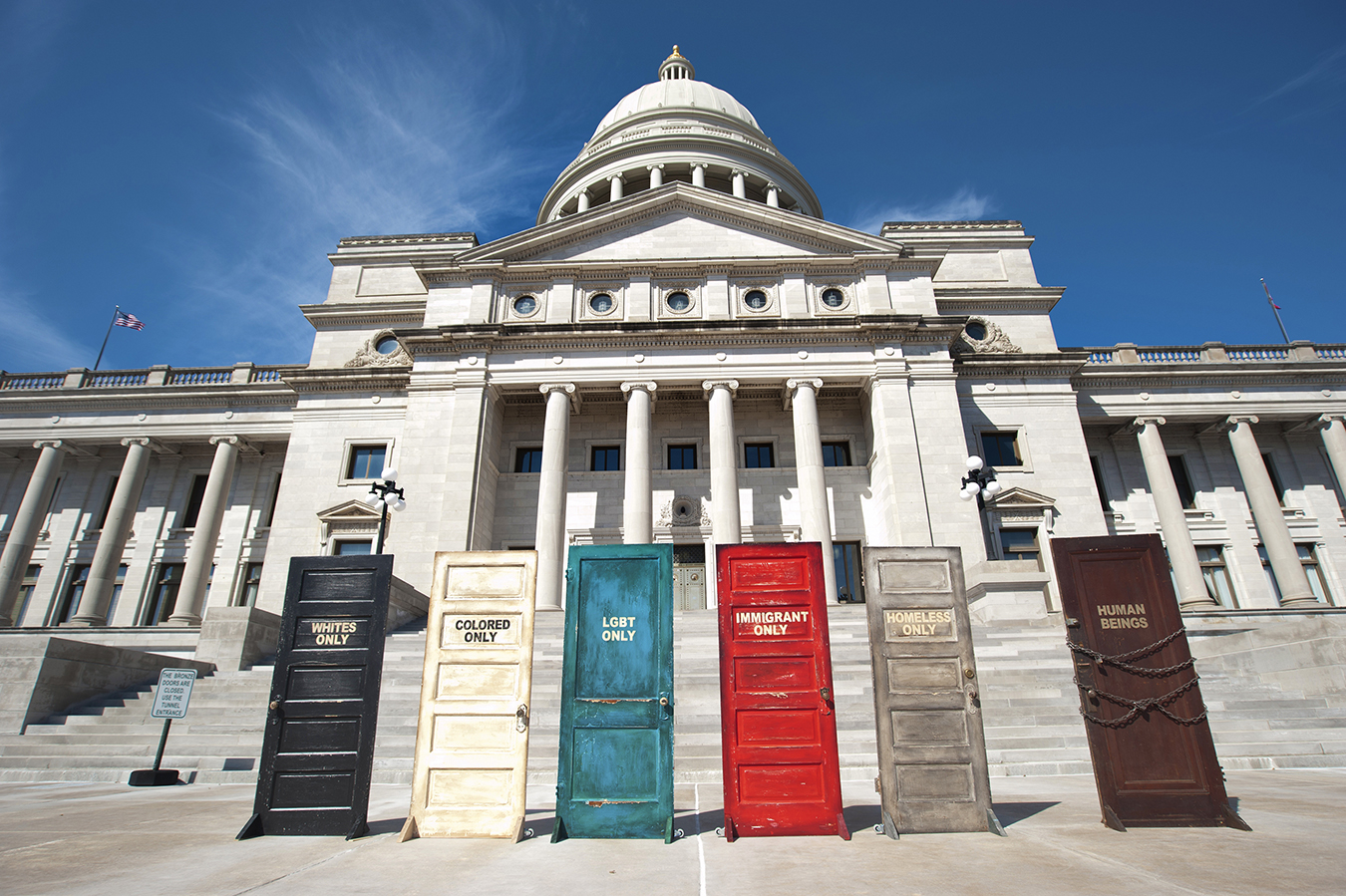
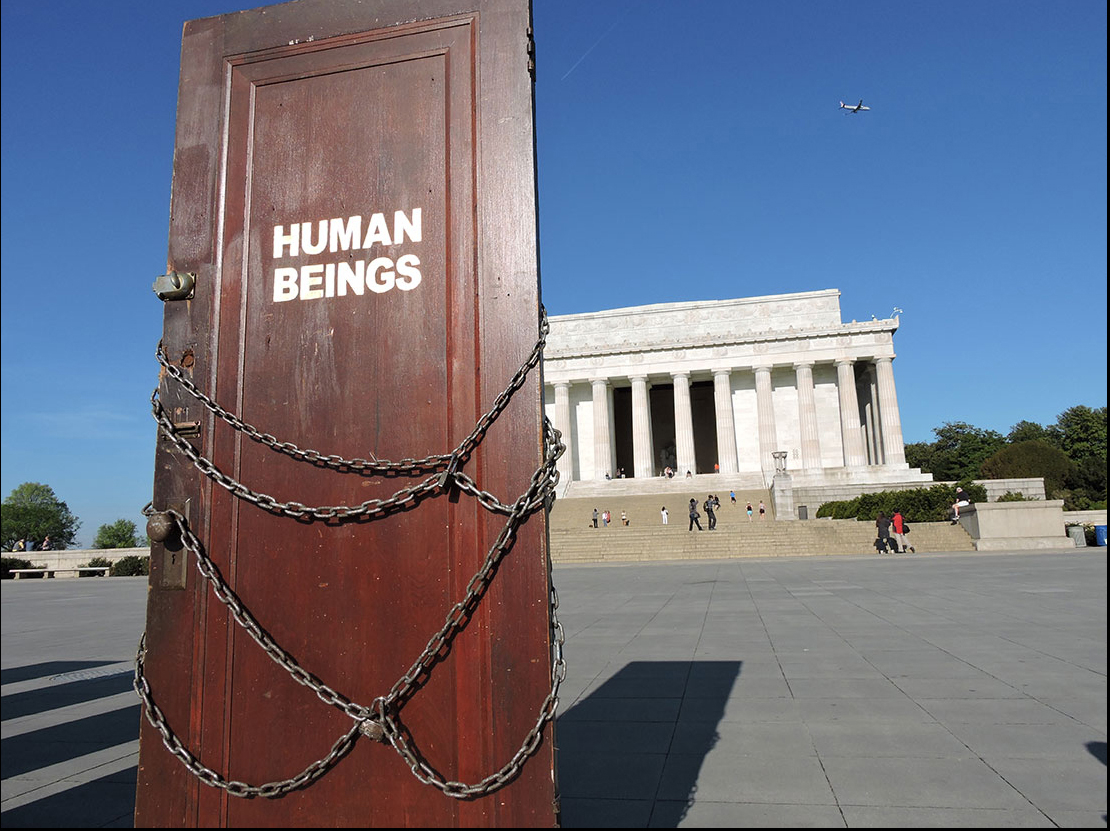
“END HATE DOORS”

The series was created in response to Arkansas’s HB1228 which made it out of committee in
March of 2015. This discriminatory bill would have brought back Jim Crow days where hatred
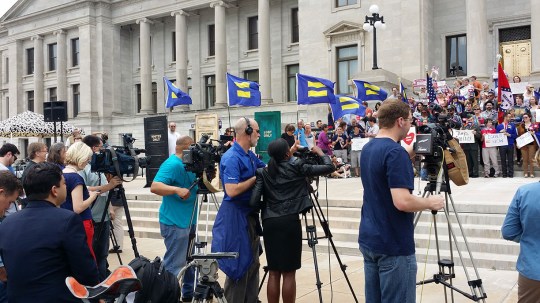
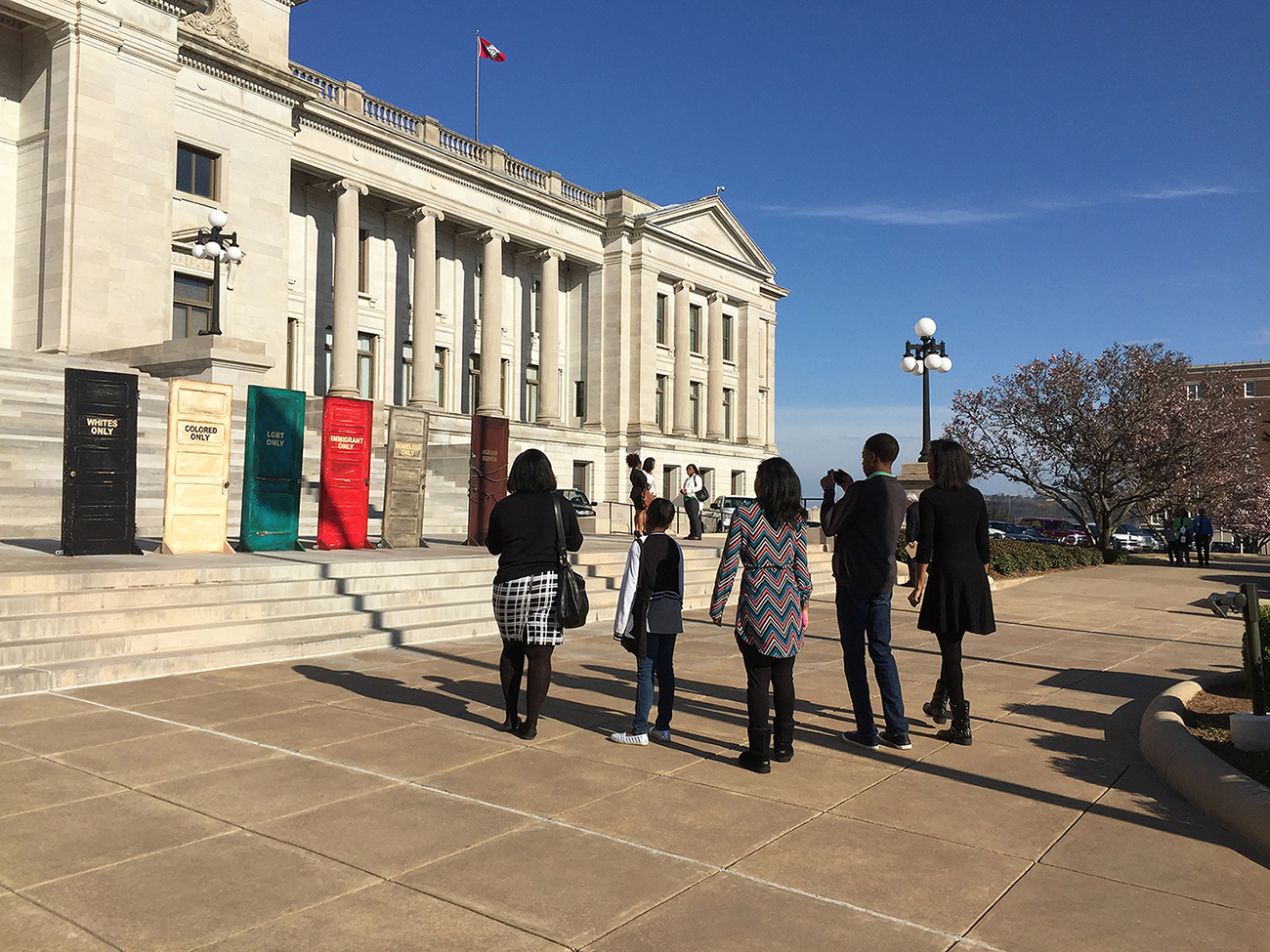
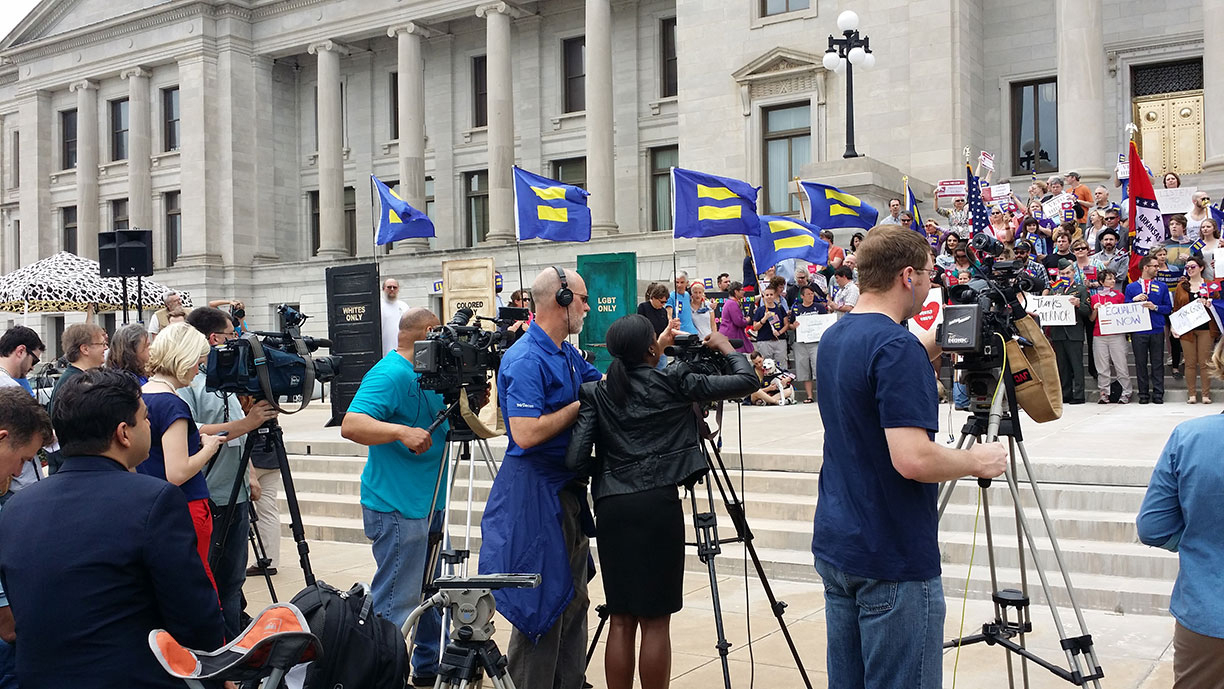
and repression were the law of the land. The “End Hate” installation was installed twice on the
steps of the Arkansas State Capitol as a First Amendment protest of the reckless and unjust
behavior by the 90th General Assembly. Through social media and the Associated Press, the
series helped bring world-wide attention to the struggle. With enormous pressure now being
forced on government officials, HB1228 was defeated.

The celebration was brief. With similar bills being considered and passed across the country, the
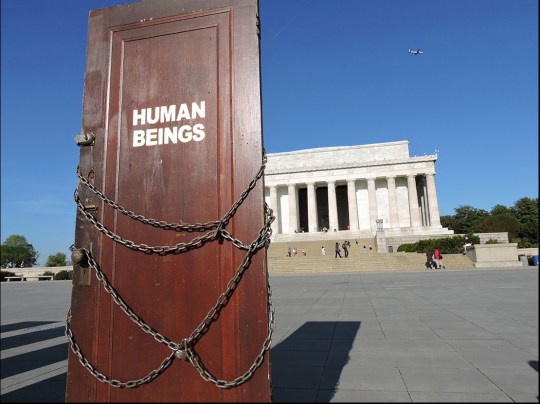
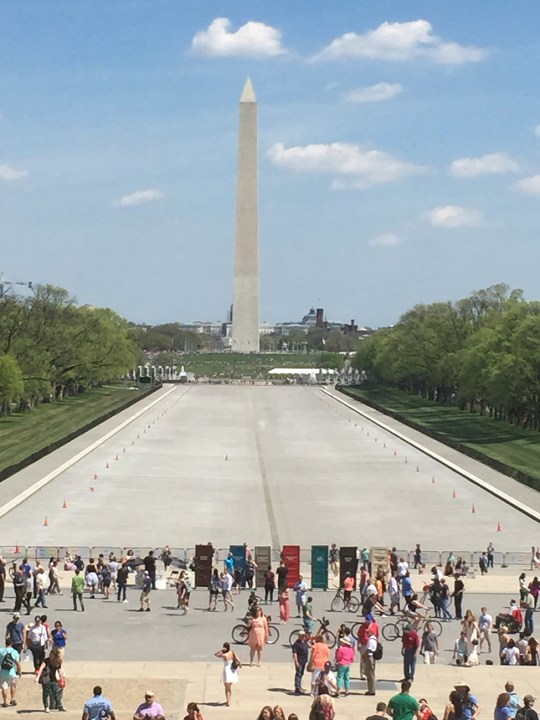
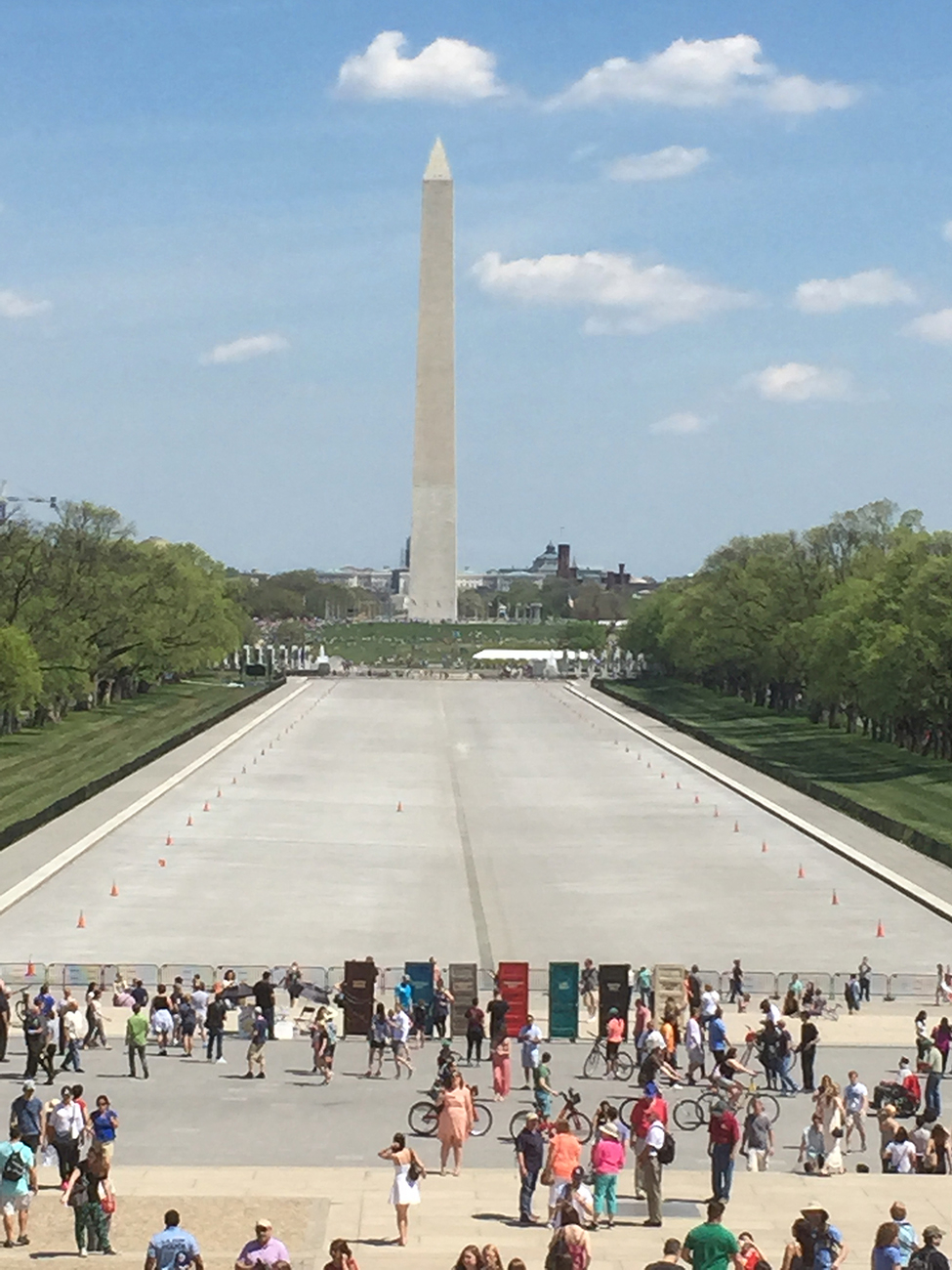
“End Hate” installation was then taken to the Lincoln Memorial in Washington D.C., where the
“I Have a Dream” speech was delivered by American civil rights activist Martin Luther King Jr.
on August 28, 1963. His speech was a defining moment of the American Civil Rights
Movement. With Civil Rights laws now slowly being chipped away or even denied for some, this
was a sacred place where dreams and freedom were born and was the perfect place to once
again, stand for justice and equality for all. To say that the series was well received on that day,
is an understatement. Over 250,000 people were present, and not one negative comment was
heard about the series. Not one. The power and simplicity of the historic content strongly
resonated through the crowd. It brought people that were visiting from all over the world
together in conversation, sharing their own stories of discrimination and injustice, in peace and
camaraderie. And to me, that is where change begins. Separate Is Never Equal.

END HATE DOORS are solid wooden doors from the 1950’s and paint.
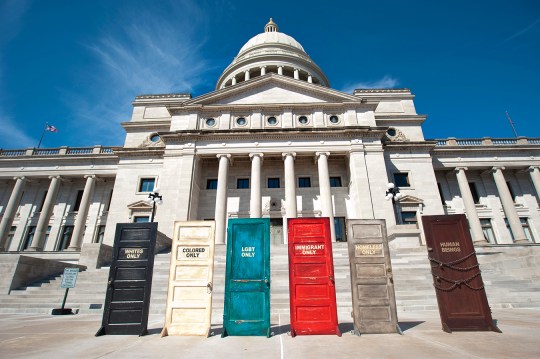
3-24-15 V.L. Cox Equality Doors Exhibit at the Arkansas State Capitol.

v.l. cox-End Hate series-doors-Arkcap2

V.L. Cox End Hate series--doors-HB1228defeat

V.L. Cox-End Hate series-doors-Lincolnmemorial2

V.L. Cox-End Hate series-doors-Washingtonmonument


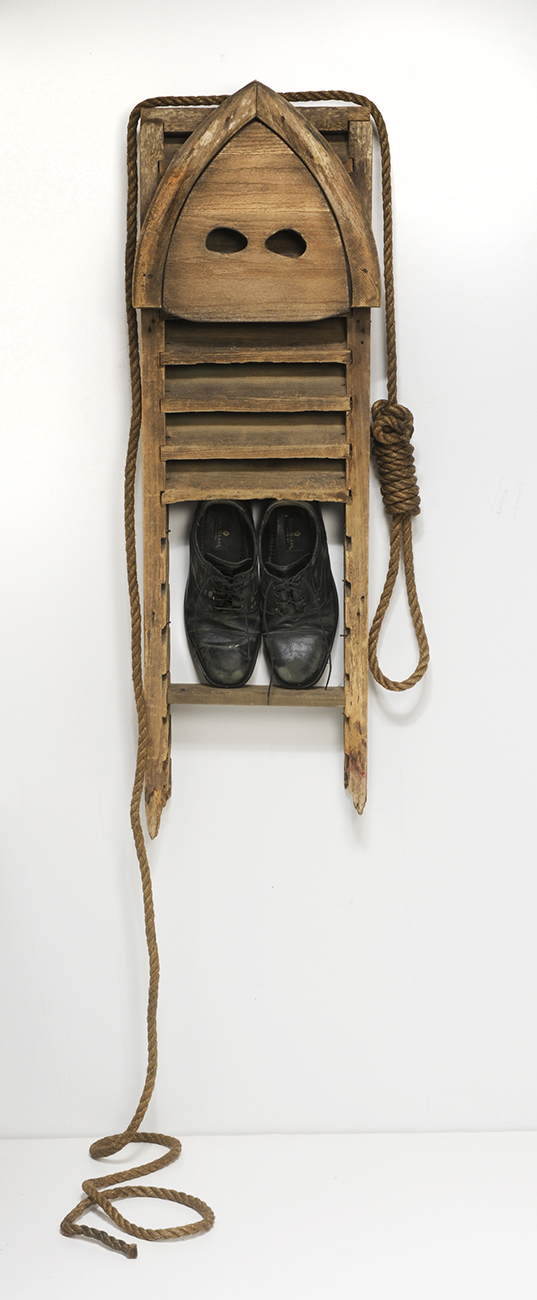
“SOLES”

42.5″ x 13.75″ x 3.75 – Mixed Media

Created from a 1896 church roof dormer from south Arkansas, wood from an old church pew,
1930 rope, and worn leather shoes. In the 1920’s, the Klan used to request full church services
and show up in all their regalia. The only way people could recognize the Klansmen was by
their hands or their shoes. A little side note: My great-grandfather was almost killed by the Klan.
He was pulled out of his house and bed by his ankles, tied to a tree, and horse whipped within
an inch of his life after being falsely accused by a man who was sour over a horse sale. My
grandfather and great-grandmother had to cut him down and nurse his bloody wounds. My
great-grandfather later recognized the shoes of a cousin that was involved in the whipping on
Main St. Arkadelphia, Arkansas and swore revenge. They never spoke again.

SOLES is comprised of an 1896 wooden church dormer vent, natural fiber 1930 rope, leather
and rubber shoes.
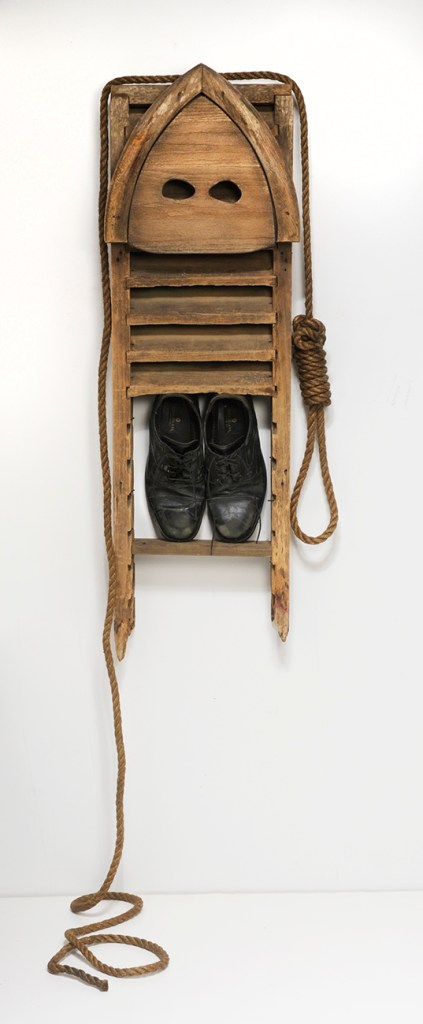
V.L. Cox-End Hate series-Soles


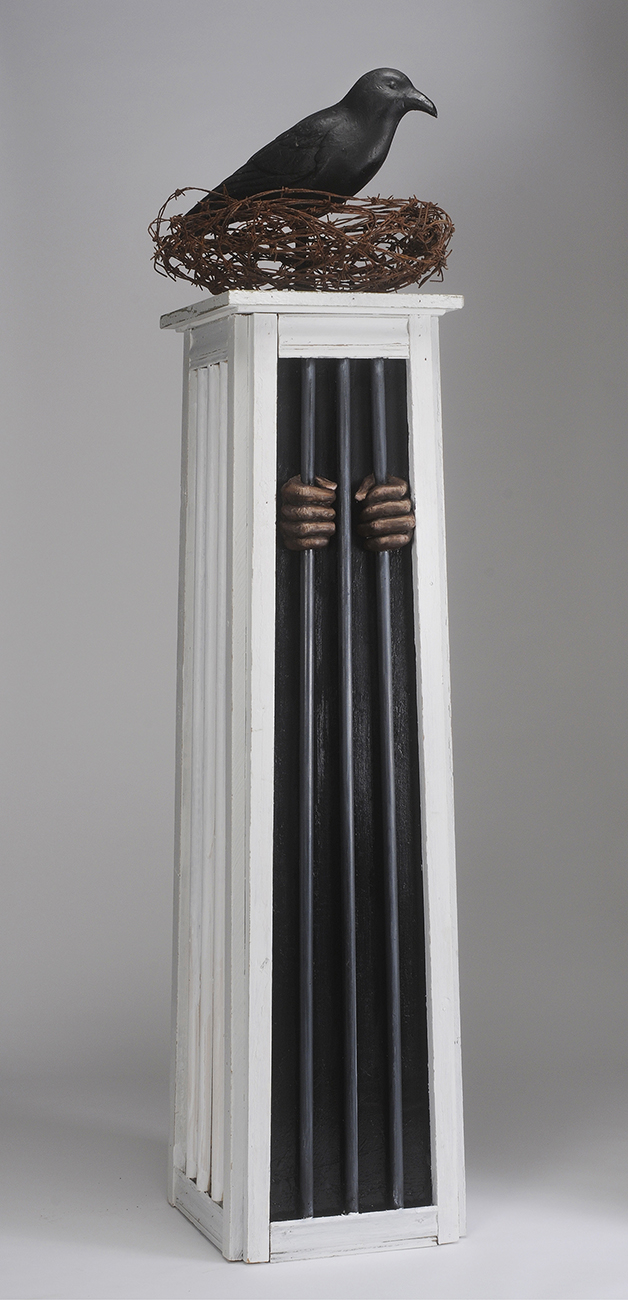
“JIM”

66” x 20”x 20” – Mixed Media Installation

After working with incarcerated youth and seeing first hand the unjust imbalance of mass
incarceration of minorities in our country today, I find this piece haunting and sad, but painfully
true. The white column is taken from an old craftsman style front porch, where a lot of time is
spent during the hot summer months due to the sweltering heat. Sitting on the front porch
watching the world go by, is a relaxing, cherished moment here in the south. Unfortunately due
to social economic status, lack of opportunity or the color of their skin, many individuals never
get the opportunity to go very far past this setting before being funneled into the lucrative and
politically controlled ‘cradle to prison’ pipeline. They literally spend a lifetime, from birth to
death, ‘looking out’ into the real world.

JIM is comprised of a vintage Crow decoy, rusted barbed wire, paint, epoxy, and wood.
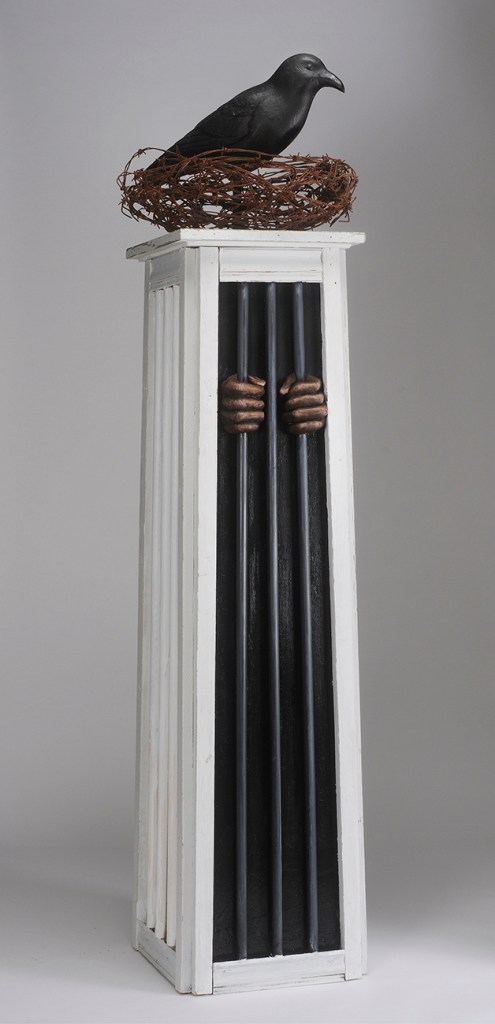
V.L. Cox-End Hate series-Jim


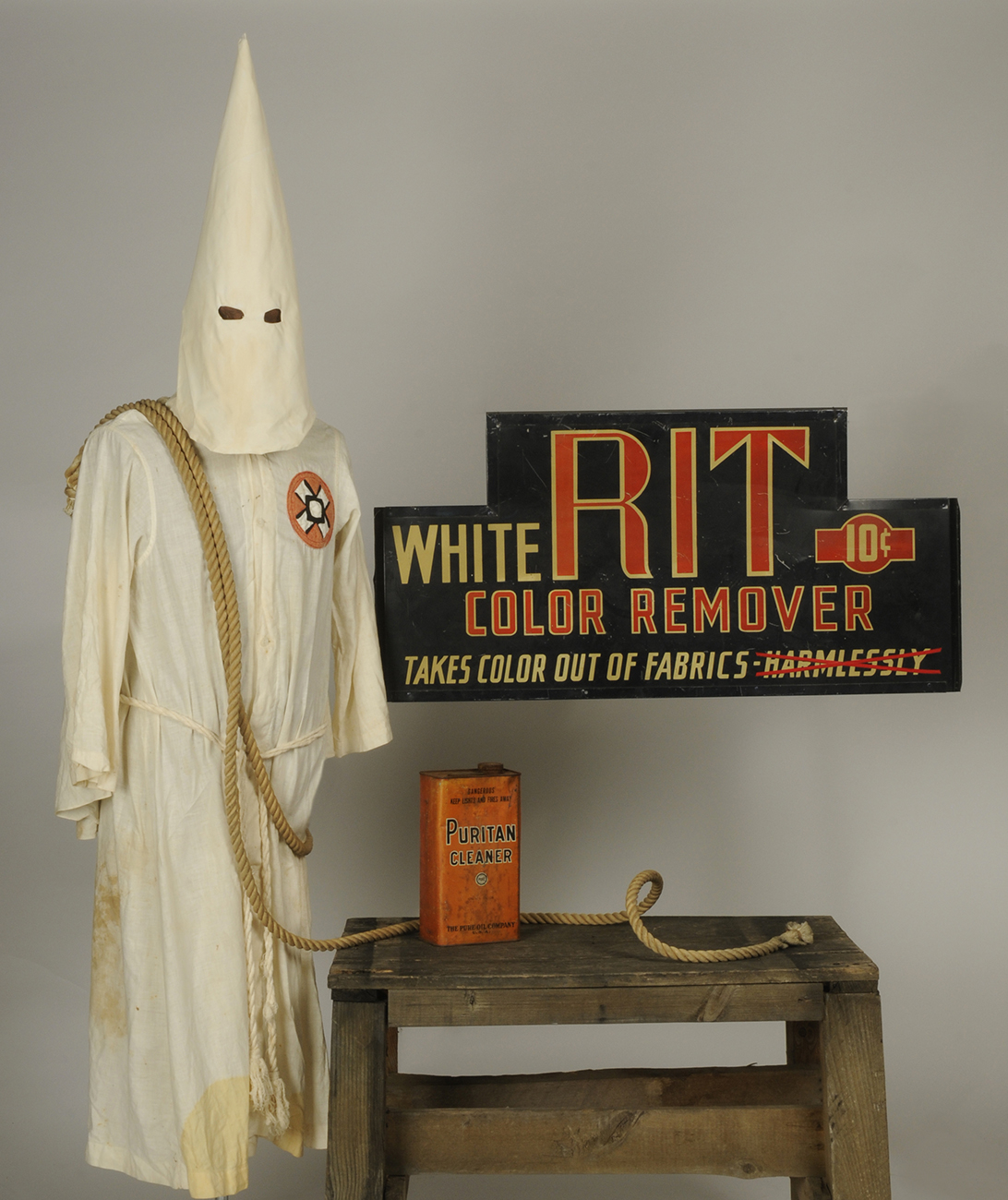
11. “SOILED”

Mixed Media Installation

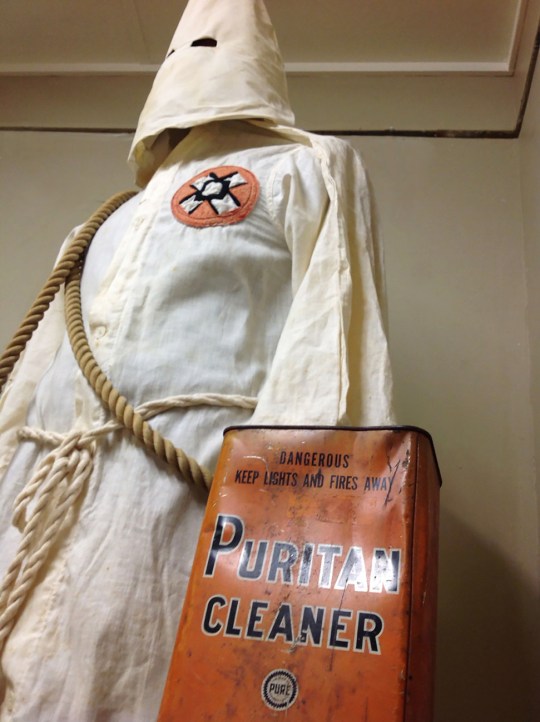
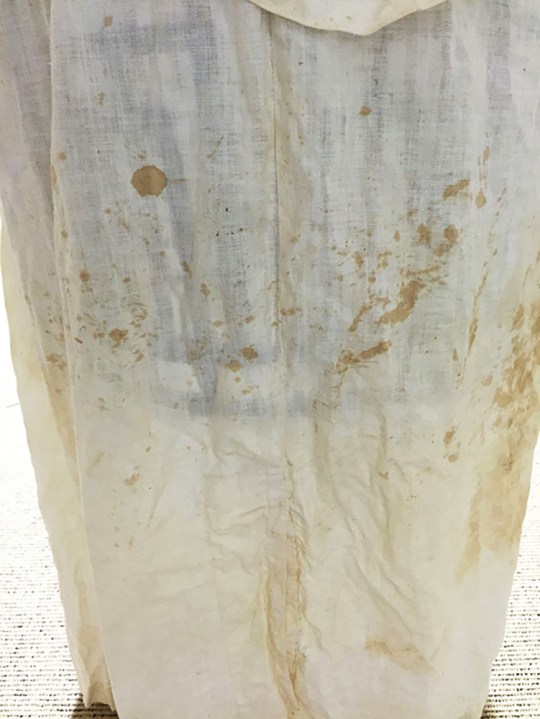
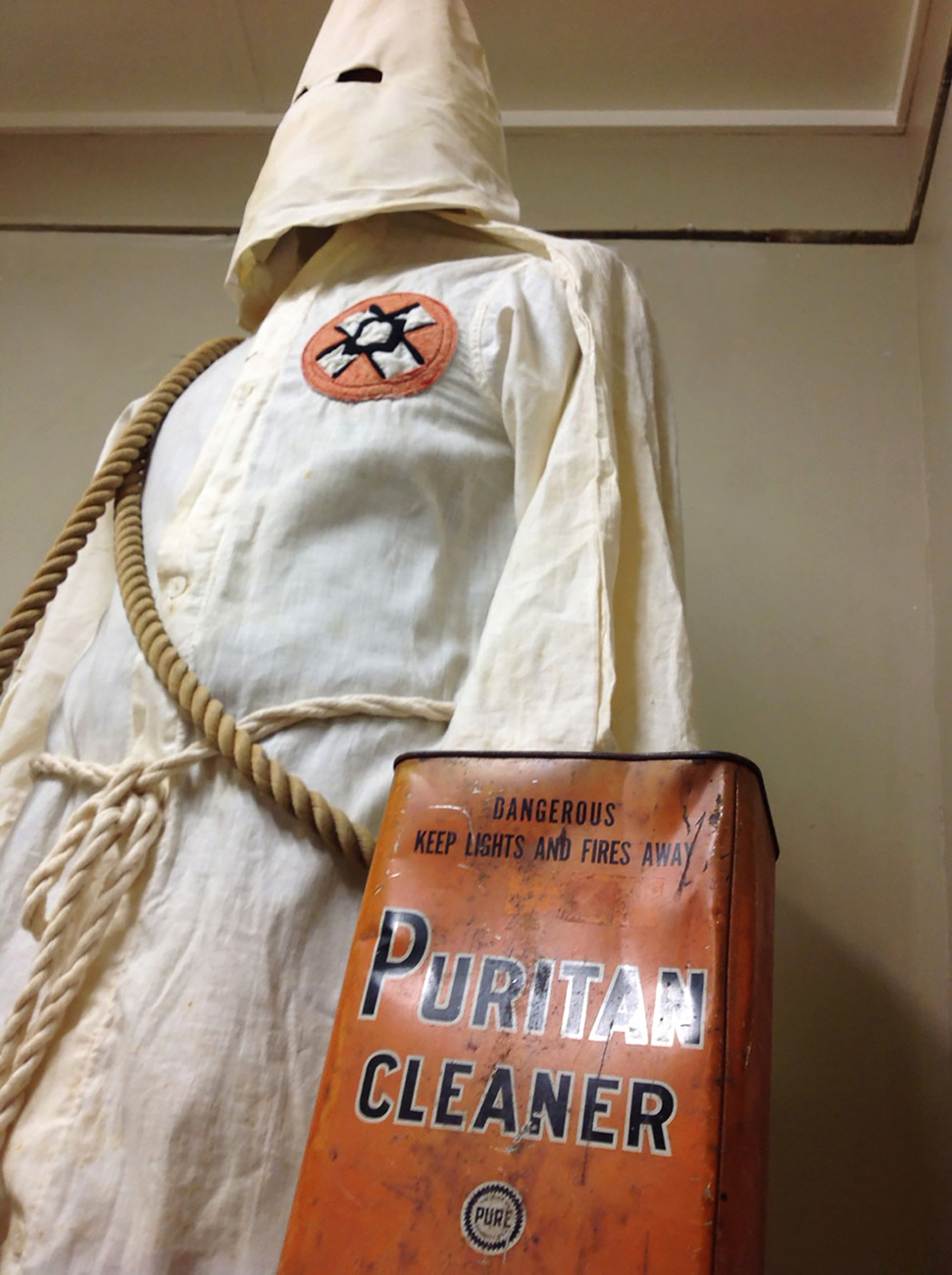
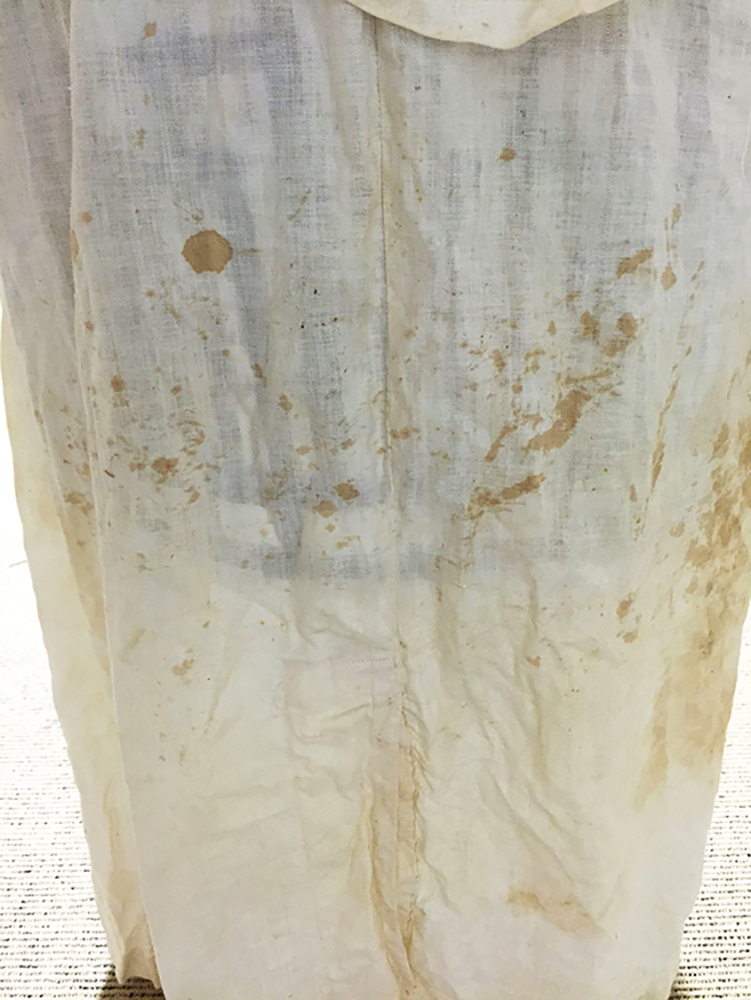
A 1920 (95 year old) blood stained Klan robe installation. I acquired this piece from an antique
dealer who had a family bring it in after another family member died. I had no idea it was
stained with blood before the acquisition. I believe, after historical research, that this was used inthe Summer of 1919 (“Red Summer”) somewhere in the south. It’s just too stained and the time period is almost identical. I kept the robe intact, created the hood to complete it, and purchased the vintage metal signage to show the true level of hatred this robe and installation represents. The rope is an old bell tower church rope.

SOILED is comprised of circa 1919 authentic Klan robe, natural fiber rope, metal and wood.
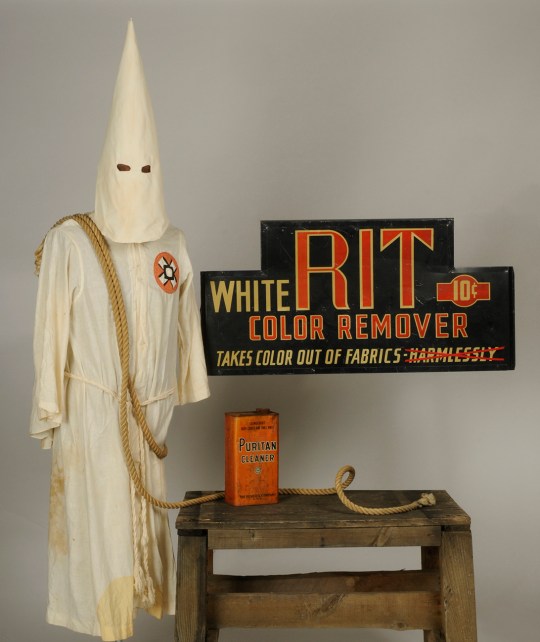
V.L. Cox-End Hate series-Soiled

V.L. Cox-End Hate series-Soiled2

V.L. Cox-End Hate series-Soiled3


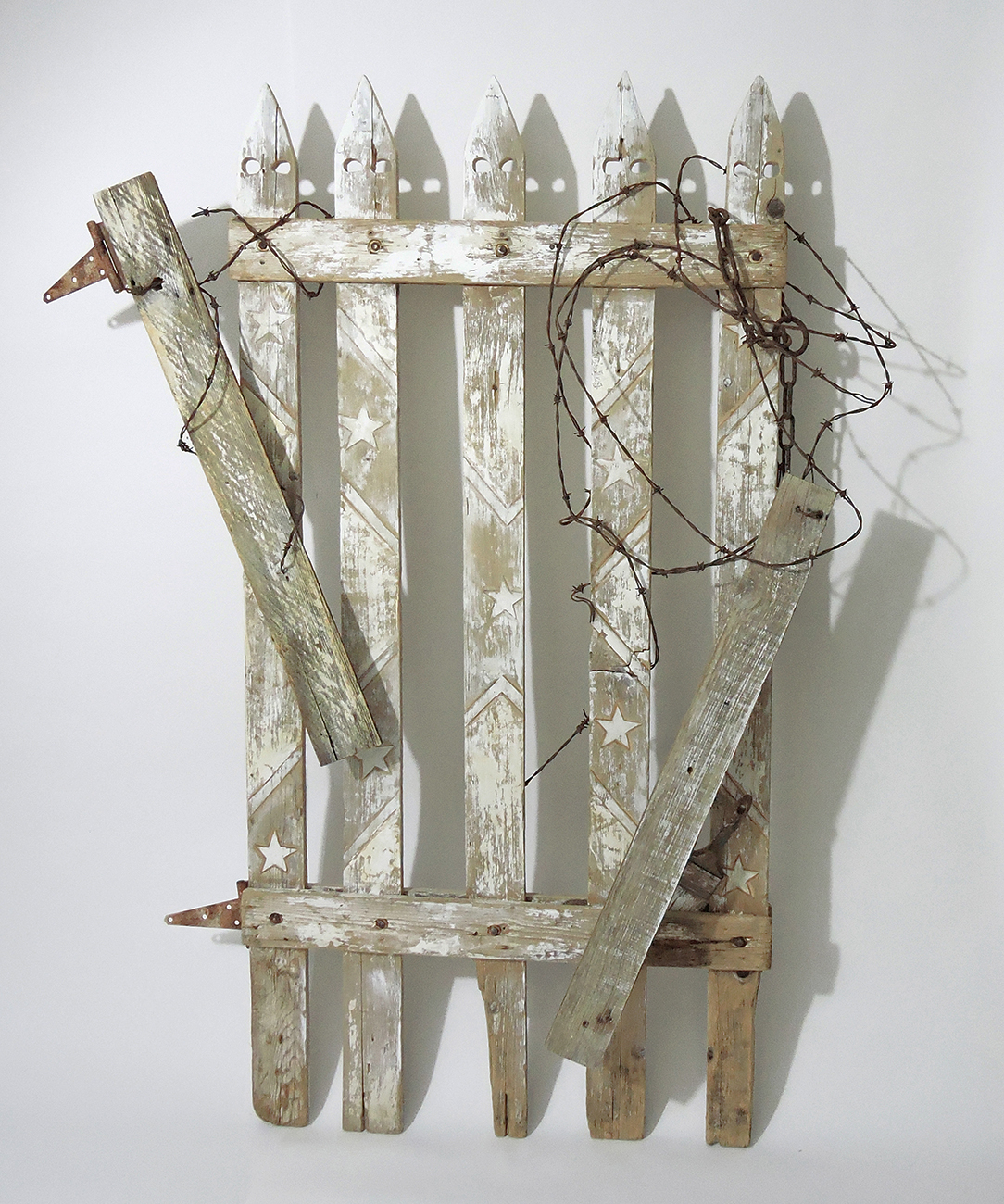
12. “WHITEWASH”

65” x 52”x 9” – Mixed Media

While driving through Harrison, Arkansas, I passed a dusty ‘compound’ on the edge of town
with a large gate and numerous confederate flags marking the surrounding property lines as well
as the gate entrance. It’s hard to miss.

With the gate and the confederate flags being such a strong visual to me, I picked up this old
wooden gate in an antique shop around the area, and wanted to create a piece that reflects the
entrance into the dark world of White Supremacy. Antiquated, but still standing, in secrecy and
anger intertwined with hatred, ignorance and fear. The two wood boards on each end, as well
as the hinges and barbed wire were not original to the gate but were added. I then cut the flat
tops of the gate pickets into a ‘hood’ image and carved a faded white Confederate Flag into the
wood to represent the same flags from the compound. When I positioned the lighting at a 45
degree angle, it then created ‘ghosts’ behind the gate, lending an element of recognition to the
old term ‘Invisible Empire’ from back in the day.

WHITEWASH is comprised of wood, metal and paint.
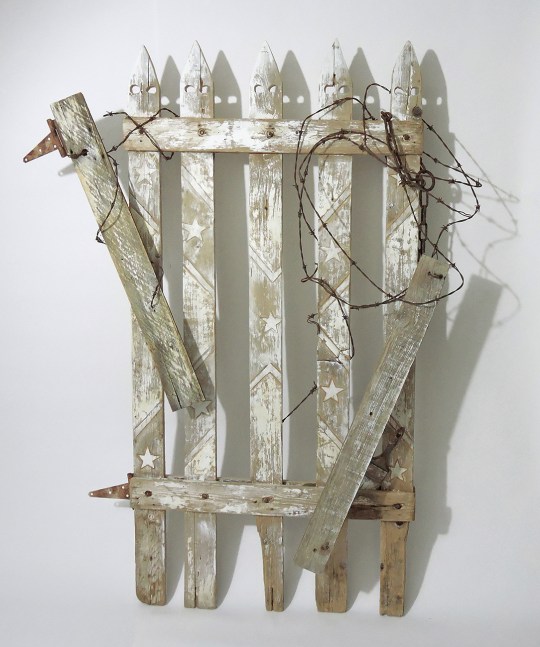
V.L. Cox-End Hate series-Whitewash


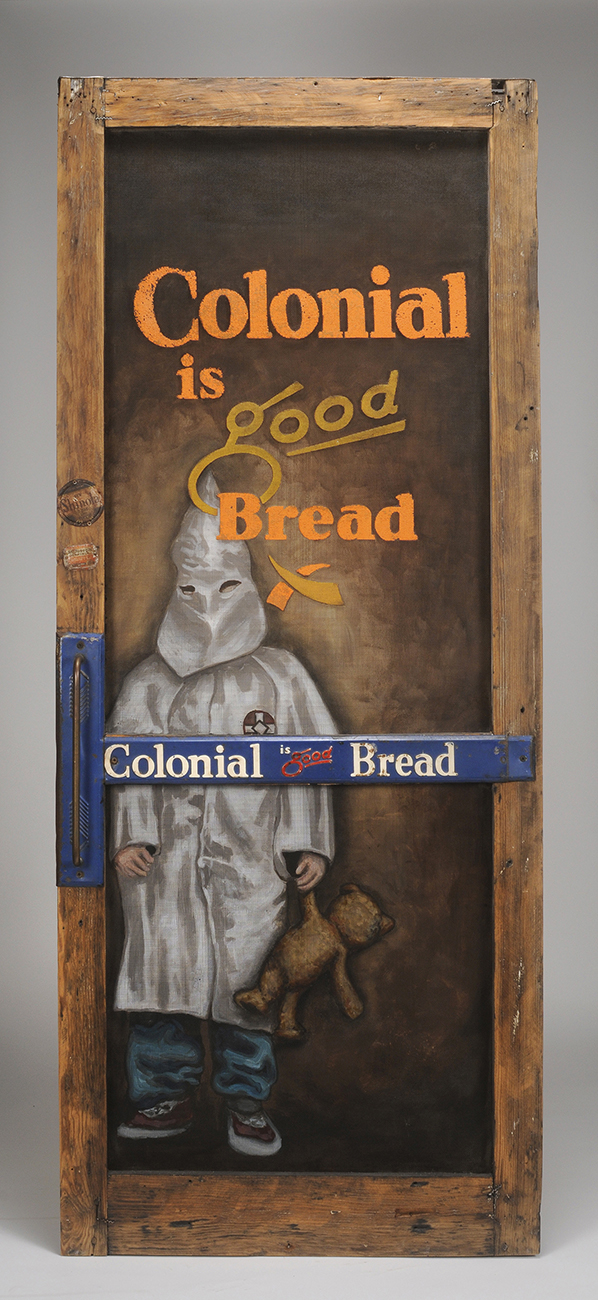
13. “WHITE BREAD”

70” x 28.5”x 4” – Mixed Media

This piece was created after I read about “Klan Camp” for kids held this summer at
the National Ku Klux Klan headquarters in Harrison, Arkansas. The teddy bear is
facing backwards to represent the loss of innocence, and addresses children and early
indoctrination. This screen door is also part of my “Images of the American South”
screen door series. This long running, 24 year narrative body of work is registered
with the Library of Congress and tells the story of the South.

WHITE BREAD is comprised of wood, metal and paint.
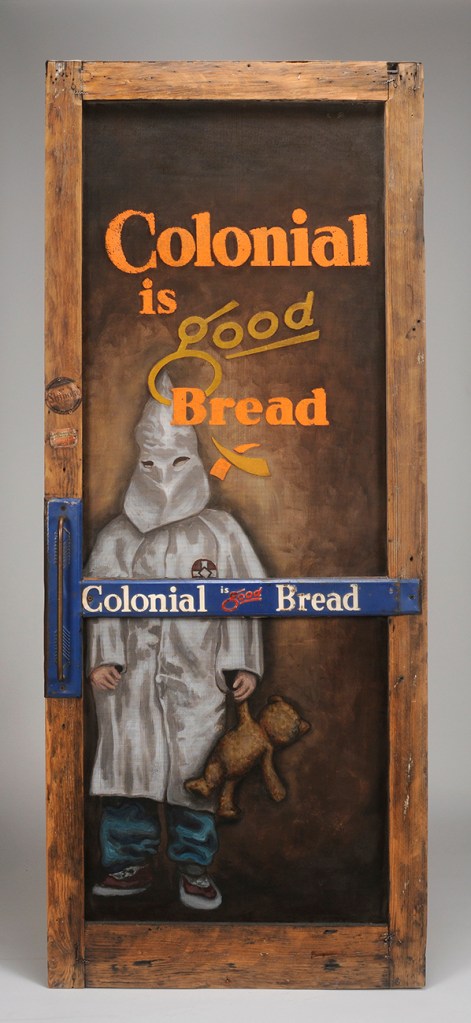
V.L. Cox-End Hate series-WhiteBread


“OLD GLORY”

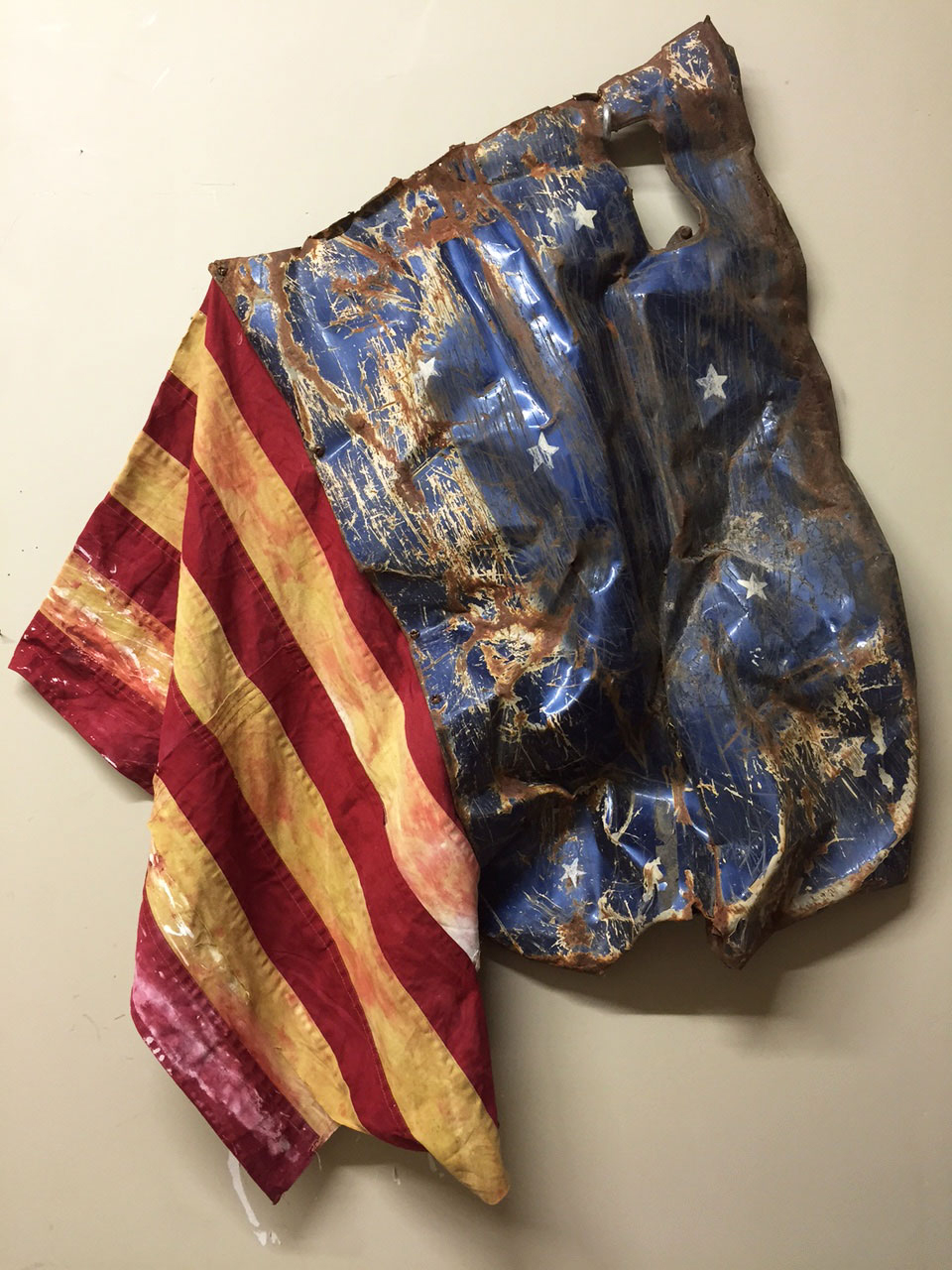
41″ x 48″ x 5″ – Mixed Media

“Old Glory” is a sculptural piece made out of vintage steel and cloth. This old blue steel has been
knocked around until it appears ruined and damaged, but is still as strong as ever. I couldn’t
even bang out some of the dents with a sledgehammer. It was then I decided to use it for this
piece. I for one am sick and tired of all the crazy, narcissistic ’Reality TV’ drama that has torn
our country apart. I wanted to do a piece to show that even though we take a pounding,
regardless of our stance or differences, I still believe that we are Americans, our country is
strong, and freedom, equality and justice FOR ALL will prevail.

OLD GLORY is comprised of metal, cloth, and paint.
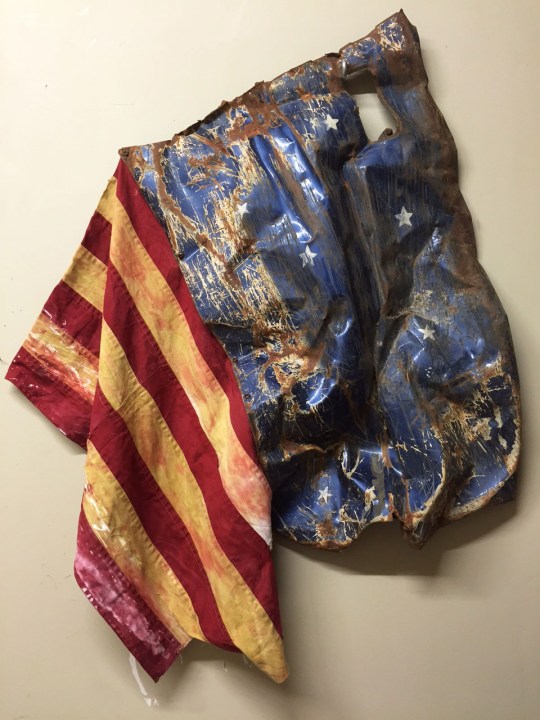
V. L. Cox-End Hate series-Glory


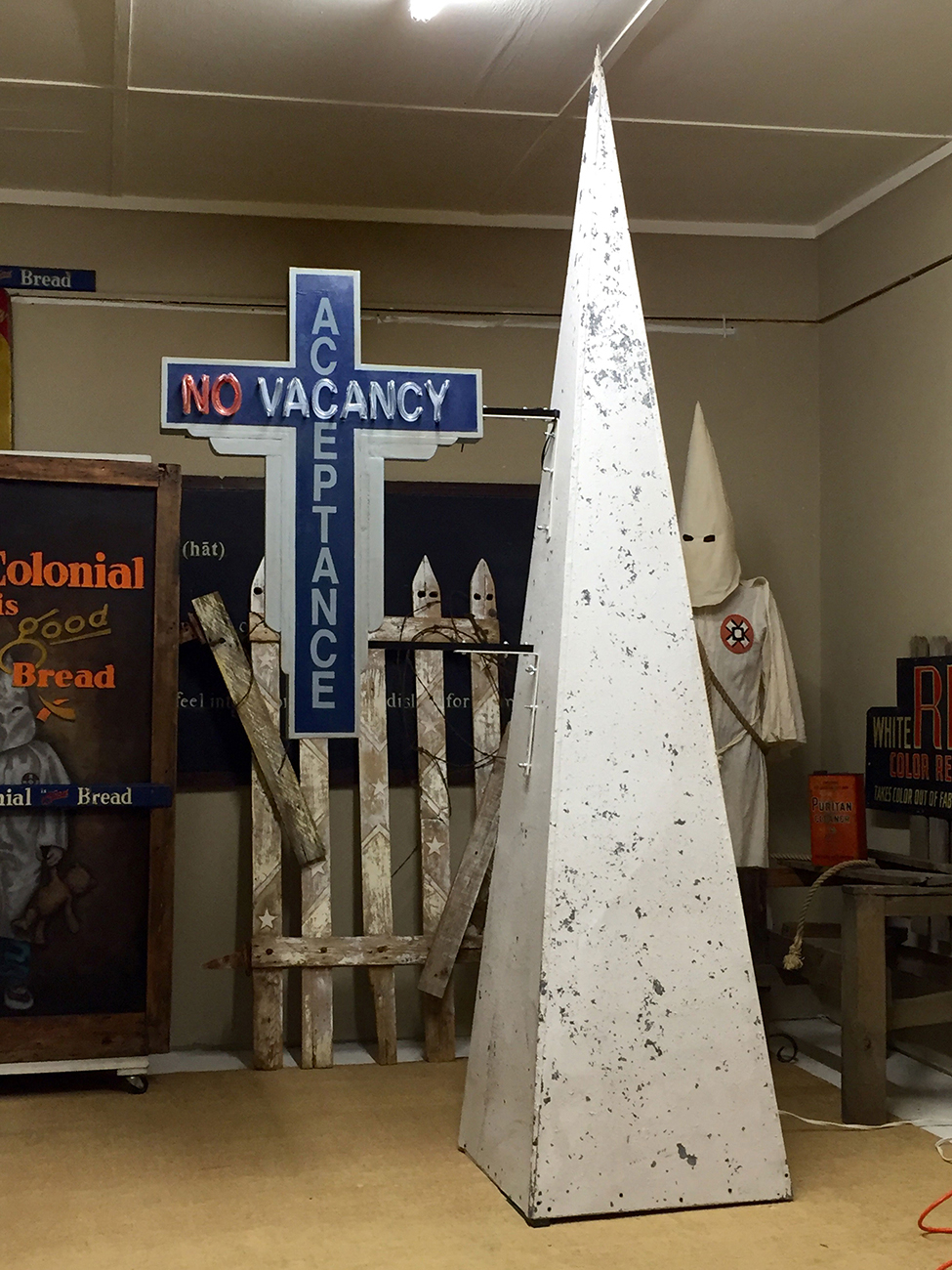
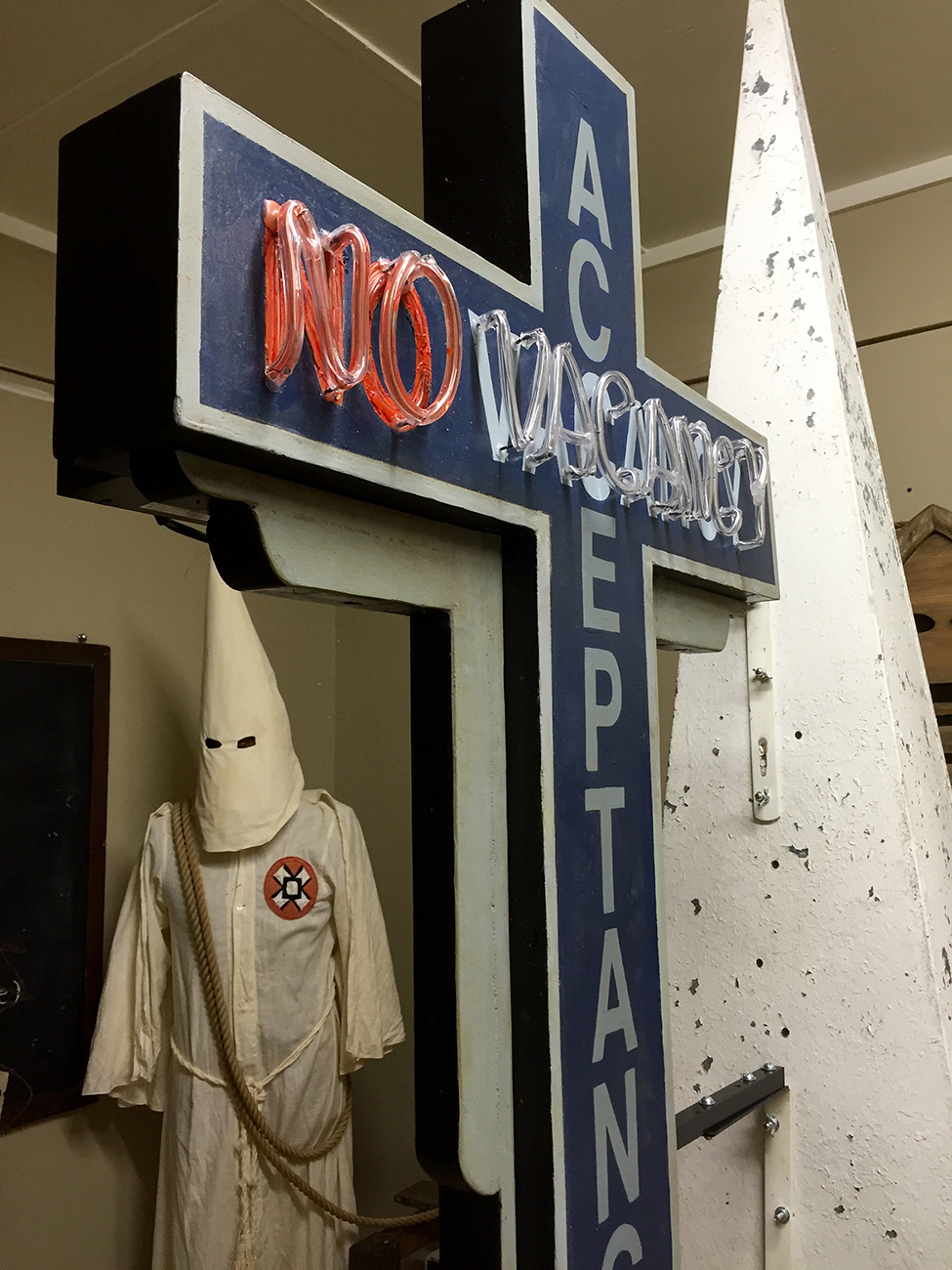
“NO VACANCY”

Mixed Media Installation – 109″ x 60″ x 25″

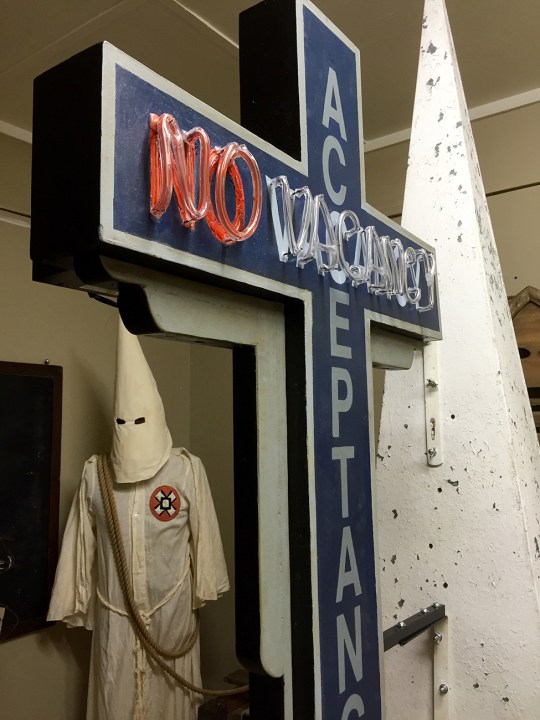
I created “No Vacancy” from old 9 foot tall church steeple from the Delta after reading the story
the Arkansas Times did on a young man in northern Arkansas who received a letter in the mail
from his church telling him he was immediately being removed from their membership records
because he was gay, and then another story about a man who had to actually move his deceased
partner’s grave due to the threats in Baxter County. The worker for the monument company
who was moving the tombstone was even approached and threatened by a man with a Bowie
knife in a Wal Mart parking lot of “why he had that ‘faggot’s’ headstone in the back of the
truck.” Stories like this are all to common today and I don’t think this is what Christ had in mind
when he told people to ‘love thy neighbor.’

NO VACANCY is comprised of wood, metal, plastic, electrical lighting and paint.
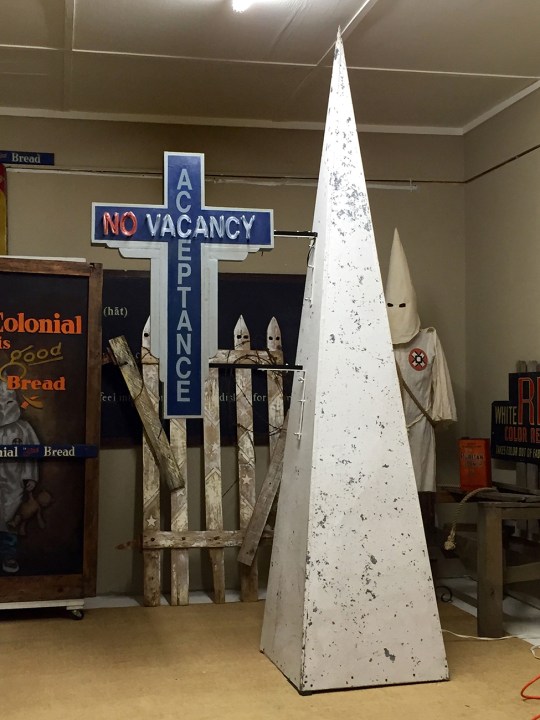
V.L. Cox-End Hate series-1 NoVacancy

V.L. Cox-End Hate series-NoVacancy2


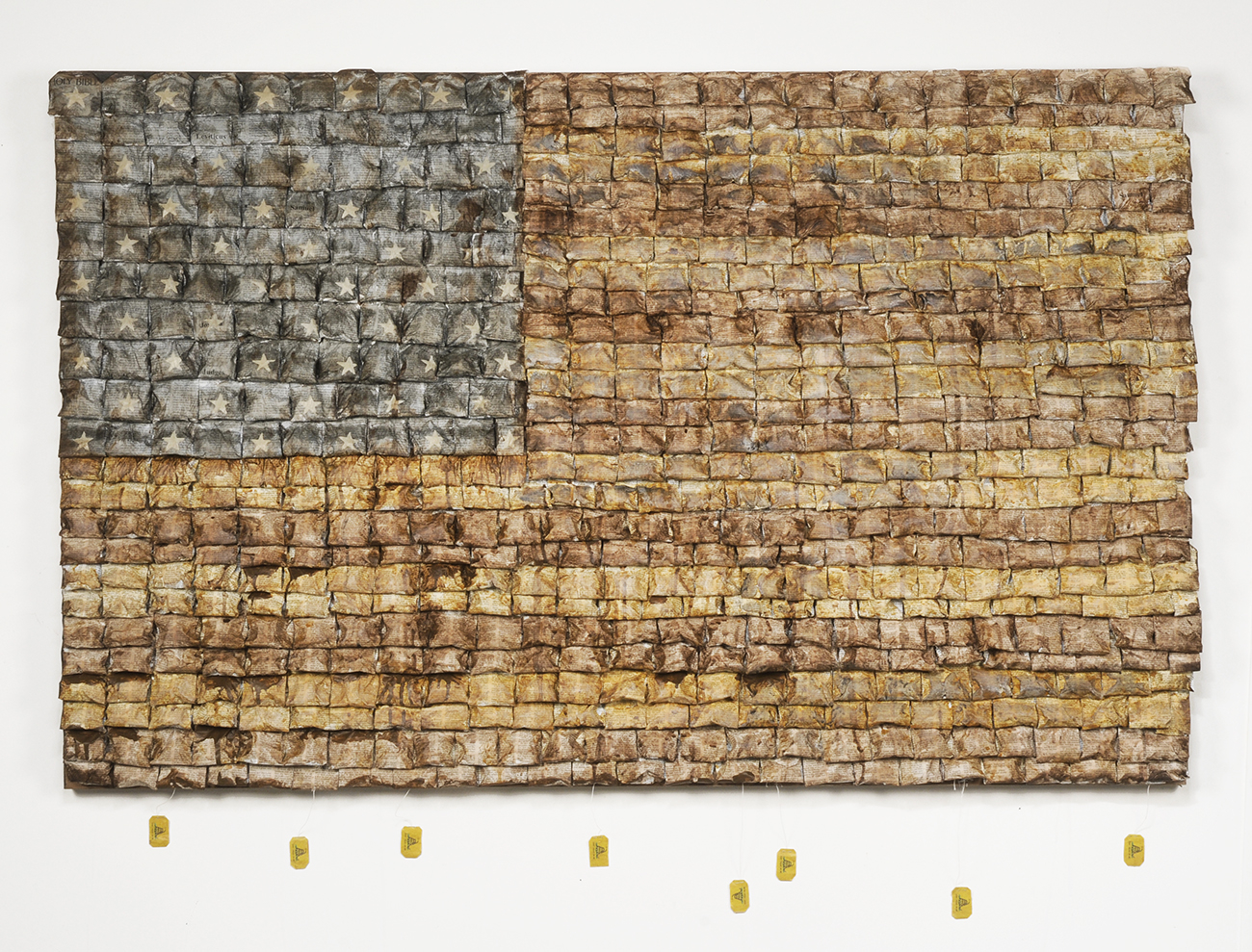
“STAINED”

36″ x 56″ x 2.5″ – Mixed Media

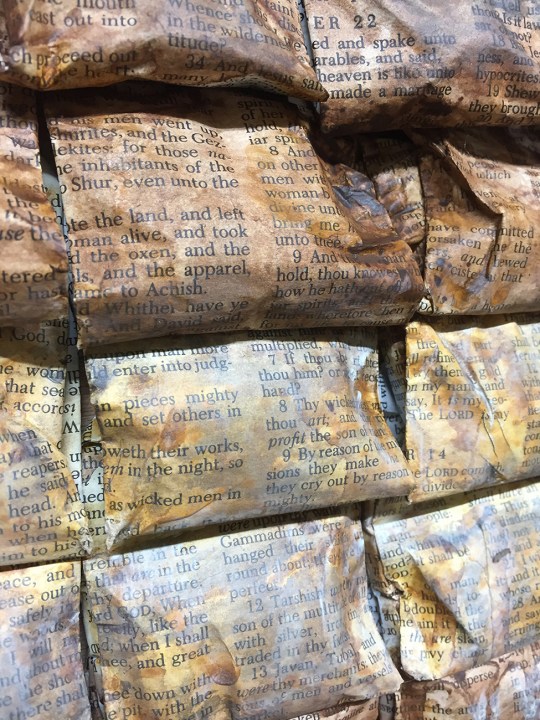
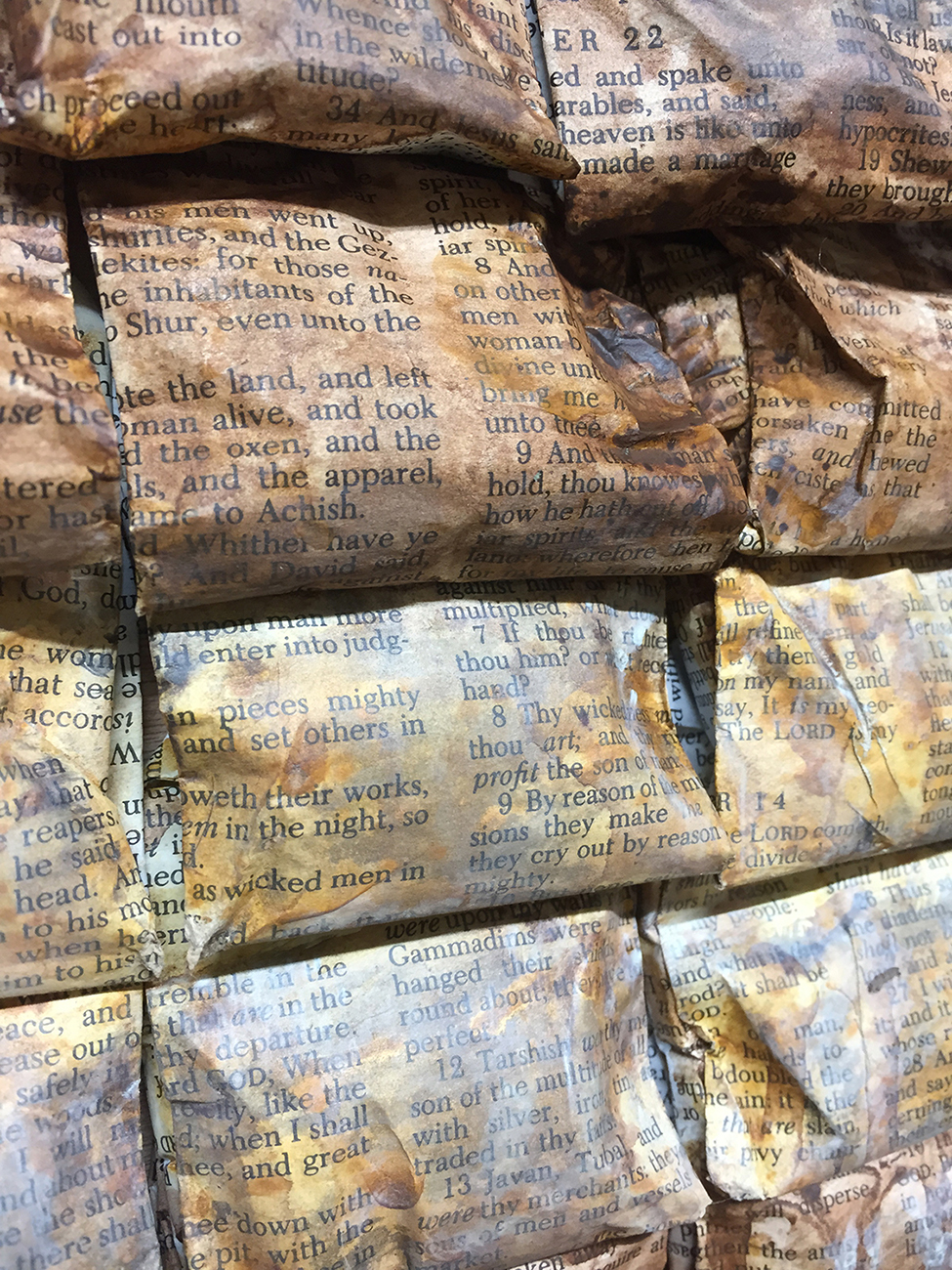
Represents the damage the extreme faction of the ‘Tea Party’ has done to our country when the
pages of the Bible are ripped out of context and used to harm others. It’s made up of over six
hundred and six (606) pages of the Bible made into tea bags with real tea inside. I started at the
bottom with Leviticus, with an entire bible being used in this piece as well as part of another
one.

STAINED is comprised of paper, paint, black tea, string and wood.
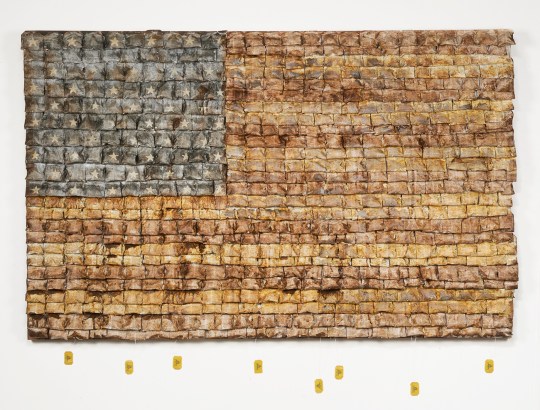
V.L. Cox-End Hate series-Stained

V.L. Cox-End Hate series-Stained2


“HOME OF THE BRAVE”

74″ x 34″ x 21″ – Mixed Medium Installation

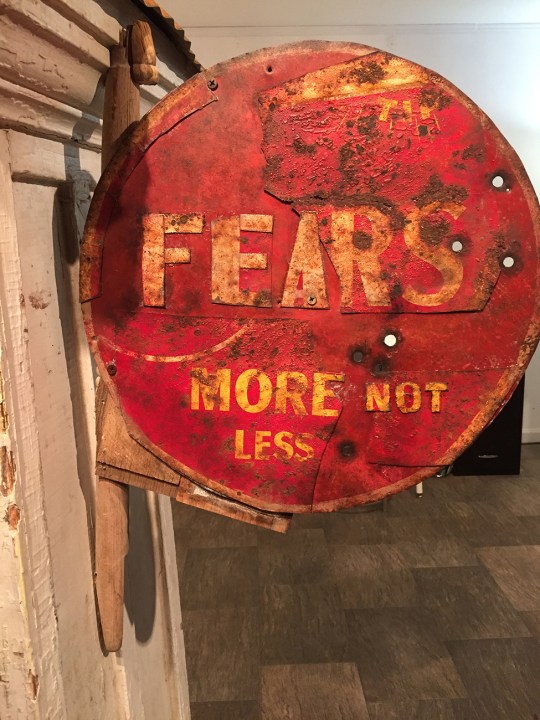
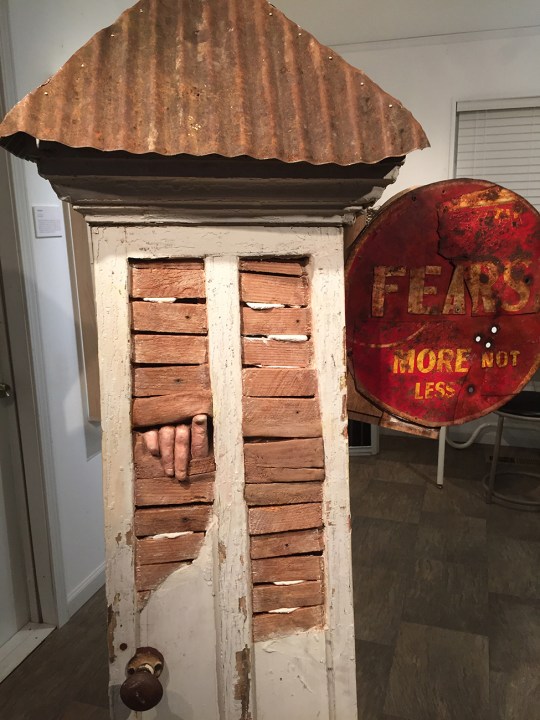
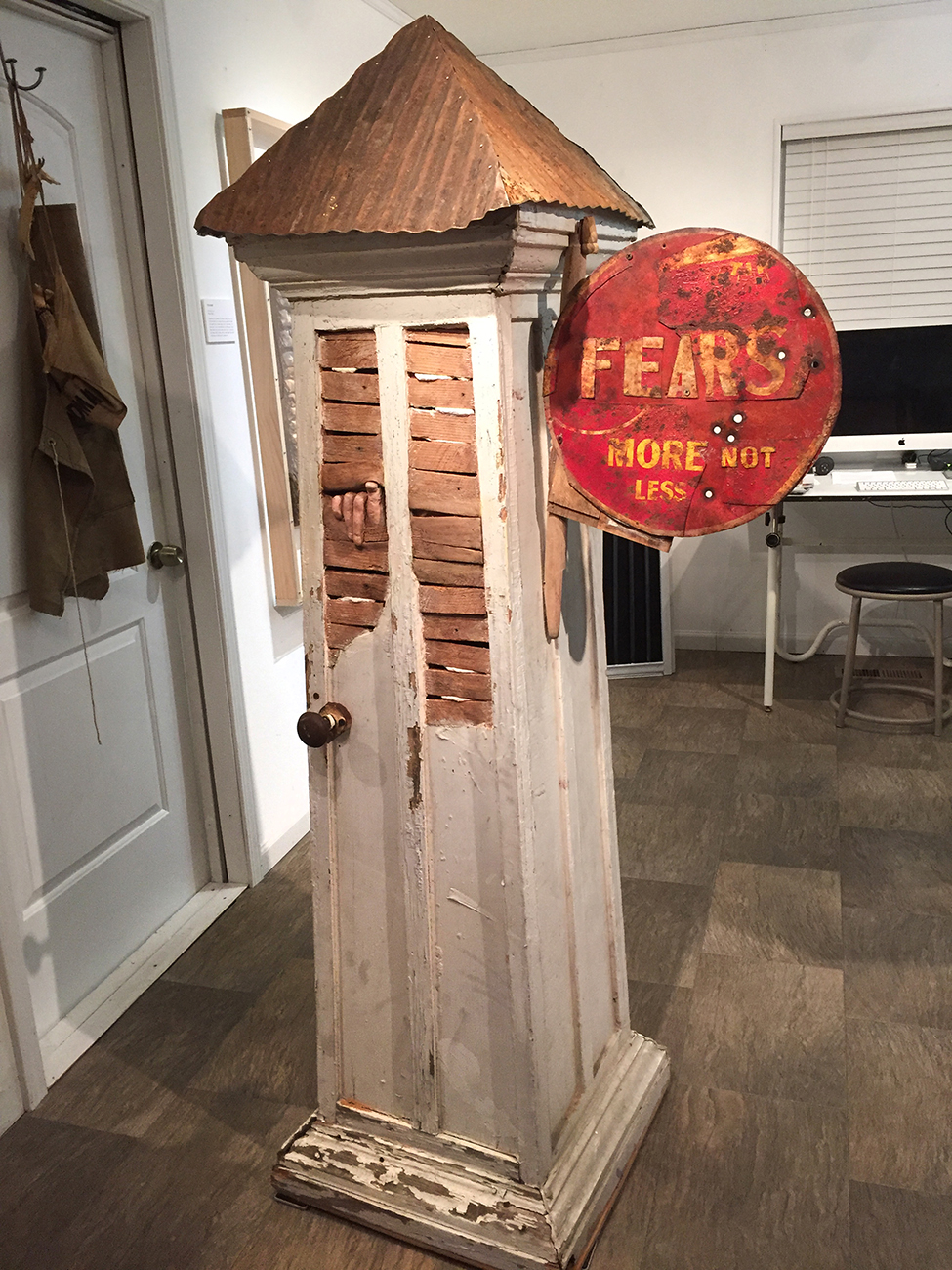
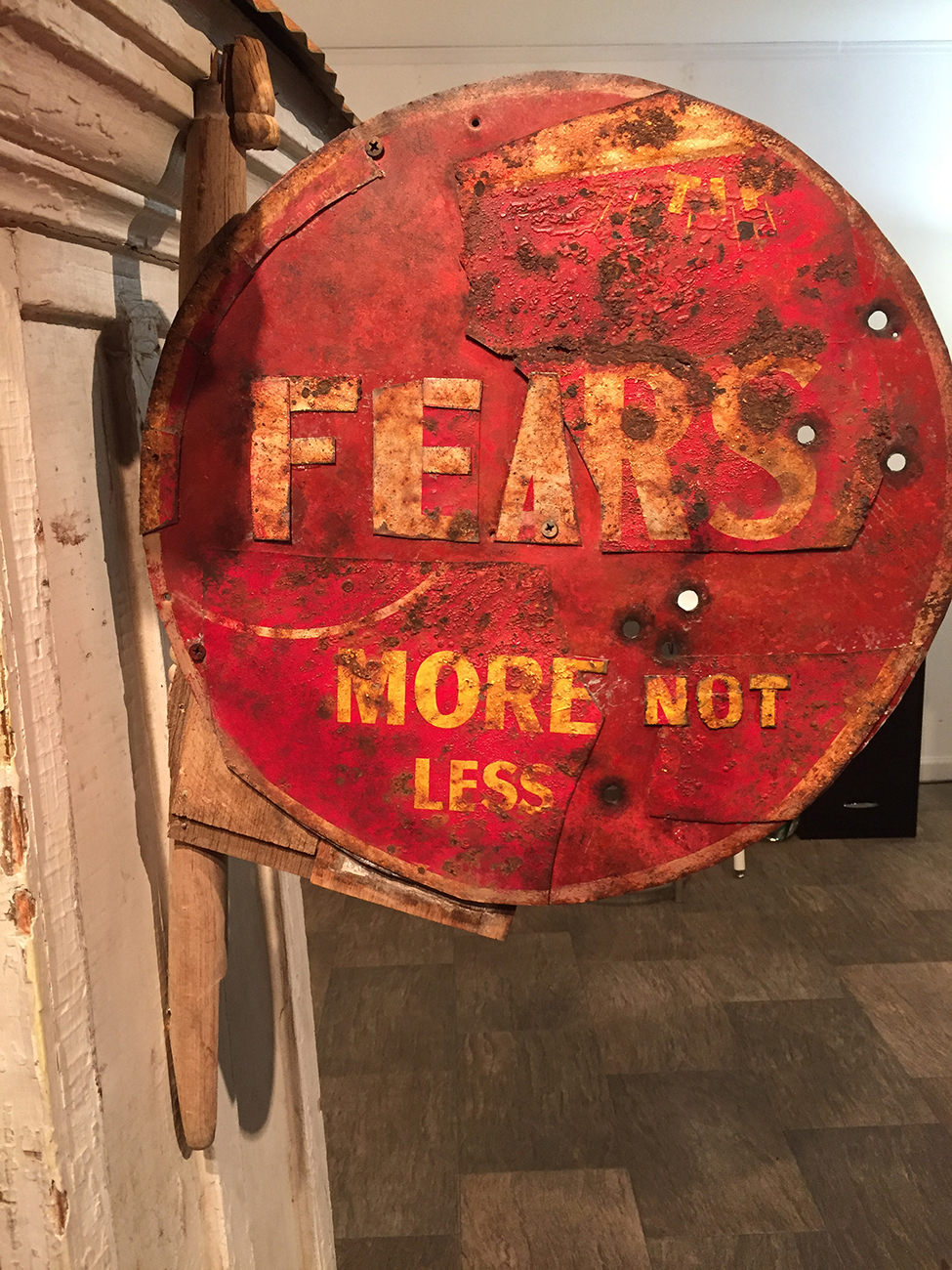
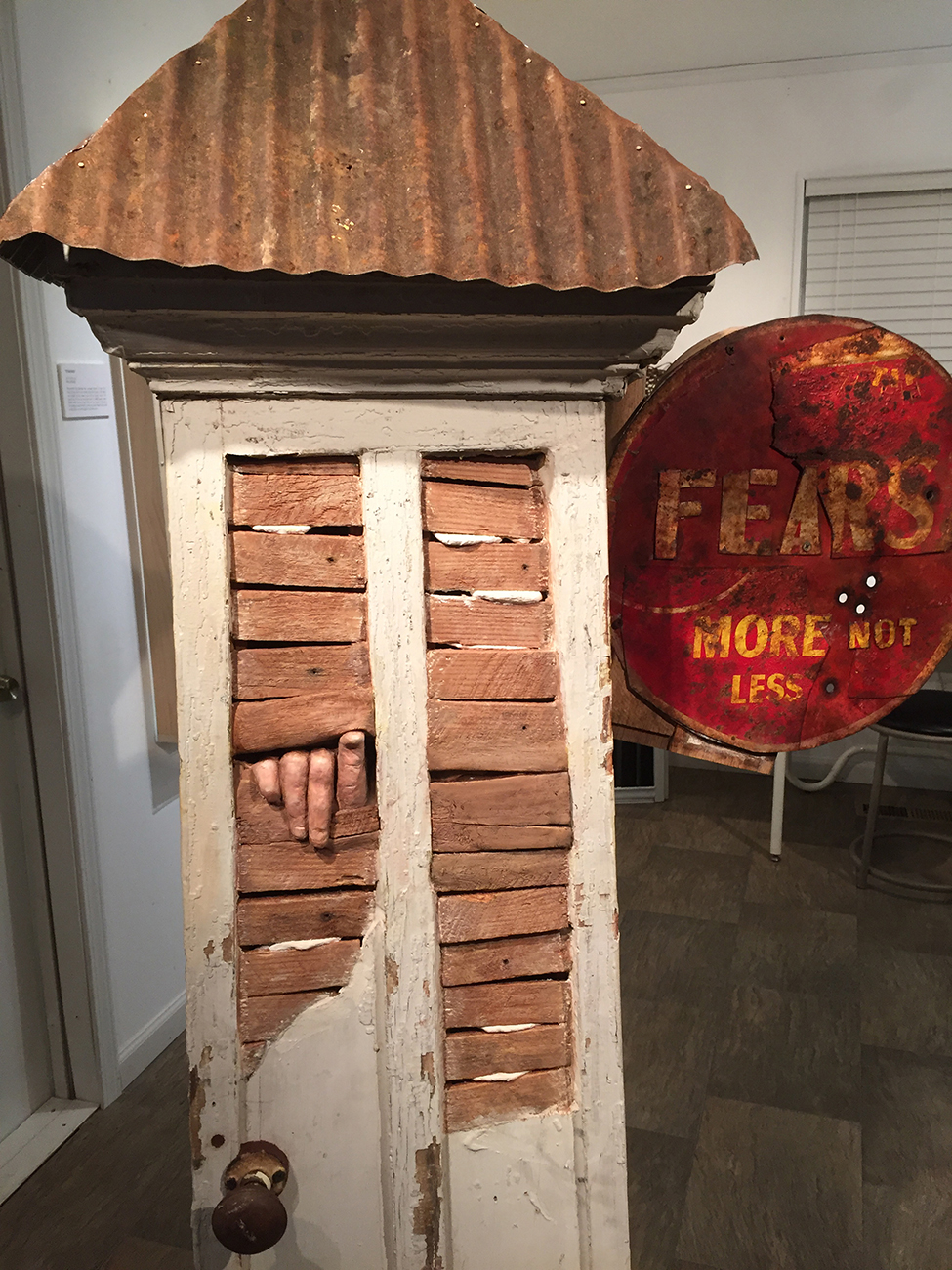
Being a rational, concerned individual is one thing. Reckless panic is another. Created out of an
old Craftsman front porch column “Home of the Brave” represents the ridiculous level of ‘Fear’
that is being intentionally streamed into our homes to separate us as Americans today. Fear fuels
mistrust, repression and hatred among neighbors. Yes, there are things we need to take care of,
but keeping a level head, checking facts, and not taking direction from emotionally charged
individuals or media sources that are bent on monetary or personal gain is the solution. Truth is
the key to our safety, security and happiness. America doesn’t need to “be great again,” it never
stopped being great, and don’t let anyone motivated by self-interest or fear tell you otherwise.

HOME OF THE BRAVE is comprised of wood, metal, and epoxy.
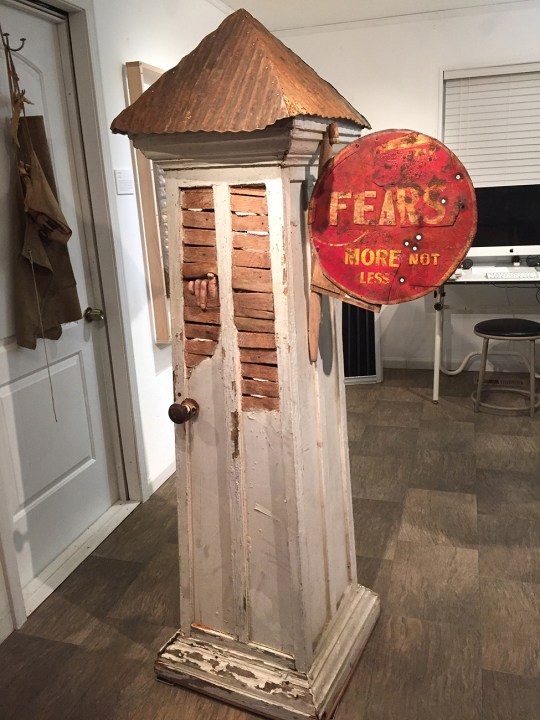
V.L. Cox-End of Hate series-Homeofthebrave

V.L. Cox-End Hate series-Brave2

V.L. Cox-End Hate series-Brave4


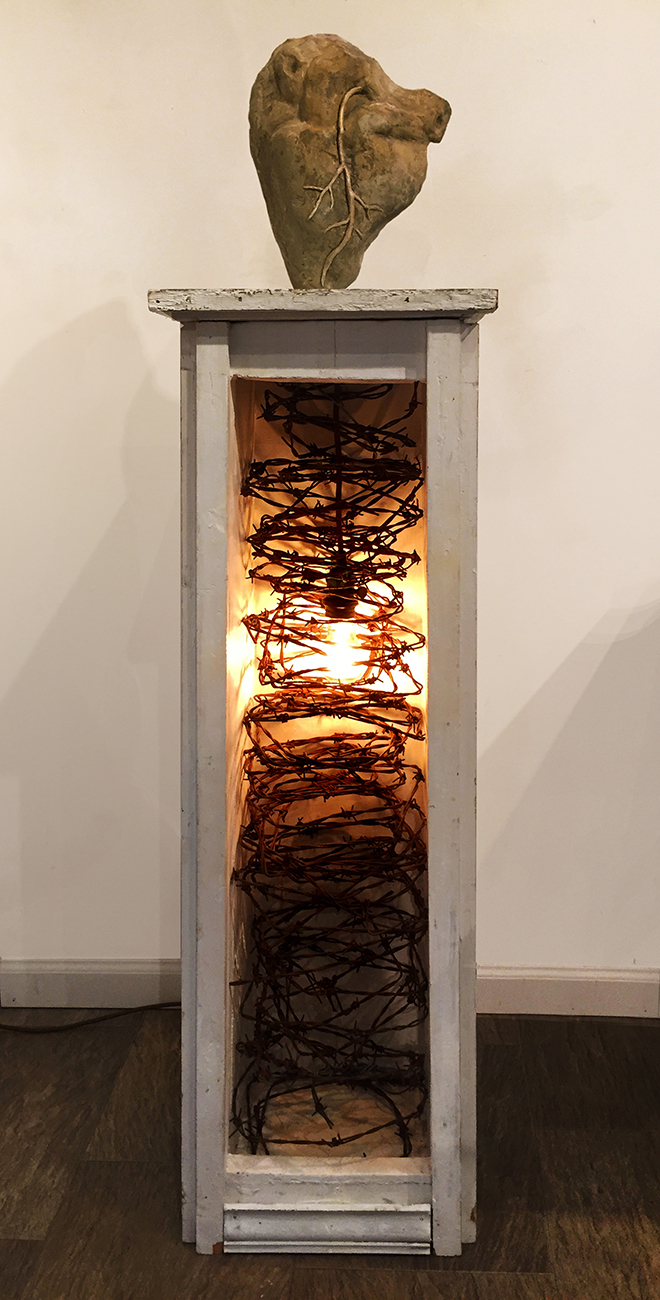
“PILLAR”

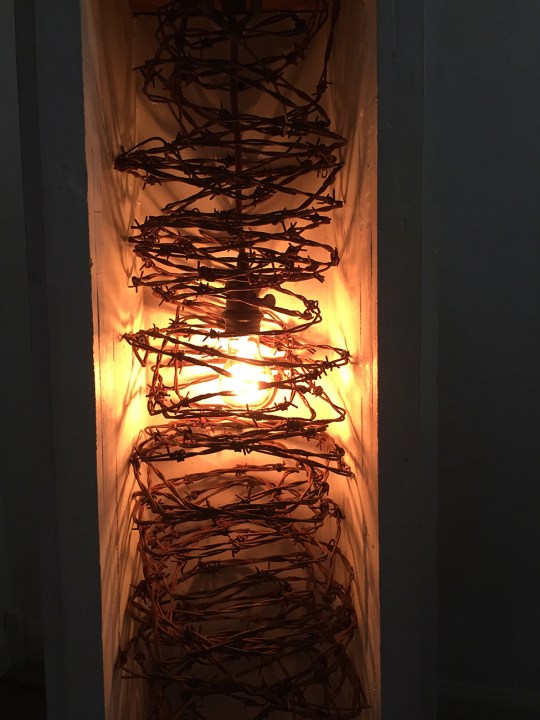
54” x 15”x 14” – Mixed Media Installation

“And I will give you a new heart, and a new spirit I will put within you. And I will remove the
heart of stone from your flesh and give you a heart of flesh.” – Ezekiel 36:26.

This piece represents the convenient loss of humanity toward others in this digital age. While
talking in great lengths to a friend one day about an idea I had for a project on this subject, she
mentioned one of her favorite biblical quotes that went along with the stone heart I had just
carved. I actually liked it. Bottom line, regardless of your beliefs it’s up to all of us to make the
efforts to open our hearts to others before any change can take place.

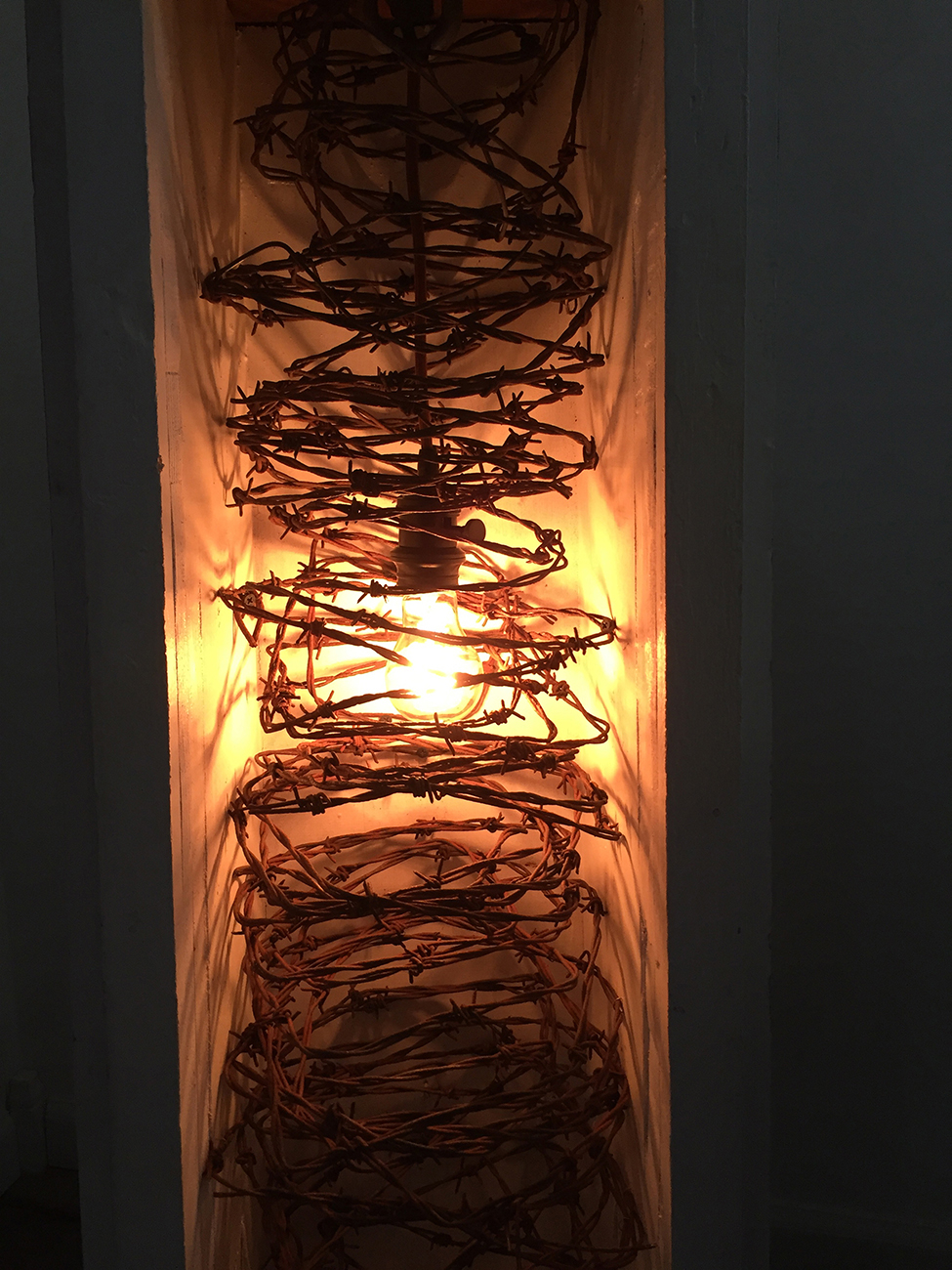
I chiseled the stone heart with an air hammer, and the old rusted barbed wire came from property blessed by a church. The base is an antique craftsman style porch column representing the foundations and lessons of the South. The light represents hope.

There’s always hope…

PILLAR is comprised of wood, rusted barbed wire, stone, electric lighting, epoxy, and wood.
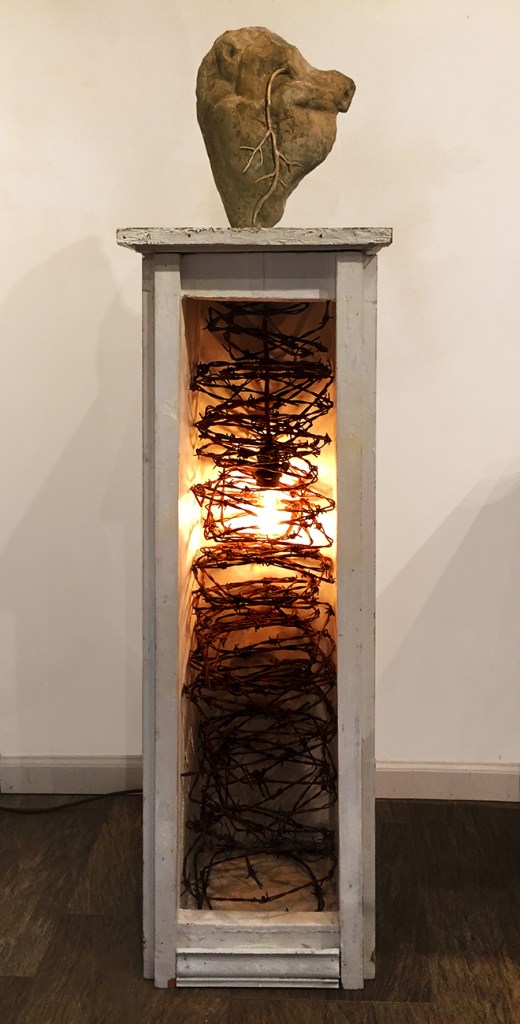
V.L. Cox-End Hate series-Pillar

V.L. Cox-End Hate series-Pillar2


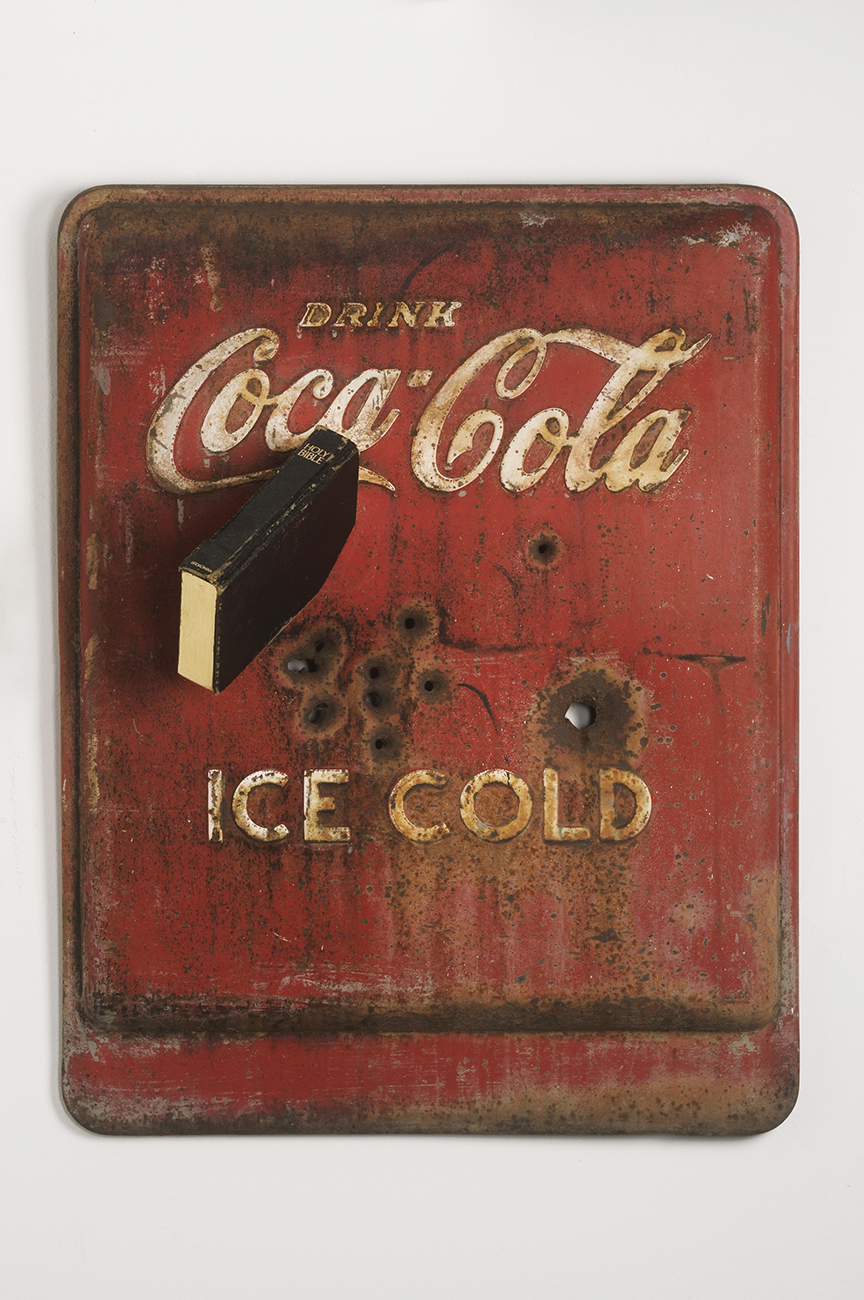
“READY, AIM, FIRE AND BRIMSTONE”

25.5″ x 33.5″ x10″ – Mixed Media

Represents how careless, reckless and forceful the bible can be thrown around these days here in
the South. At times, it’s as casual as shooting a sign as you drive by it, or hitting the sign with a
beer bottle. Original vintage bible cover over wood with gold leaf, mounted on the end of a
1939 Coca Cola box cooler.

READY, AIM, FIRE AND BRIMSTONE is comprised of metal, wood, paper and Tibetan
gold leaf.
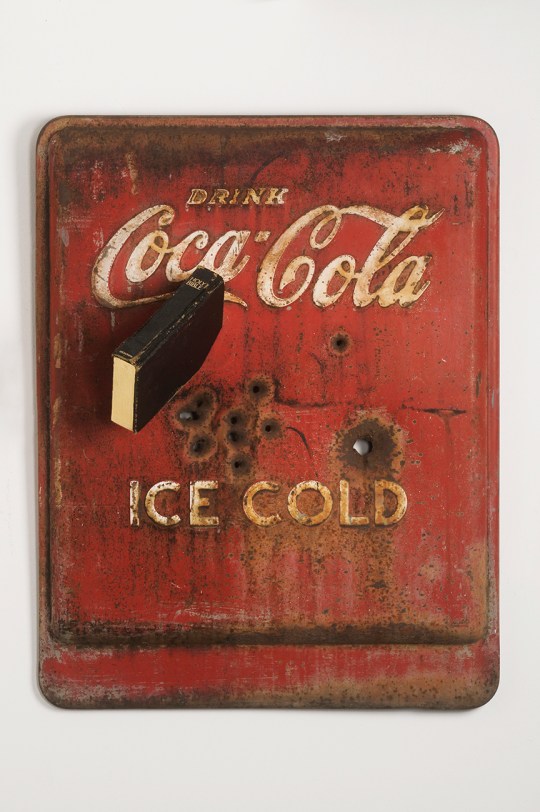
V.L. Cox-End Hate series-ReadyAimFireandBrimstone


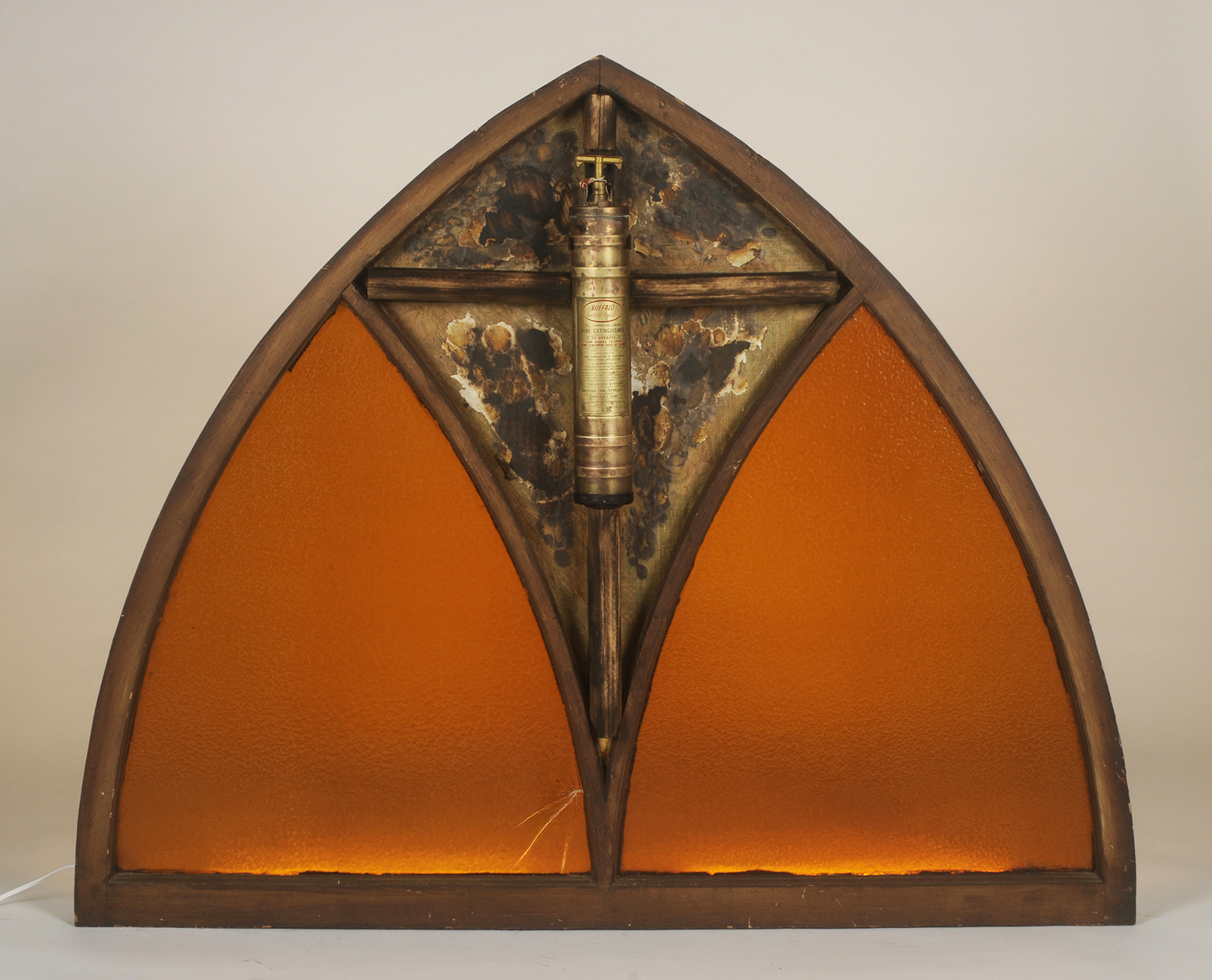
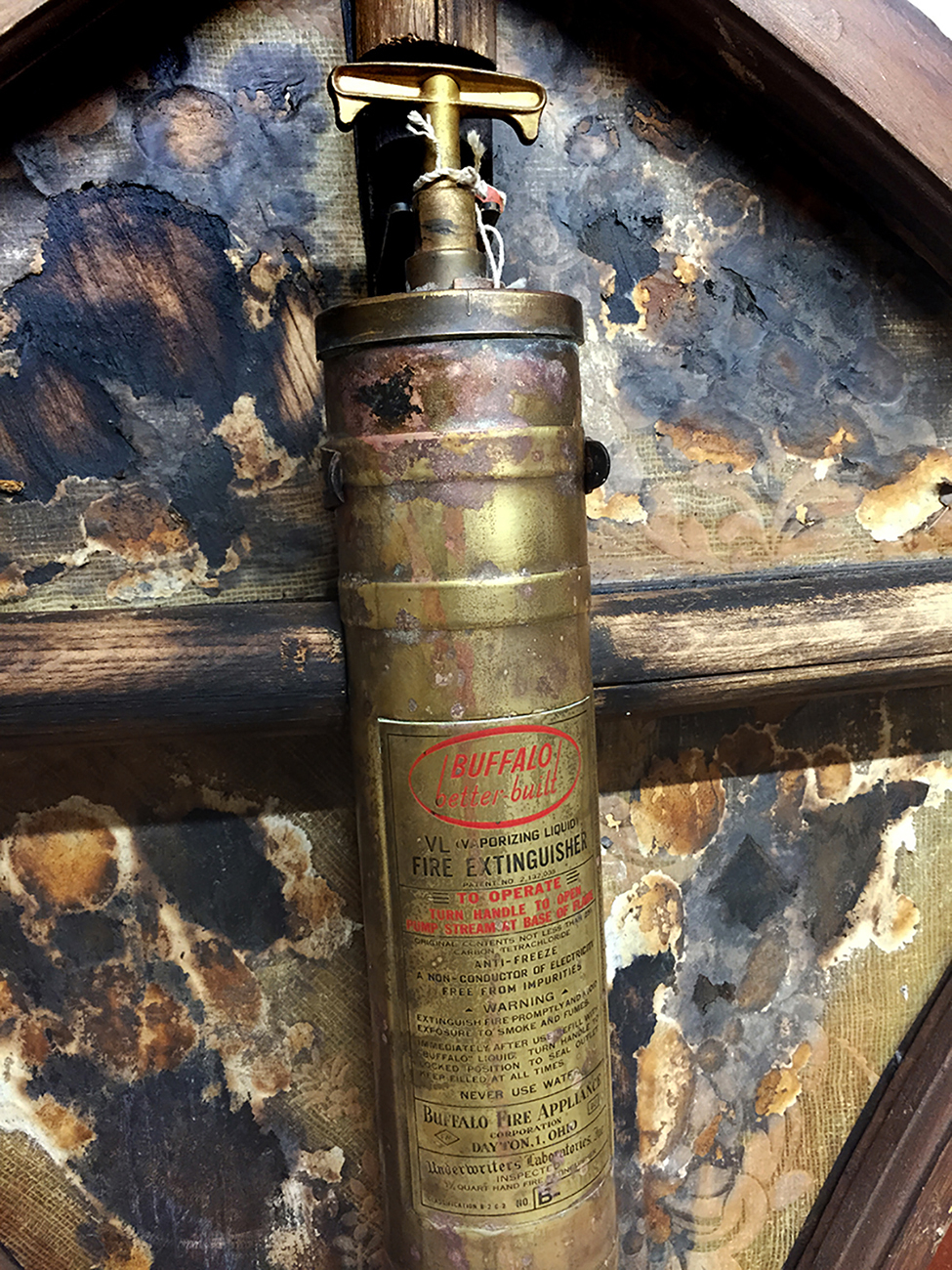
“BLESSED ASSURANCE”

57″ x 47″ x5.5″ – Mixed Media

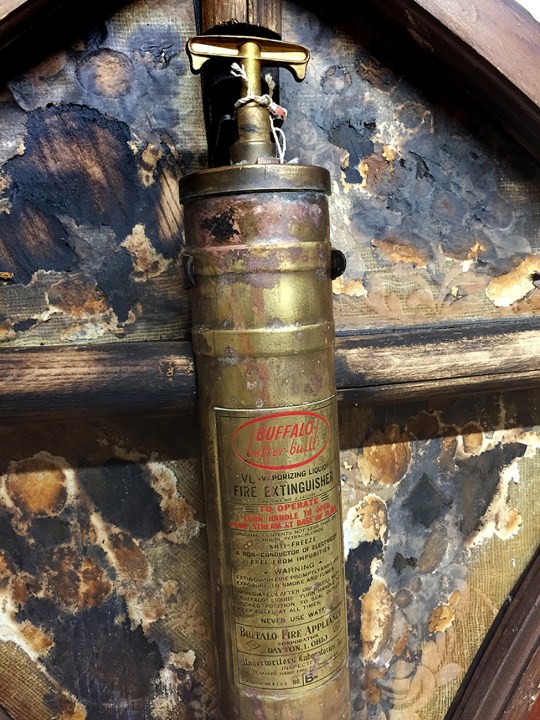
This piece was created after reading about the numerous black churches that were being burned
down through the south after the Charleston Massacre. The stained glass window is from 1896
and the brass fire extinguisher is from the 1920’s. Both come from old churches in South
Arkansas. The wooden background is made from an old church pew from off Roosevelt Road in
Little Rock, Arkansas and burned along with old wallpaper attached to it.

BLESSED ASSURANCE is comprised of glass, metal and wood.
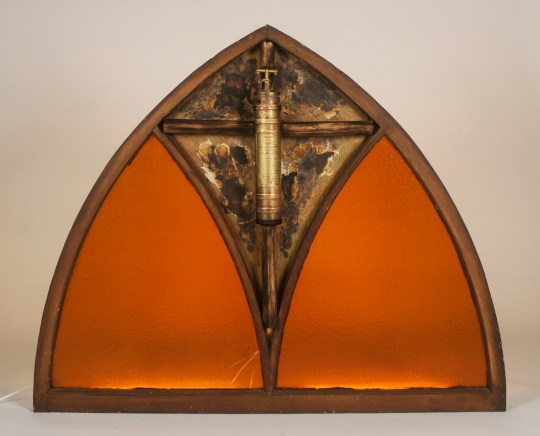
V.L. Cox-End Hate series-BlessedAssurance

V.L. Cox-End Hate series-BlessedAssurance2


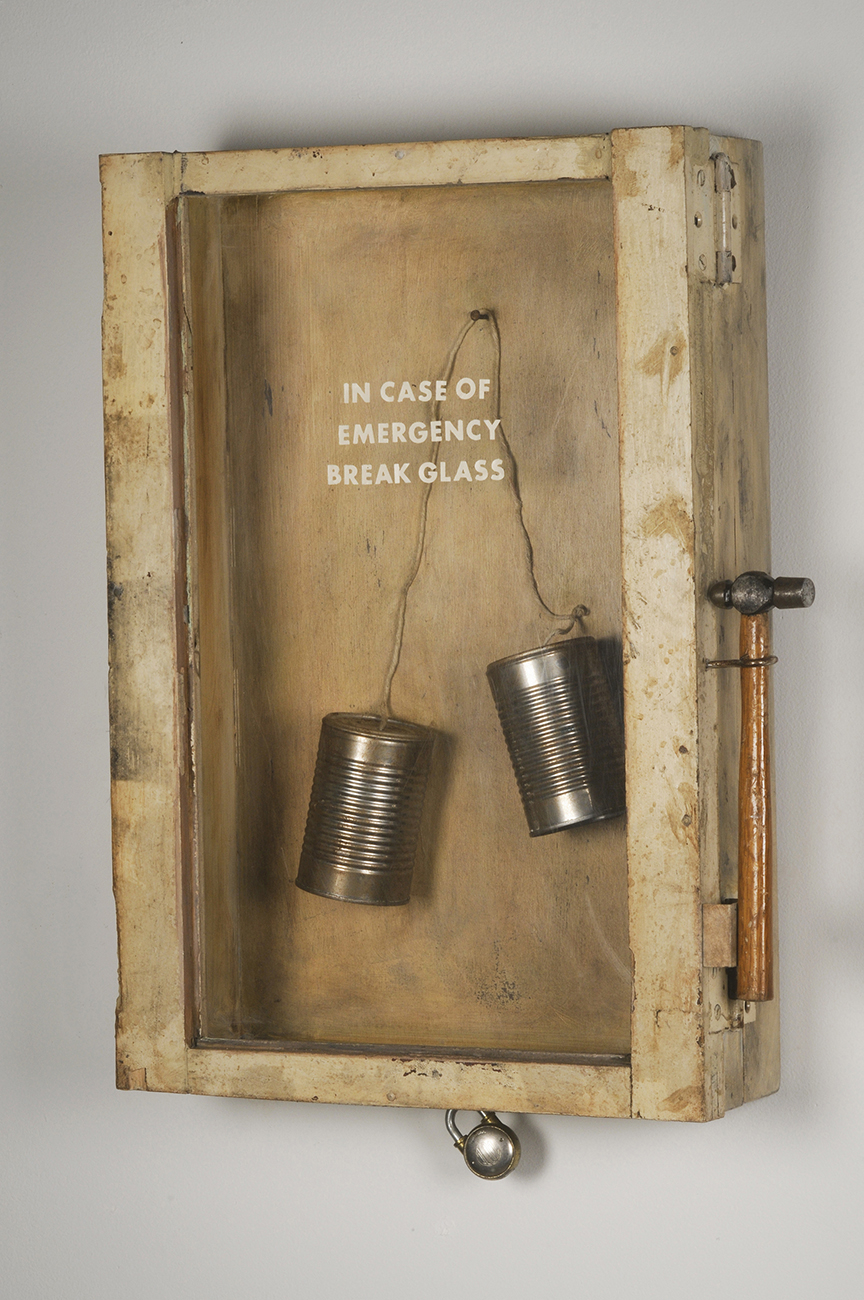
“IT’S TIME WE START OVER AND TALK ABOUT HATE”

23.25″ X 17.75″ X 5.5″ – Mixed Media

When hate escalates to violence, it IS an emergency. It’s time to go back to the basics, start from
the beginning, and learn to talk to one another. This is why I used an image of a simple child’s
toy for the subject matter. The glass front is a resized 1950 wooden window, mounted on a
vintage mercantile display case from the 40’s.

IT’S TIME WE START OVER AND TALK ABOUT HATE is comprised of glass, metal,
plastic, natural fiber, paint, and wood.
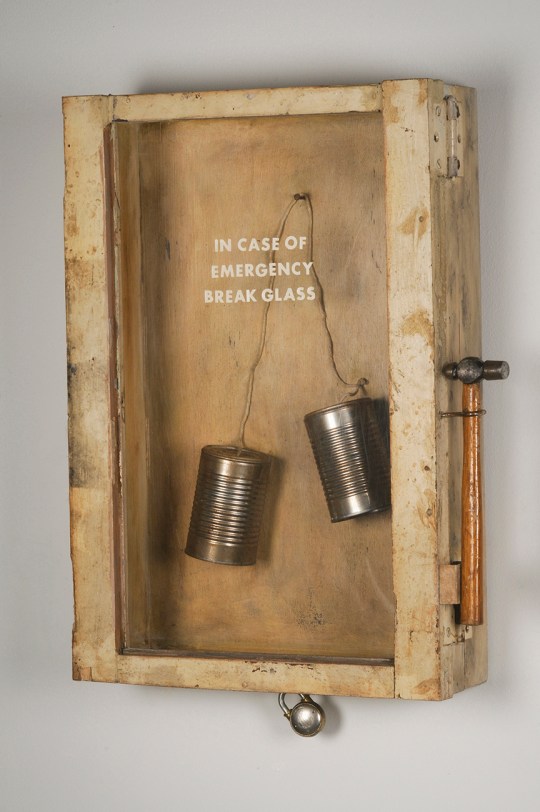
V.L. Cox-End Hate series-It'sTimeWeTalked


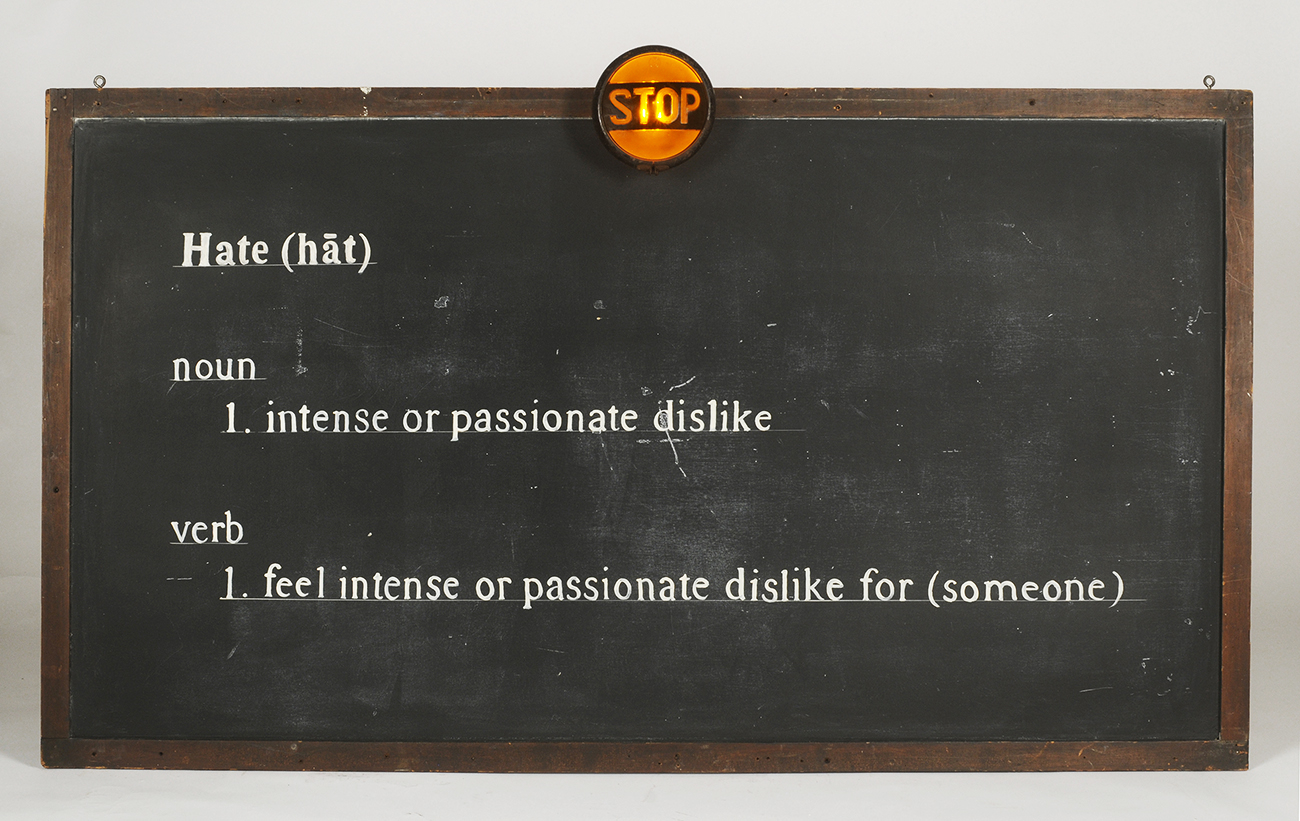
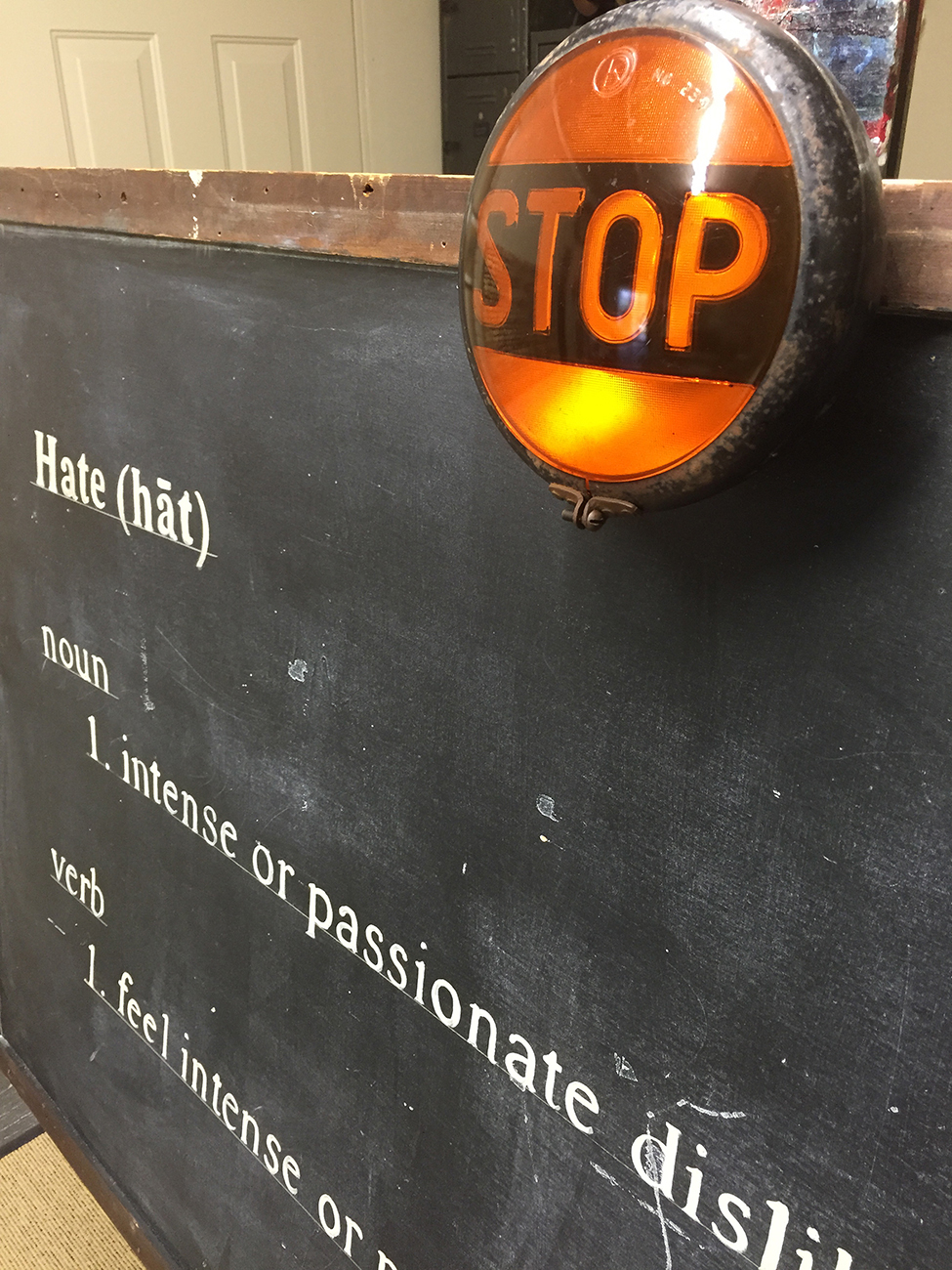
“STOP HATE”

42″ x 70″ – Mixed Media

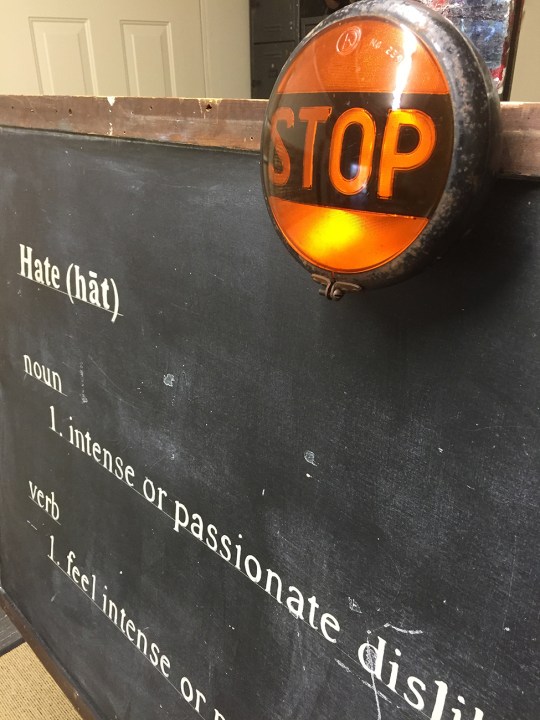
Old church chalkboard from the 1930’s with a vintage school bus ‘stop’ light. It represents how
early we need to teach our children about stopping hate.

STOP HATE is comprised of paper, wood, glass, metal and paint.
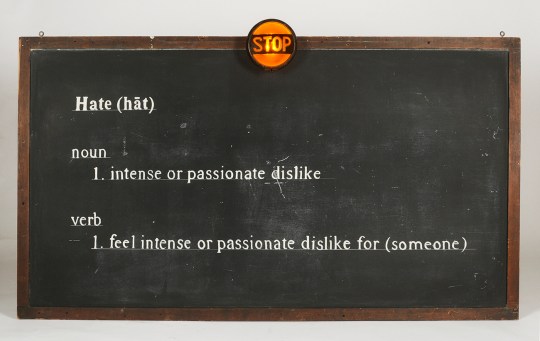
V.L. Cox-End Hate series-stophate

V.L. Cox-End Hate series-stophate2


V.L. CoxArtist: V.L. Cox

V.L. Cox was born in Shreveport Louisiana and raised in Arkansas. She acquired a Bachelor of Fine Arts degree from Henderson State University in 1991. Cox’s recent work has been highly active in projects that involve Human Rights and Equality. In 2015, she launched her National “End Hate” Installation Series, an anti-discrimination series that was placed twice on the steps of the Arkansas State Capitol, and then at the base of the Lincoln Memorial in Washington, D.C.

Cox understands how to draw the viewer into her work through her experience with working with large audiences. While working as an artist in Dallas, Texas, Cox worked in the scenic industry constructing and painting large backdrops for theatrical organizations such as the Dallas Opera, the Dallas Ballet, and the Los Colinas Film Studios. Some of the productions include: The Nutcracker and Phantom of the Opera. Cox also painted the background for the National Civil Rights Humanities Awards in Memphis, Tennessee where Leah Rabin, wife of slain Israeli Prime Minister Yitzhak Rabin, spoke and presented the award for freedom.

People and surroundings heavily influence Cox’s work. Over the years she has developed
a growing interest in historical preservation while portraying a southern way of life. Cox
currently resides in North Little Rock, Arkansas and has been painting for 26 years. She
works as a full time-artist and her work can be found in international private and
corporate collections. Her progress in the art world has been rapid.

Website: http://www.greatfineart.com/
 

That Moment When Artists Snap

by Carla Aaron-Lopez

Carla writes about the experience of being an emerging artist. Her previous posts are: Notes from kingCARLA, Notes from kingCARLA 2, Notes from kingCARLA 3.

Kevin Bongang, Mural in Edgewood neighborhood, Atlanta

Kevin Bongang, Mural in Edgewood neighborhood, Atlanta

“Kevin just snapped,” said Corey. And he did.

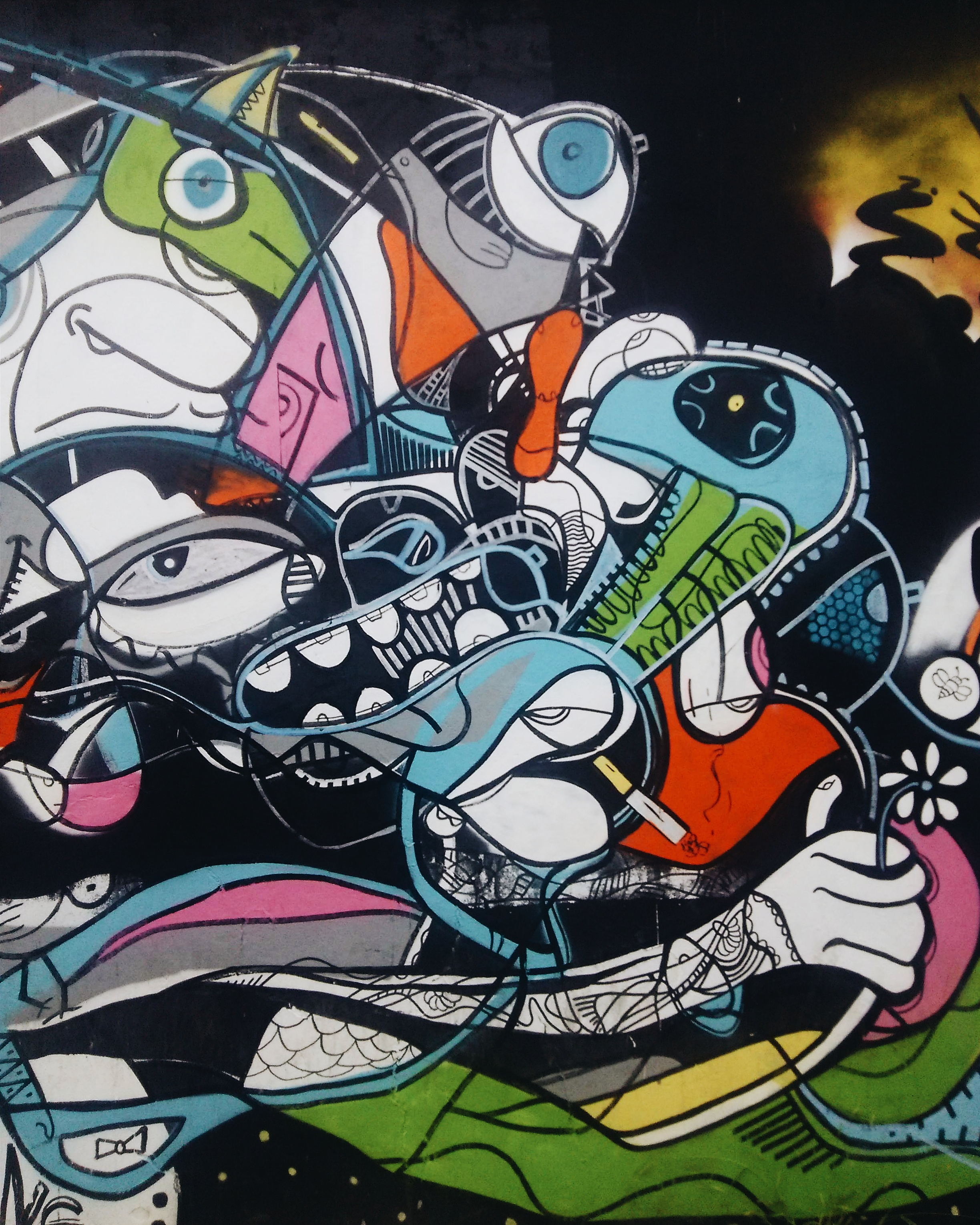
One year, his drawings looked a certain way and the next year they were on another level. They took on their own whimsical nature unlike the controlled squiggles that Kevin was known for drawing. His color palette no longer looked like someone studying color but of a man that had created his own world and the colors informed the mood of the characters that inhabited this make-believe space. I was blown away by someone that I felt had potential but wasn’t sure where he was going with all that. Half of the time I don’t even know where I’m going.

I had this conversation about Kevin with Corey, an artist friend of mine, a few years ago before I left Atlanta. Corey is another person that also snapped when it came to his art. It is his series of female portraits that are just striking. At the time, I didn’t really understand the ramifications of Corey’s statement about Kevin or what it meant to truly snap artistically. Years later on a spontaneous trip back to Atlanta, I saw one of Kevin’s newest public art murals and began to understand the power of snapping as an artist.

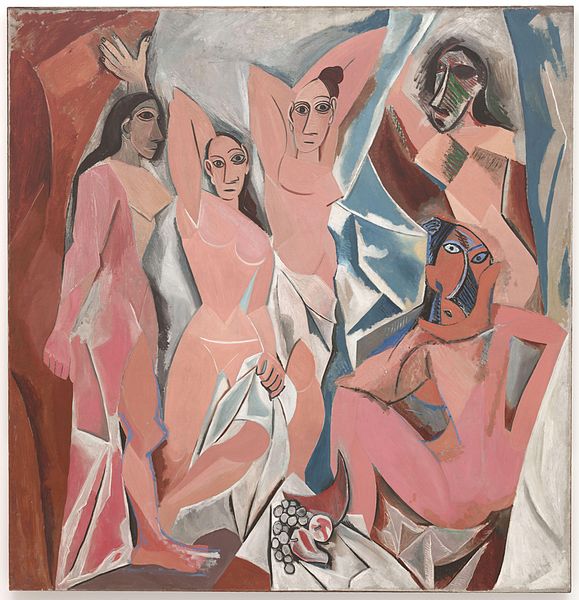
As much as I’ve studied art, there is a legit moment when the artist snaps. The work changes and evolves to an actual visual statement versus a singular creative object. Hobbyists make creative objects. Artists make visual statements that force viewers to think and see the world differently . As cliched as it is to use Picasso as an example, he snapped the day he walked into a museum, saw some African masks and changed the direction of Les Demoiselles d’Avignon. That same painting changed the entire direction and nature of modern art in the late 20th century. Picasso makes art history and we all know the rest of the story from there.

What went through his head the moment he saw those masks? We can speculate but we weren’t there nor can we go back in time to have a Being John Malkovich moment and crawl into his mind to see what he really thought.

We just know that it was at that moment, he snapped.

Honestly, I’m waiting for my moment to snap. I’m in awe and envy of my friends that have had their moment. I want to evolve but I have let fear get in the way. Fear of not making something mind-numbingly great. Fear of not hitting the black intellectual nail on the head. Fear of getting fired for making super controversial feminist (yes, I’ve finally admitted that I am a feminist) work because I’m a middle school art teacher and the list goes on. It’s these types of fears that keep me from progressing the way I would like to as an artist and I don’t know when or how I’m going to get rid of them. I’m on the side of my proverbial mountaintop but scared to continue.

Eventually, I’m going to snap too. Or just be stuck in waiting until I quit making art.

I look up to many artists that have all had that moment somewhere in their career. Sadly, majority of them are men due to the art world’s lack of compassion for all women artists. Even more sadly is that if those same women artists have never had children and it wasn’t because of a biological reason (see Frida Kahlo), I lack total respect for them. My life doesn’t align with theirs. They will never understand the beauty and harsh reality of motherhood. They will never understand the intense paranoia of doing something that could possibly take food off your table and clothes off your child’s back. Face the facts, I live in the South and Southerners don’t do controversy very well. That’s a reality for me while others can get away with it. I stand in the wings of life’s grand stage secretly applauding their controversial actions.

I’ve lacked in producing any work this past year because I’ve finally achieved the goal of getting my career as an educator and financial life together. Not only have I been concerned with making my art but seriously, how was I going to pay for this? How were supplies going to get into my home? These priorities force me to think and see art differently. Encounter new ways of executing old ideas. Boldly steal concepts from my favorite artists and force them into my fold. I figured out a long time ago that if I wanted to make the bold, controversial art, I needed for it to be large, attention-getting and everything that I feel I cannot be in public.

I want the work to be disgusting and unladylike. I want to do it under a pen name of a white man and totally fuck with the perception of gender and power because why not? White men rule the art world. I want the work to have everything that you hate in it. Pictures of outer space and shit. Big, fat ass strippers because why not? Throw in little nods to slavery and the black experience here and there because black and white people love that shit.

Maybe I have snapped and I don’t know it yet.

Maybe I’m fantasizing again.

Or maybe I’m bored and unchallenged because I am a middle school art teacher who spends nothing but time sharpening my foundational sword.

There’s only so much I can do right now in this moment.

–    Ms. Lopez


Carla Aaron-Lopez photoArtist: Carla Aaron-Lopez

Instagram: @iamkingcarla

Twitter: @teachkingcarla


TRUE COLOR

by María Álvarez

María Álvarez E Image 1

María Álvarez E Image 2

María Álvarez E Image 3

María Álvarez E Image 4

María Álvarez E Image 5

María Álvarez E Image 6

María Álvarez E Image 7

María Álvarez E Image 8

María Álvarez E Image 9


María ÁlvarezArtist: María Álvarez

Madrid-based oil and acrylic painter. Born in Vigo, María began to study drawing and painting at the age of 7 in the studio of the renowned painter Mingos Teixeira. There, she inherited the passion for color and contemplation. While developing her painting skills, she also took music and piano lessons through several years. When she turned 18, María moved to Madrid to pursue a Bachelor’s Degree and a Master’s Degree both in Audiovisual and Applied Creativity Studies. This experience expanded her concept of image and opened her the door to other forms of art such as film, photography and graphic design.

Her art is based on mental passages and richness of color, through nature, wildlife and sometimes abstract scenes, where you can find the inspiration of the Impressionist and landscaper painters.

Website: www.mariaalvarezestevez.com

Instagram: @maria_alvarez_e

Facebook: https://www.facebook.com/mariaalvarezeart/


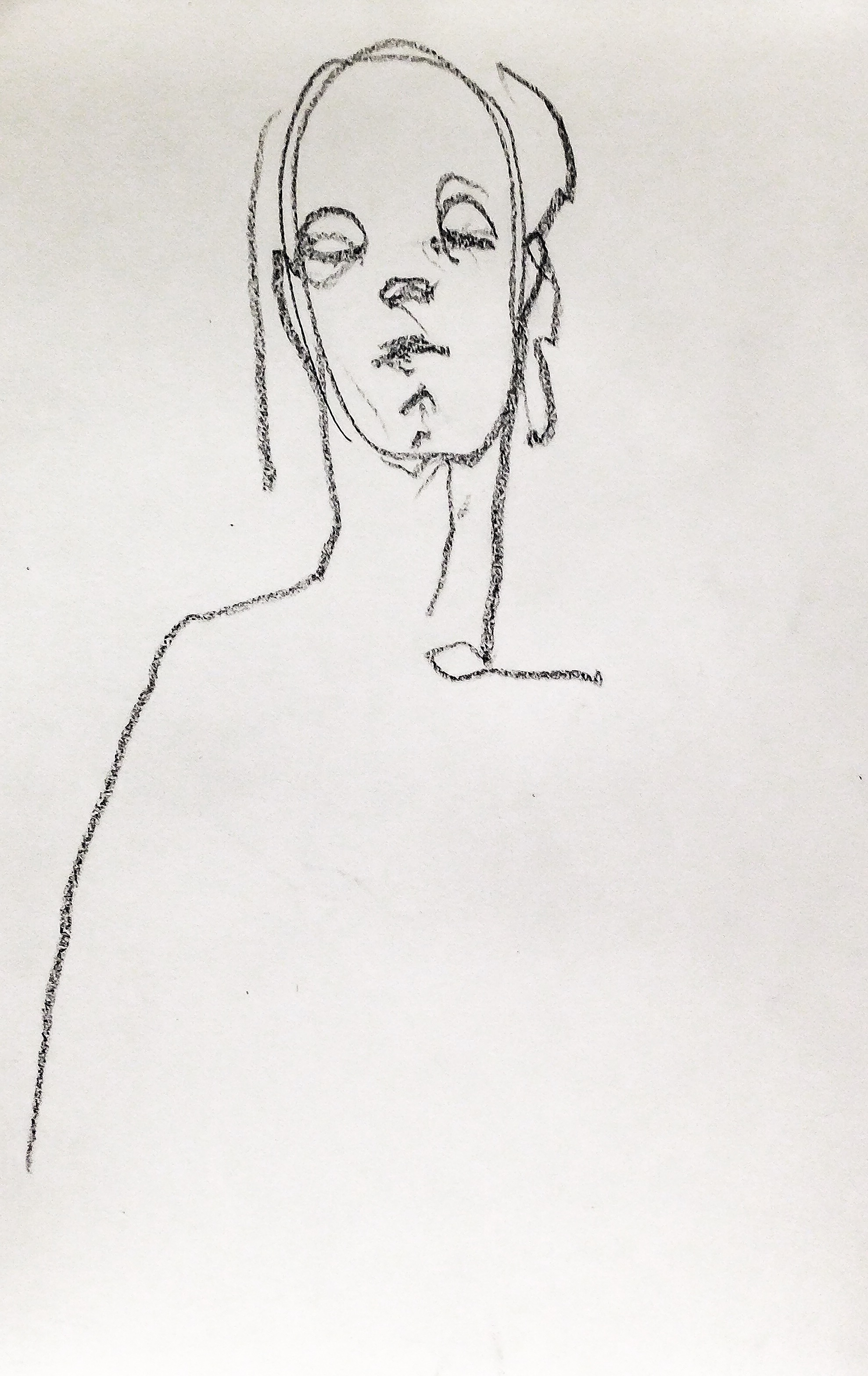
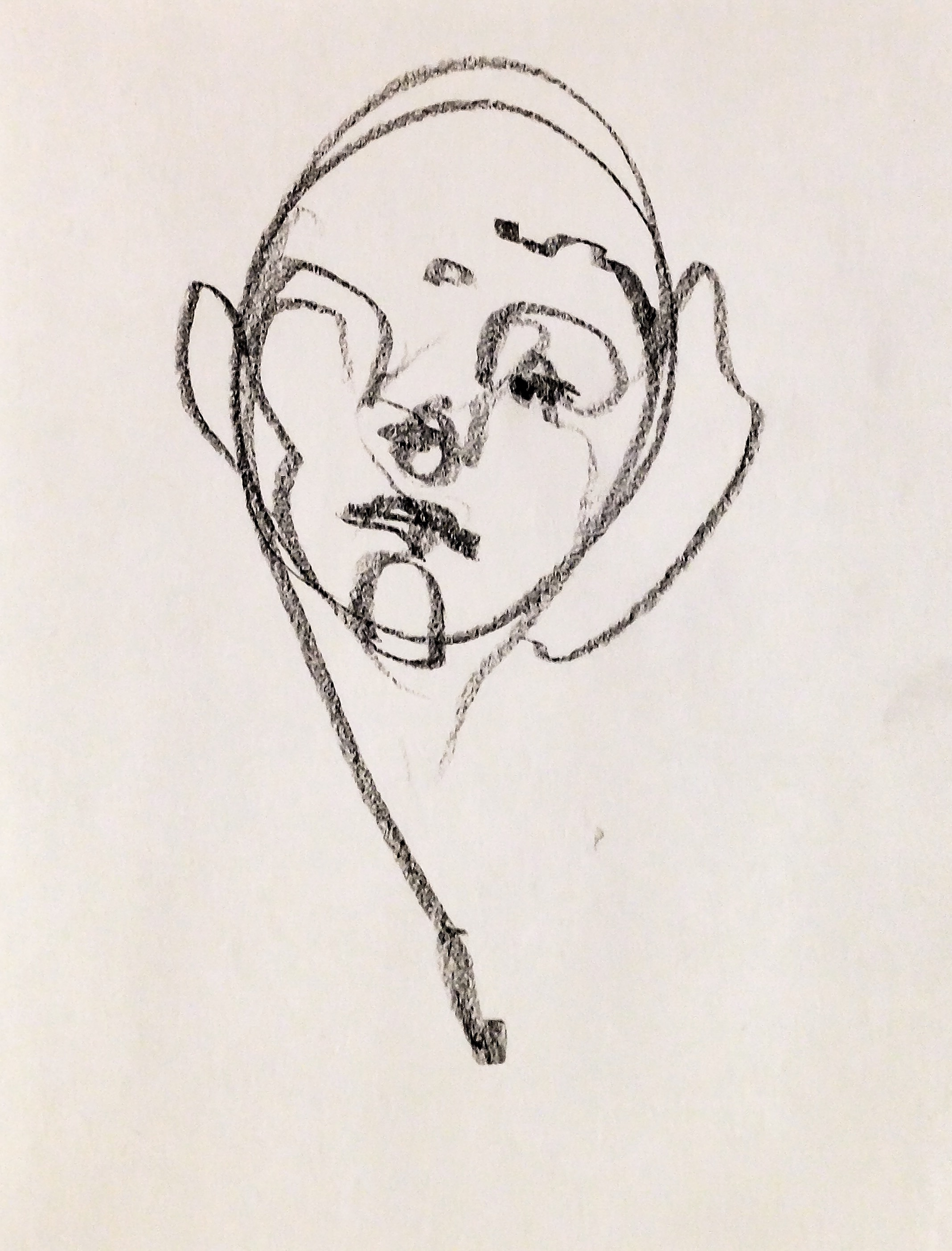
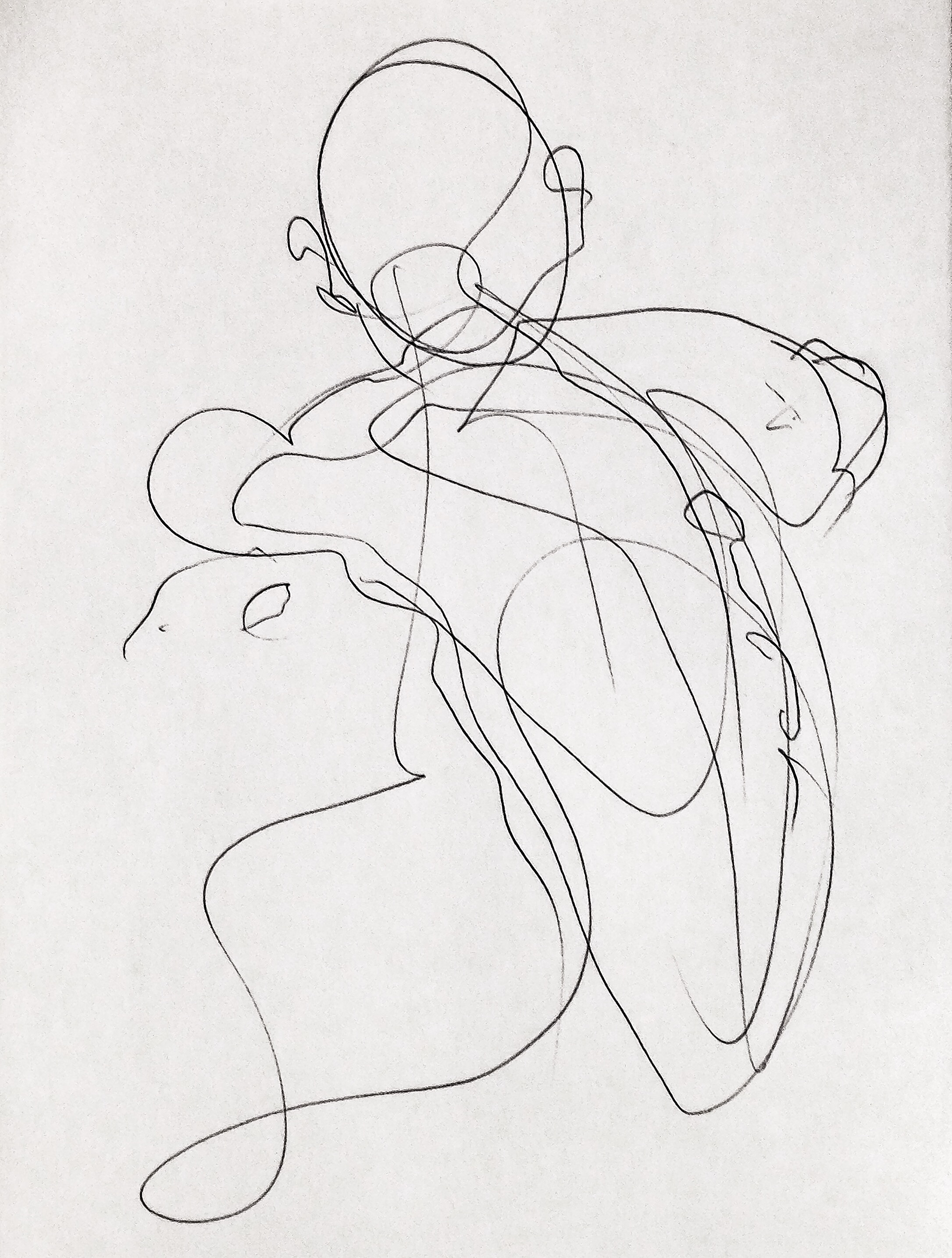
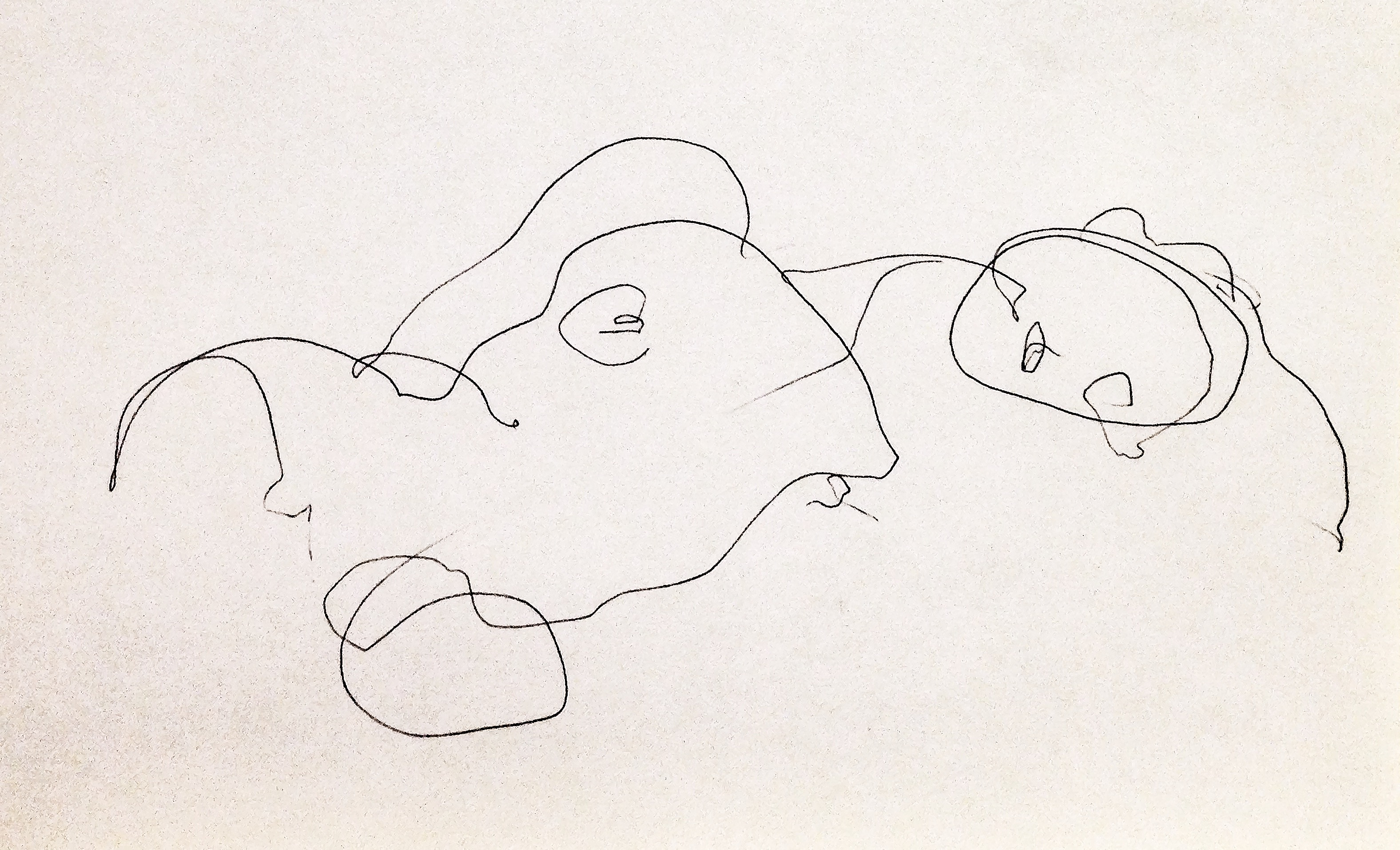
Beauty of Line

by Jerry Shawback

Jerry Shawback Image 2

Jerry Shawback Image 3

Jerry Shawback Image 4

Jerry Shawback Image 5

Jerry Shawback Image 6

Jerry Shawback Image 7

Jerry Shawback Image 8

Jerry Shawback Image 9

Jerry Shawback Image 10

Jerry Shawback Imge 11

Jerry Shawback Image 12

Jerry Shawback Image 13

Jerry Shawback Image 14

Jerry Shawback Image 15


Jerry ShawbackArtist : Jerry Shawback

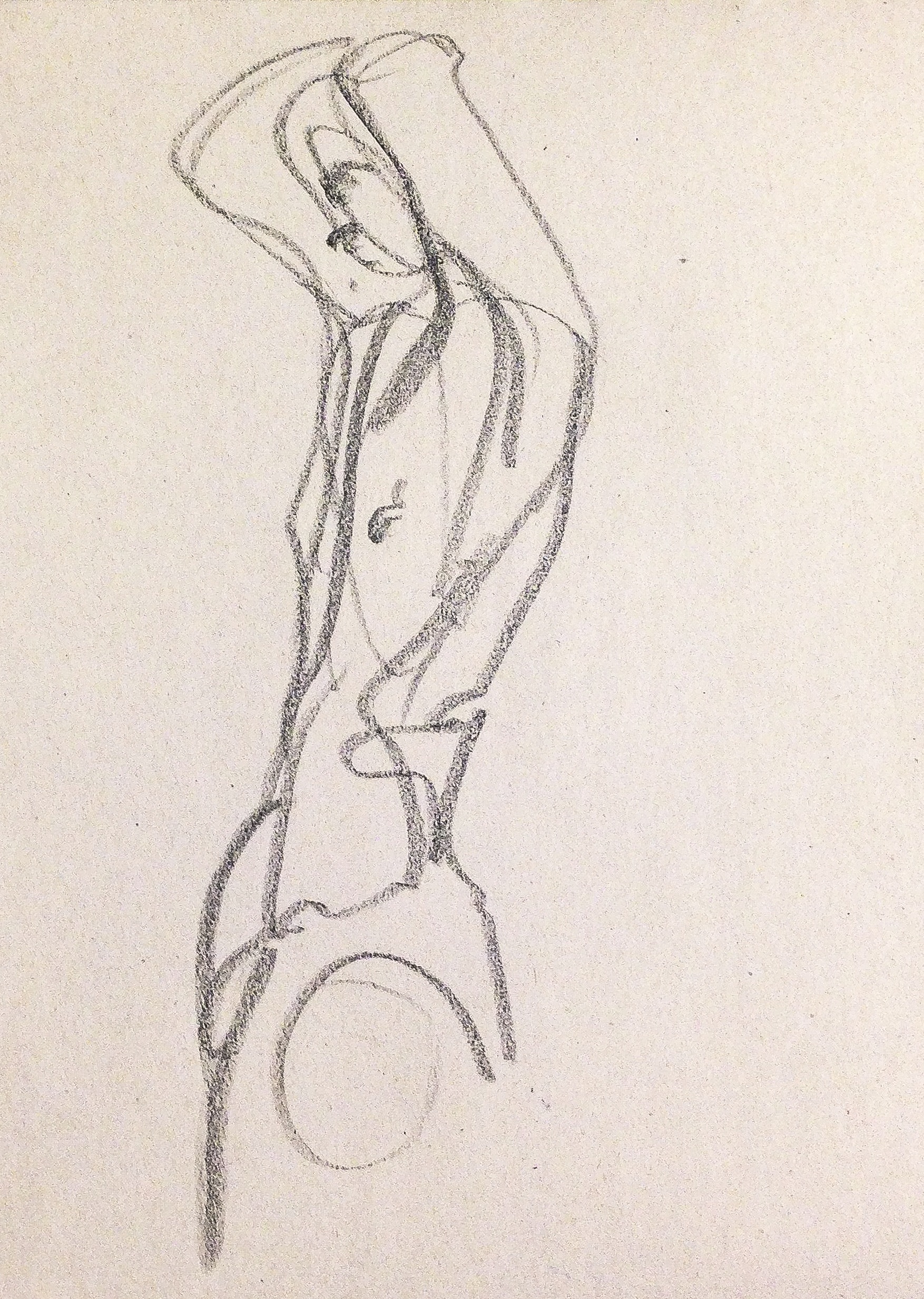
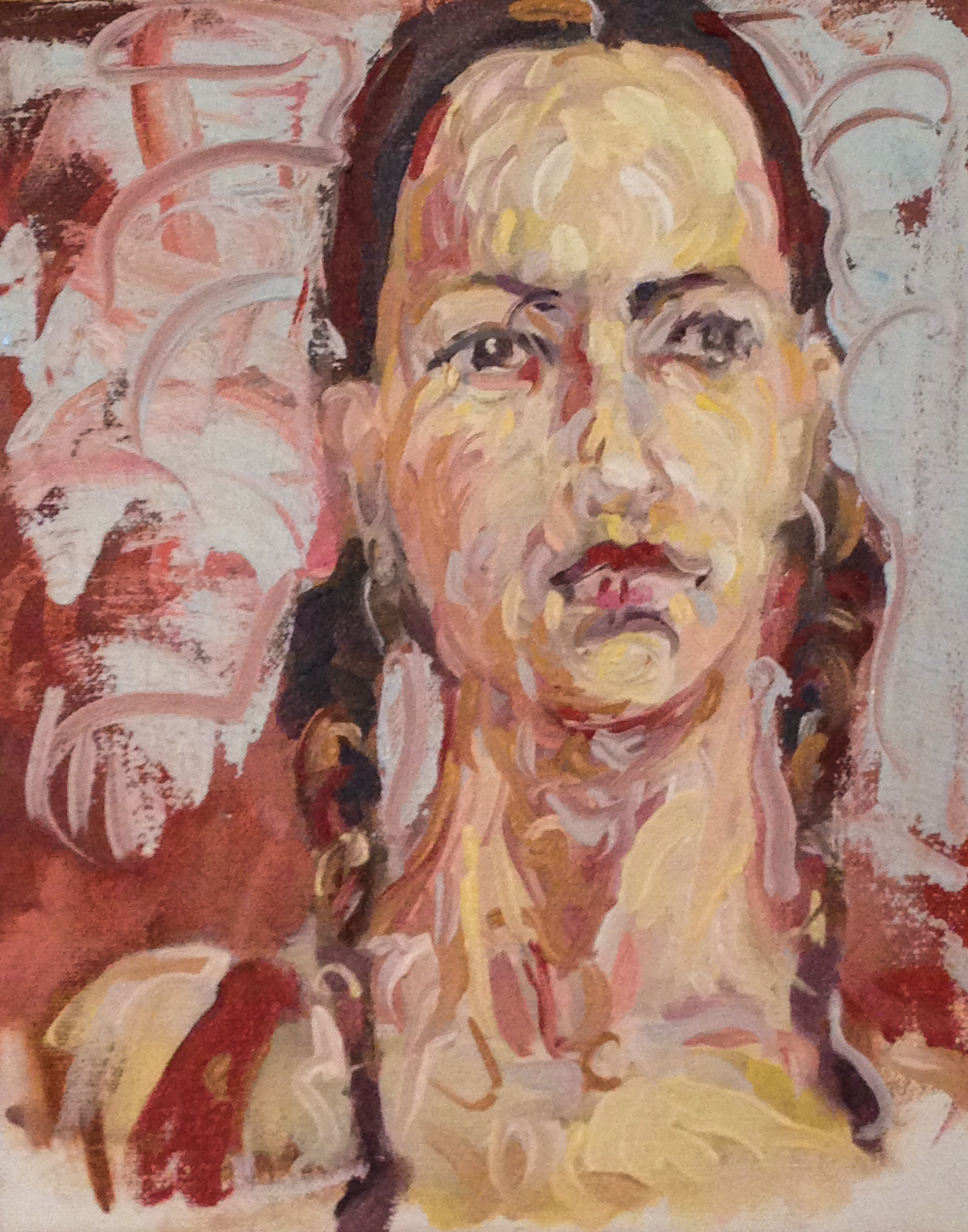
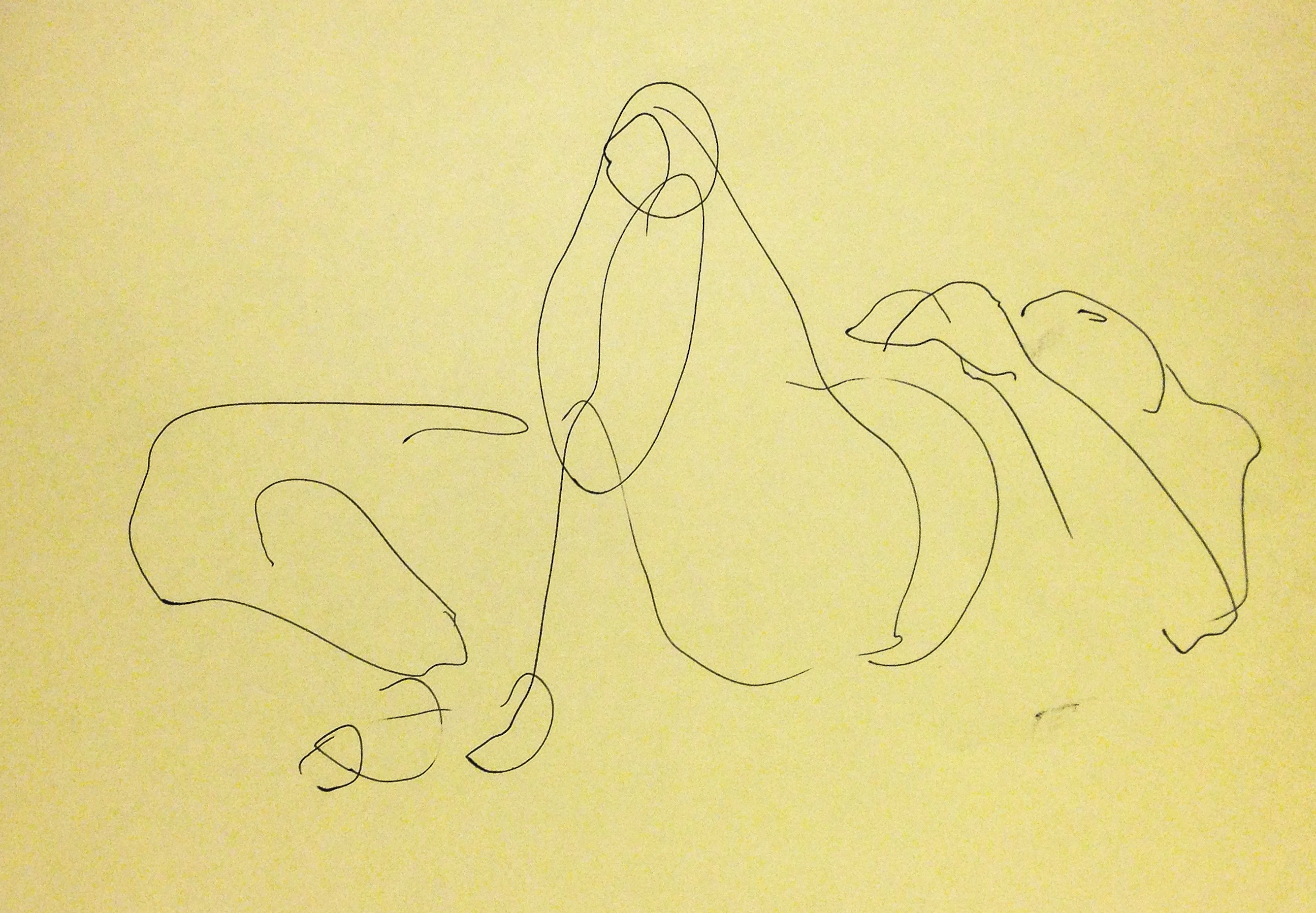
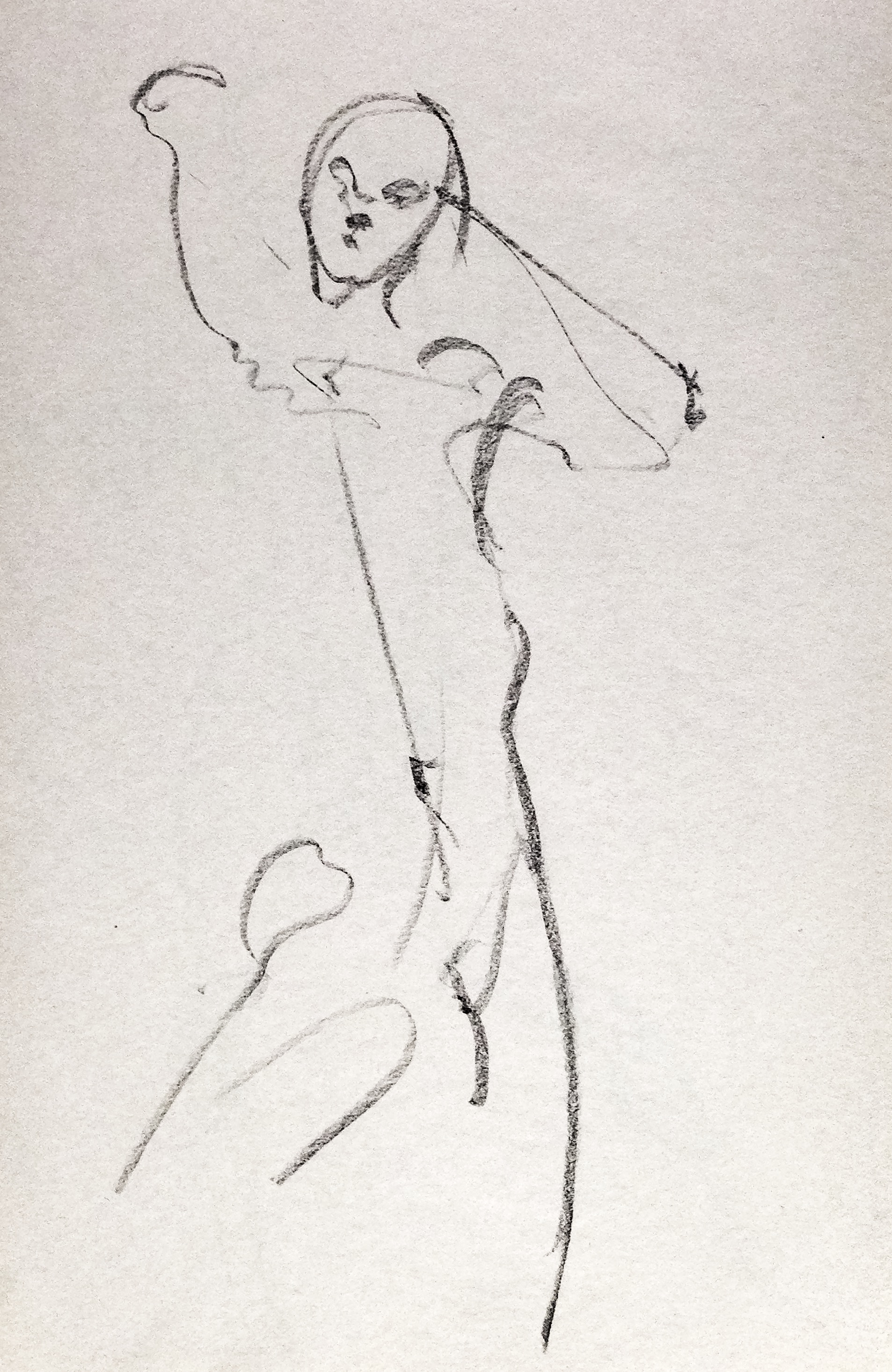
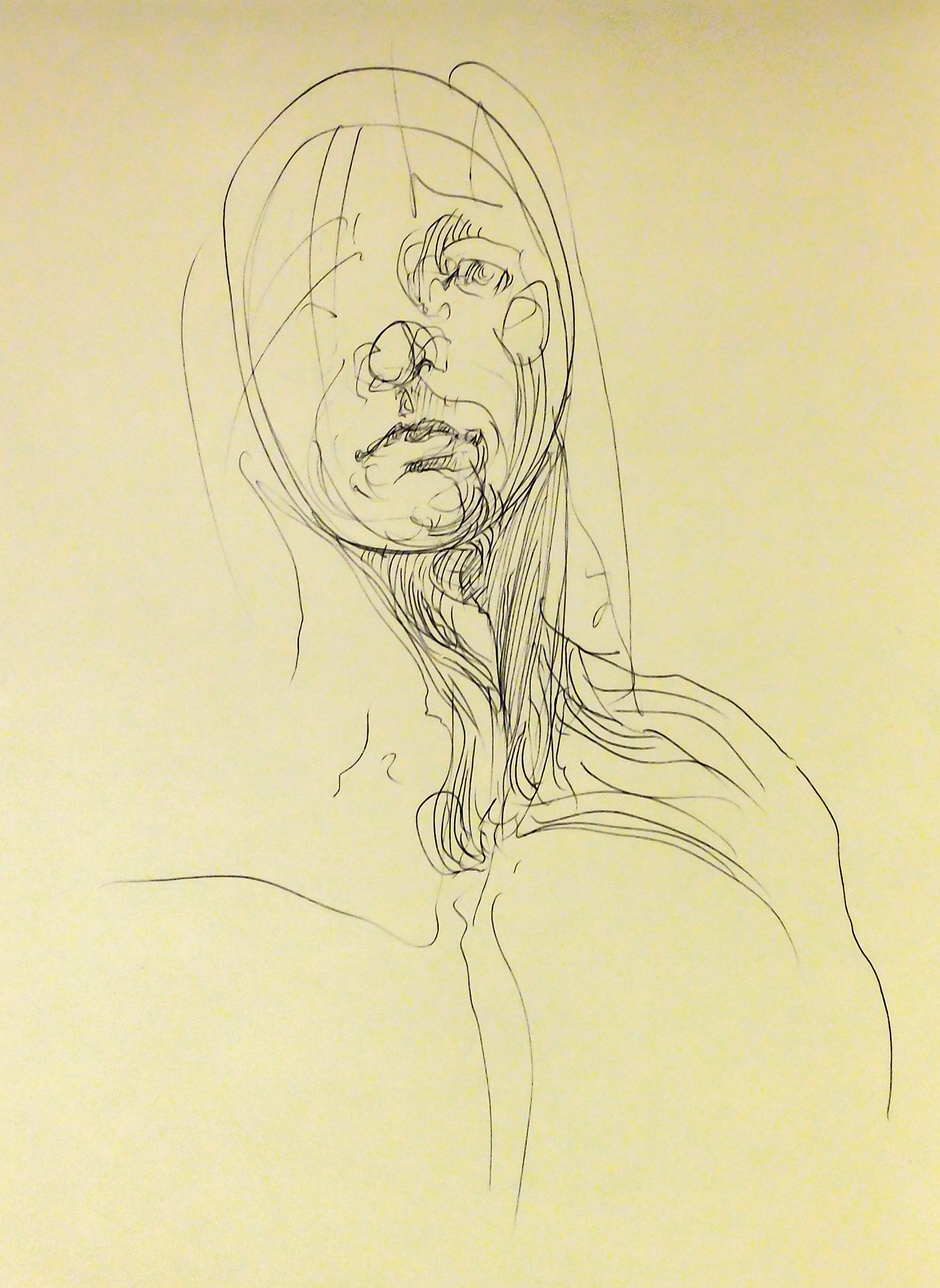
Jerry Shawback uses drawing as his primary form of expression. He studied communication design in Los Angeles at the Otis Art Institute of Parsons School of design, a division of the New School for Social Research. Jerry worked as a freelance designer, commercial artist, and animator for the entertainment industry.

After a ten year hiatus from the art world, Jerry returned to painting in 2007,  as a primary focus producing a series of self portraits encompassing various artistic motifs, while maintaining an underlining vision, cohesion and emotional honesty.  The artist’s self portrait series explores identity through multiple approaches to the same subject matter. Stylistically varied, they reveal the strange and vulnerability essence of the human condition. Jerry is now working on a series of paintings and portraits exploring self through images of others.

His affinity for people, observation of life and strong draughtmanship is apparent in his depiction of the human form and informs Jerry’s painting. Other influences include: Rico Lebrun, Egon Schiele, Francis Bacon, Lucien Freud and his mentor Cornelius Cole III.

Jerry has been sharing his works on paper daily on social media, documenting the lives and experiences around him. Exploring the subtle beauty of line through a continuing study of the human form is a common thread that permeates all his work.

Jshawback.tumblr.com

Twitter@jerryshawback


A Tale from the Heart

by Tiago Azevedo

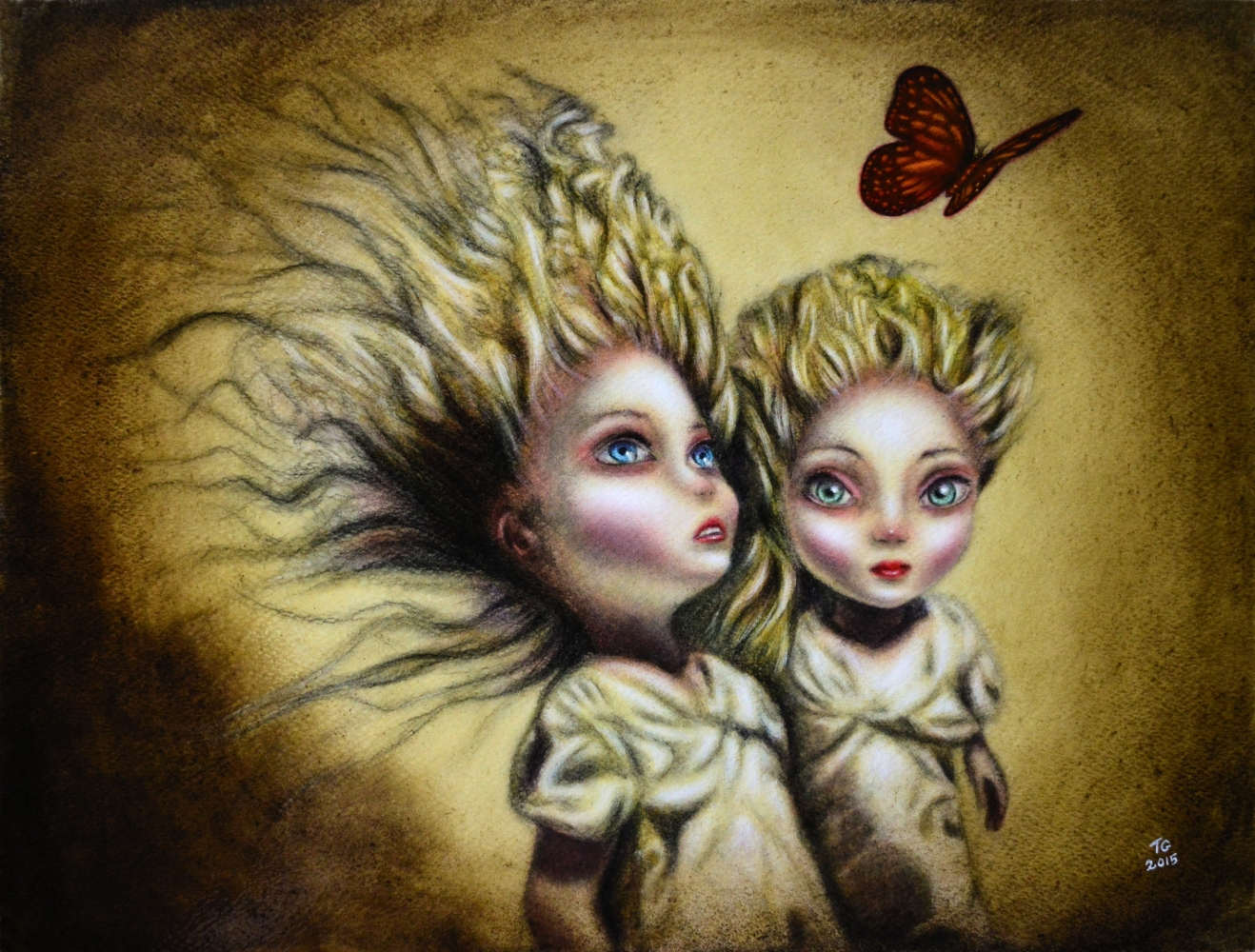
Two Sisters

Two Sisters

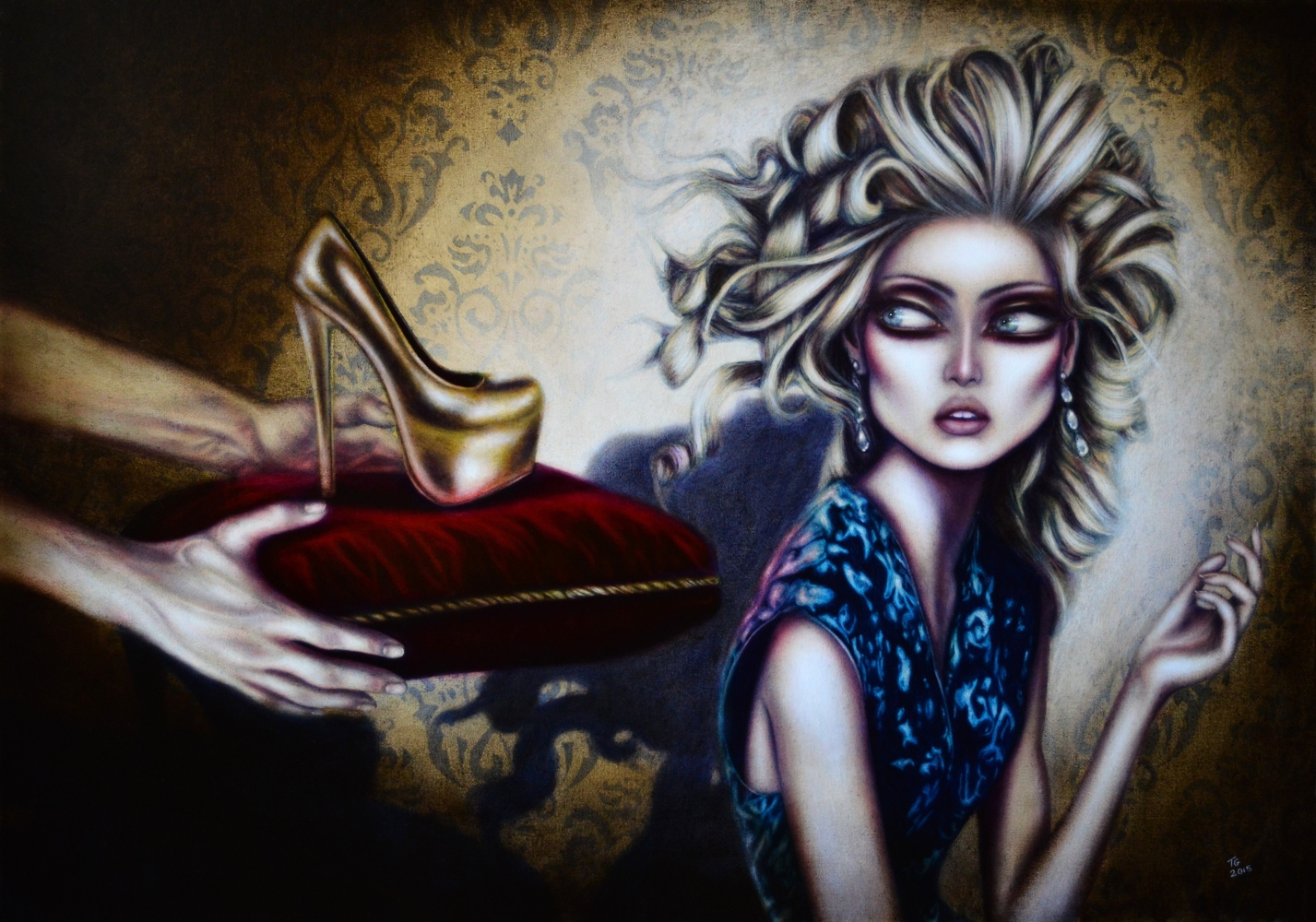
Aschenputtel

Aschenputtel

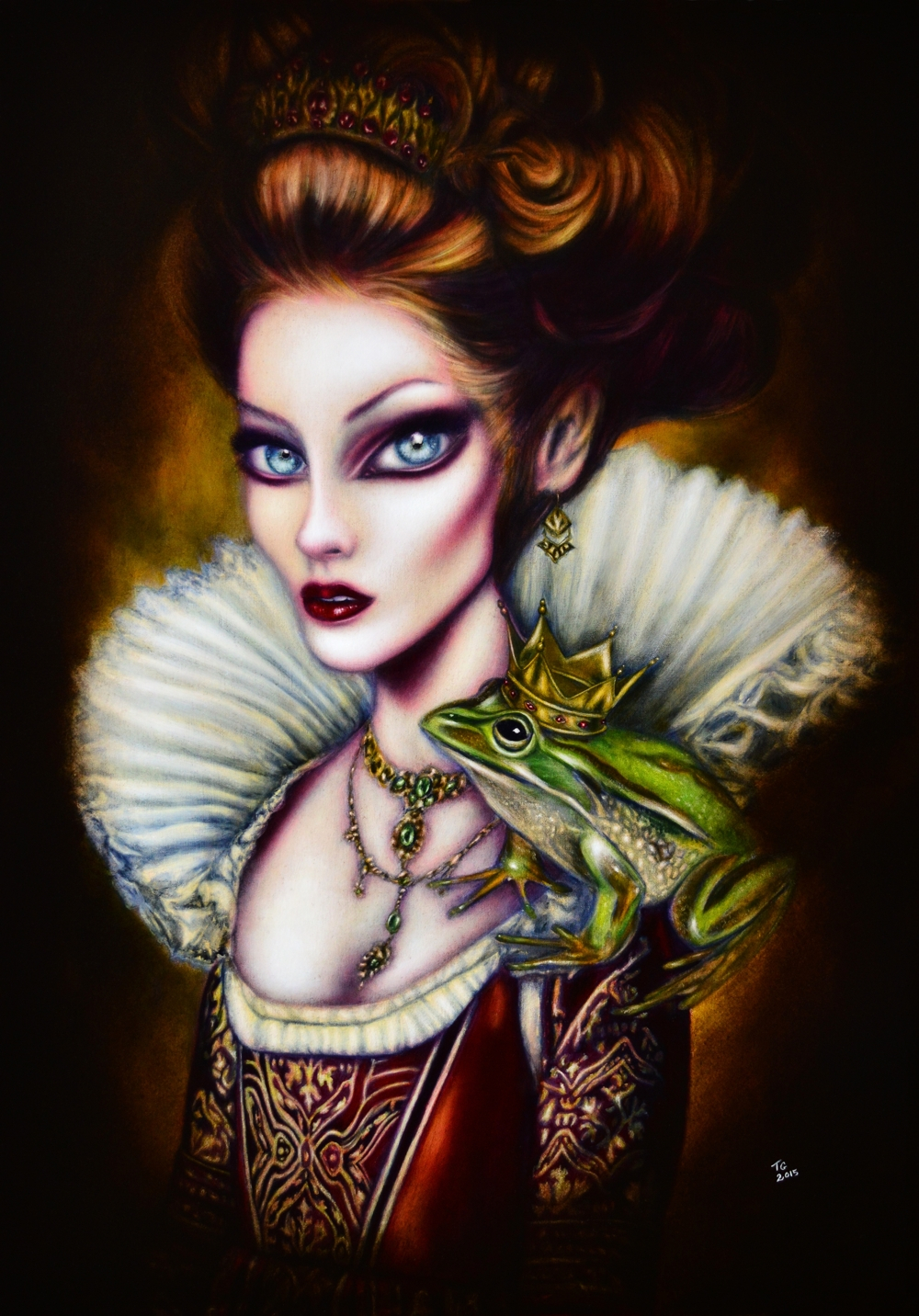
The Frog King

The Frog King

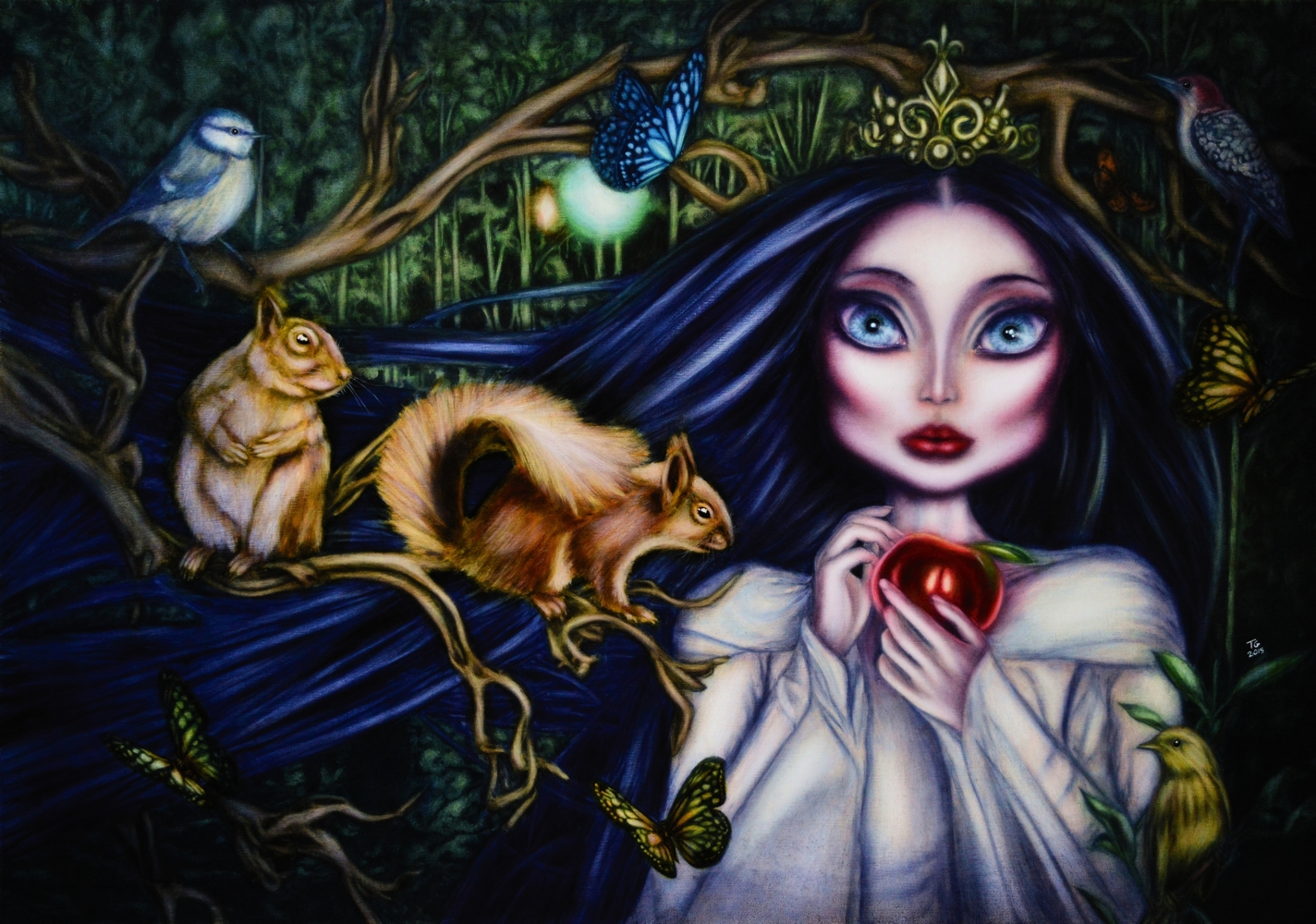
Snow White

Snow White

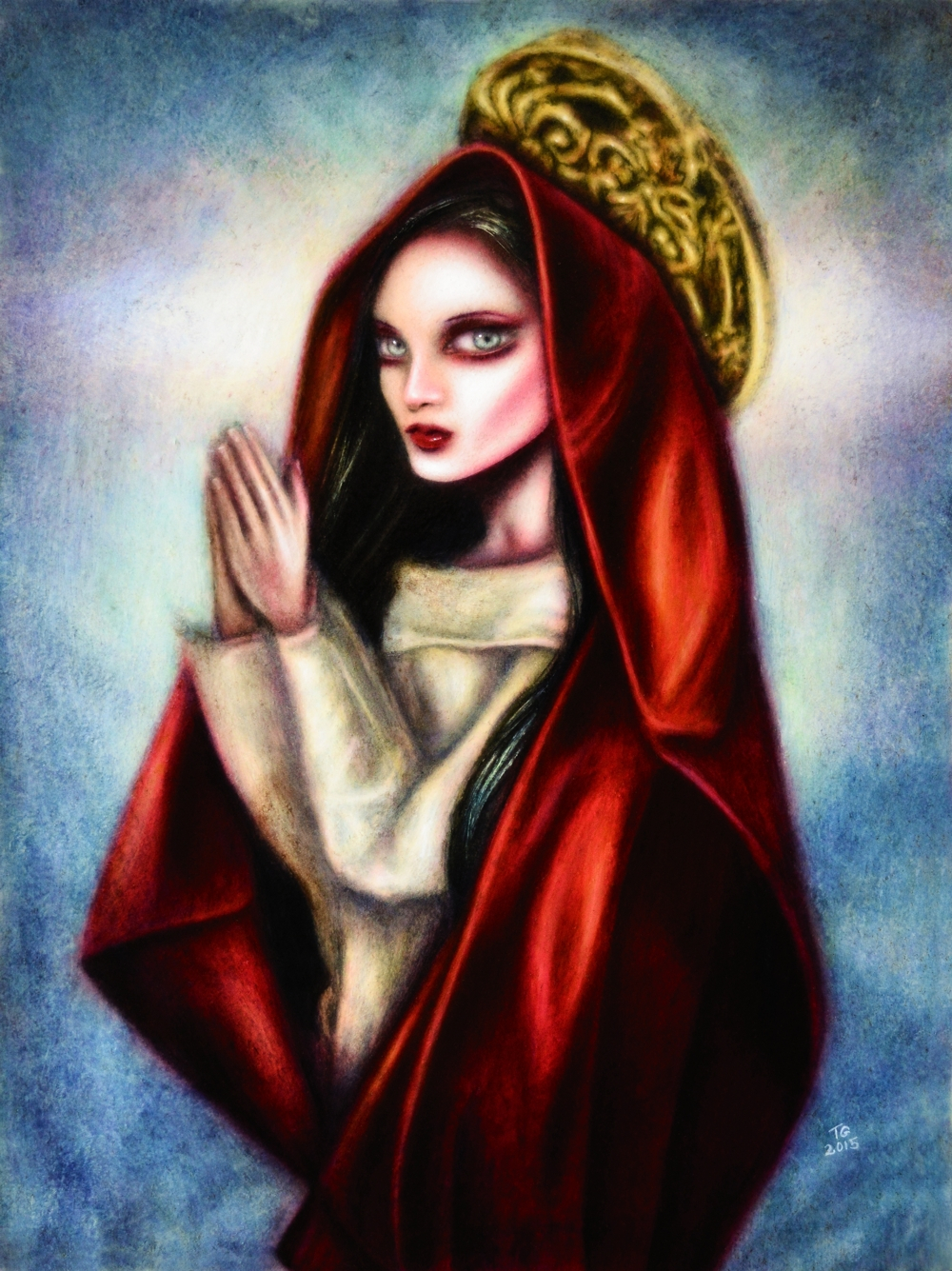
The Praying Virgin

The Praying Virgin

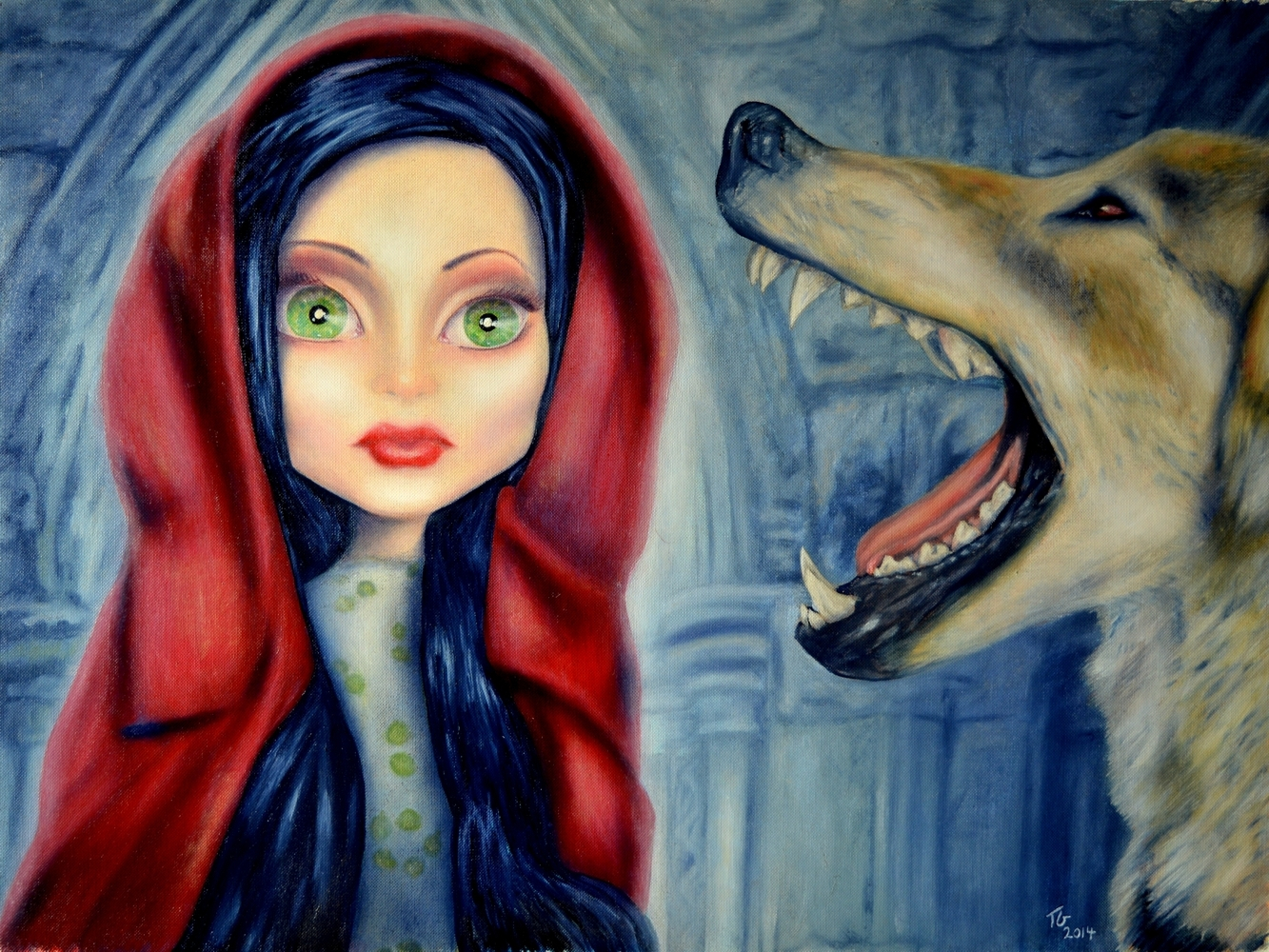
Red Riding Hood

Red Riding Hood

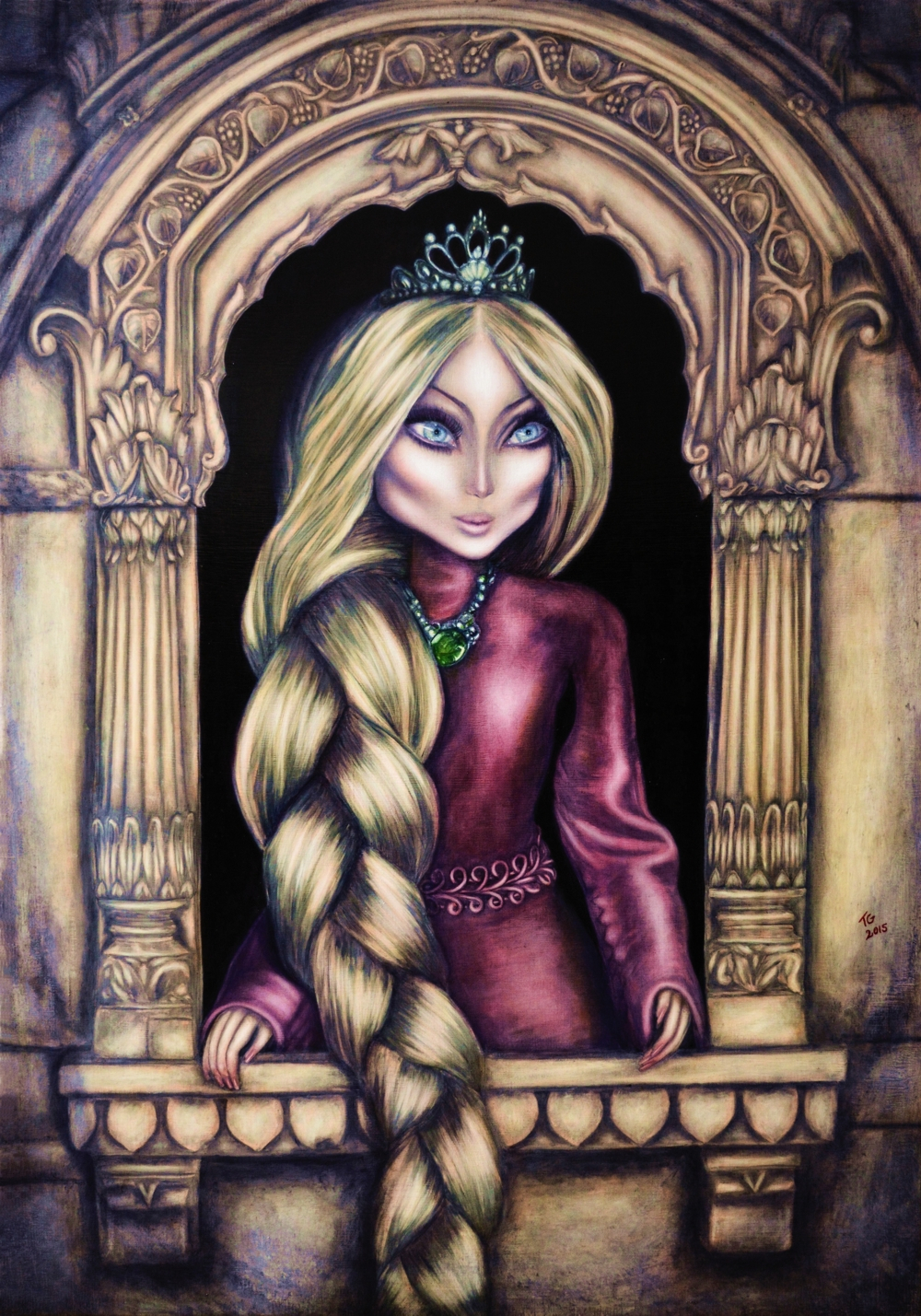
Rapunzel

Rapunzel

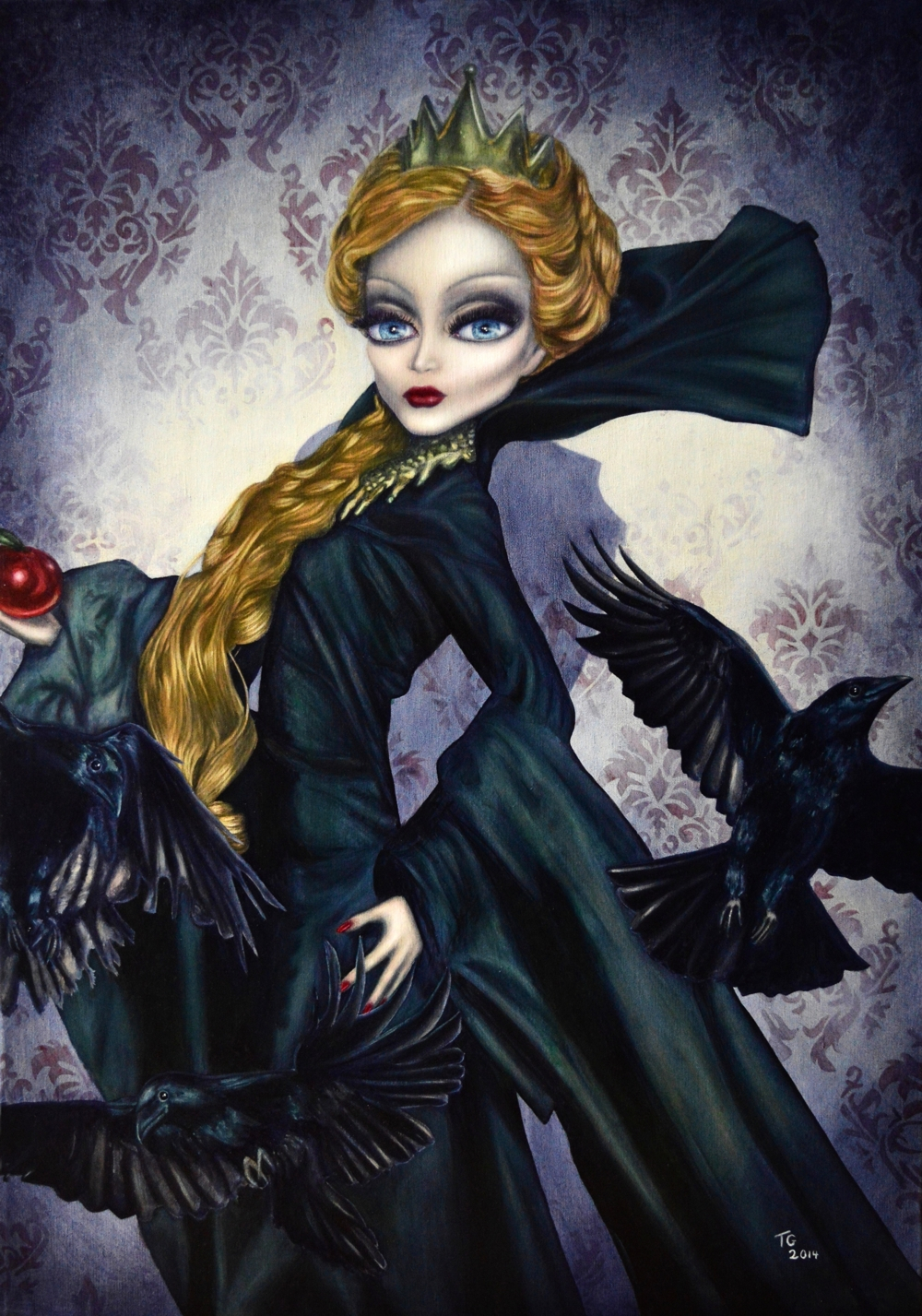
The Evil Queen

The Evil Queen

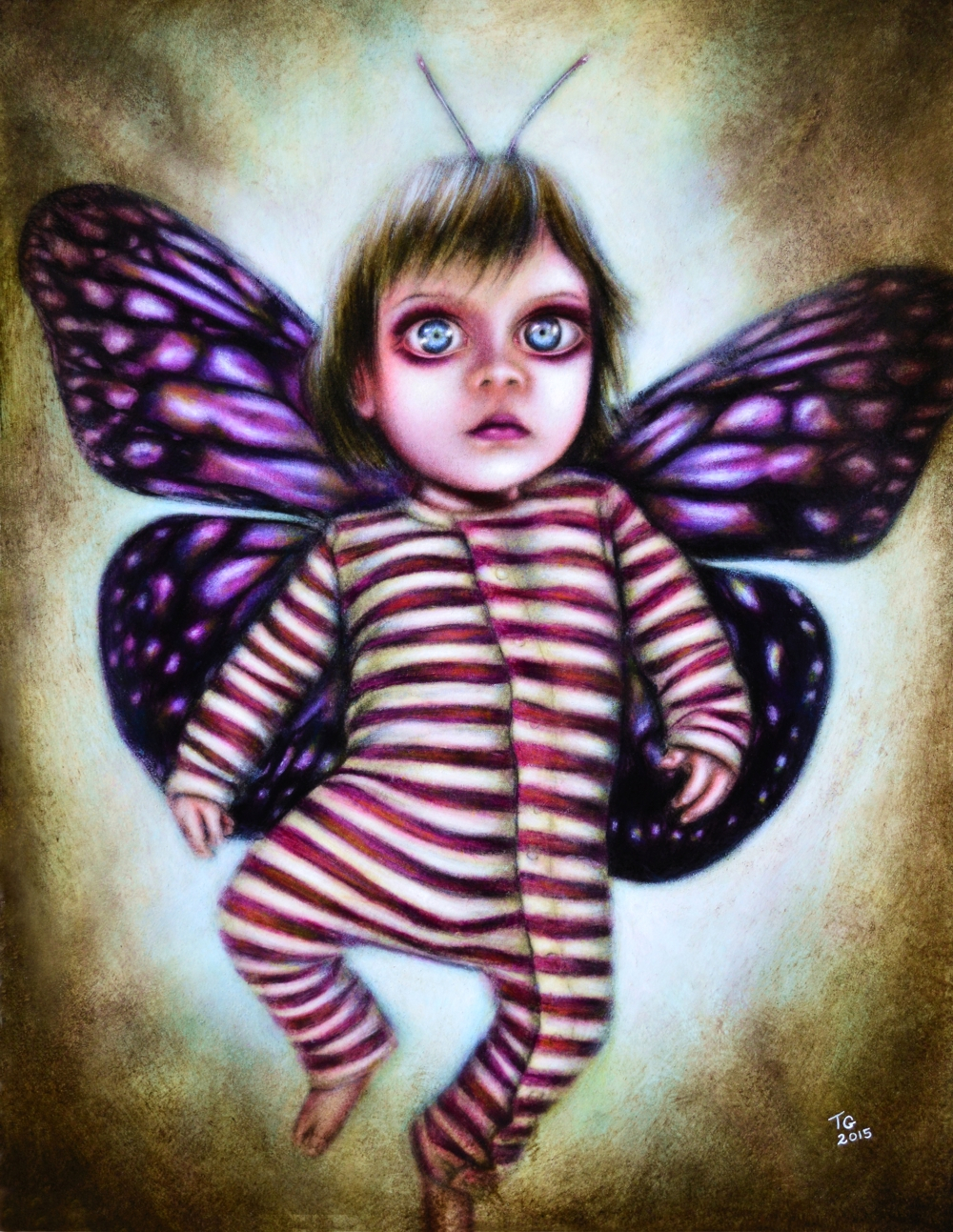
Little Fairy

Little Fairy

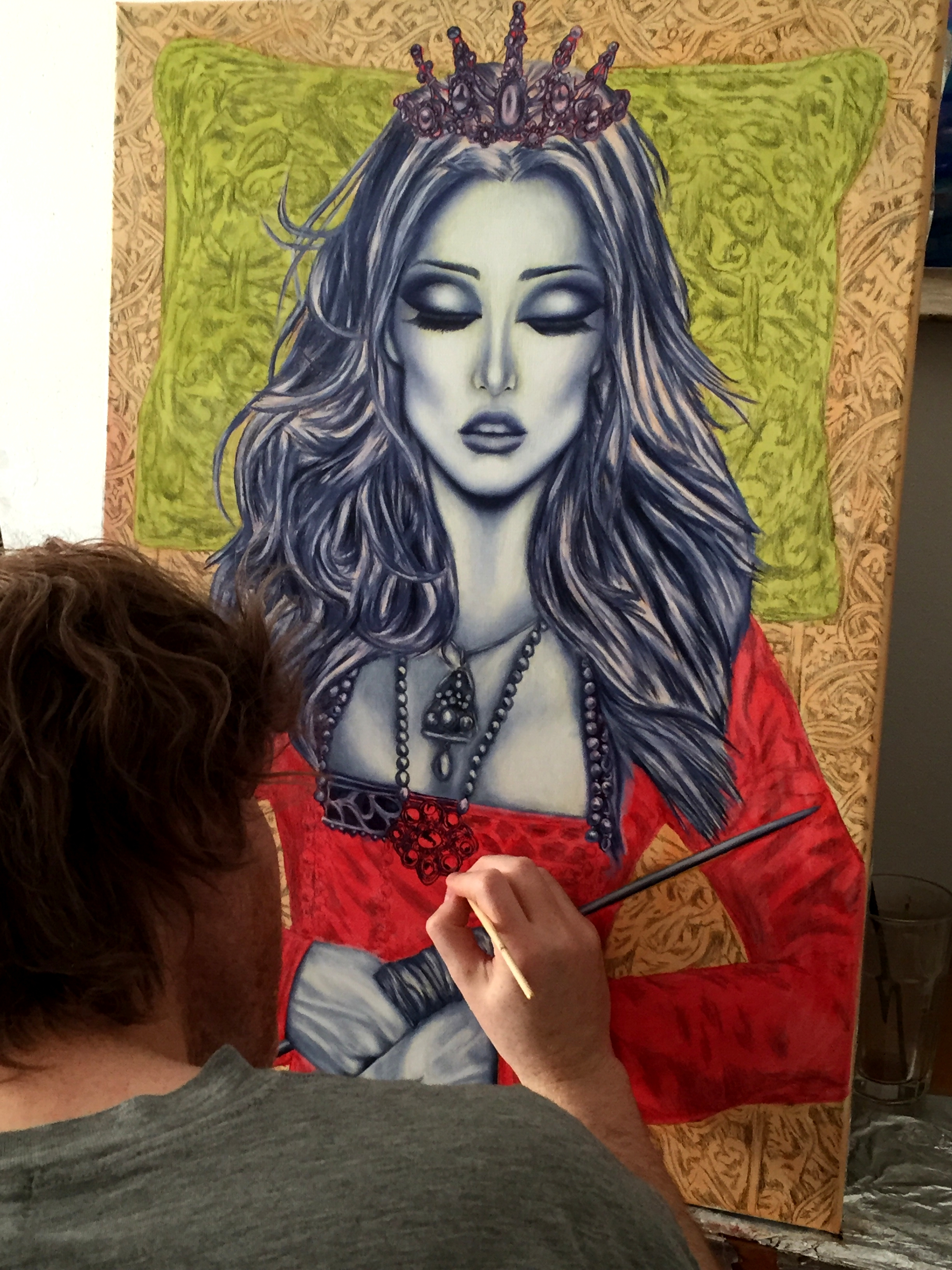
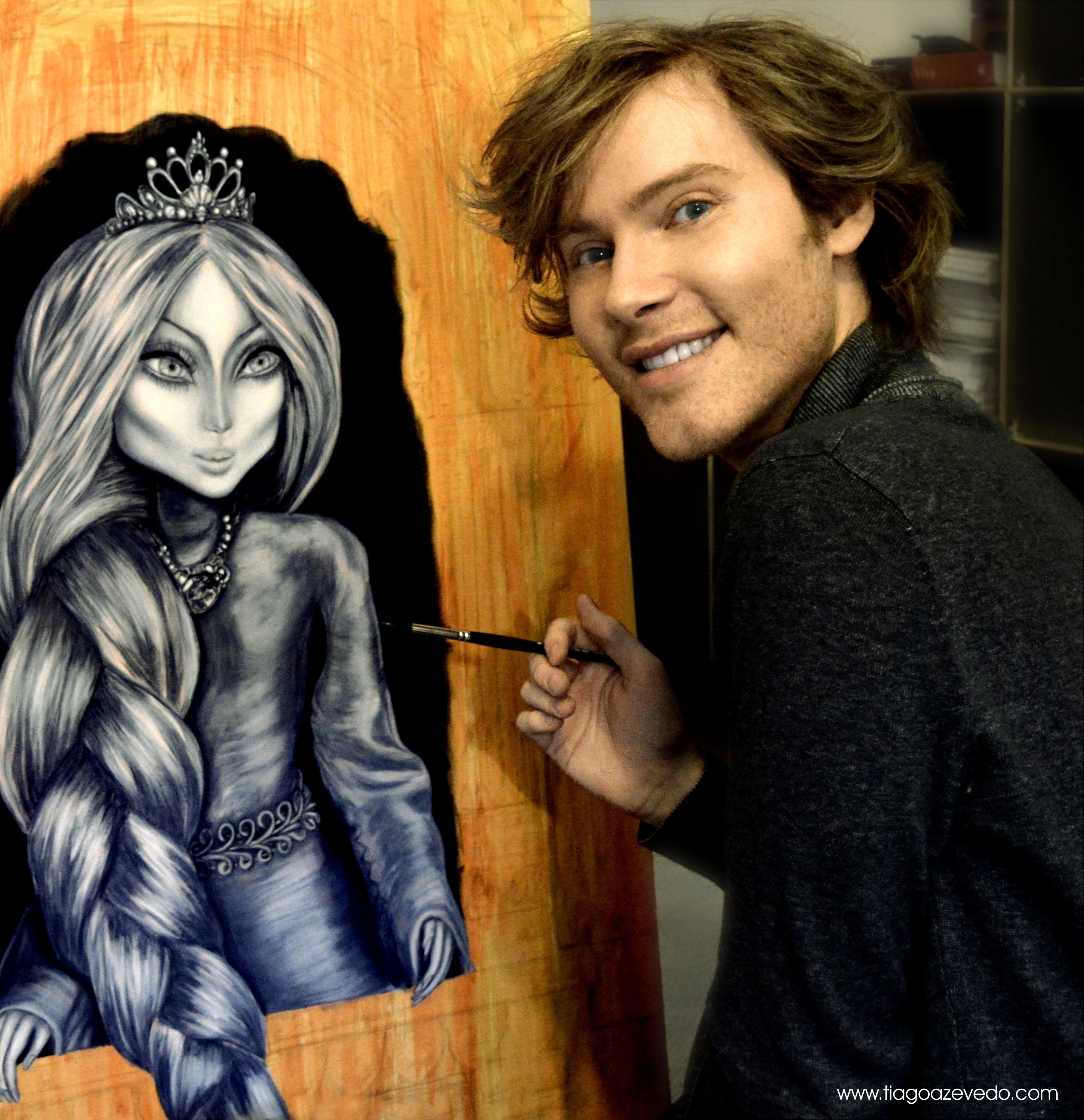
Work in Progress

Work in Progress


Tiago Azevedo 02Artist: Tiago Azevedo

I was born in the Azores islands and influenced by that environment. I have
been drawing magical worlds and fantastic creatures since a very young age.

Latter I attended Art School for a period of three years however I decided to
graduate as an Architect.

Even though I was working as an architect by choice, those fantastic
creatures were screaming to get out.

So I finally decided to follow my passion and dedicate my full attention to the
artistic expression of my world.

Consequently my themes always revolve around Fantasy and Religion.

As a technique I use oil painting for its colour richness and jewel like effect.

At the moment I am working on an illustrated book based on my interpretation
of the Brothers Grimm Fairytales. This emerged out of my move to Germany
and my passion for German folk stories.

Facebook: https://www.facebook.com/tg.fine.art

Twitter: https://twitter.com/TG__Art

Instagram: https://instagram.com/tg.art/

Google+: https://plus.google.com/+tgoazevedo/posts

Pinterest: https://www.pinterest.com/tg_azevedo/

Tumblr: http://tgoazevedo.tumblr.com/

Blogger: http://www.tgoazevedo.blogspot.de/


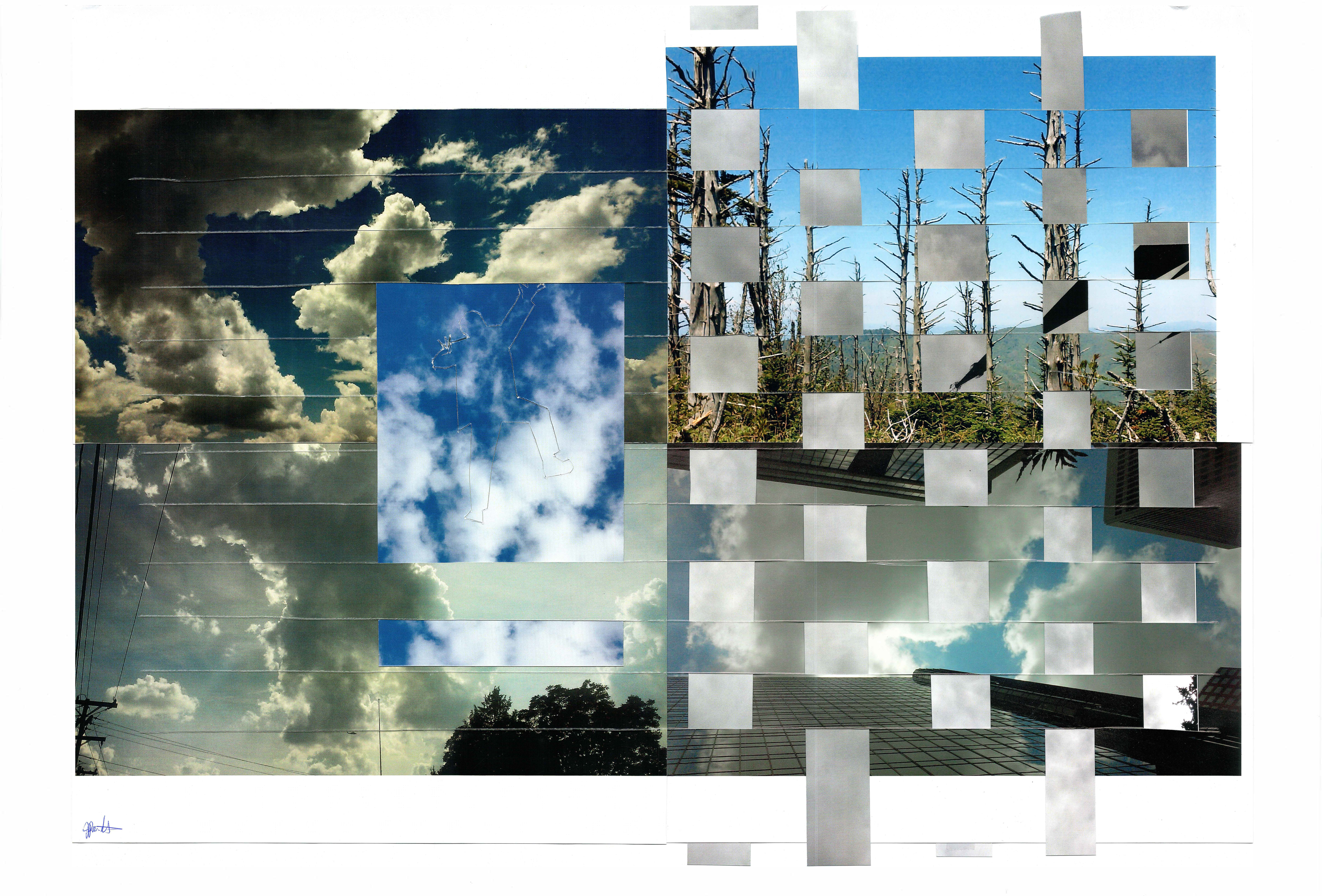
Transformations (After Anne Sexton)

By Jessica E. Prescott

conversation

conversation


lights

lights


food hawk

food hawk


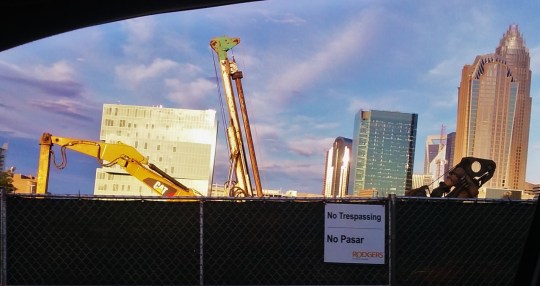
charlotte

charlotte


charlotte 3

charlotte 3


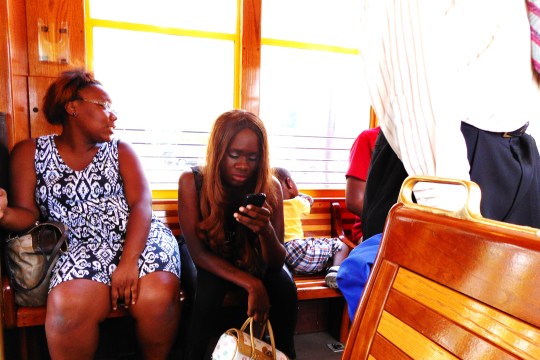
trolley

trolley


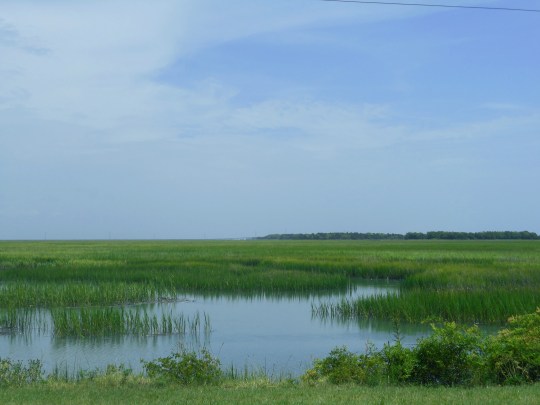
 low country greener

low country


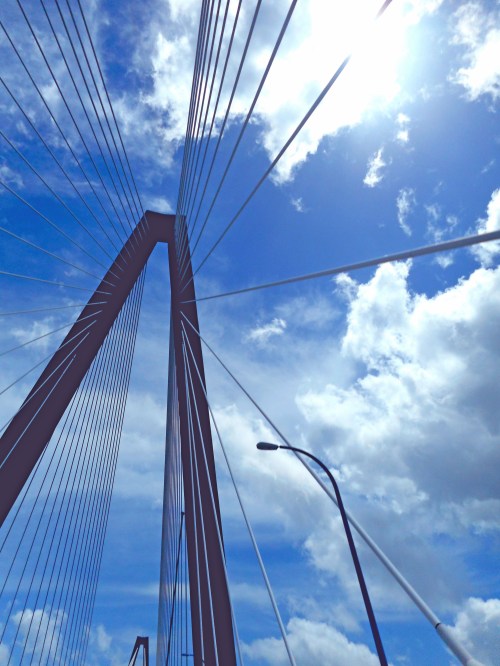
south cack bridge

south cack bridge


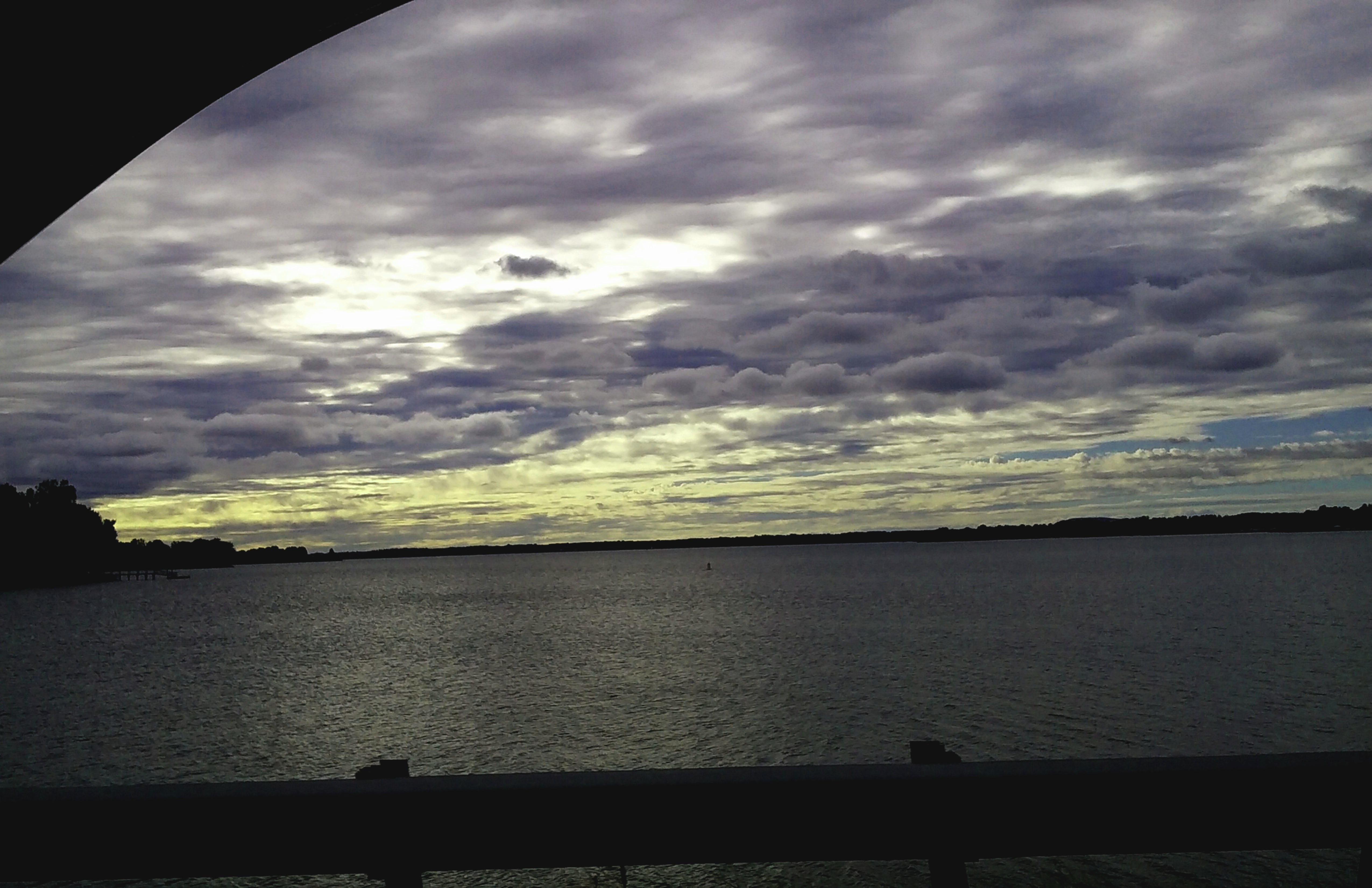
 lake norman

lake norman


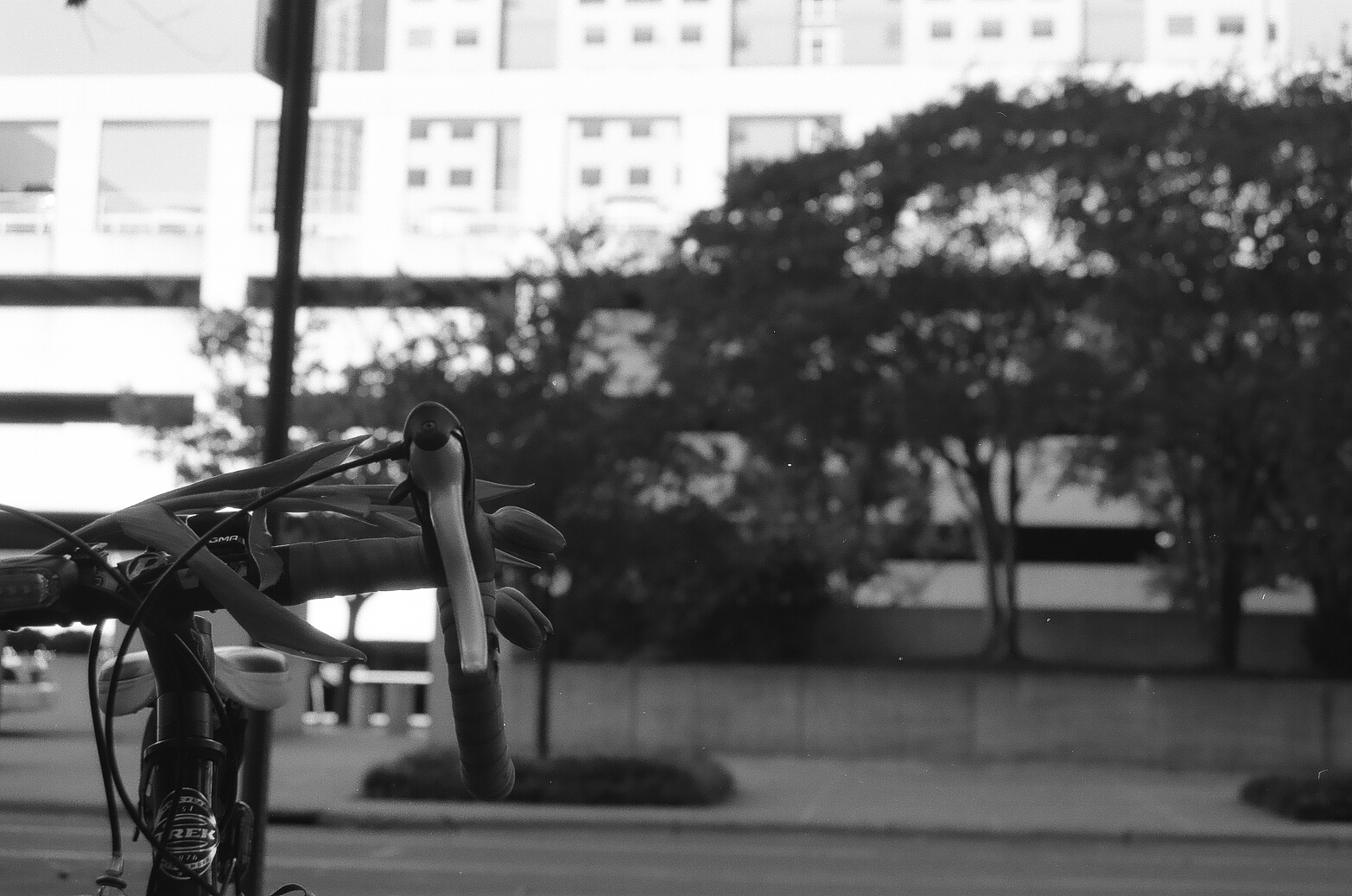
trek

trek


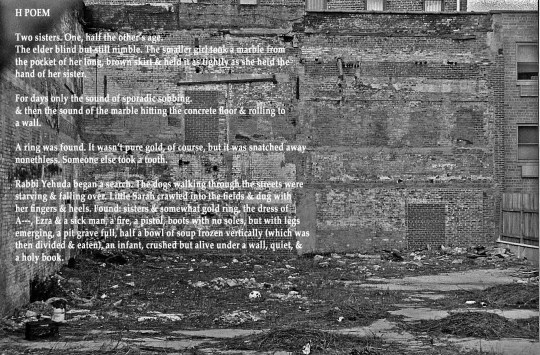
H Poem

H Poem


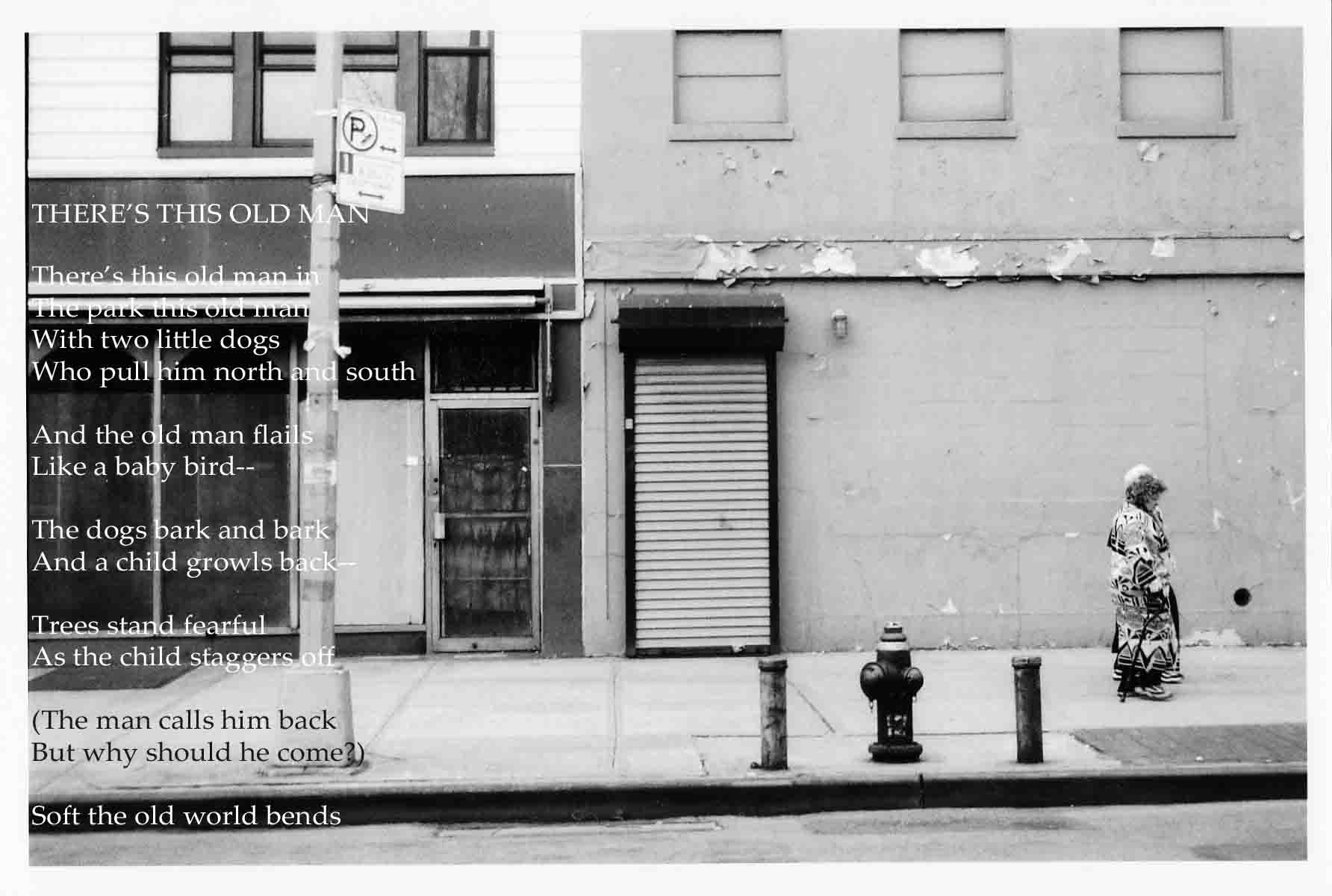
there's this old man

there’s this old man


Sky

Under One Sky


Collage

Collage


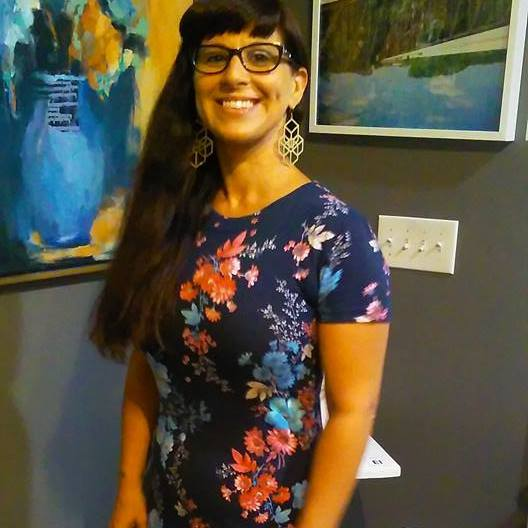
Jessica Era PrescottArtist: Jessica Era Prescott

Jessica is a chess teacher by trade, an observer by practice, and a hedgehog by design. She cycles, recycles, is currently reading the history of the American short story, bakes occasional challah bread, edits accidentally, tinkers on the mandolin, write poems, takes pictures of clouds, curates & liaisons between artists & community, teaches little humans how to be big ones, & mothers a thoughtful, three-year-old boy. Her chess book and details of her chess world on FB & overthechessboard.com.

Website: http://www.jessicaeprescott.com/
Instagram: @madzetetic

Facebook: https://www.facebook.com/j.era.martin

Email: j.era.prescott@gmail.com