Archive | Art RSS feed for this archive

Ophelos by TAPROOT

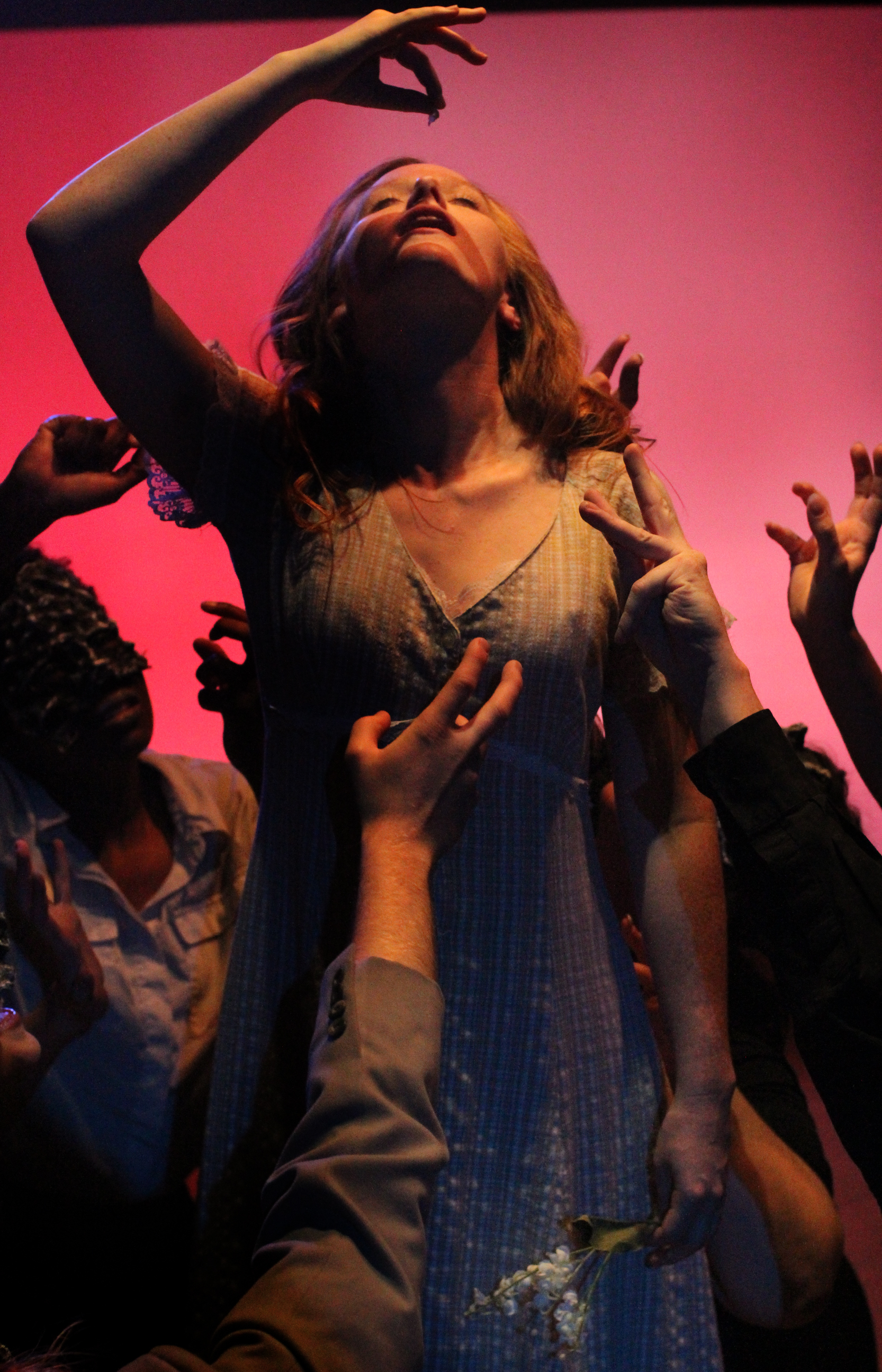
The goal of Creative Thresholds has always been to explore different genres and art forms, particularly those that trouble and work those boundaries. Until now the focus has been on writing and visual art. It’s time to expand and what better way than by sharing an excerpt from the collaborative performance ensemble TAPROOT‘s original production Ophelos?

photo by Reuben Bloom

photo by Reuben Bloom

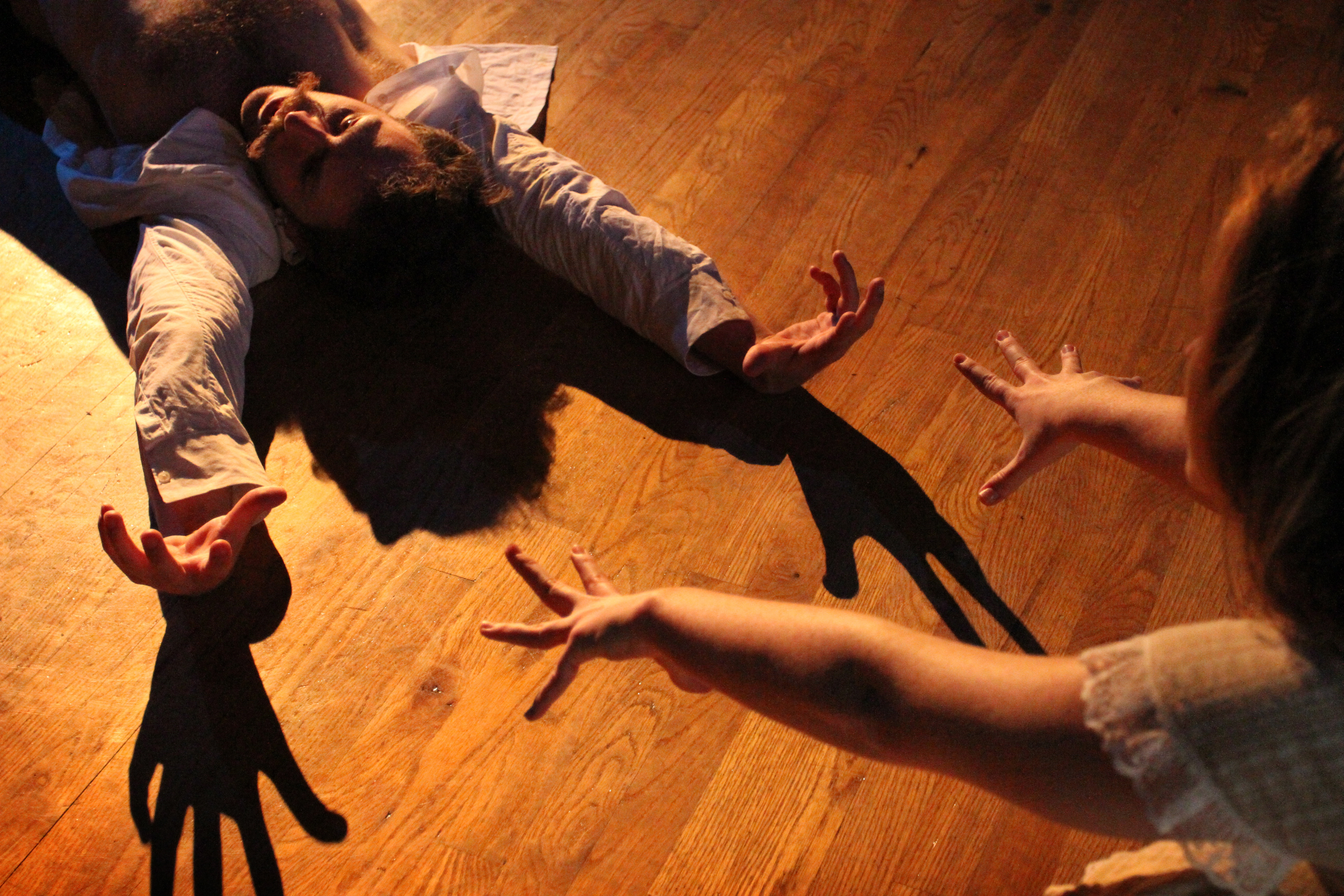
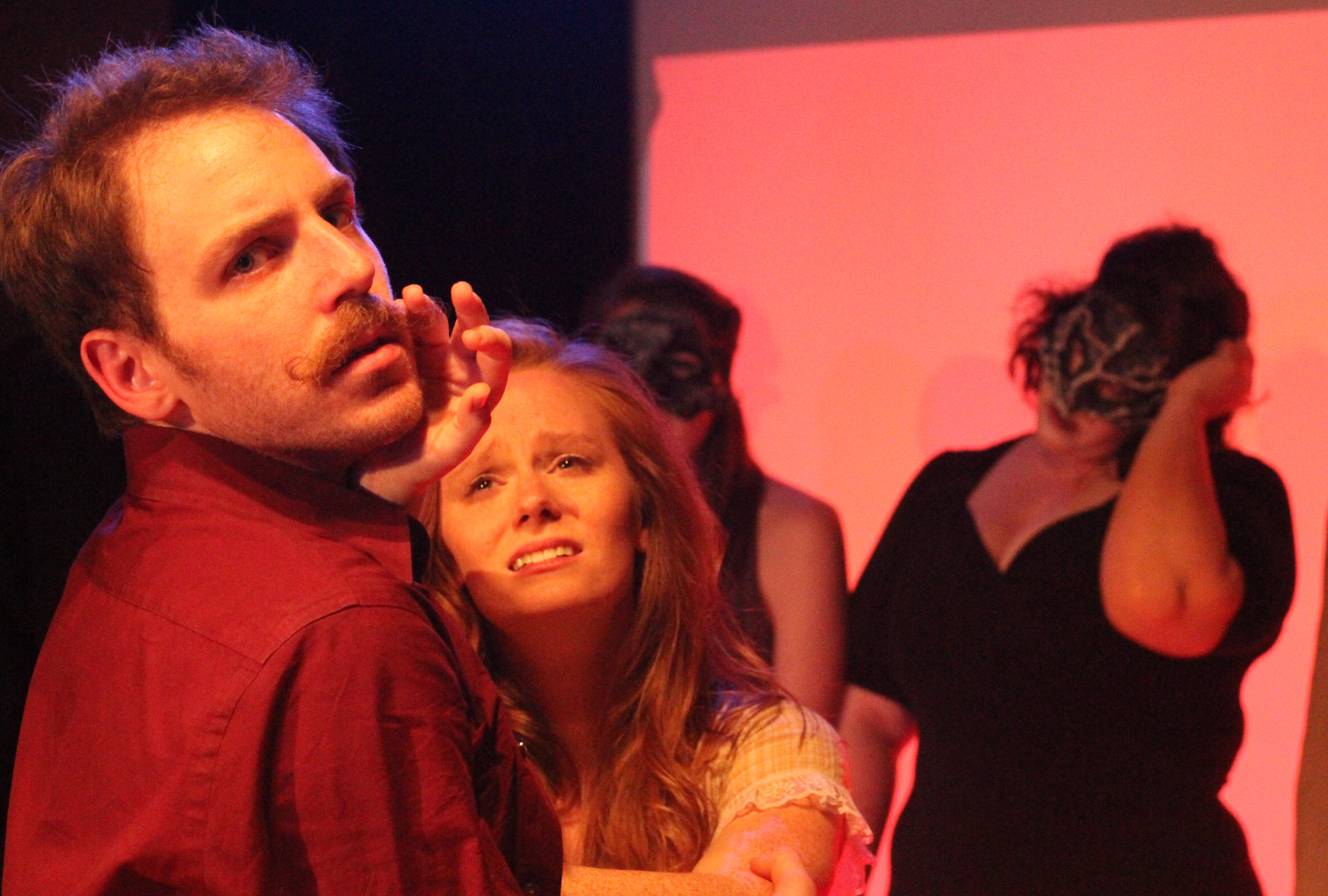
A young woman struggles against a destructive cycle of violence to save the man she loves from succumbing to a culture of vengeance. Enter the  violent, sensual, immersive theatrical experience of Ophelos

Ophelos 1 Reuben Bloom

photo by Reuben Bloom


Ophelos is an original performance piece told through movement, masques, music and shadow. It is designed to give the audience a performance experience which breaks down the fourth wall, with action taking place throughout the space. Based on the Scandinavian folk tale of Amleth with text from Shakespeare’s Hamlet, Ophelos transcends time using Shakespearean language, 1930s inspired costuming, original music, modern dance techniques and a unique understanding of multidisciplinary performance.
http://vimeo.com/75911762


Ophelos is being performed throughout April 2014 in the Charlotte, NC area.

Tickets – Sliding Scale $15 – $25

Kadi Fit – 19725 Oak St #6, Cornelius, NC 28031

Purchase tickets here
 
Upstage – 3306 N Davidson St, Charlotte, NC 28205
 
Purchase tickets here

photo by Reuben Bloom

photo by Reuben Bloom

TAPROOT is a collaborative performance ensemble working to build community and create innovative cross-disciplinary performance experiences through artistic collaboration that speaks truth and challenges audiences. All of TAPROOT’s original and collaborative works have worked to engage the greater Charlotte community by inviting public participation in feedback sessions throughout the development of each piece. TAPROOT also regularly offers free or low-cost programming that encourages artists to expand their techniques, ideas and peer communities. Learn more at TAPROOT’s website or Facebook page.

Humanscapes

By Nicholas Quin Serenati

Humanscapes is the final post in a three-part series, which began with Locating Place: Fragments of an Illness.

About the series: Illness experience is a resource for experiential knowledge. To that extent, it is important to understand that life has infinite spaces which can be experienced. My work is concerned with phenomenological experiences that transform these spaces into places. These places become the foundations in our individual lives – the construct of our identity. The work in this series is intended to ascertain an understanding of the ways meaning–making functions as a method for healing, and how the creative process operates to uncover and identify new metaphors that best communicate illness experience to others.


HUMANSCAPES


In Bob Trowbridge’s book, The Hidden Meaning of Illness: Disease as a Symbol and Metaphor, a philosophical engagement is established with how illness penetrates the process of being human. What illness does for a person is quite unique and individualized. For me, I find that illness is an experience that can stifle and complicate the order of living. However, I believe that illness experience offers an opportunity to transcend the basic containment of being ill and evolve into a more knowledgeable and inspired being. Similar to the process of art making, illness is a process of discovery. During illness experience, an opportunity arises to untether from the superficialities that compound life and embrace the moments of being vulnerable, confused and weak in order to flourish in strength, beauty and wisdom.

Humanscapes presents an extremely straightforward and customary point of view on illness. The work embodies the typical tone and nature that possesses aggression and horror. Humanscapes is an exploration of the human condition as I perceive it to be through my illness experience. Specifically, the exploration dealt with juxtaposition of content – image and poetry – and in doing so, the overarching philosophical questions emerges: what would resonate?


Collected Spaces
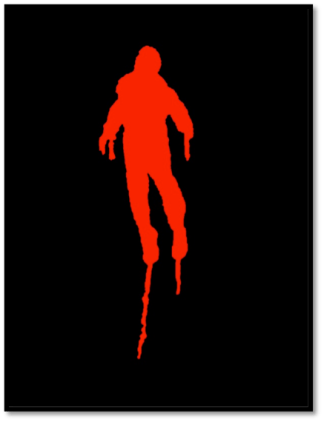
 

Nicholas Serenati 1


Pathosis.

Death comes during the twilight.
An opera of suffocating screams,
tuned in the key of pain.
Pitch perfect, echoing across barren landscapes.
Injections, ravenous poison, constricting veins.
Internal asphyxiation.

A lifeless marionette standing on a thorn’s edge of a cacti.
Sand storms perform a ritual dance
to a fiddling devil, vultures circle above.
Breath shallows, eyes hollow, heart slows, flesh blisters.
Red-eyed from hearing my mother’s cry.
Tears from angels come crashing down, loud.
Collected by the hands of a decomposing crowd.
Now, we can bathe, and be covered in a linen shroud.

Traces of red from these fingertips,
Ink that flows and pens this script.
What is left are bloodstains,
from life’s dismissed.
I’d be remiss, if a history of illness went claimless.
Anabiosis.


Timberland
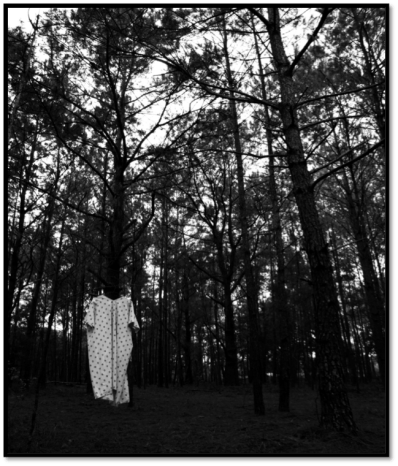
 

Nicholas Serenati 2
I tasted illness.

Flavored by metallic bitterness of wicked misery,
It sped through my veins.
A devouring plague,
An internal decomposition;
The memory hangs in the timberland of my mind.
Silent, static, yet ever present.


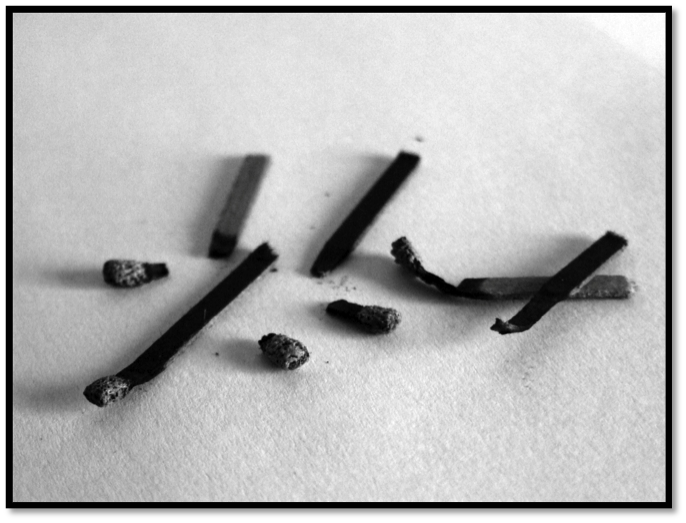
Matches
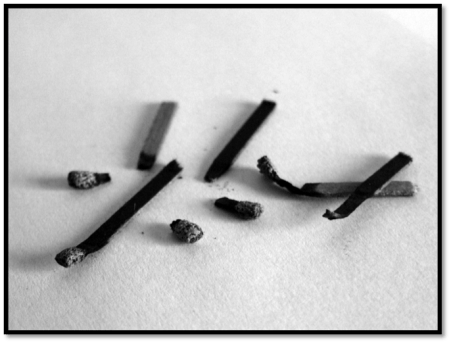
 

Nicholas Serenati 3


I sympathize with those who lie still.
The light has escaped them;
and now, darkness.

I find it eerily near.
Stillness.
Vulnerability that will always remain.

In the shadows,
just as ugly.
Dark separation is home.

Shadows misplaced,
Lying dormant with others.


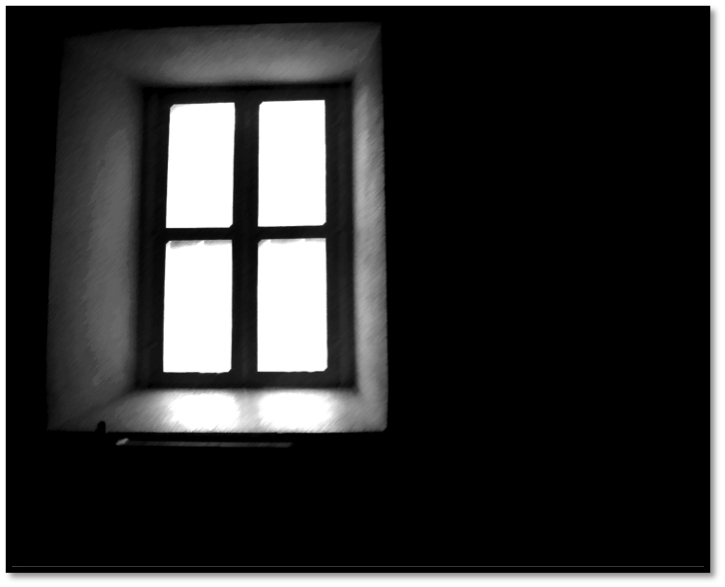
Windows
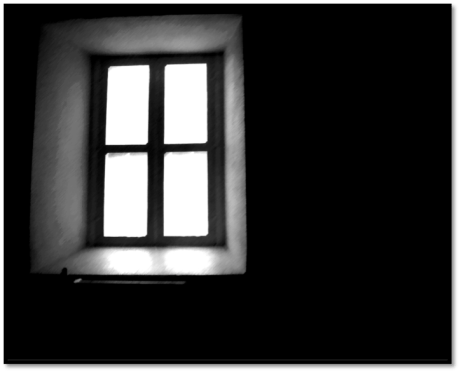
 

Nicholas Serenati 4


Overshadowed by internments of negative space,
Reflection blinds the wonder of escape.

A room,
Void of definition, exists little to name.
Balanced by masses,
Whispers of nothingness fall short of noise.

Beneath an image is the image.
Transcending the real for a rendering of another;
The antagonistic image that requires such attention.

Light, the consciousness of wisdom;
Darkness, its frame


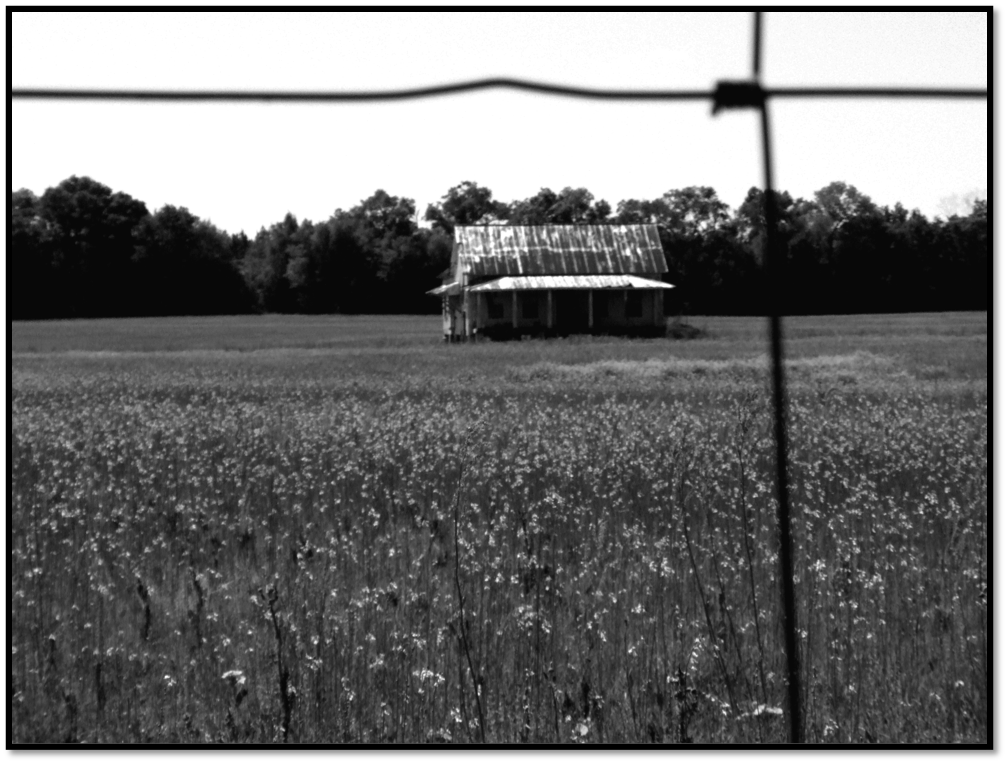
The Old Oak House
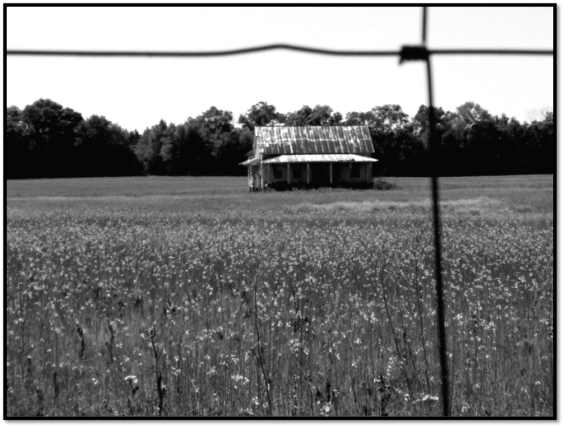
 

Nicholas Serenati 5


A splintering in the wood on the side of this old oak house reminds me of that winter.

Crackling echoes through the chilled air from slivers separating.

This old oak house is in ruins, decaying inside out.

I stand by the window looking out.

My fingers run across the weathered wood interior,

Pieces of the old oak break away and fall around my feet.


That morning, trees stood still, birds frozen in flight.

Water ran down the grooves of the rusted metal roof, down the pane of glass

Like rain, dropping down upon my forehead.

The old oak house dampened.

The crackling grew louder.

Light from the sun turned away and darkness loomed.


Near the old oak house, a river cut through the land like a knife.

Steam from the water smothered a rolling landscape,

A scorching water flow.

Condensation ran down trunks of trees, off tips of leaves, down the plank wood siding

of the old oak house.

Soaked was the landscape.


Just beyond the old oak house, past the riverbank, into the distance, a forest.

From the thicket of brush and pine, a dark horse emerged.

Massive and stoic it stood, flaring its nostrils, sensing the frigid still air.

Black, lifeless eyes peered in the direction of the old oak house.


With a gait slow and steady, the dark horse neared.

I moved aside of the window, peering out carefully

Fear lumped in my throat as his presence grew broader.

The dark horse approached the edge of the riverbank.

Blood trickled from his fractured hooves into the water.

The red streamed down current.

I gasped from inside that old oak house; the dark horse stared.

That is where we remained.

 

Nicholas Quin SerenatiNicholas Quin Serenati is an interdisciplinary scholar-artist whose work is defined by arts-based research that explores the potential of medium and discipline in liminal spaces. With a practice rooted in locating one’s place, Serenati employs video, creative writing, photography, sound, installation and performance to investigate forming situations that direct his research around illness and metaphor.

Serenati’s intellectual practice deeply engages the creation of meaning – form and function – and the articulation of story throughout the investigative process. Themes of trauma, identity, illness, disability, experimental narrative, social constructivism, sound and language are all contributing factors to Serenati’s work as a critical discourse. Serenati’s scholarly-art practice is intended to investigate phenomena as a way of achieving profound knowledge of theory, philosophy and art.

Based out of St. Augustine, Florida, Serenati holds a BA in Communications from Flagler College, an MFA in Interdisciplinary Arts from Goddard College, and is a candidate for his Ph.D. in Interdisciplinary Studies: Humanities and Culture from Union Institute & University. He is currently the Art Director / Dept. Chair of the Cinematic Arts program at Douglas Anderson School of the Arts and an adjunct professor of media and cinema studies at Flagler College.

Serenati’s dissertation, ReFraming Leukemia: Metaphorizing Illness as Windows, will be completed May 2014, and the installation of the project is set for early 2015 in St. Augustine, Florida.

Twitter: @nqserenati
Website: nqserenati.com
Interactive and Unbreakable: The Sculpture of Brian Rumping

By Brian Rumping

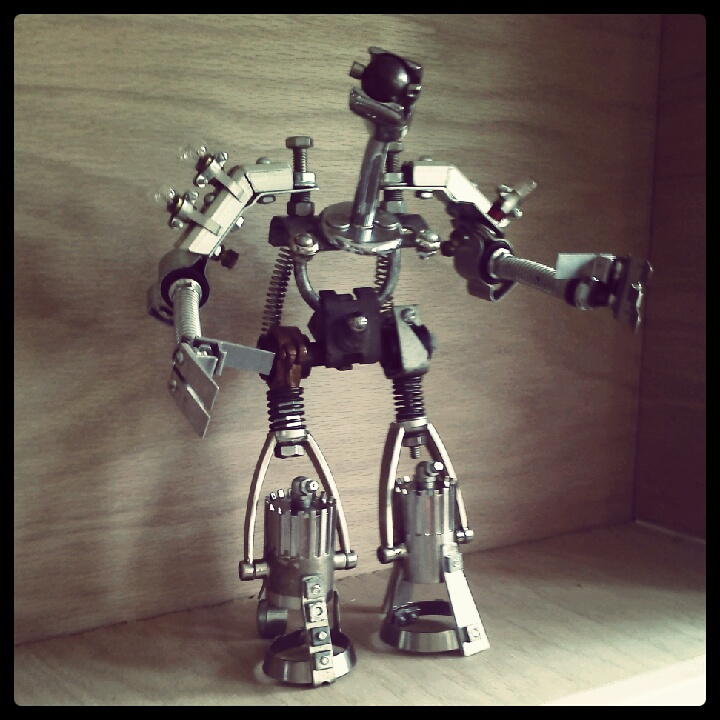
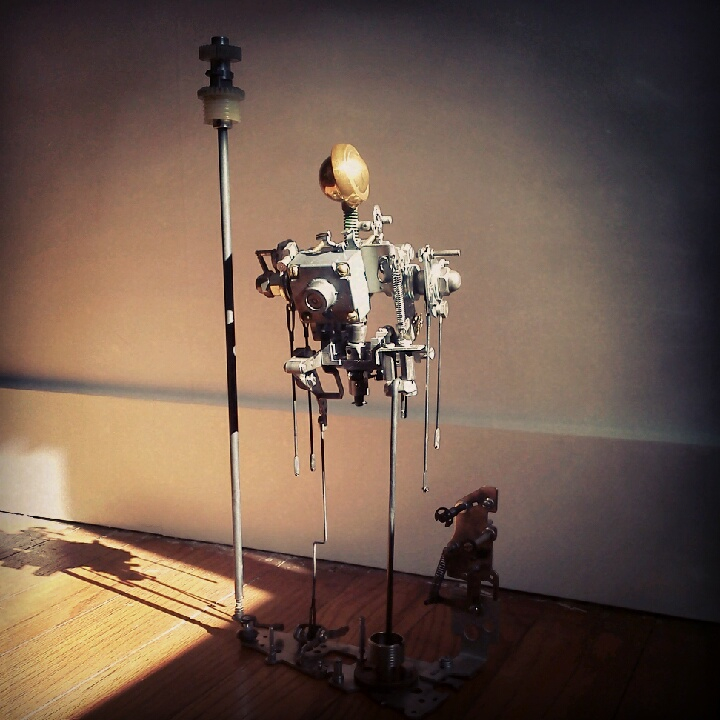
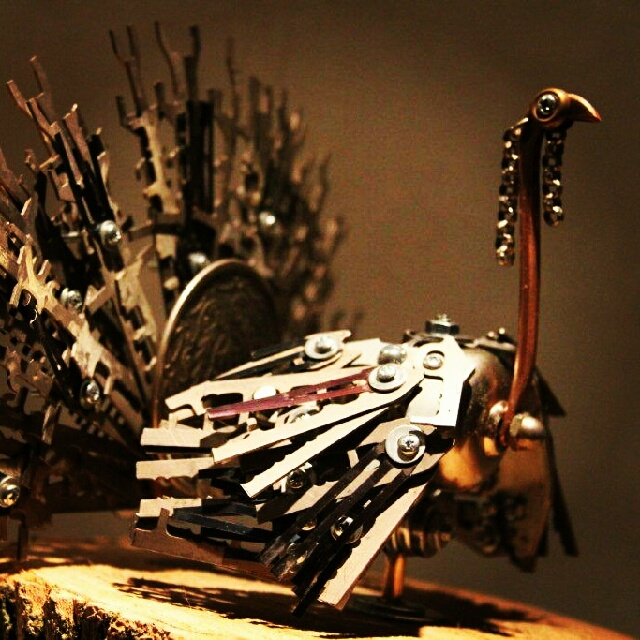
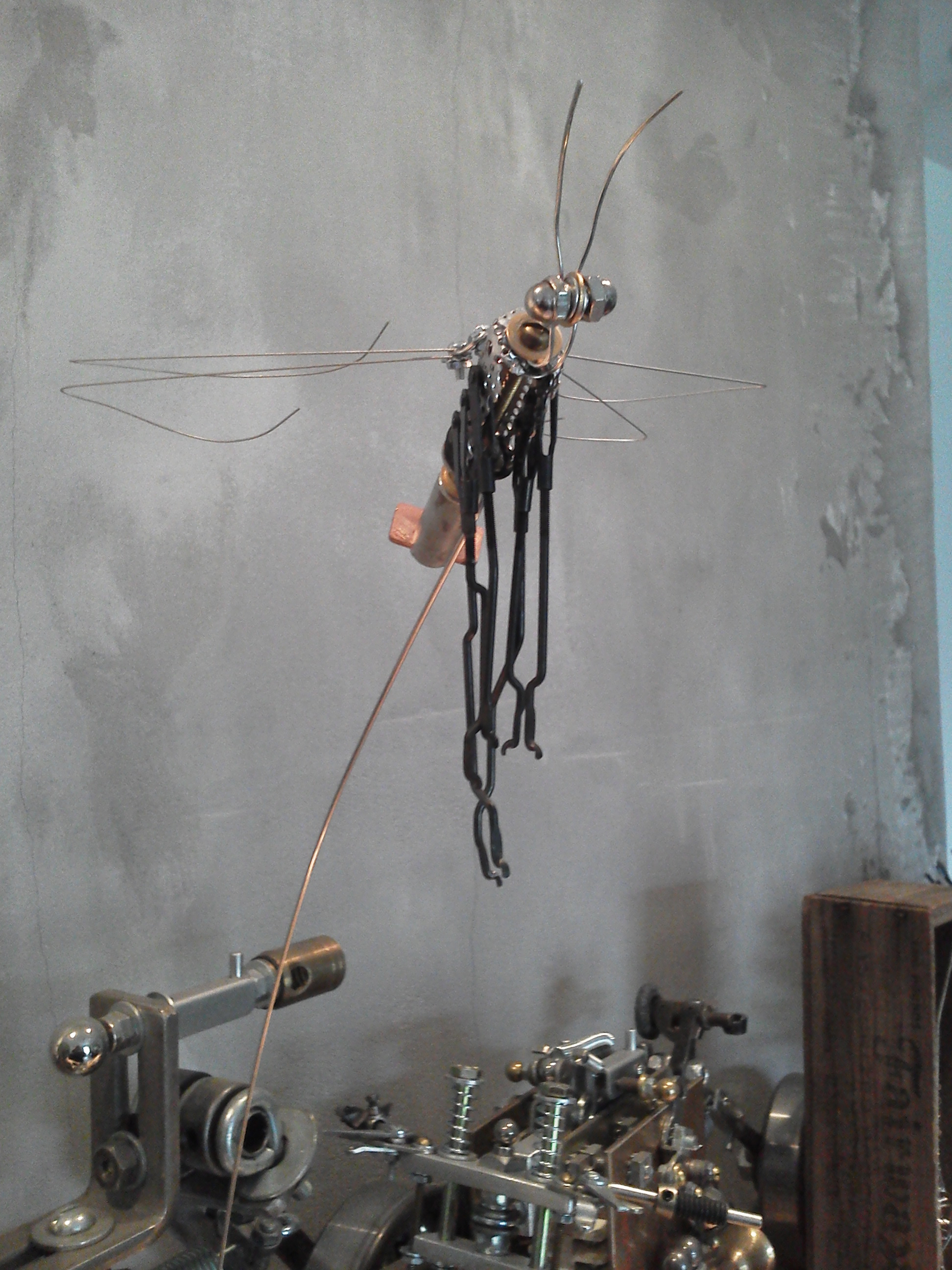
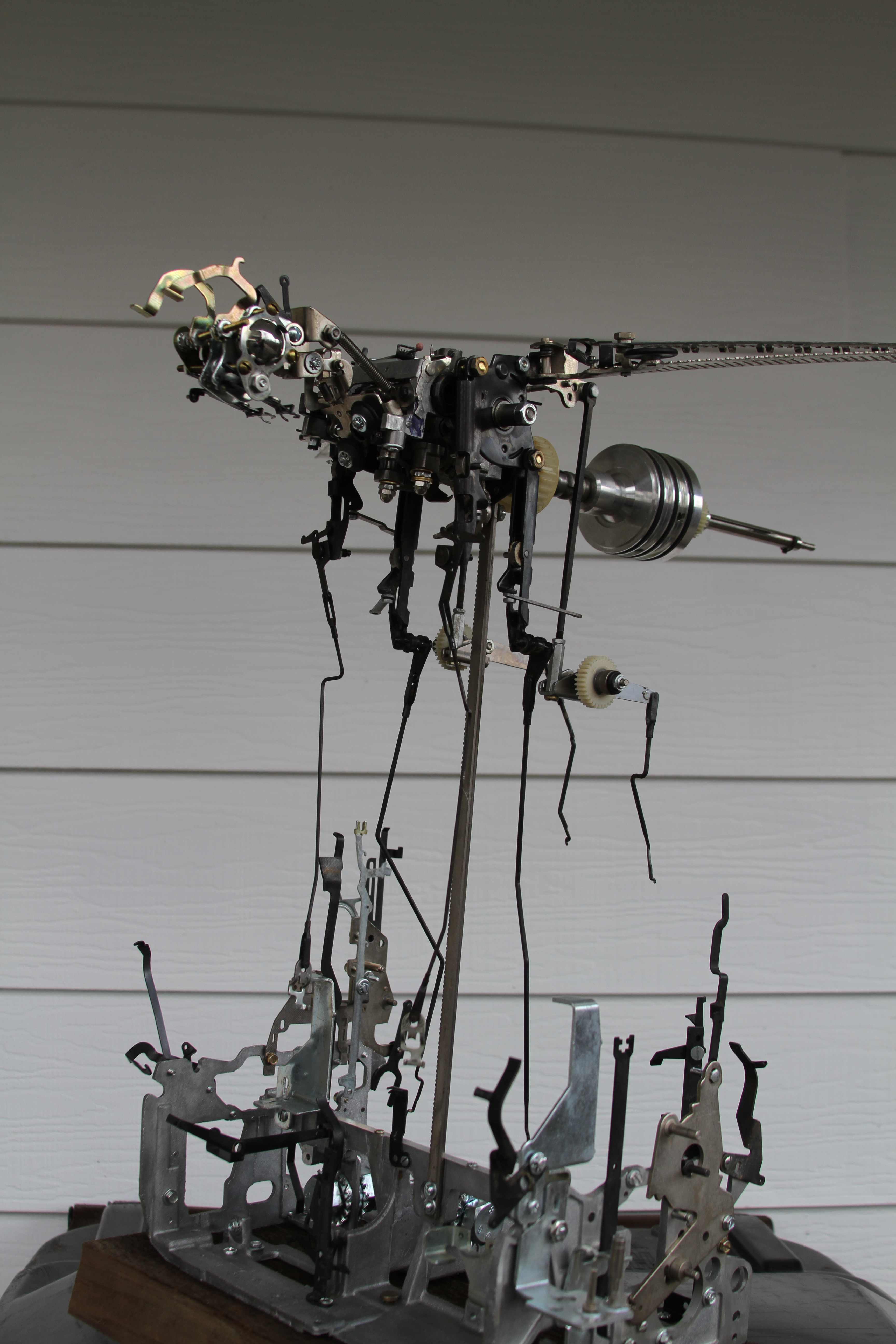
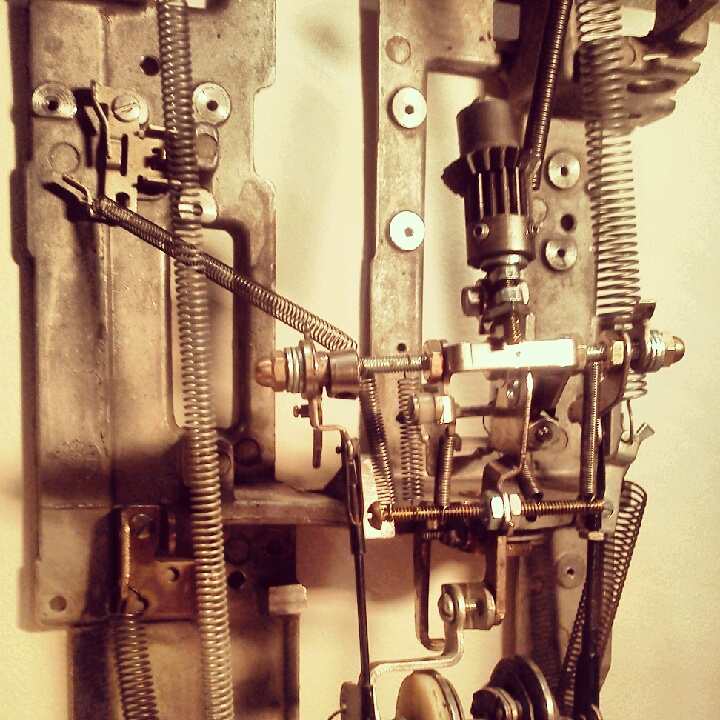
My art began as a desire to make things interactive, and unbreakable. That’s why I use cold assembly, which means I don’t weld or solder anything. If it comes apart, you can just tighten a few screws, and all is good. My pieces started out a lot bigger, and heavier. I used a lot of larger cast iron bits. Mostly for outdoor sculpture. I’ve made sundials, fire pits, and bird baths. Before my mom’s dad passed away, I used a lot of wire to accomplish my goals. After he passed, I raided his barn, and found a plethora of small metal bits of all kinds, and hardware galore. I’m so glad he was a hoarder. That’s when the real obsession began. I couldn’t have enough junk. Ask my wife. I started taking apart typewriters after buying about ten sewing machines. The sewing machines were good, but the typewriters are where it’s at. My favorite is the IBM selectric II. It has over 2800 parts, and takes me about four hours to totally disassemble. After which I just sit in front of a pile of parts, and start putting things together. Sometimes I have an idea of what I want to make. Then other times ideas are spawned from one piece in particular. There are very few parts that have a twin, which makes symmetry very difficult. So I usually take apart two machines at the same time so I have matching parts. I very rarely modify the parts. They are made from hardened steel, which makes them very hard to drill. So I typically use the holes that were manufactured in them. I go through a lot of trial and error. Sometimes I end up totally taking a piece apart, and starting over.

I don’t know what I’m going to do when I can no longer find typewriters. Hopefully I’ll have a big enough inventory to keep me working, or I can find something else to take apart. For now I can usually find one or two in a day of thrift shopping or hitting garage sales.

I have aspirations of motorizing my sculpture, and building on a much larger scale. I love what I do, and I think about new ideas constantly. I have just recently moved to the Charlotte, NC area and have met some great people. The art community is great around here. I’m looking forward to spreading my work around.

See more of Brian’s work at his Facebook Fan page and Instagram.

Brian Rumping 1

Brian Rumping 3

Brian Rumping 2

Brian Rumping 5

Brian Rumping 4

Brian Rumping 6

Postcolonial Thoughts: Art & the Origins of Supremacy

by Christopher Hutchinson


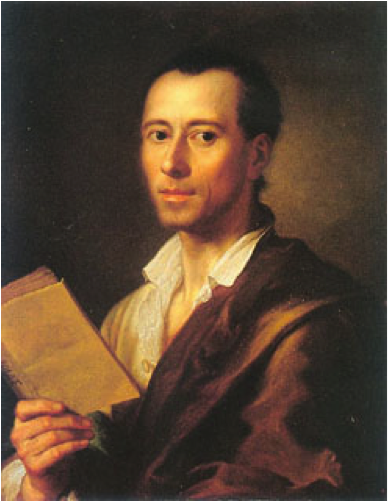
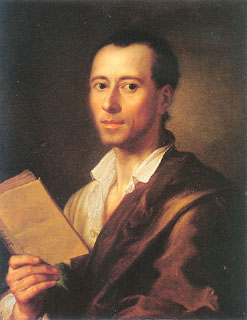
To Winckelmann, the art of Rome was an afterthought. The pinnacle of ancient art had been achieved in fifth-century Athens, whose democracy was the root cause of her excellence. The decline of art began with the establishment of the Hellenistic kingdoms following the death of Alexander. The moral lesson to be drawn from ancient history was not the danger of pagan hubris but rather the superiority of democracy.

http://www.brynmawr.edu/library/exhibits/antiquity/education3.htm


Art & Supremacy

From its inception art history has been tied to Supremacy.  Johann Winckelmann, author of the first History of Ancient Art 1764, whose sentiments are stated above, set the rubric as to what could and should be considered art. Many assume that art history has always been in existence. Truthfully it officially begins with Winckelmann and Neoclassical thought.  True to Neoclassical thought, there can be only one way to achieve art, and is through Democracy.

This democracy has been one of the major reasons why Greece has become the go-to standard as the beginning of art praxis.  This allows a global nullification of art produced by second and third world countries.  Winckelmann’s democracy becomes synonymous with supremacy.

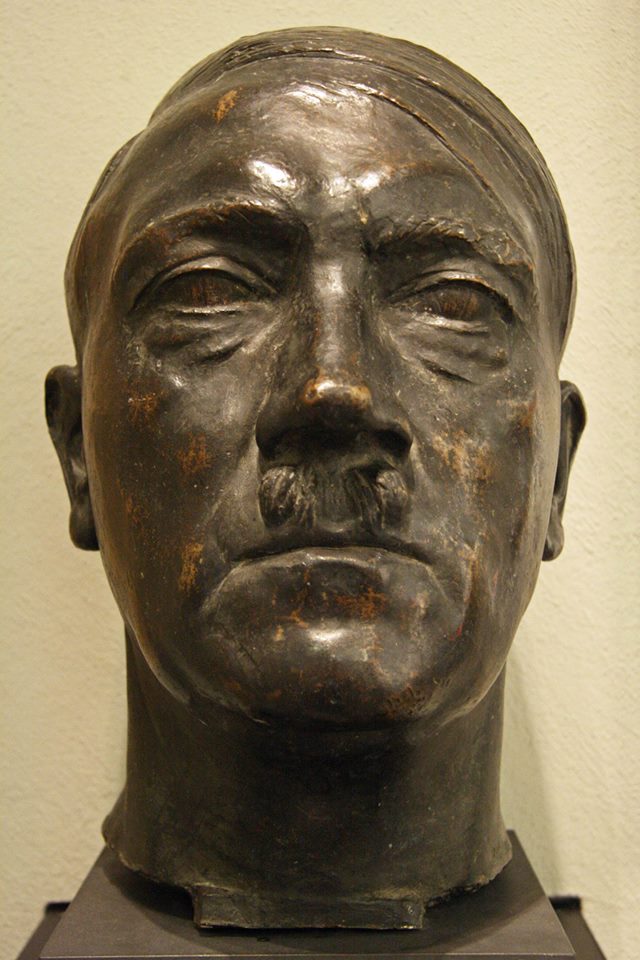
It is completely logical that the art of the Third Reich would adopt the standard of supremacy set by Winckelmann. Even the rebirth of humanism laid in the Renaissance and art movements that follow after, have a conceptual tie to that superiority that cannot be overlooked.  The linear practice of Western art theory/methodology has these roots. Hitler was aware of this obvious relationship.  His crowning achievement, after dominating the world, was to be his Museum of Art.

The museum was to have occupied the majority of the city center of Linz, turning the working-class town into Vienna’s cultural superior, a concept that Hitler had relished ever since his failed attempt to become an art student in Vienna, a city that made him feel like a rejected, second-class citizen, prior to his political career  

http://www.thedailybeast.com/articles/2014/02/07/inside-hitler-s-fantasy-museum.html


Art & Propaganda

pro·pa·gan·da

: ideas or statements that are often false or exaggerated and that are spread in order to help a cause, a political leader, a government, etc.

1capitalized :  a congregation of the Roman curia having jurisdiction over missionary territories and related institutions

2:  the spreading of ideas, information, or rumor for the purpose of helping or injuring an institution, a cause, or a person

3:  ideas, facts, or allegations spread deliberately to further one’s cause or to damage an opposing cause; also :  a public action having such an effect


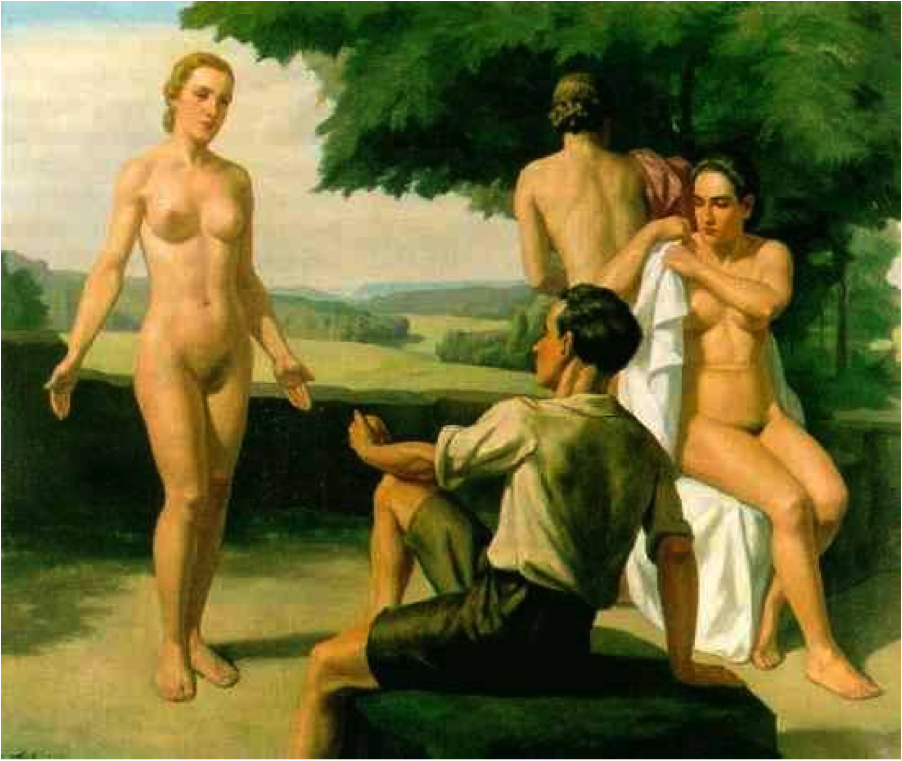
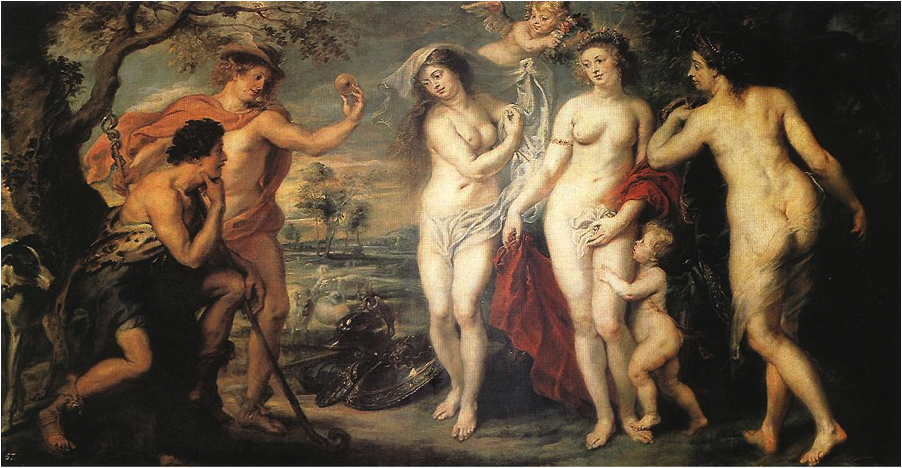
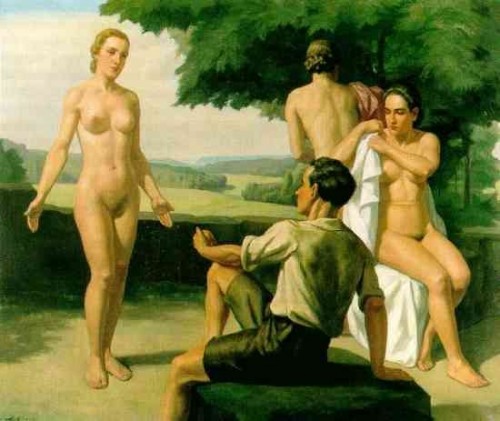
The Ziegler painting installed above the mantle of Hitler's apartment. The Judgement of Paris by Ziegler http://www.berkshirefinearts.com/uploadedImages/articles/2074_Guggenheim785848.jpg

The Ziegler painting installed above the mantle of Hitler’s apartment. The Judgement of Paris by Ziegler
http://www.berkshirefinearts.com/uploadedImages/articles/2074_Guggenheim785848.jpg


Art of the Third Reich has often been linked with the term propaganda as something negative.  Propaganda is usually perceived as the binary opposite to democracy. This would be the traditional understanding, except for the seamless transition Hitler’s propaganda and the history art already present.  Ziegler’s direct appropriation of Ruben’s Judgement of Paris 1636 is a testament to the farce of democracy. How could this be propaganda, when this narrative was already present?


Christopher HutchinsonChristopher Hutchinson is an Assistant Professor of Art at Atlanta Metropolitan State College, Archetype Art Gallery Owner in Atlanta, Ga, and Smoke School of Art Founder. He received his Master of Fine Arts Degree in Painting from Savannah College of art & Design, Atlanta and his Bachelor of Arts Degree from the University of Alabama in Huntsville, Alabama. He lived in Alabama for 10 years before moving to Atlanta in 2008.

Learn more about Christopher and his work at Black Flight 144.


Portraits by Manu Duf

Henri

Henri

John

John

Louis

Louis

Séraphine

Séraphine

Dadue

Dadue

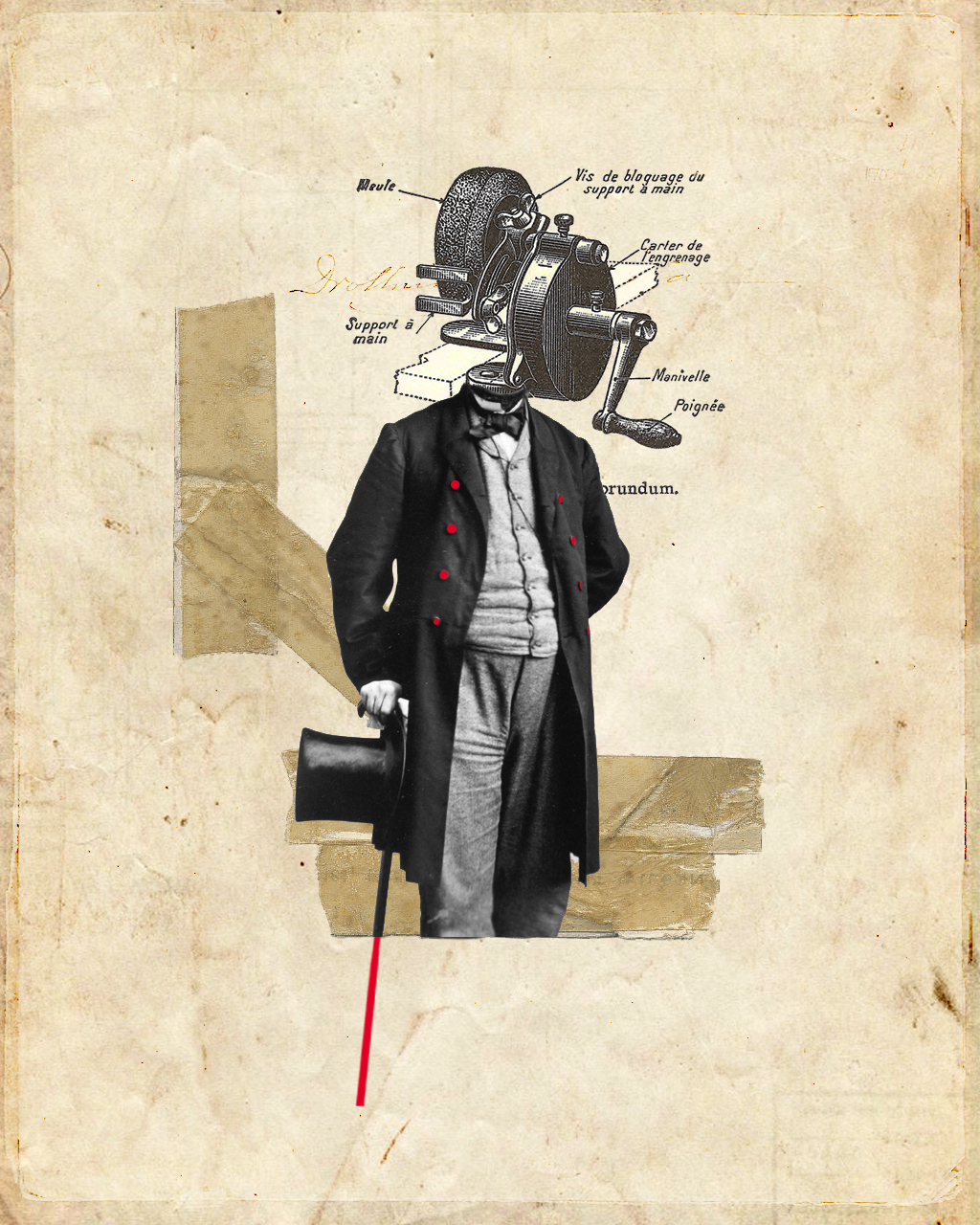
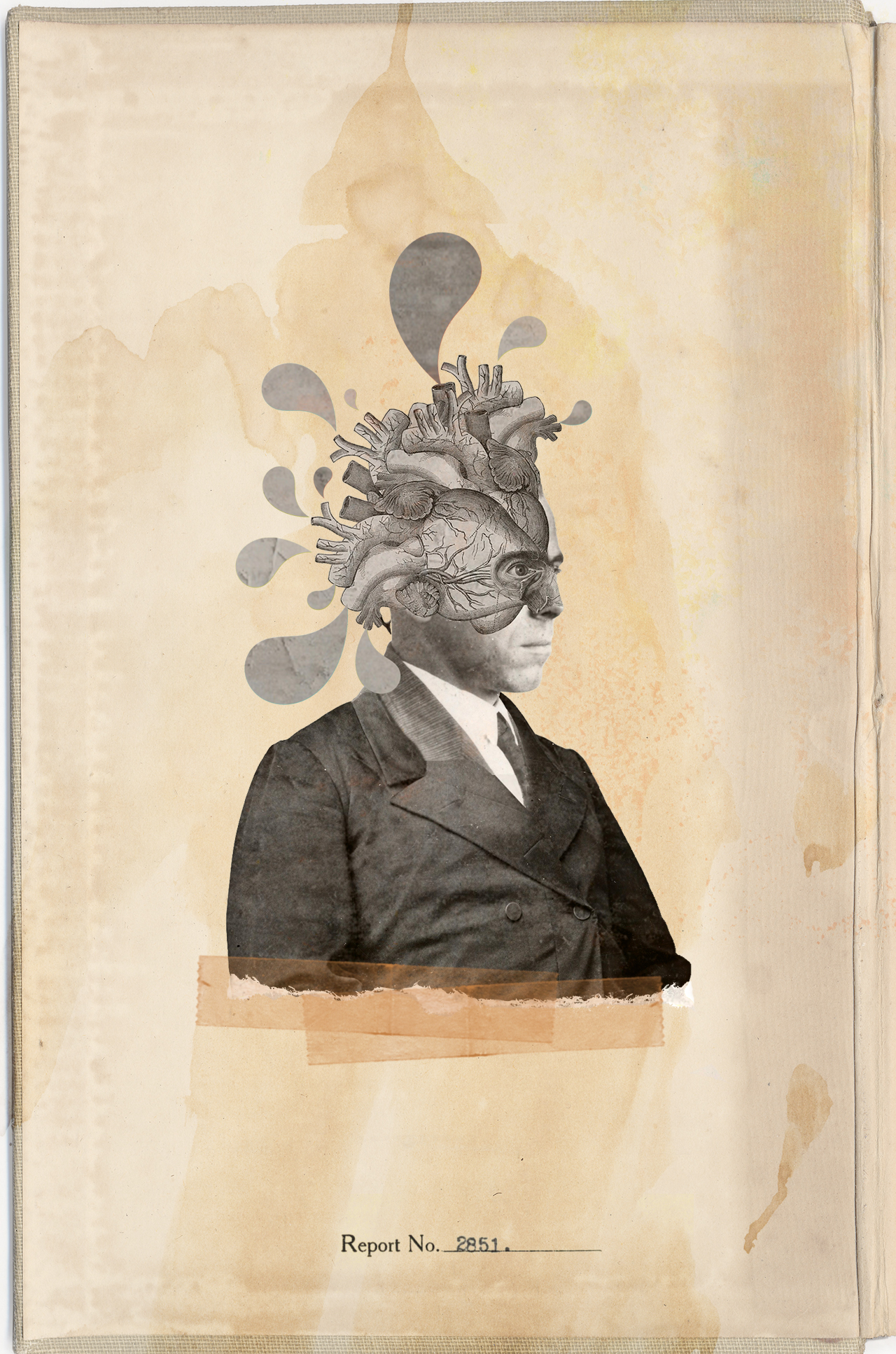
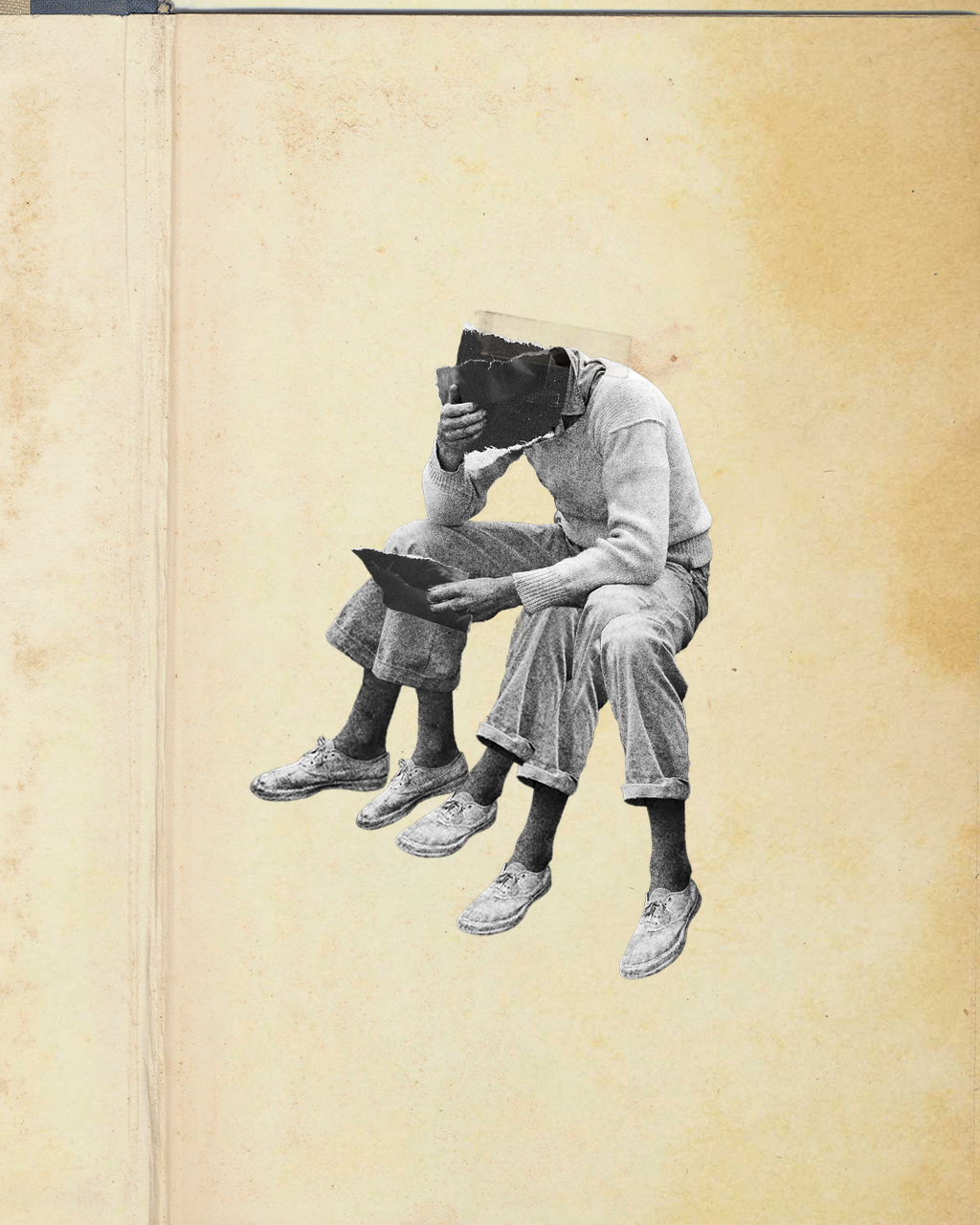
Artist: Manu Duf
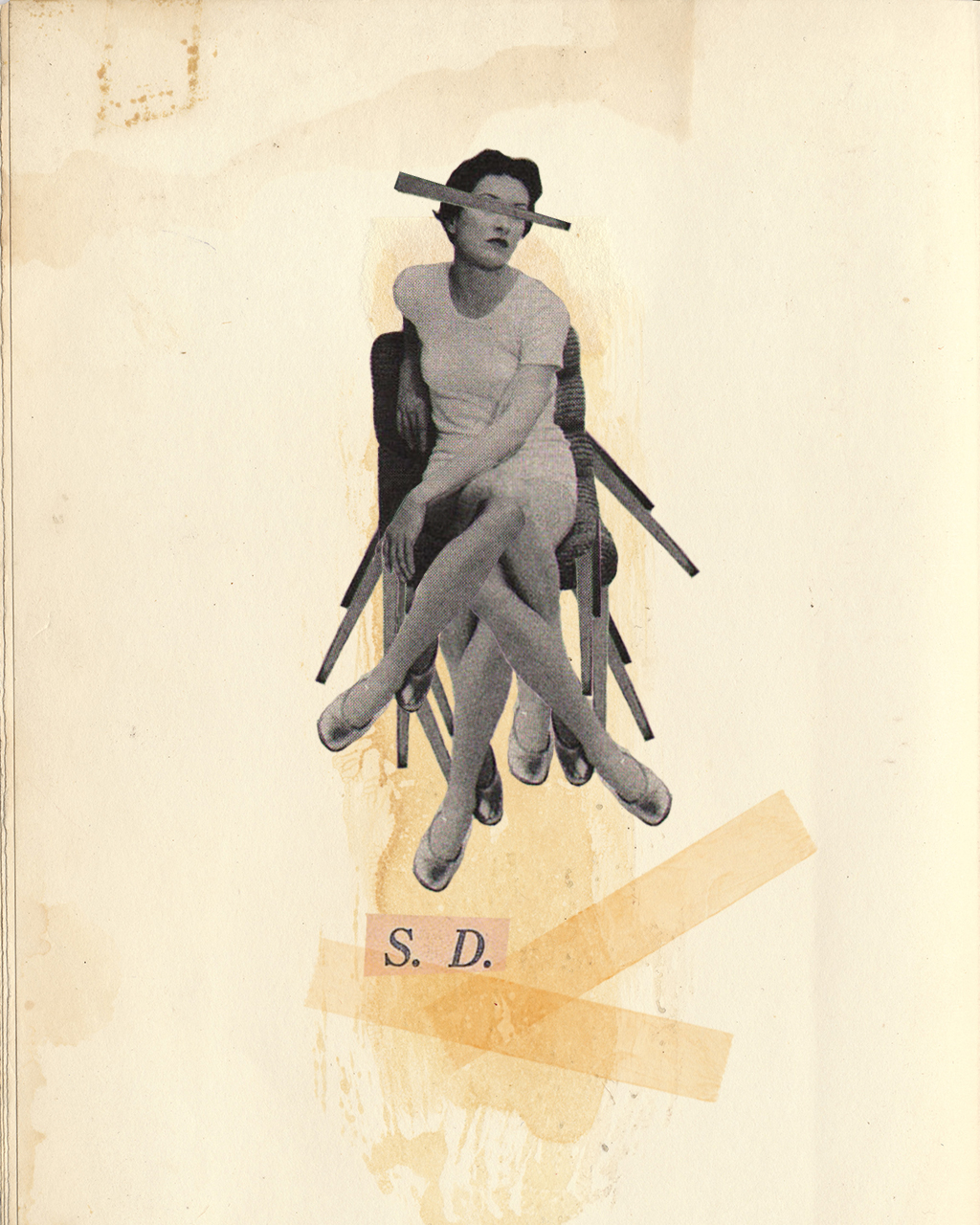
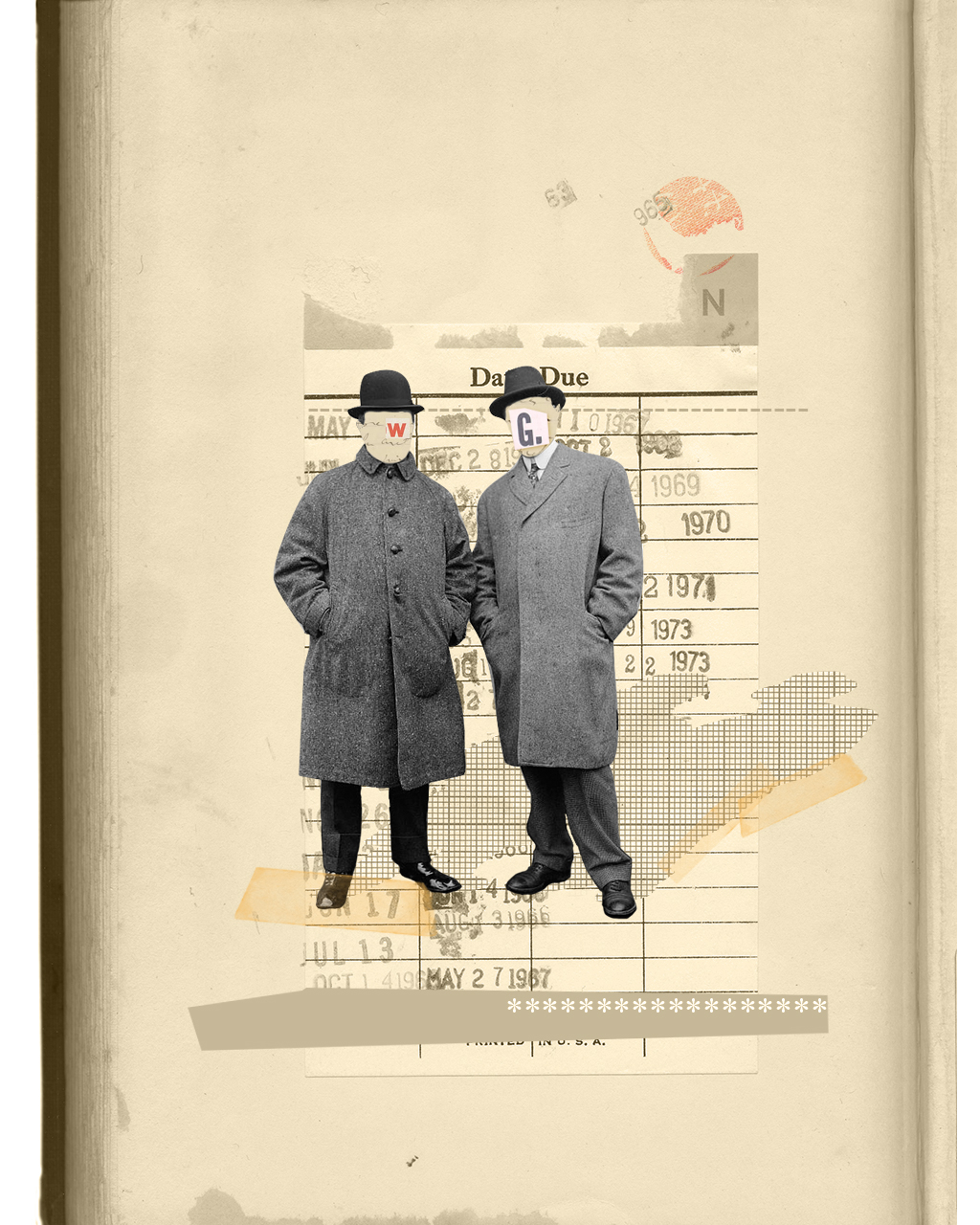
I am a French amateur collagist. I’ve been interested in art since my childhood. I have always been impressed with creation in all its forms: painting, drawing, collage, literature, music…. I started sharing this passion for creativity in social media by presenting artists and works that were important to me. Gradually, I invested a little more by sharing my own creations, mostly digital collages, since 2012. Portraits are for me a source of endless inspiration.

Life is Beautiful

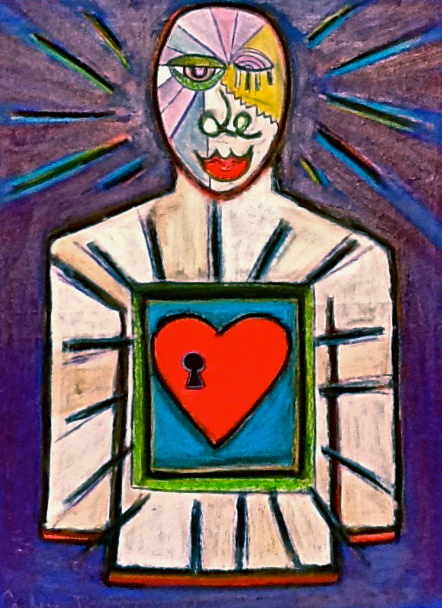
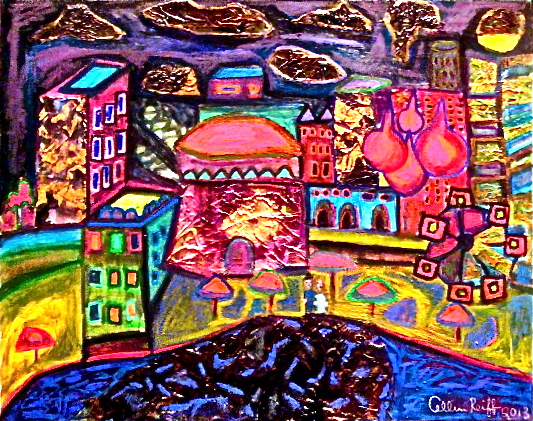
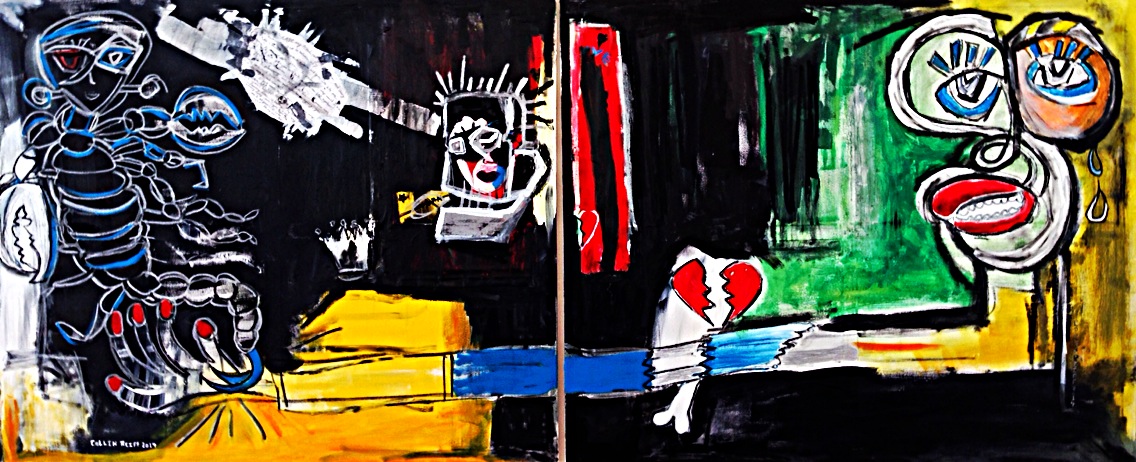
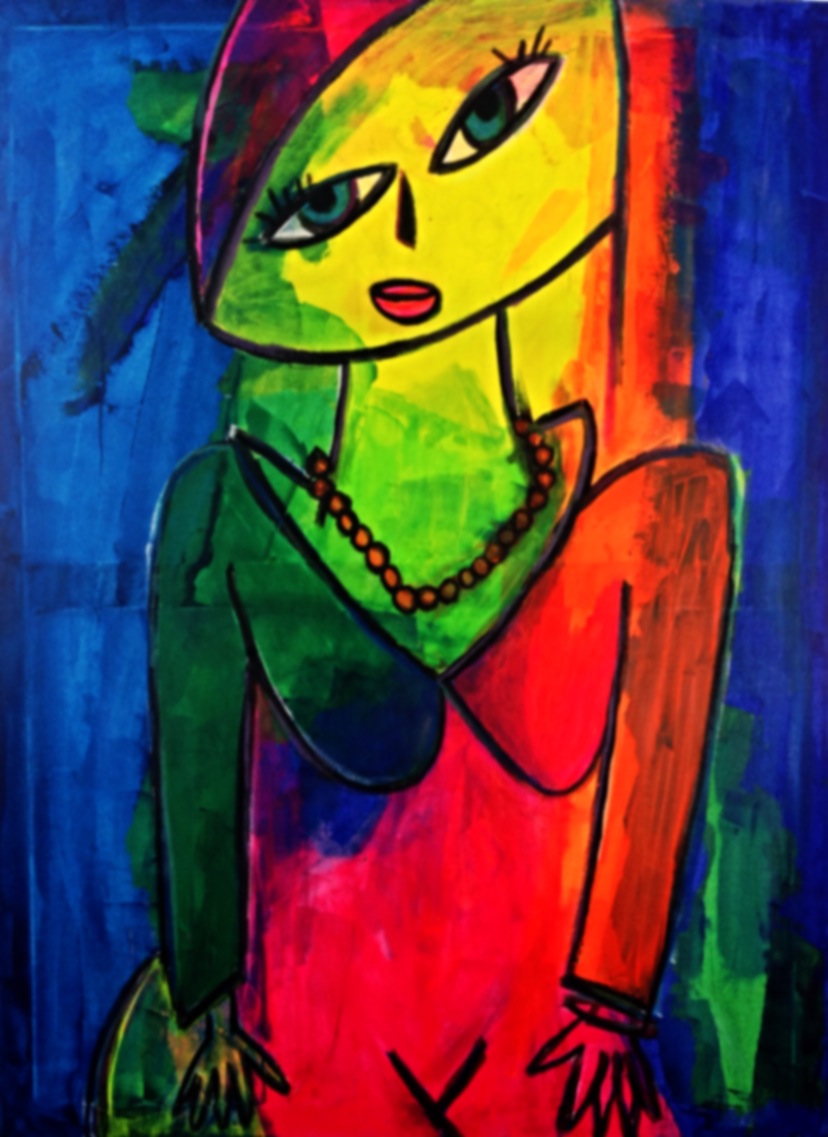
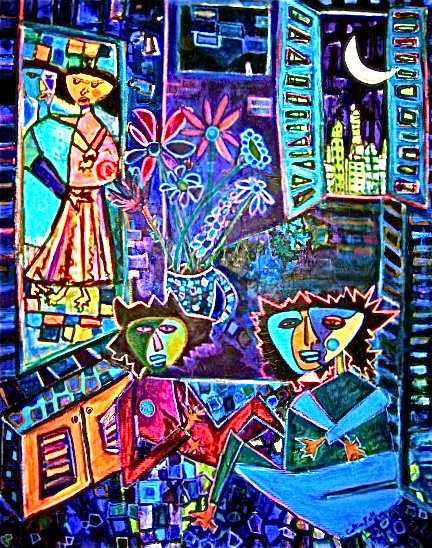
by Collin Reiff

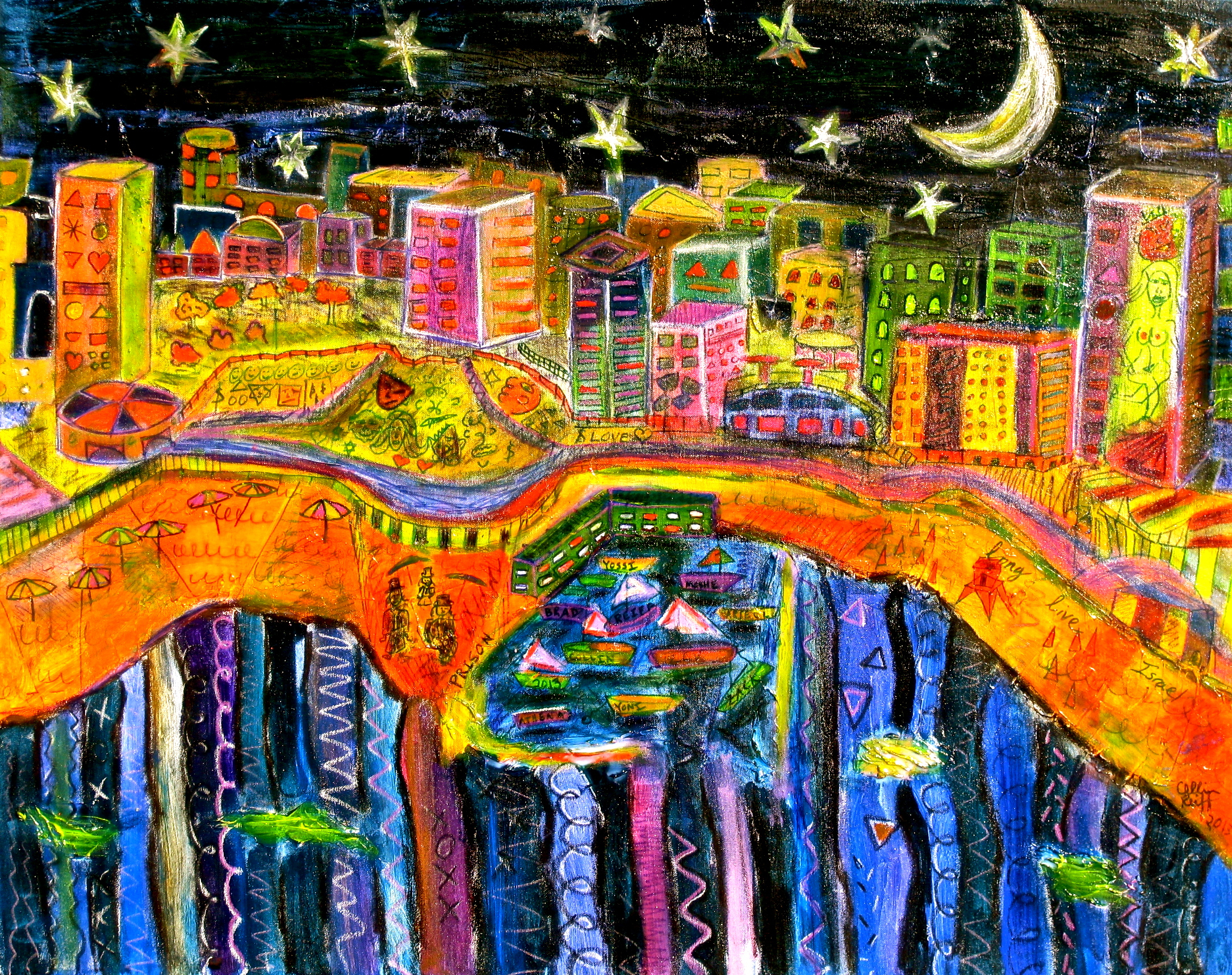
The paintings featured here were created in Tel Aviv, Israel between 2013 and 2014 with incredible support from The Karp Art Fellowship.

Tel Aviv at Night

Tel Aviv at Night

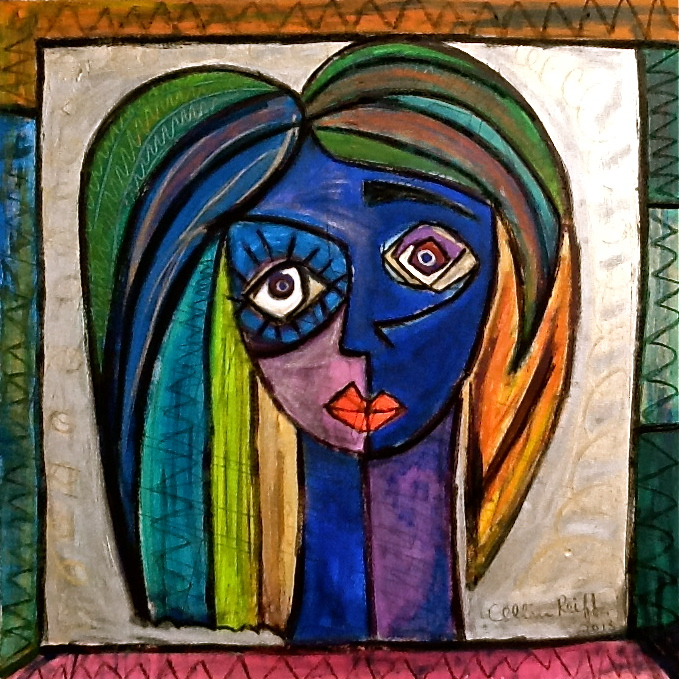
Portrait of Limor

Portrait of Limor

Margishim: We Feel

Margishim: We Feel

Eliat at Night

Eliat at Night

The artist and the scorpion

The artist and the scorpion

Portrait of Athena

Portrait of Athena

Lady in Jerusalem

Lady in Jerusalem

The chase

The chase

Opium in Sinai the eternal recurrence of Le Petit Prince

Opium in Sinai the eternal recurrence of Le Petit Prince

Untitled

Untitled

Artist: Collin Reiff
I like to think of myself as an existentialist painter. It is all about meaning. Every painting has been inspired by a real life event. Together the works tell a story, which began when I was 19 years old. They highlight life events: relationships, loves lost and found, unique moments, places and people who have touched my soul. My philosophy on painting is there is no art in the ugly and the beautiful. It does not exist. Only the mystery, the magic, the horrible and the beautiful can be expressed. It is by engaging the instinct entirely, without intellectual intervention, that one can express completely and strongly what is in oneself. There are times when the canvas reveals itself to the imagination and must be explored without hesitation, and other times when the imagination reveals itself to the canvas. It is the dialogue between the two that continues to inspire each stroke, drip, splash, or tear. Eventually a climax is reached. At this moment, the artist steps away and leaves before him another world within the confines of the canvas. When another being encounters this creation and feels love, sorrow, the pull of emptiness or inspiration, the artist’s job is complete.

Website: http://www.collinreiff.com

Works by Jason Sweet

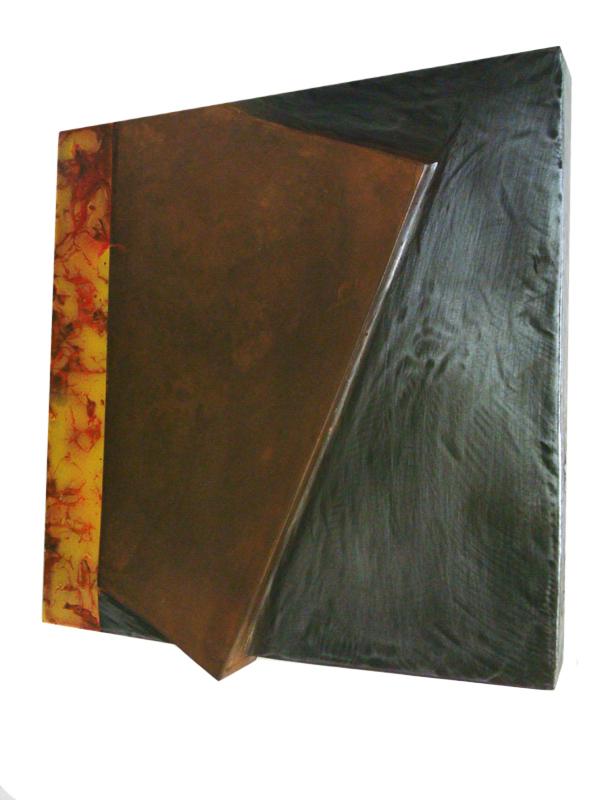
"From Home"     32" x 32" x 5"     Welded steel, enamel paint, patina

“From Home”

32″ x 32″ x 5″
Welded steel, enamel paint, patina

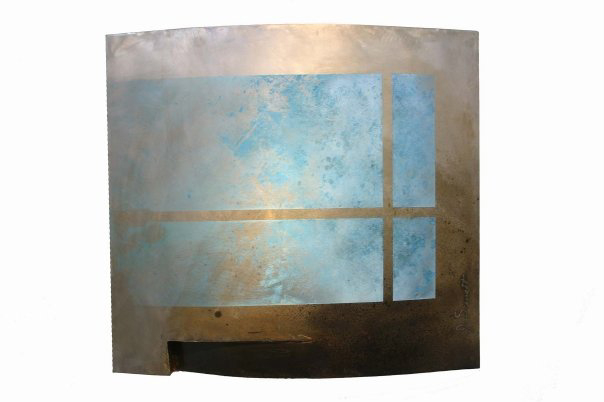
"Comp 3 & 4"      32" x 32" x 2"      Welded Steel, enamel paint, patina

“Comp 3 & 4”
32″ x 32″ x 2″
Welded Steel, enamel paint, patina

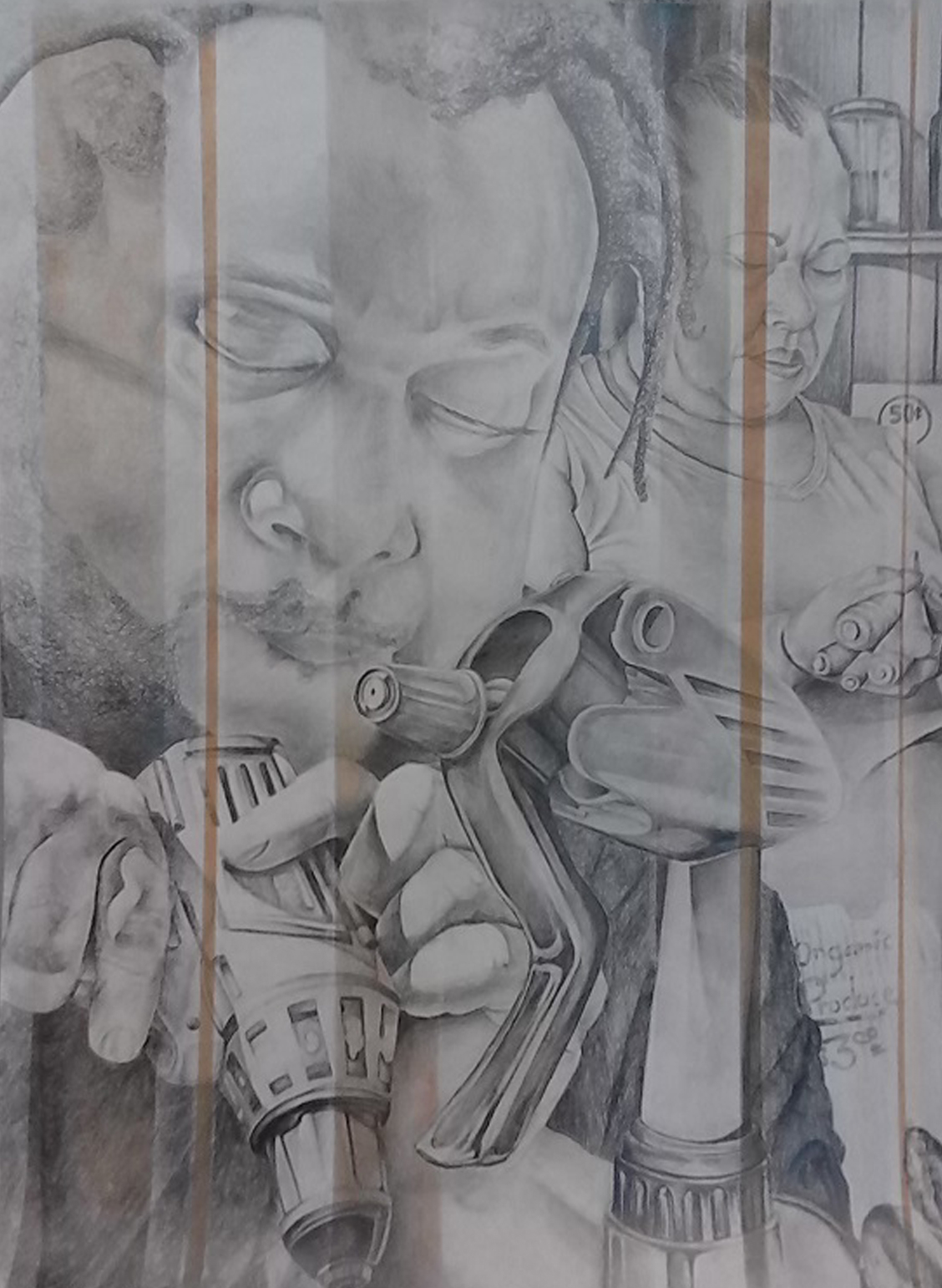
"Organic Produce"      18" x 24"      Pencil drawing and Georgia clay

“Organic Produce”
18″ x 24″
Pencil drawing and Georgia clay

"Cast Under"       60" x 38" x 12"       Welded Steel, enamel paint, patina

“Cast Under”
60″ x 38″ x 12″
Welded Steel, enamel paint, patina

"John Woolman's Gift"       Mixed media installation

“John Woolman’s Gift”
Mixed media installation

"No Puede Hacer Anoche"        Performance art piece

“No Puede Hacer Anoche”
Performance art piece

"Architectural and Environmental Symposium"      Public Art Commission monumental scale       Commercial Bronze

“Architectural and Environmental Symposium”
Public Art Commission monumental scale
Commercial Bronze


“Sigoa!” at 2009 annual international performance art series at Vertigo.

ARTIST STATEMENT

 Aspects of art I create is a genuine reflection of my interest in conceptual and/or formal notions in art making. By using conceptual matter and formal matter as a vehicle, my body of work attempts to balance contrasting elements be it through materials, design and/or subject matter.

   BIO

Jason Sweet Jason Sweet is a sculptor, painter, drawer, performance and installation artist.  He has exhibited his work internationally and has been awarded a number of public art commissions.  Sweet is Assistant Professor of Art and serves as Department Chair of Fine Arts at Atlanta Metropolitan State College.  He received his Master of Fine Art Degree in Sculpture from the University of Illinois Urbana/Champaign where he studied under renowned glass artist William Carlson and artist/critic Buzz Spector.  For his Bachelor of Arts he attended the University of Northern Iowa studying under the direction of sculptor Tom Stancliffe.  In 2001 he moved to Atlanta of which he currently resides.

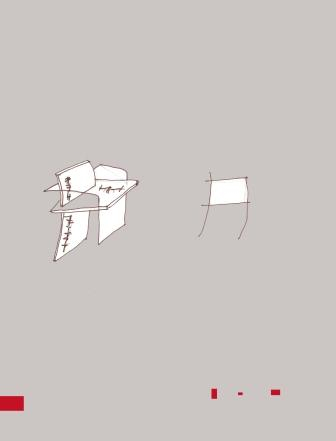
1 MULHER 1 CADEIRA [ 1 WOMAN 1 CHAIR]

by LizzieRz

ESTAMPA, graphic design on architectural design

ESTAMPA, graphic design on architectural design

ABOUT KISSES & HUGS, acrylic painting on canvas, digital photo, collage

ABOUT KISSES & HUGS, acrylic painting on canvas, digital photo, collage

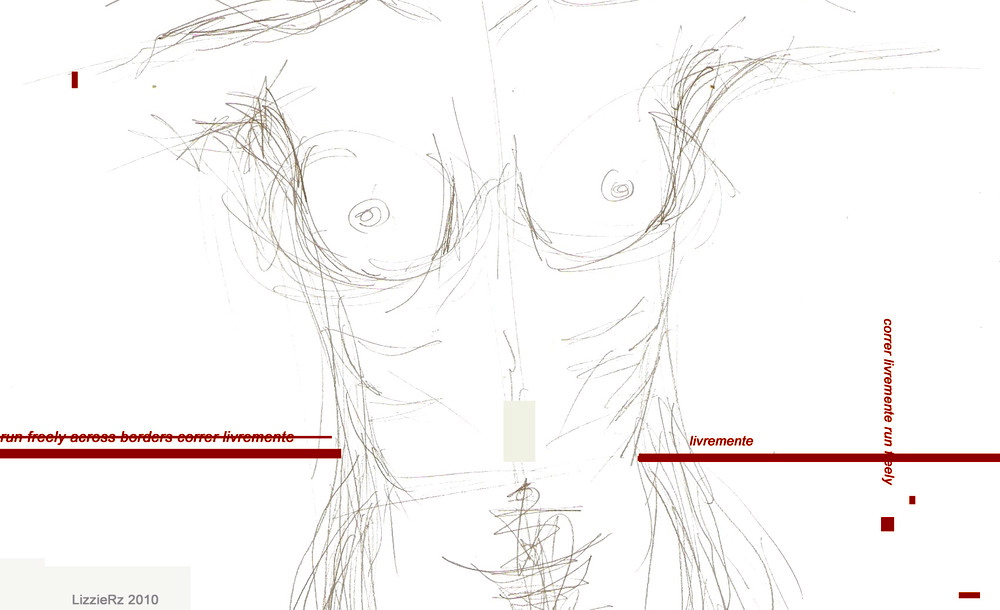
RUN FREE, pencil and pen on paper and digital graphic design

RUN FREE, pencil and pen on paper and digital graphic design

CHAIRS, pencil and pen on paper and digital graphic design

CHAIRS, pencil and pen on paper and digital graphic design

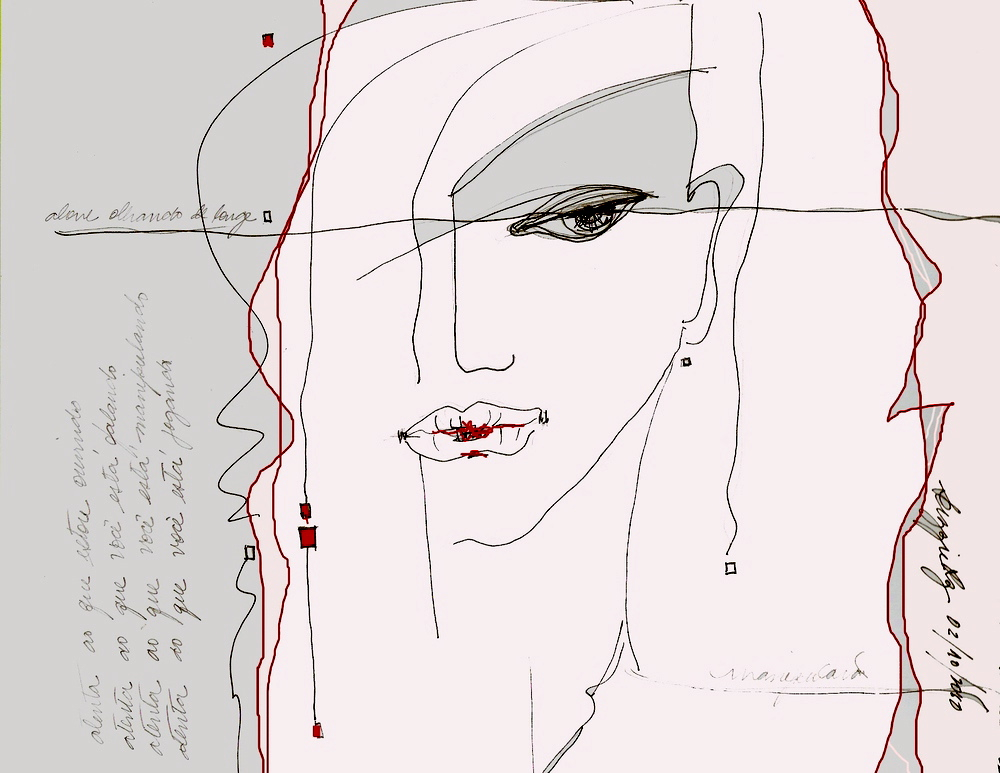
WOMAN, pencil and pen on paper and digital graphic design

WOMAN, pencil and pen on paper and digital graphic design

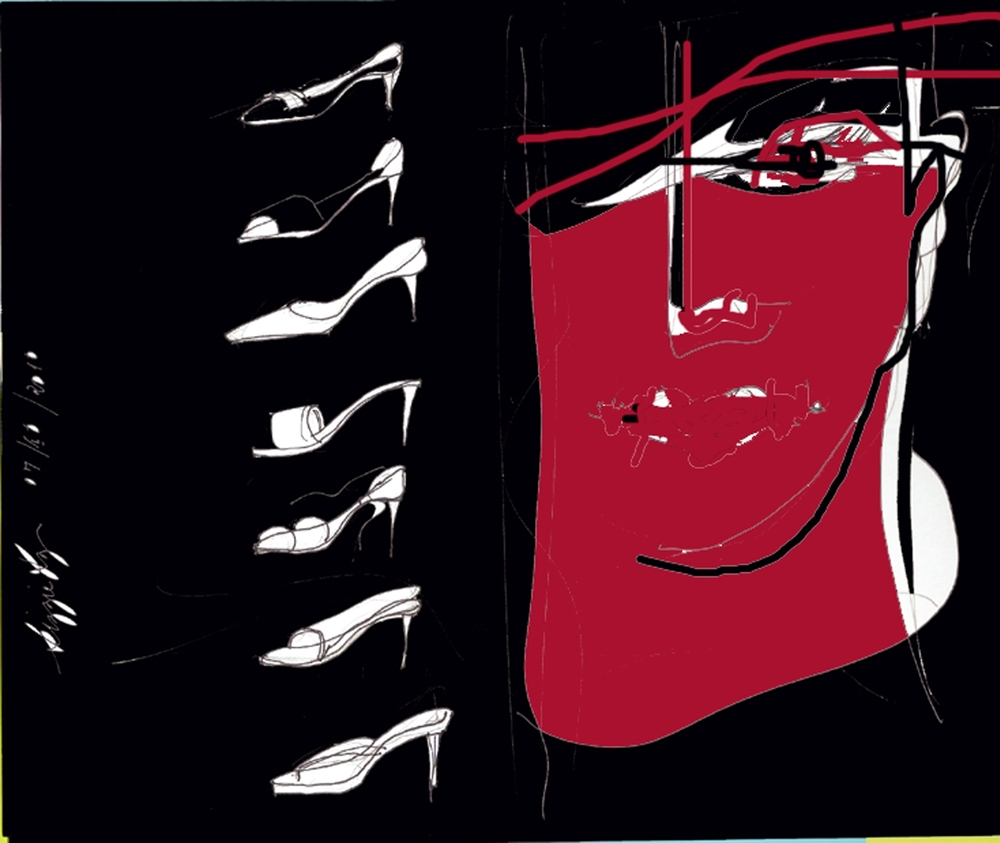
OPOSTOS, pencil and pen on paper and digital graphic design

OPOSTOS, pencil and pen on paper and digital graphic design

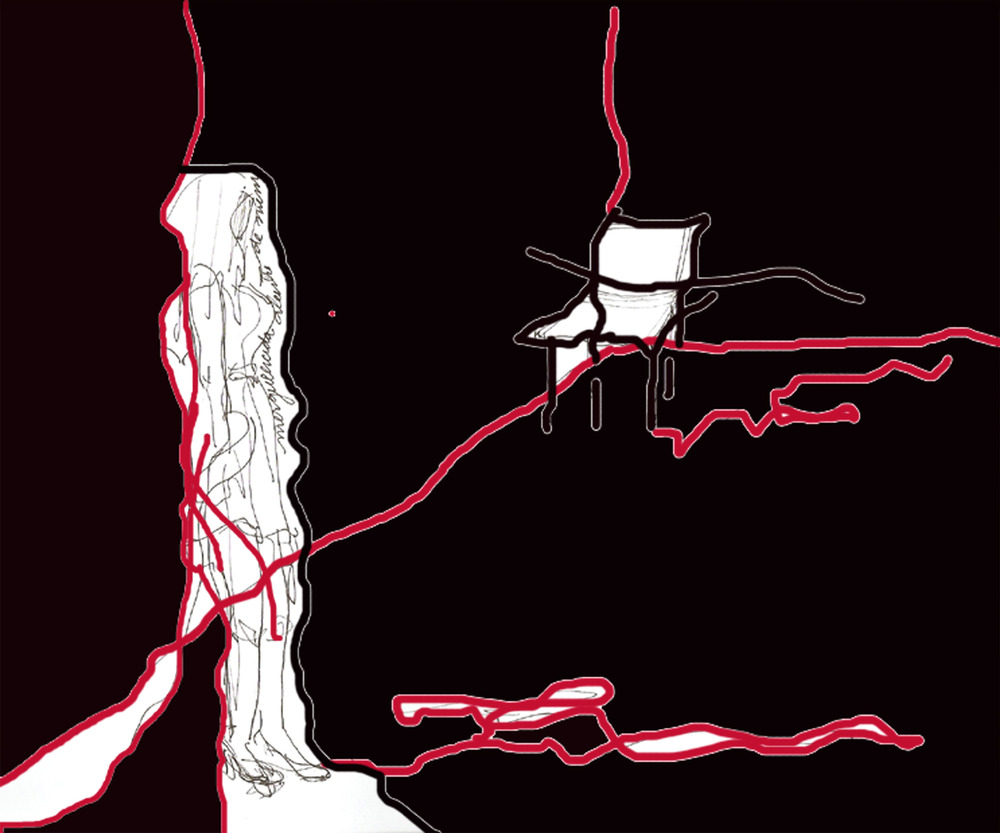
1 MULHER 1 CADEIRA, pencil  and pen on paper and digital graphic design

1 MULHER 1 CADEIRA, pencil and pen on paper and digital graphic design

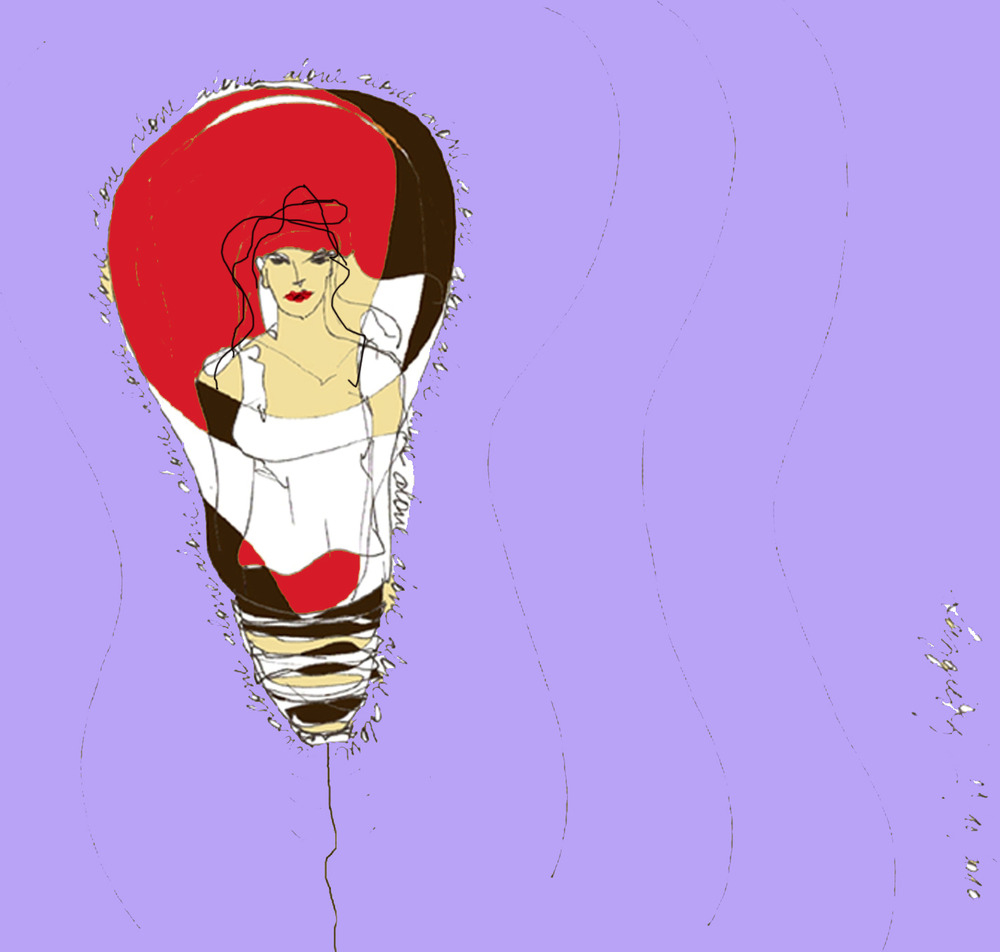
ALONE, pencil and pen on paper and digital graphic design

ALONE, pencil and pen on paper and digital graphic design

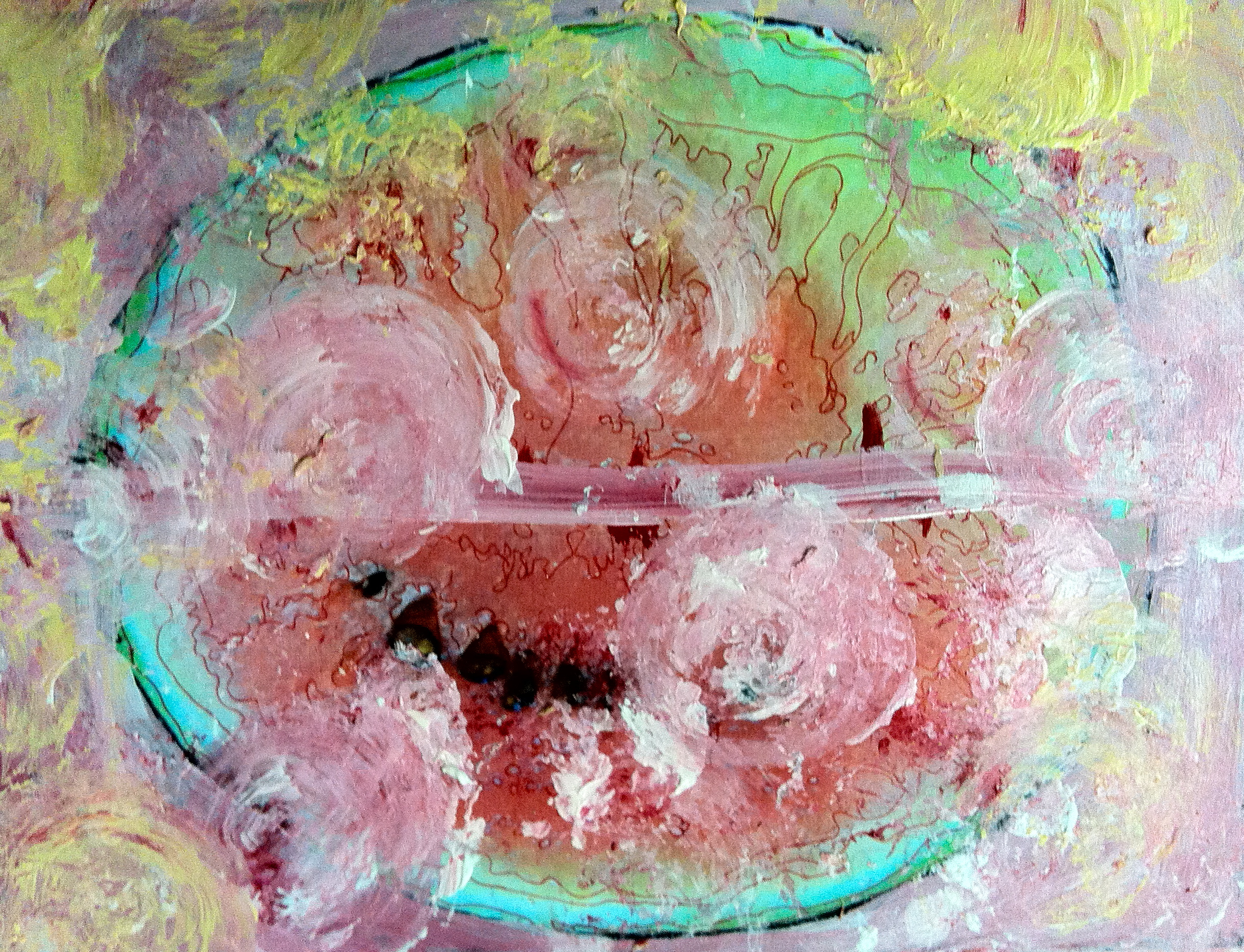
MELANCIA, photography and acrylic painting

MELANCIA, photography and acrylic painting

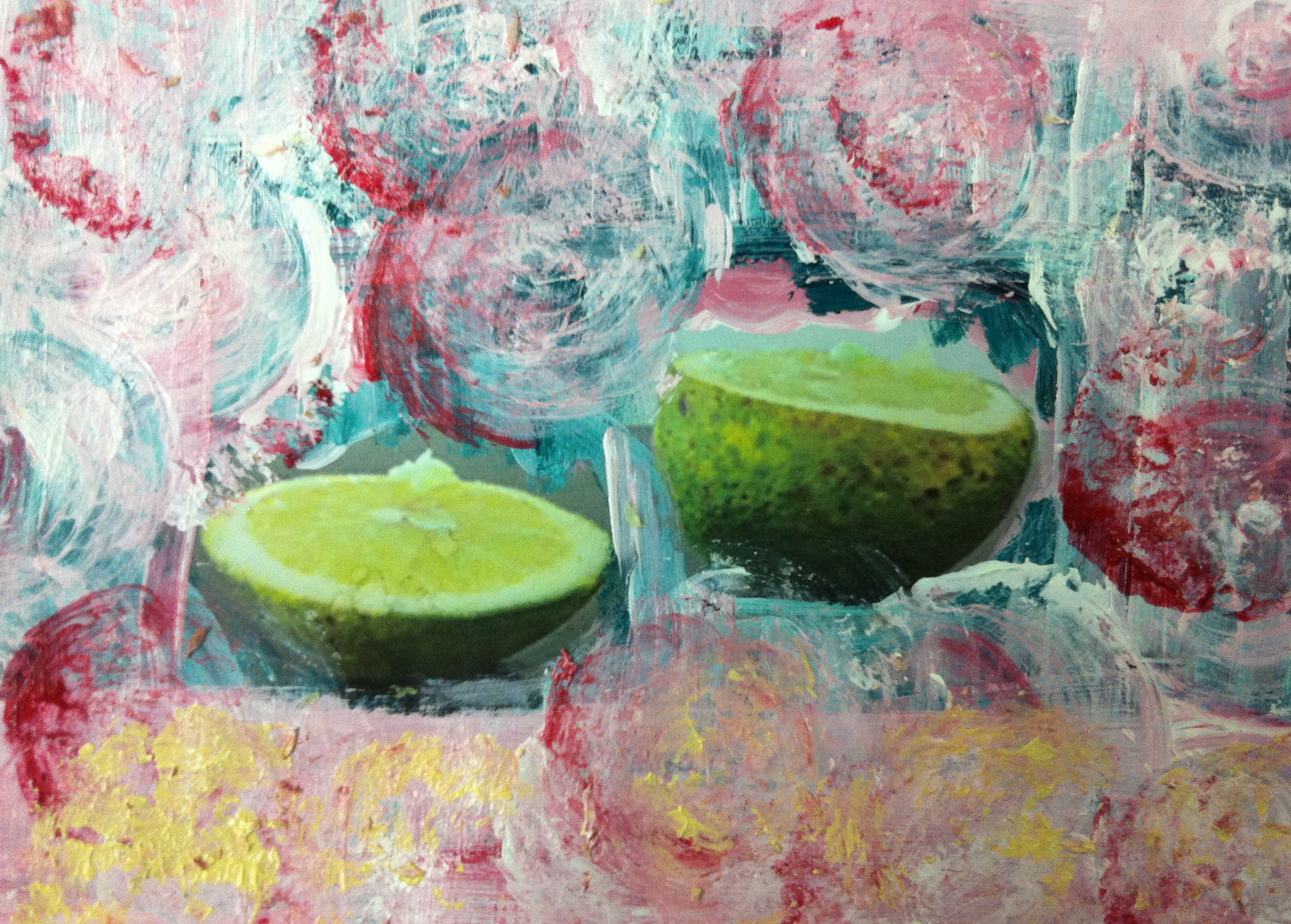
LARANJAS, photography and acrylic painting

LARANJAS, photography and acrylic painting


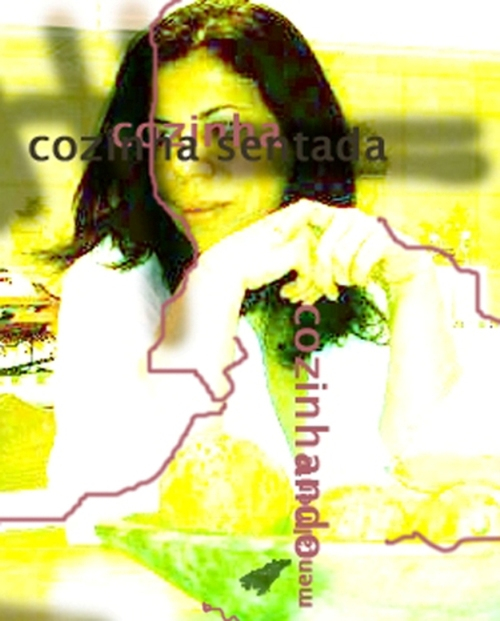
LizzieRz-SAMSUNGLizzieRz is a Brazilian Architect and Urbanist, internationally recognized and quoted in the press for her artistic and architectural projects. Throughout her career she’s worked in a broad artistic universe–design, graphic design, painting, drawing, sculpture, and literature. As an artist, Liz likes to choose simple details in everyday context and expand them to reveal new patterns.

You can learn more about LizzieRz here:

http://www.lizzierz.com/

http://www.soulempreendimentos.com/

https://twitter.com/LizzieRz

Postcolonial Thoughts: Raymond Saunders and Black Abstraction

by Christopher Hutchinson

Black abstraction is often overlooked in art history. Black art is a term that is used to classify the artwork of image and subject based exclusively for the Black community. Any work outside of the stereotype lives in a limbo state that would typically be designated for Western Academia. Black abstraction is almost an oxymoron, due to the fact that Black art is largely associated with outsider, primitive, and folk art. Examining this relationship between Raymond Saunders and Jean-Michel Basquiat is to draw a linear history of Art that proves a transcendence of Black art to being more than stereotypical images.

When one does an Internet search for Saunders, names like Robert Rauschenberg, Jim Dine, or Cy Twombly come up. Likewise with Basquiat names like Julian Schnabel, David Salle, Francesco Clemente, Enzo Cucchi, and Warhol. The two almost never intertwine yet their work is so similar. It is my hypothesis that the obvious link between the two is their Black art lineage. It is in their interest in documenting history and challenging the prohibition on black in traditional painting, the physicality of Blackness through black paint, all the while coding it in Black language.

Prohibition on black paint

Gray is toneless and immobile. This immobility, however, is of a different character from the tranquillity of green, which is the product of two active colors and lies midway between them. Gray is therefore the disconsolate lack of motion. The deeper this gray becomes, the more the disconsolate element is emphasized, until it becomes suffocating.
Wassily Kandinsky, On the Spiritual in Art
http://www.artnet.com/magazine/features/kuspit/kuspit12-19-02.asp

The term Black is a color is a direct response to any painter who has endured a traditional oil painting class. The professors of these classes create rules for students that forbid the use of buying or using black paint at anytime during the course. Students are to mix their own blacks. You must learn the ways of the Italian oil painting masters. Painters who paint from life know that there is no real black in nature. So to a true oil painter any amount of pure black is an offence. Black paint is not a shadow, it is a warm color that comes to the front and does not recede. Black flattens space, or the depth of a painting, everything that the old masters are against. These were the guidelines all the way to a significant shift with Edward Manet. It is very easy to tell artists who paint from life or a photograph. That heightened contrast only exists in photography and artificial lighting, not nature. Undergraduate foundation courses still have these rules as a rubric.

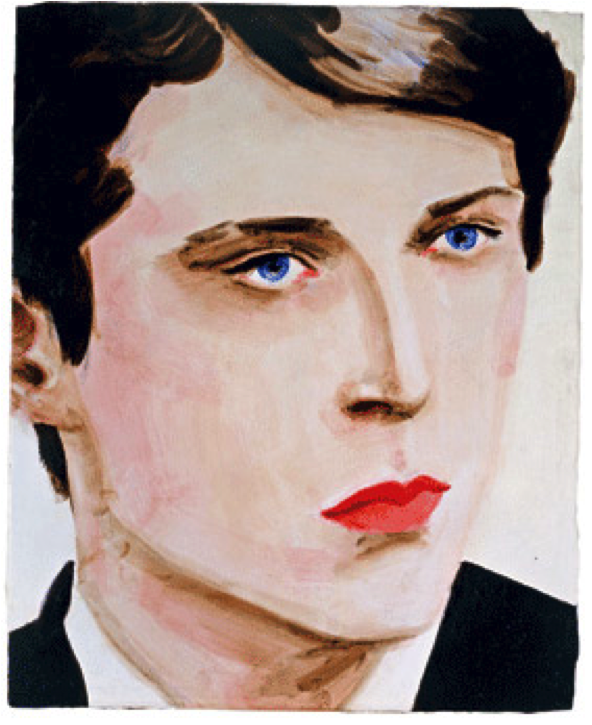
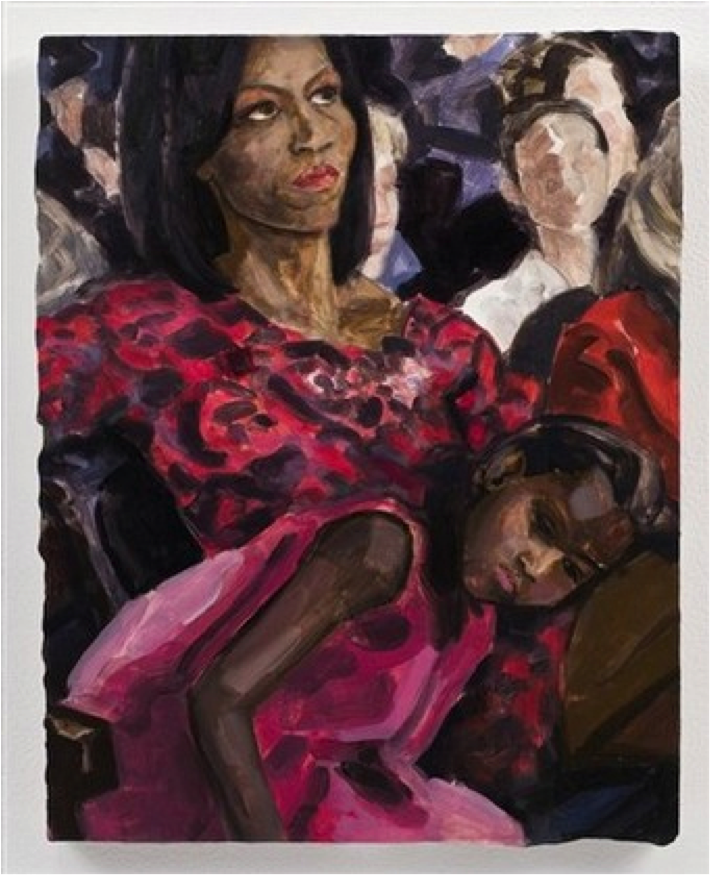
This ban on black paint allows many so-called oil realists, who are also considered brilliant colorists, to fail miserably to capture Black skin. While initially these black paint and Black skin seem to be unrelated, it becomes blatantly obvious when it is painted. This can easily be seen in the works of Elizabeth Peyton. She is known for painting these androgynous icons but her depiction of the first Lady and daughter is proof of the European painters lack of skill in understanding black paint and Black skin, then further Black people.

Elizabeth Peyton Democrats are more beautiful (after Jonathan Horowitz), 2001 Oil on board 25,4 x 20,3 cm Collection Laura & Stafford Broumand http://www.e-flux.com/announcements/elizabeth-peyton/

Elizabeth Peyton
Democrats are more beautiful (after Jonathan Horowitz), 2001
Oil on board
25,4 x 20,3 cm
Collection Laura & Stafford Broumand
http://www.e-flux.com/announcements/elizabeth-peyton/

Elzabeth Peyton “Michelle and Sasha Obama Listening to Barack Obama at the Democratic National Convention, August 2008” http://artandperception.com/2009/01/obama-and-the-arts.html

Elzabeth Peyton
“Michelle and Sasha Obama Listening to Barack Obama at the Democratic National Convention, August 2008”
http://artandperception.com/2009/01/obama-and-the-arts.html

The prohibition of black paint is transfixed to Black imagery and the spectacle of the Black body. It is within this prohibition that Raymond Saunders practice begins to identify the semiotics of black the color and Black imagery.

black
1. lacking hue and brightness; absorbing light without reflecting any of the rays composing it. 2. characterized by absence of light; enveloped in darkness: a black night.
3. ( sometimes initial capital letter ) a. pertaining or belonging to any of the various populations characterized by dark skin pigmentation, specifically the dark-skinned peoples of Africa, Oceania, and Australia. b. African American. 4. soiled or stained with dirt: That shirt was black within an hour. 5. gloomy; pessimistic; dismal: a black outlook.
6. deliberately; harmful; inexcusable: a black lie. 7. boding ill; sullen or hostile; threatening: black words; black looks. 9. without any moral quality or goodness; evil; wicked: His black heart has concocted yet another black deed. 10. indicating censure, disgrace, or liability to punishment: a black mark on one’s record. 11. marked by disaster or misfortune: black areas of drought; Black Friday. 13. based on the grotesque, morbid, or unpleasant aspects of life: black comedy; black humor. 14. (of a check mark, flag, etc.) done or written in black to indicate, as on a list, that which is undesirable, substandard, potentially dangerous, etc.: Pilots put a black flag next to the ten most dangerous airports. 17. deliberately false or intentionally misleading: black propaganda. http://dictionary.reference.com/browse/black

Black is a Color pamphlet

Saunders has also published catalogs and pamphlets; most notably, his 1967 pamphlet “Black is a Color”, which argues that African American artists need not be limited by racial representations, and argues against the concept of “black” art as a potentially degrading restriction, in favor of a more race-neutral approach to artistic creation. https://www.cca.edu/academics/faculty/rsaunders

Artist and Professor Raymond Saunders wrote his pamphlet “Black is a Color” in 1967 after attaining his MFA from California College of Arts in 1961. Black is a Color takes issue with the Black Art of present in the 60’s and is still more so relevant today. Saunders sees the spectacle of the black body as something extremely limiting to African American contribution to the Arts. Saunders recognizes the need for abstraction as a tool to challenge the narrative of black so coded in the long history of the painted image.

“Racial hang-ups are extraneous to art. no artist can afford to let them obscure what runs through all art–the living root and the ever-growing aesthetic record of human spiritual and intellectual experience. can’t we get clear of these degrading limitations, and recognize the wider reality of art, where color is the means and not the end?” [sic]
–Raymond Saunders, African-American artist, in his 1967 pamphlet Black is a Color http://xroads.virginia.edu/~ug01/westkaemper/callaloo/gallery6.html

Black Abstraction

abstract art
noun
an abstract genre of art; artistic content depends on internal form rather than pictorial representation [syn: abstractionism]

A trend in painting and sculpture in the twentieth century. Abstract art seeks to break away from traditional representation of physical objects. It explores the relationships of forms and colors, whereas more traditional art represents the world in recognizable images.

http://dictionary.reference.com/browse/abstract%20art?&o=100074&s=t

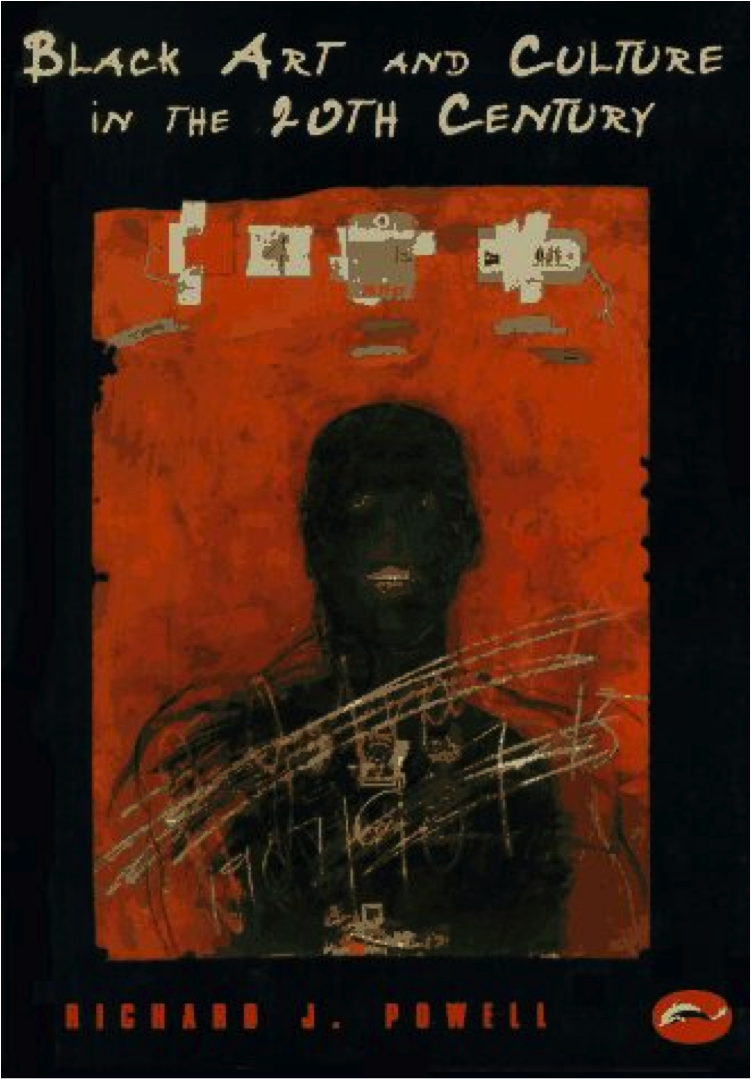
20th-century black art  is the first to concentrate on the art works themselves, and on how these works, created during a major social upheaval and transformation, use black culture both as subject and as context. Professor Powell traces and explores the visual representations of black culture throughout the 20th century, to racial and cultural identity used as artistic content in the 1980s and 1990s. A conclusion discussing black society and culture in 20th-century film and video, and biographies of the many artists discussed in the book, complete this comprehensive work. http://www.amazon.com/Black-Culture-20th-Century-World/dp/0500202958

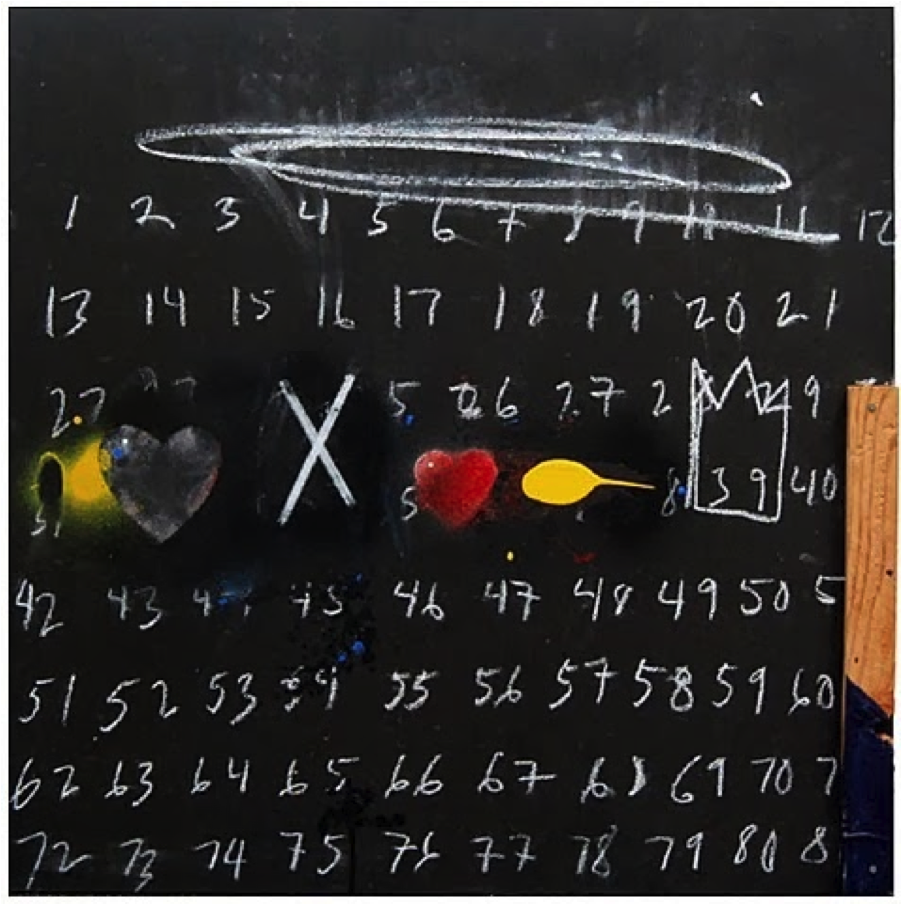
Saunders’s  “Jack Johnson” (1972) painting graces the cover of Professor Richard J. Powell’s Black Art and Culture in the 20th Century. Powell’s book lists artists from the Diaspora that have contributed to a contemporary art dialogue while discussing its context. There is a Black lineage of artists that goes beyond Romare Bearden. There is a lineage of Black abstraction.

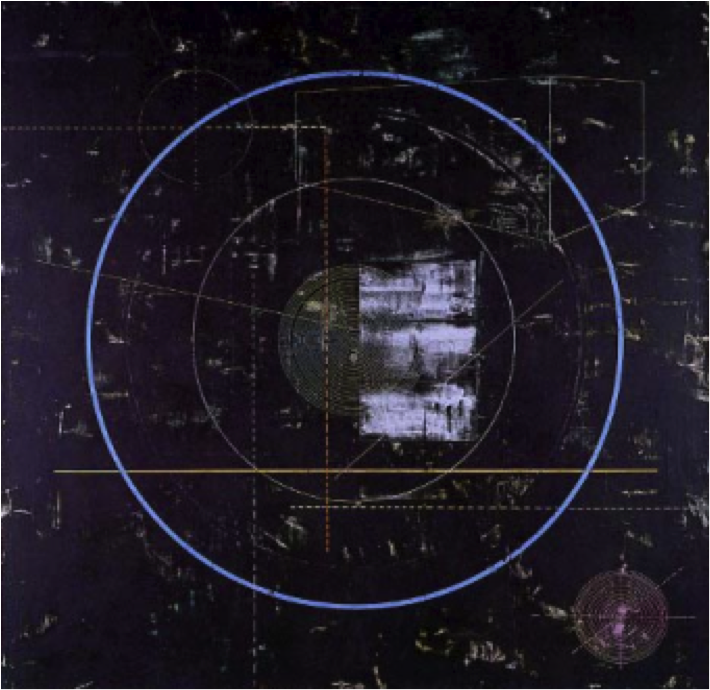
Saunders does not use abstraction as a way to hide his ethnicity, rather to explore the physical qualities of black as it relates to Blackness. Many have used abstraction in ways to avoid ethnicity completely. The use of black in Black abstraction is also shared with Jack Whitten in his Dead Reckoning  1  1980.

Basquiat’s Radiant predecessor

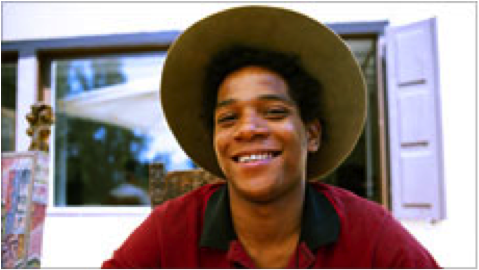
Centered on a rare interview that director and friend Tamra Davis shot with Jean-Michel Basquiat more than 20 years ago, this film chronicles the meteoric rise and fall of the young artist. In the crime-ridden New York City of the 1970s, he covers the city with the graffiti tag ‘SAMO.’ In 1981 he puts paint on canvas for the first time, and by 1983 he is an artist with “rock star status.” He achieves critical and commercial success, though he is constantly confronted by racism from his peers. In 1985, he and Andy Warhol become close friends and painting collaborators, but they part ways and Warhol dies suddenly in 1987. Basquiat’s heroin addiction worsens, and he dies of an overdose in 1988 at the age of 27. The artist was 25 years old at the height of his career, and today his canvases sell for more than a million dollars. http://www.pbs.org/independentlens/jean-michel-basquiat/film.html

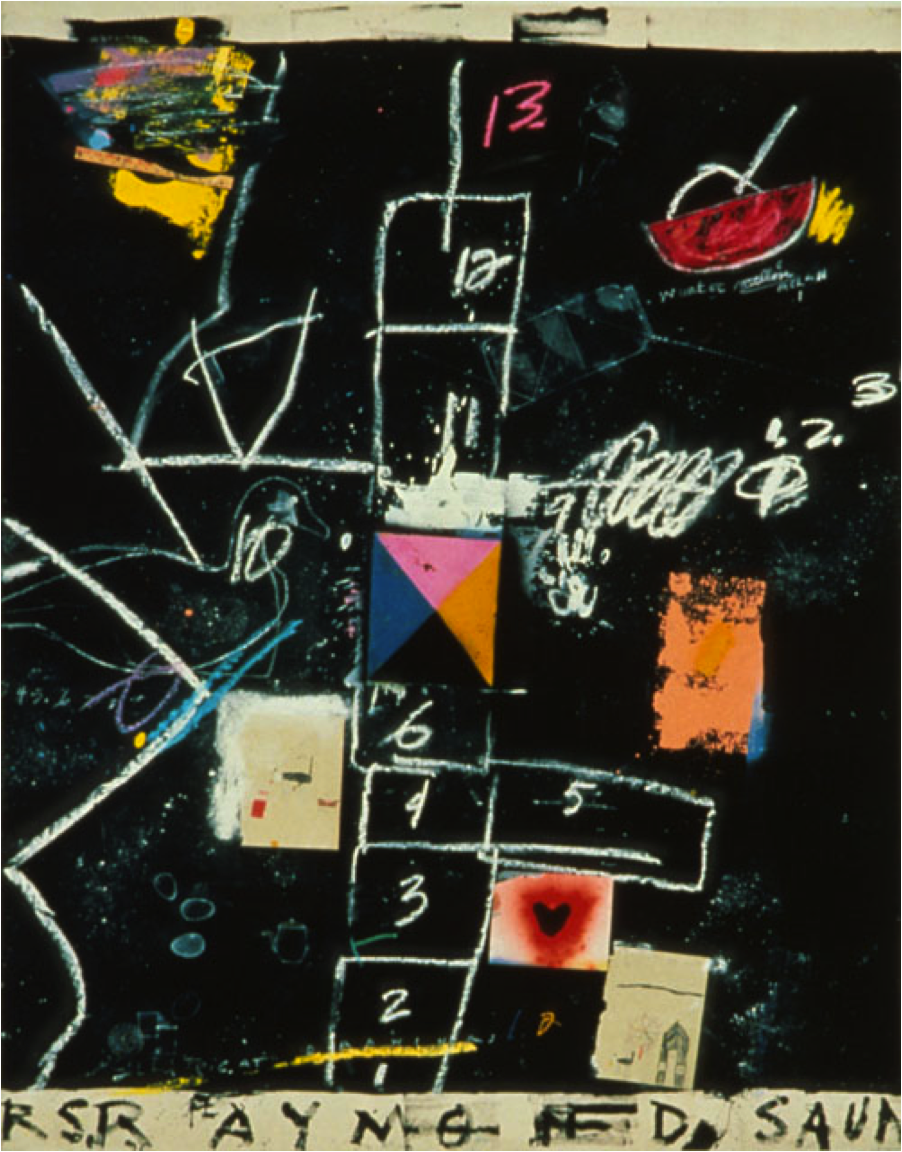
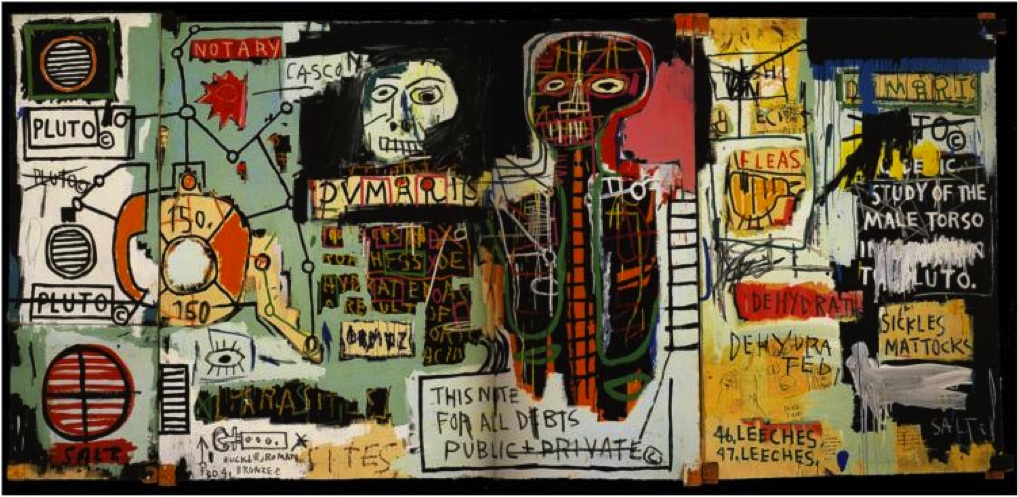
Tamara Davis’s documentary Jean-Michel Basquiat: The Radiant Child is the best documentary about the Afro-Puerto Rican, Haitian-American, and New York native Basquait there is. Davis filled the scholarly interviews that provided a feel of a real understanding of Basquait’s methodology and process. As all-encompassing as this documentary was, the lineage of Black abstraction was again overlooked. No mention of Saunders, Whitten, Chase-Riboud allows for a Western discovery narrative of the radiant child, a child born and nurtured with no influence of Black. An unknown phenomenon plucked out as worthy. Even the depiction of him listening to Jazz as he painted reminds us of the Pollock process being the same. This Western Adoption of Basquiat has every bit to do with the fact that Basquiat himself does not mention the Black lineage of Abstraction, but one look at Saunders’s mark-making, image and text, collaboration, chalk and found object doors, and it easy to see that whatever praise is lauded unto Basquiat it due to the utter appropriation of his predecessors, specifically Raymond Saunders.

Jean-Michel Basquiat, who was so heavily influenced by Saunders that he adapted several of the artist’s motifs into his own paintings. Some of these, like his dedications to famous jazz musicians and a king’s crown drawn in white chalk, appear prominently in the new work. Taken as a whole, the exhibits’ swirls of color over full black grounds resemble galaxies and suggest movement, perhaps influenced by his years of traveling and working abroad. http://www.boothism.org/2007/09/28/open-to-interpretationraymond-suanders-just-paints/

These two are both great artists and are both responsible for the limited scope of Black art which is still largely viewed as folk. Not acknowledging the past and allowing the Western canon to “discover” you is a problem. It negates the possibility of that culture to stand on its own aesthetics and moral. Not acknowledging reinforces the very advances that great artists like these make.


Christopher HutchinsonChristopher Hutchinson is an Assistant Professor of Art at Atlanta Metropolitan State College and Archetype Art Gallery Owner in Atlanta, Ga. He received his Master of Fine Arts Degree in Painting from Savannah College of art & Design, Atlanta and his Bachelor of Arts Degree from the University of Alabama in Huntsville, Alabama. He lived in Alabama for 10 years before moving to Atlanta in 2008.
Learn more about Christopher and his work at Black Flight 144.

Reclaiming Experiential Residue: Misconceptions

by Nicholas Quin Serenati

Reclaiming Experiential Residue: Misconceptions is the second of a three-part series, which began with Locating Place: Fragments of an Illness. The third and final part is Humanscapes.

About the series: Illness experience is a resource for experiential knowledge. To that extent, it is important to understand that life has infinite spaces which can be experienced. My work is concerned with phenomenological experiences that transform these spaces into places. These places become the foundations in our individual lives – the construct of our identity. The work in this series is intended to ascertain an understanding of the ways meaning–making functions as a method for healing, and how the creative process operates to uncover and identify new metaphors that best communicate illness experience to others.


Reclaiming Experiential Residue: Misconceptions

Illness is a window to foresight. My proposed metaphor is a dynamic performance. This metaphor encompasses experience, object, space, language, sound, translation and meaning as a surfacing of my experience with illness. I have chosen a window for two significant attributes: an object – a way of being, and a lens – a way of seeing. With this approach, the window is a reconstitution of my body in a place – or experience – that is designed by time and space. Time, within the relationship of this video, provides insight into a spatiotemporal system. This system is intended to shape perception and impart meaning. Employing this conceptual system of spatiotemporal thinking has a history that also needs unpacking.

In 1922, Sigmund Freud published his analysis of the conventional understanding of traumatic neurosis in his book, Beyond the Pleasure Principle. In Freud’s analysis, he identified two major effects of traumatic neurosis that go beyond the conservative notion of physical injury (8). Most critical to Freud’s analysis are two polarizing and complex effects. First, the idea of a negative effect is characterized by the defensive action of suppressing the traumatic event as a method of avoiding a reliving of the event. The second, the positive effect, is using methods to bring the event back into operation, or as Freud states, “confirm the reconstruction of [the patient’s] own memory” (17-18). It is of my opinion that the positive effect approach exercises with success illness experience. Presently, this approach can be deemed most effective by contemporary applications such as journaling and creative outputs (i.e., painting, drawing, photography, etc.) and will play a central role in the theory that underpins this project.

In elaborating on illness experience, a trauma is absorbed and an influential preoccupation with that experience becomes rooted in the psyche of the patient. This preoccupation can have a deeply profound result on the way an individual perceives and lives with illness experience. Through methods of positive effect approaches – repeating, reliving and re-organizing – the traumatic experience will serve as a source of knowledge building. In using video art as the method of positive effect operation, there exists a fascinating application with digital media that support, and in some cases, goes beyond the ideas presented by Freud when it comes to “repetition-compulsion” (Freud, 19).

The idea of repetition and compulsion is a landmark in video art and I will use this method to emphasize the focus of the work’s investigation of metaphorical construction and meaningful subtext. For example, one key component to the structure of video art is time.  Through the employment of repetition, or the loop, time can be utilized to suspend the real so that a greater attention can be paid to an element that may be, in the real, too small.  More specifically, the idea is to narrow the scope of time on a particular sequence of footage, lock in a specific set of in and out points within the timecode of the video, and encode a repetitious sequence that delivers a cycle meditated on a specific idea(s). Another key component in the structure of time is the notion of speed. The rendering of speed not only shifts the paradigm of what is believed to be footage of real time, it also changes the context by ramping up or slowing the speed down to a hyper-real interpretation. In influencing these few attributes, the work moves outside of normality and is reconfigured to communicate a new perception of reality – or provide exposure to an augmented reality.

This augmented reality is a justification of constructing methods of sight. Time and space manipulation of the video project will inform the ways the work is engaged, meditated, and understood. For instance, the window is the conceptual anchor – for being and seeing differently. The concept of a window extracted from its traditional context and placed directly in an aesthetic situation, is intended to communicate an idea of illness within the body.

Misconceptions (2012) is a body of work that enforces the notion of repetition, time, and space. Additionally, the work was produced from a mixed methodology approach involving the weaving of my Buddhist mediation practice and art practice. From this particular approach, the objective is to select a location that I am interested in investigating – at times it is planned and others it is meant to be spontaneous and thus would explain my work with new media and mobile devices – and I arrange my meditation session along with the setup of my camera. If I choose video, I record the entire meditative session. If I choose still photography, I wait to the moment that my meditation is complete and I either use a short or long exposure to capture the moment. Misconceptions employs video as the means of documentation and a window as a center of interest. Interestingly enough, this experience inspired some creative writing that I shortly after I stopped recording the session. Later, I recorded the prose with a talent that I frequently use in my pieces and embedded the audio track in the video to complete the work. This project was the first in a series of experiments intended on achieving dharma art.


Nicholas Quin SerenatiNicholas Quin Serenati is an interdisciplinary scholar-artist whose work is defined by arts-based research that explores the potential of medium and discipline in liminal spaces. With a practice rooted in locating one’s place, Serenati employs video, creative writing, photography, sound, installation and performance to investigate forming situations that direct his research around illness and metaphor.

Serenati’s intellectual practice deeply engages the creation of meaning – form and function – and the articulation of story throughout the investigative process. Themes of trauma, identity, illness, disability, experimental narrative, social constructivism, sound and language are all contributing factors to Serenati’s work as a critical discourse. Serenati’s scholarly-art practice is intended to investigate phenomena as a way of achieving profound knowledge of theory, philosophy and art.

Based out of St. Augustine, Florida, Serenati holds a BA in Communications from Flagler College, an MFA in Interdisciplinary Arts from Goddard College, and is a candidate for his Ph.D. in Interdisciplinary Studies: Humanities and Culture from Union Institute & University. He is currently the Art Director / Dept. Chair of the Cinematic Arts program at Douglas Anderson School of the Arts and an adjunct professor of media and cinema studies at Flagler College.

Serenati’s dissertation, The ReFraming of Leukemia: Metaphor, Buddhism, Art and Illness Experience, will be completed May 2014, and the installation of the project is set for early 2015 in St. Augustine, Florida.

Twitter: @nqserenati
Website: nqserenati.com